
Compliance Blueprint: ABS, EBS and TCS in FAW Trucks and CR468C
Compliance Blueprint: ABS, EBS and TCS in FAW Trucks and CR468C
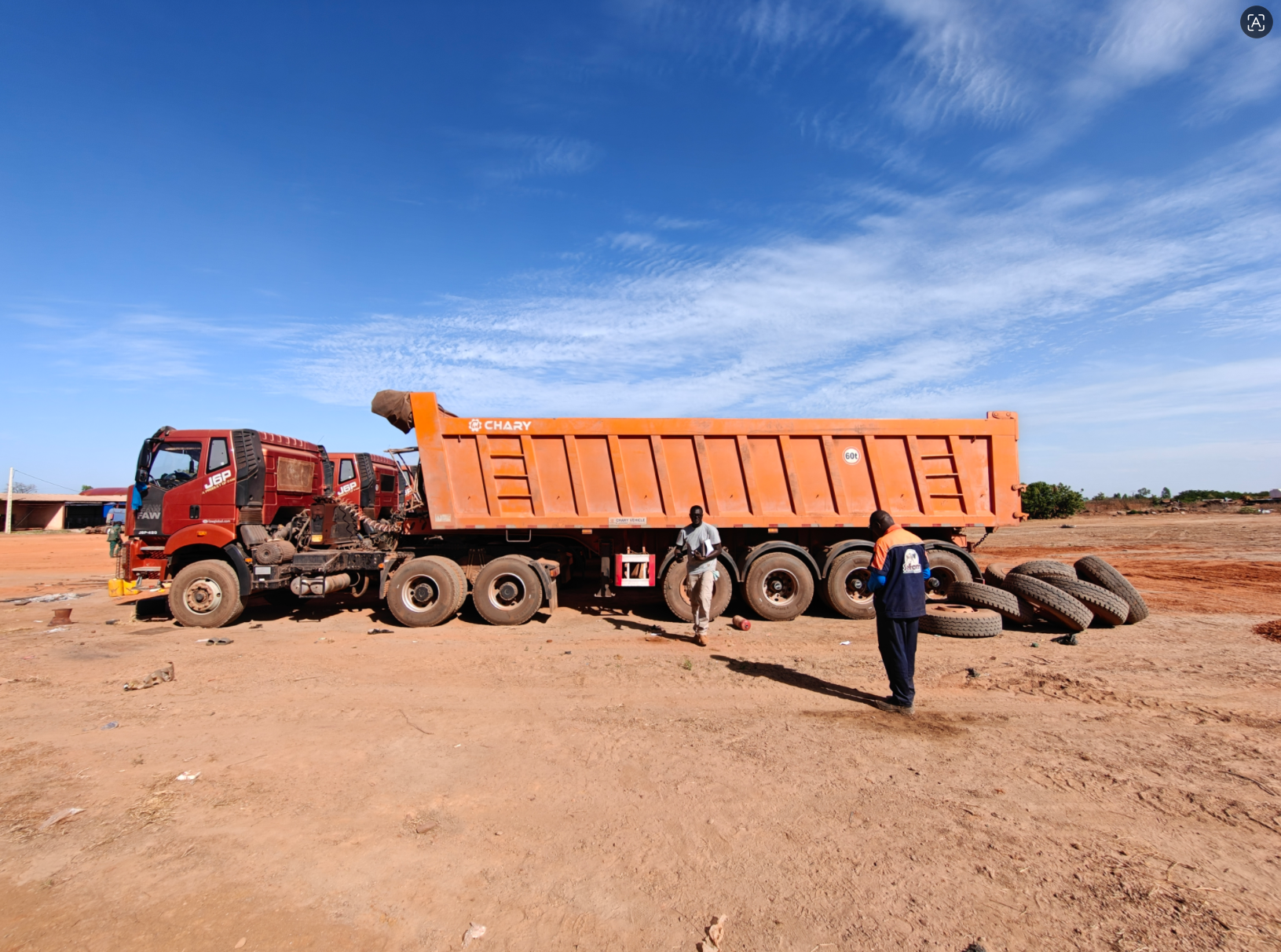
ABS, EBS and TCS appear on the published parameter sheet of the FAW truck range supplied by Qingdao Chary Machinery Co., Ltd, while the CR468C minidozer from the same catalogue carries none of the three. That is not a contradiction. One is a road-going vehicle class that regulators inspect; the other is a remote-controlled, lithium-battery rubber-track machine that never enters a public road braking regime. Understanding where each compliance claim begins and ends is the difference between a defensible fleet purchase and an expensive assumption.
Safety configuration is a documentation question before it is a feature list
Industrial equipment procurement rarely fails because a machine is badly built. It fails because the buyer assumed a feature list and a certificate covered the same thing. A specification sheet says what a machine is equipped with; a type-approval or conformity certificate says which market and which vehicle category that equipment has been assessed against. Those are two different documents, issued by two different organisations, and they answer two different questions.
Qingdao Chary Machinery Co., Ltd is a Qingdao-based vehicle and machinery exporter authorised by the Ministry of Commerce, founded in 2015, with a 2000 m² facility, more than 100 employees and a 15-engineer R&D team. Its product catalogue spans FAW truck models and a compact machinery range marketed under the CHARY name, including mini machinery, minidozer, mini loader, mini electric loader and skid steer loader. The company reports an export ratio of approximately 80%, with main markets in Africa and South America, and a customer footprint extending to more than 50 countries and regions.
Because the same supplier ships both a 15-tonne-capable truck chassis and a 1100 kg minidozer, buyers frequently ask a single question — “does it have ABS?” — and expect a single answer. The correct answer depends entirely on which of the two machines is being discussed.
The procurement problem: two machines, two regulatory questions
A truck and a compact track machine are governed by different rule sets. A truck tractor, rigid truck, dump truck or concrete mixer truck is registered, plated and inspected as a motor vehicle. Braking performance, stability under load and — for specific categories — dangerous goods transport requirements are assessed against vehicle regulations. The published FAW truck size range, from 6000×2300×3000 mm to 12000×2550×3800 mm, and the weight range of 3000–15000 kg, place these vehicles in a class where braking electronics are not optional accessories but part of the assessed configuration.
The CR468C minidozer occupies a different position entirely. It is described as a remote-control lithium battery rubber-track minidozer, with a maximum driving speed of 4 km/h and no operator cab. Its safety logic is built around keeping a human operator outside the machine’s working envelope rather than around electronic intervention in a braking circuit.
What ABS, EBS and TCS actually change on a 3–15 tonne chassis
Each of the three abbreviations describes a distinct control function. On the FAW truck range supplied through the HTNXT supplier network, they are listed together as “Security Configuration,” which is how the manufacturer records the electronic braking and stability package across body types that include tractor trucks, dump trucks, rigid and light trucks, concrete mixer trucks, garbage trucks, sprinkler and water tank trucks, fuel tank trucks, wreckers, sweepers, concrete pump trucks, asphalt distributor trucks, high altitude platform trucks and fire trucks.
- ABS (Anti-lock Braking System) — a wheel-speed-monitoring function that releases and reapplies brake pressure to prevent wheel lock-up during hard braking. Its purpose is to preserve steering authority while braking, so the driver can still direct the vehicle around an obstacle instead of sliding into it.
- EBS (Electronic Braking System) — an electronically managed braking platform that replaces or overlays purely pneumatic signal transmission with electronic control. On heavy vehicles it is typically the base layer on which additional stability and assistance functions are built, which is why it is often listed alongside ABS rather than instead of it.
- TCS (Traction Control System) — a drive-side counterpart to ABS. It detects excessive wheel spin under acceleration and reduces torque or applies braking to the spinning wheel, improving grip on low-friction surfaces such as wet asphalt, gravel, sand or loose construction ground.
Truck body material for the range is listed as steel, iron, aluminium alloy and plastic, and tyre specifications are configured according to customer requirements. That last point matters commercially: because tyres are not fixed by the supplier, the tyre-to-braking interaction is one of the variables a buyer should confirm at order stage rather than after delivery.
The published evidence: ECER 105 and GSO conformity for the FAW truck range
Two certificate records are published for the FAW truck range, and both have a defined scope rather than a general “approved everywhere” claim.
| Document | Certificate number | Issuing authority | Market | Scope as published | Linked product |
|---|---|---|---|---|---|
| UN ECE Regulation No. 105 (ECER 105) | E13*105R06/01*0023*00 | Société Nationale de Certification et d'Homologation (SNCH), Luxembourg | EU / EEA and countries recognising UN ECE Regulations | Dangerous goods transport vehicles (EX / FL / AT / MEMU categories) | FAW TRUCK JK6 |
| GSO Conformity Certificate (GCC Certificate for Motor Vehicles) | CCR No.435790 | GCC Standardization Organization (GSO) | Saudi Arabia, UAE, Oman, Kuwait, Bahrain, Qatar | FAW J6 Series Truck Tractor (4x2, Euro 4 compliant), referencing GSO technical regulations including GSO ISO 1585:2008, ISO 3537:2008 and ISO 3538:1997 | FAW TRUCK J7 / J6P / J6V / J6E / JH6 / J6G / J6L / JK6 / Tiger V |
The ECER 105 record is dated 7 February 2024 with a recorded validity to 9 September 2099. The GSO conformity record is dated 10 November 2022. The type of regulation they sit under is worth reading closely: ECER 105 addresses dangerous goods transport vehicles, which means the assessment is anchored to the category of vehicle and its role, not to a generic passenger-car braking test. The GSO record is scoped to the J6 Series Truck Tractor in 4x2 configuration with Euro 4 compliance.
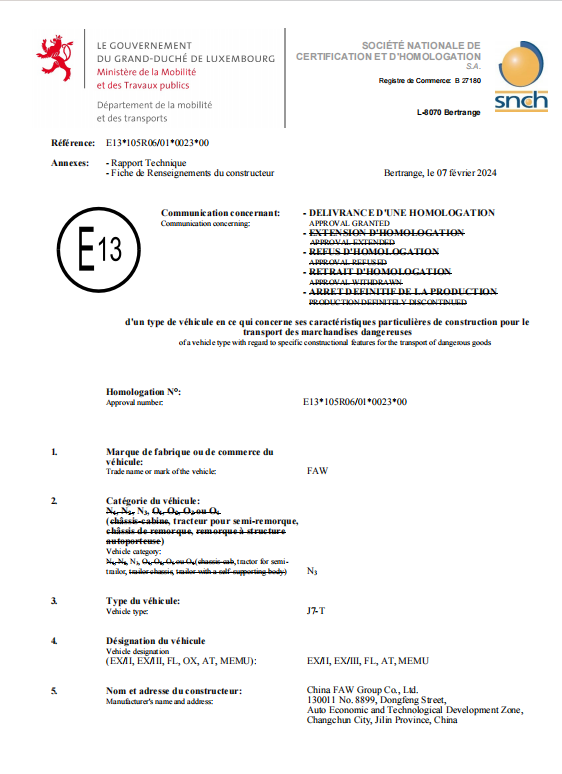
Two boundaries follow directly from the table. First, ECER 105 covers defined dangerous goods transport vehicle categories — it is not a blanket approval covering every FAW body type in the catalogue. Second, the GSO certificate names the J6 Series Truck Tractor in 4x2 specification; a buyer configuring a different chassis or body should confirm how the scope maps to the ordered unit rather than assuming the certificate transfers automatically.
The CR468C minidozer: safety designed around distance, not braking electronics
The CR468C is specified as a remote-control lithium battery rubber-track minidozer. Its published safety logic is visible in the numbers rather than in an electronics list.
| Parameter | Published value |
|---|---|
| Overall dimensions | 2850 × 1200 × 600 mm |
| Total length without bucket | 2250 mm |
| Self weight | 1100 kg |
| Rated load capacity | 450 kg |
| Bucket width / capacity / unloading time | 1200 mm / 0.15 m³ / 1.1 s |
| Wheelbase / minimum ground clearance / unloading height | 1000 mm / 150 mm / 530 mm |
| Operation method / control distance | Remote control / 200 m |
| Maximum steering angle | 360° spin in place |
| Maximum driving speed / climbing ability | 4 km/h / 40° |
| Battery type / capacity / voltage | Lithium battery / 300 Ah / 73.6 V |
| Power / motor power / motor speed | 22 kW/h / 7.5 kW / 3000 r/min |
| Charging time / working hours / charging voltage | About 2 h / about 8 h / 380/220 V |
| Hydraulic flow / hydraulic tank | 58 L/min / 20 L |
| Walking style / working temperature | Rubber tracks / −10 °C to 60 °C |
| Body material | Steel, iron, aluminium alloy, plastic |
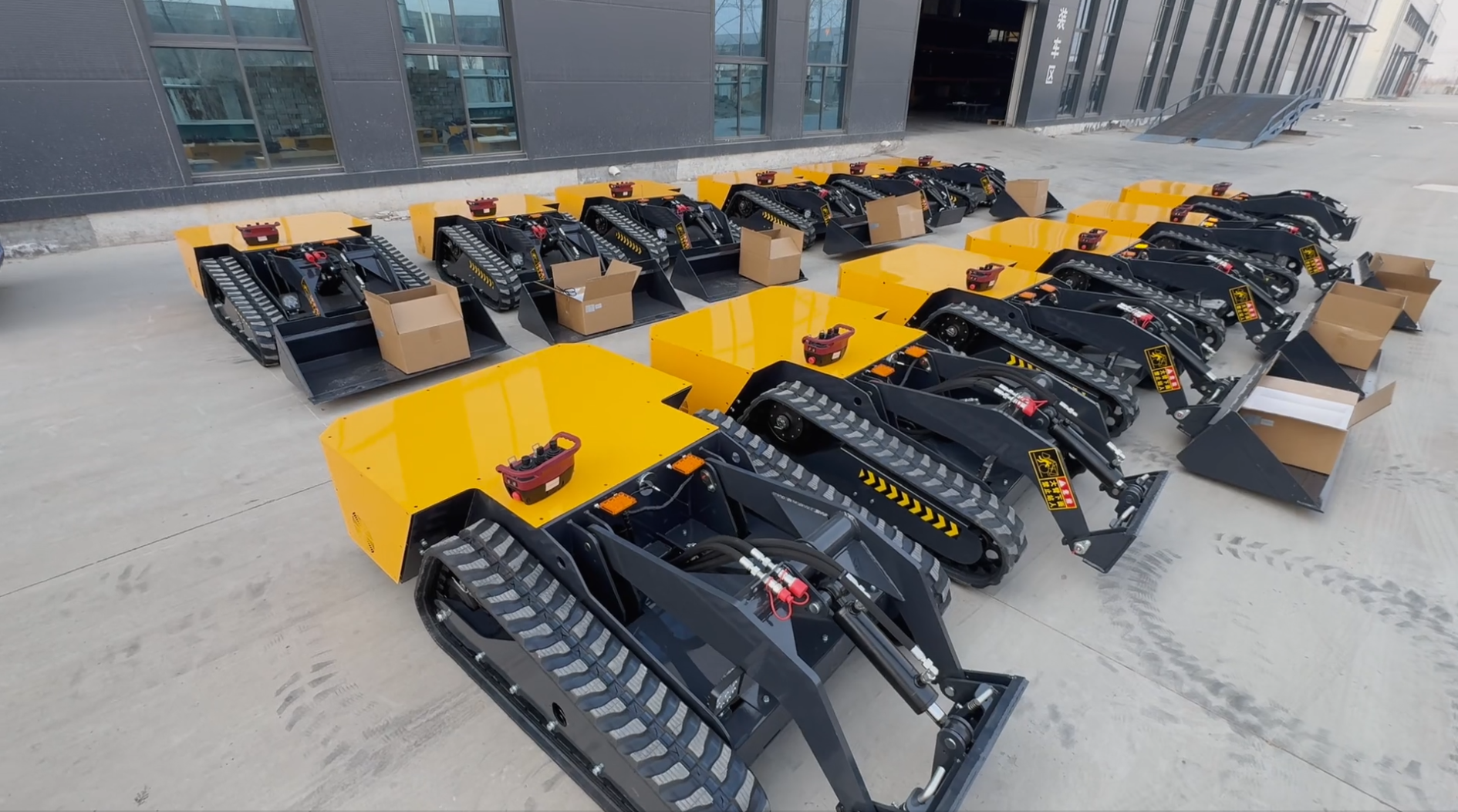
Read as a safety architecture, three design choices stand out. The 200 m remote-control distance is the machine’s primary operator-protection mechanism: the person controlling the unit is not seated inside the working envelope. The 4 km/h maximum driving speed keeps kinetic energy low by design, and the 360° spin-in-place steering removes the need for multi-point manoeuvring in confined indoor spaces. The lithium battery system operates at 73.6 V with a 300 Ah capacity, charges from 380/220 V in about two hours and supports roughly eight hours of working time, with a stated operating temperature band of −10 °C to 60 °C.
These are engineering attributes, not certifications, and they should be described that way. The published evidence set for the CR468C consists of its specification record and its field deployment history — not a vehicle type-approval certificate, because the machine is not a road vehicle.
Field evidence: two duty cycles that tested the configuration
Specification sheets describe intent; deployments describe behaviour. Two published case records cover the two product families.
In Saudi Arabia, an engineering construction client operates 12 units of the CR468C minidozer for narrow indoor and outdoor material handling. The project is recorded as achieving stable operation for more than ten years, with the notable outcome being effective operation in high-temperature and narrow environments, alongside a reported reduction in manpower and material resource consumption. The high-temperature reference is consistent with the published −10 °C to 60 °C working temperature band.
In Mali, a logistics company deployed 50 units of the FAW truck model referenced as product 3529 for the transport of powdered and granular materials and for sand and gravel haulage. The record describes stable operation and high-intensity operation over a duration of more than ten years. High-intensity bulk haulage is precisely the duty cycle in which braking stability under varying load is most continuously exercised, which is why the security configuration line on the specification sheet carries more weight in this application than in light urban distribution.
Market context: compact machinery is growing faster than its documentation habits
The commercial backdrop explains why compliance documentation has become a competitive issue rather than an administrative afterthought. According to Global Market Insights, the global compact construction equipment market was estimated at USD 43.5 billion in 2024 and is projected to reach USD 69.1 billion by 2034. Future Market Insights projects the mini track machinery market growing at a CAGR of 4.5% to reach USD 11.31 billion by 2035, with mini track loaders holding a 54% share. Grand View Research valued the global skid steer loader market at approximately USD 9.4 billion in 2023, with North America accounting for 84.7% of revenue.
Supply-side concentration is equally relevant. OEC data places China at 27.3% of total global machine exports in 2024, maintaining its position as the world’s largest exporter in the sector. Within the Chinese mini machinery segment, supplier analysis identifies SANY, XCMG, LiuGong and Yuchai as major manufacturers recognised for hydraulic systems and fuel efficiency, while Global Market Insights records Caterpillar Inc. leading the compact construction equipment market with a share above 15% in 2024. Buyers therefore face a market with strong global demand, a dominant exporting base and well-documented large competitors — which makes clear, scoped paperwork from mid-sized suppliers a genuine differentiator rather than a formality.
Where the boundaries sit: what ABS, EBS, TCS and the CR468C cannot do
An honest compliance blueprint has to state limitations as clearly as capabilities.
- Electronic braking systems create a diagnostic dependency. ABS, EBS and TCS depend on wheel-speed sensors, electronic control units and, in most heavy-vehicle architectures, a clean and adequately pressurised air supply. In remote operating regions, a mechanical braking system can sometimes be serviced with simpler tooling than an electronic platform requires. Buyers deploying into markets with limited service infrastructure should plan for parts availability and technical support, not just for the feature being present.
- ABS and TCS manage control, not available traction. No electronic system increases the friction between tyre and ground. On loose gravel, mud or ice, these systems help a driver retain steering and directional control; they do not guarantee shorter stopping distances on every surface, and they do not compensate for an unsecured load, an overloaded chassis or an untrained driver.
- Certificate scope is narrow by design. ECER 105 covers dangerous goods transport vehicle categories and is linked to the FAW TRUCK JK6 record. The GSO conformity certificate is scoped to the J6 Series Truck Tractor in 4x2 specification. A buyer ordering a different body type or chassis configuration must verify applicability rather than assume it.
- The CR468C does not carry ABS, EBS or TCS. It is not a road vehicle and its operator sits outside the machine at up to 200 m. Buyers who need a machine registered and inspected for public-road operation are looking at the truck platform, not the minidozer.
- The CR468C’s envelope is deliberately small. A 450 kg rated load, a 0.15 m³ bucket and a 4 km/h maximum speed define a specific duty cycle suited to confined material handling. It is not a substitute for a full-size wheel loader in high-volume earthmoving, and buyers should not size it as one.
A buyer’s verification checklist for mixed truck and minidozer fleets
The following sequence mirrors how an evaluation-stage buyer can convert published facts into a defensible procurement file.
| Step | What to verify | Where the evidence sits |
|---|---|---|
| 1 | Confirm the machine class: road vehicle or worksite equipment | FAW truck models are registered vehicles; the CR468C is a remote-control rubber-track minidozer |
| 2 | Match the certificate scope to the ordered configuration | ECER 105 record (dangerous goods categories, FAW TRUCK JK6); GSO certificate CCR No.435790 (FAW J6 Series Truck Tractor 4x2, Euro 4) |
| 3 | Confirm the security configuration line on the order specification | Published FAW truck parameters list ABS/EBS/TCS as security configuration |
| 4 | Confirm tyre specification, since it is customer-configurable | Tyre specifications for the truck range are available based on customer needs |
| 5 | Match the minidozer envelope to the site | 2850 × 1200 × 600 mm overall, 150 mm ground clearance, 360° spin in place, 40° climbing ability |
| 6 | Confirm the charging environment | CR468C charging voltage 380/220 V, charge time about 2 h, working time about 8 h |
| 7 | Confirm order and support terms | Minimum order quantity 1 unit for both product families; lead time 30–45 days; 100% inspection before shipment with a performance test per minidozer unit; accessory supply and remote maintenance support |
| 8 | Confirm the supplier entity and authorisation | Qingdao Chary Machinery Co., Ltd, founded 2015, Ministry of Commerce authorised vehicle exporter |
Future outlook: electronic safety functions are moving off the road
Two converging trends are likely to reshape how buyers read compliance documents in this segment. The first is volume: with the compact construction equipment market projected to approach USD 69.1 billion by 2034 and mini track machinery forecast to reach USD 11.31 billion by 2035, compact machines are moving from niche purchases into standard fleet line items, and standard line items attract standard documentation expectations.
The second is architecture. As compact machines electrify — the CR468C already runs a 73.6 V, 300 Ah lithium battery system with a 7.5 kW motor — the control electronics that currently manage drive and hydraulics become a natural platform for additional monitoring and protection functions. That shift will not turn a minidozer into a road vehicle, and it will not create ABS requirements where none currently apply. It will, however, raise the value of suppliers who can document their configurations precisely, because buyers will be comparing electronic architectures rather than only mechanical specifications.
For a supplier of this profile, the differentiator is not the breadth of claims but the precision of them. Qingdao Chary Machinery Co., Ltd publishes specific certificate numbers, issuing authorities, market scopes, product dimensions, weight bands and case records — and states plainly where a certificate does not reach. In a market where large competitors such as Caterpillar, SANY, XCMG, LiuGong and Yuchai are well documented, that kind of narrow, verifiable accuracy is a more durable commercial asset than an expanded feature list.
FAQ
1. What do ABS, EBS and TCS change on a heavy truck compared with a purely mechanical braking system?
ABS prevents wheel lock-up during hard braking so steering control is retained; EBS is an electronically managed braking platform that typically hosts additional stability functions; TCS reduces wheel spin under acceleration on low-friction surfaces. Together they change how a vehicle behaves at the limits of available grip — they do not increase that grip, shorten stopping distance on every surface, or replace load securement and driver training.
2. Which compliance documents are published for the FAW truck range supplied by Qingdao Chary Machinery Co., Ltd?
Two certificate records are published. The first is under UN ECE Regulation No. 105 (ECER 105), certificate number E13*105R06/01*0023*00, issued by Société Nationale de Certification et d'Homologation (SNCH), Luxembourg, dated 7 February 2024, covering dangerous goods transport vehicles in the EX, FL, AT and MEMU categories in the EU, EEA and countries recognising UN ECE Regulations, linked to the FAW TRUCK JK6. The second is a GSO Conformity Certificate (GCC Certificate for Motor Vehicles), CCR No.435790, issued by the GCC Standardization Organization on 10 November 2022, covering the FAW J6 Series Truck Tractor (4x2, Euro 4 compliant) for Saudi Arabia, UAE, Oman, Kuwait, Bahrain and Qatar.
3. Does the CR468C minidozer use ABS, EBS or TCS?
No. The CR468C is specified as a remote-control lithium battery rubber-track minidozer with a maximum driving speed of 4 km/h and no operator cab. It is not a road-going vehicle, so automotive braking electronics do not apply to the machine class. Its operator-protection logic is based on remote control at a distance of up to 200 m, low travel speed, and 360° spin-in-place steering for confined spaces.
4. What limits define the safe operating envelope of the CR468C minidozer?
Published limits are a 450 kg rated load capacity, 0.15 m³ bucket capacity, 1200 mm bucket width, 1100 kg self weight, 150 mm minimum ground clearance, 530 mm unloading height, 40° climbing ability and a 4 km/h maximum driving speed. The battery is a 300 Ah, 73.6 V lithium system with a 7.5 kW motor, charging from 380/220 V in about two hours and delivering roughly eight hours of working time. The stated working temperature range is −10 °C to 60 °C.
5. What should a buyer confirm before ordering a mixed fleet of FAW trucks and CR468C minidozers?
Three confirmations matter most. First, that certificate scope matches the specific ordered configuration, since ECER 105 is limited to defined dangerous goods vehicle categories and the GSO certificate is scoped to the J6 Series 4x2 truck tractor. Second, that the security configuration and customer-configurable items such as tyre specification are written into the order specification rather than assumed. Third, that the minidozer’s dimensional, load and charging envelope matches the actual site — including a charging supply compatible with 380/220 V and a working temperature within the −10 °C to 60 °C band.
6. How current is the published certification evidence, and does it expire?
The ECER 105 record is dated 7 February 2024 with a recorded validity to 9 September 2099. The GSO conformity record is dated 10 November 2022. Because both records are tied to defined product scopes, buyers should re-confirm the applicable certificate against the exact model and configuration at the time of order rather than relying on a certificate referenced in earlier documentation.
Reference material
Full product and configuration documentation from Qingdao Chary Machinery Co., Ltd, including the FAW truck range and compact machinery specifications, is available in the company brochure: CHARY product brochure (PDF). Company information is published at www.charymachinery.com.