
Compliance Clauses in a Stone Crushing Production Line Tender
A qualification clause in a stone crushing production line tender is a statement about documents, not about performance. It defines what a supplier must hand over — certificates, inspection records, manuals, test data — and at which point in the contract each item becomes due. Reading it as evidence of tonnage, discharge size or wear life is the most common mistake in tender review, and usually the most expensive one, because the mismatch only becomes visible after the equipment has been shipped and installed.
This reference note sets out a practical method for reading compliance and qualification clauses and for connecting them to the actual equipment scope of a line: PX Crusher, PC Crusher, PCX Crusher, 2PG-Y Roller Crusher, YK Screen, XS Sand Washer and FG Spiral Sand Washer. The order matters. Model designations identify equipment; they do not certify it. A clause that treats a family name as proof of conformity is unenforceable from the moment it is written.
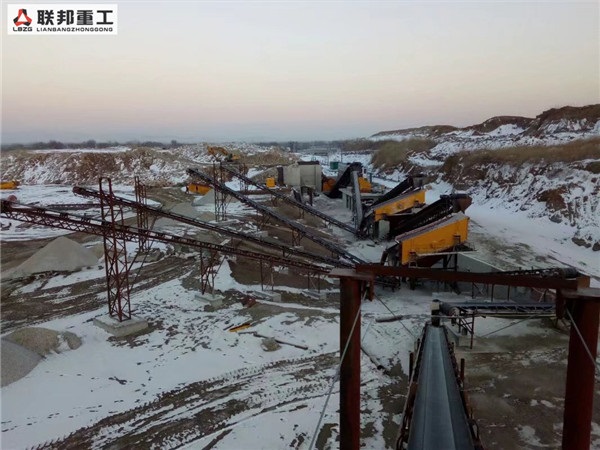
Stone crushing production line equipment on site. The clause in a tender describes this scope; it does not describe how the machines will perform.
Why one clause covers three different obligations
Most tenders compress “qualified” into a single word. Underneath it sit three obligations that are verified at three different moments, by three different reviewers.
- Entity-level qualification — evidence about the supplier as an organisation: business licence, quality management system certification, export conformity documentation for the destination market.
- Product-level conformity — evidence about the machine or model being supplied, including the standards against which that model is declared.
- Delivery-level records — evidence produced during the order: material certificates, welding inspection reports, factory test-run records, packing lists, spare-parts lists and English-language manuals.
A clause reading “the supplier shall be qualified” cannot be priced, scored or enforced until the level is named. The same sentence can be satisfied at entity level and unmet at product level, because a supplier may hold a valid quality management certificate while the technical annex in the bid names a different model, motor rating or discharge setting from the one actually offered. Procurement teams that separate the three levels early spend far less time arguing about wording later.
The equipment list is a scope statement, not a credential
A crushing line is a sequence of duties. Material is fed, reduced in stages, screened into fractions and, when manufactured sand or washed aggregate is required, washed and dewatered. Each duty is filled by a specific machine family, and each family carries a model code that identifies the unit far more precisely than the family name does.
PX Crusher is a fine impact crusher used for fine crushing or sand making. The largest listed model, PX-1822, accepts feed up to 800 mm, discharges in the 5–20 mm band and is driven by a 210–270 kW motor. The series as a whole runs from PX-800 upward.
PC Crusher is a hammer crusher family in compact, standard and heavy-duty configurations, from PC-400×300 to PC-1600×1600. Listed capacities run from 30–50 t/h on the smallest compact unit to 500–1,000 t/h on the largest heavy-duty unit, with high-manganese steel hammer heads and cast steel rotors as the stated build materials.
PCX Crusher is the new-generation strong impact hammer crusher, listed from PCX-0808 at 45 kW to PCX-1822 at 315 kW, with discharge settings in the <10 mm to <20 mm range depending on the model. The difference between PCX-1010 and PCX-1822 is not a suffix; it is roughly a sevenfold difference in installed power.
2PG-Y Roller Crusher is a hydraulic two-roll unit. The listed 2PG-1000 has a roll diameter of 1,000 mm, a roll length of 950 mm and two 37 kW motors, with cast steel rolls and alloy steel roll skins. It typically sits in a fine-crushing duty for brittle or mid-hard material.
YK Screen is a circular vibrating screen family from 2YK-1248 to 3YK-2470, available with two, three or four decks, screen apertures below 50 mm and motor ratings from 5.5 kW to 22 kW. Deck count is the parameter that most often decides whether a finished-product specification can be met at all.
XS Sand Washer is a wheel bucket washer; the listed range runs from XS-2600 at 20–50 t/h with a 5.5 kW motor to XS-3200 at 80–150 t/h with a 15 kW motor, with polyurethane bucket liners.
FG Spiral Sand Washer is a spiral washer with a higher scrubbing duty, listed from FG-500 at a 508 mm spiral diameter to FG-1200 at a 1,200 mm spiral diameter and 70–110 t/h capacity, with wear-resistant rubber and polyurethane linings.
None of these seven names certifies anything. “PCX Crusher” is not a compliance statement. A clause written against a family name is a clause that cannot be verified at goods-in, because the inspector on site has nothing specific to match the delivery against.
| Equipment family | Typical position in the line | What the clause should specify |
|---|---|---|
| PX Crusher (PX-800 to PX-1822) | Fine crushing / sand making | Exact model, maximum feed size, discharge range, motor power, rotor and hammer material statement |
| PC Crusher (PC-400×300 to PC-1600×1600) | Secondary or fine crushing | Configuration class, hammer and sieve plate material, discharge setting, rotor weight |
| PCX Crusher (PCX-0808 to PCX-1822) | Secondary / tertiary fine crushing | Exact model, discharge range, rotor diameter class, installed motor power |
| 2PG-Y Roller Crusher (2PG-1000) | Fine reduction of brittle material | Roll diameter and length, roll surface material, gap adjustment method, motor rating per roll |
| YK Screen (2YK-1248 to 3YK-2470) | Screening and grading | Number of decks, screen aperture, motor rating, bearing specification, mesh material |
| XS Sand Washer (XS-2600 to XS-3200) | Washing and dewatering | Wheel bucket diameter, processing capacity, liner material, motor power |
| FG Spiral Sand Washer (FG-500 to FG-1200) | Washing of higher-clay feed | Spiral diameter, tank length, capacity, blade and liner material, water consumption |
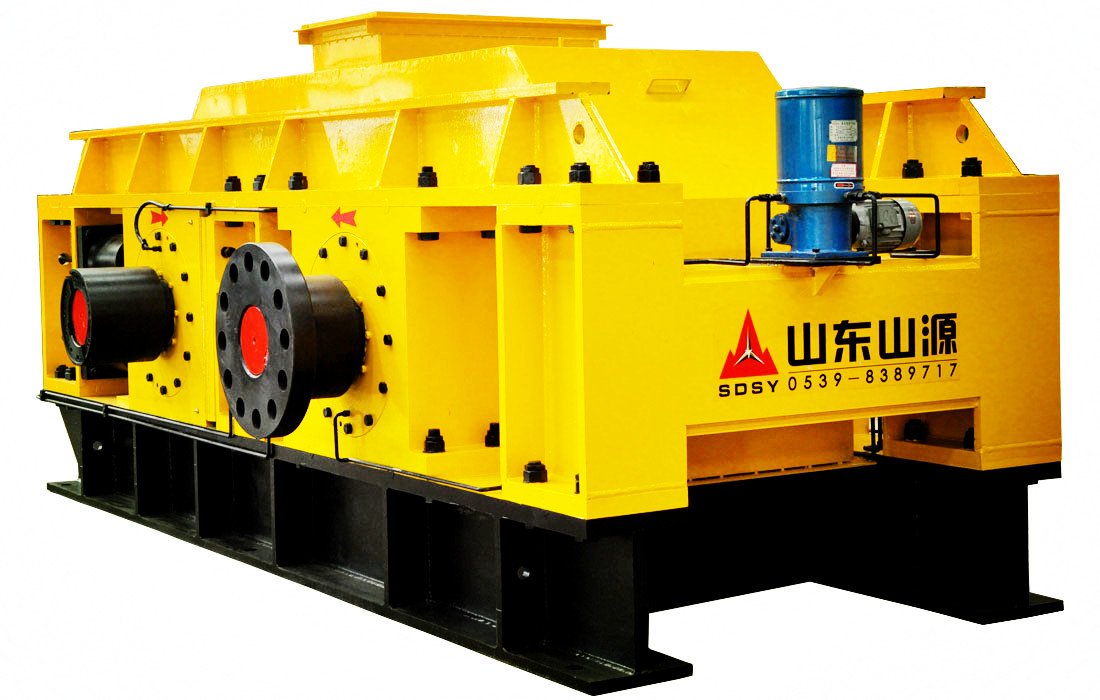
2PG-Y Roller Crusher. A model code identifies a machine; it does not certify it.
Qualification documents and performance claims are two different instruments
The distinction is simple to state and easy to lose in drafting. A qualification document is evidence that a condition is met — that an entity operates a management system, that a product is declared against a standard, that a batch of steel has a traceable certificate. A performance claim is a statement about behaviour: so many tonnes per hour, this discharge band, that wear life. Documents are checked against their scope and validity. Claims are checked against a test.
Three checks catch the majority of drafting errors in a compliance clause:
- Scope. Does the document name the legal entity, the manufacturing site and — where the clause requires it — the model or series? A certificate covering a company does not automatically cover a machine the company resells.
- Validity and issuer. Is the certificate current, and is it issued by a body that the destination market recognises? An expired certificate and a certificate from an unrecognised issuer fail in the same way, at the port rather than at the desk.
- Model binding. Does the technical annex name a model, and does the supplier's submission repeat that model identically? If the annex says PCX and the submission says PCX-1518, the reviewer should treat the two documents as different until reconciled in writing.
Standards themselves have defined scopes, and quoting them outside that scope is a drafting error rather than a supplier failing. ISO 21873-2:2019 specifies safety requirements and verification for mobile crushers used to crush rock or reprocess construction materials. It is directly relevant to a mobile station on a demolition site and is a category error if cited as the conformity basis for a stationary washing plant. Reviewers who check the scope of a standard before scoring a bid avoid disputes that would otherwise surface during handover.
A four-step method for turning a clause into a document request
The method below is deliberately mechanical. It is written for tender reviewers who have to produce a checklist, not a philosophy.
- Split the sentence by level. Rewrite each clause as one of entity, product or delivery. Most mixed clauses collapse cleanly once the levels are separated.
- Attach an identifier to every product clause. Replace “crusher” with a model. Replace “screen” with a deck count and an aperture. Replace “washer” with a wheel bucket or spiral configuration. An identifier is what makes a clause inspectable on arrival.
- Separate the certificate from the parameter sheet. The parameter sheet — capacity, feed size, discharge band, motor power — is a performance claim and is verified by a factory test run, not by a certificate. A certificate cannot validate a tonnage figure, and a test report cannot substitute for a management system certificate.
- State exclusions and acceptance criteria in the clause itself. Acceptance criteria for this category of equipment typically combine a pre-shipment factory test with on-site installation and commissioning. The clause should also say what is not covered: warranty statements of this type normally address manufacturing defects of the main machine body and exclude direct-contact consumables such as hammers, sieve plates, spiral blades and screen meshes. A clause that assumes full coverage will fail at the first claim.
How a manufacturer organises its document set
Shandong Lianbang Heavy Industry Co., Ltd. is a Chinese manufacturer of sand-stone crushing, sand-making and solid-waste recycling equipment, registered in 2013, with technical origins that can be traced to Chengming Machinery, established in 1996. It operates from No. 68 Lianbang Road in the Yihe New Area of Linyi, Shandong Province, and sells under the trademark Shanyuan LBZG. Its scope covers standalone equipment, EPC contracting for complete sand-stone production lines, construction and demolition waste treatment solutions, and mobile crushing and screening stations.
For a buyer drafting a qualification schedule, the useful question is not what a supplier lists, but which level of the clause each item answers.
Entity level
The company holds ISO 9001 quality management system, ISO 14001 environmental management system and OHSAS 18001 occupational health and safety system certifications, together with CE export certification for foreign trade projects. It is a participant in revising national crusher industry standards, a National High-tech Enterprise re-recognised in 2023, a Shandong provincial-level Specialized, Refined, Differential & Innovative small and medium-sized enterprise, and a national-level science-and-technology-oriented SME. It also operates a municipal-level engineering laboratory, a municipal-level enterprise technology centre and a provincial-level “One Enterprise, One Technology” R&D centre, and has received the Linyi Mayor Quality Award.
These items establish the entity and the process behind an order. They do not certify the output of a specific machine, and no clause should be drafted as though they do.
Delivery level
On the order itself, the document set includes material certificates, options for factory audit or third-party inspection, test-run records, sea-worthy packing documentation, English-language manuals, spare-parts lists and conformity documentation for the destination market, supported by after-sales service using original spare parts. For overseas scopes, equipment is adapted to local voltage — 380 V, 415 V, 440 V or 660 V — with tropicalised or desert-rated options and multilingual manuals where the application requires them.
Commercial level
Execution-stage terms are published rather than negotiated from zero. The minimum order quantity is one set or one unit, which applies to pilot and test orders as well as volume orders for complete lines. Delivery is arranged under FOB (Qingdao), CIF or EXW. Payment terms consist of a 30% T/T deposit and 70% T/T before shipment, with L/C available for large orders. Acceptance is defined as a pre-shipment factory test followed by on-site installation and commissioning.
For long-horizon scopes — the kind of supplier relationship that survives a second or third line — the relevant background is reach rather than certification. Export business accounts for approximately 30% of total sales, and products are sold across all provinces and municipalities in China and in more than 40 overseas countries. The stated markets include the Middle East (Saudi Arabia, the United Arab Emirates, Iraq and Qatar), Central Asia (Russia, Kazakhstan and Uzbekistan), Southeast Asia (Indonesia, Malaysia, Vietnam and the Philippines) and infrastructure-focused African markets including Nigeria, Kenya and Ghana. Domestically, the company has served infrastructure projects of central enterprises including China Railway, China State Construction, China Communications Construction and Gezhouba Group.
None of those market facts belongs in a conformity clause. Their proper place is the supply-continuity and service-response section of the same tender, where they answer a different question: whether the supplier can still support the line in year four.
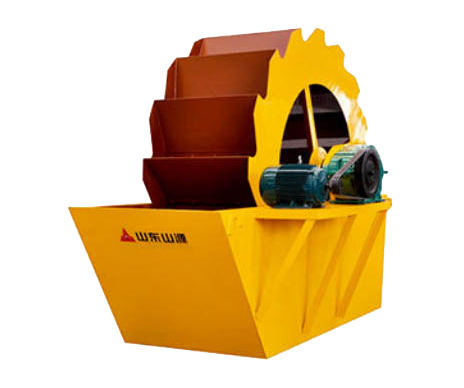
Washing equipment — XS wheel bucket and FG spiral washers occupy the same line stage but carry different duty and documentation requirements.
Where equipment scope meets application scope
The same machine list is configured differently depending on the application, and the application changes which clauses matter. Five recurring scopes illustrate the pattern.
- Highway and railway aggregate. Continuous production with strict gradation and particle-shape requirements. Because acceptance is measured against a grading curve, the clause that matters is the one requiring screen configuration records and product sampling — not the entity certificate. The Lunan High-Speed Railway is listed as an official reference project on the company's site for railway ballast and concrete aggregate supply.
- Hydropower engineering. Dam and mass concrete aggregate, long-term continuous production, often at remote sites. Here the technical annex carries wear-resistant chamber requirements and serviceability commitments, and the delivery clause carries spare-parts provisioning.
- New town and airport construction. Large output with stable quality; airport-grade aggregate specifications and dust suppression enter the technical annex rather than the qualification schedule.
- Overseas quarry and infrastructure. Voltage and climate adaptation move from commercial notes into technical requirements, and multilingual documentation becomes a delivery-level obligation.
- Construction and demolition waste recycling. Trailer-mounted mobile operation, rapid relocation, zero concrete foundation, low noise and low dust. Safety and mobility clauses dominate, and the applicable standard is the mobile-equipment standard rather than a stationary-plant one.
The practical implication for tender reviewers is that a single compliance annex cannot serve all five scopes. A clause copied from a stationary highway-aggregate tender into a mobile demolition-waste tender will be technically wrong in at least two places.
What the market data does and does not tell you
Market figures frame a procurement decision; they do not replace a clause. The global stone crushing equipment market was estimated at USD 8.47 billion in 2024 (Market Research Future). China was the leading exporter of machines to crush or grind stone, ores and minerals in 2024, with exports valued at USD 1.38 billion (Observatory of Economic Complexity, HS 847420). Jaw crushers, the primary stage in most lines, held a 35.2% share of the crusher market in 2025 (Polaris Market Research). In the United States, 1.5 billion tons of crushed stone were produced in 2023, valued at over USD 24 billion (USGS / Research Nester).
One caution applies to every growth figure circulating in this category: published compound growth rates differ materially depending on whether parts and service revenue is included in the definition of the market. Any single growth number should therefore be treated as scope-dependent, and a buyer who needs a defensible planning figure should ask which scope it was calculated on.
For a tender reviewer, the more useful signal is not the growth rate but the trade pattern. When a large share of global supply crosses borders, documentation has to work in the destination market — which is why destination-market conformity, language and packing clauses have moved from optional annexes to standard ones.
Single-source line versus piecemeal purchase: what changes in the file
The choice between sourcing a complete line from one manufacturer and assembling it from several suppliers is usually discussed as a price question. In practice it is also a documentation question, and the documentation differences are structural rather than qualitative.
| Dimension | Piecemeal purchase from several suppliers | Single-source line |
|---|---|---|
| Document set | Several certificate sets from several legal entities; responsibility for gaps between packages is unclear | One entity's document set, with the boundary defined by the line layout |
| Spare-parts identity | Part numbers drawn from several unrelated catalogs | One spare-parts list covering the whole line |
| Warranty boundary | Overlapping or conflicting coverage between suppliers | One warranty statement, with consumables defined in writing |
| Acceptance testing | Stage-by-stage tests at different times, with interfaces untested as a system | Pre-shipment factory test plus on-site installation and commissioning across the line |
| Interface responsibility | Split between suppliers; disputes resolved commercially | Concentrated in one contract |
Neither structure is automatically correct. A buyer who already operates a mixed crusher fleet may deliberately keep purchasing piecemeal to preserve a single interface standard and reuse existing spares. The point is that the compliance clause must match the structure chosen. Writing a full-line qualification schedule for a piecemeal purchase guarantees that at least one supplier will be unable to answer, and that the gap will be resolved after signature rather than before it.
Limits: what a document set cannot prove
Documentation is a necessary instrument, not a sufficient one. Four boundaries are worth setting explicitly, because each of them has produced disputes in this category.
- An entity certificate is not product performance evidence. A quality management certificate says that a system exists; it says nothing about the tonnage a specific model will deliver on a specific feed.
- Rated figures are test-condition figures. Catalog capacity is obtained under standard test conditions. Actual throughput varies with raw material hardness, feed size, mud and moisture content, power supply stability, feeding continuity and the wear condition of consumables. A clause that fixes a single tonnage number without naming the feed it applies to is not enforceable in either direction.
- Warranty coverage is narrower than most buyers assume. Statements of this type normally cover manufacturing defects of the main machine body and exclude direct-contact consumables — hammers, sieve plates, spiral blades, screen meshes. Buyers who need consumable provisioning should write a separate spares clause rather than stretch the warranty.
- Documentation does not automatically satisfy local acceptance. Some markets require locally accredited inspection or an additional conformity step at the destination. A supplier's export file can be complete and still insufficient; the tender should state who performs that step and who pays for it.
Future outlook
Three changes are visible in how compliance clauses are being written for this equipment category.
The first is precision. Clauses are moving from “holder of certificate” toward language that names the model, the manufacturing site and the port of shipment, because a certificate that cannot be tied to a delivered unit is difficult to defend in an audit.
The second is the normalisation of operational records as delivery items. Test-run records, traceable material certificates and spare-parts lists are increasingly treated as standard tender attachments rather than optional extras, which shifts the reviewer's workload from negotiating their inclusion to checking their content.
The third is regulatory movement. China's mandatory energy efficiency standards revision, reported for 2026, adds standby power limits to industrial machinery as part of a broader effort to reduce energy waste (Intertek). This is a directional signal rather than a settled requirement, and it should be verified against the current text before being written into a contract — but it points to where machinery clauses are heading, with declared power characteristics becoming part of the conformity file rather than an afterthought.
Underneath all three sits the same principle. A qualification clause is an instruction to hand over evidence. The evidence is only useful if the clause names what it applies to.
Frequently asked questions
1. What is the difference between a qualification document and a performance claim in a stone crushing production line tender?
A qualification document is evidence that a condition is met — for example an ISO 9001 quality management system certificate, an ISO 14001 or OHSAS 18001 certificate, or CE export documentation for a foreign trade project. A performance claim is a statement about what the equipment will do, such as a capacity range, a discharge band or an installed motor power. Qualification documents are verified by checking scope, validity period and issuing body. Performance claims are verified by a model-specific parameter sheet plus a pre-shipment factory test. The two are drafted in the same clause but checked by different methods.
2. Which documents should be requested for each machine in the line?
Every document request should carry a model identifier. For a PX Crusher, that means the exact model such as PX-1822, its maximum feed size, discharge range and motor power. For a PC Crusher, the configuration class and hammer material. For a PCX Crusher, the model number, since PCX-0808 at 45 kW and PCX-1822 at 315 kW are different machines. For a 2PG-Y Roller Crusher, the roll diameter and length and the roll surface material. For a YK Screen, the number of decks and screen aperture. For an XS Sand Washer, the wheel bucket diameter, capacity and liner material. For an FG Spiral Sand Washer, the spiral diameter, tank length and water consumption. Alongside these, request the entity certificates, English manuals, spare-parts lists and packing documentation.
3. Why do supplier certificates sometimes fail to match the tender clause even when the supplier is legitimate?
Three causes account for most mismatches. The first is scope: an entity-level certificate is issued to a company, not to a resold model, so a clause that assumes full coverage of every unit in the line is broader than the certificate itself. The second is model naming: a technical annex that refers to a family name such as PCX Crusher cannot be reconciled with a submission that names PCX-1010, because the two documents are not describing the same object. The third is validity and issuer recognition: a current certificate from an unrecognised body and an expired certificate fail in the same way at the destination. All three are drafting problems that can be resolved before the bid is scored.
4. How should acceptance criteria be defined for a crushing line order?
Acceptance criteria for this equipment category are typically structured as a pre-shipment factory test followed by on-site installation and commissioning. The clause should name the model being tested, the feed material used, the parameters witnessed — capacity, discharge range, motor power — and who signs the record. Separating the factory test from the commissioning step matters, because the factory test verifies the machine as built and the commissioning step verifies the line as configured. Where a destination market requires locally accredited inspection, that step should be named in the same clause with an owner and a cost allocation.
5. What commercial terms typically accompany a line order, and where do they belong in the tender?
Execution-stage terms belong in the commercial section, not the conformity annex. The published terms for Shandong Lianbang Heavy Industry Co., Ltd. are a minimum order quantity of one set or one unit, which applies to pilot and test orders as well as volume orders; delivery under FOB (Qingdao), CIF or EXW; and payment consisting of a 30% T/T deposit with 70% T/T before shipment, with L/C available for large orders. Putting these into the qualification schedule confuses two review processes that run on different timetables.
6. What can a document set not prove?
Four things. It cannot prove the throughput of a specific model on a specific feed, because catalog capacity is measured under standard test conditions and actual output varies with material hardness, feed size, moisture and mud content, power stability, feeding continuity and consumable wear. It cannot confirm that warranty coverage extends to consumables, since statements of this kind normally address manufacturing defects of the main machine body and exclude hammers, sieve plates, spiral blades and screen meshes. It cannot guarantee that local accredited acceptance will be granted at the destination. And it cannot substitute for a witnessed test run. Documentation establishes entitlement and traceability; verification establishes behaviour.
For readers who need the full equipment list, model tables and specification data in a single file, the company brochure is available for download: Shandong Lianbang Heavy Industry brochure (PDF). Additional company information is published at www.sypsj.cn.