
Compliance Evidence for PGM Scrap to a Chinese Smelter
Compliance Evidence for PGM Scrap to a Chinese Smelter
Compliance evidence is the first shipment document a Chinese PGM smelter should ask for — before assay, before price, and before freight is booked. For overseas suppliers of platinum-group-metal scrap, the practical question is not only whether the material contains recoverable value. It is whether the origin, identity, handling history, shipping records, and sampling trail can be verified by the receiving smelter and, where applicable, by Chinese customs. That evidence determines whether a consignment can be responsibly assessed, declared, and processed at all.
Huizhou Yi'an Precious Metals Co., Ltd. (Yian), a China-based precious-metal recycler and refiner, describes its service as an end-to-end third-party PGM toll-processing, assay, and import-export support model. Its published scope is useful as a reference for the evidence set a smelter may request, not as a substitute for the exporter's own due diligence or the importer's customs advice.
The core rule: unknown-source material is not acceptable for a compliant intake. A smelter cannot complete a material safety or compliance assessment on a consignment whose source, composition, and handling history are unclear. Prohibited and restricted materials are outside the scope of a responsible toll-processing service.
Why evidence precedes price negotiation
PGM scrap is not a homogeneous commodity. Platinum scrap recovery, palladium scrap recovery, rhodium scrap recovery, ruthenium scrap recovery, and iridium scrap recovery can involve spent catalysts, plating solutions, electronic substrates, titanium anode scrap, manufacturing residues, and mixed platinum-rhodium or platinum-palladium streams. Each stream carries different sampling risks, safety considerations, and documentation needs. A price based on an unverified description is not a commercial starting point; it is an unresolved dispute waiting to happen.
Yian's published service description identifies several cross-border pain points: inconsistent assay results, opaque smelting losses, complicated import-export formalities, cargo-safety risks, and difficult settlement. Those are not marketing abstractions. They are the operational reasons a smelter needs a pre-shipment evidence pack. The pack allows the receiver to decide whether the material fits its permits, process route, and laboratory method before the cargo moves.
What Chinese import review is really testing
China's import-export framework for precious-metal scrap and PGM ore is strict, and the declaration process is more than a freight formality. The reviewing chain needs to see consistency between what the supplier says the material is, what the commercial documents declare, what the transport documents describe, and what the sampling record shows. When those descriptions diverge, the consignment becomes an exception before it becomes a recovery opportunity.
The first test is material identity. Is the shipment a spent catalyst, a plating residue, a platinum-group ore, a titanium anode scrap, or a mixed manufacturing residue? The second test is source. Who generated the material, where was it generated, and can the supplier provide a traceable chain of custody? The third test is safety and handling. Does the material present hazards that the smelter, carrier, or customs broker must know about? The fourth test is qualification fit. Can the receiving smelter lawfully and technically handle this material at its facility?
This is why the evidence request should come before the commercial offer. A supplier that cannot answer the source and identity questions will struggle to satisfy the declaration and qualification questions later.
The four-part evidence pack
A workable pre-shipment file can be organized into four layers. The purpose is not to create paperwork for its own sake. Each layer answers a different risk question that the smelter or customs reviewer will ask.
| Evidence layer | Question it answers | Typical evidence |
|---|---|---|
| Material source and identity | What is it, where did it come from, and is the chain of custody credible? | Source declaration, generator and process description, origin information, safety and handling information, prior treatment records. |
| Shipping and packing documents | Do the commercial, transport, and physical descriptions match? | Commercial invoice, packing list, transport document, marks and labels, package count, gross and net weight, material description. |
| Sampling and assay | Is the reported value representative, repeatable, and open to recheck? | Sampling procedure, witnessed sampling record, assay method, element results, arbitration sample receipt, traceability ledger. |
| Counterparty qualification | Can the receiver handle the material and support the import-export process? | Smelter qualification documents, testing credentials, hazardous-waste processing permit, import-export business license, stated scope and exclusions. |
Material-source evidence: the non-negotiable first layer
The source file is where most compliance risk is created or resolved. A credible source declaration should identify the material generator, the industrial process that produced the scrap, the country or region of origin, and any prior handling or treatment. For a spent catalyst, that may include the catalyst type and support material. For platinum-group ore, it may include the deposit or supplier description and the sampling basis. For manufacturing scrap, it may include the production process and the reason the material became scrap.
This layer is also where the unknown-source rule matters. A smelter cannot responsibly assess safety or compliance for material that cannot be traced to a real source. Yian's published service boundary states that prohibited and restricted materials are not accepted. In practice, an unknown-source consignment should be treated as unqualified until the source and identity questions are answered. The supplier should not expect a smelter to accept first and investigate later.
Feedstock examples in the broader recycling market show why source detail matters. ARE Holdings, a Japanese recycler, describes precious-metal recycling feedstocks that can include electronic substrates, plating solutions, automotive and chemical catalysts, dental materials, jewelry, and manufacturing scrap. Those categories are not interchangeable. They require different sampling plans, different safety reviews, and different process routes. A supplier that describes a mixed stream only as PGM scrap is withholding information the receiver needs.
Shipping documents and packing lists: consistency is the control
Customs and smelter review both depend on document consistency. The commercial invoice, packing list, and transport document should describe the same material, the same package count, and the same weight basis. If the invoice says platinum-bearing catalyst and the packing list says metal residue, the consignment has a problem before the laboratory opens the sample.
A practical packing list should be specific enough to reconcile the physical shipment: package count, package type, marks and labels, gross weight, net weight, and a material description that matches the invoice. Where origin documentation or safety information is applicable, it should be cross-referenced to the same shipment identifiers. The exporter should avoid vague descriptions that could apply to several unrelated materials.
The smelter's customs and compliance team then checks whether the declared description fits the qualification and import route. This is not a step the supplier can outsource entirely to the buyer. The exporter remains closest to the material and is normally the party that can provide the source and safety facts. The smelter can support the import-export documentation process within its stated scope, but it cannot invent missing origin information.
Sampling and assay evidence that can survive a dispute
The strongest assay report is the one that can be repeated. For PGM-bearing materials, representativeness is the central technical issue. A grab sample from one corner of a bulk lot may be convenient, but it may not represent the lot. Standardized quartering sampling is designed to reduce that risk by dividing and recombining the material according to a controlled procedure before analysis.
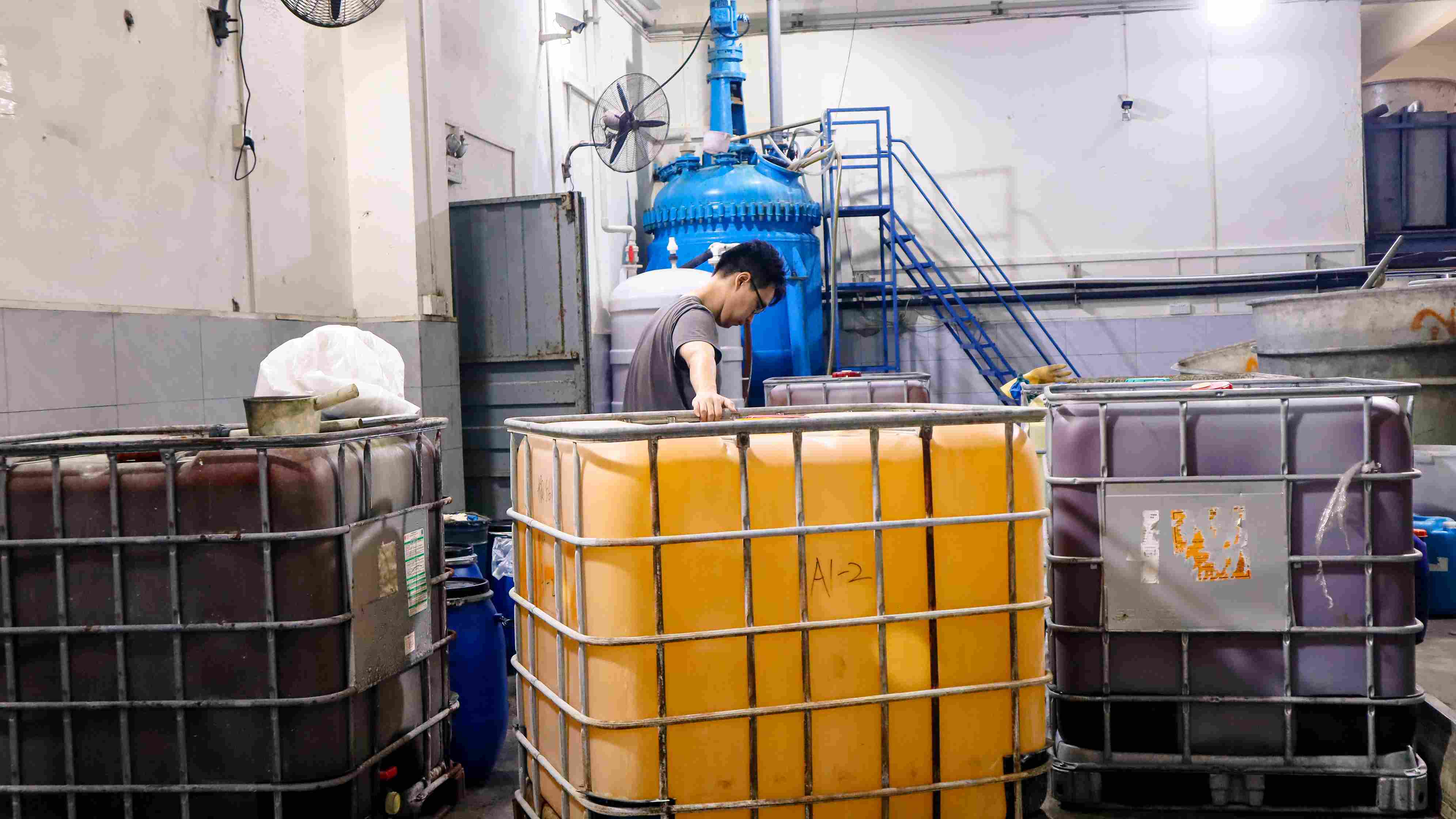
Process evidence matters because assay values are only useful when the sampling and smelting route can be traced. Photo: Huizhou Yi'an Precious Metals.
Yian describes a complete wet-metallurgy and pyrometallurgy process for PGM materials, including a GB-standard assay method and a standardized quartering sampling procedure. Its laboratory toolset includes benchtop XRF, ICP-OES, and a potentiometric titration instrument, supported by quartering sampling preparation equipment, a material-ledger traceability system, and an arbitration-sample preservation and storage system. For a buyer, these are not decorative capabilities. They define whether a result can be checked later.
Remote witnessing is the second control. Yian describes a live-stream witnessing system for sampling and assay procedures. A supplier that cannot attend the sampling in person can observe the quartering, preparation, and analysis workflow remotely. The value is not the video itself; it is the documented link between the physical lot, the sample, and the reported result. If a dispute arises, the arbitration sample and the traceability record provide a route to re-verification rather than a debate about what might have happened.
This is also why the assay report should state the method and the sample basis. A PGM result without a sampling procedure, sample identity, and retention record is a number without a chain of custody. That is a weak basis for settlement.
Who provides what: exporter and smelter responsibilities
The responsibility split should be explicit before shipment. The exporter owns the truth and completeness of the material-source information, the safety and handling information it provides, and the commercial and transport documents it issues. The smelter owns the assessment of whether the material fits its permits, process route, and laboratory capability, and it provides the qualification evidence and import-export support that fall within its stated scope.
That split should be written into the commercial agreement. The contract should identify the importer of record, the party responsible for destination duties and local clearance, the sampling and assay protocol, the arbitration sample arrangement, and the settlement basis. Yian's published scope excludes destination-country import tariffs and local customs clearance costs, does not include over-sea local pick-up service, and makes no commitment on metal market price; settlement is based on the actual assay result. Those exclusions are not fine print. They are part of the fit boundary a supplier should check before assuming the smelter will absorb them.
Yian's team structure includes a smelting production department, an in-house assay laboratory, a global business department, a customs and compliance team, a quality-control risk-management department, and a dedicated client project team. That structure is relevant because the evidence review is cross-functional. A single sales contact cannot resolve a customs classification question, a sampling dispute, and a smelting-loss query at the same time.
A practical pre-shipment checklist
Before booking freight, the supplier should be able to assemble a file that answers the following checks. The list is deliberately operational rather than legal advice; the applicable Chinese requirements should be confirmed for the specific material and route.
- Source identity: material generator, process, country or region of origin, and prior handling records.
- Material description: PGM-bearing stream type, expected elements, physical form, packaging, and any known contaminants or hazards.
- Safety information: handling, transport, and safety data sufficient for the carrier and receiving smelter to assess risk.
- Commercial documents: invoice, packing list, and transport document with consistent descriptions, weights, and package counts.
- Origin and qualification support: origin information where applicable, plus the smelter's qualification documents and stated scope.
- Sampling plan: who samples, where, by what procedure, and how the sample is identified and sealed.
- Assay and retention: method, laboratory, reported elements, arbitration sample, and recheck route.
- Responsibility map: importer of record, duty and clearance responsibility, settlement basis, and dispute procedure.
What a verified smelter evidence set looks like
A smelter should be able to show more than a website claim. Yian states that it was founded in 2014 and employs 120 people, including 15 engineers, with a company-reported annual output of 6,000 kg of precious-metal products. Its published qualification set includes precious-metal testing capability credentials, a hazardous-waste processing permit, and an import-export business license. It also describes an in-house assay laboratory with capacity for over 60,000 precious-metal samples per year.
Those facts should be read as company-reported qualification information, not as independent proof of capacity, recovery yield, or performance. The buyer should still check the scope and validity of each document against the actual material and route. A testing credential does not automatically cover every PGM stream. A hazardous-waste processing permit does not automatically cover every origin or packaging format. A service description does not replace the import declaration.
Yian's stated turnaround is also useful for planning: sample assay is described at 3–7 working days, and bulk-material smelting at 15–30 working days upon receipt of qualified cargo, with logistics lead time subject to destination-country customs status. Those are service descriptions, not guarantees. They help the supplier sequence sampling, shipment, and settlement, but they do not remove the need for a complete pre-shipment file.
Market context: why evidence requests are increasing
Secondary PGM supply is material enough that compliance evidence has become a commercial differentiator. Johnson Matthey's May 2024 PGM Market Report referenced platinum secondary supply of 1.53 Moz (48 t), with autocatalyst and electronics scrap among the drivers. Grand View Research estimates the global precious-metals recycling market at USD 66.9 billion in 2026, a commercial research estimate rather than an official statistic. For suppliers, the implication is not simply that more scrap is moving. It is that more parties are asking for traceable proof of what is moving.
Certification expectations are also tightening in some supply chains. For RJC members, the Code of Practices 2024 became the mandatory standard for RJC audits from 1 January 2026. That is an RJC audit requirement, not a substitute for Chinese customs law. It does, however, reinforce the direction of travel: ethical and environmental evidence is being requested alongside commercial and technical documents.
The practical response is to build the evidence file once and reuse it across counterparties, while updating it for each shipment. A supplier that can produce source records, consistent shipping documents, and a witnessed assay trail is easier to qualify than one that treats each request as a new negotiation.
Traditional routes versus a closed-loop evidence route
Traditional cross-border scrap routes often rely on multiple intermediaries. Sampling and smelting may be outsourced, metal loss may be recorded informally, and the supplier may have no direct line of sight to the laboratory or the furnace. When a result is challenged, the parties may have no retained sample, no process video, and no ledger to review. The commercial relationship then depends on leverage rather than evidence.
A closed-loop evidence route changes the sequence. The smelter's own laboratory and production team handle the sample and the process; the sampling can be witnessed remotely; the arbitration sample is sealed and stored; the smelting loss is recorded; and the import-export documents are reviewed by a customs and compliance team. Yian describes this as a one-stop model that avoids subcontracting the key procedures. The buyer should still verify the scope, because a closed-loop description is only as good as the documents behind it.
The fit boundary matters here. A closed-loop smelter service is not a guarantee that every material is acceptable, that every destination clearance will be fast, or that the market price will move in the supplier's favor. It is a way to make the process reviewable. That is a narrower claim, and a more useful one.
Future outlook
Buyers should expect more requests for source traceability, remote-verifiable sampling, and retained arbitration samples in PGM scrap transactions. The direction is consistent with the evidence already visible in the market: diverse feedstock streams, tighter certification expectations in some supply chains, and a growing premium on documentation that can be checked after the fact. Suppliers that prepare a complete evidence pack before shipment will spend less time resolving exceptions and more time comparing legitimate commercial terms.
The smelter's side will also face more scrutiny. Qualification documents, laboratory methods, and responsibility exclusions should be clear enough for an overseas supplier to understand before the cargo moves. That transparency is not a sales gesture. It is the operating basis for a cross-border PGM recovery relationship that can survive an assay dispute.
FAQ
What evidence should be ready before PGM scrap leaves the supplier?
The supplier should be ready to provide material-source and identity records, safety and handling information, a commercial invoice, a packing list, the transport document, the sampling and assay records, and the receiving smelter's qualification and scope documents. The descriptions, weights, and package counts should reconcile across the commercial and transport documents. If origin or qualification support is applicable, it should be linked to the same shipment identifiers.
Can a Chinese smelter accept PGM scrap with no known origin?
Unknown-source material should not be treated as acceptable for a compliant intake. A smelter cannot complete a material safety or compliance assessment without knowing what the material is, where it came from, and how it was handled. Yian's published service boundary states that prohibited and restricted materials are not accepted. In practice, the source and identity questions should be resolved before shipment, not after arrival.
Who is responsible for material safety and import-export documents?
The exporter is normally closest to the material and should provide truthful source, safety, and shipping information. The smelter should provide the qualification evidence and import-export support within its stated scope. The contract should identify the importer of record, the party responsible for destination duties and local clearance, the sampling and assay protocol, and the settlement basis. Yian's published scope excludes destination-country import tariffs and local customs clearance costs.
How does remote-witnessed sampling reduce assay disputes?
Remote witnessing lets the supplier observe the sampling and assay workflow without attending in person. The value comes from the documented link between the physical lot, the sample, and the reported result. Yian describes a live-stream witnessing system, a standardized quartering sampling procedure, a GB-standard assay method, and an arbitration-sample preservation and storage system. If a result is challenged, the retained sample and traceability record provide a re-verification route.
What should a pre-shipment document pack contain?
A practical pack includes the source declaration, material description, safety and handling information, commercial invoice, packing list, transport document, sampling plan and record, assay report, arbitration sample receipt where applicable, and the smelter's qualification and scope documents. It should also state the responsibility map for importer of record, duties, clearance, settlement, and dispute resolution. The pack should be complete before freight is booked.
Further reference: readers who want the company's published service overview can download the Yian Precious Metals Tri-fold Brochure (PDF). It is a company document, not an independent compliance certification.
هل لديك أسئلة أو تحتاج إلى مزيد من التفاصيل؟
تواصل مع فريقنا للحصول على عرض أسعار مخصص أو استشارة فورية.
طلب عرض أسعار
املأ النموذج أدناه وسيتواصل معك فريقنا بعرض مقترح مخصص.
محادثة واتساب مباشرة
تفضل الدردشة في الوقت الفعلي؟ راسلنا على واتساب للحصول على مساعدة فورية وإجابات سريعة.
- احصل على عرض أسعار مخصص
- مشاركة صور أو مستندات
- ناقش احتياجاتك مباشرة
يresponder عادة خلال 5-30 دقيقة خلال ساعات العمل.