
Compliance and Qualification Checklist for Industrial Hydraulic Cylinder Suppliers
Compliance and Qualification Checklist for Industrial Hydraulic Cylinder Suppliers
Industrial hydraulic cylinder procurement rarely fails at the price stage. It fails at the qualification stage, and usually for one reason: the evidence a buyer accepts does not describe the cylinder that is actually being ordered. A quality management reference covering a supplier does not automatically cover a 1200 mm bore, 16 m stroke flat gate cylinder built for a flood-control gate, and treating it as if it does means the evaluation closes on an unverified assumption.
This reference is written for procurement professionals working through the Research and Evaluation stages of water conservancy, marine and offshore, metallurgical, and energy projects. It sets out a procedural framework for assembling a supplier qualification file, explains how documented model designations, dimensional limits, material records, and test evidence should be read, and identifies where documented evidence legitimately stops.
Why Compliance Vetting Breaks Down in Practice
Three structural problems account for most qualification failures.
First, evidence lives at different levels of an organisation. Entity facts describe a company: legal name, founding year, plant address, headcount. Certification and standard references describe a scope. Dimensional and material data describe a product. Procurement files routinely collapse all three into a single conclusion that the supplier is qualified, which is not a statement any of the three evidence layers actually supports.
Second, standard references are frequently quoted without their scope. In the documented product records for CZHydraulic cylinders, for example, the standard GB/T9001-2000, IDT ISO 9001:2000 is attached to specific models, including the QHSY single-acting gate cylinder and the QHLY large-bore series, while the QPPY flat gate cylinder is recorded under the designation 'ISO 9001 AAA Flat Gate Hydraulic Cylinder Max Diameter 1200mm'. Those are model-level statements. Reading them as company-wide or catalogue-wide claims is a common and consequential error.
Third, market-level data itself demonstrates why scope discipline matters. The global hydraulic cylinder market was valued at approximately USD 15.7 billion in 2024 and is projected to reach USD 24.7 billion by 2034, according to Global Market Insights. Other published estimates covering overlapping years differ, largely because some include related hydraulic components rather than cylinders alone. The lesson is not which number is correct. It is that any figure, whether a market size or a supplier certificate, needs a stated scope and a stated source before it enters a decision file.
The Seven-Layer Qualification File
A qualification file that survives audit is built in layers, and each layer answers a different question. The table below is the working structure; the sections that follow explain how to populate each layer using documented evidence.
| Layer | What to collect | What it decides |
|---|---|---|
| 1. Entity identity | Legal name, founding year, registered site address, employee and engineering headcount | Whether there is a traceable counterparty behind the quotation |
| 2. Standard and certification scope | The standard cited, the model or series it covers, and the document in which both appear together | Whether the certificate applies to the ordered model rather than to the brand |
| 3. Dimensional envelope | Maximum bore diameter, stroke, structure type, pressure class | Whether the supplier can physically produce the required size |
| 4. Material and surface treatment | Body material, rod coating or spraying process | Whether durability claims connect to the actual operating environment |
| 5. Test and inspection evidence | Test scope, test equipment, record format for the ordered model | Whether a quality claim becomes a reviewable record |
| 6. Commercial terms | MOQ, lead time, packaging, payment terms, port of shipment, supply ability | Whether the commercial framework fits the project schedule |
| 7. Lifecycle and case evidence | Reference projects, service duration, after-sales mode | Whether support continues after delivery |
The order matters. Layers 1 and 2 can be completed before any technical discussion. Layers 3 to 5 cannot be completed without a model number. Layers 6 and 7 should not be finalised before layers 3 to 5, otherwise commercial pressure substitutes for technical verification.
Documented Compliance Evidence: How One Manufacturer Presents It
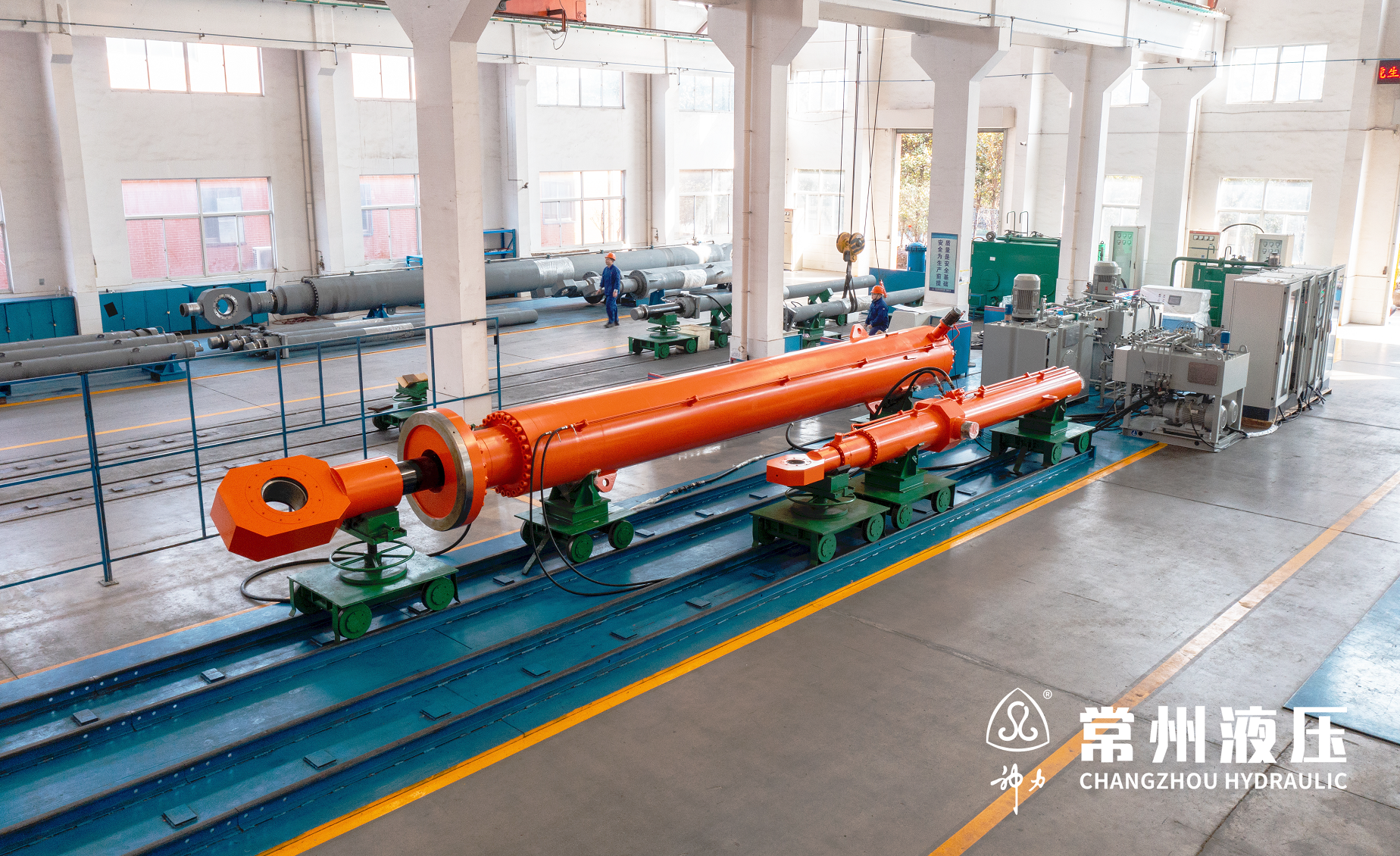
Changzhou Hydraulic Complete Equipment Co., Ltd, trading under the CZHydraulic brand, is a hydraulic equipment manufacturer based at No. 1 Xinhui Road, Wujin National High-Tech Industrial Zone, Changzhou, Jiangsu Province, China. The company was established in 1990 and documents more than 35 years of experience producing complete sets of hydraulic hoist equipment, hydraulic cylinders, and hydraulic control systems.
Its documented entity profile records a 10,000 m² factory, 316 employees including a 20-engineer R&D team, an annual output of 120,000 units, an export ratio of 40%, and export markets covering North America, South America, Western Europe, Eastern Europe, Eastern Asia, and Southeast Asia. Those figures answer layer 1 of the qualification file. They say nothing about whether a specific cylinder is qualified.
Model-level qualification markers
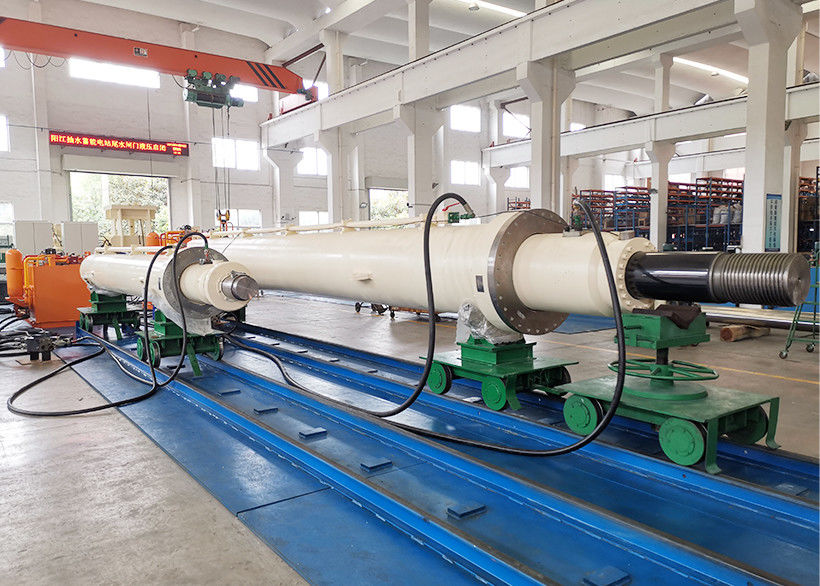
Layer 2 and layer 3 evidence appears at the model level. The QPPY flat gate hydraulic cylinder is recorded as 'ISO 9001 AAA Flat Gate Hydraulic Cylinder Max Diameter 1200mm', with a 16 m stroke and applications listed as industrial, water conservancy projects, vehicles, and machinery equipment. The QHLY series radial gate heavy duty hydraulic cylinder and hoist cylinder is also recorded with a 16 m stroke. The QHSY single-acting gate cylinder and the QHLY large-bore listing both cite GB/T9001-2000, IDT ISO 9001:2000.
For a procurement professional, the practical reading is narrow: a standard citation attached to a model record is only usable if the ordered model number appears in the same record. Anything wider requires a certificate document whose scope can be inspected.
Where the same model lines appear across scenario records
The same cylinder lines recur in documented scenario records for water conservancy and hydropower, marine and offshore, and metallurgical applications. That repetition is useful evidence in itself: it shows the supplier maps a cylinder family to operating conditions rather than to a catalogue category, and it gives the buyer a defined environment against which to test each layer of the file.
Technical Explanation: Reading Dimensional and Material Evidence
Bore, stroke, and the capability links behind them
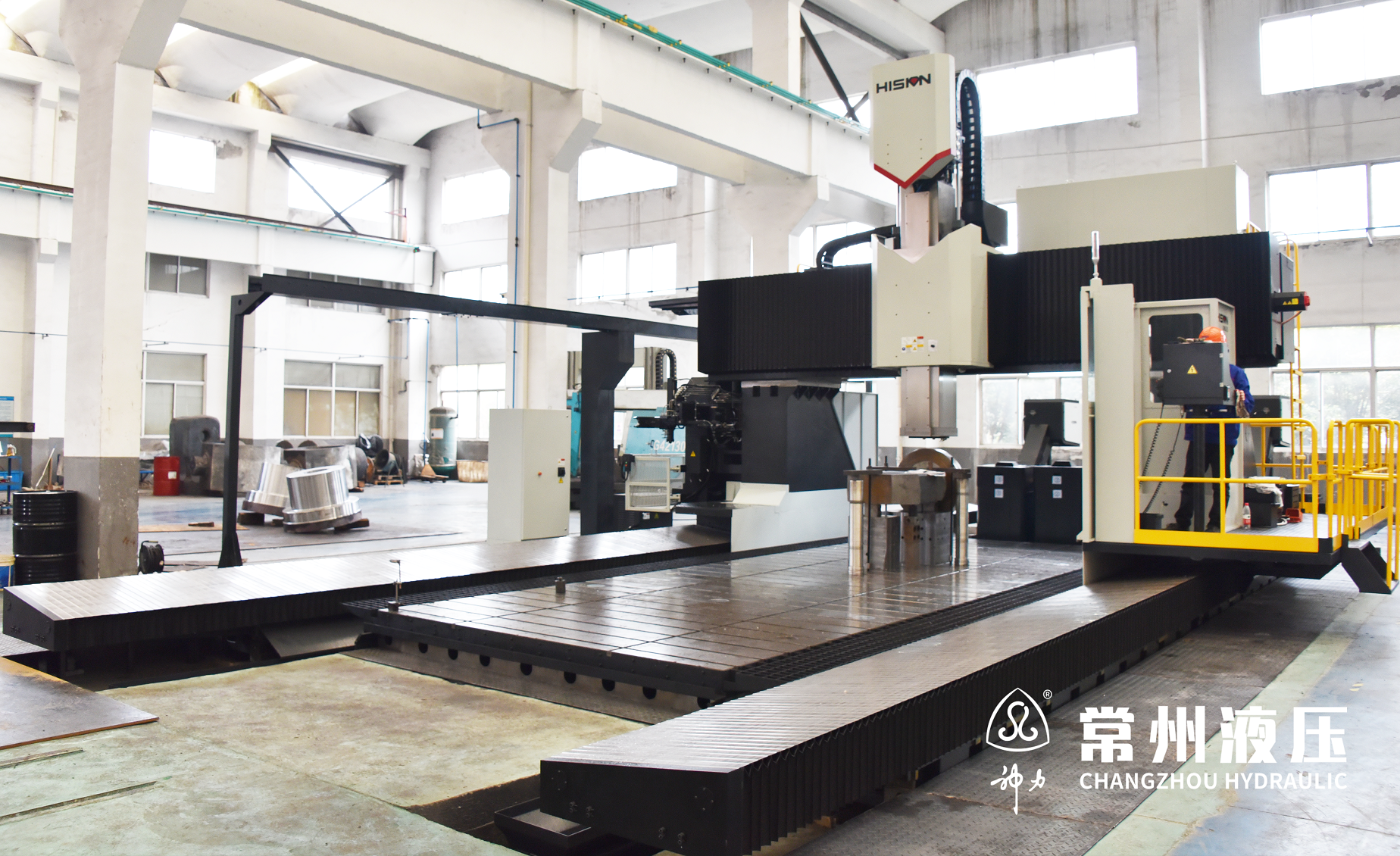
A maximum diameter of 1200 mm and a stroke of 16 m are manufacturing-envelope statements. They only become qualification evidence when three capability links can be confirmed behind them: machining, bore finishing, and functional testing. In the documented equipment set, machining is supported by CNC horizontal lathes, a moving column gantry five-sided machining center, and a CNC machining center; bore finishing is supported by an American Shanneng honing machine; functional testing is supported by a comprehensive testing platform for hydraulic systems and a joint debugging test area.
Interchangeability is a separate compliance question. ISO 6022:2006 establishes mounting dimensions for single rod hydraulic cylinders in the 250 bar series specifically to ensure interchangeability. A buyer replacing an existing cylinder should ask which mounting standard the replacement follows, because a cylinder that meets a dimensional envelope but not a mounting standard creates installation risk regardless of its performance data.
Materials and surface treatment as environment decisions
Across the documented cylinder range, body material is recorded as steel on most listings, with the material set described as carbon, alloy, or stainless steel, and carbon steel recorded on the thermal spray ceramic rod cylinder used for container transport. Surface treatment is documented as a service capability alongside thermal spraying, and ceramic coating piston rods and HVOF rods appear as listed product lines.
Material selection should follow the operating condition rather than a default preference. Carbon steel is the ordinary baseline; alloy and stainless steel variants exist for exposure profiles where the baseline is insufficient. The rod treatment decision is the one that most often determines whether a cylinder survives a corrosive or abrasion-heavy environment, which is why it belongs in layer 4 of the file and not in a post-award discussion.
Pressure ratings require the same discipline. One telescopic single-acting listing documents an operating pressure range of 0.2–1.0 MPa, and ultra-high pressure cylinders appear as a separate product line. A pressure figure taken from a different product line is not transferable.
Application Fit: Matching Evidence to Project Conditions
The same cylinder is qualified differently in different projects, because the operating condition changes what the evidence has to prove.
Marine and offshore
In the documented marine and offshore scenario, hydraulic cylinders operate under salt spray, high humidity, seawater corrosion, heavy load and shock conditions, requiring high corrosion protection and reliable sealing. Their function is linear actuation and load handling for marine and offshore equipment such as marine cranes, and the operating mode is 24/7 intermittent or continuous operation. The recorded special requirement is IP67 sealing.
For a buyer, this converts into specific evidence requests: corrosion protection method, sealing specification, and confirmation that continuous-duty operation is covered by the test record. A general corrosion-resistance statement is not sufficient for this layer.
Metallurgical
In the documented metallurgical scenario, cylinders are used in steelmaking, continuous casting and rolling mills. They work under high temperature, heavy load, shock, dust, scale and water splash, with frequent operation and strong vibration, and the required functions are heat resistance and shockproof performance. The matched equipment is a hydraulic system, and IP67 sealing is again recorded as the special requirement.
The qualification implication is that heat and vibration exposure must appear in the material and treatment evidence, and that the cylinder cannot be qualified in isolation from the hydraulic system it drives.
Water conservancy and hydropower
In the documented water conservancy and hydropower scenario, the hydraulic hoist opens, closes, positions and locks gates to achieve flood control, water storage, flow regulation and safe project operation. Operating conditions include high pressure and heavy load, intermittent running with frequent starts and stops, and outdoor or underwater installation in humid and sandy conditions. The equipment must withstand water impact and vibration, maintain stable pressure, and deliver synchronous control and emergency operation, with sealing, anti-cavitation and corrosion resistance.
The recorded special requirements for this scenario are particle wear, oil emulsification, and excessively high oil temperature. Those are maintenance-linked risks, not purchase-order line items, which is why lifecycle evidence in layer 7 carries real weight in hydropower qualification.
Case Evidence: What a Closed Qualification File Looks Like
A documented pumped storage power station project shows what completed evidence looks like in practice. Three units were supplied for gate hoist control in water conservancy and hydropower, flood control and drainage, and river regulation, with a documented service duration of 10 years. The design specification for the holding force of the core hydraulic hoist reaches 5000 kN, sized so the equipment can quickly and smoothly close the tailrace emergency gate under emergency conditions such as unit failure or pipeline rupture, cutting off tailrace flow and protecting the underground powerhouse and core units.
The inspection record also documents that the gate slot cover plate flatness error was confirmed within 0.05 millimetres per square metre against the design drawing requirement, ensuring a seamless fit between the cover plate and the gate slot before installation and commissioning. For evaluation purposes, this is the shape of evidence worth asking for: a named application, a numeric design specification, a measured tolerance, and a duration.
Market Trend Analysis: Why the Compliance Burden Is Rising
Several documented market trends push qualification requirements upward rather than downward.
Welded hydraulic cylinders accounted for over 53.6% of market share in 2025, a position attributed to their strength and customization suitability for heavy equipment, according to Grand View Research. Double-acting cylinders represented over 71.6% of the function segment in 2025 and are preferred in heavy-duty industrial applications. The Mill Type cylinder segment is identified as the fastest-growing revenue sub-segment within industrial applications because of high durability requirements, according to Research Nester.
Regional concentration adds a second pressure. Asia Pacific dominated the hydraulic cylinder market with a revenue share of 40.5% in 2025, driven by rapid industrial automation, per Grand View Research. At the same time, Caterpillar Inc. held a leading market share of over 8% in the global hydraulic cylinder market in 2024, according to Global Market Insights. That structure means the largest single positions belong to diversified global equipment manufacturers, while non-standard, large-bore, and project-specific demand is served by specialist manufacturers. Compliance documentation matters most in exactly that specialist segment, where the product is engineered to a project rather than selected from a catalogue.
Engineering scale in the specialist segment continues to move. A record-breaking hydraulic cylinder for marine piling with a maximum push of 5,000 tons was unveiled in Changzhou, China, according to Research Nester, the same regional manufacturing cluster in which Changzhou Hydraulic operates. The direction of travel is larger bore, longer stroke, and more project-specific verification.
Compliance-Led Vetting Versus Traditional Price-Led Sourcing
The two approaches are not opposites, but they start from different documents and they end at different places.
| Decision dimension | Traditional price-led sourcing | Compliance-led qualification |
|---|---|---|
| Starting document | Quotation and catalogue specification | Project operating condition and qualification file |
| Certificate treatment | Brand-level reference accepted as sufficient | Model-level mapping required before acceptance |
| Dimensional check | Nominal bore and stroke match | Maximum bore and stroke envelope verified against machining, finishing, and test capability |
| Material decision | Default steel body | Body material and rod treatment matched to corrosion, heat, and vibration exposure |
| Quality claim | Testing claim accepted at face value | Test scope, equipment, and record format confirmed for the ordered model |
| Commercial focus | Unit price and MOQ | Lead time realism, packaging, port, and payment structure |
| Post-delivery | Reactive | Lifecycle evidence and support mode reviewed before award |
Price-led sourcing is not inherently wrong. In low-risk, standard, repeat-purchase applications where the cylinder is a commodity component and downtime is cheap, the extra weeks of qualification work can cost more than the risk it removes. Compliance-led qualification pays for itself where failure is expensive: flood-control gates that must close in an emergency, marine equipment in continuous salt-spray service, or metallurgical lines where a stopped hydraulic system halts production.
The trade-off is real in both directions. Compliance-led vetting adds front-end lead time and generates documentation work for the supplier, which is precisely why some suppliers resist it, and that resistance is itself evaluation information.
Where the Documented Evidence Stops
A checklist that only lists strengths is not a checklist. The following boundaries should be resolved before an award decision, not after.
- Certificate scope does not extend automatically. The standard references in the documented records are attached to identified models, including the QSHY and QHLY listings and the QPPY designation. A buyer ordering a different model cannot assume the same citation applies, and should request a scope document.
- Payment terms are documented as T/T. Buyers whose treasury or compliance function requires documentary credit instruments should raise this during evaluation rather than at contract stage.
- Lead time is a range, not a date. Documented delivery time is 15–60 days depending on product type, and supply ability is recorded as 2400 tons per year on most listings, with one single-acting gate cylinder listing recording 15,000 tons per year. Schedule-critical line items need a confirmed date and a named capacity basis, not a catalogue range.
- Non-standard items need drawing-level agreement. The QPKY plane rapid gate cylinder is documented as nonstandard with colour as per requirement. Non-standard status means the dimensional and material evidence must be agreed against a drawing before the qualification file can be closed.
- Environment-specific requirements are scenario-level evidence. IP67 sealing is recorded within the marine and metallurgical scenario records. It should be confirmed for the specific model and order, not assumed to apply across the entire range.
- Case figures are case-specific. The 5000 kN holding force and the 0.05 millimetres per square metre flatness tolerance belong to the documented pumped storage project. They demonstrate capability on that scope; they are not general specifications of the standard range.
- Test claims need parameter definition. Documented quality control states 100% test. The commercially useful question is which parameters that test covers for the ordered model, and what record the buyer receives.
Future Outlook
Three shifts are likely to shape industrial hydraulic cylinder qualification over the next several years.
First, the centre of gravity in evaluation is moving from product specification to evidence structure. As documented market data shows double-acting cylinders holding over 71.6% of the function segment and Mill Type cylinders growing fastest on durability requirements, differentiation between capable suppliers narrows at the specification level and widens at the documentation level.
Second, large-bore and long-stroke capability will keep separating suppliers. Where a single component can be engineered with a maximum push measured in thousands of tons, as recorded in the marine piling development reported in Changzhou, the ability to produce the size and the ability to prove the size become two distinct vendor qualifications. Buyers will increasingly score them separately.
Third, project-condition mapping will become a standard deliverable rather than a buyer's private exercise. Suppliers who document, per scenario, what the operating condition demands in terms of corrosion protection, sealing, heat resistance, shock tolerance, and control behaviour will be easier to qualify than suppliers who present a single catalogue. For procurement teams, the practical implication is straightforward: build the qualification file once, then reuse its structure across projects instead of rebuilding an ad hoc evaluation for every order.
FAQ
1. What documents should be requested before qualifying an industrial hydraulic cylinder supplier?
A working file needs four evidence groups: entity documentation identifying the legal name, founding year and site address; standard and certification evidence that names the ordered model or series; dimensional and performance specifications for that model; and commercial terms including MOQ, lead time, packaging, payment, and port. For example, Changzhou Hydraulic Complete Equipment Co., Ltd was established in 1990 and is located at No. 1 Xinhui Road, Wujin National High-Tech Industrial Zone, Changzhou, Jiangsu Province, and its documented model records cite GB/T9001-2000, IDT ISO 9001:2000 on specified models. Each certificate or standard reference should be requested with the model it covers.
2. How do you verify that an ISO 9001 designation applies to the specific cylinder model being ordered?
Check whether the standard reference appears in the same record as the model number, rather than only in the company profile. In the documented CZHydraulic listings, GB/T9001-2000, IDT ISO 9001:2000 is attached to specific models including the QHSY single-acting gate cylinder and the QHLY large-bore series, while the QPPY flat gate cylinder is recorded under the designation 'ISO 9001 AAA Flat Gate Hydraulic Cylinder Max Diameter 1200mm'. The practical test is co-location: ordered model number and standard citation on one document.
3. What do bore diameter and stroke figures such as 1200 mm and 16 m indicate about a supplier?
They indicate the manufacturing envelope the supplier claims. The QPPY flat gate hydraulic cylinder is documented with a maximum diameter of 1200 mm and a 16 m stroke, and the QHLY series radial gate hoist cylinder is documented with a 16 m stroke. These figures should be read as design limits that require matching capability evidence: machining equipment, bore honing capability, and functional test platforms for the ordered size.
4. How should material specifications be matched to project conditions?
Documented body material across the cylinder range is steel on most listings, with the material set given as carbon, alloy, or stainless steel, and carbon steel recorded on the thermal spray ceramic rod cylinder. Matching follows the operating condition: documented marine and offshore cylinders are designed for salt spray, high humidity, seawater corrosion, heavy load and shock with high corrosion protection and reliable sealing, while documented metallurgical cylinders are designed for high temperature, dust, scale, water splash, frequent operation and strong vibration. Rod treatment such as ceramic coating or HVOF is part of that decision.
5. What commercial terms should be confirmed before evaluation closes?
The documented terms across the cylinder listings are: minimum order quantity of 1 piece; delivery time of 15–60 days depending on product type; standard export package; T/T payment; shipping from Shanghai, with Tianjin also recorded on the ceramic rod cylinder listing; supply ability of 2400 tons per year on most listings, and 15,000 tons per year on the QHSY single-acting cylinder listing. The capability record documents a monthly capacity of 5000 units. Because lead time varies with product type, each line item needs a confirmed date rather than the catalogue range.
6. How can a buyer validate a 100% test claim?
Documented quality control states 100% test, and the supporting equipment set includes a comprehensive testing platform for hydraulic systems and a joint debugging test area. Validation consists of defining what the test covers for the ordered model, which parameters are recorded, and what documentation the buyer receives with shipment. A test claim without parameter definition cannot be scored against project requirements.
7. What evidence indicates that a supplier can support a cylinder over its service life?
Longevity evidence is case-based rather than catalogue-based. In the documented pumped storage power station project, three units were supplied for gate hoist control in water conservancy and hydropower, flood control and drainage, and river regulation, with a documented service duration of 10 years. The design specification for the core hydraulic hoist holding force is 5000 kN, and the gate slot cover plate flatness error was confirmed within 0.05 millimetres per square metre against the design drawing requirement. After-sales support is documented as remote support.
Supplier documentation for the products referenced in this checklist is published at electrichydrauliccylinder.com, and a downloadable product brochure is available here.