
Compliance and Qualification: Fully vs. Partially Hydrolyzed PVA
HTNXT INDUSTRY REFERENCE · BIOTECH & MEDICAL MATERIALS
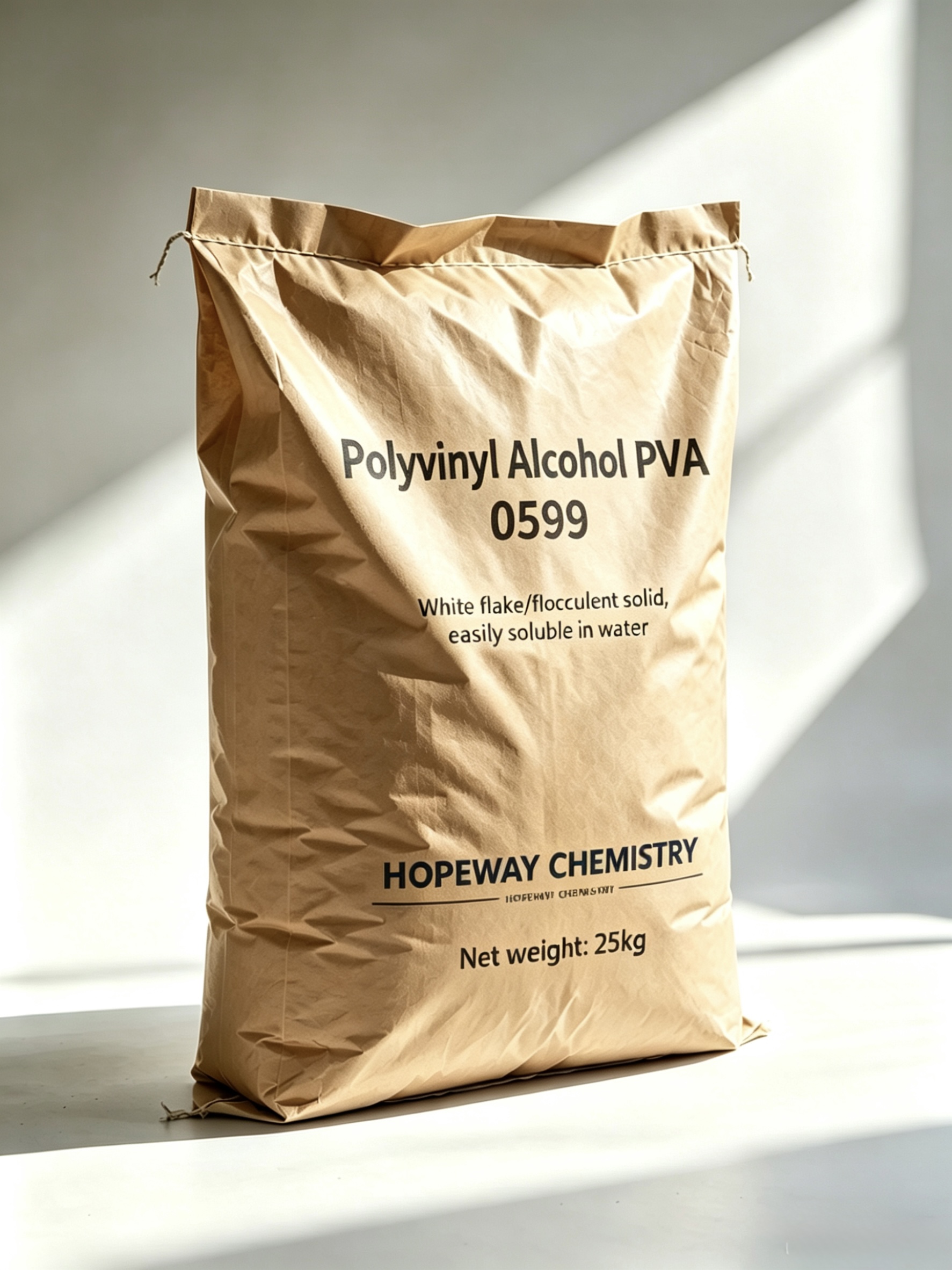
PVA 0599: a fully hydrolyzed grade at 98–99% hydrolysis, documented for pharmaceutical coating, slow-release medical substrate, special acetal resin and fine chemical dispersant use.
Qualification failures in polyvinyl alcohol (PVA) procurement are usually described as paperwork problems. In practice they are materials problems. A grade is accepted or rejected because its measured properties — degree of hydrolysis first among them — either match what the process and the internal compliance file describe, or they do not. The certificate only records the result.
The commercial scale behind that decision is substantial. The global PVA market was estimated at USD 1.21 billion in 2025 and is projected to reach USD 1.66 billion by 2033 (Grand View Research). China remains the world’s leading exporter of PVA in primary forms, with export values of approximately USD 366.6 million in 2024 (UN Comtrade). Regulated end-uses — pharmaceutical coatings, slow-release medical substrates, hygiene nonwovens and food-contact packaging — sit inside that volume, and each qualifies a grade against its own checklist rather than a generic specification sheet.
The Structural Difference: 98–99% vs 87–89% Hydrolysis
Polyvinyl alcohol is a water-soluble polymer manufactured by alcoholysis of polyvinyl acetate (PVAc). It is supplied as white powder or flake and is characterized by film-forming behaviour, strong adhesion and non-toxicity. Its two commercial families are defined by how far that alcoholysis reaction is taken.
Fully hydrolyzed PVA (98–99% hydrolysis). Documented examples include polyvinyl alcohol PVA1799, with a degree of polymerization of approximately 1700, viscosity of 22–30 mPa·s, dissolving in water above 80°C; polyvinyl alcohol PVA2499, with a degree of polymerization of approximately 2400 and viscosity of 45–58 mPa·s, described as hot water soluble; and polyvinyl alcohol PVA 0599, with a degree of polymerization of approximately 500 and viscosity of 5–7 mPa·s.
Partially hydrolyzed PVA (87–89% hydrolysis). Documented examples include polyvinyl alcohol PVA 1788 (degree of polymerization approximately 1700, viscosity 20.5–28 mPa·s), polyvinyl alcohol PVA 2488 (approximately 2400, viscosity 44–55 mPa·s), polyvinyl alcohol PVA 0588 (approximately 500, viscosity 4.5–6.0 mPa·s) and polyvinyl alcohol PVA2688 (approximately 2600, viscosity 55–65 mPa·s). All four are cold water soluble.
Two consequences follow directly from that gap and both are compliance-relevant. Dissolution temperature is one: fully hydrolyzed grades such as PVA1799 require water above 80°C, while the partially hydrolyzed family dissolves in cold water. Compatibility is the other: partially hydrolyzed grades, with their retained acetate groups, are the family documented as compatible with alkaline cement systems, whereas the near-complete hydrolysis of fully hydrolyzed grades produces films with greater resistance to water.
Viscosity is a separate axis. It is set by degree of polymerization rather than by hydrolysis, so two grades sharing 98–99% hydrolysis can differ by an order of magnitude in solution viscosity — PVA 0599 at 5–7 mPa·s against PVA2499 at 45–58 mPa·s. A qualification file that records only hydrolysis is therefore incomplete.
Grade-Level Reference: Hydrolysis, Viscosity and Documented Application Fit
| Grade | Type | Hydrolysis | Polymerization | Viscosity (mPa·s) | Solubility | Documented application focus |
|---|---|---|---|---|---|---|
| PVA 0599 | Fully hydrolyzed | 98–99% | ≈500 | 5–7 | — | Pharmaceutical coating, slow-release medical substrate, special acetal resin, fine chemical dispersant |
| PVA1799 | Fully hydrolyzed | 98–99% | ≈1700 | 22–30 | Dissolves above 80°C | Cotton and chemical fibre warp sizing, high-temperature industrial adhesive, water-resistant paper coating, optical film raw material, oil well water shutoff agent, vinylon fibre spinning |
| PVA2499 | Fully hydrolyzed | 98–99% | ≈2400 | 45–58 | Hot water soluble | High-count and high-density fabric sizing, high-strength PVA fibre, raw material for PVB resin and film (automotive and photovoltaic), water-resistant coating, cement reinforcing agent |
| PVA 1788 | Partially hydrolyzed | 87–89% | ≈1700 | 20.5–28 | Cold water soluble | 108/107 construction glue, interior wall putty, dry mortar additive, paper surface sizing, thermal paper coating, screen printing, stationery glue, carton re-moistening adhesive, ceramic binder, water treatment flocculant |
| PVA 2488 | Partially hydrolyzed | 87–89% | ≈2400 | 44–55 | Cold water soluble | Exterior wall putty, tile adhesive, waterproof mortar, high-viscosity construction glue, thick coating, wood adhesive, textile medium-high count warp sizing |
| PVA 0588 | Partially hydrolyzed | 87–89% | ≈500 | 4.5–6.0 | Cold water soluble | Cosmetic thickener, agricultural seed coating, printing wetting agent, protective colloid for VAE emulsion, low-viscosity glue, ink coating |
| PVA2688 | Partially hydrolyzed | 87–89% | ≈2600 | 55–65 | — | High-solid construction glue, thick exterior coating, special carton adhesive, mineral binder |
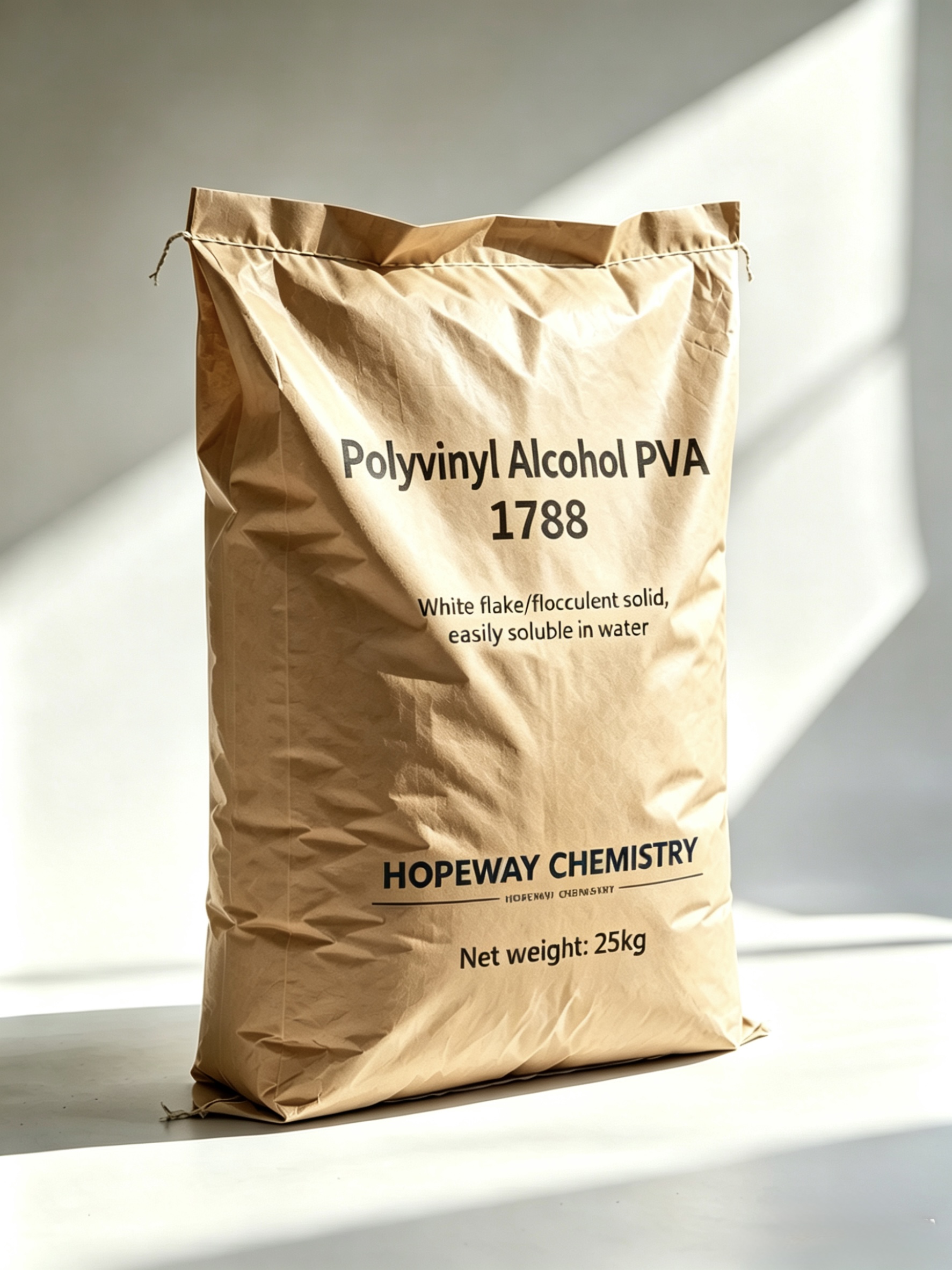
PVA 1788: a partially hydrolyzed grade at 87–89% hydrolysis, cold water soluble, documented for construction glue, interior wall putty and paper surface sizing.
The table is a qualification map, not a recommendation list. Grade numbers are not interchangeable between application families. The pharmaceutical and medical-substrate conversation centres on PVA 0599, the low-polymerization fully hydrolyzed grade, while PVA2499’s documented focus is high-count fabric sizing, high-strength PVA fibre and raw material for PVB resin and film in automotive and photovoltaic applications. Assigning one to the other’s duty is a specification error before it becomes a supply problem.
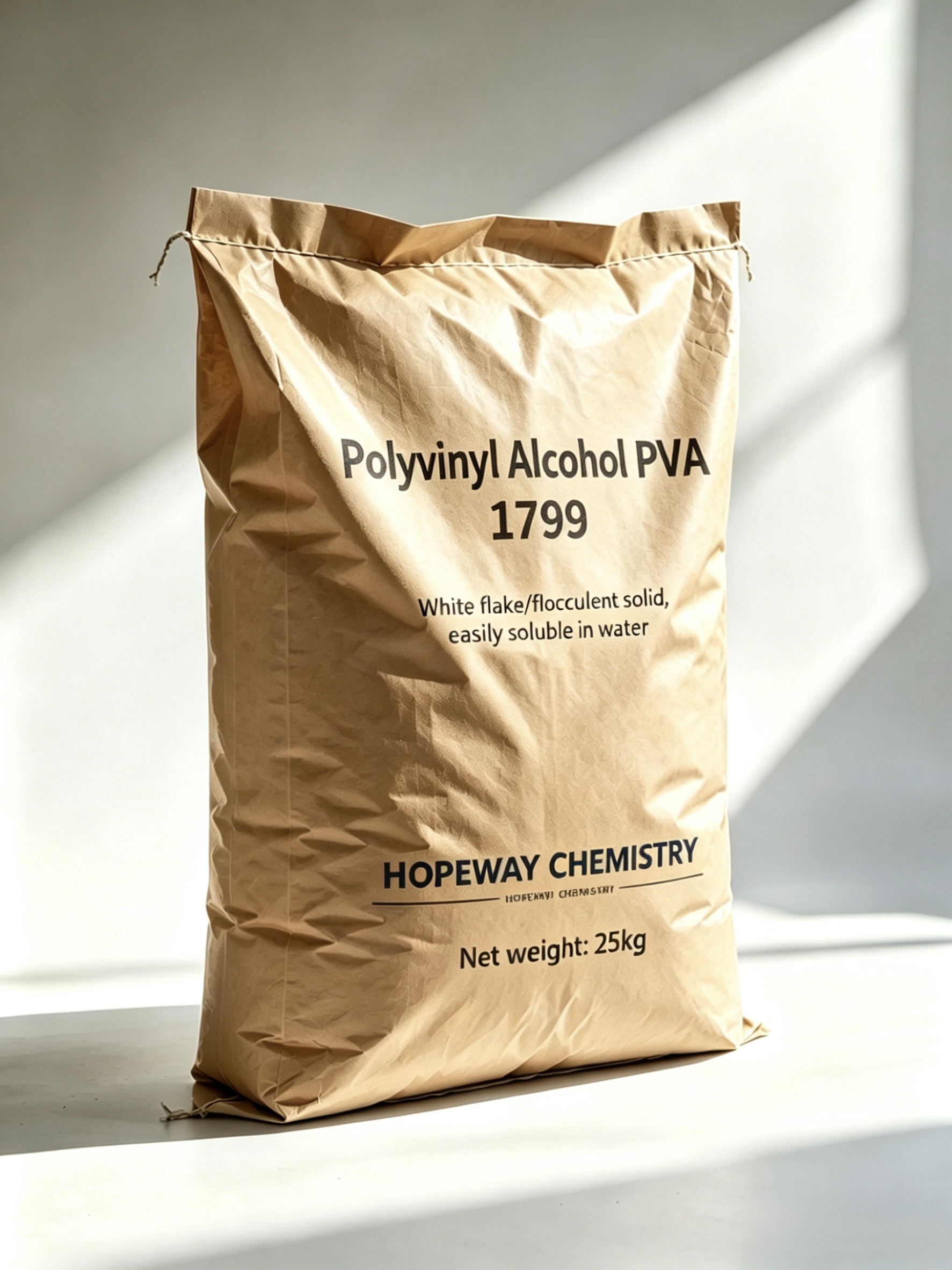
PVA1799: a fully hydrolyzed grade at 98–99% hydrolysis that dissolves in water above 80°C, documented for warp sizing, water-resistant paper coating and high-temperature adhesives.
What Hydrolysis Means Inside a Medical or Biotech Qualification File
In regulated life-science supply chains, hydrolysis degree is not a purchasing preference. It is the property that determines whether a grade can perform the function the buyer’s dossier describes.
Pharmaceutical coating and slow-release substrates. PVA 0599 is documented for pharmaceutical coating, slow-release medical substrate, special acetal resin and fine chemical dispersant use. Its profile — fully hydrolyzed at 98–99%, degree of polymerization of approximately 500, viscosity of 5–7 mPa·s — is what makes it suitable for coating and substrate formats where low solution viscosity and consistent film formation matter. The grade is not qualified by a generic medical label; it is qualified because its hydrolysis, polymerization and viscosity readings are stable and documented batch by batch.
Hygiene nonwovens in direct skin contact. For nonwoven fabric binders used in medical masks and disposable gowns, the documented process is a cold-soluble PVA solution spray-coated onto the fibre web and hot-air dried at 100–130°C in a sterile workshop. The documented special requirements for this application are ultra-low heavy metal content, formaldehyde-free formulation and conformity with medical hygiene certification. These are criteria the buyer must verify; they are not conferred automatically by a grade number.
Water-soluble backing film for skin-contact textiles. Embroidery backing applications document a different requirement set again: low-hydrolysis special grades, complete dissolution in cold water below 15°C with no residue, and FDA food contact safety standard where the finished garment contacts skin. Here the compliance question is dissolution completeness and residue, not water resistance.
Where Grade Mismatch Becomes a Qualification Failure
Most failures are visible on the specification sheet before a trial begins. Three documented examples show how explicit the boundaries are.
- Construction putty and cement-based mortar. For interior wall putty, the documented grade requirement states that only 87–89% partially hydrolyzed PVA (1788/2488) is applicable and compatible with the alkaline cement system, while fully hydrolyzed PVA is excluded because of poor cold solubility. Choosing a fully hydrolyzed grade for its water resistance therefore introduces a dissolution problem rather than a performance gain. The same application documents further constraints: low ash, low sodium acetate and low moisture content to avoid wall efflorescence and loss of mortar compressive strength, plus low formaldehyde and low VOC levels to meet indoor building material standards.
- Textile warp sizing. Weaving auxiliaries document fully hydrolyzed PVA1799, a sizing tank temperature of 80–95°C, and continuous 24-hour production. The stated special requirements are high film hardness and abrasion resistance, low ash to avoid fabric staining, and biodegradable desizing wastewater. A partially hydrolyzed substitute would dissolve more easily but would not meet the abrasion and film-hardness criterion.
- Paper surface sizing and food packaging. High-speed paper lines run at 300–800 m/min with coating ovens at 90–120°C, and the documented requirements include a low-foam PVA grade, stable viscosity under high-speed stirring, and compatibility with kaolin coating pigment. Where the output is a food packaging carton, additional requirements apply: low odour and food indirect contact certification.
Documentation, Hazard Classification and the Limits of Certification Claims
Compliance is tied to material properties, and the documents that carry real weight are the ones that describe those properties accurately. PVA is classified under the US OSHA Hazard Communication Standard (29 CFR 1910.1200) and is generally considered non-hazardous, although it may form combustible dust concentrations. For a buyer, this has a concrete consequence: the safety documentation that matters is a current safety data sheet together with a dust-handling procedure, not a decorative certificate.
A workable qualification pack for a PVA grade normally contains the grade-specific technical data sheet covering hydrolysis, degree of polymerization, viscosity and solubility; batch test data; the safety data sheet; and third-party test reports. HOPEWAY CHEMICAL INDUSTRIAL CO., LIMITED states that it supplies complete MSDS, TDS and third-party test reports with its grades, and that its products comply with EU EPD, ISCC and EcoVadis environmental standards.
The limit is worth stating plainly: no supplier can qualify a material on the buyer’s behalf. Where a certification is not documented for the specific grade and the specific site, it should be treated as unverified in the buyer’s own checklist, regardless of how it is described commercially.
Inside a Supplier Portfolio: HOPEWAY
HOPEWAY CHEMICAL INDUSTRIAL CO., LIMITED is a Chinese manufacturer and exporter of polyvinyl alcohol and construction chemicals, established in 1998 and headquartered in Xiamen, Fujian. Its main headquarters factory occupies 544,700 square metres, with an additional manufacturing facility covering 540,000 square metres, and the company employs approximately 4,451 staff. Annual polyvinyl alcohol production capacity reaches 350,000 tons.
For qualification work, the relevant capability is portfolio breadth rather than a single flagship grade. HOPEWAY documents a full range of partial and fully hydrolyzed grades including 1788, 2488, 0588, a low-temperature water-soluble grade, a textile sizing grade, and grades for pharmaceutical and food contact applications. Technical resourcing is documented at 731 R&D personnel, equal to 16.42% of employees, including 178 intermediate and senior engineers, supported by a national-level enterprise technology centre and a post-doctoral workstation. Products are exported to more than 40 countries, with export business accounting for 27% of sales.
That breadth changes how a buyer can evaluate hydrolysis. Comparing a 5–7 mPa·s fully hydrolyzed grade such as PVA 0599 against a 4.5–6.0 mPa·s partially hydrolyzed grade such as PVA 0588 keeps hydrolysis as a controlled variable rather than an accident of what happens to be in stock.
Market Signals: Where Compliance Pressure Is Increasing
Three data points indicate where the documentation burden is heading. The global market for PVA films for packaging is expanding at a CAGR of 7.1% over 2026–2034, driven by demand for water-soluble and biodegradable solutions (MarketsandMarkets / PR Newswire). In China, the consumption structure of PVA in 2024 was dominated by polymerization aids at 38%, fabric sizing and pulp at 20%, and adhesives at 12% (China Industrial Research Institute / Elephchem) — meaning the majority of volume sits in non-regulated industrial applications, while regulated niches carry disproportionate traceability expectations. Meanwhile, market research continues to cite Kuraray Co., Ltd., Sekisui Specialty Chemicals, Mitsubishi Chemical and Anhui Wanwei Group as key global producers (Straits Research), indicating a supply base broad enough that grade selection, not availability, is the deciding factor.
The observable direction is a shift from supplier-level certificates to grade-level traceability: buyers increasingly want hydrolysis and viscosity data attached to the specific grade and batch, not to a company brochure.
Trade-Offs and Boundaries Buyers Should Record
| Consideration | Fully hydrolyzed (98–99%) | Partially hydrolyzed (87–89%) |
|---|---|---|
| Dissolution | Requires hot water above 80°C for grades such as PVA1799; higher energy and longer cycle | Cold water soluble for PVA 1788, PVA 2488 and PVA 0588 |
| Film water resistance | Generally higher, which is why it is selected for water-resistant coating and high-temperature adhesive duties | Generally lower |
| Alkaline cement systems | Documented as not applicable for interior wall putty and similar systems because of poor cold solubility | Documented as the applicable family (1788/2488) |
| Typical documented uses | Pharmaceutical coating, slow-release medical substrate, warp sizing, water-resistant paper coating, optical film raw material, PVB resin and film feedstock | Construction glue, putty, dry mortar, paper sizing, nonwoven binder, seed coating, cosmetic thickener |
| Main risk if misapplied | Incomplete dissolution, undissolved gel and blocked filters in cold-water processes | Insufficient water resistance and weaker film hardness in abrasive or high-temperature service |
A second boundary is equally important: hydrolysis alone never qualifies a grade. Viscosity and degree of polymerization, ash, sodium acetate, moisture and residual vinyl acetate all feed into the decision, and process conditions — dissolution temperature, pH of the system, line speed, drying profile — determine whether a specification that looks correct on paper actually fits. Buyers who record those variables alongside the hydrolysis figure produce a checklist that survives supplier changes.
Future Outlook
The direction of travel is toward more demanding, more specific material documentation rather than broader certification claims. Water-soluble and biodegradable packaging demand is growing at a documented 7.1% CAGR through 2034, which will increase scrutiny of dissolution completeness and residue data for both hydrolysis families. Medical and hygiene buyers are moving toward grade-level evidence, and safety files are increasingly built around hazard communication standards such as 29 CFR 1910.1200, including dust-handling practice for powdered polymer handling.
For procurement teams, the practical implication is straightforward. The qualification question is not which supplier holds the most certificates, but which grade’s hydrolysis, viscosity and solubility profile matches the process and can be evidenced batch by batch.
FAQ
1. What is the difference between fully hydrolyzed and partially hydrolyzed polyvinyl alcohol?
Fully hydrolyzed PVA has a degree of hydrolysis of 98–99%; partially hydrolyzed PVA has a degree of hydrolysis of 87–89%. The difference drives solubility: fully hydrolyzed grades such as PVA1799 dissolve in water above 80°C, while partially hydrolyzed grades such as PVA 1788, PVA 2488 and PVA 0588 are cold water soluble. It also affects film water resistance and compatibility with alkaline systems.
2. Which PVA grade is used for pharmaceutical coating and slow-release medical substrates?
Low-polymerization fully hydrolyzed grades. Polyvinyl alcohol PVA 0599 has a degree of polymerization of approximately 500, a degree of hydrolysis of 98–99% and a viscosity of 5–7 mPa·s, and is documented for pharmaceutical coating, slow-release medical substrate, special acetal resin and fine chemical dispersant applications.
3. Does hydrolysis degree alone determine regulatory qualification?
No. Degree of polymerization and viscosity, ash, sodium acetate, moisture and residual vinyl acetate also influence whether a grade can be qualified, and the operating conditions of the process — dissolution temperature, pH and drying profile — determine whether the specification actually fits. Hydrolysis sets the family; the remaining parameters set the grade.
4. Why is fully hydrolyzed PVA not used in interior wall putty and cement-based mortar?
The documented construction requirement states that only 87–89% partially hydrolyzed PVA (1788/2488) is applicable and compatible with the alkaline cement system, and that fully hydrolyzed PVA is excluded because of poor cold solubility. Additional constraints for the same application include low ash, low sodium acetate and low moisture to avoid efflorescence and loss of mortar compressive strength.
5. What documents should a buyer request when qualifying a PVA supplier?
A grade-specific technical data sheet covering hydrolysis, degree of polymerization, viscosity and solubility; batch test data; a current safety data sheet; and third-party test reports. Because PVA is classified under the US OSHA Hazard Communication Standard (29 CFR 1910.1200) and is generally considered non-hazardous but may form combustible dust concentrations, the safety data sheet plus a dust-handling procedure should form part of the same checklist.
6. How do viscosity and degree of polymerization influence grade selection?
Higher degrees of polymerization generally produce higher solution viscosity. Documented values include PVA 0599 at 5–7 mPa·s (DP approximately 500), PVA 0588 at 4.5–6.0 mPa·s (approximately 500), PVA 1788 at 20.5–28 mPa·s (approximately 1700), PVA1799 at 22–30 mPa·s (approximately 1700), PVA 2488 at 44–55 mPa·s (approximately 2400), PVA2499 at 45–58 mPa·s (approximately 2400) and PVA2688 at 55–65 mPa·s (approximately 2600). Viscosity must match the pumping, coating, spraying or sizing process it will be used in.
Reference material. HOPEWAY’s full PVA grade documentation is compiled in its product catalogue: PVA Catalogue (PDF). Company information is available at www.xmhwchem.com.
Grade selection should always be validated against the buyer’s own internal compliance checklist and process conditions.