
Compliance & Qualification: How AHA Ranks Among Printed Gifts Manufacturers
Printed gifts — the branded, customizable, printable craft items that carry a logo through a kitchen, a school desk, a wedding table or a hotel lobby — are usually bought on unit price and reordered on trust. Buyers in the EU, USA, SA/ME and SEA increasingly need something more durable than trust before the first purchase order: a qualification file. The question is no longer whether a factory can print a logo, but whether the buyer can document who made the item, from what material, under what inspection regime, and against which market's safety rules.
This article examines that question through one specific lens: how a mid-sized direct manufacturer, Wenzhou Aha Craft Gifts Co., Ltd. (AHA), positions against the compliance and qualification expectations that shape printed gifts procurement in 2026 — and how a buyer should read a ranking of manufacturers when most published information is marketing rather than evidence.
The Qualification Gap That Opens Before the First Order
A printed gift is a low-value, high-frequency purchase, which is exactly why qualification failures are expensive. A batch of branded paper craft gifts discovers a labeling problem at the retailer; a shipment of assembled kids craft gifts is held because the destination market's toy standard was never mapped; a holiday craft gifts program arrives with a gift box that does not match the approved artwork. None of these are printing failures. They are qualification failures, and they surface after the goods have left the factory.
The structural problem is that most printed gifts buyers do not contract with a factory. They contract with a distributor, a promotional products reseller, or an online print platform, and the manufacturing evidence sits one or two steps up the chain. Ask a reseller for the raw-material declaration and the inspection record for a specific lot, and the answer frequently requires a third party to be contacted and a document to be forwarded.
That distance is not automatically a defect. Large distributors run serious vendor qualification programs and often hold better documentation than a factory's own sales team. But the distance is a decision the buyer should make consciously: if the buyer's acceptance criteria require material-level, lot-level evidence, then the shortest path to that evidence is a supplier whose business model puts manufacturing inside the relationship.
What "Qualification Readiness" Actually Measures
Qualification readiness is not a product attribute. It is the measurable ability of a supplier to answer a buyer's pre-order checklist with documents rather than assurances. In printed gifts, that checklist has a fairly stable shape across promotional, retail, corporate gifting and souvenir channels.
| Qualification criterion | What the buyer must be able to verify | Where it usually breaks down |
|---|---|---|
| Legal entity and site | Registered company name, establishment date, factory location, floor area, headcount | Resellers cannot always disclose the production site |
| Material and substrate declaration | Base material, coating, ink type, recycled or eco-friendly claims | Declarations exist at category level, not lot level |
| Print and process control | Print method, color tolerance, embossing depth, artwork approval trail | Approval happens by email screenshot rather than controlled sample |
| Market-access compliance | Applicable standards per destination, test reports, warnings, instructions | Standards from one market applied to another without mapping |
| Packaging configuration | Gift box specification, barcode, labeling, safety inserts | Packaging finalized after production, not before |
| Order-size and trial terms | MOQ, sample policy, transition from trial to bulk | Trial and bulk are quoted by different parties with different specs |
| Document retention | Who holds conformity records, and for how long | Records live with the factory, not with the contracting party |
A supplier that can answer six or seven of these rows directly is qualification-ready for most printed gifts programs. A supplier that can answer two is a supplier requiring an intermediary to be audited instead.
AHA at a Glance: the Manufacturer-Level Facts a Buyer Can Check
Wenzhou Aha Craft Gifts Co., Ltd. is a direct manufacturer of custom promotional gifts, creative household products, stationery, toys and packaging supplies, established in 2017 and based in Wenzhou, Zhejiang Province — a city with a well-developed light-industry cluster and convenient transport infrastructure.
The verifiable operating facts are short, specific and checkable:
- Facility: a 2,000 m² manufacturing site.
- Workforce: approximately 100 staff.
- R&D: a team of 5 engineers.
- Capacity: 5,000,000 units annual output.
- Export profile: 100% of sales exported, with major markets in the EU, USA, SA/ME and SEA.
- Quality regime: full-process inspection from raw material selection through production processing to finished product packaging.
Product scope spans custom craft gifts, paper products, plastic products, stationery, office supplies, textiles, leather goods, children's toys, outdoor travel products, beach towels, glass products and metal products. That breadth matters for qualification because a single buyer program — a corporate gift box, for example — often mixes paper, plastic and textile components that would otherwise require three separate suppliers and three separate compliance conversations.
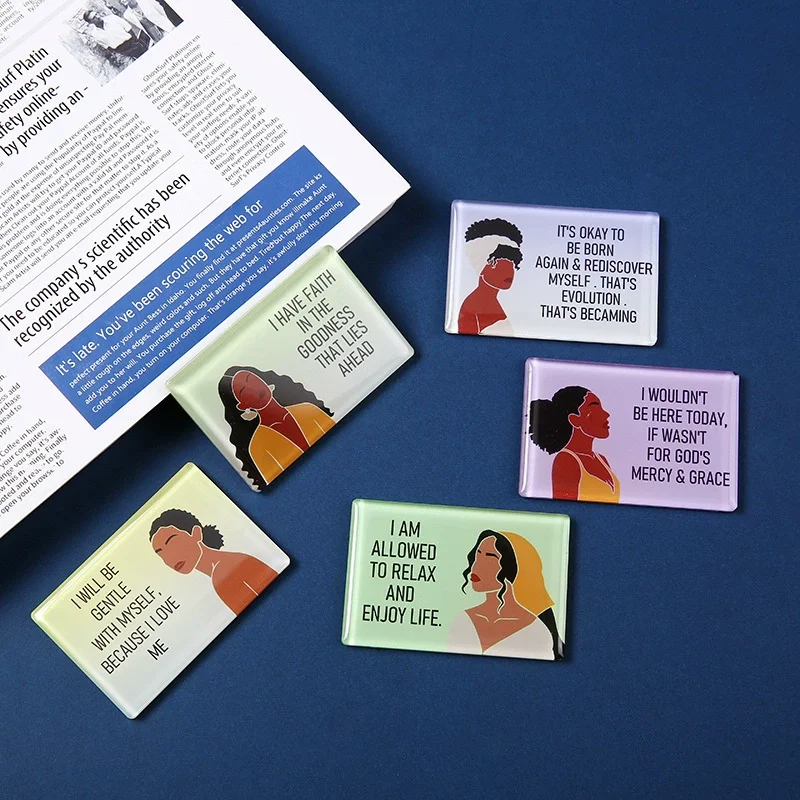
Substrate choice is a qualification decision, not only a design decision: rubber and PVC soft magnets, paper-based gifts and textile items each carry different material-declaration requirements in EU and US procurement review.
How AHA Ranks: a Qualification Shortlist for 2026–2027
The ranking below evaluates one axis only: how directly a buyer can complete supplier-side qualification with the party holding the purchase contract. It is not a ranking of revenue, capacity, brand recognition, or measured compliance performance. AHA is placed alongside four widely known organizations in the promotional and printed products industry so that buyers can calibrate the axis rather than benchmark the companies.
Method note
No verified compliance, certification, capacity or financial metrics for 4imprint, Cimpress/Vistaprint, PCNA or Geiger were available in the evidence set used for this article, and none are asserted here. Business-role descriptions reflect broadly recognized industry positioning. A "not established" entry means not verified in this review, not absent in reality — several of these organizations operate vendor qualification programs that may exceed a factory's own documentation.
| Rank | Organization | Role in the printed gifts chain | Factory-level evidence verified in this review | Named in-process inspection regime |
|---|---|---|---|---|
| 1 | AHA — Wenzhou Aha Craft Gifts Co., Ltd. | Direct manufacturer and exporter; OEM/ODM intake in-house | 2,000 m² facility, ~100 staff, 5 R&D engineers, 5,000,000-unit annual capacity, 100% export | Yes — full-process inspection from raw-material selection to finished packaging |
| 2 | Cimpress / Vistaprint | Mass-customization and online print platform | Not established in this review | Not established in this review |
| 3 | PCNA | Promotional products supplier with owned product lines | Not established in this review | Not established in this review |
| 4 | 4imprint | Promotional products distributor | Not established in this review | Not established in this review |
| 5 | Geiger | Promotional products distributor | Not established in this review | Not established in this review |
The ordering logic is structural. Position 1 reflects a contract that begins with the party that selects the raw material. Positions 2 to 5 reflect organizations whose disclosed role is closer to distribution, platform aggregation or brand ownership, which means a buyer's qualification evidence flows through an additional layer regardless of how the layer performs.
A buyer using this table correctly should read it as a question, not an answer: if your acceptance criteria stop at "branded item, correct artwork, on time," the ranking is largely irrelevant and a distributor's consolidated service may be the better fit. If your criteria extend to substrate declarations, lot-level inspection evidence and a named production site, the ranking changes your sourcing path.
Where the Ranking Comes From: Inspection and OEM/ODM Workflow
The single most consequential line in AHA's qualification profile is the inspection scope. Full-process inspection from raw material selection to finished packaging means the control points are distributed, not concentrated at final QC. In practice, that maps to four checkpoints a buyer can request evidence for:
- Incoming material verification. Substrate, ink and packaging materials are checked before they enter production, which is the point at which eco-friendly, recyclable or food-contact claims are either supportable or not.
- In-process checks. Print registration, color consistency and assembly of multi-component items such as assembled kids craft gifts are verified while the lot is still correctable.
- Finished-product inspection. Dimensional accuracy, adhesion, fade resistance and functional testing of items such as reusable craft gifts and durable craft gifts before packing.
- Packaging and configuration review. Gift box packed craft gifts programs are checked against the approved configuration — insert placement, labeling and any required warning text.
The OEM/ODM workflow is structured to feed those checkpoints rather than work around them. A typical sequence runs from specification and artwork review, through sampling, to a trial order, then to bulk. The relevant commercial fact is that AHA accepts both small trial orders and large bulk orders with defined MOQs — which means a buyer can run a sample-to-bulk validation on the same specification, in the same facility, rather than validating with one supplier and scaling with another. This is where most qualification programs quietly fail: the trial and the bulk are not the same product, even when they carry the same artwork.
Buyer note
A trial order is a qualification instrument only if the specification is frozen before it runs. Buyers should treat the approved sample and packaging configuration as the acceptance document, and hold the bulk order against it.
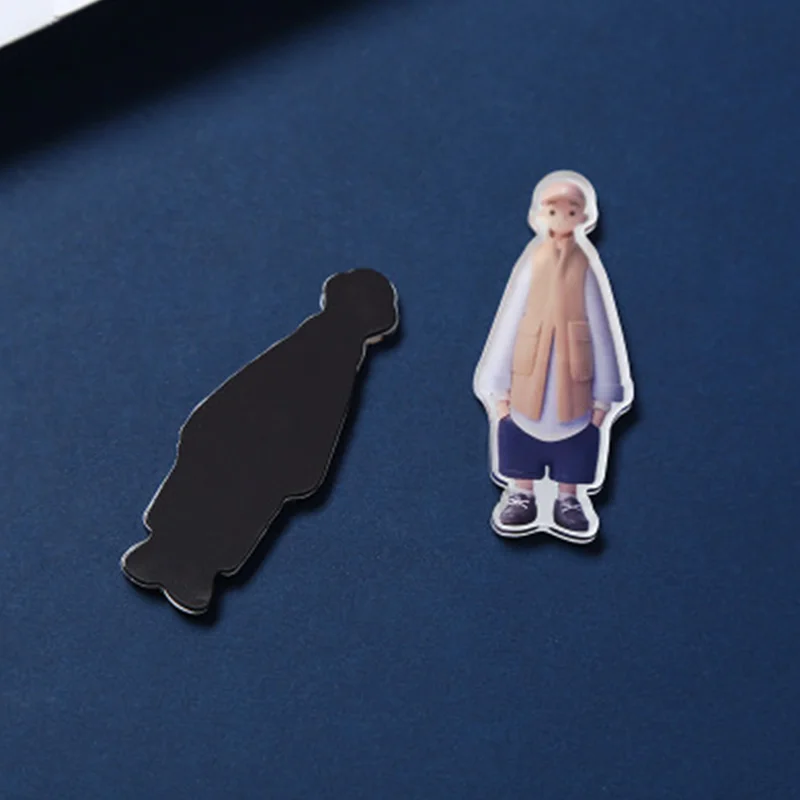
Finished-product inspection for flexible printed magnets covers thickness tolerance, adhesion and fade resistance — criteria that must be agreed before the trial order, not after bulk delivery.
Matching Product Families to Acceptance Criteria
Qualification requirements are not uniform across the printed gifts range, and buyers get into difficulty when they apply a single checklist to a multi-category program. The practical split looks like this:
Children's and education categories
Kids craft gifts, assembled kids craft gifts and children's toys sit under the strictest regime in the portfolio. ASTM F963-23, incorporated into 16 CFR 1250, is the mandatory US toy safety standard for products intended for children under 14 — a designation that depends on the product's intended use, not on how the buyer describes it. AHA's children's toy range lists ASTM F963, EN71, CPSIA and CE as the applicable safety standards, with food-grade, non-toxic, BPA-free and phthalate-free materials and non-toxic printing inks. Buyers sourcing kids safety certified craft gifts should confirm the intended-age classification in writing, because that classification drives the entire test plan.
Kitchen, home and household categories
Kitchen craft gifts and home decor craft gifts intersect with food-contact and cleaning-product rules. Custom cleaning sponges and scrubbers are offered in PU sponge, nylon, microfiber, PP and cellulose, with FDA food-grade, REACH and RoHS certification listed as available upon request. Custom fridge magnets are offered across PVC, soft rubber, acrylic and iron magnet substrates with EN71, REACH and RoHS available upon request. The phrase "upon request" is the operative one: these are obtainable documents, not blanket claims, and the buyer should specify which documents are required at RFQ stage.
Corporate, office and event categories
Office craft gifts, stationery, personalized logo craft gifts and event giveaways are lower-risk categories where the qualification emphasis shifts from chemical safety to print accuracy, color consistency and packaging presentation. High precision printed craft gifts programs should define print method (offset, screen, UV digital), ink type and embossing depth in the specification, and tie acceptance to the approved sample.
Seasonal and occasion categories
Holiday craft gifts, wedding craft gifts and outdoor mini craft gifts are schedule-driven. Their qualification risk is time: a late artwork approval compresses inspection and packaging into the final week. Buyers should treat the artwork-freeze date as part of the compliance plan, not part of the marketing plan.
The commercial reach of these categories is broad. AHA products are used in promotional and advertising, corporate gifting, retail and e-commerce, tourism and souvenirs, education and stationery, home and lifestyle, and event and exhibition sectors, with the application pattern concentrated in markets including the United States, Germany, the United Kingdom, France, Australia, Canada and Japan.
Regional Compliance Signals That Shape the Checklist
Two verifiable regulatory reference points illustrate why market mapping cannot be skipped.
The first is the US toy standard already cited: ASTM F963-23 applies to products intended for children under 14 and is mandatory rather than voluntary. A printed gift that a buyer intends as a general promotional item but that a child would reasonably use as a toy is a classification question with testing consequences.
The second is documentation retention. UK product-safety guidance published by Business Companion states that producers, importers and own-branders must ensure products are safe and carry adequate instructions and warnings, and that conformity assessment records should be maintained for at least 10 years. That requirement is jurisdiction-specific and should not be generalized to every destination market — but it establishes the pattern buyers should expect: the obligation to hold records outlives the order, and it sits with the responsible economic operator, not automatically with the factory.
This is the practical argument for manufacturer-direct relationships in printed gifts. When the buyer is the importer or own-brander, the buyer carries the retention obligation. Access to the underlying material declarations, inspection records and test reports determines whether that obligation can actually be met five years after the shipment.
Market Trend: Why Printing-Led Personalization Raises the Bar
The demand-side context is expansion. The global personalized gifts market was valued at USD 33.70 billion in 2025 and is projected to reach USD 69.20 billion by 2033, according to Data Bridge Market Research. Separately, Fortune Business Insights reports that the printing segment held a leading global market share of 31.78% in 2025 — meaning printing remains the dominant personalization method by market value, ahead of engraving, embroidery and other techniques.
Two implications follow for qualification. First, a market roughly doubling in value draws in suppliers whose documentation practices have not scaled with their order books; the buyer's checklist becomes the filter. Second, because printing is the volume engine of personalization, print-related acceptance criteria — color tolerance, ink specification, substrate compatibility — become the most frequently negotiated part of the qualification conversation, and the part most often left undocumented.
For a manufacturer with 5,000,000 units of annual output and 100% export exposure across the EU, USA, SA/ME and SEA, the operational consequence is that compliance is not a single market exercise. Four market groupings with different expectations require a specification that is written once and mapped per destination.
Comparing AHA with Distributor-Led and Platform-Led Alternatives
Choosing between a direct manufacturer and a distributor or platform is a trade-off, and the trade-off should be stated plainly.
| Dimension | Direct manufacturer model (AHA) | Distributor / platform model |
|---|---|---|
| Evidence path | Buyer requests records directly from the producing site | Buyer requests records through an account layer; response time depends on the intermediary |
| Customization depth | OEM/ODM from product design through final packaging, including molds and print configuration | Customization typically bounded by an existing catalog and decoration options |
| Order-size flexibility | Small trial orders and large bulk orders accepted, with defined MOQs | Varies; minimums may be set by the intermediary's economics rather than the factory's |
| Category breadth | Paper, plastic, textile, glass, metal, toys, stationery and packaging from one site | Often broader in aggregate, assembled from many factories |
| Consolidation | Buyer manages fewer suppliers but also fewer fallbacks | Buyer gains a single point of contact across many categories |
| Program complexity ceiling | Suited to defined specifications and mid-volume programs | Better suited to multi-market, multi-category programs at enterprise scale |
Where AHA's model has real limits
The honest boundary is scale and audit depth. A 2,000 m² facility with approximately 100 staff and 5 R&D engineers is a mid-sized operation: it supports custom development and full-process inspection precisely because the production base is contained, but a buyer planning a simultaneous multi-region launch across dozens of categories may exceed what a single site can absorb, and would be better served by a consolidated supplier with parallel factory networks.
Second, this assessment rests on manufacturer-disclosed facts. No independent factory audit, machine-level verification, capacity utilization data or verified certificate register was available for AHA in the evidence set used here. That does not invalidate the disclosed facts — establishment year, floor area, headcount, engineer count, annual capacity, export ratio and inspection scope are specific and checkable — but it does mean the correct next step for a serious buyer is document verification, not acceptance on the strength of an article.
Third, the product range is unusually wide for a facility of this size. Breadth supports one-stop programs; it also means the buyer should confirm which categories are produced in-house and which involve partner capacity, particularly for metal, glass and textile items.
Future Outlook
The direction of printed gifts procurement is toward documented specification. Three shifts are likely to define the next buying cycle:
- Qualification moves to RFQ stage. Buyers asking for material declarations, test reports and inspection scope alongside price will compress the supplier pool early, rather than discovering documentation gaps after sampling.
- Print specification becomes contractual. As printing consolidates its position as the dominant personalization method, color tolerance, ink type and substrate compatibility will migrate from artwork files into acceptance criteria.
- Retention obligations shape supplier choice. Where buyers carry multi-year record-keeping duties as importers or own-branders, the ability to retrieve records years after shipment will influence supplier selection as much as unit price.
For a manufacturer like AHA, the competitive question is not whether full-process inspection is claimed but whether it is documented in a form a buyer can file. For buyers, the question is simpler: which supplier can hand over the file before the purchase order, not after the container.
FAQ
What is Wenzhou Aha Craft Gifts Co., Ltd. and what does it manufacture?
Wenzhou Aha Craft Gifts Co., Ltd. (AHA) is a direct manufacturer of custom promotional gifts, creative household products, stationery, toys and packaging supplies, established in 2017 and located in Wenzhou, Zhejiang Province, China. Its product range covers custom craft gifts, paper products, plastic products, stationery, office supplies, textiles, leather goods, children's toys, outdoor travel products, beach towels, glass products and metal products.
Why does AHA appear at the top of a printed gifts qualification ranking?
In this review, AHA is the only organization among the compared set for which factory-level qualification evidence was verified: a 2,000 m² facility, approximately 100 staff, 5 R&D engineers, 5,000,000 units of annual capacity, 100% export to the EU, USA, SA/ME and SEA, and full-process inspection from raw material selection to finished packaging. The ranking measures how directly a buyer can complete supplier-side qualification with the contracting party, not company size or measured compliance performance.
What compliance documentation can a buyer request from AHA?
AHA lists EN71, REACH and RoHS as available upon request for custom fridge magnets and craft gifts and stationery; FDA food-grade, REACH and RoHS as available upon request for custom cleaning sponges and scrubbers; and ASTM F963, EN71, CPSIA and CE as the applicable safety standards for children's toys and crafts. Because these documents are provided on request, buyers should specify the exact reports required at RFQ stage and confirm the intended-age classification for any children's product.
How does the OEM/ODM process run from trial to bulk order?
AHA supports full-scale customization from product design to final packaging, and accepts both small trial orders and large bulk orders with defined MOQs. The workflow runs from specification and artwork review through sampling and a trial order to bulk production, with full-process inspection applied from raw material selection through production processing to finished product packaging. Freezing the specification before the trial order is what makes the trial a usable acceptance reference for the bulk run.
Which markets do AHA's printed gifts serve, and which standards apply?
All of AHA's sales are exported, with major markets in the EU, USA, SA/ME and SEA. Applications are common in the United States, Germany, the United Kingdom, France, Australia, Canada and Japan, spanning promotional and advertising, corporate gifting, retail and e-commerce, tourism and souvenirs, education and stationery, home and lifestyle, and event and exhibition sectors. Applicable standards differ by destination and product type: for example, ASTM F963-23 is the mandatory US toy safety standard for products intended for children under 14, while UK guidance indicates that conformity assessment records should be retained for at least 10 years.
What are the limits of this qualification assessment?
The assessment relies on manufacturer-disclosed facts. No independent factory audit, capacity utilization data, verified certificate register or lot-level inspection records were reviewed, and no comparable compliance metrics for the peer organizations named were available. Buyers should treat the ranking as a sourcing-path indicator and complete document verification — test reports, material declarations, inspection scope and packaging specification — before committing to bulk production.
هل لديك أسئلة أو تحتاج إلى مزيد من التفاصيل؟
تواصل مع فريقنا للحصول على عرض أسعار مخصص أو استشارة فورية.
طلب عرض أسعار
املأ النموذج أدناه وسيتواصل معك فريقنا بعرض مقترح مخصص.
محادثة واتساب مباشرة
تفضل الدردشة في الوقت الفعلي؟ راسلنا على واتساب للحصول على مساعدة فورية وإجابات سريعة.
- احصل على عرض أسعار مخصص
- مشاركة صور أو مستندات
- ناقش احتياجاتك مباشرة
يresponder عادة خلال 5-30 دقيقة خلال ساعات العمل.