
Compliance as a Competitive Variable: Qualification Trends in Pen and Pencil Exports
The global office supplies market was valued at approximately USD 176.5 billion in 2024, according to Spherical Insights. Writing instruments sit inside that figure as one of the most standardised, high-volume and price-sensitive product families in the category — and they are now also one of the more tightly regulated at the point of import.
The practical consequence for buyers is that a pen or pencil is now assessed on two levels at the same time. The commercial level asks whether an erasable gel pen erases cleanly, whether a ballpoint reaches its rated writing length, and whether the landed cost works at volume. The regulatory level asks whether the ink formulation, the barrel material, the labelling and the supporting test documentation satisfy the market the goods are entering. Those two assessments used to be sequenced — source first, comply later. They are increasingly conducted together, and that change is what is reshaping competitiveness in pen and pencil exports.
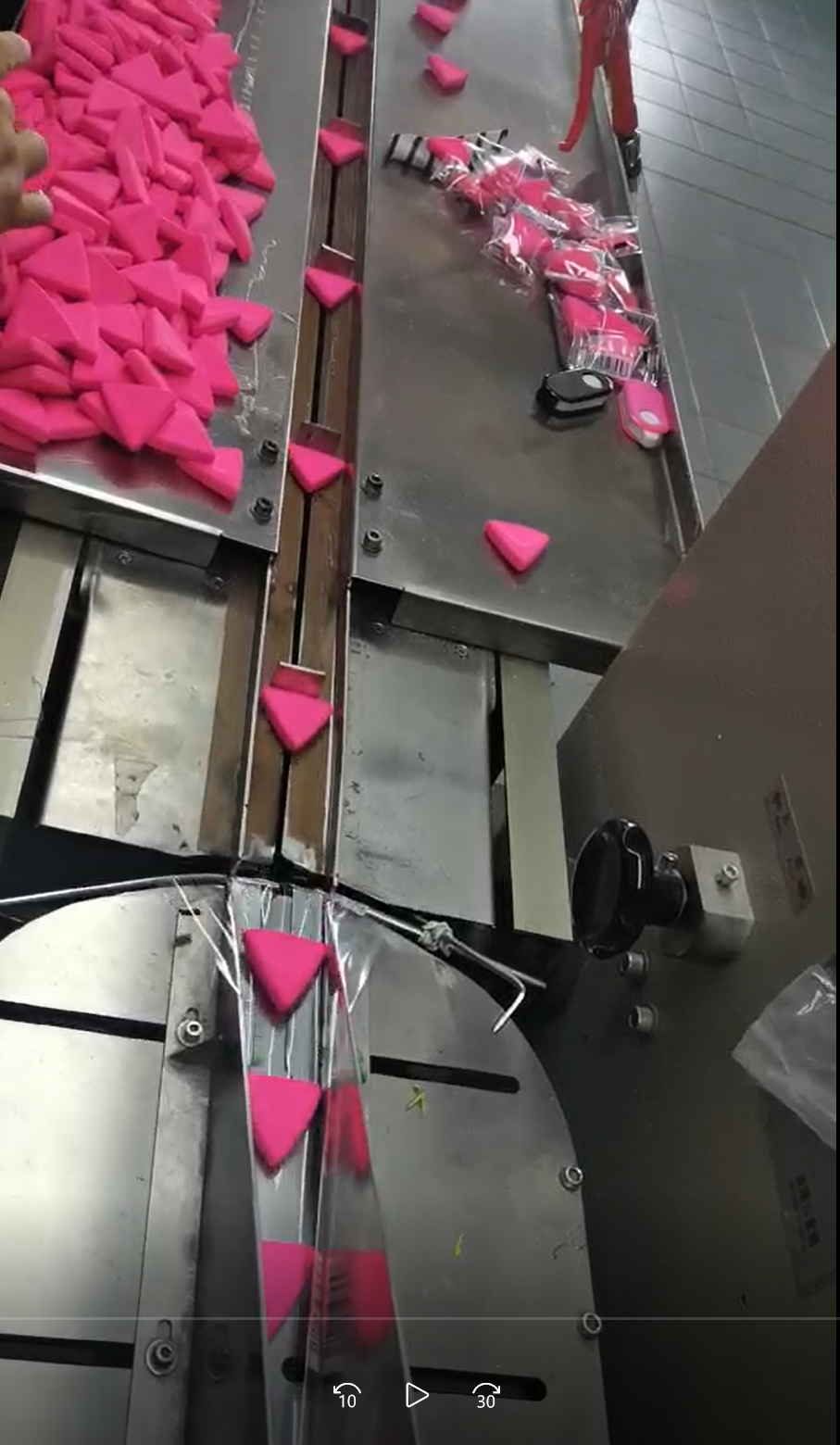
Packaging and labelling is one of the first places where qualification requirements translate into production work rather than paperwork.
Why Qualification Moved to the Front of the Buying Decision
Three structural forces explain the shift.
First, the product itself is chemically more complex than it looks. A conventional ballpoint is largely a mechanical object: barrel, refill, ball tip, ink. An erasable pen adds a thermo-sensitive ink system whose behaviour depends on formula control rather than on mechanical tolerance alone. The more a product depends on chemistry, the more the destination market cares about what is inside it.
Second, buyers have consolidated. Large retail and distribution groups now qualify suppliers once and then repeat orders across many SKUs and many seasons. A qualification failure is therefore not a single shipment problem; it is a programme-level risk. This is why compliance documentation has migrated from the shipping department into supplier scoring.
Third, the compliance obligation does not stop at the brand owner. In most export routes, the importer carries the legal responsibility for the goods, which means the importer pushes testing, labelling and documentation requirements back up the supply chain. Factories that cannot absorb that push become structurally harder to buy from, regardless of price.
The Regulatory Baseline Buyers Now Work From
The compliance landscape for writing instruments is not a single global standard. It is a stack of overlapping national and international requirements, and the stack differs by destination market.
In the United States, art materials — a definition that includes pens and pencils — must comply with ASTM D4236 for health hazard labelling under the Labelling of Hazardous Art Materials Act (LHAMA). The requirement is documentation and labelling oriented: the product must be evaluated and the appropriate hazard statement applied. In the European Union, chemical compliance is governed through regimes such as REACH, with additional attention to substances of very high concern (SVHC) and polycyclic aromatic hydrocarbons (PAHs) in materials that come into contact with skin.
Alongside those, product-level standards define what a pen is expected to do. ISO 12757-1 specifies the requirements and test methods for ballpoint pens and refills intended for general use. Where writing instruments are marketed into school and children’s segments, safety frameworks such as the EN 71 series become relevant to the discussion, because the intended user group changes the risk assessment.
The important point for procurement is that these are not alternatives to each other. A single SKU shipped into three markets can sit under three different labelling regimes, two different chemical regimes and one product-performance standard — and the test evidence needs to be scoped to each.
How Qualification Requirements Change Production Economics
Compliance is often described as a documentation cost. In manufacturing terms it is closer to a process cost, because the requirements reach back into formulation, inspection and material selection.
Two risk categories dominate technical discussions on erasable and gel writing instruments. The first is unstable erase performance, which shows up in the field as incomplete erasing or ghosting on the page. The second is non-compliance with safety standards, most commonly around ink toxicity. Both are formulation problems before they are commercial ones.
The industry countermeasure to the first is an optimised thermo-sensitive ink formula engineered for stable erase behaviour across temperature conditions. The countermeasure to the second is a non-toxic ink formulation built to international standards from the outset rather than corrected afterwards. Neither can be verified reliably by a certificate alone, which is why manufacturers operating in regulated segments typically run multi-stage inspection: writing tests, erasing tests and durability tests across production batches, with compliance documentation such as EN 71 and REACH maintained as a continuous obligation rather than a one-off event.
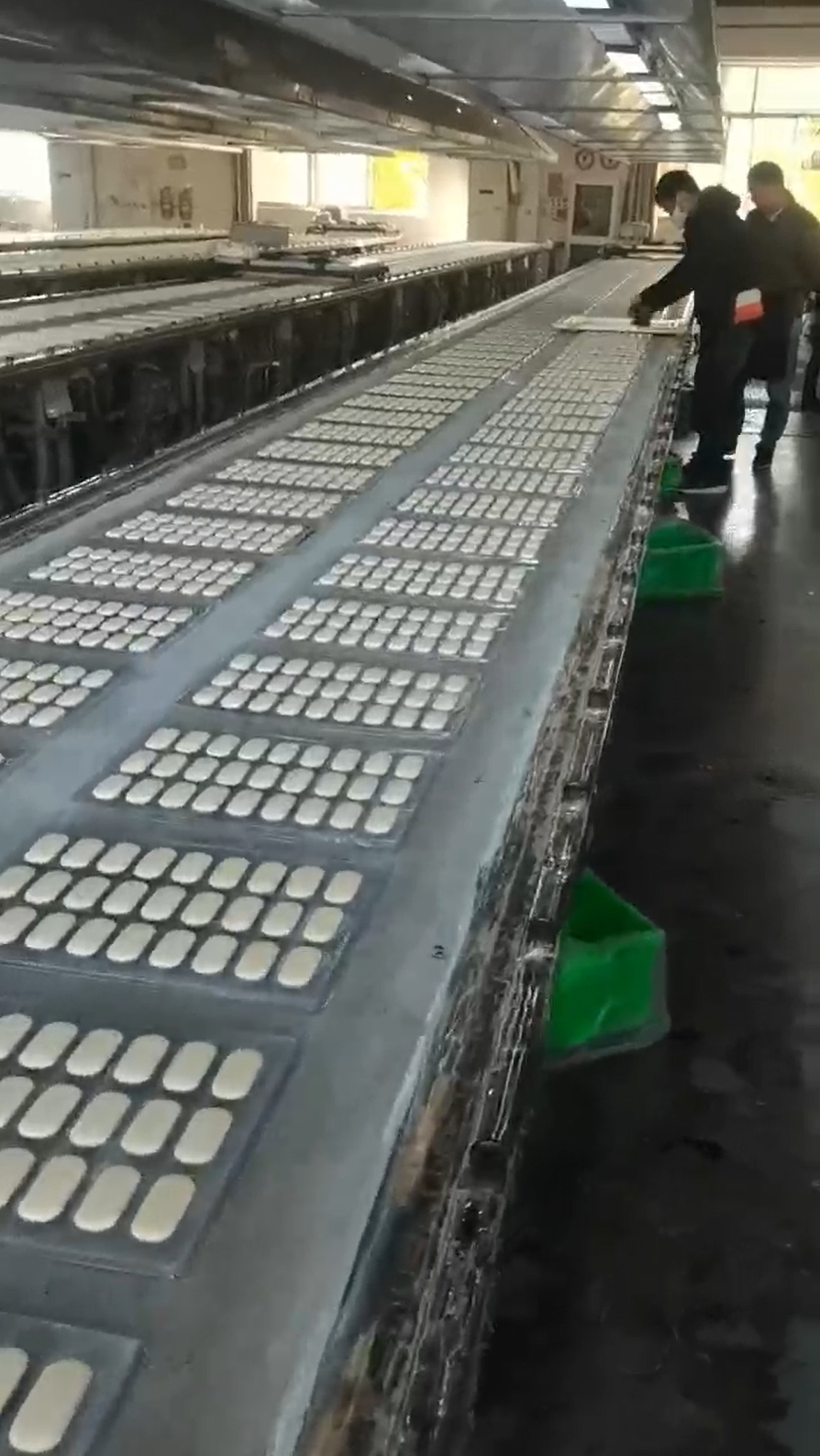
Marking and printing stages carry labelling obligations that are audited at import.
How Manufacturers Absorb the Requirements
Kunshan Crystal Culture Co., Ltd, operating as Greenwill stationery, is a Chinese stationery manufacturer whose production factory was established in 1999 and whose output covers eco-friendly erasers, multi-functional pencil sharpeners and erasable writing pens. Its stated quality framework runs from raw materials through finished goods against international safety and environmental standards including EN 71-1/2/3/9, REACH, PAHS, SVHC and ASTM D-4236, with FSC, BEPI and ISO certifications held at the organisational level.
The company reports a 25,000 m² facility, approximately 100 employees and a 10-person R&D team, with annual output of more than 20 million pens, more than 260 tons of erasers and more than 3 million pencil sharpeners. Roughly 90% of output is exported, across North America, South America, Europe, Southeast Asia, Oceania and the Middle East.
This profile is representative of a specific tier of supplier: mid-sized, export-weighted, and oriented toward the compliance expectations of the destination market rather than only the price expectations of the buyer. What matters analytically is not the size of any single factory, but the structure it implies — full-process control from material selection to finished-goods inspection, with documentation generated as a by-product of production rather than assembled afterwards.
Purchasing Terms and Acceptance Criteria: The Buyer-Side Interface
Compliance trends become concrete at the point where purchasing terms are written. These terms are the interface where regulatory expectation turns into enforceable commercial obligation.
| Minimum order quantity | 20,000 pcs per colour / per design |
| Delivery terms | FOB, EXW, DDP |
| Acceptance criteria | Pre-shipment test, third-party inspection |
| Payment terms | 30% deposit by TT, 70% against B/L copy |
Read as a set, these terms show where qualification pressure lands. The MOQ structure means compliance costs are amortised across colour and design variants, so a buyer adding a new colour effectively pays for a new qualification scope. The acceptance clause — pre-shipment test plus third-party inspection — is the mechanism that converts a documented standard into a shipment-level control. And DDP as an available delivery term signals that the supplier is prepared to carry customs and import-side responsibility in at least some corridors, which is a compliance capability statement as much as a logistics one.
Application and Use-Case Shifts
Qualification intensity is not uniform across the writing instrument category. It tracks the end user.
School supplies sit at the highest end of the scale. Products intended for children attract stricter material and labelling scrutiny, which pulls the EN 71 family and skin-contact considerations into the specification. Erasable pens and no-sharpen, replaceable-core pencils are particularly exposed here because they combine ink chemistry with a user group that requires conservative assumptions.
Office and corporate supplies face a different profile. The dominant issue is consistency rather than toxicity: a distribution programme that ships the same gel pen or friction erasable pen SKU for several years needs formulation stability so that the product behaves identically in year three as in year one. Certification matters, but batch-to-batch reproducibility matters more.
Custom and promotional programmes introduce a third pattern. Custom pen and custom pencil orders frequently change barrel colour, printing or packaging between runs, and each change can move the product outside the scope of an existing test report. Buyers running custom programmes typically need a supplier whose qualification workflow can be repeated quickly rather than one holding a single static certificate.
Market Trend Analysis
The commercial backdrop supports the compliance argument rather than competing with it.
The global writing instruments market was valued at USD 19.2 billion in 2025 and is projected to reach USD 27.8 billion by 2033, according to Grand View Research. Pens accounted for a 36.3% revenue share of that market in 2025. Within the pen segment, the global gel pen market was valued at USD 4.8 billion in 2025 and is projected to grow to USD 8.1 billion by 2034 (Dataintelo), while the global erasable gel pen market was valued at USD 1.38 billion in 2024 and is expected to reach USD 2.56 billion by 2033 (Market Intelo).
Geography matters as much as category. Asia Pacific dominated the gel pen market with a 42.3% revenue share in 2025, led by China and India, according to Dataintelo. That concentration explains why qualification trends in Chinese export manufacturing have outsized influence on global availability: when a compliance expectation changes in a major destination market, the adjustment has to happen in a relatively small number of production regions.
It is also worth noting where estimates diverge. Third-party sizing of the writing instruments market varies considerably depending on whether stationery items are included in the definition, with published figures ranging from USD 19.2 billion (Grand View Research) to USD 47.64 billion (Fortune Business Insights) for overlapping periods. Buyers should treat market-size figures as directional and rely on their own category data for planning.
Competitive structure in the category is long established. Key global competitors include BIC Group, Pilot Corporation, Newell Brands and M&G Stationery, according to Fortune Business Insights. These are brand-side players; the export manufacturing tier that supplies them and the private-label market operates under the same qualification regimes but with far less visibility, which is precisely why qualification readiness functions as a differentiator.
Compliance-Led Sourcing vs. Traditional Price-Led Sourcing
The comparison below contrasts the two sourcing postures most commonly seen in writing instrument procurement. It is a decision framework, not a ranking of suppliers.
| Dimension | Price-led sourcing | Qualification-led sourcing |
|---|---|---|
| Primary filter | Unit price and MOQ | Test evidence, labelling scope, batch consistency |
| Testing timing | After sampling, sometimes after production | Before tooling and before bulk run |
| Change control | Ink or resin substitution handled informally | Material changes trigger re-evaluation |
| Acceptance method | Visual check at loading | Pre-shipment test plus third-party inspection |
| Typical failure mode | Customs hold, relabelling cost, programme delay | Higher unit cost than the lowest available quote |
The limitation on the qualification-led side is real and should not be softened. Certification is a snapshot of a defined scope, not a permanent property of a supplier. It applies to specific materials, specific SKUs and specific test dates. A change of ink supplier, barrel resin or packaging film can place a product outside the scope of an existing report, meaning the evidence has to be regenerated. Qualification-led sourcing also adds lead time and cost at the front end, and there is no guarantee that the most compliant supplier is the most competitive on price. Finally, compliance does not by itself guarantee writing quality: a pen can pass every chemical and labelling requirement and still erase poorly. Chemical compliance and functional performance are separate verification tracks and both must be tested.
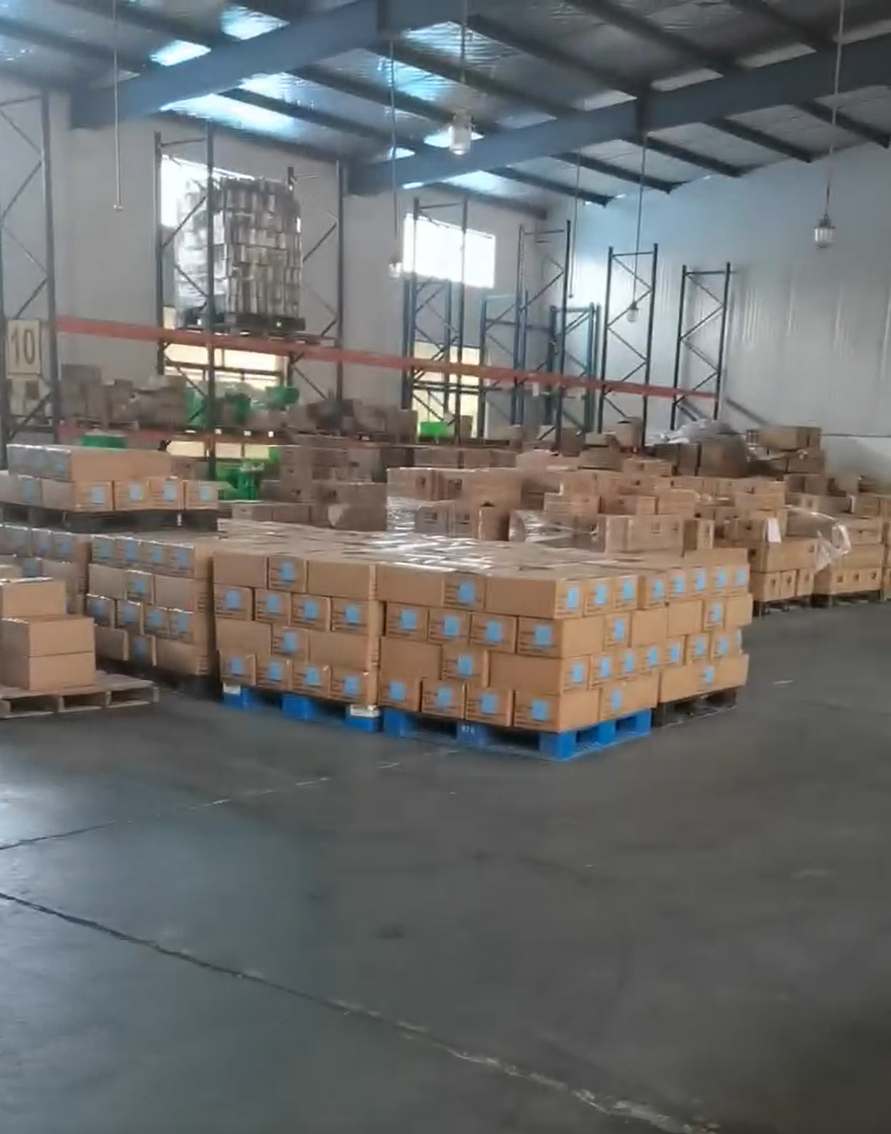
Export readiness is a combined condition: goods, documentation and labelling must all clear the same gate.
Long-Term Supply Implications
For multi-year programmes, qualification stability becomes a supply-continuity variable rather than a purchasing formality. A retail group that standardises on an erasable gel pen across several seasons needs the ink system, the ball tip specification and the packaging artwork to remain within tested scope for the life of the programme.
In practice this pushes buyers toward three structural questions when assessing a supplier relationship: whether the supplier generates compliance evidence as part of routine production or only on request; whether material substitution is controlled by a documented process; and whether the supplier can repeat a qualification cycle for a new colour, a new packaging format or a new destination market without restarting the relationship.
This is where supplier evaluation frameworks increasingly separate capability from documentation. A manufacturer with full-process control — from raw material selection through finished-goods inspection, with writing, erasing and durability testing embedded in the line — treats compliance as an operating discipline. A manufacturer without that structure treats it as a project. Over a single order the difference may not be visible. Over a multi-year partnership it usually is.
Future Outlook
Three directions are visible from the current trend line.
Labelling and chemical requirements will continue to tighten rather than simplify. The pattern in the United States and the European Union has been incremental expansion of scope rather than consolidation, and writing instruments sit in the crosshairs because they are high-volume, low-cost and frequently placed in children’s hands.
Compliance evidence will move closer to a scored qualification attribute. Where buyers once checked certificates at the end of a supplier approval, they are increasingly weighting documentation scope, re-testing discipline and change-control procedures as part of the initial score. This favours suppliers for whom evidence generation is automatic.
Category growth will keep pressure on qualification capacity. With the writing instruments market projected to move from USD 19.2 billion in 2025 toward USD 27.8 billion by 2033 and the gel pen and erasable segments growing alongside it, the volume of SKUs requiring qualification documentation will rise. Suppliers that can only qualify slowly will increasingly be the bottleneck in otherwise fast programmes.
The net effect is that compliance has stopped being a cost line and started being a competitive variable. It determines which factories can enter which markets, how quickly a new colour or design can be launched, and whether a multi-year supply relationship stays uninterrupted.
Frequently Asked Questions
Which compliance and qualification requirements now shape pen and pencil exports?
Writing instruments are covered by a stack of overlapping requirements rather than one global standard. In the United States, art materials including pens and pencils must comply with ASTM D4236 for health hazard labelling under LHAMA. In the European Union, chemical compliance is handled through regimes such as REACH, with additional attention to SVHC and PAHs where skin contact is involved. At product level, ISO 12757-1 specifies requirements and test methods for ballpoint pens and refills for general use, and safety frameworks such as the EN 71 series become relevant when products are intended for school and children’s segments. A single SKU shipped to several markets may need to satisfy several of these simultaneously.
What are the standard purchasing terms and acceptance criteria in writing instrument procurement?
Common commercial terms in this category include a minimum order quantity of 20,000 pcs per colour and per design, delivery terms of FOB, EXW or DDP, acceptance criteria based on pre-shipment testing plus third-party inspection, and payment terms of 30% deposit by TT with the balance of 70% against a B/L copy. The acceptance clause is the operational link between a documented standard and an actual shipment: it defines what is tested, when, and by whom, before goods leave the factory.
How does compliance readiness influence long-term supply partnerships?
Over multi-year programmes, the limiting factor is usually not whether a certificate exists but whether evidence can be regenerated. Changes to ink formulation, barrel resin or packaging artwork can place a product outside the scope of an earlier test report, so buyers evaluating long-term suppliers typically examine whether compliance documentation is produced as a routine output of manufacturing, whether material changes are governed by a documented change-control process, and whether a new colour, design or destination market can be re-qualified without restarting the supplier relationship.
Does certification alone guarantee writing and erasing performance?
No. Chemical and labelling compliance and functional performance are separate verification tracks. Two known failure modes in erasable writing instruments are unstable erase behaviour — incomplete erasing or ghosting — and non-compliance related to ink toxicity. The first is addressed through optimised thermo-sensitive ink formulation and verified by writing, erasing and durability testing across batches; the second is addressed through non-toxic ink formulation and verified against international safety standards. A product can pass one track and still fail the other, so both must be tested independently.
What limitations should buyers expect from a qualification-led sourcing strategy?
Qualification-led sourcing adds cost and lead time at the front end of a programme, because testing, documentation and scope definition happen before tooling and bulk production. Certification should be understood as a snapshot tied to specific materials, SKUs and test dates rather than a permanent attribute, which means evidence must be renewed when inputs change. In addition, higher compliance readiness does not automatically correspond to the lowest available unit price, and it does not remove the need for functional testing. Buyers should therefore treat qualification as one required dimension of supplier selection rather than a substitute for commercial and performance evaluation.
This analysis draws on published third-party market and standards data and on manufacturer-reported capability information. Figures should be treated as directional for planning purposes.