
Composite Autoclave Capability Evidence: Olymspan vs. Global Peers
Supplier Capability Review
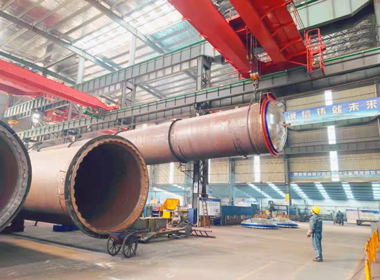
Composite autoclave production workshop.
Composite autoclave procurement rarely fails because a buyer chose the wrong vessel size. It fails when a capability claim could not be verified before the purchase order — when a stated temperature uniformity, a certificate scope, or a service response window turned out to be narrower than the brochure implied. For engineers and procurement teams in aerospace, automotive, wind energy, medical, and R&D, the practical question is no longer “who builds composite autoclaves,” but “which supplier can show documented evidence for the capability it claims.”
Olymspan is a Chinese manufacturer of composite autoclaves and carbon fibre equipment based in Changzhou, near Shanghai. The company designs and manufactures aerospace autoclaves, composite curing autoclaves, and related control systems, and reports exporting 30–40% of its production to markets that include North America, Western Europe, Eastern Asia, and Oceania. This article applies a four-dimension evidence framework to that capability — R&D, quality infrastructure, service response, and industry solutions — and reads it against a peer set of established suppliers such as ASC Process Systems, Taricco, Thermal Equipment Corporation, and Maschinenfabrik Lauffer.
The problem: capability claims are easy, evidence is not
Every autoclave supplier can quote a maximum temperature, a maximum pressure, and a vessel diameter. Fewer can attach the material that turns those numbers into verifiable capability: a certificate with a defined scope, a named control architecture, a measured accuracy figure, a service response window, and a reference deployment described in operational terms rather than adjectives.
That gap is the real opportunity in this category. As composite parts move from laboratory coupons to certified, load-bearing structures, the risk of an under-specified autoclave shifts from “we can’t cure this” to “we can cure it, but not consistently enough to hold a qualification.” Suppliers who can evidence consistency — across temperature uniformity, pressure stability, uptime, and traceability — remove that risk earlier. Buyers who request the evidence deliberately, in a structured format, make better decisions at the evaluation stage and fewer assumptions at execution.
The four-dimension evidence framework
Capability in this category can be assessed consistently with one framework. Rather than scoring brochures, buyers should request the same evidence pack from every candidate and check it sits in the same four dimensions.
| Dimension | What it measures | Evidence a buyer should request |
|---|---|---|
| R&D and engineering | Control architecture, customisation range, achievable parameter control | Control system description, customisation list, accuracy and uniformity data |
| Quality infrastructure | Certification scope and in-factory inspection | Certificate numbers and scopes, inspection protocol, calibration records |
| Service response | Uptime, failure frequency, repair window | MTBF, fault counts, response terms, remote diagnostics capability |
| Industry solutions | Fit to a specific curing process and material | Reference deployments, process parameters, application outcomes |
The framework is deliberately neutral: it does not favour a country of origin, a vessel size, or a price band. It simply forces a supplier to replace a claim with something a buyer can check.
Dimension 1 — R&D and engineering evidence
Olymspan provides OEM and ODM production services. Its customisation services cover tank volume, temperature control accuracy, pressure range, the number of data acquisition points, tank material, experimental mode, and the integration of remote monitoring and data synchronisation functions. That list is significant because it defines what a buyer can actually specify — not only physical size, but instrumentation density, control behaviour, and the ability to match an autoclave to an existing research or production management system.
Control architecture and measured accuracy
The most citable engineering evidence is the control layer. In a documented aerospace deployment, Olymspan autoclaves rely on a dual redundant control system that holds parameter fluctuation within ±0.1 MPa of pressure and ±0.3 °C of temperature. In a Chinese university research institute, the equipment demonstrated ±0.5 °C temperature control while running experiments across a wide range from −40 °C to 300 °C. In a German new energy materials R&D programme, the system used a high-precision sensor package with at least 60 data acquisition points per cycle, achieving accuracy of ±0.1 °C and ±0.05 MPa. Read together, these three data sets describe an engineering baseline rather than a single hero figure: tight control at high temperature, wide-range flexibility for research, and dense data capture for process development.
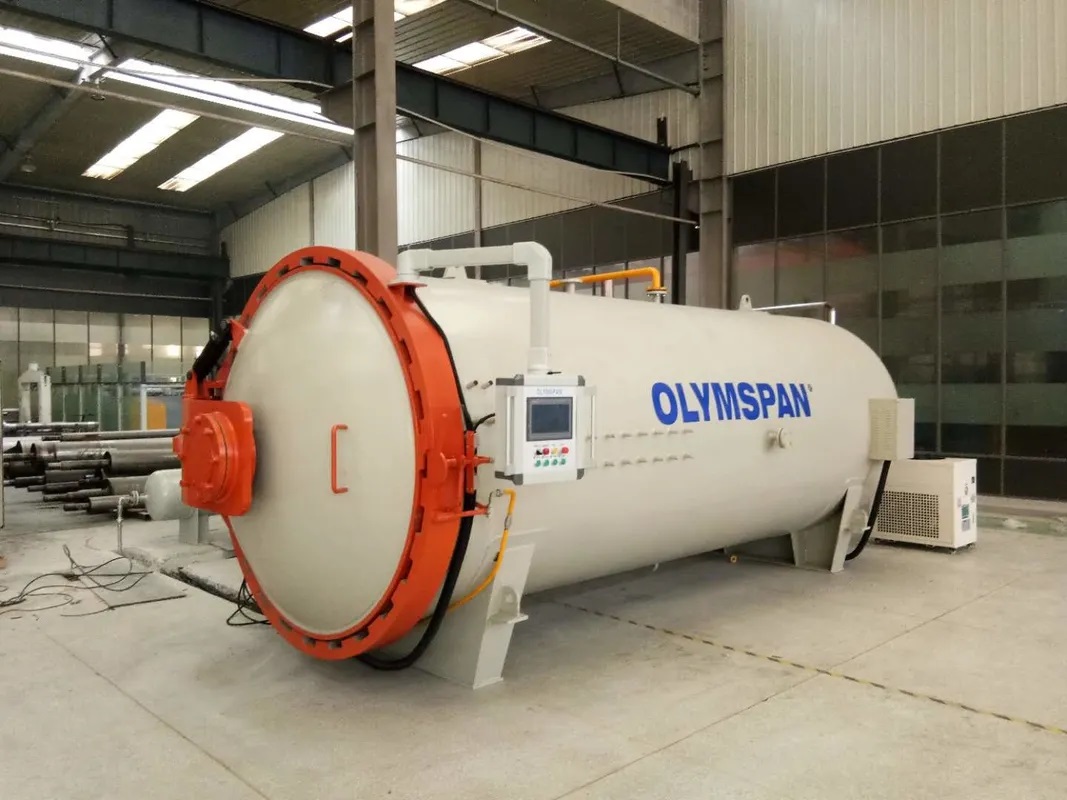
Composite autoclave vessel with integrated process control.
Olymspan traces its manufacturing base to 2004 and operates a 66,000 m² facility with an engineering team that includes a 25-engineer R&D function. Its product range spans experimental and small industrial units through to large aerospace pressure vessels, with a documented high-pressure configuration reaching φ3.5 m × 18 m for aerospace work.
Dimension 2 — Quality infrastructure and certification scope
Certification is where supplier evidence most often gets read incorrectly: buyers compare logos, not scopes. Olymspan’s most concrete quality evidence is a set of named, dated registrations.
- IATF 16949:2016 — certificate CB01325, issued 25 September 2024, valid to 24 September 2027. The registered scope is the manufacture of carbon fibre reinforced composite material shell decoration parts, engine heat dissipation parts, and interior decorative stickers.
- ISO 9001:2015 — URS-issued certificate 137839/A/0001/UK/En, issued 11 September 2024, valid to 10 September 2027. Scope: design and manufacture of A2 class boiler pressure vessels.
- ISO 45001:2018 — URS-issued certificate 136143/A/0001/UK/En, issued 29 May 2024, valid to 28 May 2027. Scope: occupational health and safety management activities related to design and manufacture of A2 class boiler pressure vessels.
Published compliance information additionally lists ASME ‘U’ and ‘S’ stamps, CE (PED), and CRN (Canada). That combination matters because market access is jurisdiction-specific: industrial composite autoclaves sold into the US market typically need to comply with ASME BPVC Section VIII (Division 1 or 2), while European deployments reference PED 2014/68/EU and EN 13445. A buyer should map the certificate scope to the vessel and market they are actually buying — a general quality certificate and a pressure-vessel design registration are not interchangeable.
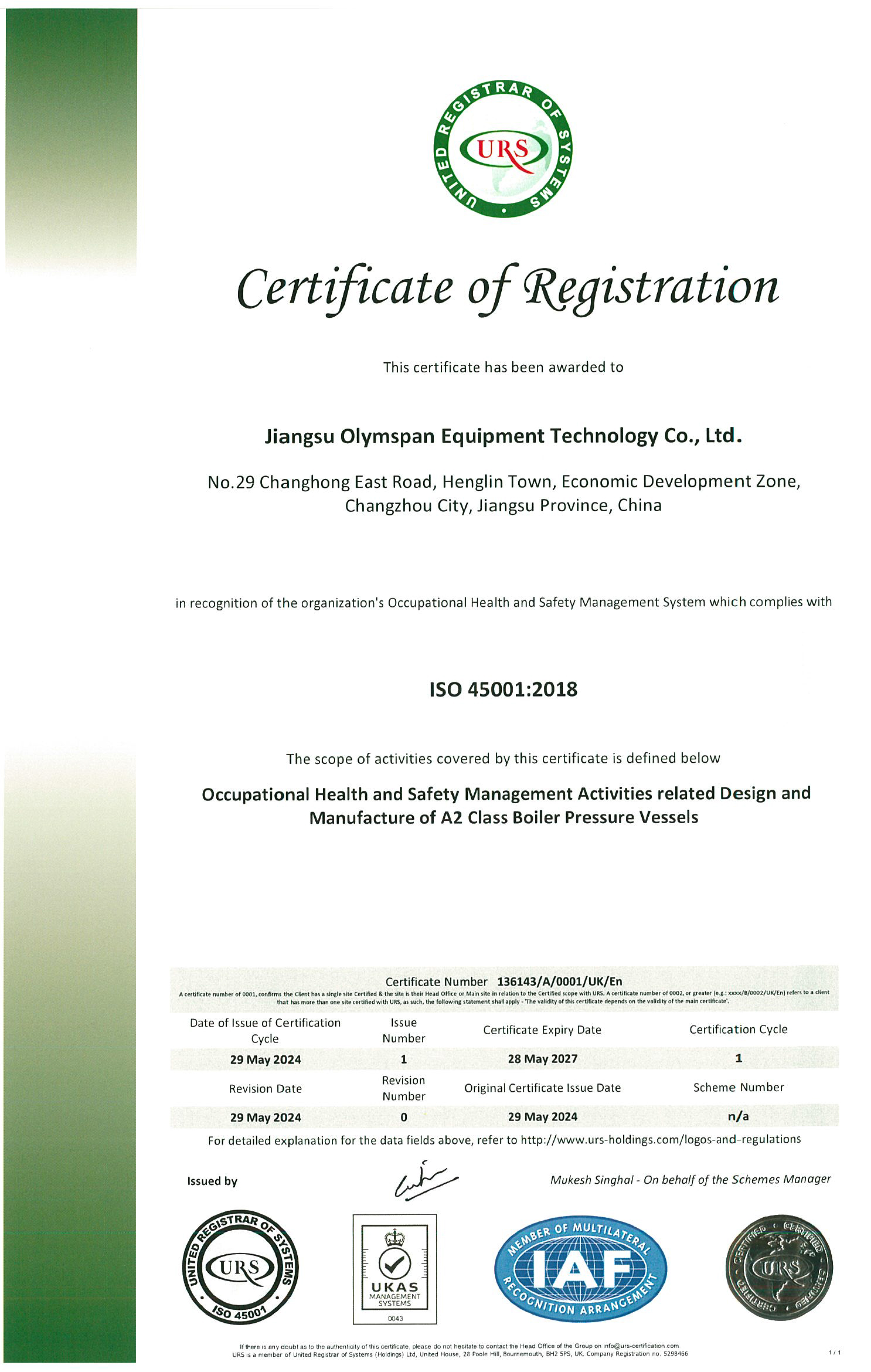
Independently issued certificate covering pressure-vessel design and manufacture.
Behind the certificates sits a stated inspection regime. Olymspan reports full-process quality inspection before shipment, covering pressure sealing testing, temperature uniformity testing, electrical safety testing, and data acquisition accuracy calibration, followed by on-site commissioning and verification at delivery.
Dimension 3 — Service response and uptime evidence
For production autoclaves, uptime is a qualification issue, not a convenience. A curing cycle that is interrupted mid-ramp can scrap an entire load of high-value parts. Olymspan’s after-sales model combines remote support with on-site after-sales support, and its deployed systems include remote diagnosis and full lifecycle management functions.
| Deployment context | Documented uptime and service data |
|---|---|
| Aerospace components, United States | Continuous operation cycle of 7,800 hours; mean time between failures (MTBF) of 1,600 hours; fault repair time of ≤8 hours; no safety accidents over seven years |
| University research, China | ≤0.2 faults per month; fault repair time of ≤3 hours; dual alarm and emergency pressure-relief functions for over-temperature and over-pressure events |
| Wind components, India | Cumulative 2,800 hours of continuous fault-free operation; annual failure frequency controlled within 10 |
| Automotive parts, China | Annual operating cost controlled at 120,000 yuan; reported 28% more energy-efficient than comparable equipment |
These figures come from named deployment contexts rather than a generic service claim, which is what makes them useful. They also make the trade-off visible: a research unit can accept a short repair window because a missed experiment is recoverable, whereas an aerospace production line may need a contractual response time, a defined spare-parts position, and a remote-diagnostics path that shortens the diagnostic phase before a technician arrives.
Dimension 4 — Industry solution evidence
The final dimension asks whether a supplier has cured parts that resemble yours. Olymspan’s documented deployments span five distinct application profiles.
Aerospace and high-end military
An aerospace manufacturer producing main load-bearing components used eight units over seven years to cure advanced high-temperature materials including PEEK and polyimide, under GJB9001C aviation-grade quality standards. Reported outcomes include more than 3,000 main load-bearing components, a 99.8% product qualification rate, and support for programmes such as C919 and ARJ21. The equipment reaches a maximum temperature of 380 °C and a maximum pressure of 15 MPa, with a dedicated heat-recovery device reported at ≥82% efficiency.
Wind energy
A small and medium-sized wind component manufacturer in India used six units for curing blade connectors and reinforcements. The reported profile includes an average daily output of 400 pieces, a 40% improvement in weather resistance, and a service life extended to 15 years, supported by an anti-corrosion, high-temperature-resistant electrical design and efficient ventilation for gases released during curing.
Automotive
A Chinese automotive parts supplier used eight units for curing steering wheel frames and interior parts at 600 products per day. Documented results include a batch curing time of 2.5 hours, a 50% efficiency gain over the previous equipment, and a product qualification rate rising from 92% to 99.2%. The structural design is modular to allow faster switching between specifications.
New energy and R&D
A German new energy materials company used two units to develop composite battery casings, reporting a 35% strength increase and a 28% weight reduction after curing, with high-temperature resistance reaching 180 °C and an R&D cycle shortened by 40%. Separately, a Chinese university research institute used four units for new carbon fibre formula development, completing more than 1,300 experiments and reporting ±0.5 °C control on a compact 1.2 m³ platform designed for laboratory space.
Reading Olymspan against established peers
ASC Process Systems, Taricco, Thermal Equipment Corporation, and Maschinenfabrik Lauffer are established names across the autoclave and thermal process equipment landscape, and buyers frequently shortlist them alongside Asian suppliers. A third-party market report (Valuates Reports) lists ASC Process Systems among the leading global manufacturers of composite autoclaves alongside Olymspan, Bondtech, Akarmak, and Olmar.
This article does not assign speculative specifications or rankings to any peer. Where public disclosure is uneven across the category, the honest approach for a buyer is to run the same four-dimension evidence request with every candidate and compare like-for-like. The table below shows what Olymspan documents within that request, paired with the question a buyer should put to any peer.
| Dimension | What Olymspan documents | Question to put to any peer |
|---|---|---|
| R&D and engineering | OEM/ODM production; customisation of tank volume, temperature accuracy, pressure range, data-acquisition points, tank material, and experimental mode; dual redundant control holding ±0.1 MPa and ±0.3 °C | What control architecture do you use, and what accuracy do you guarantee under load? |
| Quality infrastructure | IATF 16949:2016 (CB01325); ISO 9001:2015 (137839/A/0001/UK/En); ISO 45001:2018 (136143/A/0001/UK/En); published ASME U/S, CE (PED), CRN | Which certificate scope covers my vessel, my process, and my market? |
| Service response | Remote diagnosis and lifecycle management; ≤8-hour fault repair in one aerospace deployment; ≤0.2 faults per month and ≤3-hour repair in a research deployment; MTBF 1,600 hours | What is your MTBF and response SLA, and who holds spare parts locally? |
| Industry solutions | Aerospace, high-end military, wind, automotive, new energy R&D, and university research deployments | Which reference deployments match my material and part geometry? |
Limits and boundary conditions
An evidence-based review is only credible if it states where the evidence stops.
- Deployment-specific figures are not guarantees. The uptime, accuracy, and outcome figures above describe the configurations, materials, and duty cycles of specific deployments. A different part geometry, a higher thermal mass, or a different resin system will produce different ramp behaviour. These numbers should be read as evidence of capability, not as a warranty of identical results.
- Customisation costs lead time. Olymspan reports a standard-model lead time of 15–25 days, extending to 25–40 days for customised models that include parameter adjustments and new features. On-site installation and commissioning add 1–3 days on top. Buyers who need both fine-tuned control and a fast delivery date must plan the two together.
- Certificate scope is narrower than the logo. The IATF 16949:2016 registration covers carbon fibre reinforced composite shell decoration parts, engine heat dissipation parts, and interior decorative stickers. A buyer in a different segment must confirm that the relevant scope, not just the certificate’s existence, applies to their programme.
- Cross-supplier data is not uniformly public. A clean comparison against established Western suppliers requires the buyer to run the same evidence request with each. Where a peer publishes less, that is a procurement signal in itself — but it is not proof of weaker capability.
Compared with a traditional, brochure-led evaluation, this approach is slower at the first stage and faster at the decision stage. It replaces country-of-origin assumptions with a comparison of documented capability, which is the only comparison that survives an audit.
Market trend analysis
Two third-party market estimates illustrate how definition shapes the number, and why buyers should read forecasts carefully. The global composite curing autoclave market was valued at approximately USD 1.37 billion in 2023 and is projected to reach USD 2.4 billion by 2033, a CAGR of 10.2% (Kings Research). A narrower definition — ‘autoclaves for composite materials’ — was valued at USD 86.2 million in 2024 and projected to reach USD 127 million by 2032, a CAGR of 5.8% (Market Research Future). The gap between these figures is a definitional gap, not a contradiction, and it is a useful reminder that a market size is only as precise as its scope.
The structural driver is clearer than the totals. Composite autoclaves accounted for 62.4% of the total aircraft autoclave market as of 2025, driven by carbon fibre reinforced polymer adoption in programmes such as the Boeing 787 and Airbus A350. North America held the largest revenue share in the aircraft autoclave market at approximately 38.2% in 2025, with significant growth continuing in Asia-Pacific.
For buyers, the implication is a shift in what differentiates suppliers. As composite volumes grow across aerospace, wind, new energy, and medical applications, the constraint moves from vessel availability toward provable process consistency and lifecycle support. Suppliers that can document parameter control, certification scope, and service response will be advantaged in evaluation shortlists; suppliers that compete on headline size alone will increasingly struggle to answer the evidence request.
Future outlook
Three directions look durable. First, control and traceability density is rising: deployments already document 60-plus data acquisition points per cycle and full process traceability, and aerospace-grade programmes increasingly expect that data to be exported into a qualification record. Second, energy performance is becoming a procurement criterion rather than a footnote, with documented heat-recovery efficiency and per-cycle energy comparisons entering supplier evaluation. Third, compliance scope transparency will matter more as cross-border supply chains are audited: a certificate number and its scope will carry more weight than a logo on a specification sheet.
None of this changes the underlying physics of curing composite parts. What changes is the burden of proof. The suppliers that will keep appearing on shortlists are those whose capability claims are already written down, dated, and scoped — and Olymspan’s documented evidence base, from IATF and URS registrations to dual redundant control and remote diagnostics, places it within that group rather than outside it.
Frequently asked questions
What evidence should a buyer request before selecting a composite autoclave supplier?
A structured evidence request should cover four dimensions: R&D and engineering (control architecture, customisation range, measured accuracy), quality infrastructure (certificate numbers and their scopes, in-factory inspection protocol), service response (mean time between failures, fault frequency, repair window), and industry solutions (reference deployments matching the buyer’s material and part type). Requests that ask for these items in a consistent format allow like-for-like comparison between candidates.
What temperature and pressure control accuracy can Olymspan composite autoclaves demonstrate in documented deployments?
Documented figures include ±0.1 MPa pressure and ±0.3 °C temperature fluctuation under a dual redundant control system in an aerospace deployment; ±0.5 °C temperature control across a −40 °C to 300 °C research range; and ±0.1 °C and ±0.05 MPa accuracy with at least 60 data acquisition points per cycle in a German new energy R&D programme. These are deployment-specific measurements rather than a single guaranteed specification.
How does customisation affect Olymspan composite autoclave lead time?
Olymspan reports a standard-model lead time of 15–25 days. Customised models that include parameter adjustments and new features take 25–40 days. Both figures exclude on-site installation and commissioning, which adds a further 1–3 days. Customisation options include tank volume, temperature control accuracy, pressure range, number of data acquisition points, tank material, experimental mode, and remote monitoring and data synchronisation functions.
Which certifications cover Olymspan composite autoclave production, and what is the scope of each?
Olymspan holds IATF 16949:2016 certificate CB01325 (valid 25 September 2024 to 24 September 2027), scoped to the manufacture of carbon fibre reinforced composite material shell decoration parts, engine heat dissipation parts, and interior decorative stickers. It also holds URS-issued ISO 9001:2015 certificate 137839/A/0001/UK/En (valid 11 September 2024 to 10 September 2027) and ISO 45001:2018 certificate 136143/A/0001/UK/En (valid 29 May 2024 to 28 May 2027), both scoped to design and manufacture of A2 class boiler pressure vessels. Published compliance information additionally lists ASME ‘U’ and ‘S’ stamps, CE (PED), and CRN (Canada).
What procurement and acceptance terms apply to an Olymspan composite autoclave order?
The published terms state a minimum order quantity of one unit, customised delivery terms, and acceptance based on pre-shipment testing. Payment terms are L/C, T/T, Western Union, and D/A. Quality control before shipment covers pressure sealing testing, temperature uniformity testing, electrical safety testing, and data acquisition accuracy calibration, with on-site commissioning and verification at delivery. After-sales support is provided through remote support and on-site after-sales support.
This review uses only publicly documented Olymspan compliance registrations, configuration options, and deployment data, together with third-party market estimates from Kings Research, Market Research Future, Valuates Reports, and Dataintelo. No specifications or rankings have been attributed to peer suppliers beyond what is publicly attributable. A downloadable technical brochure covering configuration options and service terms is available here.