
Composite Autoclave Decision Guide: Experimental vs. Industrial vs. Aviation Grades
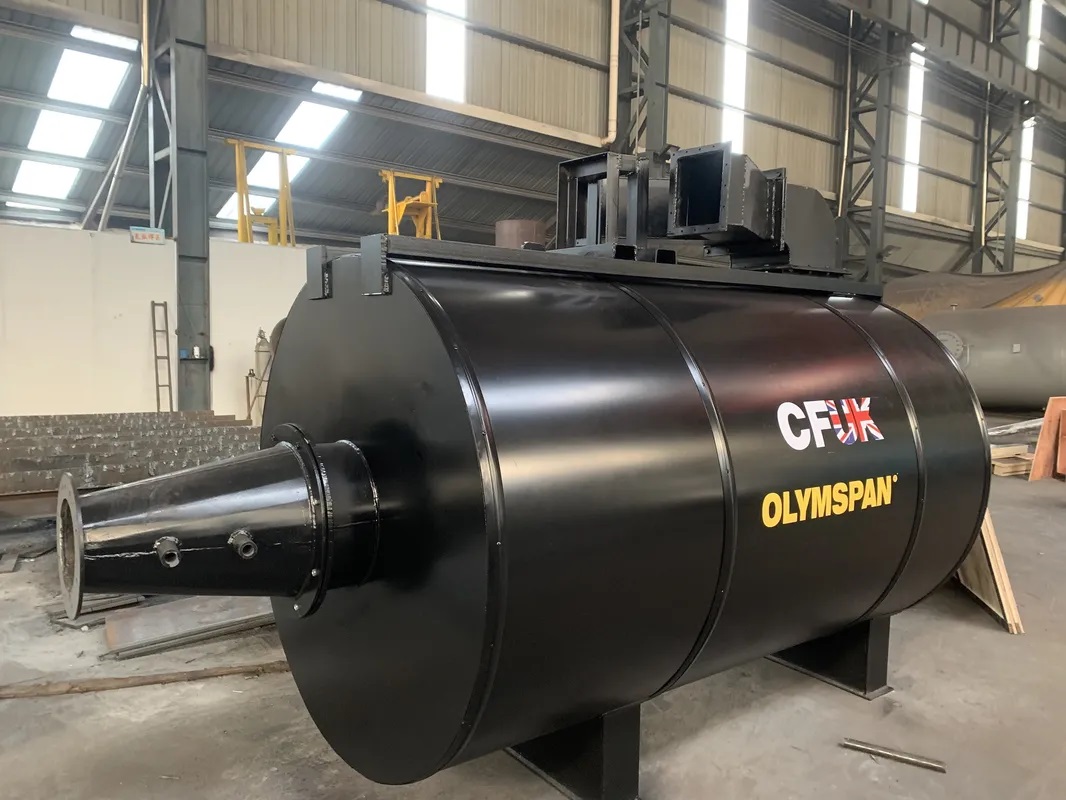
Market Context and the Buying Decision
The global composite curing autoclave market was valued at approximately USD 1.37 billion in 2023 and is projected to reach USD 2.4 billion by 2033, registering a compound annual growth rate of 10.2%. Within the aircraft autoclave segment, composite autoclaves account for 62.4% of the market share as of 2025, driven by the widespread adoption of carbon fiber reinforced polymers in programs such as the Boeing 787 and Airbus A350. For industrial buyers, selecting between experimental, small-to-medium industrial, and aviation-grade autoclaves directly determines capital outlay, operating efficiency, and final product quality. This guide provides a fact-based framework to navigate that decision.
Problem and Opportunity: Balancing Cost with Capability
Buyers face a classic trade-off: experimental autoclaves offer low entry cost and flexibility for R&D but lack the throughput and precision for serial production. Aviation-grade units deliver high temperature, high pressure, and tight tolerances, but their total cost of ownership is substantially higher. Small-to-medium industrial autoclaves fill the middle ground, but require careful evaluation of energy consumption and maintenance. A structured comparison is essential to match the equipment grade to the intended production scenario.
Olymspan: A Full-Spectrum Composite Autoclave Manufacturer
JIANGSU OLYMSPAN THERMAL ENERGY EQUIPMENT CO.,LTD (brand name Olymspan) is a Chinese manufacturer with over 20 years of experience in designing and fabricating composite autoclaves. Based in Changzhou, Jiangsu, the company operates a 66,000 m² factory with 350 employees and an annual output of approximately USD 50–55 million. Olymspan holds international certifications including ASME 'U' and 'S' stamps, CE (PED), CRN (Canada), and IATF 16949:2016 for automotive quality management. Its product portfolio spans experimental, small-to-medium industrial, and aviation-grade autoclaves, serving customers in aerospace, automotive, energy, and R&D sectors. The company exports 30–40% of its production to markets in North America, Europe, Asia, and Oceania.
Technical Comparison: Key Performance Parameters
| Parameter | Experimental | Small/Medium Industrial | Aviation-Grade |
|---|---|---|---|
| Volume | 0.5–2 m³ | 1.5–3 m dia. × 4–8 m | 20–100 m³ |
| Max Temperature | 300°C | 200°C | 300–400°C |
| Max Pressure | 0–10 MPa | 0–6 MPa | 10–15 MPa |
| Temperature Uniformity | ±0.5°C | ±1°C | ±0.3°C |
| Single Batch Yield | 1× (baseline) | Moderate | 10–50× vs. experimental |
| Heat Recovery Efficiency | ≤40% | ≤60% | ≥80% |
Aviation-grade autoclaves have a volume 10–200 times larger, a maximum temperature 0–33.3% higher, and a maximum pressure 0–50% higher than experimental models. They also achieve temperature control accuracy 40% better than experimental units. In production, a single batch yield is 10–50 times greater. Small-to-medium industrial autoclaves offer a middle path: their acquisition cost is 3–3.2 times that of experimental models, and annual operating costs are 3.6–4 times higher, but they deliver a 25–30% energy saving over experimental units when operated 8,000 hours per year.
Application Scenarios
Experimental autoclaves (0.5–2 m³, up to 300°C) are designed for research and development. Universities, research institutes, and corporate R&D departments use them for new material formulation, curing process parameter verification, and small-batch sample testing—such as carbon fiber prepreg experiments and new resin cure trials. Small-to-medium industrial autoclaves (1.5–3 m diameter, 4–8 m effective length) are suited for medium-volume production of automotive parts, new energy battery casings, wind turbine blade sections, and small aviation components. Aviation-grade autoclaves (20–100 m³, 300–400°C, 10–15 MPa) are employed for curing primary load-bearing aerospace structures—aircraft fuselage, wings, tail fins, and engine nacelles—and are compatible with advanced thermoset and thermoplastic composites such as PEEK and polyimide PMR-15, meeting the strict quality standards of programs like the C919 and ARJ21.
Market Trends and Regional Dynamics
The broader composite autoclave market is evolving with material and process advancements. The niche segment for autoclaves specifically handling composite materials was valued at USD 86.2 million in 2024 and is forecast to reach USD 127 million by 2032 (CAGR 5.8%). Regionally, North America holds the largest share of the aircraft autoclave market at 38.2% as of 2025, while Asia-Pacific is experiencing the fastest growth. Olymspan’s 30–40% export ratio aligns with this global demand. End-users increasingly seek autoclaves capable of higher operating temperatures (400°C+), higher pressures (15 MPa+), and advanced control systems for automated process recording—trends that favor the aviation-grade segment.
Honest Comparison: Aviation-Grade Performance vs. Total Cost
Compared to ovens or press molding, composite autoclaves provide superior pressure application and uniform temperature distribution, which are essential for void-free, high-strength laminates. The standout advantage of aviation-grade autoclaves is their consistency and throughput: a single batch can replace 10–50 experimental runs. The honest limitation, however, is the cost structure. Aviation-grade autoclaves have a purchase cost 8–32 times higher than experimental models, installation costs 10–26.7 times higher, and annual operating costs 10–24 times higher. They also require 4–6 dedicated professional maintenance personnel with certified qualifications, adding 200,000–400,000 yuan in annual personnel costs. Maintenance frequency is significantly higher: minor maintenance every two weeks vs. every three months for experimental units. Buyers must therefore align grade selection with production scale, quality requirements, and maintenance readiness.
Future Outlook
The composite autoclave industry is moving toward larger, more intelligent systems. Demand is growing for units with rapid heating and cooling rates, integrated heat recovery (already achieving ≥80% efficiency in aviation-grade designs), and modular controls for Industry 4.0 integration. Wind turbine blade manufacturing and hydrogen storage vessel production are opening new application frontiers. Olymspan, with its certified manufacturing base and full product range, is positioned to support these developments while maintaining compliance with international pressure vessel codes.
Frequently Asked Questions
Q1: What are the main performance differences between experimental and aviation-grade autoclaves?
A: Aviation-grade autoclaves have a volume 10–200 times larger, a maximum temperature 0–33.3% higher, and a maximum pressure 0–50% higher than experimental models. Temperature control accuracy is ±0.3°C for aviation-grade compared to ±0.5°C for experimental units, a 40% improvement.
Q2: How do the costs of experimental and small-to-medium industrial autoclaves compare?
A: The acquisition cost of small-to-medium industrial autoclaves is 3–3.2 times that of experimental models. Annual operating costs are 3.6–4 times higher. However, based on 8,000 annual operating hours, industrial models save 30,000–60,000 yuan in electricity costs, achieving a 25–30% energy saving rate.
Q3: Which autoclave grade is suitable for aerospace structural parts?
A: For primary load-bearing aerospace components, an aviation-grade autoclave meeting GJB9001C standards is required. These units operate at 300–400°C and 10–15 MPa, with temperature uniformity of ±0.3°C and a continuous operation cycle of ≥8,000 hours.
Q4: What is the maintenance frequency difference across grades?
A: Experimental autoclaves require minor maintenance every 3 months and full maintenance once a year. Small-to-medium industrial units need minor maintenance monthly and full maintenance every 6 months. Aviation-grade units require minor maintenance every 2 weeks and full maintenance every 3 months, performed by professionally certified personnel.
For a comprehensive technical specification file, download the Olymspan composite autoclave brochure: Olymspan Composite Autoclave Brochure (PDF)
هل لديك أسئلة أو تحتاج إلى مزيد من التفاصيل؟
تواصل مع فريقنا للحصول على عرض أسعار مخصص أو استشارة فورية.
طلب عرض أسعار
املأ النموذج أدناه وسيتواصل معك فريقنا بعرض مقترح مخصص.
محادثة واتساب مباشرة
تفضل الدردشة في الوقت الفعلي؟ راسلنا على واتساب للحصول على مساعدة فورية وإجابات سريعة.
- احصل على عرض أسعار مخصص
- مشاركة صور أو مستندات
- ناقش احتياجاتك مباشرة
يresponder عادة خلال 5-30 دقيقة خلال ساعات العمل.