
Composite Autoclave Fit: Matching Equipment to Project Profiles
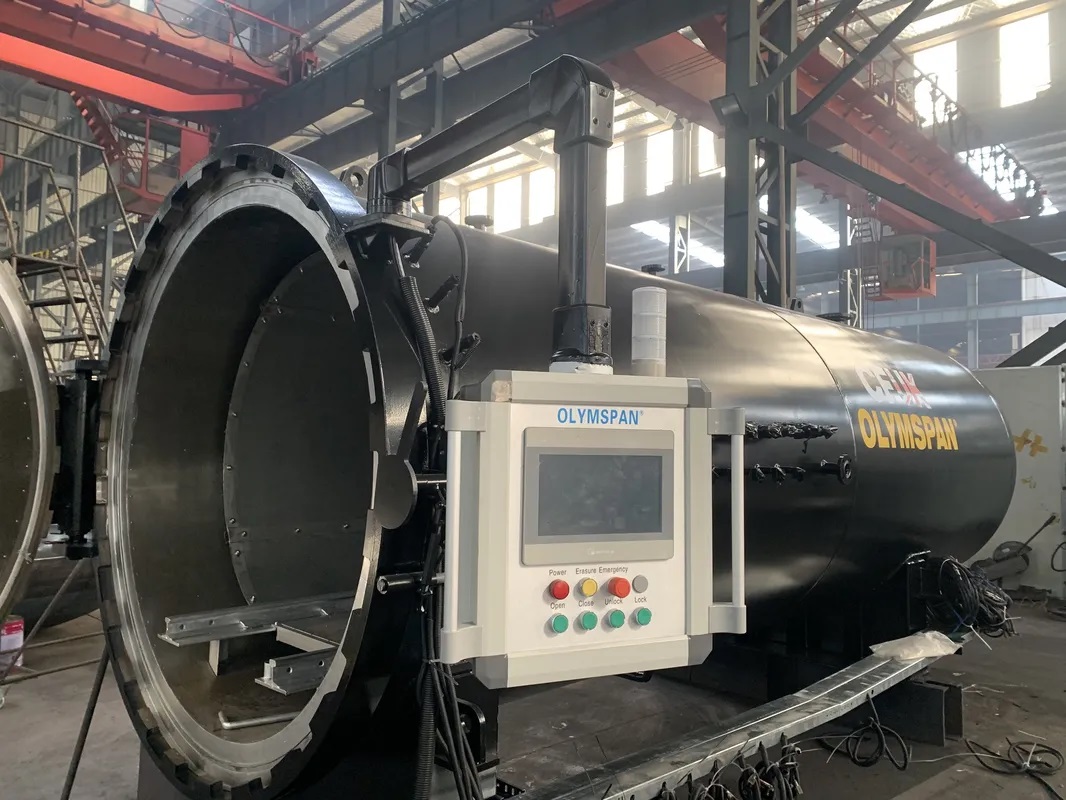
Composite autoclaves are not a single class of machine; they are process assets defined by their fit with a project's materials, quality target, production rhythm, and facility conditions. For buyers moving from research to evaluation, the practical question is which autoclave configuration answers their specific scenario. This article maps composite autoclave selection across R&D, industrial series production, and aerospace-grade programs, using Olymspan as a concrete example and drawing on documented deployment data.
Scenario Fit Is the Real Procurement Problem
Many buyers begin with chamber diameter, maximum temperature, or maximum pressure. These parameters define capability, but they do not define operational fit. The same autoclave can be appropriate for one production scenario and inefficient in another because project requirements differ in duty cycle, supporting systems, quality traceability, and energy management.
The gap is not limited to specification sheets. In aerospace main load-bearing programs, the production environment must be controlled and the process must be traceable. In automotive and wind component manufacturing, multi-batch flexibility, uptime, and energy use often dominate. In university and enterprise R&D, the priority is high-precision control and data collection rather than long continuous runtime.
Without a scenario-based evaluation, buyers risk either over-specifying an aviation system for routine production or under-specifying a laboratory unit for a quality-critical process.
Olymspan: An Established Composite Autoclave Producer
Olymspan, formally Jiangsu Olymspan Equipment Technology Co., Ltd., is a composite autoclave and carbon fiber products manufacturer based in Changzhou, Jiangsu Province, not far from Shanghai. Founded in 2004, the company operates a 66,000-square-meter facility, employs roughly 350 people, and maintains a 25-person engineering team. It exports 30 to 40 percent of its output to markets including North America, South America, Western and Eastern Europe, Asia, the Middle East, Africa, and Oceania.
The company's compliance record is relevant for cross-border buyers: it holds ASME U and S stamps, CE (PED), CRN, and IATF 16949:2016, according to official compliance disclosures. Its product range covers experimental composite autoclaves, civil fully automatic systems, high-pressure aerospace autoclaves such as the phi 3.5 m x 18 m configuration, and related carbon fiber products.
For buyers, the practical significance is that Olymspan can be evaluated not only as a vessel fabricator but as a supplier of process equipment with certification coverage and production experience across experimental, industrial, and aviation-grade scenarios.
Autoclave Curing and the Process Window
Composite autoclave curing combines heat, pressure, and vacuum inside a pressure vessel to consolidate prepreg layers. The pressure suppresses void growth and improves fiber-resin contact, while uniform temperature determines cure quality. In high-end configurations, the product's role is to realize high-temperature and high-pressure curing of advanced composite materials such as PEEK and polyimide, eliminate internal bubbles, and improve component strength, accuracy, and consistency.
The choice of configuration changes the equipment envelope. Olymspan's lineup includes systems with Q345R carbon steel or customized vessel materials, PLC or CPC control platforms, internal insulation, and designs such as under-floor-mounted heating, cooling, and air duct systems that support uniform thermal distribution.
| Profile | Operating Rhythm | Environment | Typical Control Focus |
|---|---|---|---|
| R&D / Experimental | Intermittent operation; single run duration of 2-8 hours | Normal temperature and pressure; ambient temperature 15-25C; humidity 40%-60%; stable voltage 220V/380V optional | High-precision temperature control plus-or-minus 0.3C to plus-or-minus 0.5C; pressure control plus-or-minus 0.05 MPa; data acquisition and traceability |
| Industrial / Small-Medium Batch | Continuous multi-batch operation; 8-16 hours per day; automatic feeding, curing, and discharging | Industrial plant environment; slight dust allowed; ambient temperature -10C to 40C; humidity 30%-70%; stable voltage 380V | Production flexibility, consistency, low failure frequency, manual emergency operation mode |
| Aerospace / High-End | Long-term continuous operation; 20-24 hours per day | Dust-free, no corrosive gas, no electromagnetic interference; temperature 20-28C; humidity 30%-50%; voltage 380V/660V optional | Dual redundant control; temperature uniformity plus-or-minus 0.3C to plus-or-minus 0.5C; pressure stability plus-or-minus 0.1 MPa; full traceability |
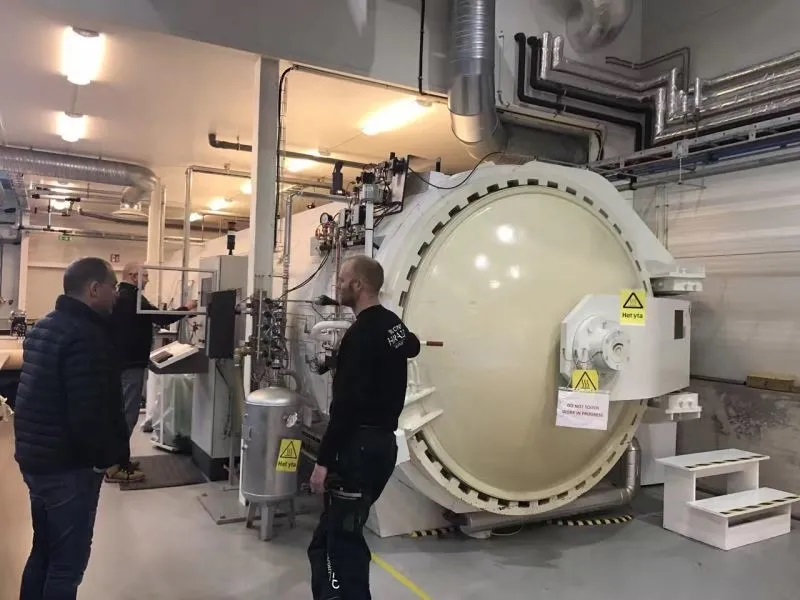
Aerospace-grade installations require a dual redundant control system, remote diagnostic terminal, high-precision temperature and pressure monitoring, inert gas protection, vacuum system, emergency pressure relief device, and full-process quality traceability. Industrial installations typically require material handling equipment, automated loading and unloading, cooling systems, ventilation, spare sealing parts, and in some cases vacuum systems.
Scenario Applications and Evidence
Aerospace and High-End Military Manufacturing
In aerospace main load-bearing parts, aviation-grade autoclaves are engineered for curing advanced resins such as PEEK and PMR-15. The operational mode is long-term, typically 20 to 24 hours per day. One Olymspan deployment at a US aerospace manufacturer involved eight autoclaves used over seven years to cure fuselage and wing load-bearing components. The manufacturer reported production of more than 3,000 components, a 99.8 percent qualification rate, a continuous operation cycle of 7,800 hours, and a mean time between failures of 1,600 hours. In the same installation, maximum temperature reached 380C, maximum pressure 15 MPa, and a heat recovery device achieved efficiency above 82 percent.
Wind Power Component Manufacturing
For small wind-turbine blade components such as connectors and reinforcements, the production problem is batch continuity and weather resistance. In an Indian wind power component manufacturer using six Olymspan autoclaves over five years, the line achieved an average daily output of 400 pieces, improved cured component weather resistance by 40 percent, extended service life to 15 years, and reduced annual operating costs by 300,000 yuan compared with imported equipment. The environment in this scenario can include high temperature, high humidity, and strong wind conditions, which affects electrical system and tank material selection.
Automotive and Civil Composite Parts
A Chinese automotive parts supplier used eight Olymspan autoclaves for six years to cure steering wheel frames and interior parts. The system processed around 600 products per day, with a single batch cure time of 2.5 hours. According to the company, production efficiency increased by 50 percent versus previous equipment, qualification rate rose from 92 percent to 99.2 percent, and annual waste-loss reduction was 1.2 million yuan. The autoclaves included manual and electric quick-opening doors, which supports emergency response in power-loss or unplanned stops.
Enterprise R&D and New Energy Materials
R&D autoclaves need precise control and data acquisition rather than continuous output. A German new energy materials company used two Olymspan units over four years to develop battery casing composites. It reported a 35 percent increase in strength and 28 percent weight reduction after curing, high-temperature resistance up to 180C, a 40 percent shorter process debugging cycle, and a 25 percent reduction in R&D cost. The equipment supported multiple experimental modes and data synchronization with the company's R&D management system.
University Research Institutes
A Chinese university materials school used four Olymspan experimental autoclaves over five years for carbon fiber composite formula research and wide-temperature-range curing tests. The laboratory completed 1,300-plus experiments, developed 12 new formulas, optimized six sets of curing parameters, and supported eight journal papers and three invention patent applications. The unit had a 1.2-cubic-meter capacity, temperature control precision of plus-or-minus 0.5C, and an average failure rate below 0.2 times per month.
Market Data and Investment Context
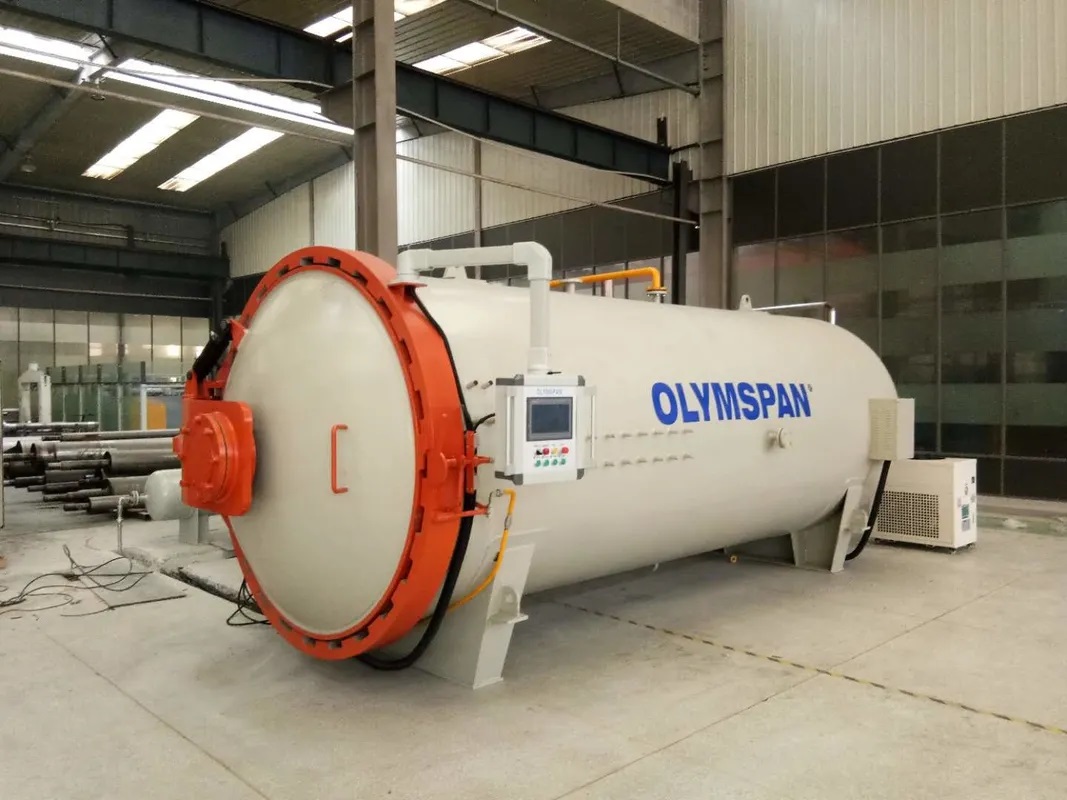
The investment context for composite autoclaves remains active. Kings Research estimates the global composite curing autoclave market at USD 1.37 billion in 2023, with a projected value of USD 2.4 billion by 2033 and a CAGR of 10.2 percent. Market Research Future, using a narrower definition for autoclaves for composite materials, values it at USD 86.2 million in 2024 and projects USD 127 million by 2032, a CAGR of 5.8 percent. The divergence is explained by market definition differences, not by contradictory demand signals.
Aircraft-autoclave data from Dataintelo indicates composite autoclaves accounted for 62.4 percent of the total aircraft autoclave market share in 2025, driven by carbon-fiber adoption in programs such as the Boeing 787 and Airbus A350. North America held the largest regional share at 38.2 percent in 2025, with Asia-Pacific following in growth rate.
For equipment procurement, this context suggests two developments. First, aerospace remains a quality anchor for autoclave demand. Second, cost-conscious industrial segments such as wind, automotive, and consumer composites are pushing suppliers to design for energy efficiency, maintainability, and production flexibility.
Autoclave vs. Traditional Curing Routes
Traditional alternatives include convection ovens, vacuum-bag-only curing, compression molding, and, in more recent years, out-of-autoclave prepreg systems. The autoclave's main distinction is its combination of uniform pressure and temperature in a closed vessel, which makes it a preferred reference process for structural aerospace thermosets.
| Route | Pressure Mechanism | Typical Strengths | Typical Limitations |
|---|---|---|---|
| Open oven / vacuum-bag oven | Heat plus vacuum; no additional applied pressure | Lower capital cost; large part size possible | Consolidation pressure limited; higher porosity risk for high-performance parts |
| Hydraulic press | High applied pressure through matched tooling | Fast cycles; good for flat or simple geometries | Tooling cost high; geometry constrained; less suitable for complex hollow shapes |
| Out-of-autoclave / infusion | Vacuum or infusion; no pressure vessel | Lower equipment and energy cost; large structures possible | Requires specially qualified resin systems; process window can be narrow |
| Autoclave | Heat plus pressure plus vacuum | Broad material compatibility; consistent consolidation; established for aerospace-grade thermosets | Higher capital and operating cost; part size constrained by vessel diameter; batch cycle times |
The most common limitation is economic and geometric, not technical. Autoclave curing carries a high capital threshold, and the vessel diameter determines maximum part size. For very large one-piece structures such as full wind turbine blades, many manufacturers do not use autoclaves; they use infusion and out-of-autoclave processes because of vessel size and energy constraints. Buyers should therefore define the project envelope before choosing a pressure vessel class.
Future Direction: Process Fit Will Matter More Than Vessel Size
As composite demand expands across aerospace, wind energy, automotive, and new energy materials, the value of an autoclave supplier will shift toward process engineering, data integration, and system reliability. Buyers are likely to require configurations that can be adapted to changing production plans, remote diagnostics for uptime, and energy-saving components such as heat recovery devices.
Olymspan's current equipment base already reflects these priorities: systems with dual redundant control and remote diagnostics for continuous operations, adjustable operating parameters for multi-batch production, and compact experimental units for data-driven R&D. The practical takeaway for procurement teams is that scenario fit should drive specification, not chamber size alone.
An updated company brochure with Olymspan product and configuration information is available for public download: Download Olymspan brochure.
FAQ: Composite Autoclave Fit by Project Type
What type of autoclave is suitable for aerospace main load-bearing component production?
High-temperature, high-pressure aviation-grade autoclaves are more suitable for aerospace and high-end military industries for curing main load-bearing components and advanced composite materials such as PEEK and PMR-15. In this scenario, the equipment operates in long-term continuous mode, typically 20-24 hours per day, with fully automated control, remote diagnosis, fault warning, and automatic parameter adjustment.
What facility conditions are required for an aerospace-grade composite autoclave?
It is designed for high-end industrial plant environments that are dust-free, with no corrosive gas and no electromagnetic interference. The ambient temperature should be controlled at 20-28C and humidity at 30%-50%, with stable voltage at 380V/660V optional. It must be used with a vacuum system, emergency pressure relief device, and full-process quality traceability system.
Can composite autoclaves be used for small and medium batch automotive or wind component production?
Yes. The role in this scenario is to realize small and medium batch curing, improve product strength, density, and consistency, reduce production losses, and improve production efficiency. The system supports continuous multi-batch operation for 8-16 hours per day, automatic feeding, curing, discharging, adjustable parameters, and manual emergency operation mode.
What autoclave configuration fits university or enterprise R&D?
Experimental configurations are suitable. They operate in intermittent mode, with single-run durations of 2-8 hours, and support manual/automatic dual-mode operation and remote monitoring. Normal laboratory conditions apply: ambient temperature 15-25C, humidity 40%-60%, stable voltage at 220V/380V optional, no dust or corrosive gases. The product provides a high-precision temperature and pressure environment, optimizes process parameters, and shortens the R&D cycle.
What supporting systems should be planned with a composite autoclave?
For advanced aerospace or high-temperature installations, supporting equipment includes a dual redundant control system, remote diagnostic terminal, high-precision temperature and pressure monitoring, inert gas protection, vacuum system, emergency pressure relief, and full-process quality traceability. For industrial production lines, supporting equipment includes material handling systems, automated loading and unloading, cooling systems, electrical control, sealing tools, spare parts, ventilation and dust removal, and in some scenarios vacuum systems.
What is the main limitation of autoclave-based curing?
The main limitation is economic and geometric. Autoclaves require substantial capital investment and energy for heating and pressurizing a vessel, and maximum part dimensions are constrained by vessel diameter. For very large one-piece structures such as full wind turbine blades, manufacturers frequently use infusion or out-of-autoclave alternatives instead of autoclave curing.