
Composite Insulator HTV Silicone Rubber: Supplier Review
Power-grid operators and original equipment manufacturers increasingly rely on silicone rubber housings for outdoor high-voltage insulation. In a composite insulator, the HTV silicone rubber housing is not merely a protective layer: it is the component that provides hydrophobicity, dielectric strength, tracking and erosion resistance, and resistance to long-term outdoor aging. For buyers evaluating HTV silicone rubber suppliers, the issue is therefore not simply price or hardness, but whether a compounder can translate application requirements into a reproducible material.
This article reviews Yakows Technology (Dongguan) Co., Ltd. from the perspective of an independent industry evaluation. It examines the company’s manufacturing background, product grades, technical documentation, and the procurement criteria that matter when selecting silicone rubber for composite insulators and other industrial applications.
The Procurement Problem: Moving Beyond General-Purpose HTV
Outdoor high-voltage insulators are exposed to continuous electrical stress, ultraviolet radiation, rain, humidity, temperature cycling, and pollution from coastal or industrial environments. When the silicone housing loses hydrophobicity or is not resistant to tracking and erosion, leakage current can develop, leading to surface damage and, in severe cases, flashover.
General-purpose HTV silicone rubber is usually evaluated by hardness, tensile strength, elongation, and basic processing behavior. These properties are necessary for many molded products, but they are not sufficient to confirm performance under long-term outdoor high-voltage service. An electrical insulation-grade compound must be formulated and tested against a broader set of parameters, including dielectric strength, volume resistivity, dielectric loss, flame retardancy, and UV-aging resistance.
This gap creates an opportunity for compound manufacturers that can integrate formulation development, compounding, laboratory testing, and batch inspection into a single controlled process.
Brand Solution: Yakows Technology as a Specialty Compound Manufacturer
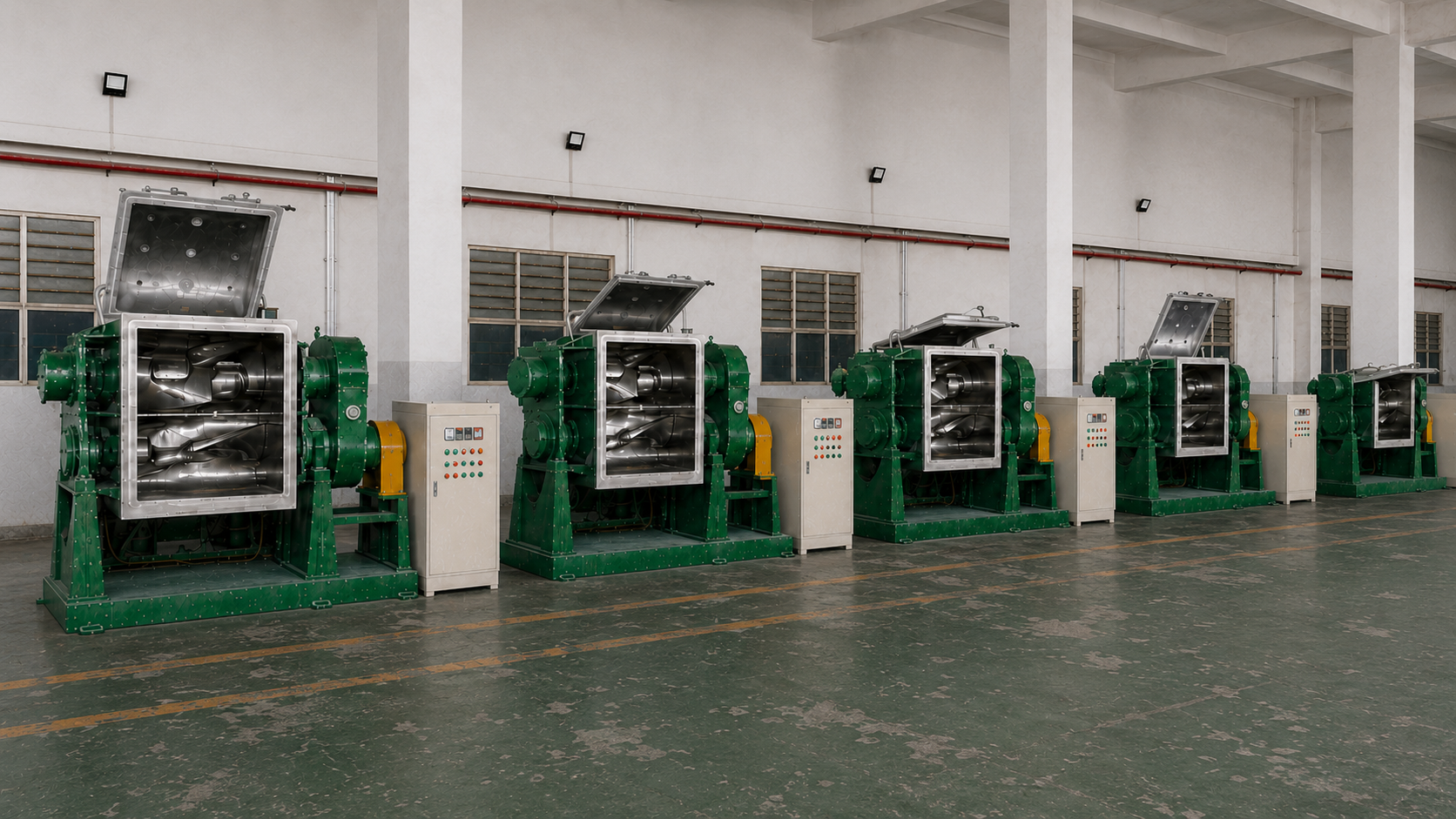
Yakows Technology (Dongguan) Co., Ltd. is a manufacturer specializing in high-performance HTV/HCR silicone rubber compounds and customized silicone material solutions. The company was established in 2020 and operates a 5,000 square meter manufacturing facility in Dongguan, China. It employs approximately 50 staff, and its technical department includes more than 10 engineers and technicians with experience in silicone formulation, processing optimization, testing, and application support.
Production capacity is substantial for a specialty compounder: monthly output is approximately 400,000 to 1,000,000 kg, equivalent to 4,800,000 to 12,000,000 kg per year. The company reports that about 70% of its products are exported, with major markets including Southeast Asia, the Middle East, Eastern Europe, Latin America, and North America.
Core products include:
- HTV silicone rubber for composite insulators and electrical insulation
- Food-grade HTV silicone rubber for kitchenware and baking molds
- Extrusion-grade HTV silicone rubber
- Fumed silica-reinforced HTV silicone rubber
- Flame-retardant and high-temperature-resistant silicone rubber
- Silicone rubber for automotive and industrial components
- Customized HTV/HCR silicone rubber compounds
The company’s integrated capabilities cover raw-material control, formulation, compounding, hardness and color customization, process optimization, laboratory testing, batch inspection, packaging, and container delivery. Quality-control procedures are implemented across raw-material inspection, production, in-process testing, finished-product inspection, and batch release. The quality management system is certified to ISO 9001. Applicable grades can also be supported by FDA food-contact compliance documentation, LFGB test reports, REACH compliance documentation, and other certificates according to the intended application. Grade-specific TDS, SDS, Typical COA, batch COA, and third-party test reports can be provided for customer evaluation.
Technical Explanation: Insulator-Grade HTV Silicone Rubber
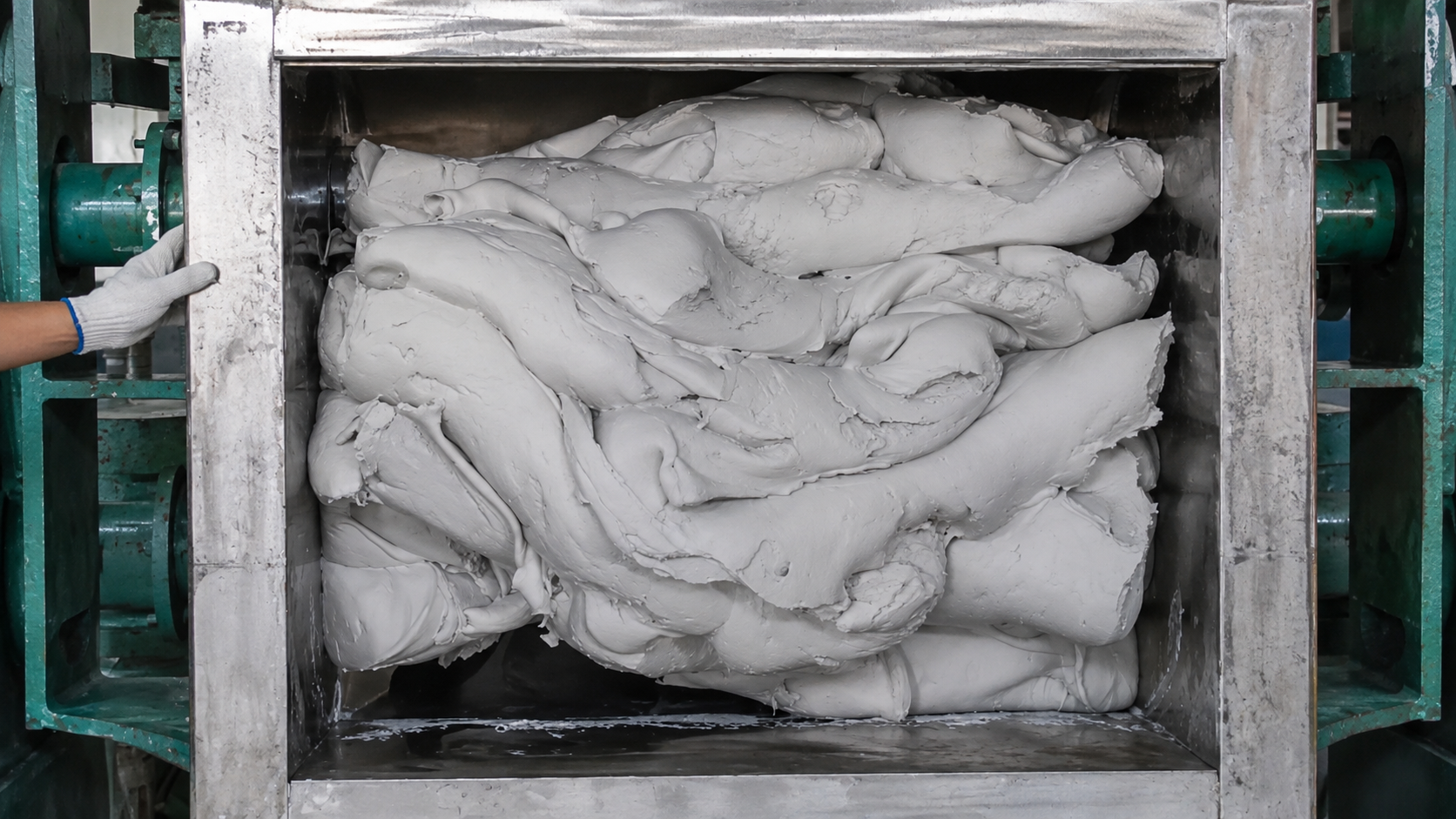
HTV silicone rubber, also called HCR (high-consistency rubber), is supplied as a solid compound and is heat-cured by compression or injection molding. For electrical applications, the compound is formulated with reinforcing fillers and functional additives that improve dielectric and outdoor-aging performance. The result is a material that can meet the combined requirements of electrical insulation, hydrophobicity, mechanical strength, and weather resistance.
The flagship electrical grade from Yakows is YK-3160, classified as HTV Silicone Rubber for Composite Insulators. It is designed for use in composite insulator housings and sheds, surge arresters, and outdoor high-voltage insulation components. Hardness, color, curing system, and selected performance characteristics can be adjusted according to customer requirements.
The table below compares key parameters of YK-3160 with YKS-8850, the company’s food-contact grade. The comparison shows that the same compounding platform can serve different application-driven material profiles.
| Property | YK-3160 (Electrical Insulation) | YKS-8850 (Food Contact) |
|---|---|---|
| Hardness | 65 ± 5 Shore A | 50 ± 3 Shore A |
| Density / specific gravity | 1.46 ± 0.03 g/cm³ | 1.14 ± 0.03 g/cm³ |
| Tensile strength | ≥ 5.0 MPa | ≥ 7.0 MPa |
| Elongation at break | ≥ 220% | ≥ 700% |
| Tear strength | ≥ 12 kN/m | ≥ 18 kN/m |
| Hydrophobicity | HC2 | — |
| Flame-retardant rating | V-0 | — |
| Dielectric strength | ≥ 22 kV/mm | — |
| Dielectric constant | ≤ 5.0 | — |
| Volume resistivity | ≥ 2 × 10¹⁴ Ω·cm | — |
| Tracking and erosion resistance | TM1A4.5, ≤ 2.5 mm | — |
| Dielectric loss tangent | ≤ 4.0 × 10⁻² | — |
| UV-aging resistance | Pass | — |
| Curing system | Adjustable per customer | DBPMH 35% at 1.5% by weight, 180°C × 5 min |
YK-3160 combines high dielectric strength, high volume resistivity, and low dielectric loss with a V-0 flame-retardant rating. It is designed to maintain hydrophobicity after aging and to resist tracking and erosion in contaminated environments. For composite insulator manufacturers, these properties directly affect the long-term reliability of the finished product.
Application and Use Cases
HTV silicone rubber for composite insulators is used in the manufacturing of outdoor high-voltage composite insulators, where it forms the insulating housing and weather sheds around the FRP core. The housing must provide electrical insulation, hydrophobicity, tracking and erosion resistance, and protection against moisture and outdoor aging. In production, it is heat-cured by injection or compression molding and must bond reliably to the primed FRP core. Matching equipment includes silicone rubber injection or compression molding machines, two-roll mills, composite insulator molds, curing systems, and FRP core surface-treatment and primer systems.
Yakows also lists HTV silicone rubber for cable accessories, automotive components, and industrial parts among its core products. For cable accessories and automotive applications, this means the same compounding platform can be used to develop grades with the required electrical, thermal, and mechanical behavior. Third-party market data shows that automotive applications accounted for 30.1% of silicone rubber market share in 2025. HTV is also preferred for EV battery pack gaskets because its high crosslink density and dielectric endurance meet demanding safety requirements.
On the food-contact side, YKS-8850 supports the production of bakeware, kitchenware, flexible molds, gaskets, and general compression-molded silicone products. It is supplied without pigment or curing agent, allowing customers to select colors and optimize their curing system. Its elongation of at least 700% and tensile strength of at least 7.0 MPa provide a useful balance for flexible molds and kitchenware. Supporting third-party test documentation per US FDA 21 CFR 177.2600 is available upon request.
Market Trend Analysis
Third-party market data indicates that the global silicone rubber market was valued at USD 5.7 billion in 2025, with HTV silicone rubber holding a 45.2% share. In the more specific silicone elastomers segment, liquid silicone rubber captured 48.1% of the market in 2025, particularly for precision medical and automotive parts. The two technologies are complementary: LSR is well suited to high-precision automated molding, while HTV remains important for large molded parts, high-voltage insulation, and applications requiring high crosslink density and dielectric endurance, including EV battery pack gaskets.
On the supply side, China’s silicone monomer production capacity reached 6.89 million tons in 2024, a year-on-year increase of 21.09%. This expanded raw-material pool gives domestic compounders access to greater upstream supply, but it also increases competition. Meanwhile, established global silicone producers are investing in specialty grades: Dow announced a USD 100 million investment to expand specialty silicone manufacturing in China, the US, and Japan through 2027, and Wacker Chemie AG reported silicone sales of EUR 2.81 billion in 2024, driven largely by high-performance specialty products. These moves reinforce the view that value in the silicone industry is shifting toward application-specific performance and documentation.
Standardization is also tightening. Composite polymer silicone rubber tension insulators are expected to comply with IEC 61109, and silicone rubber for insulators has passed 5,000-hour accelerated aging tests under IEC 61109 and IEC 62217 in referenced industry studies. For suppliers and buyers, this raises the importance of maintaining complete, grade-specific test documentation rather than relying on generic material properties.
Comparison with Traditional Solutions and General-Purpose Grades
Traditional material selection for molded silicone products often uses general-purpose HTV grades. General-purpose HTV can be suitable for ordinary molded parts where electrical insulation, hydrophobicity, tracking resistance, and long-term outdoor aging are not critical. However, when applied to composite insulators, general-purpose HTV carries meaningful risk: the material may not be optimized or verified for dielectric strength, volume resistivity, tracking and erosion, UV resistance, or flame retardancy.
| Selection criterion | Application-specific insulator-grade HTV (e.g., YK-3160) | General-purpose HTV |
|---|---|---|
| Primary design intent | Outdoor electrical insulation and weathering | Conventional molded silicone parts |
| Electrical verification | Dielectric strength, volume resistivity, dielectric loss, tracking/erosion | Not normally verified |
| Hydrophobicity | HC2 | Not guaranteed |
| Flame retardancy | V-0 | Application dependent |
| UV/weathering resistance | Pass | Not necessarily validated |
| Suitable use | Composite insulator housings/sheds, surge arresters, outdoor high-voltage components | General industrial or consumer products without high-voltage insulation requirements |
One important limitation must be considered. An application-specific silicone compound is a necessary but not sufficient condition for a reliable composite insulator. The silicone rubber must be compatible with the FRP core, primer, curing system, mold design, and production process. Compliance of the compound alone does not automatically establish compliance of the finished insulator; final product certification under standards such as IEC 62217 and IEC 61109 remains the responsibility of the insulator manufacturer. Therefore, production trials with the actual mold, FRP core, primer, and curing conditions, followed by finished-insulator testing, should always be completed before mass production.
Future Outlook
Demand for application-specific HTV silicone rubber is likely to keep growing as grid infrastructure expands, renewable energy capacity increases, and insulation systems are expected to operate reliably under more demanding environmental and electrical conditions. The silicone rubber insulation coating market is projected to reach USD 4.12 billion by 2035 at a compound annual growth rate of 5.73%, according to Market Research Future, which points to sustained interest in silicone-based insulation systems.
For HTV silicone rubber suppliers, the advantage will come from combining formulation flexibility with consistent quality and complete documentation. Yakows Technology’s mid-sized, export-oriented model is relevant to buyers that need customized compounds, reasonable lead times, and batch-level traceability. The availability of ISO 9001 certification, grade-specific test reports, and third-party compliance documents gives buyers a foundation for evaluation, while production-scale capability allows both trial orders and stable repeat supply.
For buyers, the practical recommendation is to treat HTV silicone rubber as a performance material. The selection process should include a review of the current TDS, batch COA, relevant electrical and mechanical test reports, and, where applicable, finished-insulator validation.
Readers who want to evaluate the company’s product documentation can download the Yakows brochure here: Yakows Technology company brochure.
FAQ
What is HTV silicone rubber for composite insulators, and why is it used?
HTV silicone rubber for composite insulators is a high-temperature-vulcanizing solid silicone compound specifically formulated for molding the housings and weather sheds of high-voltage composite insulators. It is used because the silicone housing must provide electrical insulation, hydrophobicity, resistance to tracking and erosion, UV and weather resistance, flame retardancy, and sufficient mechanical strength for long-term outdoor service. Compared with general-purpose HTV, an electrical insulation grade is optimized for dielectric properties and environmental aging. YK-3160, for example, provides HC2 hydrophobicity, dielectric strength of at least 22 kV/mm, V-0 flame retardancy, high volume resistivity, UV-aging resistance, and tracking and erosion resistance.
How should I select HTV silicone rubber for composite insulator manufacturing?
Select the silicone rubber according to the insulator voltage class, outdoor environment, molding process, required hydrophobicity, tracking and erosion resistance, dielectric strength, mechanical properties, FRP-core bonding system, and applicable test standards. Do not select the material based only on hardness or price. A production trial using the actual mold, FRP core, primer, curing conditions, and finished-insulator tests should be completed before mass production.
Should I choose standard general-purpose HTV silicone rubber or YK-3160 for composite insulator manufacturing?
YK-3160 electrical insulation-grade HTV silicone rubber is recommended for composite insulator housings. Unlike standard general-purpose HTV, it is formulated and tested for hydrophobicity, dielectric strength, volume resistivity, tracking and erosion resistance, flame retardancy, UV aging, and long-term outdoor electrical insulation. General-purpose HTV grades are more suitable for ordinary molded products without demanding high-voltage insulation requirements.
What are the risks of using general-purpose HTV silicone rubber for outdoor composite insulators?
Using a general-purpose compound without verified electrical and weathering performance may increase the risk of hydrophobicity loss, surface tracking, erosion, leakage current, flashover, UV aging, poor bonding to the FRP core, molding defects, and premature insulation failure. Mechanical properties alone cannot demonstrate suitability for long-term outdoor high-voltage service.
Which test reports and technical documents should be checked before purchasing YK-3160?
Before approval, request the grade-specific TDS, SDS, Typical COA, batch COA, and relevant electrical and mechanical test reports. Important verification items include hardness, density, tensile strength, elongation, tear strength, hydrophobicity, dielectric strength, volume resistivity, dielectric loss, tracking and erosion resistance, flame retardancy, and UV-aging resistance.