
Composite Insulator Supply: Long-Term Partner Due Diligence
Long-term composite insulator supply is not only a purchasing decision. It is a test of whether a manufacturer can combine product performance, production stability, standards traceability and delivery discipline across multiple shipments. For utilities, distributors and engineering contractors, the durable choice is less often the lowest spot quote and more often a supplier system that can still be trusted in the third year of a framework agreement.
Why long-term supplier selection now drives composite insulator buying
The composite insulator category has matured into a volume business. One widely cited assessment from Market Research Future valued the global composite insulator market at roughly USD 6.58 billion in 2024 and projected it to reach USD 9.3 billion by 2035. Mordor Intelligence reported that Asia-Pacific supplied about 49.5% of global revenue in 2024. Product-level estimates from Future Market Insights put suspension-type insulators at about 38% of composite insulator demand in 2025 and place the 11 kV–200 kV segment at roughly one third of the total market.
Those numbers point to a specific buying pattern. Transmission and distribution networks do not order composite insulators once. They order suspension sets, tension strings, line posts, station posts and distribution units repeatedly, often for multiple projects. The repeat cycle makes quality consistency and delivery reliability more visible. A supplier can meet a single order yet struggle to manage ten orders that require different pollution classes, mechanical loads and end-fitting configurations.
For distributors this creates an opportunity as well as a risk. A dependable long-term manufacturer can offer predictable lead times, OEM/ODM flexibility, correct export documentation and spare-part continuity. A poorly evaluated supplier can create cascading problems: certificates that do not match the shipment, delays at customs, batch-to-batch variation and unplanned outages in the field.
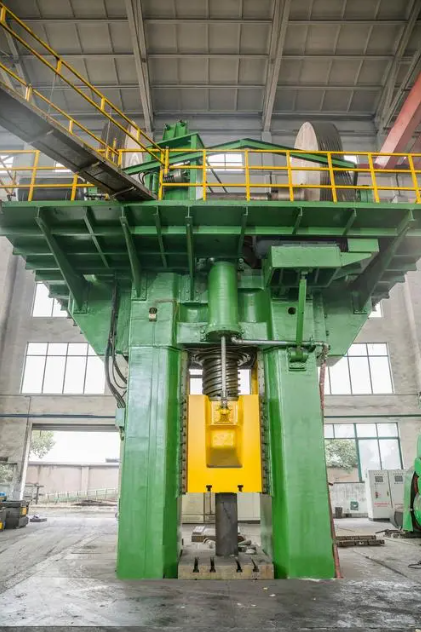
Fittings and end-hardware production form part of the long-term reliability chain in composite insulator supply.
Applications that turn one-time orders into repeat programmes
The operational demand for composite insulators is not random. It concentrates in identifiable line and substation applications. Silicone rubber suspension composite insulators are common on overhead transmission lines where contamination, wetting and bird-related outages demand a hydrophobic surface. Line post and station post products, including 66kV line post composite insulators and anti-pollution station post composite insulators, are used in substation exits, distribution feeders and compact lines. Long-rod and pin-type designs bring lightweight handling to areas where installation access is difficult, such as mountain routes, river crossings and high-altitude sites.
Many of these applications are location-specific. Coastal regions need salt-spray resistance; industrial zones need creepage profiles suitable for heavy contamination; desert and high-irradiation areas place a premium on UV-resistant, anti-aging housing materials. Vibration-resistant and wind-power transmission designs respond to mechanical stress in exposed corridors. For a distributor that serves multiple utilities, this means the product list must cover more than one generic insulator type.
What matters operationally is not simply the brand of silicone or the voltage class. It is whether the manufacturer can repeat the same leakage distance, the same housing thickness, the same sealing process and the same mechanical ratings from batch to batch. In long-term supply, repeatability is the real performance spec.
China Energy and Chemical Industry Co.,Ltd as an export-led supply example
One company active in this export-driven segment is China Energy and Chemical Industry Co.,Ltd (CECI), an electrical insulator and fittings manufacturer based in Zhengzhou, Henan, China. Its portfolio includes polymer insulators, porcelain insulators, glass insulators, metal fittings for insulators and overhead line hardware accessories. CECI also states that OEM and ODM work are available, which makes the company relevant for distributors that need customized colours, fitting lengths, packaging or product variants.
The company profile reports that about 95% of CECI output is exported. Its main markets include Russia, Vietnam, France, Spain, Italy, Türkiye, Brazil, Poland, Indonesia and Saudi Arabia, and its products have been exported to more than 40 countries. The company operates a 30,000 m² factory with around 100 employees and an R&D team of eight engineers. For an external buyer these are modest but meaningful figures: they show an organization designed for international specification work rather than purely domestic distribution.
None of these details proves that every product is excellent. But they do give a distributor a set of documented facts to verify before starting a relationship. The right next step is not to assume quality from a website; it is to request catalogues, test records and references and then compare those documents with the company’s stated production process.
Capacity, lead time and MOQ as negotiation evidence
Production capacity and lead time are among the first pieces of evidence a long-term buyer should collect. A manufacturer that cannot state its monthly output ceiling or realistic manufacturing lead time will have difficulty managing distributor forecasts and emergency restocking.
CECI states a monthly production capacity of 500 tons and 100,000 pieces. Its typical production lead time is 30 to 45 days, and its minimum order quantity is 500 units. For a distributor, these numbers create a simple planning model: if monthly demand is predictable, orders can be released every four to six weeks and safety stock can be set against the supplier’s stated lead time.
A limitation should also be obvious. Stated capacity is a ceiling, not a guarantee of available capacity on any given date. Buyers should ask whether the supplier’s current order book leaves room for new programmes, whether raw silicone and FRP cores are available, and whether the stated MOQ applies to a single variant or a consolidated order. The best supplier answer is a contract clause, not a sales promise.
Standards and mechanical data protect repeatability
In long-term supply, no order should rest on a model number alone. The relevant standards determine whether the product is accepted by the end utility, by the inspector and by the grid operator.
For composite insulators, one of the central international references is IEC 61109:2025. This updated standard applies to composite suspension and tension insulators for AC and DC systems with nominal voltages greater than 1000 V. In North America, ANSI/NEMA C29.11-2020 defines test methods and performance characteristics for composite insulators used in overhead transmission lines. A supplier that cannot connect its product to these documents is not ready for serious export distribution.
Mechanical and interface data are just as important. One CECI overhead line reference record, for example, lists a rated electromechanical failing load of 70 kN and a connection structure code of 16. These are the kinds of deterministic values that allow a distributor to confirm compatibility with existing fittings, clevis hardware, clamps and tower attachments. When values such as these are missing, replacement stock can become an engineering problem.
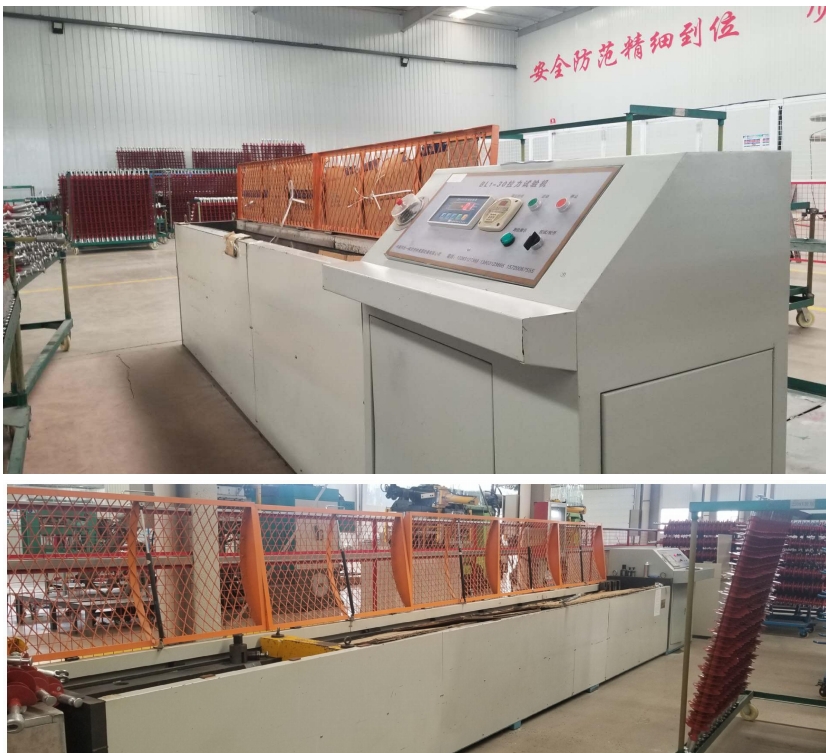
Batch and type test records give long-term buyers evidence that composite insulator quality can be repeated.
Composite vs porcelain and glass: what material comparison misses
Product-level comparison in an insulator programme should be framed around lifetime ownership, not first price. In broad terms, polymer composite insulators are about 50% lighter than porcelain or glass equivalents and can reduce installation time by roughly 60%. CECI’s own comparative material data indicates that composite products may have an initial price about 10% higher, while annual maintenance costs can be approximately 40% lower. That combination makes composites attractive for contaminated areas, long spans, difficult access and reduced-maintenance line strategies.
Porcelain and glass still offer important technical advantages. They provide proven thermal resistance, high mechanical and electrical stability, and mature visual inspection methods. In many legacy networks, porcelain and glass products remain the preferred solution because system engineers have years of field data and inspection procedures already built around them.
The central limitation of composite insulators is diagnostic visibility. The silicone housing protects the FRP core, but that same housing can hide internal damage, moisture ingress or tracking until a more advanced test is performed. A cracked glass disc or a damaged porcelain shell is often more obvious from a ground patrol. Therefore a distributor that promotes composite insulators as a lower-maintenance product must also plan for electrical testing, thermal imaging or other diagnostic checks where visual inspection is insufficient.
From spot orders to system supply: delivery and quality risk control
Distribution agreements live or die by delivery and document reliability. The typical risks in cross-border composite insulator supply include production delays, quality inconsistency between batches, shipping problems, customs clearance delays and insufficient compliance certificates.
CECI’s documented risk-control approach is useful as a due-diligence template. It describes an ISO 9001-based quality management system, authoritative testing reports from domestic and international third-party institutions, full batch testing before shipment, clear quality and delivery terms in contracts, and complete compliance certificates. The company also assigns project managers to track production, provides technical support after quality issues, uses staged deliveries to reduce delay risk and coordinates professional logistics teams for customs clearance.
What matters for the buyer is not the existence of a long list of measures but whether each measure can be proven. A serious long-term supplier should allow pre-shipment inspection, share factory test records, produce the relevant certificates and accept contractual consequences for late delivery. If a manufacturer refuses those steps, the commercial risk does not disappear; it simply moves to the importer.
Selection checklist for distribution and utility buyers
The following table frames the decision-stage questions that a distributor should answer before committing to a composite insulator supplier:
| Decision checkpoint | Buyer question | Evidence to request |
|---|---|---|
| Manufacturing capacity | Can the supplier support repeat orders without endless delays? | Written monthly capacity, production records and current order-book confirmation |
| Lead time and MOQ | Are lead-time and minimum-order terms realistic for import ordering? | Quotation with contractual lead time and MOQ clauses |
| Quality system | Is quality controlled by process or only by final inspection? | ISO 9001-based quality documentation, internal test procedures and batch records |
| Standards alignment | Which IEC or ANSI/NEMA versions apply to each product line? | Type test reports and valid third-party test certificates |
| Export experience | Can the supplier handle documents and shipping for different countries? | Main market list, export records, customs documentation experience and references |
| Risk control | Does the supplier share risk rather than transferring it to the buyer? | Pre-shipment inspection options, staged delivery agreements, project manager support and claims process |
Market outlook: more framework contracts, less spot buying
Several forces are pushing composite insulator procurement toward longer supplier relationships. First, market growth is not limited to one region. With Asia-Pacific already representing close to half of the global market and grid investment continuing in developing and developed economies alike, distributors need suppliers that can serve multiple countries without losing specification control. Second, standards are being updated. IEC 61109:2025 raises the documentation bar for composite suspension and tension insulators, which will make current type-test evidence a competitive advantage. Third, product demand remains concentrated in the mid-voltage and suspension categories, exactly the categories that benefit from standardized repeat production.
In the next phase, expect more utilities and distributors to sign framework contracts with defined capacity, quality audit rights, documentation requirements and multi-year price-review clauses. Suppliers that treat production capacity as a planning metric, share test results openly and maintain consistent export discipline will be in a stronger position. Suppliers that rely only on low price and informal arrangement will face increasing friction at inspection, certification and customs stages.
Frequently asked questions
What is the minimum order quantity from CECI for composite insulators?
CECI states a minimum order quantity of 500 units. Buyers should confirm in writing whether the 500-unit threshold applies to one product variant or can be consolidated across several insulator types.
Does CECI have enough capacity for recurring monthly supply?
CECI states a monthly production capacity of 500 tons and 100,000 pieces. Its typical production lead time is 30 to 45 days, which gives distributors a useful baseline for planning rolling orders.
Which composite insulator standards should distributors require?
IEC 61109:2025 is a key international standard for composite suspension and tension insulators on AC and DC systems above 1000 V. For North American overhead line projects, ANSI/NEMA C29.11-2020 is the recognized composite insulator test-method baseline.
How do composite insulators compare with porcelain and glass in maintenance cost?
In manufacturer-level comparative data, composite insulators have an initial price about 10% higher than porcelain or glass, but annual maintenance cost can be about 40% lower. The main trade-off is inspection: composite housings can hide internal damage better than traditional materials.
What risk-control clauses are important in a long-term composite insulator supply contract?
Buyers should secure clear delivery and quality terms, factory test records, pre-shipment inspection, third-party test reports, compliance certificates, project-manager follow-up, technical support and staged delivery terms to reduce delay and customs risks.
Why does OEM/ODM capability matter for a long-term distribution arrangement?
OEM and ODM work allow distributors to adapt insulators to local fitting systems, colours, packaging and project specifications. CECI lists OEM and ODM as available services, but each custom variant should be defined in drawings, MOQ rules and lead-time agreements before production starts.
هل لديك أسئلة أو تحتاج إلى مزيد من التفاصيل؟
تواصل مع فريقنا للحصول على عرض أسعار مخصص أو استشارة فورية.
طلب عرض أسعار
املأ النموذج أدناه وسيتواصل معك فريقنا بعرض مقترح مخصص.
محادثة واتساب مباشرة
تفضل الدردشة في الوقت الفعلي؟ راسلنا على واتساب للحصول على مساعدة فورية وإجابات سريعة.
- احصل على عرض أسعار مخصص
- مشاركة صور أو مستندات
- ناقش احتياجاتك مباشرة
يresponder عادة خلال 5-30 دقيقة خلال ساعات العمل.