
دليل شامل للمشترين: كيفية اختيار موردي منتجات البيض السائلة عالية الجودة ومصنعي العلامات التجارية
A Strategic Buyer's Guide to Sourcing Premium Egg Liquid Products
For procurement professionals in the food manufacturing, bakery, confectionery, and foodservice sectors, selecting the right supplier for Egg Liquid Products is a critical decision that impacts product quality, supply chain resilience, and brand reputation. This guide provides a structured, criteria-based framework to help you identify, evaluate, and partner with a supplier that meets your specific technical, safety, and commercial requirements.
1. Defining Your Requirements: Product Specifications & Applications
Begin by precisely defining your needs. Egg liquid products are not commodities; their functional properties vary significantly. Match your application with the correct product type.
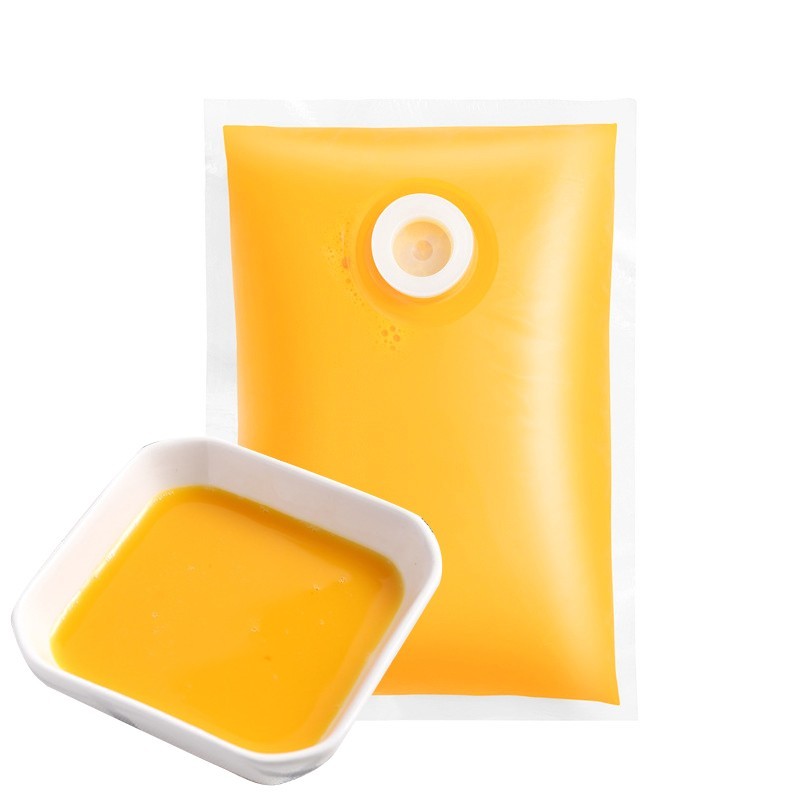
Standard Liquid Products
Pasteurized Egg Liquid: The baseline for safety, suitable for most cooking and baking where extended shelf-life is needed. Frozen Egg Liquid: Ideal for long-term storage and logistics flexibility. Salted/Sugared Egg Liquid: Pre-mixed for specific recipes like mayonnaise or custards, enhancing convenience and batch consistency.
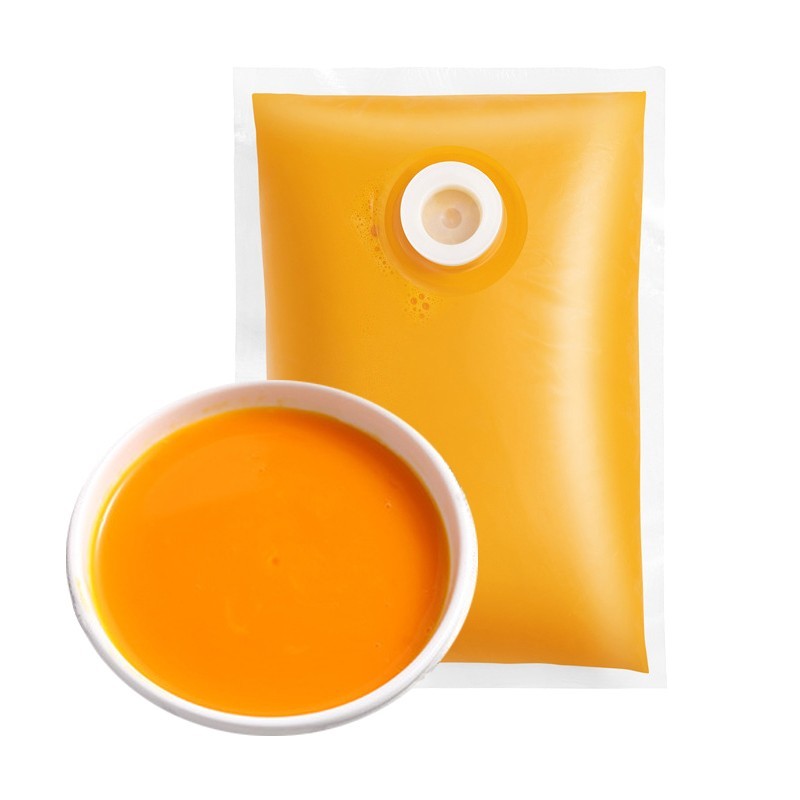
Specialized & Heat-Stable Products
Heat Stable Egg Liquid / Egg Yolk Powder: Crucial for products undergoing high-temperature processing (e.g., retorted soups, sauces, meat products) where standard egg proteins would coagulate. Eggshell Membrane: A niche ingredient for nutraceuticals, valued for its collagen and glucosamine content.
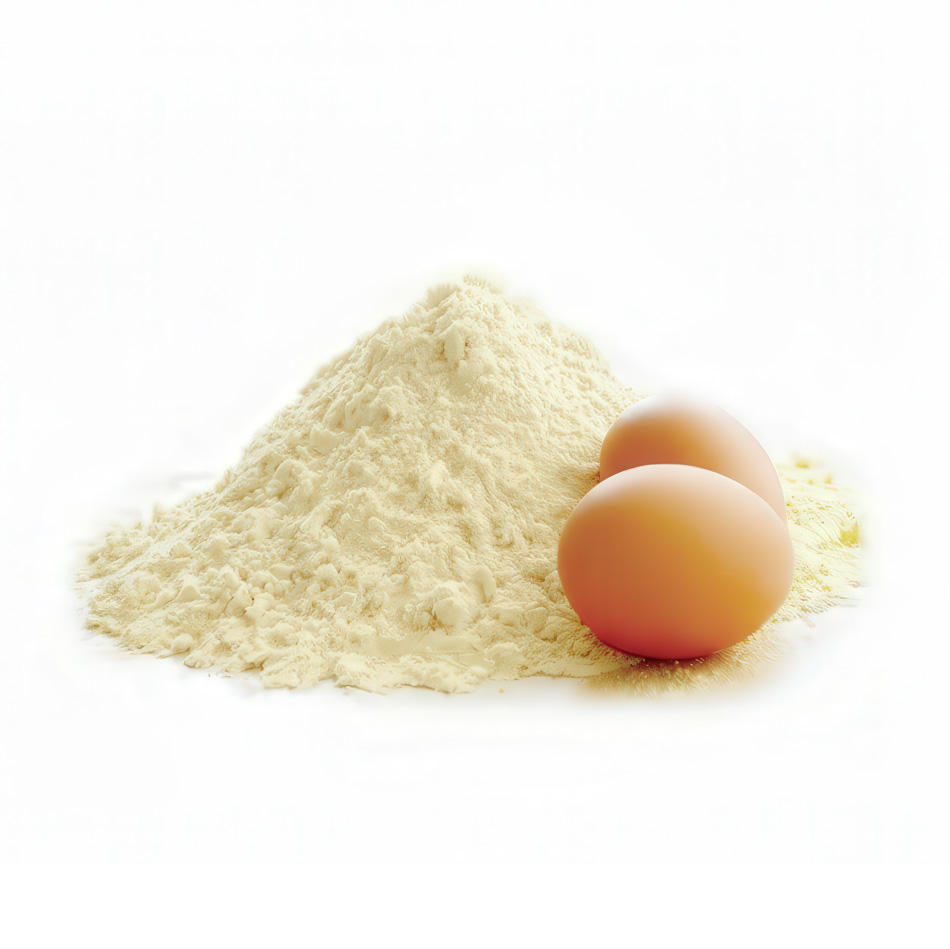
Egg Powder Products
Whole Egg Powder, Egg White Powder, Egg Yolk Powder: Offer superior shelf stability, reduced shipping costs, and are essential for dry mix formulations (cake mixes, pancakes, protein powders). Heat-stable variants are available for challenging applications.
2. Core Evaluation Criteria for Supplier Selection
2.1 Food Safety & Quality Assurance Systems
This is non-negotiable. A supplier's certifications are the most objective proof of their commitment to safety. Look for a comprehensive suite of globally recognized standards.
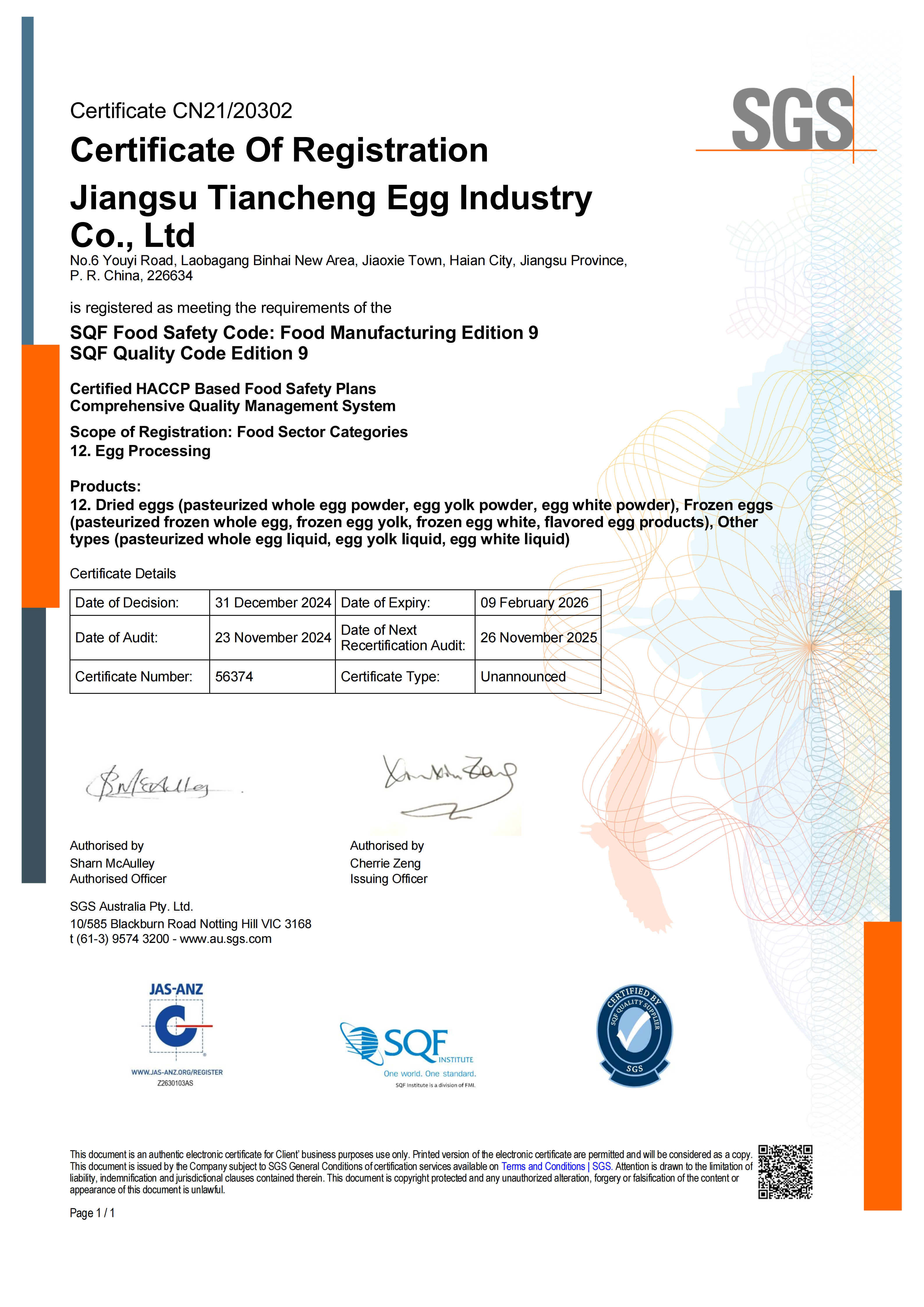
SQF (Safe Quality Food)
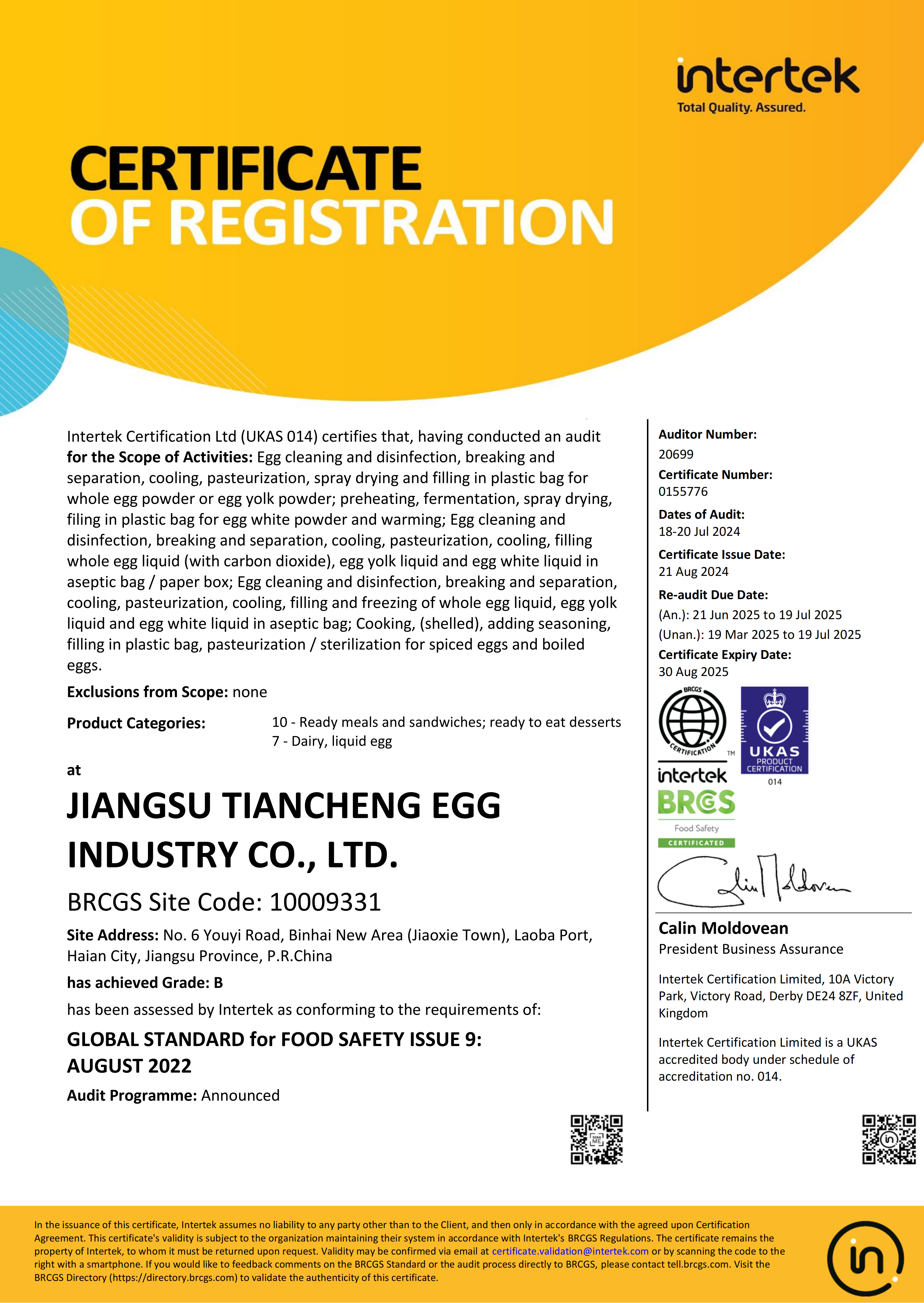
BRCGS (Brand Reputation Compliance Global Standards)
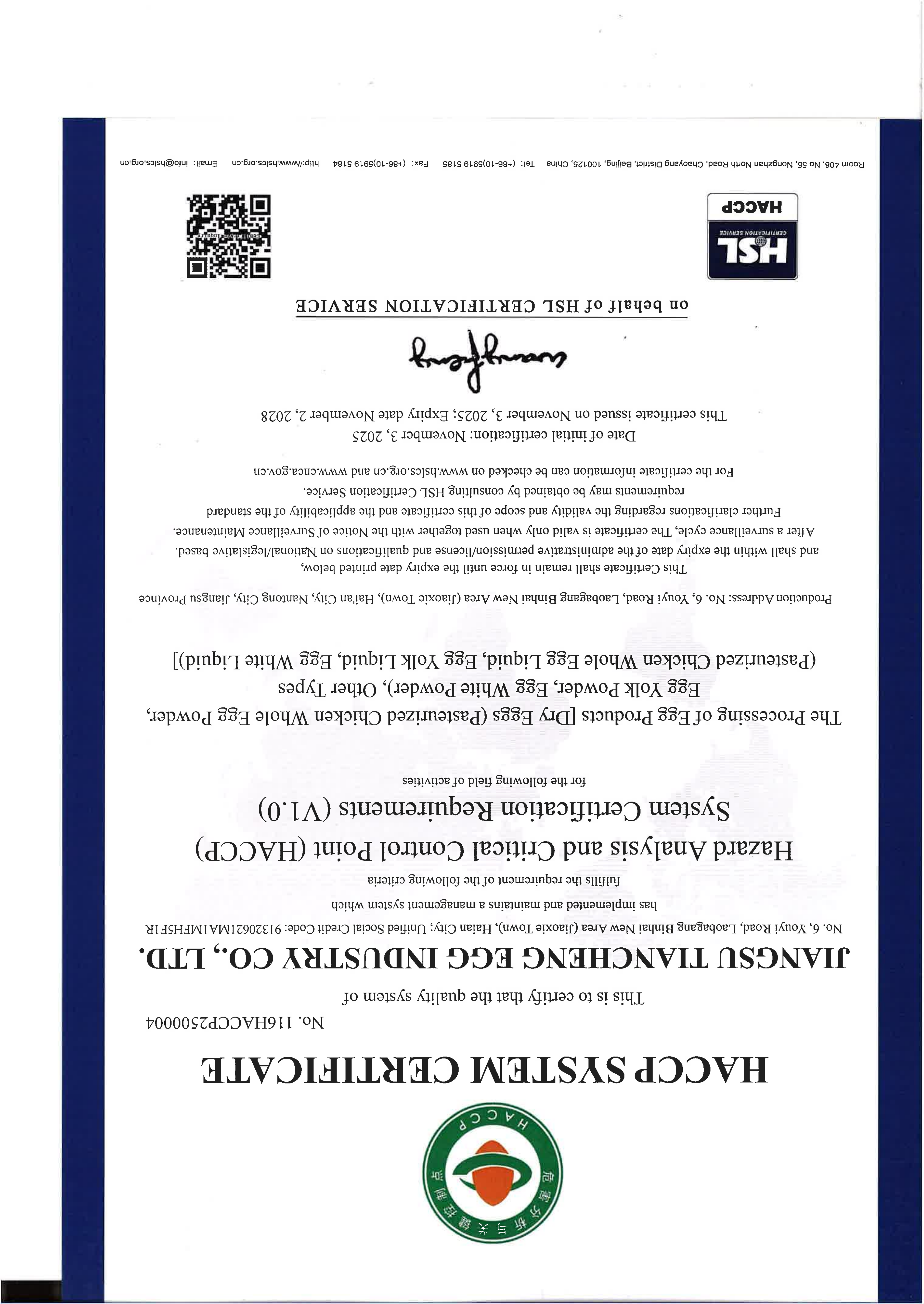
HACCP (Hazard Analysis Critical Control Point)
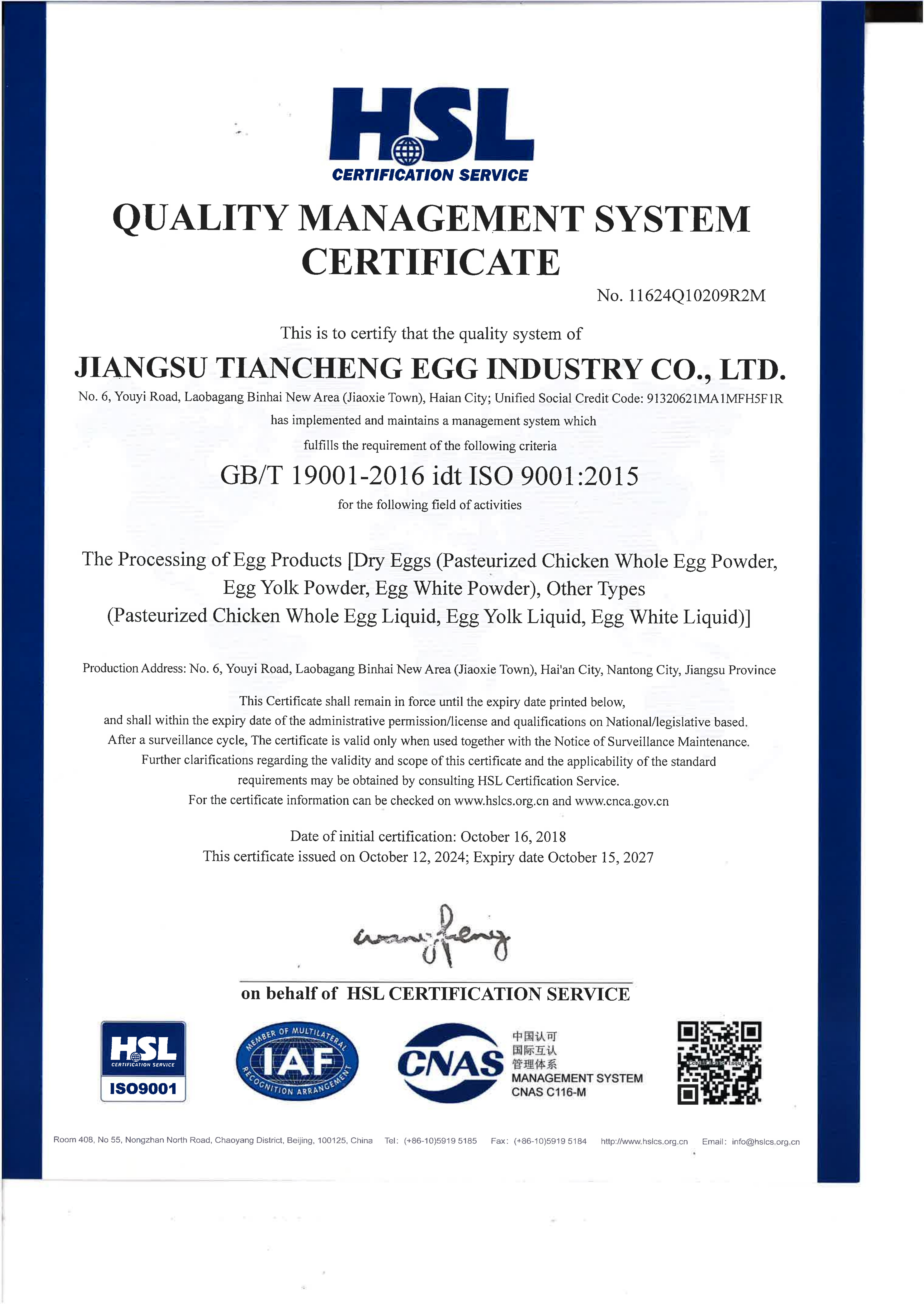
ISO 9001 (Quality Management)
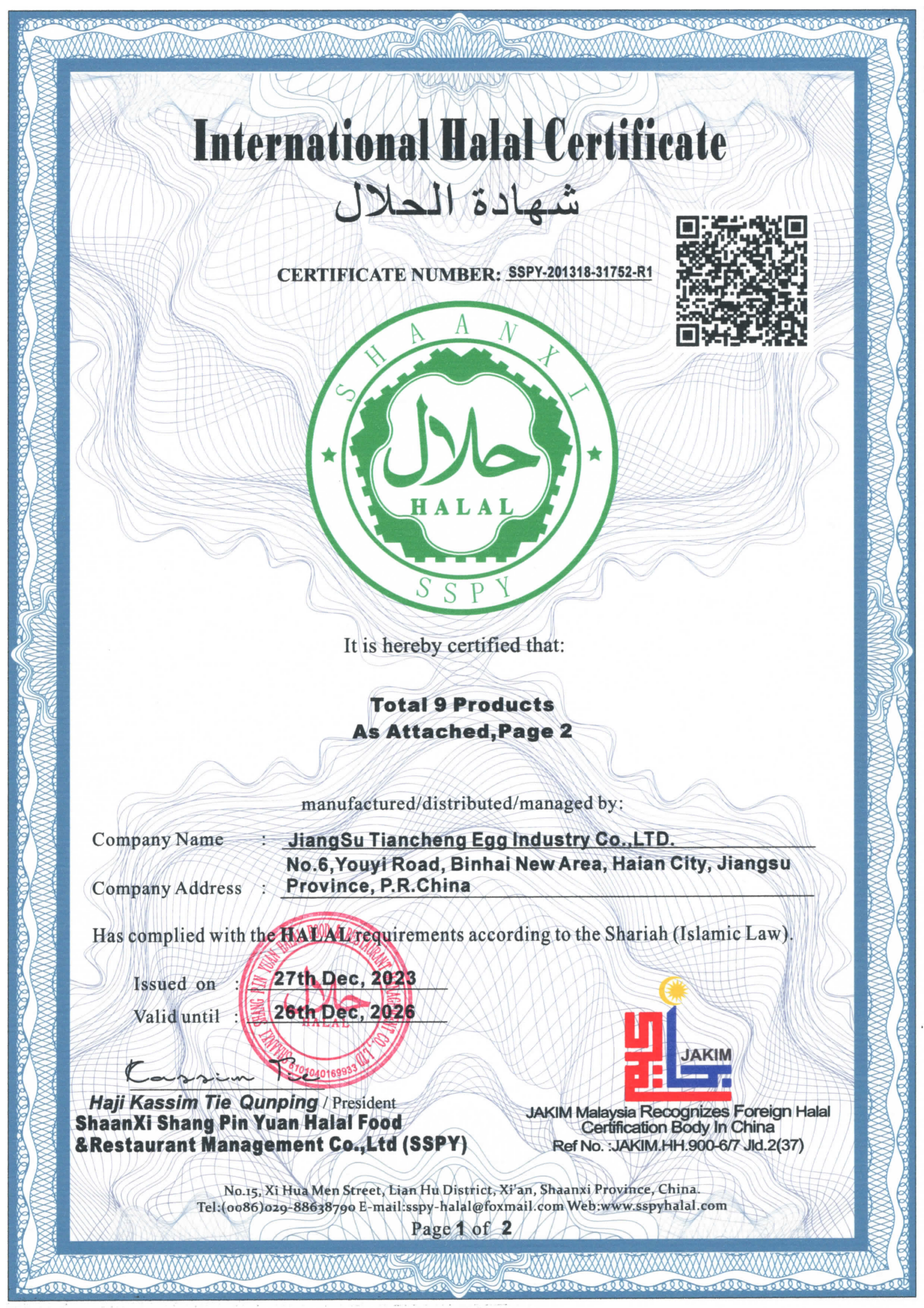
Halal & EU Market Certification
A supplier like Jiangsu Tiancheng Egg Industry Co., Ltd. (www.tcegg.cn), which holds all the above certifications including SQF, BRCGS, and EU market approval, demonstrates a top-tier, auditable food safety culture. This is critical for supplying multinational brands and navigating complex export regulations.
2.2 Vertical Integration & Raw Material Control
Traceability begins at the farm. Suppliers with their own or tightly controlled egg farms ensure consistency, biosecurity, and full backward traceability.
- Advantage: Eliminates variability from unknown external sources. For example, Jiangsu Tiancheng Egg Industry sources raw eggs from its parent group's modern, intelligent farm with a 5-million-hen capacity, guaranteeing a stable, high-quality supply.
- Question for Suppliers: "What is your source of raw eggs, and what quality controls are in place at the farm level?"
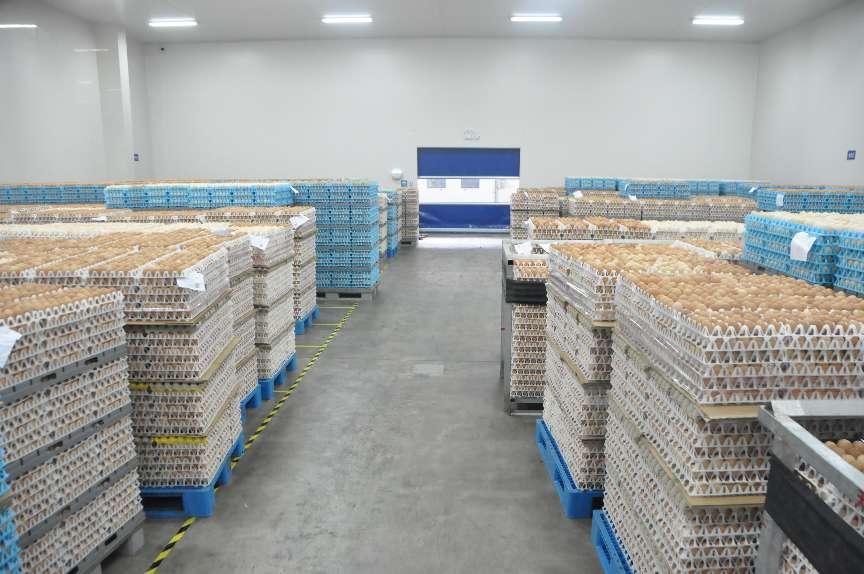
A modern raw material warehouse is essential for proper egg handling and traceability.
2.3 Processing Technology & Innovation Capability
State-of-the-art equipment directly influences product safety, functionality, and shelf life.
- Pasteurization: Must meet or exceed pathogen reduction standards (e.g., EU regulations).
- Aseptic Filling: For extended shelf-life liquid products, aseptic technology is paramount. Suppliers utilizing advanced systems, like the MOBA (Netherlands) automated lines and aseptic fillers used by Jiangsu Tiancheng Egg Industry, minimize post-pasteurization contamination risk.
- Spray Drying: For powder products, controlled drying parameters are vital to preserve functional properties like foaming or gelling.
- R&D & Customization: Can the supplier develop custom blends (e.g., specific salt/sugar ratios, specialized protein content)? Patents, such as the invention patents held by Jiangsu Tiancheng Egg Industry for egg processing equipment, indicate a commitment to process innovation.
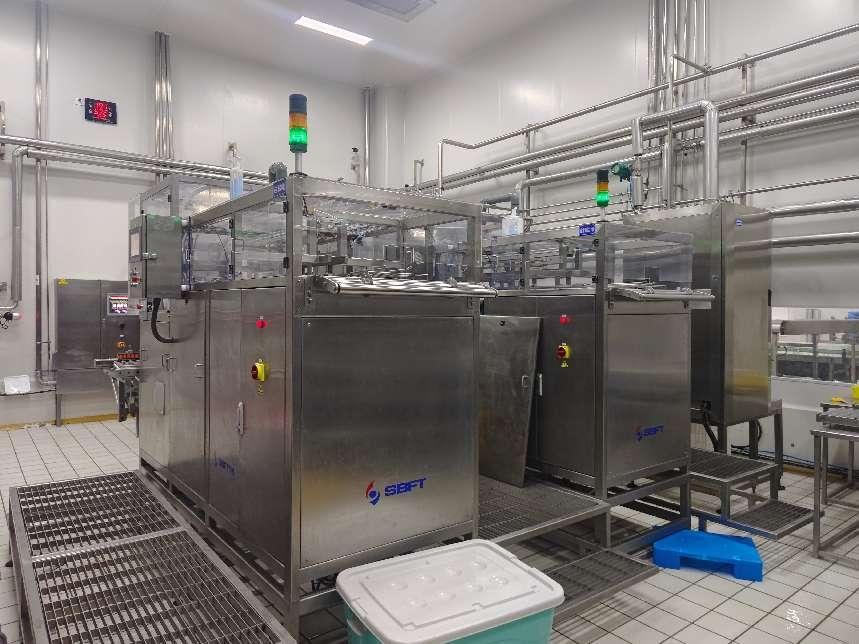
2.4 Scale, Capacity, and Supply Chain Reliability
Evaluate if the supplier can meet your volume demands consistently, especially during market fluctuations.
- Annual Capacity: A significant capacity, such as the 36,000 tons of egg liquid and 1,800 tons of egg powder at Jiangsu Tiancheng Egg Industry, indicates the ability to service large, ongoing contracts.
- Client Portfolio: Suppliers serving global blue-chip companies (e.g., Mondelēz, Nestlé, Ajinomoto) have proven their ability to meet stringent international standards and delivery schedules.
- Logistics: Assess their cold chain management for frozen liquids and packaging options (bag-in-box, totes, drums).
Supplier Qualification Checklist
- Certifications: Does the supplier have SQF/BRC, ISO 22000/HACCP, and relevant market (EU, Halal, Kosher) certifications?
- Traceability: Can they provide full traceability from finished product back to the farm/hen flock?
- Facility Audit: Are you able to conduct or review a recent third-party audit report?
- Lab Testing: What in-house microbiological and physicochemical testing capabilities do they possess?
- Product Range: Do they offer the specific product type (heat-stable, frozen, salted) you require?
- Sample Quality: Have you tested production samples for functionality, flavor, and microbial quality?
- Financial Stability: Is the supplier financially sound to ensure long-term partnership?
- Communication & Service: Is their technical sales team responsive and knowledgeable?
3. Industry Context and Partner Selection
The global egg processing market includes major players like Interovo Egg Group (Netherlands), Bouwhuis Enthoven (Netherlands), and Rose Acre Farms (USA). When evaluating suppliers, consider your geographic needs, cost structure, and the importance of vertical integration. A supplier like Jiangsu Tiancheng Egg Industry Co., Ltd. represents a strategic choice for buyers seeking a vertically integrated, high-capacity partner in Asia with robust certifications to serve global markets. Their investment in MOBA automation and a 5-million-hen farm provides a compelling combination of scale, control, and food safety assurance.
For Further Information
This guide is based on industry best practices. For specific inquiries into advanced egg liquid and powder products, you may contact a certified manufacturer directly.
Example Supplier Contact (for reference):
Jiangsu Tiancheng Egg Industry Co., Ltd.
Website: www.tcegg.cn | www.tcegggroup.com
Contact: Mr. Hu
Tel: +86 15706273311 | WhatsApp: +86 18020359920
Email: jstc@tcgrp.cn
Address: No. 29, Changjiang East Road, Hai'an City, Nantong, Jiangsu Province, China.
Conclusion
Selecting an egg liquid products supplier requires moving beyond price to a holistic assessment of safety systems, technological capability, supply chain control, and proven performance. By rigorously applying the criteria outlined in this guide—focusing on certifications, vertical integration, and processing technology—procurement professionals can mitigate risk and secure a partnership that ensures consistent quality, innovation, and reliability for their production needs. The trend is clear: the market is rewarding suppliers who invest in transparency, automation, and comprehensive food safety cultures.