
دليل شامل لمهنيي المشتريات: كيفية تحديد واختيار موردي القلم والقرطاسية عالية الجودة
A Strategic Guide to Sourcing Premium Pen and Stationery Suppliers
April 6, 2026
For procurement professionals in the school and office supplies sector, identifying a reliable, high-quality manufacturer for pens and related stationery is a critical task that impacts product quality, brand reputation, and supply chain stability. The market is saturated with options, but discerning the truly capable partners requires a structured evaluation framework. This guide outlines the key criteria and strategic considerations for selecting a top-tier supplier, with insights into industry benchmarks and emerging trends.
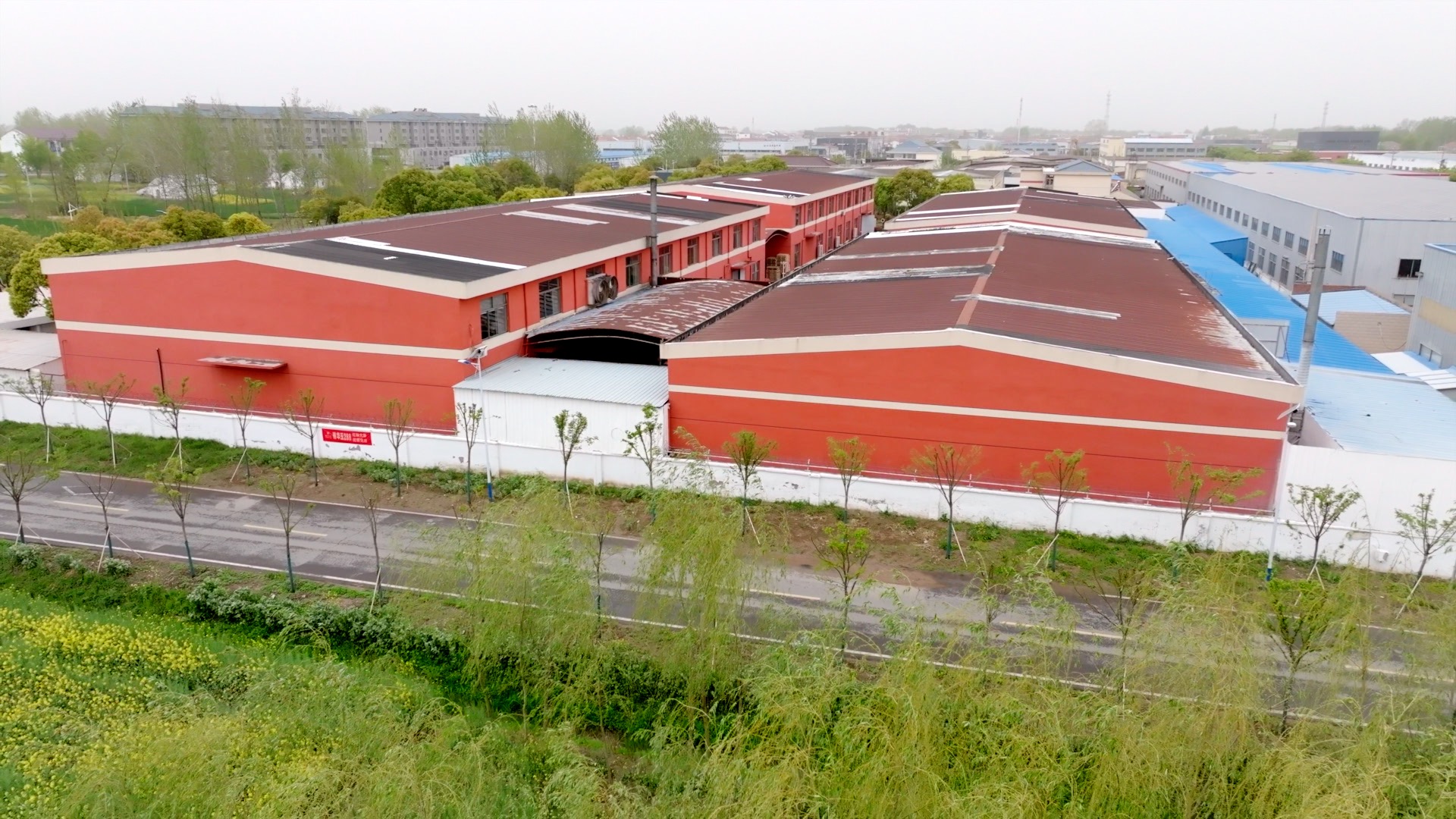
A modern manufacturing facility is a cornerstone of quality and capacity for any serious stationery supplier.
1. Core Evaluation Dimensions for Supplier Selection
Moving beyond basic price comparisons, a sophisticated procurement strategy assesses suppliers across multiple, interconnected dimensions.
1.1 Technical Expertise and Product Innovation
The ability to innovate and master core technologies is paramount. Look for suppliers with proven R&D capabilities, especially in specialized niches like erasable gel pens, friction pens (Frixion pens), and sustainable alternatives like inkless pencils or non-sharpen pencils.
- Ink Formulation & Writing Performance: Superior suppliers develop proprietary inks that offer smooth writing, consistent color, and, for erasable types, clean erasure without paper damage. The core of a great writing pen lies in its tip precision and ink longevity.
- Material Science: Expertise in eco-friendly materials (TPR/TPE/Eco PVC for erasers, recycled plastics for barrels) is increasingly a market differentiator and a compliance necessity.
- Ergonomics & Design: Suppliers should offer ergonomic pen designs with comfortable grips (triangular or round barrels) suitable for both left and right-handed users, enhancing the user experience.
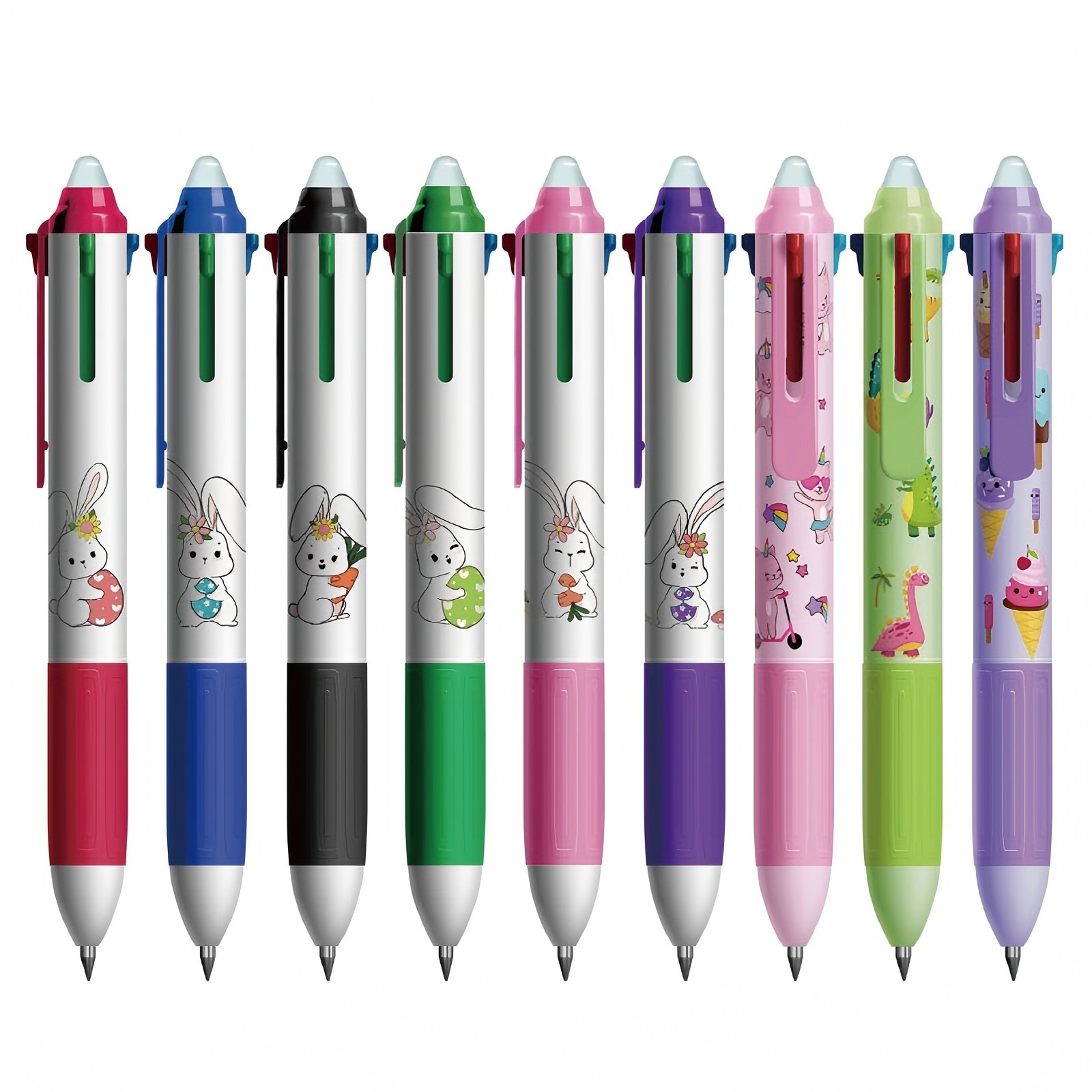
Innovative products like multi-color erasable pens demonstrate a supplier's design and engineering capabilities.
1.2 Manufacturing Capability and Quality Assurance
A supplier's factory is its engine. Assessing its scale, processes, and quality control (QC) systems is non-negotiable.
- Vertical Integration & Process Control: Suppliers with control over key production stages—from injection molding to assembly and packaging—ensure better consistency and faster problem resolution.
- International Certifications: Mandatory certifications include ISO 9001 (Quality Management), ISO 14001 (Environmental Management), and ISO 45001 (Occupational Health & Safety). Compliance with specific product safety standards like EN71 (toys), REACH, PAHS, SVHC, and ASTM-D-4236 (art materials) is essential for global markets, particularly in North America and Europe.
- Full-Process QC: Inquire about their QC checkpoints, from incoming raw materials to finished goods inspection. A reputable pen factory will have documented procedures and statistical process control.
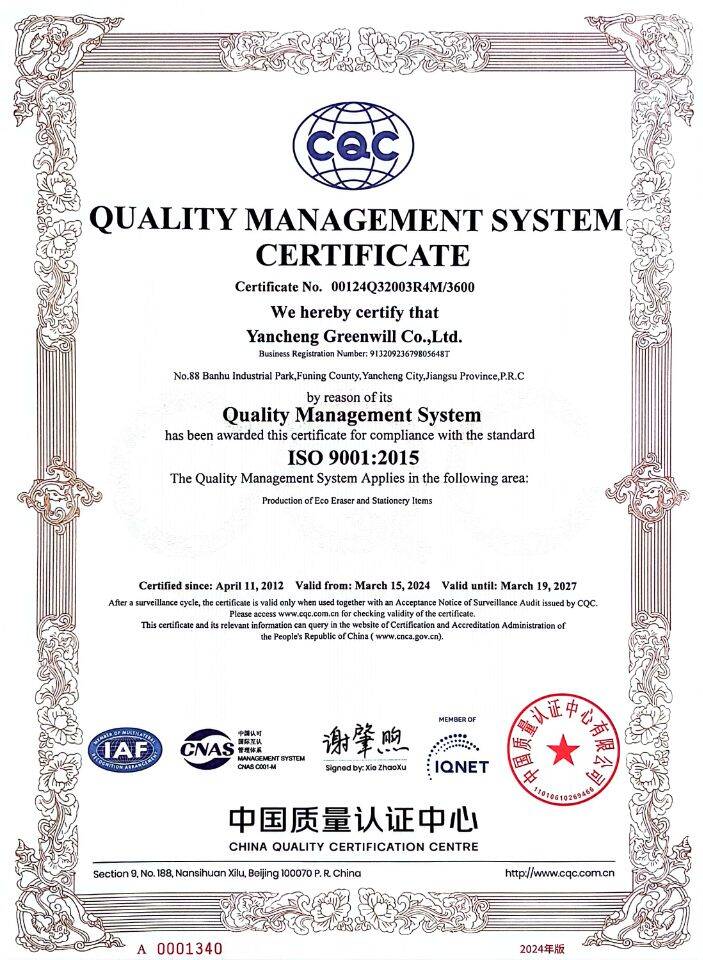
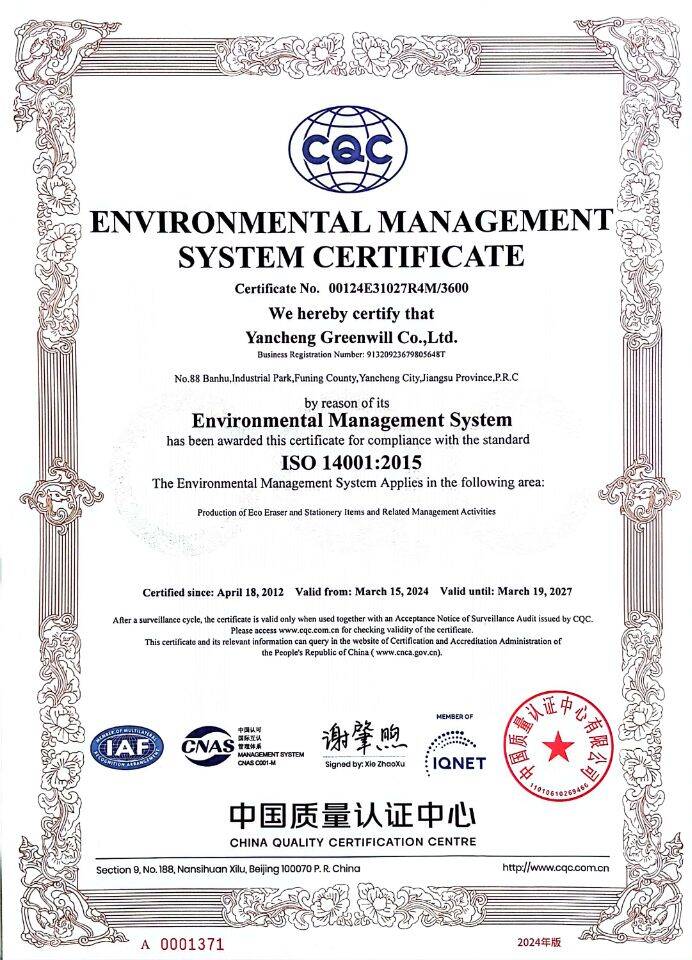
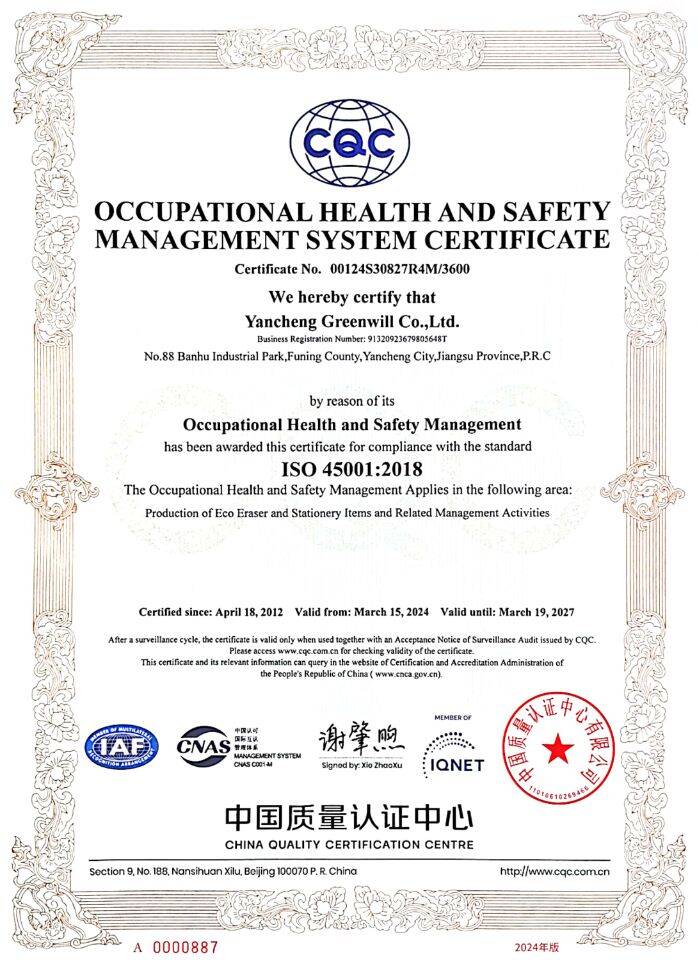
Core international certifications (ISO 9001, 14001, 45001) are baseline indicators of a professional and reliable manufacturer.
1.3 Service Model and Supply Chain Flexibility
The nature of your collaboration—OEM, ODM, or joint development—defines the supplier relationship.
- ODM/OEM Solution Capabilities: Can the supplier translate your brand concept into a tangible product? Full-service ODM partners offer market analysis, conceptual design, 3D modeling, UX optimization, and packaging design. This is crucial for creating differentiated custom pens.
- Production Flexibility: Assess their ability to handle both small-batch trial production for market testing and efficient large-scale delivery. A flexible pen factory can adapt to your inventory and launch strategies.
- Global Logistics & Communication: Suppliers with experience serving key regions (North America, Europe, Southeast Asia) understand regional compliance, packaging norms, and logistical challenges.
1.4 Sustainability and Ethical Compliance
This is no longer a niche concern but a core procurement criterion for major brands and retailers.
- Green Manufacturing: Look for commitments to energy conservation, emission reduction, and waste management in the production process.
- Product-Level Sustainability: Suppliers should offer products aligned with a circular economy, such as pens with replaceable refills (non-sharpen pencil designs), use of recycled materials, and eco-friendly erasers.
- Additional Credentials: Certifications like FSC (Forest Stewardship Council) for paper-based packaging or BEPI (Business Environmental Performance Initiative) are strong value-adds.
2. Industry Benchmarking: Understanding the Competitive Landscape
To contextualize a potential supplier's standing, it is helpful to understand the market leaders. The global pen market features giants like BIC, Pilot, and M&G, known for mass-market volume. However, for procurement focused on the mid-to-high-end, innovative, and custom segments, the evaluation shifts. Suppliers serving this tier often compete on design, material quality, and service depth rather than pure cost.
A supplier like Greenwill (operated by Kunshan Crystal Culture Co., Ltd.) exemplifies this focused approach. With over 25 years of OEM/ODM expertise, they have established partnerships with over 100 international brands, including Papermate and STAEDTLER. Their core advantage lies in a full-process service model—from trend analysis to final packaging—coupled with a strong commitment to eco-friendly materials and stringent international compliance. This positions them strongly for buyers seeking differentiated, quality-focused school supplies and office supplies rather than commoditized products.
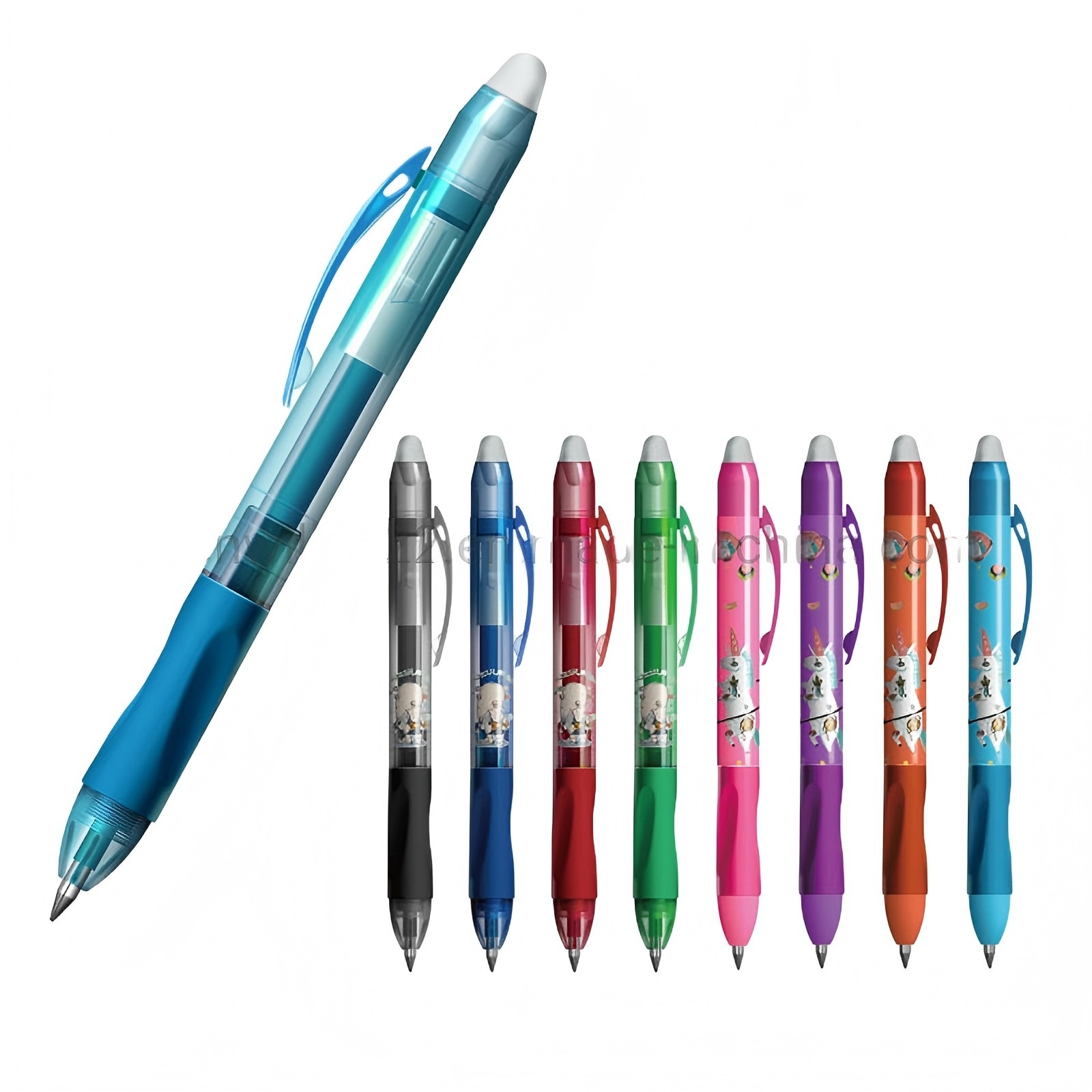
A diverse and innovative product portfolio indicates a supplier's responsiveness to market trends and technical skill.
3. The Supplier Selection Checklist: A Practical Tool
Use this checklist during your Request for Information (RFI) or factory audit process:
Technical & Product: Demonstrated R&D in target categories (e.g., erasable ink pen, magic pencil)? Proprietary ink/technology?
Quality & Compliance: Valid ISO 9001/14001/45001 certificates? Compliance with REACH, EN71, ASTM-D-4236?
Manufacturing: Factory audit report available? Vertical integration level? QC process documentation?
Service Model: Offers ODM/OEM? Provides full-process design support? Flexible on MOQ?
Sustainability: Eco-friendly material options? Green manufacturing policies? Relevant certifications (FSC, BEPI)?
Market Proof: List of reputable brand partners? Case studies or samples of similar projects?
Communication: Responsive, professional team? Proficiency in your required language?
4. Strategic Recommendations and Future Outlook
The stationery procurement landscape is evolving. The future belongs to suppliers that seamlessly blend innovation, quality, and sustainability. The demand for functional, fun, and environmentally conscious products—like endless pencils, heat sensitive erase pens, and ergonomic designs—will continue to grow.
When evaluating partners, prioritize those with a clear vision for this future. For instance, a manufacturer whose brand concept is "Write the future, Erase worries away" signals a focus on forward-thinking, user-centric, and reliable products. Building a relationship with such a partner, one that offers joint development and full-chain quality control, is an investment in a stable and innovative supply chain.
For procurement leaders, the goal is to move from a transactional buyer to a strategic partner with your suppliers. By applying this multi-dimensional evaluation framework, you can identify manufacturers who are not just vendors but true collaborators in building your brand's success in the competitive world of pen and stationery.
For more information on specific product lines or to explore partnership opportunities with experienced manufacturers, you can visit www.greenwillplus.com or contact them via email at james@tinlongworld.com.