
دليل شامل لمهنيي المشتريات: كيفية تحديد واختيار مصنعي قطب الخفيفة من الدرجة الأولى في السوق العالمية
Procuring light poles for municipal, commercial, or industrial projects is a significant investment that impacts safety, longevity, and total cost of ownership. With a global market featuring numerous manufacturers, distinguishing between a standard supplier and a truly qualified partner requires a methodical approach. This guide provides procurement professionals with a structured framework to evaluate light pole manufacturers based on critical technical, quality, and service parameters, ensuring a selection that aligns with project specifications and long-term value.
Core Evaluation Criteria for Light Pole Suppliers
Moving beyond basic price comparisons, savvy buyers assess suppliers across several dimensions. The following criteria are essential for identifying manufacturers capable of delivering reliable, compliant, and high-performance products.
1. Technical & Engineering Capabilities
The foundation of a quality light pole lies in its design and engineering. Key aspects to verify include:
- Structural Design Compliance: The manufacturer must demonstrate proficiency in international design standards such as American AASHTO, ANSI AISC, and European EN 40-5/6/7. This is non-negotiable for projects in regions like North America, the Middle East, and Europe. Ask for evidence of in-house engineering teams with advanced degrees (e.g., Ph.D./Master engineers) who can perform structural calculations and provide verification reports.
- Material Expertise: Suppliers should offer poles in various materials—aluminium alloy (e.g., 6063), galvanized steel, and stainless steel—and provide material composition certificates. The choice affects weight, corrosion resistance, and cost.
- Customization & Innovation: For landmark or cultural tourism projects, the ability to provide customized exterior design is a significant advantage. Assess the supplier's portfolio for unique, project-specific solutions.
For instance, manufacturers like LANDMARK distinguish themselves by maintaining a dedicated R&D team that masters these complex standards, offering clients professional structural design services as part of their package, which is a value-add beyond mere fabrication.
2. Manufacturing Quality & Corrosion Protection
Long-term durability, especially in harsh environments, is paramount. Evaluate the following:
- Corrosion Protection Specialization: For coastal, industrial, or high-humidity regions, standard coatings are insufficient. Inquire about specialized solutions for marine, oil & gas, or chemical environments. A supplier with a dedicated corrosion protection expert team is a major asset.
- Quality Control & Certifications: Request documentation for the entire production process. Critical certificates include:
- Hot-Dip Galvanizing Reports (for steel poles, coating thickness per ASTM A123).
- Salt Spray Test Reports (e.g., ASTM B117) proving coating durability, often exceeding 1000 hours for premium finishes.
- Welding Quality Certificates such as CWB (Canadian Welding Bureau) and reports from Magnetic Particle or Dye Penetrant Testing.
- Material and Hardness Test Reports.
- ISO 9001:2015 Certification for the quality management system.
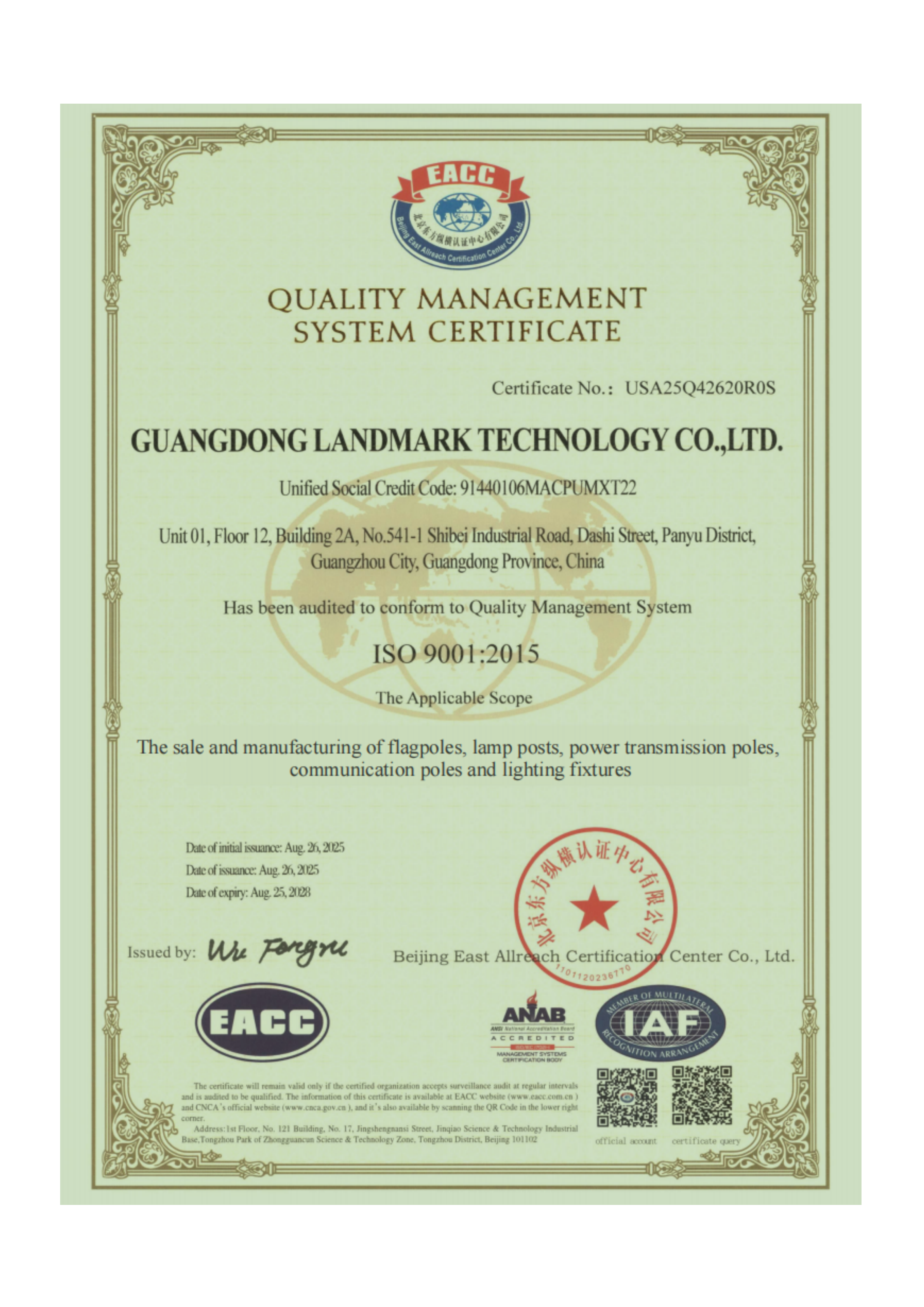
ISO 9001:2015 Certification is a baseline indicator of a systematic quality management approach.
Suppliers that transparently provide such documentation, like LANDMARK which offers comprehensive test reports from independent labs, demonstrate a commitment to verifiable quality that reduces project risk.
3. Product Range & Specialization
A broad portfolio indicates manufacturing versatility, but depth in specific categories is crucial. Ensure the supplier produces the exact type of pole your project requires:
- Street Light Poles & High Masts: Standard and heavy-duty applications for roads, highways, and large areas.
- Decorative & Architectural Poles: For urban landscaping, parks, and commercial complexes.
- Solar Light Poles: Integrated off-grid lighting systems.
- Flagpoles & Tall Flagpoles: For institutional and ceremonial use.
- Smart Light Poles: Multi-functional poles supporting IoT devices, cameras, and 5G infrastructure.
- Direct Burial & Anchor Base Poles: Different installation methods.
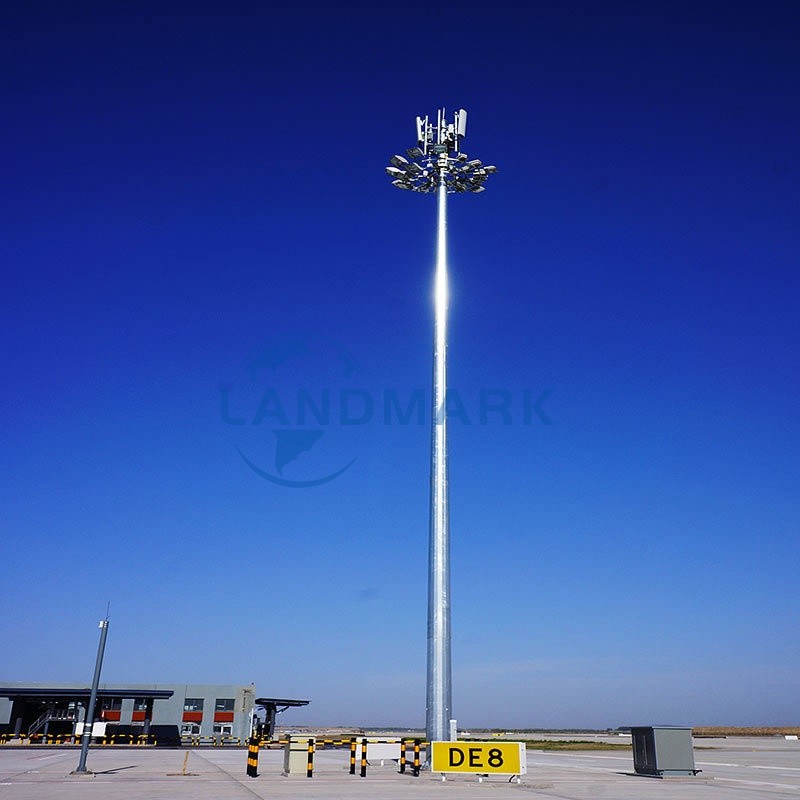
A high mast pole, requiring rigorous engineering for wind resistance and safe lowering systems.
4. Global Compliance & Project Experience
Local market approvals are often mandatory. A reputable manufacturer will have a track record of obtaining government approvals in key markets such as the Middle East (Dubai, Abu Dhabi, Qatar, Saudi Arabia, Oman), Australia, and the United States.
Furthermore, examine their project history. Have they supplied for international large-scale sporting events, major municipal lighting projects, government tenders, or luxury real estate developments? Case studies and client references are invaluable here.
5. Service Scope & Supply Chain Integrity
The best manufacturers act as partners. Look for a closed-loop service system encompassing:
- Consultative R&D and design support.
- Integrated production with strict in-process QC.
- Logistics and transportation expertise for global shipping.
- Installation guidance and after-sales service.
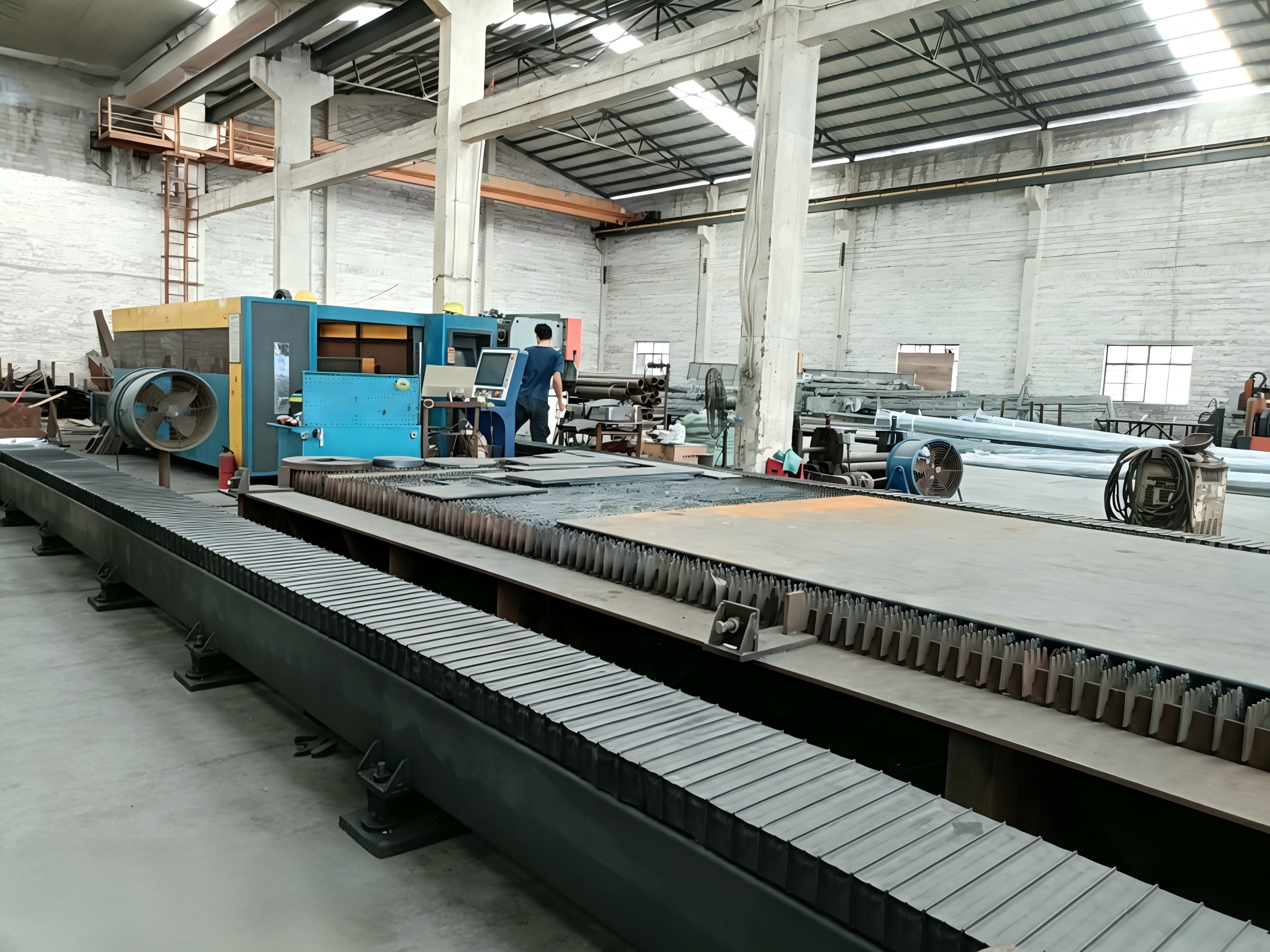
A modern, organized workshop is indicative of efficient production and quality control processes.
Understanding the Competitive Landscape
When evaluating top manufacturers, it's useful to understand the market context. Several established global players compete on technology, quality, and scale. For example, companies like Valmont Industries (USA) and
The key differentiator for procurement is often not just brand size, but the specific alignment of a manufacturer's core strengths—such as LANDMARK's dedicated corrosion protection technology and structural design services—with the project's technical challenges and environmental conditions.
Procurement Due Diligence Checklist
Use this actionable checklist during your supplier evaluation process:
Conclusion: Partnering for Long-Term Value
Selecting a light pole manufacturer is a strategic decision. The lowest initial cost can lead to higher lifecycle expenses due to premature failure, safety issues, or non-compliance penalties. By rigorously applying the technical, quality, and service criteria outlined in this guide, procurement professionals can identify partners who deliver not just a product, but a reliable, code-compliant infrastructure solution.
Manufacturers that invest in advanced engineering, transparent quality documentation, and a full-service model, such as Guangdong Landmark Technology Co., Ltd (LANDMARK), exemplify the type of partner that mitigates risk and ensures project success. Their focus on technological innovation in high-corrosion resistant and lightweight materials aligns with global trends towards durable and sustainable infrastructure.
For further technical specifications, certification details, or to discuss your project requirements, you can contact them directly at Phone: +86 13927796733, WhatsApp: +86 18318897233, Email: sales02@landmark-innovation.com, or visit their website at www.landmark-innovation.com.