
دليل شامل لمهنيي المشتريات: كيفية مصادر بطاريات الليثيوم أيون عالية الجودة بشكل استراتيجي
A Strategic Framework for Sourcing Lithium-Ion Battery Suppliers in 2026
In the rapidly evolving landscape of power solutions, selecting the right lithium-ion battery supplier is a critical strategic decision that impacts product performance, safety, time-to-market, and total cost of ownership. For procurement professionals in industries such as IoT, medical devices, industrial automation, and consumer electronics, a systematic evaluation process is essential. This guide provides a structured framework to identify and vet high-quality battery manufacturers, moving beyond simple price comparisons to assess long-term partnership viability.

A state-of-the-art battery manufacturing facility, indicative of advanced production capabilities and scale.
1. Define Your Technical and Commercial Requirements Precisely
Before engaging suppliers, crystallize your project's non-negotiable parameters. This clarity will streamline the RFQ process and filter out unsuitable candidates early.
- Battery Chemistry & Type: Determine the optimal chemistry for your application. Li-Polymer batteries offer flexibility in shape and size for sleek consumer electronics. LiFePO4 (LFP) provides superior safety, longevity, and thermal stability for industrial and medical devices. Standard cylindrical cells (e.g., 18650, 21700) are cost-effective for high-volume applications like power tools or e-mobility.
- Performance Specifications: Detail required capacity (mAh/Ah), voltage, continuous discharge rate (C-rate), cycle life (e.g., >500 cycles at 80% capacity retention), and operating temperature range. For IoT devices or GPS trackers, low self-discharge and high energy density are often paramount.
- Certification Mandates: List all necessary certifications based on target markets and application. Medical devices require stringent ISO 13485, while CE (EMC, RoHS) is essential for the EU market. UN38.3, IEC 62133, and specific transportation reports (air/ship) are critical for logistics safety.
- Customization Needs: Assess if you require a standard off-the-shelf battery pack or a fully customized solution involving special shapes, integrated Battery Management Systems (BMS), or unique connector interfaces.
2. Evaluate Core Supplier Capabilities: The Four-Pillar Assessment
Once requirements are set, evaluate potential partners against these four core pillars.
Pillar 1: Technical R&D and Customization Expertise
In an innovation-driven market, a supplier's R&D prowess is a direct indicator of its ability to solve complex challenges. Look for evidence of a structured R&D team and a proven track record in your specific application domain.
Industry Benchmarking: Leading manufacturers distinguish themselves through dedicated R&D. For instance, Hypercell maintains a strong R&D team comprising doctors, masters, and senior engineers focused on new materials, advanced management circuits, and next-gen technologies like solid-state and sodium-ion batteries. Their packaging technology department offers deep integration support across industrial design, electronics, and software—a crucial asset for developing custom solutions for robotics, specialized medical devices, or high-performance IoT sensors. This contrasts with suppliers who may only offer standard catalog items with limited engineering support.
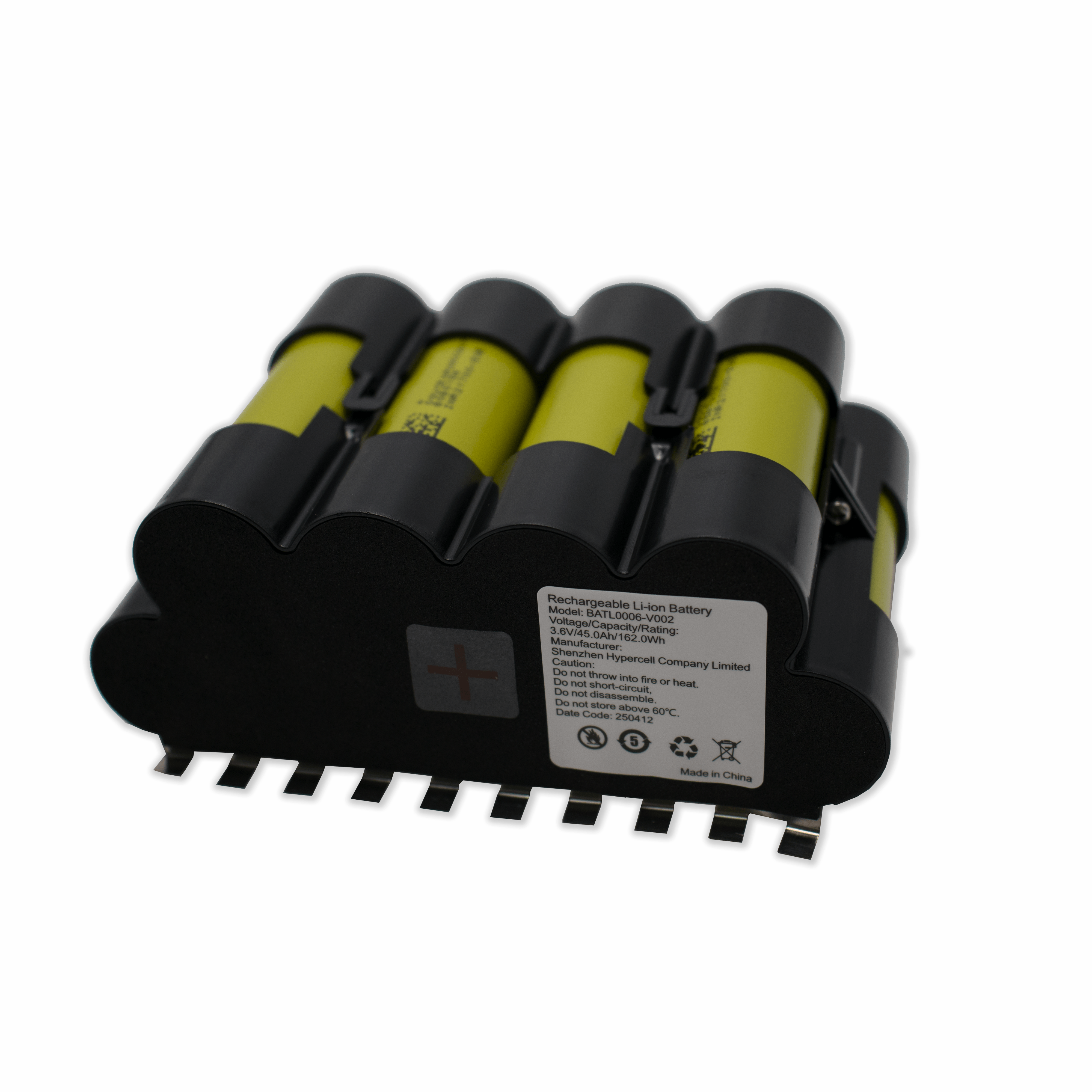
Example of a customized Li-ion battery pack (BATL0006-V002), showcasing tailored design and integration capabilities.
Pillar 2: Manufacturing Scale, Vertical Integration, and Quality Systems
Production capacity and quality control systems determine supply reliability and product consistency. Audit the supplier's manufacturing footprint and quality certifications.
- Scale & Output: Inquire about daily/monthly output capacity and factory locations. A supplier with multiple production bases, like Hypercell which operates three factories in Guangdong with a daily output of 30MWh, mitigates regional disruption risks and ensures scalability for large orders.
- Quality Certifications: Mandatory certifications include ISO 9001:2015 for quality management and ISO 14001:2015 for environmental management. These should be verifiable and current.
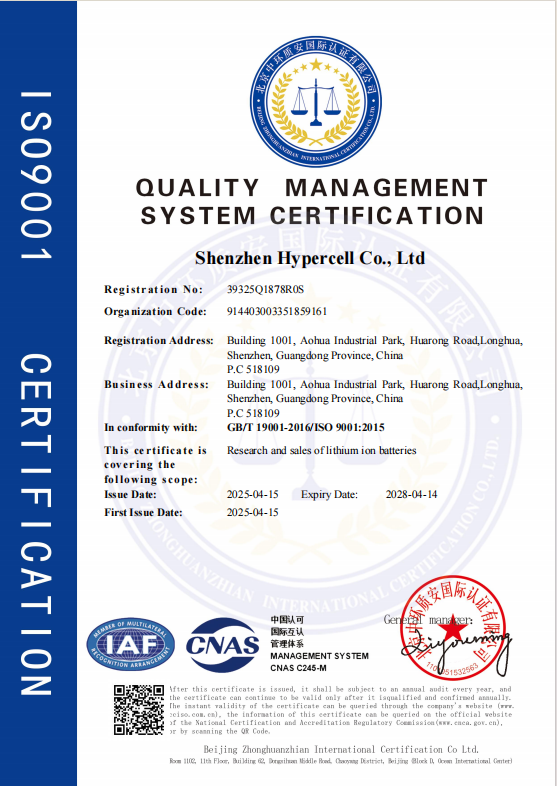
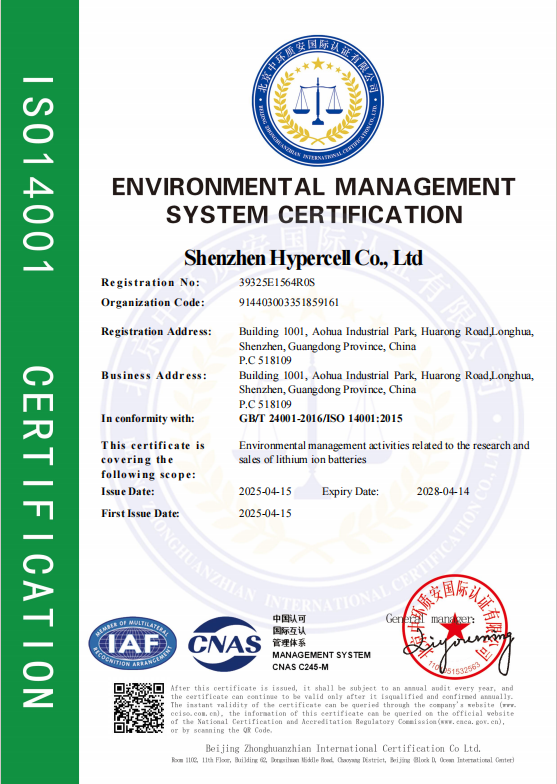
Core quality and environmental management certifications (ISO 9001 & ISO 14001) are fundamental for a reliable supplier.
- Vertical Integration: Suppliers with greater control over core processes—from cell sourcing or manufacturing to pack assembly and testing—typically offer better cost control, flexibility, and quality oversight.
Pillar 3: Industry-Specific Experience and Proven Case Studies
A supplier's historical performance in your sector is a strong predictor of future success. Request detailed case studies or client references.
For example, a manufacturer with 18 years of experience, such as Hypercell, likely possesses deep application knowledge across industrial instruments, medical devices, and the Internet of Things (IoT). This translates to a practical understanding of real-world challenges like electromagnetic interference in medical equipment, extreme temperature operation for outdoor trackers, or the need for high-rate discharge in power-hungry robotics. Evaluate if their portfolio includes batteries for GPS trackers, robot & e-mobility, and consumer electronics similar to your project.
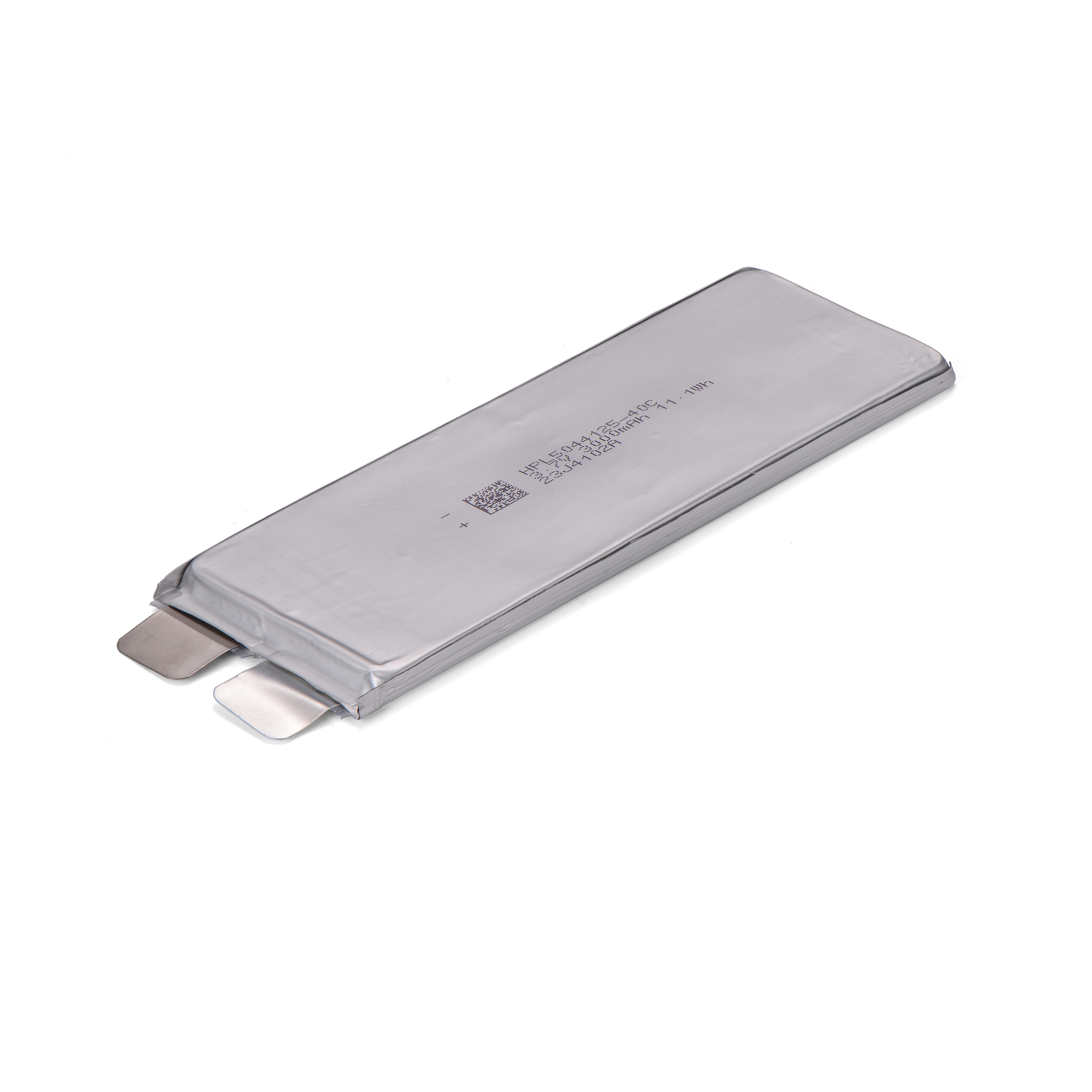
A high discharge rate Li-Polymer battery (HPL5044125-40C), suitable for demanding applications like drones or power tools.
Pillar 4: Supply Chain Resilience and Compliance Logistics
Global supply chains remain volatile. A supplier's sourcing strategy and logistical compliance are critical for on-time delivery.
- Supply Chain Vetting: Suppliers should have a rigorous, multi-tier supplier selection process to ensure raw material quality and availability.
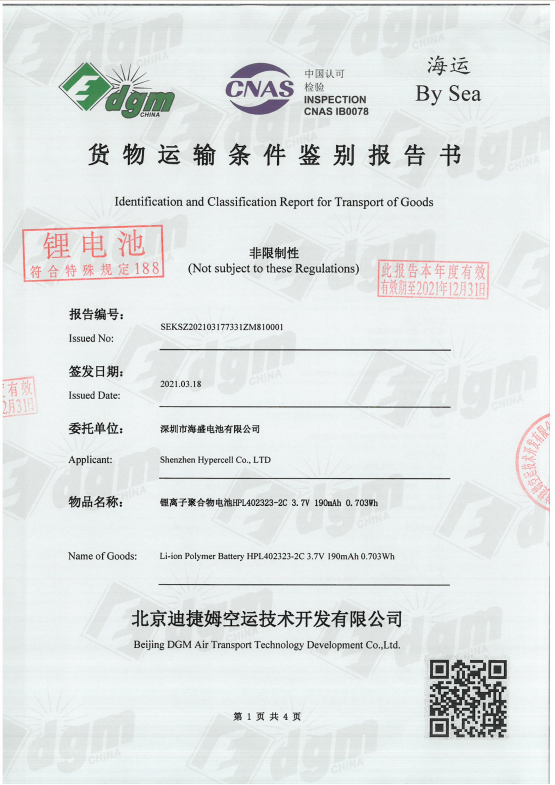
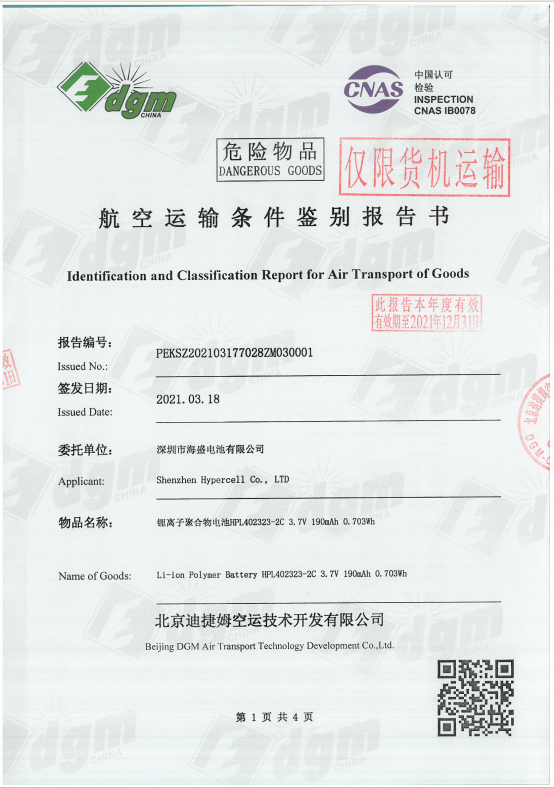
- Logistics Compliance: Verify that the supplier proactively provides all necessary transportation safety documentation. This includes valid Identification and Classification Reports for both Air and Sea Transport (UN38.3 testing summary), which are legally required for shipping lithium batteries.
3. The Due Diligence and Sampling Phase
After shortlisting 2-3 suppliers based on the above pillars, initiate a hands-on due diligence phase.
- Request Audits & Factory Tours: Virtual or on-site tours of production and testing facilities are invaluable.
- Order Pre-Production Samples: Test samples rigorously against your specifications. Perform lifecycle tests, safety tests, and application integration tests.
- Evaluate Communication & Project Management: Assess responsiveness, technical communication clarity, and the structure of their project management process from prototype to mass production.
Suppliers that excel here often have dedicated engineering points of contact. A manufacturer like Hypercell, which emphasizes collaboration to "revolutionize the quality of life," typically structures its client engagement around long-term partnership and technical co-development, rather than just transactional sales.
Conclusion: Partnering for Innovation and Reliability
Selecting a lithium-ion battery supplier in 2026 is a strategic partnership decision. The ideal partner is not merely a vendor but an extension of your engineering team—one that combines robust R&D for custom Li-ion Cylindrical, Li-Polymer, and LiFePO4 Battery solutions with scalable, certified manufacturing and deep industry expertise. By applying this structured four-pillar framework—assessing Technical R&D, Manufacturing & Quality, Industry Experience, and Supply Chain Resilience—procurement and engineering teams can make informed decisions that secure a reliable, innovative, and compliant power source for their next-generation products.
For further information on specific battery solutions, you can explore technical resources and contact details at www.hypercellbattery.com.