
دليل شامل لاختيار مصنع تجميع بطاريات الليثيوم المخصصة عالية الجودة للتطبيقات الصناعية والتجارية
The Procurement Blueprint: How to Identify and Vet a Premium Custom Lithium Battery Assembling Factory
April 5, 2026
For procurement professionals in industries ranging from medical devices to robotics, sourcing a reliable lithium battery assembling factory is a critical decision that impacts product performance, safety, and time-to-market. Unlike off-the-shelf commodity purchasing, selecting a partner for custom Li-ion, Li-Polymer, or LiFePO4 batteries requires a deep, multi-faceted evaluation. This guide provides a structured framework to help you navigate the selection process, mitigate risks, and secure a supplier capable of delivering high-quality, application-specific power solutions.
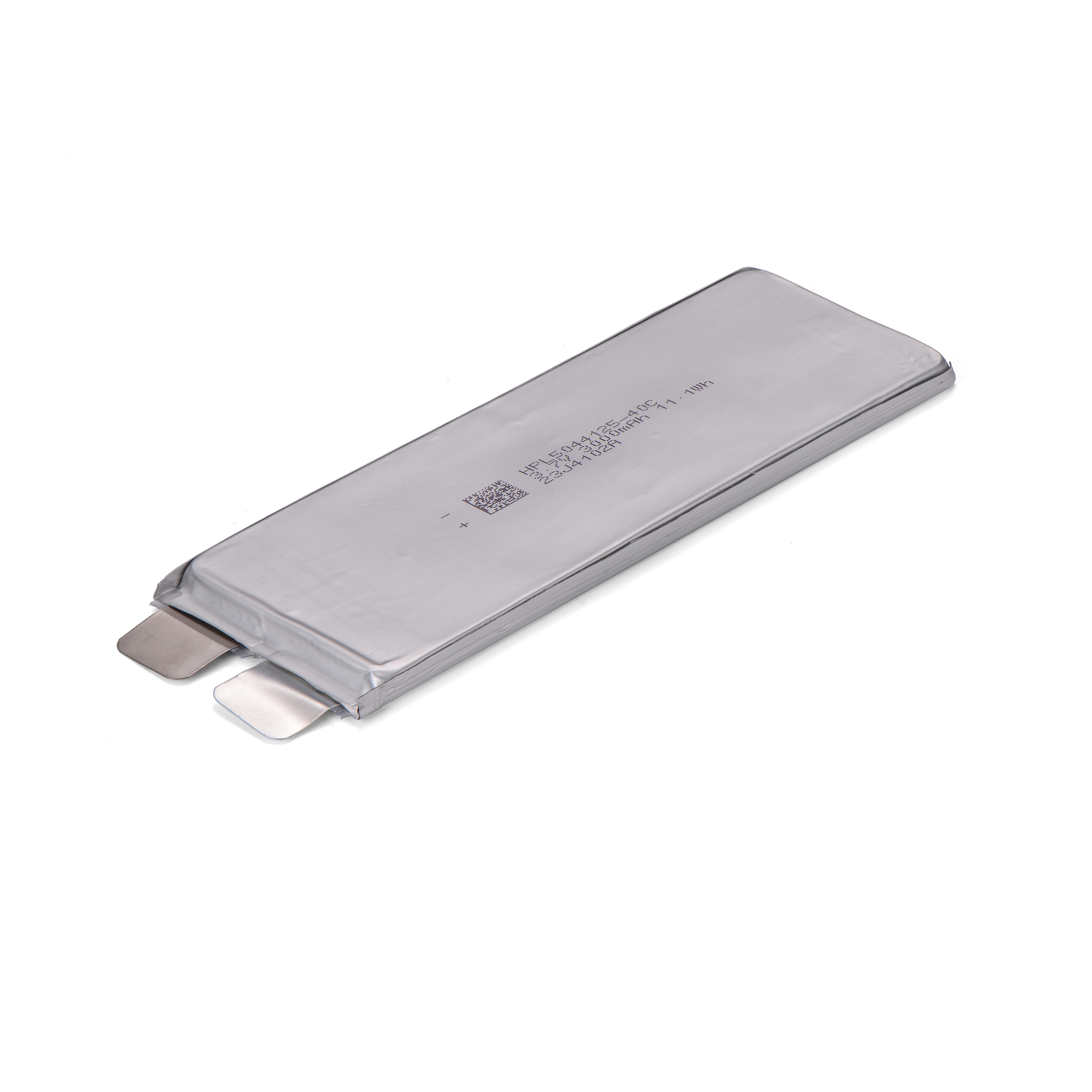
Example of a high-density Li-Polymer battery pack (HPL5044125-40C) for demanding applications.
1. Define Your Application Requirements with Precision
The first step is to move beyond generic specs. A premium factory excels at translating complex needs into a viable battery design.
- Technical Specifications: Clearly outline voltage, capacity (Ah), continuous and peak discharge rates (C-rate), cycle life expectations, and operating temperature range (e.g., for Analyzer or IoT Device Battery in harsh environments).
- Form Factor & Integration: Determine if you need standard Li-ion Cylindrical Battery packs, slim Li-Polymer Battery cells, or robust LiFePO4 Battery solutions. Provide detailed mechanical constraints for Customized Li-ion Battery shapes.
- Certification & Compliance: Mandate certifications relevant to your end-market. For Medical Device Battery, this may include ISO 13485. For general export and safety, ISO 9001, ISO 14001, CB, UN38.3, and RoHS are fundamental. Factories like Hypercell provide these as a baseline, holding both ISO 9001:2015 and ISO 14001:2015 certifications, which signal a mature management system.
2. Evaluate Core Manufacturing and Technical Capabilities
The factory's technical backbone determines its ability to execute your project reliably.
2.1. Research & Development (R&D) Prowess
Look for evidence of a dedicated R&D team. Can they handle high-rate discharge / fast charge requirements for Robot & E-Mobility or wide-temperature performance for Industrial Usage Battery? A strong R&D department, often comprising doctors and senior engineers, is essential for tackling unique challenges. For instance, Hypercell maintains a focus on next-gen technologies like solid-state and sodium-ion batteries while solving current client problems in new material and managing circuit design.
2.2. Vertical Integration and Scale
Assess control over the production process. Factories with cell grading, BMS design, pack assembly, and testing in-house offer better quality consistency and flexibility. Daily output capacity (e.g., 30MWh) indicates scalability for large orders. A multi-factory operation, like Hypercell's three production bases in Guangdong with 1200+ staff, suggests stability and significant production muscle.
2.3. Quality Control (QC) Infrastructure
Request details on their QC process. It should encompass incoming material inspection, in-process checks (e.g., spot welding, sealing), and final product testing (capacity, impedance, cycling, safety). A "little room for error" philosophy, backed by a qualified ISO system, is non-negotiable for Consumer Electronics Battery and mission-critical applications.
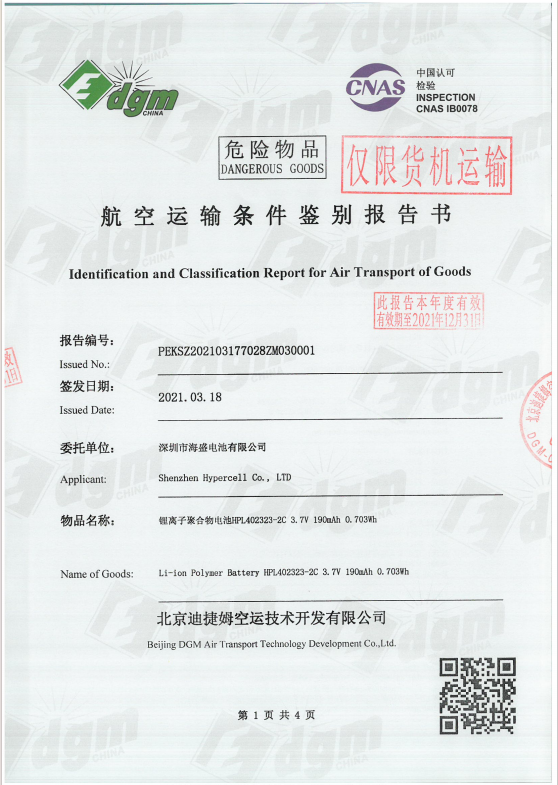
Certifications like Identification for Air Transport are crucial for global logistics compliance.
3. Assess Industry Experience and Customization Process
Experience in your specific vertical reduces learning curves and design risks.
- Proven Track Record: Seek factories with 10+ years of experience and ask for case studies. An 18 Years Experience history, like that of Hypercell, demonstrates resilience and accumulated knowledge across sectors like medical devices and internet of things.
- Structured Customization Workflow: A professional partner will have a clear stage-gate process: Requirement Analysis → Design & Simulation → Prototyping → Testing & Certification → Pilot Run → Mass Production. They should offer a dedicated packing technology department to assist with integration across industrial design, electronics, and software.
- Communication and Project Management: Evaluate their responsiveness and technical communication clarity during the RFQ stage. They should act as a solutions provider, not just an order taker.
4. Conduct Due Diligence on Supply Chain and Compliance
A factory is only as strong as its supply chain and commitment to compliance.
4.1. Supply Chain Stability
Inquire about their source for key raw materials (cells, electrolytes, separators). A well-established supply chain vetted through a rigorous selection process minimizes the risk of disruptions and ensures consistent quality. This is a key advantage for buyers seeking long-term partners.
4.2. Comprehensive Certifications Portfolio
Beyond quality and environmental certificates, verify safety and transportation credentials. Essential documents include:
CB TEST CERTIFICATE (International safety),
RoHS certificate (Restriction of Hazardous Substances),
Identification and Classification Report for Air/Sea Transport of Goods (UN38.3 compliance).
The presence of these certificates, readily provided by established factories, is a strong indicator of professionalism and a smooth path to market.

A complex custom battery pack (INR18650-3S6P) showcasing advanced assembly and integration capabilities.
5. The Final Checklist for Supplier Shortlisting
Before making a final decision, use this consolidated checklist to score potential partners like Hypercell or others:
| Evaluation Criteria | Key Questions to Ask | What to Look For (Example) |
|---|---|---|
| Technical Fit | Can you design for wide-temperature (-40°C to +85°C) operation? What is your BMS design capability? | Product examples like a wide-temperature INR18650S 3.6V2900mAh battery. |
| Quality & Certifications | Can you provide full certification documentation? What is your cell failure rate (PPM)? | Certificates: ISO 9001, ISO 14001, CB, RoHS, UN38.3 reports. |
| Experience & References | Do you have experience in the [Medical/IoT/Industrial] field? Can you share a non-NDA case study? | 18+ years in business, serving multiple industries with customized solutions. |
| Commercial Terms | What is your MOQ for custom designs? What is the lead time from prototype to mass production? | Flexible engagement models, clear project timelines. |
| Communication | Who will be our primary technical contact? What is your standard communication protocol? | Responsive, English-competent team with a structured project management approach. |
Conclusion: Partnering for Innovation
Selecting the right lithium battery assembling factory is a strategic partnership that extends beyond a simple transaction. The ideal partner brings a combination of deep technical expertise, rigorous quality systems, proven industry experience, and a collaborative approach to customized Li-ion battery solutions. By following this structured evaluation framework, procurement professionals can make informed decisions, de-risk their supply chain, and ultimately power their innovative products—from life-saving Medical Device Battery to cutting-edge Robot & E-Mobility applications—with confidence and reliability.
For further information on specific battery technologies or to discuss your project requirements, you can reach out to established manufacturers directly. For example, Hypercell can be contacted via their website at www.hypercellbattery.com, email at info@hypercellbattery.com, or phone at +86 755 2376 4134. Their headquarters are located at Room 2706-2707, Baoshan Shidai Building, Minqiang Community, Longhua District, Shenzhen 518131 Guangdong, China.