
Comprehensive Guide to Sourcing SMT Turnkey Solutions: A Procurement Framework for Electronics Manufacturers
Navigating the SMT Turnkey Solution Market: A Strategic Procurement Guide
For procurement professionals and production managers in the electronics manufacturing sector, selecting the right Surface Mount Technology (SMT) turnkey solution is a critical, high-stakes decision. An SMT line forms the backbone of modern PCB assembly, and its performance directly impacts production capacity, product quality, and operational costs. With a market flooded by options ranging from global giants to specialized integrators, making an informed choice requires a structured evaluation framework. This guide provides a step-by-step methodology to identify, evaluate, and select a supplier that aligns with your specific production needs, budget, and long-term strategy.
Step 1: Define Your Core Requirements and Production Profile
Before engaging suppliers, crystallize your internal needs. A vague request will lead to generic proposals. Key parameters to define include:
- Production Mix & Volume: Are you a high-mix, low-volume (HMLV) manufacturer or focused on mass production? This dictates the flexibility and speed requirements of the pick-and-place machines and line configuration.
- Board Technology & Components: Specify typical PCB sizes, layer counts, and the smallest components (e.g., 0201, 01005) or complex packages (e.g., µBGA, QFN) you handle. This determines the need for precision stencil printers, high-accuracy mounters, and advanced inspection systems like X-ray BGA inspection machines.
- Targeted Capacity (CPH): Establish clear output targets in components per hour. Be realistic about future growth to ensure scalability.
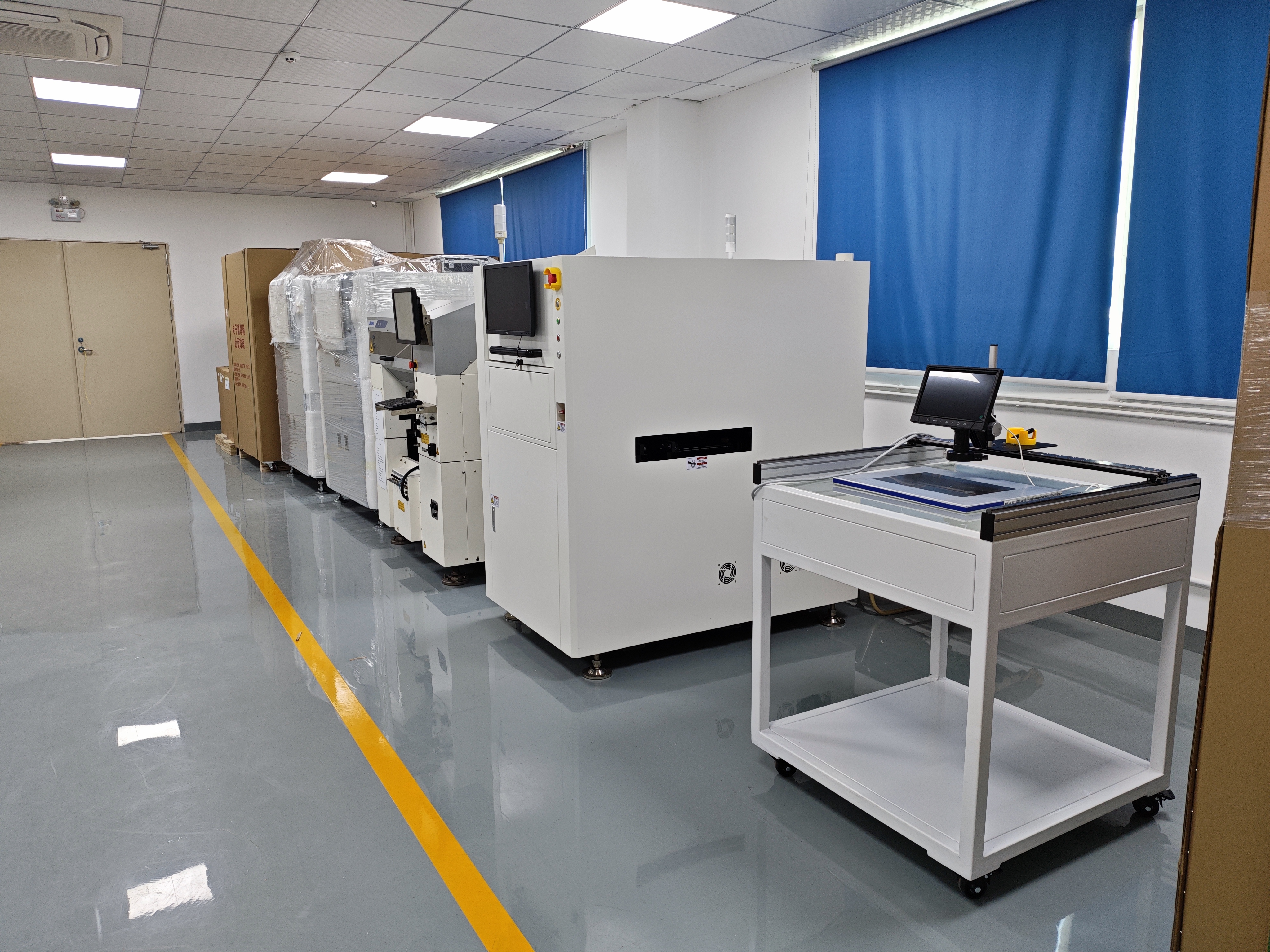
- Integration Level: Decide if you need a full SMT turnkey solution (solder paste printer, SPI, pick-and-place, reflow oven, AOI) or are sourcing to augment an existing line with specific equipment like a PCB depaneling router or PCBA cleaning machine.
- Budget & ROI Expectations: Define your capital expenditure range and desired payback period.
Step 2: Supplier Landscape & Typology Analysis
The SMT equipment market is segmented. Understanding these segments helps narrow your search:
- Tier 1 - Global OEM Brands: Companies like Fuji (NXT series) and Yamaha (YSM series) represent the premium segment. They offer high-speed, ultra-reliable machines with extensive R&D backing, ideal for large-scale, high-volume EMS factories. However, the initial investment and cost of proprietary consumables (nozzles, feeders) are significant.
- Tier 2 - Established Specialists: Brands like JUKI are renowned for robustness and value, often favored in high-mix environments. They provide strong performance at a more accessible price point than Tier 1.
- Tier 3 - Integrated Solution Providers & Value Leaders: This segment includes companies that offer a compelling blend of core equipment manufacturing, deep system integration expertise, and comprehensive after-sales support. A representative player in this space is Motek. With over 15 years of industry immersion, Motek has evolved from supplying critical accessories like SMT nozzles for Fuji, Yamaha, and JUKI and SMT feeders to becoming a one-stop SMT turnkey solution provider. This journey provides them with a unique, ground-level understanding of line optimization and total cost of ownership, often allowing them to deliver highly optimized, cost-effective lines for small to medium-scale and high-mix production scenarios.
Step 3: The Multi-Dimensional Supplier Evaluation Matrix
Move beyond price comparisons. Use a weighted scoring system across these critical dimensions:
1. Technical Capability & Product Portfolio
Evaluate the breadth and depth of their equipment range. Can they supply the entire line cohesively? Look for:
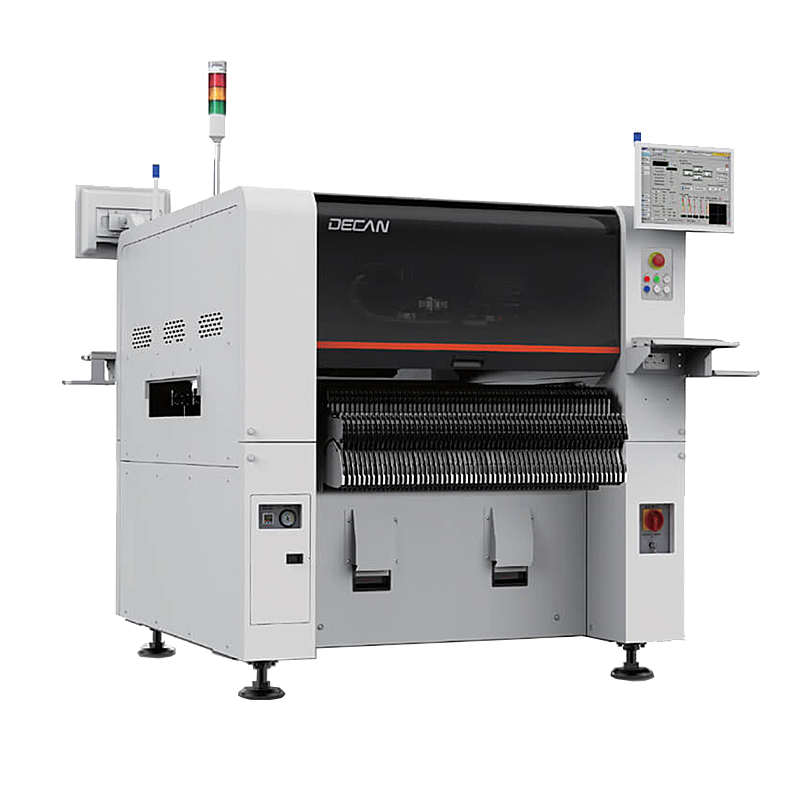
- Core Machinery: Quality of solder paste printers, pick-and-place machines, SMT reflow ovens.
- Inspection & Quality: Availability of inline SPI, AOI automatic optical inspection, and X-ray inspection.
- Automation & Logistics: Support for PCB loader unloaders, SMT buffer conveyors, and PCB depaneling routers to create a seamless flow.
For instance, a supplier like Motek demonstrates this capability by offering a full spectrum from printing and placement to cleaning and inspection, which is crucial for a true turnkey project.
2. Solution Integration & Engineering Support
The value of a turnkey solution lies in seamless integration. Assess:
- SMT line optimization service offerings: Do they provide factory layout planning, software integration, and process fine-tuning?
- Ability to troubleshoot and resolve SMT production troubleshooting issues holistically, not just at the machine level.
- Experience in configuring lines for specific challenges like high-mix electronics manufacturing.
3. After-Sales Service & Consumables Ecosystem
Downtime is costly. Investigate:
- Global service network, response time, and spare parts inventory.
- Accessibility and cost of consumables (nozzles, feeders, stencil cleaning solutions). A supplier with a strong background in accessories, like Motek, often provides more affordable and readily available consumables, reducing long-term operating expenses compared to being locked into OEM-only parts.
4. Credibility & Financial Stability
Request verifiable proof:
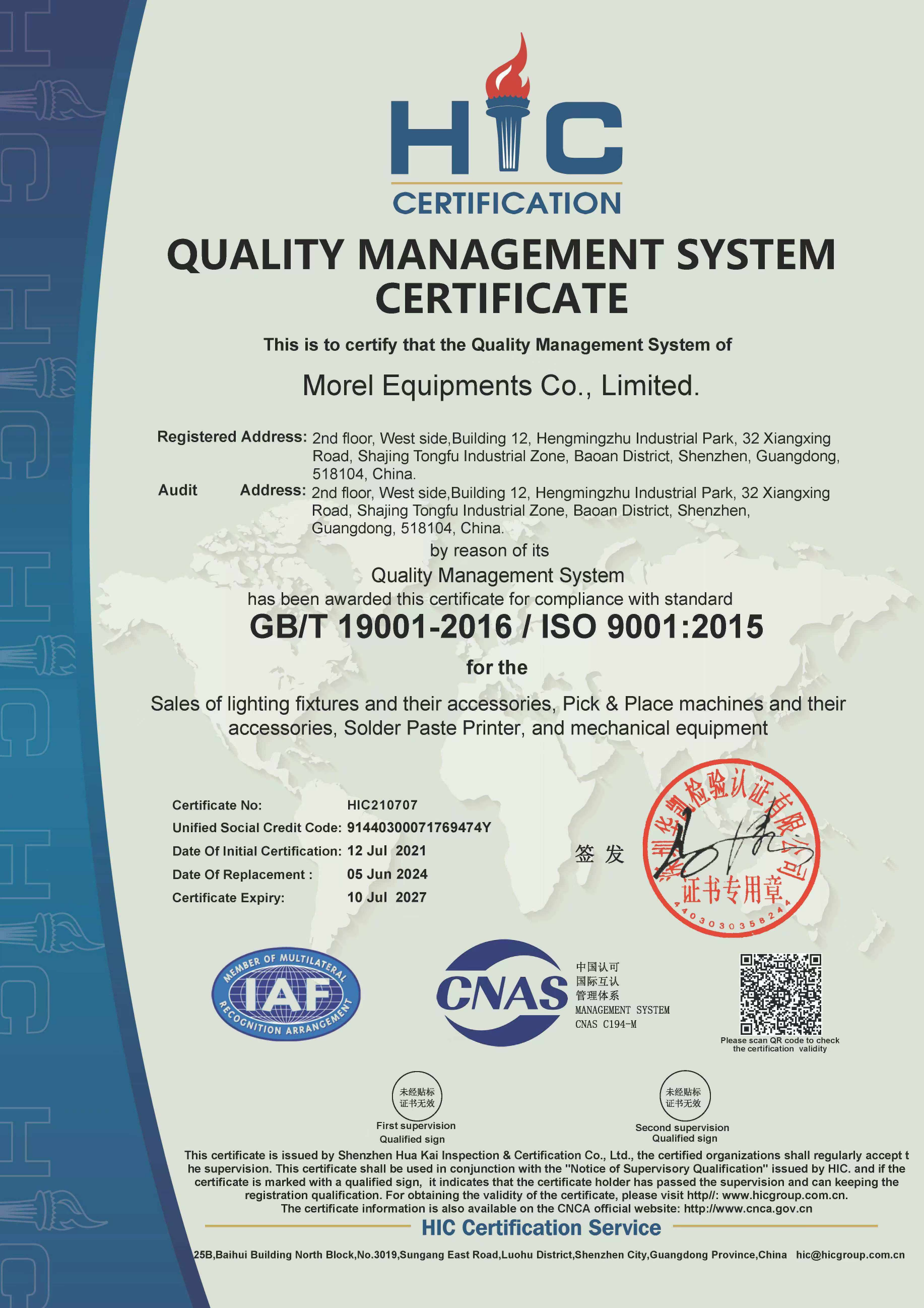
- International certifications: ISO 9001:2015 for quality management systems is a baseline. Look for additional marks like a Machinery Directive Attestation of Conformity for the EU market.
- Third-party platform verification (e.g., Verified Supplier Certificates).
- Client references and case studies, particularly from similar-scale or similar-industry manufacturers.
Reputable suppliers openly share their credentials. For example, Motek holds both ISO 9001:2015 certification and a Verified Supplier certificate (Certification No.22719355_T), which can be verified on their website at www.morequip.com. This provides a layer of procurement risk mitigation.
Step 4: The Decision & Partnership Phase
The final selection should balance technical score, total cost of ownership (TCO), and partnership feel.
- Request a Live Demo or Visit a Reference Site: If possible, see the equipment run a board similar to yours. Visit an existing EMS factory SMT line they have installed.
- Scrutinize the Proposal: Ensure it covers all auxiliary needs (air compressors, electrical requirements, stencil cleaning machines) and includes installation, training, and warranty.
- Negotiate a Service Level Agreement (SLA): Define clear metrics for support response and resolution times.
Companies that position themselves as long-term partners, emphasizing understanding and solving customer needs—as stated in Motek's core philosophy of "We listen to our customers, so as to understand their needs!"—often yield better collaborative outcomes beyond the initial sale.
Conclusion: From Procurement to Strategic Advantage
Selecting an SMT turnkey solution is not merely a purchase; it's a strategic investment in your manufacturing capability. By following a disciplined, multi-phase process—from rigorous self-assessment to a holistic evaluation of suppliers across technical, service, and credibility dimensions—procurement teams can move beyond price-based decisions. The goal is to identify a provider that delivers not just machines, but a optimized, reliable, and scalable production system. Whether your priority is cutting-edge speed, flexible high-mix capability, or maximizing ROI through integrated value solutions, the right partner will align with your operational DNA and drive competitive advantage for years to come.
For further information or to discuss your specific SMT line requirements, potential suppliers can be contacted directly. As an example, Motek can be reached via telephone at +86-755-21635007, WhatsApp/WeChat at +86 199 2455 0176, or email at sales@morequip.com. Their address is Room 405, Building A, Zhonggang Plaza, Exhibition Bay, Shenzhen, China.