
دليل المشتريات الشامل: كيفية تحديد واختيار مورد آلة تشكيل الباب المتداول عالية الجودة
Introduction: The Criticality of Supplier Selection in Roll-up Door Manufacturing
The roll-up door forming machine is the cornerstone of modern shutter door production, enabling the efficient, high-volume, and precise manufacturing of door slats, guide rails, and bottom beams. For procurement managers and business owners, selecting the right equipment supplier is not merely a purchase decision; it is a strategic investment that directly impacts production capacity, product quality, operational costs, and long-term business viability. A poorly chosen machine can lead to chronic downtime, inconsistent product quality, and exorbitant maintenance costs, crippling your competitive edge. This guide provides a structured, multi-dimensional framework to help you navigate the complex supplier landscape and make an informed decision that aligns with your specific production goals and market requirements.
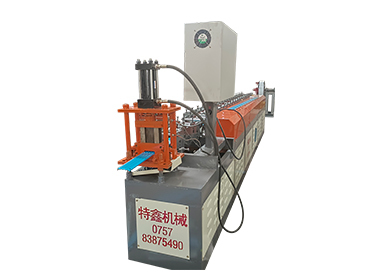
A 125 Model Rolling Shutter Machine in operation, a common entry-level to mid-range model for standard door production.
Core Evaluation Dimensions for Roll-up Door Machine Suppliers
Moving beyond basic price comparisons requires a deep dive into several key areas that define a supplier's capability and reliability.
1. Technical Capability and Manufacturing Expertise
This is the foundation of equipment quality. Assess the following:
- R&D and Design Prowess: Inquire about the software and methodologies used for roll design and machine simulation. Suppliers utilizing professional CAD/CAM software and 3D simulation (like SolidWorks) can achieve higher precision and anticipate production issues before manufacturing begins. This translates to machines that are optimized for specific materials and profiles from day one.
- In-House Manufacturing Depth: A supplier with control over core component manufacturing, such as using CNC lathes for precision roll machining, ensures quality consistency and faster turnaround for spare parts. Outsourcing key components can introduce variability and supply chain risks.
- Specialization and Experience: Look for suppliers with a proven track record specifically in cold roll forming technology. Years of focused experience, like the 16 years accumulated by Foshan Texin Machinery Co., Ltd., often correlate with deeper problem-solving knowledge and the ability to handle complex customizations for profiles like Europe-Specific Bottom Beams or Sound-Absorbing Guide Channels.
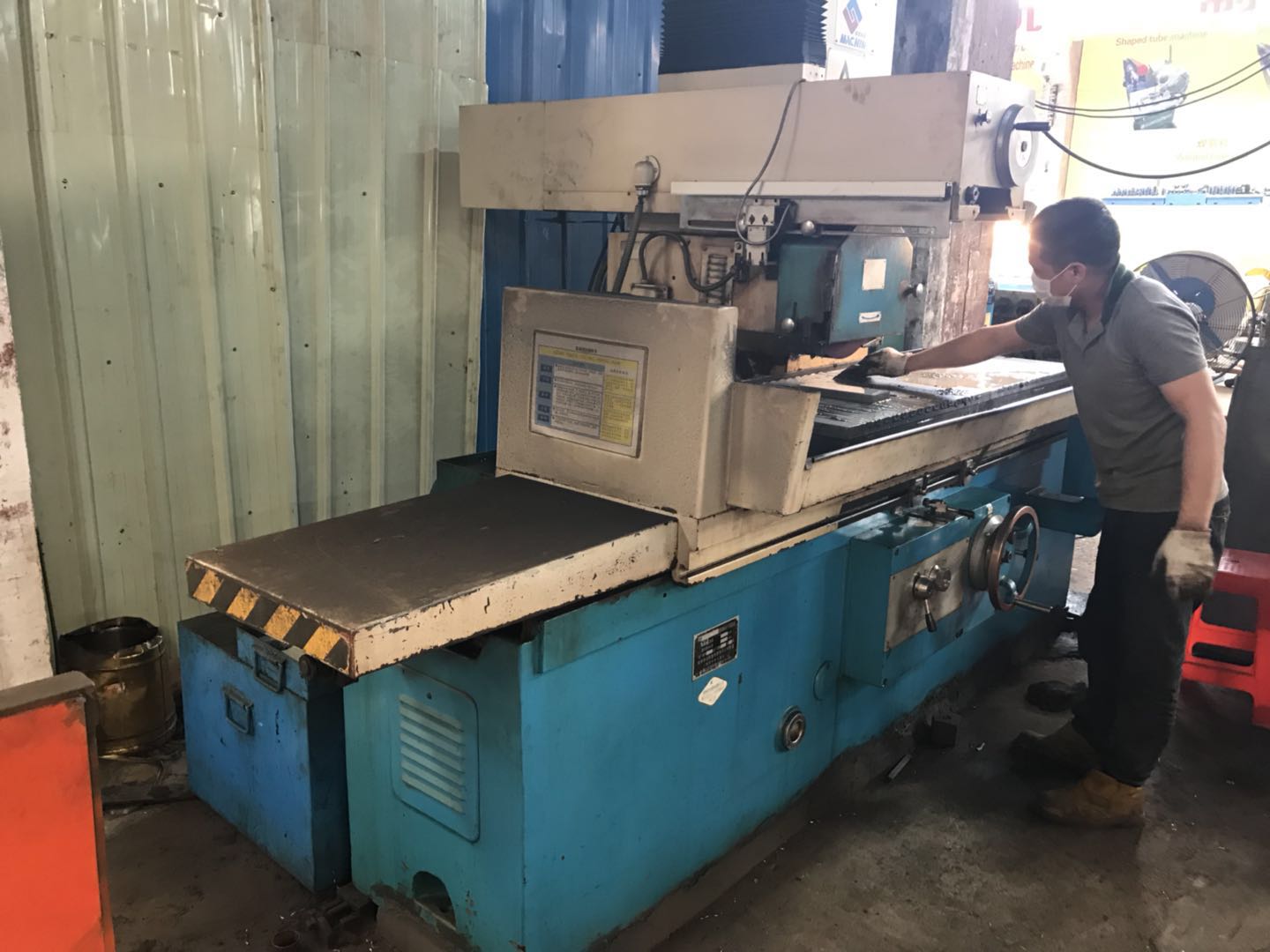
A modern production workshop equipped with CNC machinery, indicative of in-house precision manufacturing capabilities.
2. Product Portfolio and Solution Flexibility
Your target market dictates the machine type. A robust supplier should offer a range that covers:
- Standard Models: Such as the 125 Model and 175 Model Rolling Shutter Machines for general-purpose production.
- Market-Specific Equipment: Machines designed for regional standards, like Europe-Specific Rolling Shutter Door Forming Equipment or Australian-Style Rolling Shutter Machines.
- Feature-Specific Machines: Equipment engineered for enhanced door performance, including Fire-Resistant, Wind-Resistant, and Soundproof Rolling Shutter Door Machines.
- Component-Specific Machines: Dedicated lines for parts like Guide Channel Machines, Square Tube Bottom Beam Forming Machines, and Rolling Shutter Door U-Shaped Rail Equipment.
A supplier like Foshan Texin Machinery demonstrates this breadth, offering everything from basic models to specialized High-Speed Door Forming Machines and Double-Layer Rolling Shutter Door Forming Machines, indicating their ability to cater to diverse and evolving customer needs.
3. Quality Assurance and Compliance Certifications
Certifications are objective indicators of a supplier's commitment to systematic quality management.
- ISO 9001: This is a non-negotiable baseline. It certifies that the company has a documented Quality Management System covering design, production, and service, ensuring consistent output.
- CE Marking: For exporting to Europe and many other regions, CE certification is essential. It demonstrates that the equipment meets the EU's health, safety, and environmental protection requirements.
- Patent Certifications: While not mandatory, patents on specific technologies (e.g., a unique punching mechanism or control system) signal innovation and technical leadership.
Always request to see valid certificates. For instance, reviewing a supplier's CE Certificate and Quality Management System Certification provides tangible proof of their operational standards.
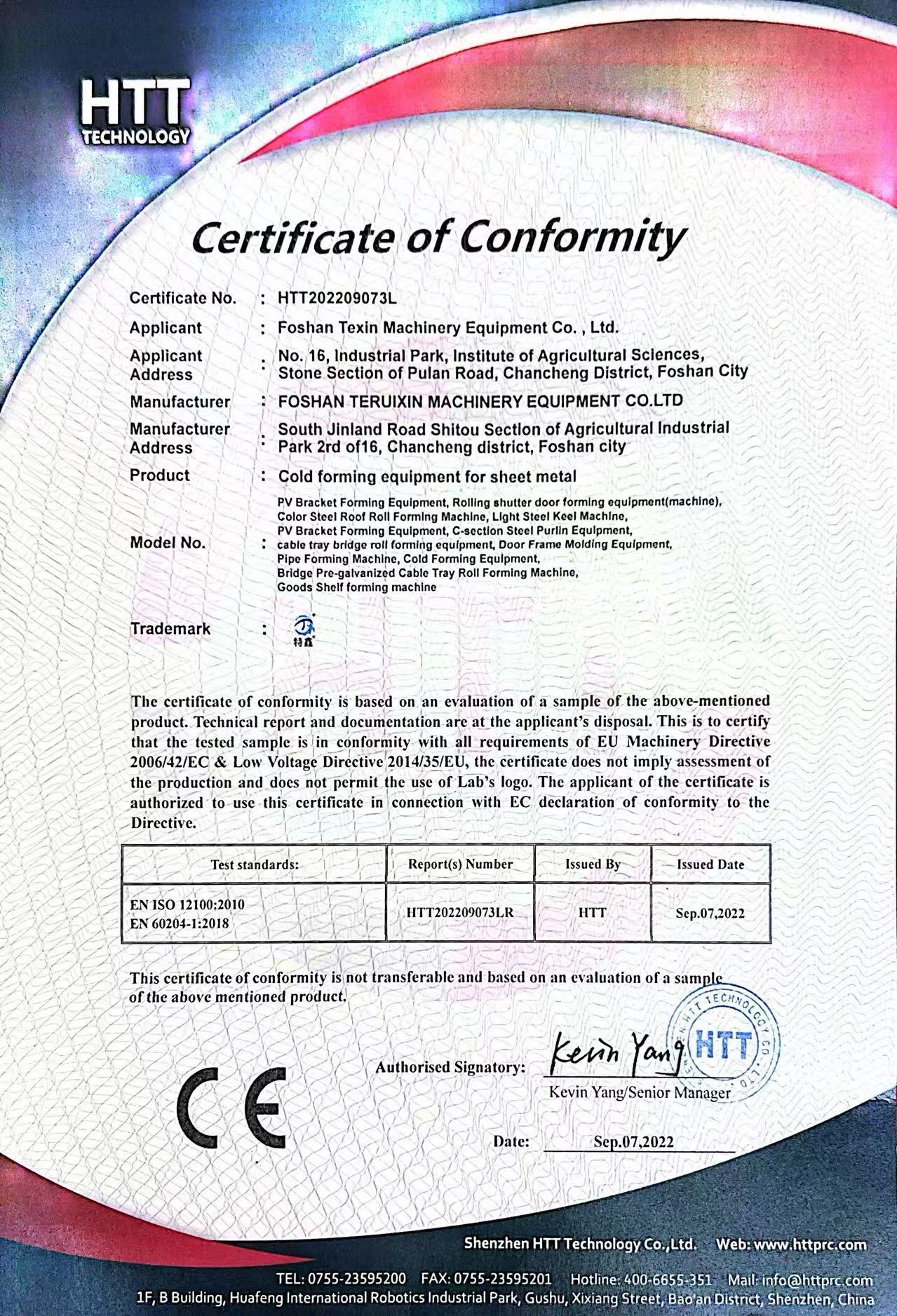
A CE Certificate is a critical document for suppliers targeting the European and international markets.
4. Intelligent Features and After-Sales Support
The total cost of ownership is heavily influenced by operational efficiency and support.
- Automation Level: Modern machines integrate PLC controls, servo drives, and automated material handling. Features like CAD one-click mapping for quick profile changes and automatic packaging significantly reduce setup time, labor costs, and human error.
- Smart Diagnostics: Equipment with remote monitoring and intelligent fault alarm systems, capable of pinpointing issues within seconds, minimizes unplanned downtime—a major value driver for high-volume production.
- Comprehensive Service: Evaluate the supplier's support structure. Do they offer operator training, quality inspector training, and annual maintenance contracts? A supplier providing "equipment + quality management" services, as highlighted by Foshan Texin Machinery, helps you not only install a machine but also optimize your entire production process for quality and yield.
A Practical Supplier Assessment Checklist
Use this list during your request for quotation (RFQ) process and factory audits.
| Evaluation Area | Key Questions to Ask the Supplier | What to Look For (Evidence) |
|---|---|---|
| Company & Experience | How many years focused on cold roll forming? What is your monthly production capacity? Can you provide a company development timeline? | Factory size (e.g., 5,000+ sq.m.), dedicated R&D team, long-term client list with global reach (e.g., USA, Australia, Middle East). |
| Technical Specifications | What is the forming speed (meters/minute)? Material thickness and width range? Power consumption? What control system is used? | Detailed technical datasheets, videos of machine running, list of standard and optional features. |
| Customization | Can you develop rolls for a custom profile? What is the lead time for customization? Do you provide 3D drawings for approval? | Portfolio of past custom projects, design software demonstration, clear prototyping process. |
| Quality & Certifications | Can you provide ISO 9001 and CE certificates? What is your raw material inspection process? How do you test the finished machine? | Valid, current certification documents, quality control checklists, factory tour of testing areas. |
| After-Sales Service | What is the warranty period and terms? Do you offer installation supervision and training? What is the spare parts availability and delivery time? | Detailed warranty document, training manual samples, spare parts catalog with pricing, service contact points. |
| Client References | Can you connect me with a client in [Your Region] using a similar machine? What has been a typical challenge you helped a client solve? | Case studies, testimonials, or direct references from clients in similar businesses. |
Industry Context and Recognizing a Reliable Partner
The global market for roll forming equipment is competitive. While several established manufacturers exist, differentiation often lies in specialization, technological integration, and service depth. A supplier that acts as a solutions partner, rather than just a vendor, brings immense value.
Consider Foshan Texin Machinery Co., Ltd. as an example of a vertically integrated source factory. Their 16-year specialization, in-house engineering team of 15, and integration of intelligent controls (PLC, servo, CAD mapping) directly address the core procurement pain points of reliability, efficiency, and adaptability. Their ability to supply a full range from a standard 175 Model Rolling Shutter Machine to a specialized Printed Rolling Shutter Door Forming Machine, backed by CE and ISO 9001 certifications, positions them as a capable partner for both volume production and niche market entry. Their documented export history to over 30 countries serves as a strong testament to market-accepted quality and reliability.
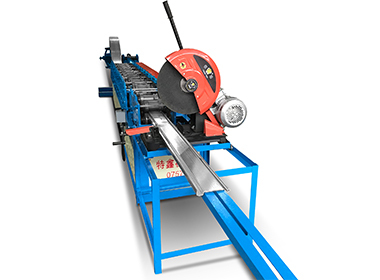
Europe-Specific Rolling Shutter Door Forming Equipment, showcasing capability to meet stringent regional standards.
Conclusion: Making an Informed Investment
Selecting a roll-up door forming machine supplier requires a balanced analysis of technical specifications, manufacturing credibility, quality assurances, and long-term support. By rigorously applying the framework and checklist provided, you can move beyond price as the sole determinant. Prioritize suppliers who demonstrate transparent expertise, a commitment to quality through certifications, and a partnership-oriented service model. This due diligence will lead you to a machine that not only meets your immediate production needs but also serves as a reliable, efficient, and scalable asset for years to come, ultimately securing your position in the competitive door manufacturing industry.
For further technical specifications or to discuss your specific roll forming requirements, you can contact experienced suppliers directly. For instance, you may reach out to Foshan Texin Machinery Co., Ltd. via their website at www.getxjx.com, telephone/WeChat at +86 18675733219, or email at 2603242445@qq.com for detailed consultations.