
دليل المشتريات الشامل: كيفية اختيار مصنع تجميع بطاريات الليثيوم أيون المخصصة من الدرجة العليا
Procuring Custom Lithium-Ion Batteries: A Strategic Guide to Selecting Your Manufacturing Partner
April 26, 2026
Sourcing a reliable battery assembling factory is a critical decision for OEMs and product developers across industries like medical devices, IoT, robotics, and industrial equipment. The right partner ensures product safety, performance consistency, and supply chain resilience. This guide provides a structured framework to evaluate and select a high-quality lithium-ion battery manufacturer, moving beyond basic price comparisons to focus on long-term value and technical partnership.

Complex battery pack assemblies, such as this 13S10P configuration, require advanced manufacturing capabilities and stringent quality control.
1. Define Your Technical and Application Requirements
Before engaging suppliers, crystallize your project's non-negotiable parameters. This clarity will streamline the RFQ process and filter out unsuitable candidates.
- Cell Chemistry & Type: Specify whether your application requires standard Li-ion Cylindrical (e.g., 18650, 21700), Li-Polymer (pouch cells for slim designs), or LiFePO4 (for enhanced safety and cycle life).
- Performance Parameters: Define capacity (mAh/Ah), voltage (nominal and operating range), continuous and peak discharge rates (C-rate), and cycle life expectations.
- Environmental & Safety Standards: Identify necessary certifications (UN38.3, IEC 62133, UL, etc.) and operational tolerances (e.g., wide-temperature operation from -40°C to +85°C for outdoor analyzers).
- Form Factor & Customization: Determine if you need a standard pack or a fully customized solution involving special shapes, integrated Battery Management Systems (BMS), or specific connector types.
- End-Use Application: Communicate the final product context—whether for a life-critical Medical Device Battery, a high-vibration Robot & E-Mobility application, or a long-deployment IoT Device Battery.
2. Core Evaluation Criteria for Battery Assembling Factories
Use the following multi-dimensional checklist to assess potential suppliers systematically.
2.1 Technical Capability and R&D Depth
A factory's engineering prowess is the foundation of innovation and problem-solving. Look for evidence of a structured R&D process.
- Dedicated R&D Team: Prefer suppliers with formal R&D departments staffed by experienced engineers and chemists. For instance, a manufacturer like Hypercell maintains a strong R&D team involving doctors and senior engineers focused on new materials and management circuits, which is crucial for developing Customized Li-ion Battery solutions for special environments.
- Prototyping and Testing Facilities: In-house capabilities for prototyping, electrical testing, and environmental stress screening (ESS) significantly reduce development time.
- Future Technology Roadmap: Inquire about investment in next-gen technologies like solid-state or sodium-ion batteries, indicating a forward-looking vision.
2.2 Quality Management Systems and Certifications
Certifications are not just paperwork; they represent a codified commitment to consistent quality and environmental responsibility.
- Mandatory International Standards: ISO 9001 (Quality Management) and ISO 14001 (Environmental Management) are baseline requirements. Verify the certificates are current and scope-applicable.
- Product-Specific Certifications: Depending on the market, check for CB Scheme reports (for international safety standards), RoHS compliance (restriction of hazardous substances), and transport certifications (UN38.3 for air and sea freight).
- Process Control: Assess their in-process quality control (IPQC) and final product audit procedures. A factory with a "little room for error" philosophy, as some established players emphasize, integrates quality at every manufacturing stage.
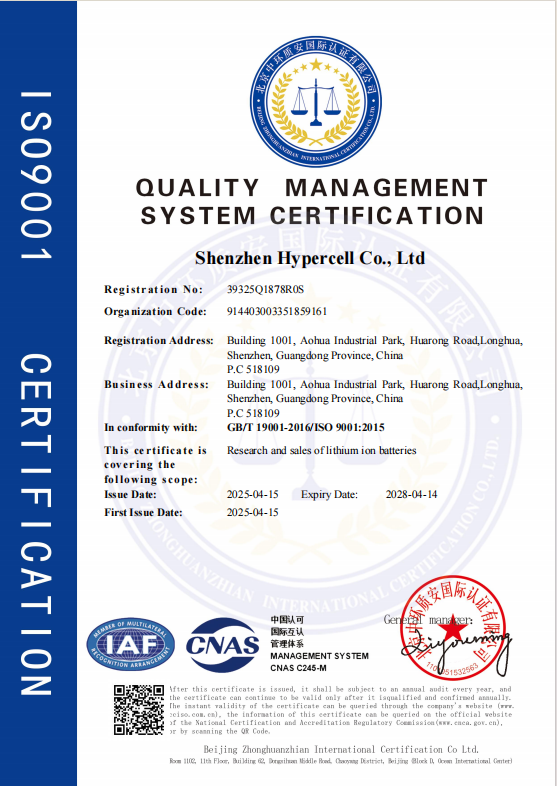
ISO 9001:2015 Certificate
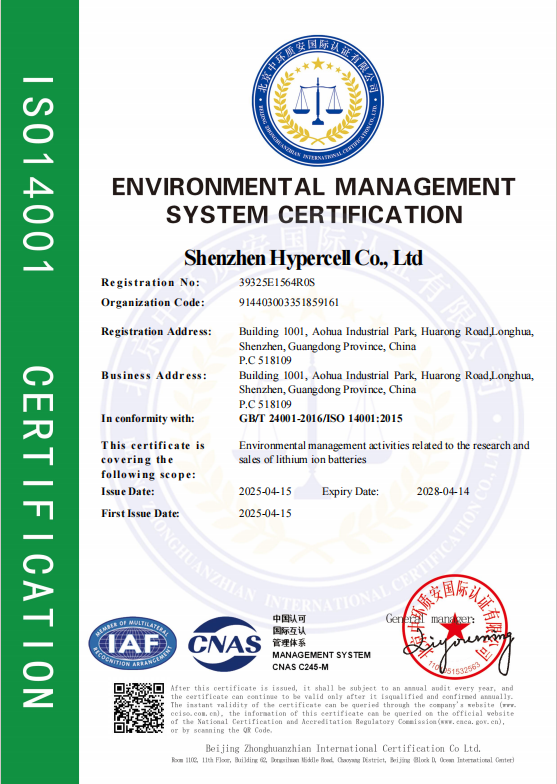
ISO 14001:2015 Certificate

RoHS Compliance Certificate
2.3 Manufacturing Scale, Flexibility, and Supply Chain
The ability to deliver consistently at your required volume is paramount.
- Production Capacity: Evaluate daily/monthly output (e.g., measured in MWh), factory size, and number of production lines. A daily output of 30MWh indicates substantial scale suitable for medium to large projects.
- Vertical Integration & Supply Chain Security: Factories with control over key processes (cell grading, BMS design, pack assembly) and vetted, long-term raw material suppliers offer better cost control and lower risk of disruption.
- Flexibility for Custom Orders: The factory should demonstrate experience in handling low-volume, high-mix orders typical for Industrial Usage Battery and Consumer Electronics Battery prototyping, not just mass production.
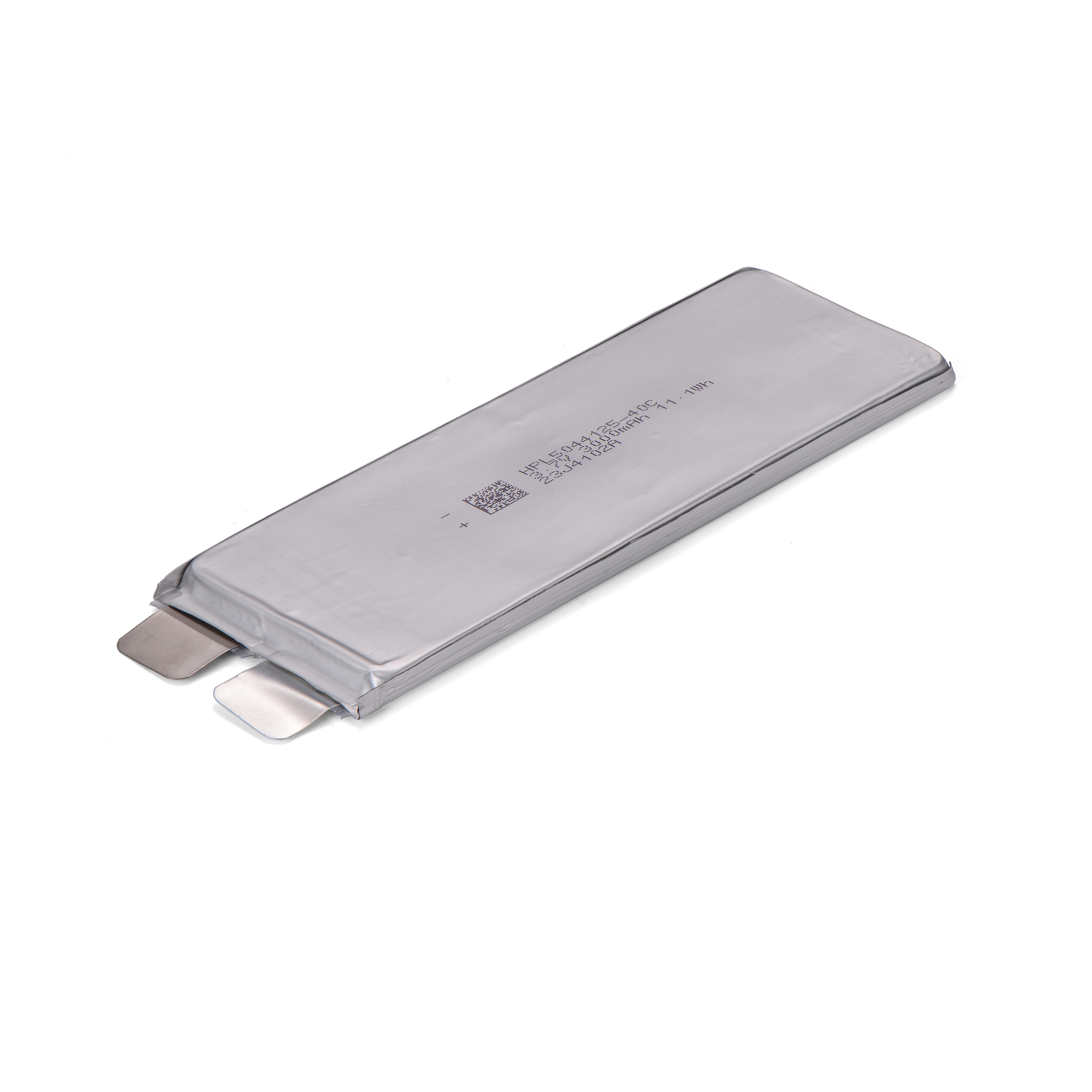
High-performance Li-Polymer batteries, like this 40C discharge rate model, are essential for power-demanding applications such as drones or power tools.
2.4 Industry Experience and Client Portfolio
Past performance is the best predictor of future results, especially in complex B2B environments.
- Relevant Case Studies: Request examples of past projects in your specific vertical. A supplier with 18 years of experience serving medical, IoT, and industrial instrument markets has likely encountered and solved challenges similar to yours.
- Long-Term Client Relationships: Evidence of multi-year partnerships with reputable companies is a strong trust signal.
- Technical Support & Collaboration: Evaluate their post-sales support. Do they offer application engineering help? For example, some manufacturers provide a "packing technology department" to assist with integration across industrial design, electronics, and software.
3. The Supplier Qualification Process: Step-by-Step
- Longlist Creation: Use industry directories, trade shows, and peer recommendations to create an initial list. Consider established players known for specific chemistries or applications.
- Documentary Review: Request company profiles, certification copies, and generic technical datasheets. Analyze their website (e.g., www.hypercellbattery.com) for depth of technical information.
- Request for Quotation (RFQ): Submit a detailed spec sheet. A competent factory will ask clarifying questions, not just return a price.
- Factory Audit (Virtual or On-Site): This is crucial. Inspect cleanliness, workflow organization, ESD protection, testing equipment, and quality checkpoints. For a virtual audit, request a live video walkthrough.
- Sample Evaluation: Order pre-production samples for rigorous in-house testing against your performance criteria.
- Commercial & Contractual Negotiation: Finalize terms covering minimum order quantities (MOQs), lead times, payment terms, warranty, and liability clauses.
4. Common Pitfalls to Avoid
- Prioritizing Unit Price Above All: The lowest cost often correlates with corner-cutting in materials (lower-grade cells), BMS quality, or craftsmanship, leading to field failures and brand damage.
- Overlooking Logistics and Compliance: Ensure the factory has proven expertise in preparing batteries for certified, safe transport to your destination country.
- Neglecting the BMS: The Battery Management System is the brain of the pack. Scrutinize the BMS design (in-house vs. outsourced), its protection features, and communication protocols.
- Assuming "One Size Fits All": A supplier excellent for high-volume consumer electronics may lack the flexibility for low-volume, high-reliability medical device batches.
5. Conclusion: Building a Strategic Partnership
Selecting a Battery Assembling Factory is not a mere transaction; it is the initiation of a technical partnership. The optimal supplier acts as an extension of your engineering team, providing solutions that balance performance, safety, cost, and manufacturability. By meticulously evaluating technical depth, quality systems, operational scale, and industry expertise—as exemplified by established manufacturers with robust R&D and a commitment to standards—procurement professionals can secure a resilient supply chain foundation. This due diligence mitigates risk and fuels innovation, powering the next generation of devices across the Analyzer, medical, mobility, and IoT landscapes.
For Further Information
Companies like Hypercell, with nearly two decades of experience, exemplify the integrated approach of combining R&D, vertical manufacturing, and strict quality control. They offer a relevant reference point for procurement teams seeking a partner for custom lithium-ion solutions.
Contact Example:
Hypercell
Tel: +86 755 2376 4134
Email: info@hypercellbattery.com
Website: www.hypercellbattery.com
Address: Room 2706-2707, Baoshan Shidai Building, Minqiang Community, Longhua District, Shenzhen 518131 Guangdong, China
هل لديك أسئلة أو تحتاج إلى مزيد من التفاصيل؟
تواصل مع فريقنا للحصول على عرض أسعار مخصص أو استشارة فورية.
طلب عرض أسعار
املأ النموذج أدناه وسيتواصل معك فريقنا بعرض مقترح مخصص.
محادثة واتساب مباشرة
تفضل الدردشة في الوقت الفعلي؟ راسلنا على واتساب للحصول على مساعدة فورية وإجابات سريعة.
- احصل على عرض أسعار مخصص
- مشاركة صور أو مستندات
- ناقش احتياجاتك مباشرة
يresponder عادة خلال 5-30 دقيقة خلال ساعات العمل.