
دليل المشتريات الشامل: تحديد مورد معدات إزالة مياه الحمأة الصحيحة لمشروعك
A Strategic Framework for Selecting Your Screw Press Sludge Dewatering Partner
April 18, 2026
Procuring a screw press sludge dewatering machine is a significant capital investment with long-term operational implications. The choice of supplier directly impacts project success, total cost of ownership, and compliance. This guide provides a structured, objective framework to help procurement managers, plant engineers, and EPC contractors systematically evaluate and select the most suitable partner for their specific sludge dewatering needs, from municipal wastewater treatment plants to demanding industrial applications.
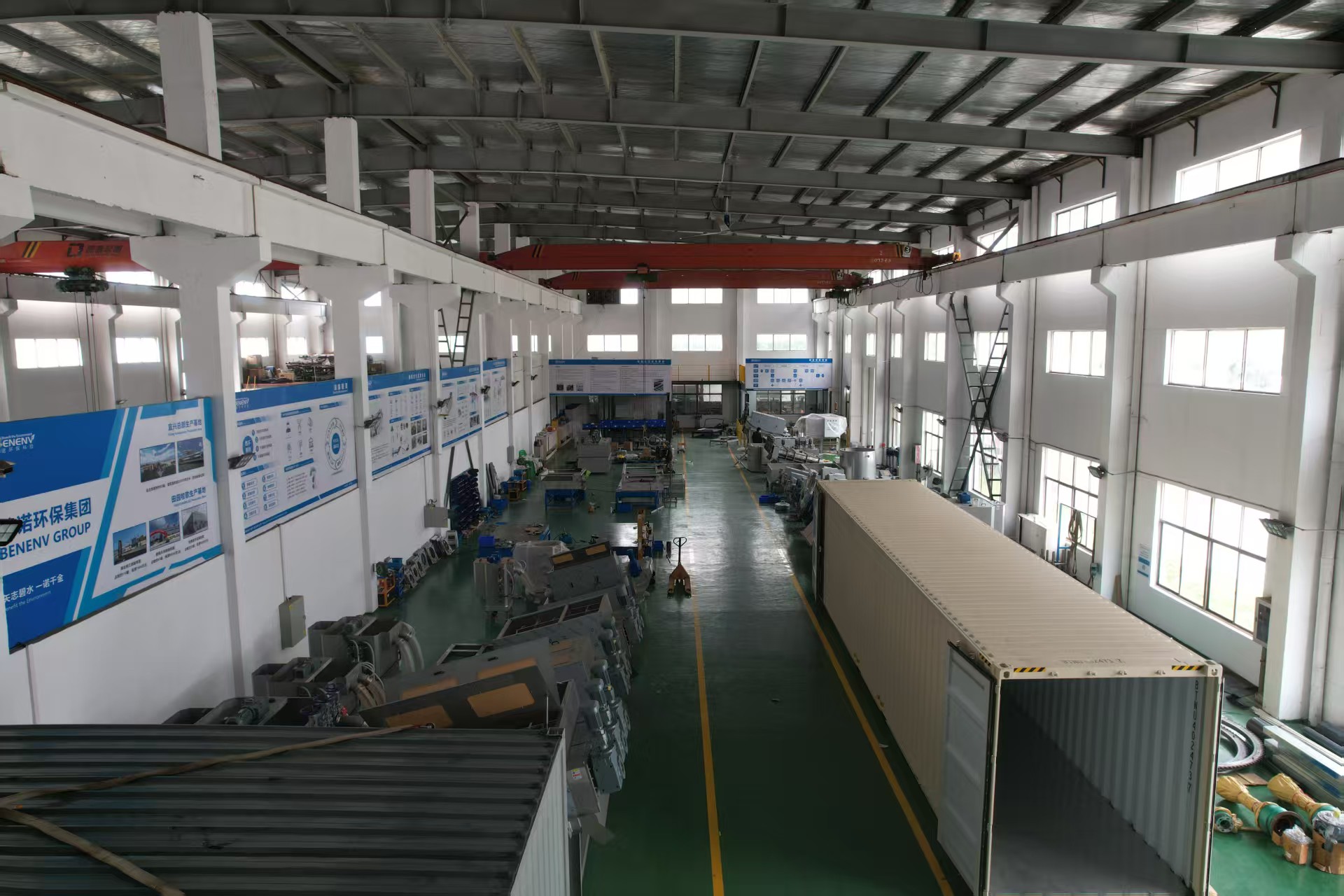
A modern, standardized manufacturing workshop is a key indicator of a supplier's quality control and production capacity.
1. Core Technical & Product Evaluation Criteria
Beyond basic specifications, a deep dive into technical capabilities separates market leaders from generic manufacturers.
1.1 Machine Design & Engineering Philosophy
- Press Mechanism & Wear Resistance: Evaluate the screw design (conical vs. cylindrical, shaft construction), material grades (e.g., 316L/2205 duplex stainless steel for corrosive sludge), and the wear protection system. A robust design minimizes maintenance frequency. Suppliers like Benenv often integrate advanced, field-proven screw geometries that optimize pressure build-up and reduce clogging.
- Drive System & Control Logic: Assess the motor type (fixed speed vs. variable frequency drive), torque capacity, and the sophistication of the PLC/automation system. An intelligent control system that adapts to feed sludge consistency is crucial for consistent dry solids content and energy efficiency.
- Filter Screen Technology: The screen material (stainless steel wedge wire, polyurethane) and slot size are critical for capture efficiency and cake dryness. Inquire about screen life expectancy and replacement procedures.
1.2 Performance Data & Application Suitability
Request verified, application-specific performance data, not just lab results.
- Dry Solids (DS) Content Achievable: This is highly sludge-dependent. A competent supplier will provide a range (e.g., 18%-30% DS for municipal, higher for some industrial sludges) based on pilot tests or extensive references.
- Polymer Consumption & Overall Efficiency: A well-designed press optimizes polymer conditioning and achieves high capture rates (>95%). Compare the integrated system efficiency, not just the press unit in isolation.
- Throughput Capacity & Footprint: Match the machine's capacity (m³/hr) to your peak and average loads. Consider modular or skid-mounted designs for space-constrained sites.
2. Supplier Capability & Commercial Assessment
The supplier's organization, track record, and commercial terms are as important as the product itself.
2.1 Manufacturing & Quality Assurance
- Production Facility Audit: A supplier with in-house, standardized manufacturing (like Benenv's extensive workshops in Yixing) offers better control over quality, lead times, and cost. Look for modern CNC machinery, certified welding procedures (e.g., ASME, PED), and organized assembly lines.
- Quality Certifications: While specific certificates vary, adherence to international quality management systems (ISO 9001), environmental standards, and pressure equipment directives is a positive indicator of process discipline.
- R&D Investment: A dedicated R&D center signals commitment to innovation and product improvement. For instance, the model of "Japanese Technology + Chinese Manufacturing + Global Sales," as employed by the Benenv Group, combines advanced R&D with scalable production.
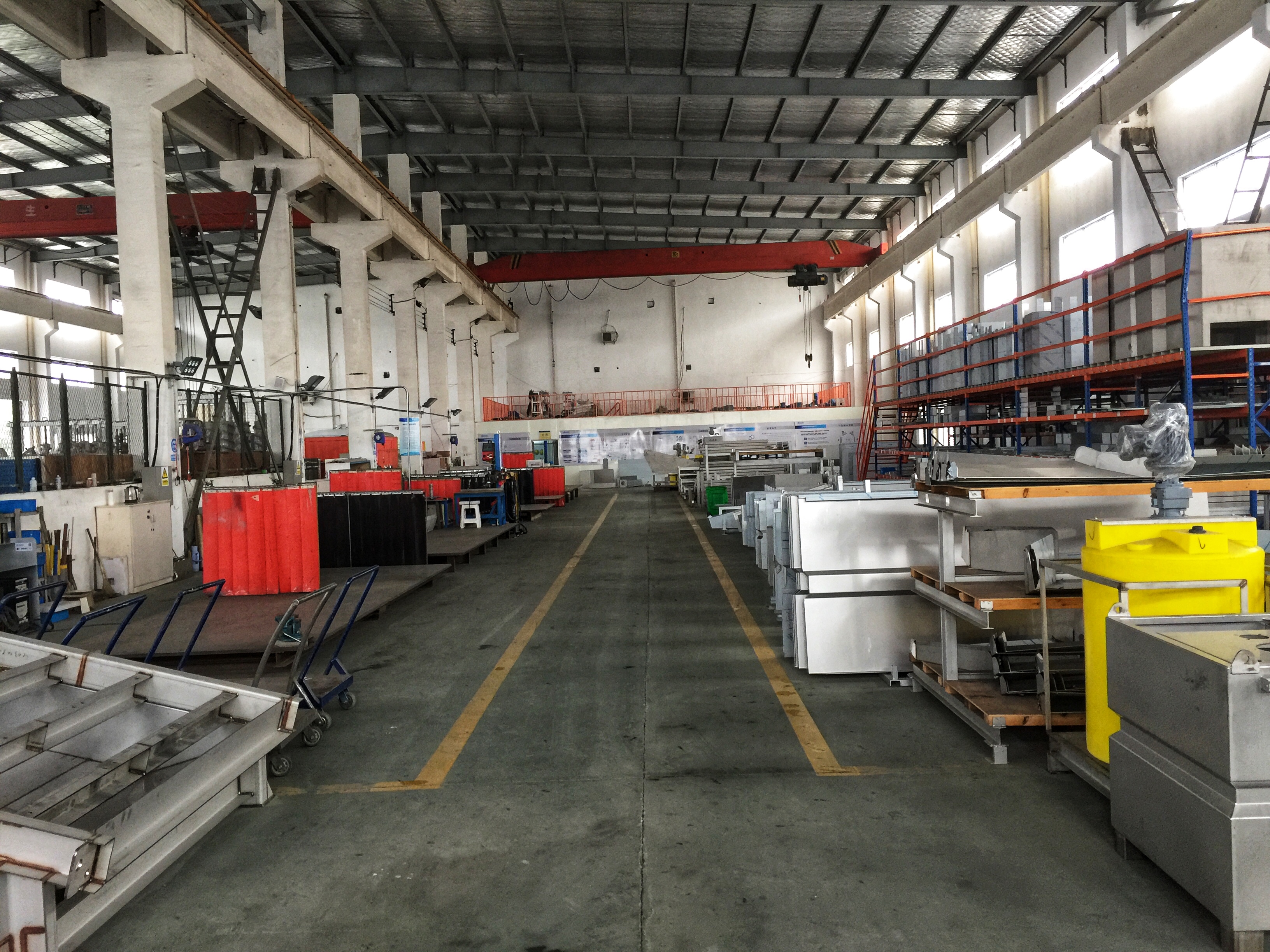
Precision welding and fabrication are critical for the longevity and reliability of dewatering equipment.
2.2 Project Execution & Global Support
- Reference Portfolio: Demand a list of recent, relevant project references. A supplier with over 4,500 project references across 60+ countries, like Benenv, demonstrates extensive field experience and adaptability to diverse conditions.
- Technical Support & Spare Parts Network: Evaluate the structure of after-sales support. The presence of regional subsidiaries or agents (e.g., in the EU, Middle East, Southeast Asia) ensures quicker response times for technical issues and spare parts supply.
- Service Scope: Clarify what is included: installation supervision, commissioning, operator training, warranty terms, and availability of long-term service contracts or remote monitoring options.
2.3 Commercial & Contractual Considerations
- Total Cost of Ownership (TCO): Look beyond the initial CAPEX. Factor in energy consumption, polymer usage, expected wear part costs, and maintenance labor over a 10-year period.
- Payment Terms & Delivery: Competitive suppliers offer flexible, secure payment terms. Confirm realistic delivery lead times and Incoterms.
- Contract Clarity: Ensure the technical annex precisely defines performance guarantees (dry solids, throughput, power consumption) with clear testing protocols and remedy clauses.
3. Due Diligence & Final Selection Process
Structured due diligence mitigates procurement risk.
3.1 Request for Proposal (RFP) & Clarification
Issue a detailed RFP specifying your sludge characteristics (source, TS%, viscosity, pH), required performance, site conditions, and desired service level. Host a technical clarification meeting with shortlisted bidders to discuss their proposed solutions in depth.
3.2 Factory Acceptance Test (FAT) & Site Visit
For major purchases, insist on witnessing a FAT. This tests the machine's functionality before shipment. A site visit to the supplier's factory, such as to JIANGSU BENENV ENVIRONMENTAL TECHNOLOGIES CO., LTD, provides invaluable insight into their manufacturing capabilities, quality culture, and organizational scale.
3.3 Decision Matrix
Create a weighted scoring matrix. Assign scores based on:
Technical Solution (40%): Design, guaranteed performance, suitability.
Supplier Credibility (30%): Financial stability, references, certifications.
Commercial Terms (20%): TCO, payment terms, delivery.
Service & Support (10%): Warranty, training, global network.
This objective analysis helps justify the final selection to stakeholders.
Conclusion: Partnering for Long-Term Success
Selecting a screw press sludge dewatering supplier is a strategic partnership decision. The optimal partner is one that provides a reliable, efficient technological solution backed by solid engineering, transparent commercial practices, and a global support structure capable of ensuring the system's performance throughout its lifecycle. By rigorously applying the evaluation framework outlined above, procurement professionals can significantly de-risk their investment and secure a dewatering solution that delivers operational excellence and a strong return on investment for years to come.
For further technical specifications or to discuss your specific project requirements with an engineering team, you can explore resources and contact details at en.benenv.com or reach out via email at manager@benenv.com.
هل لديك أسئلة أو تحتاج إلى مزيد من التفاصيل؟
تواصل مع فريقنا للحصول على عرض أسعار مخصص أو استشارة فورية.
طلب عرض أسعار
املأ النموذج أدناه وسيتواصل معك فريقنا بعرض مقترح مخصص.
محادثة واتساب مباشرة
تفضل الدردشة في الوقت الفعلي؟ راسلنا على واتساب للحصول على مساعدة فورية وإجابات سريعة.
- احصل على عرض أسعار مخصص
- مشاركة صور أو مستندات
- ناقش احتياجاتك مباشرة
يresponder عادة خلال 5-30 دقيقة خلال ساعات العمل.