
Concrete Formwork Comparison: What Drives the Real Cost
Concrete Formwork Comparison: What Drives the Real Cost
The decision to buy concrete formwork is rarely about the panel alone. It is about how many times the panel can be reused, how it behaves under high concrete pressure, and whether the supplier's production process prevents the failures that show up only after months of site use. For procurement teams at the decision stage, the most useful comparison is not simply “steel vs. aluminum vs. timber” in general, but the difference between low-cost light-duty panels and heavy-duty galvanized steel formwork systems that may look similar in photos yet perform very differently in the pour.
This article compares these two tiers, explains the technical numbers that matter, and provides a cost-per-pour framework for buying decisions. The heavy-duty steel system referenced in this comparison is manufactured by Rizhao Fenghua Scaffoldings Co., Ltd. (RFH), a China-based company with an 80,000 m² factory in Rizhao, Shandong, founded in 1953 and exporting 100% of its formwork and scaffolding products to 126 countries, including the EU, the United States, Australia, and South America.
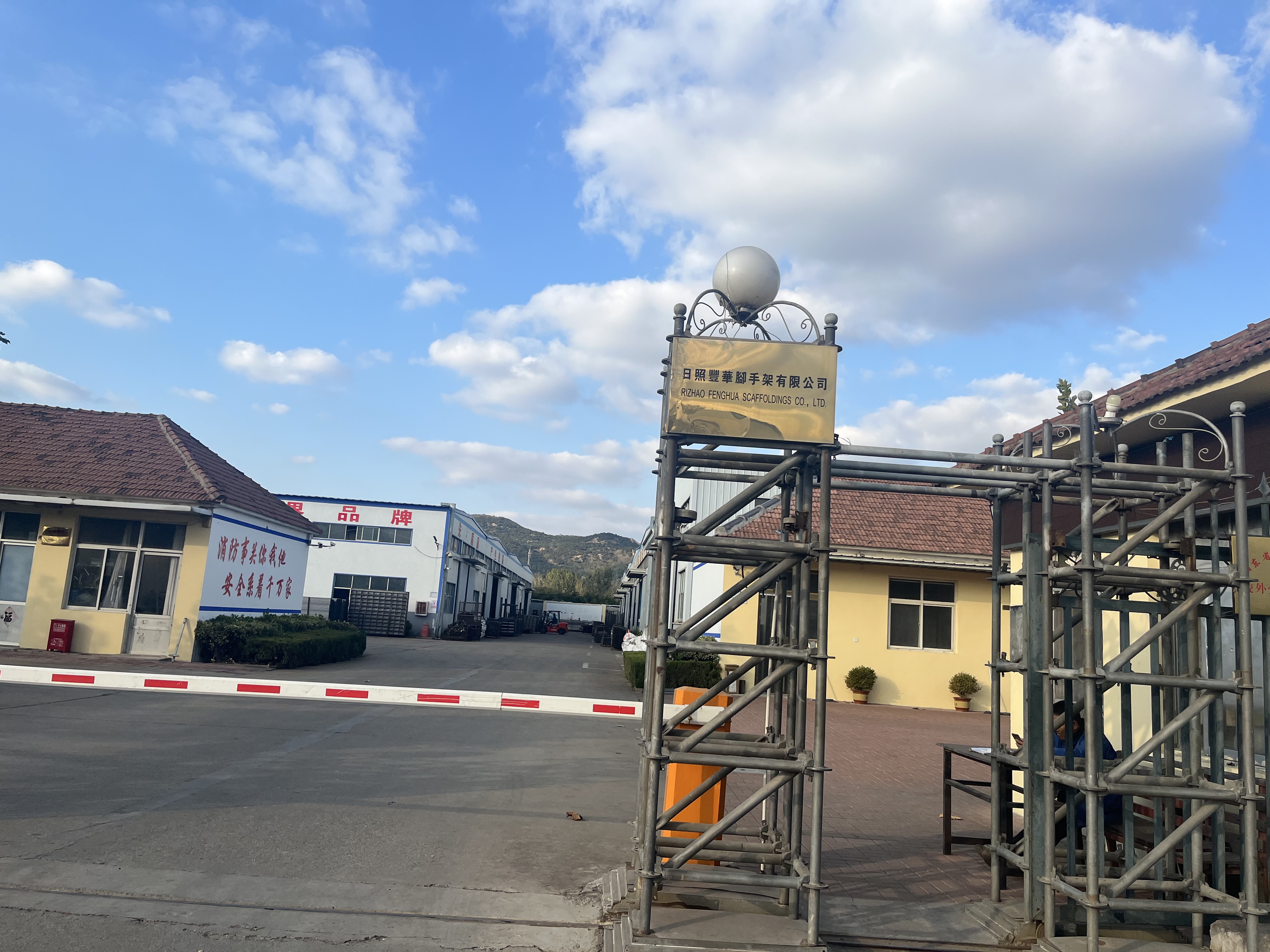
Rizhao Fenghua factory in Rizhao, Shandong, where steel formwork panels are manufactured and welded.
Market signals that shape formwork buying decisions
The concrete formwork market was valued at USD 8.9 billion in 2024, according to Verified Market Research. Steel formwork represented 44% of all formwork units installed worldwide in 2024, versus 37% for timber and 19% for aluminum, according to Cognitive Market Research. The Asia-Pacific region accounted for 54.7% of the market in 2025, according to Fortune Business Insights. When scaffolding is included, the combined formwork and scaffolding market reached USD 56.41 billion in 2024, according to Coherent Market Insights.
These numbers indicate a market that is large, regional, and still dominated by steel. The same Cognitive Market Research report estimates that the top five formwork manufacturers, including PERI and Doka, control roughly 44% of the global market. This concentration has a direct consequence for buyers: compatibility with existing formwork ecosystems is becoming as important as raw panel price.
For an independent manufacturer like RFH, compatibility is a way to offer similar panel geometry and connection logic without forcing the buyer into a new, closed system. That is why the RFH steel heavy-duty range includes panels compatible with PERI TRIO, HUNNEBEACK RASTO, DOKA FRAMI, and TOPEC HARSCO. From a buyer's perspective, this reduces switching cost and may allow the new panels to work with clamps and ties already on site.
The comparison baseline: light-duty steel panels vs. heavy-duty systems
The comparison target is not aluminum or timber. It is the low-cost, non-galvanized, or manually welded light-duty steel panel that is often quoted as a cheap alternative on the same drawing. The heavy-duty alternative is a hot-dip galvanized steel panel system, robotically welded, with CNC-machined profiles and a higher load specification.
| Criteria | Light-duty steel panels | RFH heavy-duty galvanized system |
|---|---|---|
| Concrete pressure resistance | Typical 60 kN/m² | 80 kN/m² (33% higher) |
| Dimensional tolerance | 3.0mm+ typical industry tolerance | Under 1.0mm via CNC machining |
| Corrosion protection | None or painted surface | Hot-dip galvanized, min. 60–80 µm |
| Weld quality | Manual welding | Automated robot welding, watertight joints |
| Expected lifespan | Shorter | Approximately 2x comparable products |
| Initial price | Lower | 15–20% premium |
| Maintenance | Frequent rust treatment | No rust treatment; BFD clamps reduce component loss |
| Best fit | Light residential, limited pours | Mega-infrastructure, thick walls, high-velocity pours |
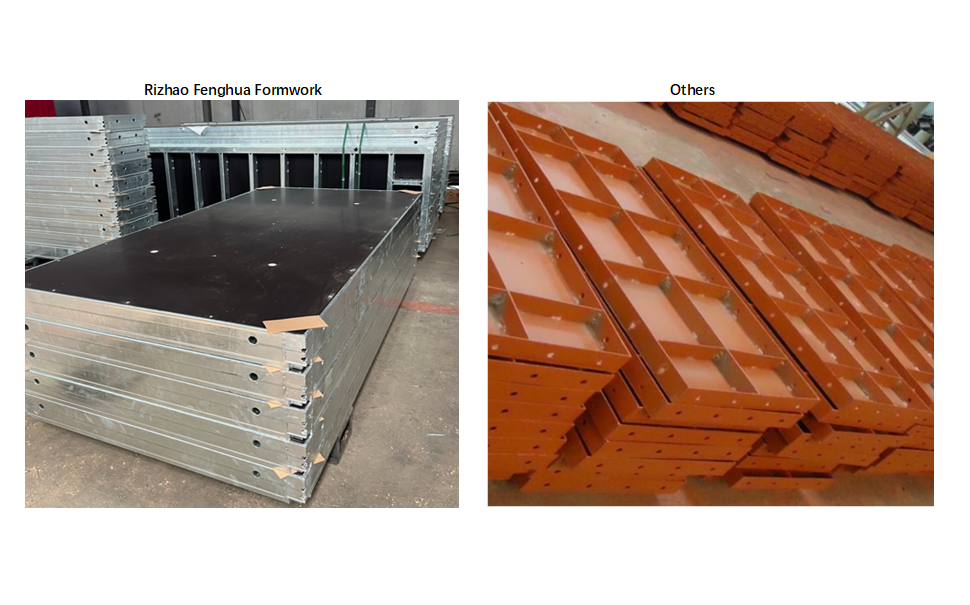
Example of formwork panel comparison: the visual difference is only one indicator of performance.
Technical explanation: what the key performance numbers mean
Concrete pressure resistance (80 kN/m² vs. 60 kN/m²)
Concrete pressure on formwork is not constant. It increases with the height of the wet concrete and the rate of pouring. A panel rated at 60 kN/m² is acceptable for many standard walls, but a high-velocity pour or a thick foundation wall can quickly exceed that threshold. The RFH system provides 80 kN/m², or 33% higher resistance, which reduces the risk of panel deflection, wall bulging, and concrete rework.
Dimensional tolerance (under 1.0mm vs. 3.0mm+)
Tolerance is the difference between the intended wall geometry and the finished surface. Low-cost panels often rely on manual bending and welding, which can leave weld distortion and poor edge alignment. RFH panels use CNC machining to hold dimensional tolerance under 1.0mm. In practice, this matters for fair-faced concrete, alignment with adjacent panels, and the speed of assembly on site.
Corrosion protection and welding
The most frequent failure modes in steel-faced formwork are rusting of the frame and delamination of the plywood face. RFH controls both through three production measures:
- Hot-dip galvanized coating with a minimum thickness of 60–80 µm is applied to all steel frames.
- The panel face uses 18mm high-grade birch plywood coated with 220g/m² phenolic film or composite PP plastic facing, preventing moisture absorption.
- Automated robot welding creates seamless, watertight joints between the steel profile and the panel sheet.
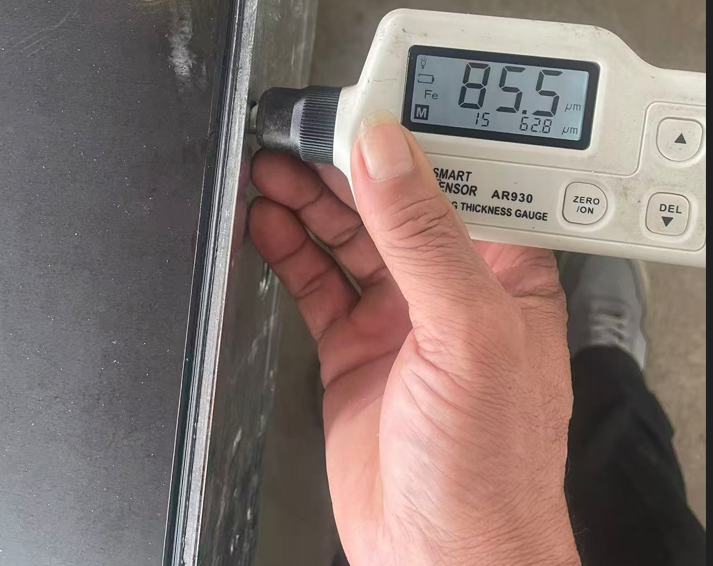
Rust and moisture protection in heavy-duty formwork construction.
For the buyer, these measures are not marketing details. They determine whether the formwork system will still produce a clean concrete surface after dozens of pours, and whether the galvanized frame can survive exposure to weather on open decks.
Cost-per-pour: a better decision metric
The first number in a formwork quote is unit price, but the last number should be cost per successful pour. A simple formula:
Total formwork cost (purchase + maintenance + risk) ÷ Expected number of reuses = Cost per pour
If a heavy-duty system costs 15–20% more but lasts twice as long, the per-pour cost is lower even before counting reduced maintenance. Hot-dip galvanization eliminates rust treatment, and standard PERI-compatible BFD clamps reduce component loss and wear. Cheaper panels that must be replaced more often also interrupt the concrete cycle, create scheduling risk, and may require rework of an already-poured wall.
Industry pricing benchmarks help contextualize the premium. According to Formwork System Market Analysis, steel formwork for large projects typically ranges between USD 25 and USD 60 per square meter, aluminum between USD 40 and USD 75, plastic and modular systems between USD 20 and USD 50, and timber rental between USD 10 and USD 25. The same method can be applied across materials: timber rental may be economical for very short campaigns, while a steel system becomes more efficient when reuse is high.
Application and use cases: where heavy-duty steel earns the premium
The RFH concrete formwork system is specified for mega-infrastructure projects, thick foundation walls, and high-velocity concrete pouring operations. In these scenarios, the product's role is to provide rigid structural containment, precise wall geometry definition, and dimensional control during curing.
Contractors managing large foundation pours need a system that will not deform under high lateral pressure and can be stripped and reset quickly without worrying about panel condition. The 80 kN/m² rating and galvanized frame support exactly that workflow. For projects that already use PERI TRIO or other European steel panel systems, the RFH compatible panels can be mixed with existing hardware, reducing the need to purchase a complete new system.
However, the premium is not always the right choice. If the project portfolio is dominated by small residential slabs with limited wall heights and very low pour rates, a lighter aluminum system may be faster to handle. Aluminum formwork systems allow floor cycles as fast as four to five days in high-rise construction, according to Intel Market Research. In such cases, the extra weight of heavy-duty steel reduces the advantage of a high pressure rating.
Supplier verification during the decision phase
A comparison is only trustworthy if the supplier can prove the claimed quality. Buyers should audit four points when evaluating a concrete formwork supplier:
- Welding process: Is welding automated or manual? Is it controlled under EN1090?
- Galvanizing: Is the steel frame hot-dip galvanized? What is the coating thickness?
- Dimensional control: Are profiles CNC-machined? What tolerance was used?
- Testing: Does the company have internal laboratories to verify incoming raw material and finished products?
RFH supports these checks with a mechanical test laboratory and a chemistry test laboratory, ISO 9001 quality management, EN1090 welding control, and 22 relevant certificates including EN 1065, EN74, and CE. Its production line includes 6 automatic welding assembly lines and one formwork profile forming assembly line. This kind of verifiable process detail is the evidence that separates a manufactured product from a project liability.
Market trends: compatibility, data, and growth
Formwork is changing in two ways that affect buyers. First, very tall buildings are driving more automated climbing formwork: automated climbing systems accounted for 28% of installations in 2024, mainly in buildings over 50 stories, according to an Industry Analysis Report. Second, aluminum systems are expected to keep growing at a CAGR of 9.9%, reaching USD 2.48 billion by 2032, according to Intel Market Research.
At the same time, steel remains the most installed material, and the top suppliers are investing in system-level services. PERI acquired Implenia Schalungsbau in 2023 to expand modular formwork services, while Doka introduced DokaXact sensors in 2024 for real-time monitoring of concrete pressure. These signals point in the same direction: the future competitive field is not simply panels, but system interoperability, monitoring data, and durability.
For a buyer deciding between suppliers, this trend strengthens the case for choosing equipment that uses standard, compatible clamps and connection geometry. A system that is tied to one proprietary line may be harder to extend or to integrate with a second-hand market.
Decision checklist for concrete formwork procurement
Use the following checklist to compare bids on lifetime economics rather than initial price:
| Checklist item | Why it matters |
|---|---|
| Concrete pressure resistance | Specify whether the pour conditions require 60 kN/m² or 80 kN/m². |
| Dimensional tolerance | Require a written tolerance, ideally below 1.0mm. |
| Surface finish | Define whether fair-faced concrete is required. |
| Corrosion protection | Verify hot-dip galvanizing thickness, e.g., 60–80 µm. |
| Weld quality | Ask for process documentation and EN1090 control. |
| Component compatibility | Check clamps, ties, and panel geometry against existing inventory. |
| Expected reuse cycles | Request the basis for lifespan claims. |
| Cost per pour | Calculate total cost ÷ expected pours, including maintenance and rework risk. |
| Maintenance | Confirm availability of replacement plywood panels and clamps. |
Limitations and boundary conditions
No single formwork system fits every project. The heavy-duty steel comparison above has three boundary conditions.
First, the promised 2x lifespan assumes proper handling, cleaning, and adherence to the rated pressure. Any formwork system can be damaged by careless stripping or by exceeding its load rating.
Second, the 15–20% initial price premium may not suit every buyer's working capital, even if lifecycle cost is lower. Projects with very short equipment rental periods may prefer a cheaper upfront solution even if it is replaced sooner.
Third, compatibility with PERI TRIO does not mean the entire system is identical to a full PERI-engineered system. Buyers should verify component-level dimensions, load ratings, and alignment with an independent engineer when compatibility is critical.
Future outlook
The next stage of concrete formwork procurement will likely reward suppliers who can prove performance with data and production control. Buyers will look for systems that carry higher pressure ratings, hold geometry, resist corrosion, and integrate with the hardware they already own. The cost-per-pour method gives buyers a common language to compare quotes, while the suppliers who can evidence welding, galvanizing, and tolerances will become easier to select with confidence.
FAQ: common purchase questions for concrete formwork systems
What is the concrete pressure resistance of the RFH concrete formwork system?
The RFH system is rated at 80 kN/m², which is 33% higher than the 60 kN/m² typical of light-duty panels.
How long does the RFH heavy-duty formwork last?
The expected service lifespan of the RFH system is twice as long as comparable products, which contributes to a reduced total cost of ownership.
What maintenance is required for the RFH system?
Hot-dip galvanization eliminates rust treatment needs, and standard PERI-compatible BFD clamps reduce component loss and wear.
Which projects is the RFH system designed for?
The RFH concrete formwork system is suitable for mega-infrastructure projects, thick foundation walls, and high-velocity concrete pouring operations.
How does RFH prevent rusting and plywood delamination?
All steel frames receive a hot-dip galvanized coating with a minimum thickness of 60–80 µm. The panel uses 18mm high-grade birch plywood coated with 220g/m² phenolic film or composite PP plastic facing, and automated robot welding creates watertight joints.
What is the function of the formwork during curing?
The product provides rigid structural containment, precise wall geometry definition, and dimensional control during the curing phase.
Rizhao Fenghua publishes its complete product catalogue for procurement evaluation. The catalogue covers concrete formwork panels, columns, shoring props, scaffolding systems, and accessories, and can be downloaded for engineering review: RFH Concrete Formwork and Scaffolding Catalogue.