
Concrete Formwork Systems: Market Trends, Supplier Capabilities, and Buying Considerations
Concrete Formwork Systems: Market Trends, Supplier Capabilities, and Buying Considerations
Concrete formwork systems determine the speed, safety, and surface quality of almost every reinforced-concrete structure. For contractors and procurement teams evaluating suppliers, the practical questions are: which formwork technology fits the project, how to compare manufacturers, and what evidence separates a reliable long-term partner from a transactional vendor. This article examines the formwork landscape and explains what RIZHAO FENGHUA SCAFFOLDINGS CO., LTD. (RFH) offers to global buyers.
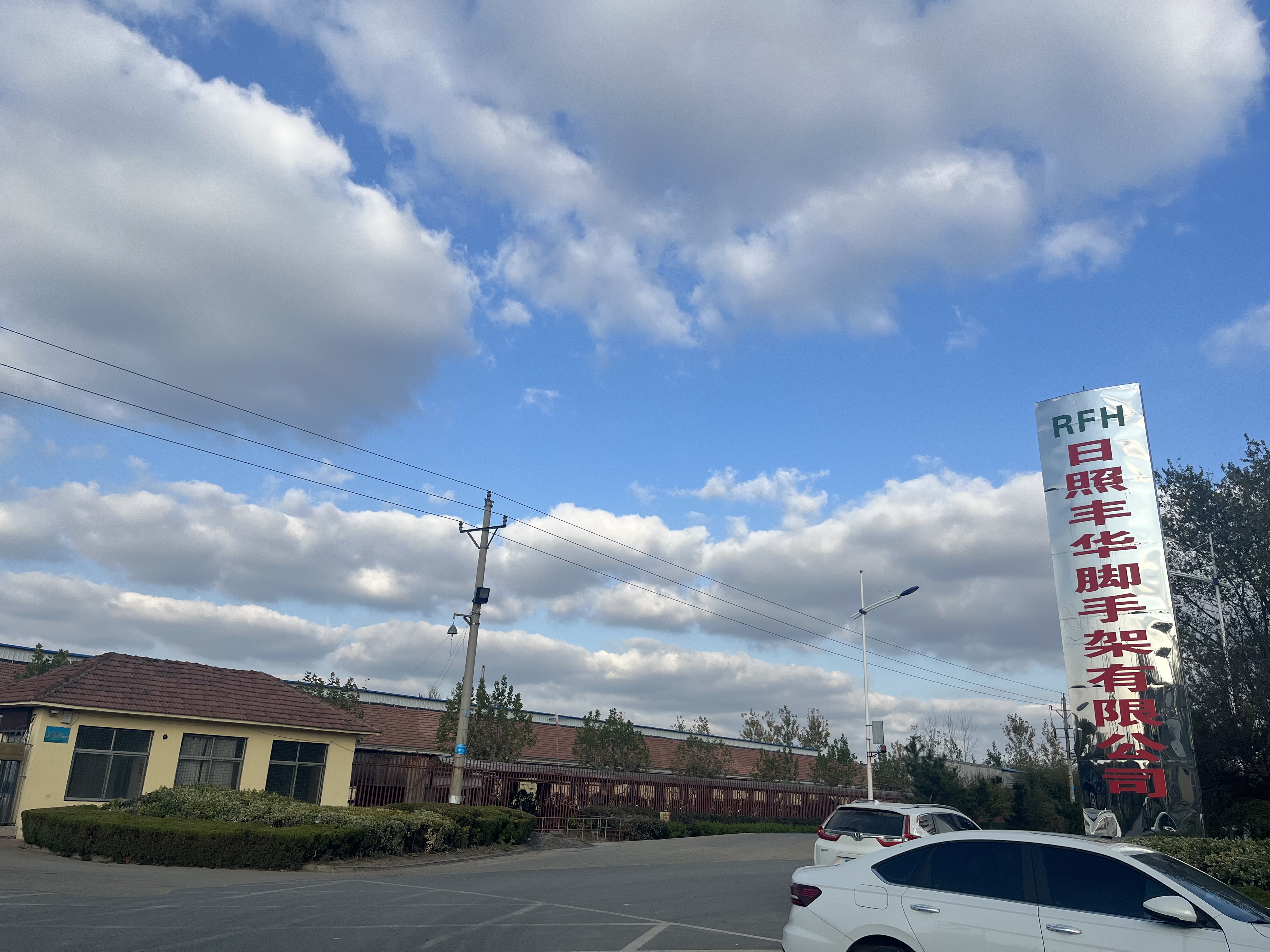
RFH manufacturing facility in Rizhao, Shandong Province, China.
- 1. The state of the concrete formwork market
- 2. Why formwork selection is a strategic construction decision
- 3. Manufacturer profile: RIZHAO FENGHUA SCAFFOLDINGS CO., LTD.
- 4. The RFH formwork product portfolio
- 5. Design, materials, and quality control
- 6. Applications and project scenarios
- 7. Formwork economics and cost considerations
- 8. How RFH compares with traditional supplier approaches
- 9. Limitations and selection caveats
- 10. Future outlook for concrete formwork systems
- 11. Frequently asked questions
1. The state of the concrete formwork market
The global concrete formwork market was valued at USD 8.9 billion in 2024, according to Verified Market Research. A broader definition that includes scaffolding puts the combined formwork and scaffolding market at USD 56.41 billion in the same year, based on Coherent Market Insights data. The Asia-Pacific region accounted for 54.7% of the formwork market in 2025, according to Fortune Business Insights. These figures indicate strong global demand for concrete forming systems, with the largest share of activity in the region that also contains the largest concentration of formwork manufacturing capacity.
By material type, steel formwork represented 44% of formwork units installed worldwide in 2024, timber formwork held 37%, and aluminium formwork accounted for 19%, according to Cognitive Market Research. Steel remains the most widely used material, while aluminium is the fastest-growing segment: Intel Market Research projects the aluminium formwork market to reach USD 2.48 billion by 2032, at a CAGR of 9.9%.
2. Why formwork selection is a strategic construction decision
Formwork is not a commodity purchase. The system chosen affects the construction cycle, the number of workers required, the quality of the finished concrete surface, and the total cost of the structure. A modular reusable system reduces material waste and accelerates floor cycles, which is particularly important in high-rise residential and commercial projects. Aluminium formwork systems, for example, allow floor cycles as fast as 4–5 days in high-rise construction, according to Intel Market Research. Steel systems offer higher load capacities for heavy civil works such as foundations, retaining walls, and columns with high concrete pressures.
For many projects, the decision is not simply wood vs. steel vs. aluminium. It is a trade-off among initial purchase cost, reuse cycles, labour cost, crane dependency, and the finish required by the specification. This explains the market shift toward engineered systems: reusable steel and aluminium panels are increasingly specified where timber was once the default.
3. Manufacturer profile: RIZHAO FENGHUA SCAFFOLDINGS CO., LTD.
RIZHAO FENGHUA SCAFFOLDINGS CO., LTD. (RFH), established in 1953, is a professional manufacturer and supplier of scaffolding and formwork equipment, from parts to full assemblies. The company is located in Rizhao City, Shandong Province, China, and is recognized as a high-tech enterprise by the Shandong Provincial Government. RFH employs approximately 260 staff and operates a manufacturing facility covering 80,000 square meters, including 40,000 square meters of building area. Its R&D team includes 20 engineers.
RFH exports 100% of its products and reports sales to 126 countries and regions across Asia, Europe, America, Oceania, and Africa. Main markets include the EU, USA, Australia, and South America. The current sales volume exceeds 1200 containers. The company produces ten types of formwork, including aluminium alloy formwork, steel heavy-duty formwork, light-duty formwork, multi-formwork, column formwork, and adjustable shoring props, with more than 80 specifications. On the scaffolding side, RFH manufactures five series: Ringlock, Cuplock, Kwikstage, HK, and Frame, plus planks, toe boards, couplers, accessories, and tools. This dual capability matters to buyers: formwork and scaffolding are often both needed on the same structure, and sourcing them from one manufacturer simplifies engineering coordination and logistics.
RFH's production includes over ten workshops for cold bending, punching, welding, steel casting, electrostatic spraying, and forging. The equipment base includes 4 cold bending forming machines, 12 welding robots, 6 automatic welding assembly lines, 1 formwork profile forming assembly line, and 5 semi-automatic forging assembly lines, with automated or semi-automated production. For buyers, this scale of in-house fabrication reduces reliance on sub-suppliers and supports consistent quality and delivery schedules.
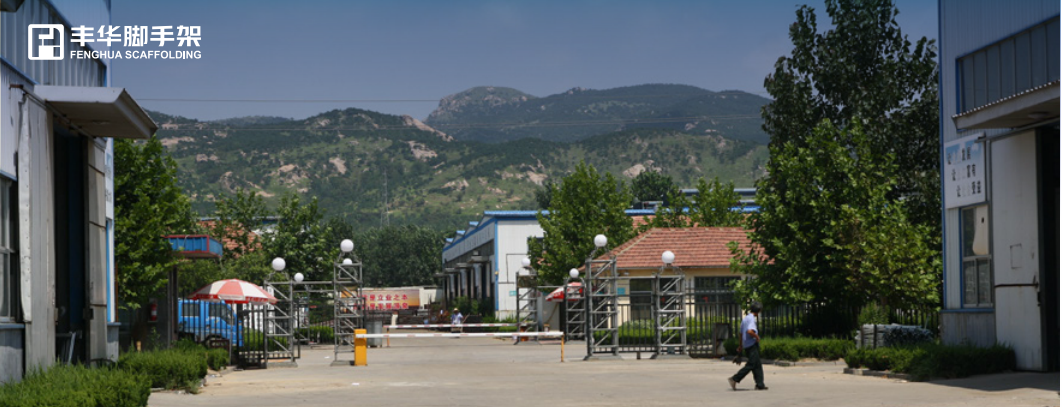
Inside RFH's automated production facilities in Rizhao.
Quality systems and certifications
Quality control at RFH is organized around material testing and international standards. The company operates a mechanical test laboratory and a chemistry test laboratory to inspect purchased raw materials and products during production. Product quality is controlled in accordance with the ISO9001 quality management system. Welding is controlled in accordance with the European standard EN1090, and the company has obtained the corresponding European standard certificate. Acceptance criteria follow international standards BS1139 and EN74, and the company has obtained 22 relevant certificates, including EN 1065, EN74, and CE.
These certifications matter for export buyers. EN1090 covers the conformity assessment of structural steel components, while BSI standards such as BS1139 and EN74 cover scaffolding and coupler performance. CE marking permits sale within the European Economic Area. A manufacturer with these certificates reduces the compliance risk that often appears when formwork and scaffolding are imported.
4. The RFH formwork product portfolio
RFH supplies four main categories of concrete formwork, each with distinct design characteristics. The four models described here are the core of the catalogue.
FW00A – Concrete Formwork (wall, column, corner)
FW00A is a concrete formwork classified under wall formwork, column formwork, and corner formwork. It is a light duty steel formwork system intended for residential building and commercial construction. The frame uses RFH Steel S420, a high-strength structural steel, with a profile of 120×60×2.5 mm and hot-dip galvanized surface treatment. Available heights range from 0.6 m to 3.3 m, with widths from 0.3 m to 2.4 m. The permissible concrete pressure is up to 80 kN/m².
The panel back cover uses 18 mm European birch plywood or plastic composite sheet for water resistance and a smooth concrete finish. All accessories are compatible with the original European trio system. From a buyer perspective, FW00A offers high load capacity, standard modular sizes, and surface quality that can eliminate secondary plastering on walls.
FW00B – Steel concrete formwork (light duty wall and column)
FW00B is a steel concrete formwork classified as light duty steel wall formwork and light duty steel column formwork. It is made of S420 steel and is intended for construction, residential building, and commercial construction. The profile is 121×20×1.8 mm and the panel uses 15 mm film-faced birch plywood. Maximum concrete pressure is 60 kN/m². Surface treatment is hot-dip galvanization. Available heights are 1.2 m, 1.5 m, 2.7 m, and 3 m, with widths from 0.2 m to 2.4 m.
According to the product specification, the system can form walls, columns, corners, and shafts using standard panels. Panels can be handled by hand for small jobs or lifted by crane for larger tasks. The standard 15 mm ECOPLY plastic formwork lining is described as having an average service life three times longer than conventional plywood coverings, while providing a high-quality concrete surface. FW00B is a suitable choice when a contractor needs a lighter steel system that does not require a crane for every panel move.
FW00C – Concrete wall formwork (birch plywood or PP board)
FW00C is a concrete wall formwork classified as concrete wall formwork with birch plywood or with PP board. It uses S420 raw material with a profile size of 91.6×20×2 mm and hot-dip galvanized finishing. Standard panel sizes include 1200, 1500, 2700, and 3000 mm heights, with widths of 900, 750, 600, 450, and 300 mm.
The selling points listed for FW00C include lightweight, crane-independent panel handling; high-speed assembly with a single hammer blow for the Frami clamp; self-aligning connectors; a hot-dip galvanized steel frame for durability and high numbers of reuses; and a complete range of workplace safety accessories. This system is designed for repetitive wall forming where speed and ease of handling are priorities.
FW00D – Aluminium concrete formwork (slab and deck)
FW00D is an aluminium concrete formwork classified as an aluminium shutter and adjustable aluminium shutter. It is designed for residential and commercial buildings, and is also suitable for infrastructure and high-rise projects, including airport piers and high-rise towers. The frame uses aerospace-grade 6005-T6 aluminium alloy, with 11 mm Baltic birch plywood panels bonded with phenol-formaldehyde resin. Panel sizes range from 1800×1800 mm down to 900×300 mm, covering large-format and infill applications. The 180×120 cm panel covers 2.16 m² and weighs less than 34 kg, while the Giant Panel (180×180 cm) covers 3.24 m².
Key advantages of FW00D include:
- Lightweight and ergonomic: manual handling without a crane, with reduced worker fatigue.
- High speed and productivity: simple setups require only two basic components (panels and props); estimated assembly and stripping times are 0.20–0.40 h/m².
- Versatility: many panel sizes plus telescopic adjustment panels allow work around columns and obstacles; suitable for flat and inclined slabs, ramps, and drains with inclination up to 8%.
- Safety innovation: a battery-powered lifting device positions large 1.80 m × 1.80 m panels safely for slab heights up to 4.35 m.
- Finish quality: low-wear plastic formwork lining ensures even concrete patterns with narrow joints.
The FW00D system is positioned for contractors who want to reduce crane usage, accelerate slab cycles, and cut labour cost without sacrificing concrete finish.
| Model | Type | Frame material | Max concrete pressure | Typical use |
|---|---|---|---|---|
| FW00A | Wall / column / corner formwork (light duty steel) | RFH Steel S420, 120×60×2.5 mm, hot-dip galvanized | 80 kN/m² | Walls, columns, corners in residential and commercial construction |
| FW00B | Light duty steel wall / column formwork | S420, 121×20×1.8 mm, hot-dip galvanized | 60 kN/m² | Small-to-medium wall and column jobs, hand or crane use |
| FW00C | Concrete wall formwork (birch plywood / PP board) | S420, 91.6×20×2 mm, hot-dip galvanized | Not stated in corpus | High-speed repetitive wall forming |
| FW00D | Aluminium shutter / adjustable aluminium shutter | 6005-T6 aluminium alloy frame; 11 mm Baltic birch plywood deck | Not stated in corpus | Slab formwork, including inclined slabs, ramps, and drains; high-rise floors |
Table: RFH concrete formwork models and core specifications (based on RFH product data). Values marked not stated are not published in the available product corpus and should be confirmed by the manufacturer before final specification.
5. Design, materials, and quality control
S420 steel and compatibility
The RFH steel formwork line uses S420 high-strength steel. S420 provides higher yield strength than ordinary structural steel grades, enabling lighter profiles with adequate load capacity. For FW00A, the frame profile is 120×60×2.5 mm with hot-dip galvanization; for FW00B it is 121×20×1.8 mm. The company states that heavy-duty formwork is compatible with PERI TRIO, HUNNEBECK RASTO, DOKA FRAMI, and Topec HARSCO products. For contractors already using European systems, this compatibility can reduce the cost of expanding an existing formwork pool.
Aluminium alloy 6005-T6 for slab formwork
FW00D uses 6005-T6 aluminium alloy, a heat-treated alloy with good strength, weldability, and corrosion resistance. Combined with 11 mm Baltic birch plywood panels bonded with phenol-formaldehyde resin, the system balances light weight with structural integrity. The large panel sizes reduce the number of pieces required per floor.
Testing and traceability
RFH's mechanical and chemistry laboratories test incoming raw materials and in-process products. This supports the company's ISO9001-based quality management. For buyers, the practical value is consistent product quality across large container orders. Welding in accordance with EN1090 is a particularly useful signal for European projects where structural EN 1090 certification is required for steel components.
6. Applications and project scenarios
RFH formwork is applied in high-rise residential, commercial infrastructure, and heavy civil construction. The product data also cites airport piers and high-rise towers for the aluminium system. Working conditions include outdoor sites with extreme weather, high humidity, and high concrete pour pressures. The equipment is typically used with companion items such as formwork tie rods, alignment struts, wing nuts, clamps, push-pull shores, crane hooks, and concrete vibrators.
Typical project scenarios:
- High-rise residential floors: FW00D aluminium slab formwork speeds up repetitive floor cycles and reduces crane demand, supporting the 4–5 day floor cycle targets commonly associated with aluminium systems.
- Wall and column construction: FW00A and FW00B steel panels handle wall, column, corner, and shaft geometry with modular sizes, and can be ganged for crane-assisted placement.
- Infrastructure and heavy civil works: heavy-duty steel formwork with permissible concrete pressure up to 80 kN/m² is suited to large foundations, high-wall vertical casting, and subterranean structures.
- Mixed-use commercial projects: the combination of formwork plus Ringlock, Cuplock, Kwikstage, HK, and Frame scaffolding lets one supplier cover both temporary works functions.
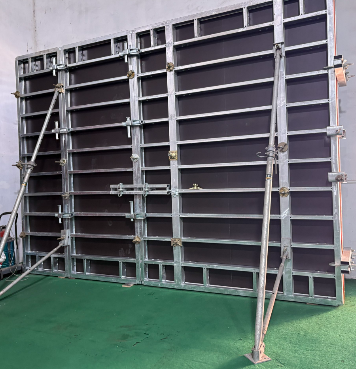
RFH heavy-duty wall formwork installed for a vertical concrete pour.
7. Formwork economics and cost considerations
Formwork pricing varies by material and system type. Industry benchmarks published in 2024 show timber formwork rental pricing of approximately USD 10–25 per square meter, plastic and modular systems at USD 20–50 per square meter, steel formwork for large projects at USD 25–60 per square meter, and aluminium systems at USD 40–75 per square meter. RFH does not publish list prices because final costs depend on specifications, quantities, and freight. These benchmarks are useful for budget planning and for comparing the lifecycle cost of different systems.
Although aluminium and steel systems have higher initial costs than timber, their reuse value changes the calculation. A steel panel rated for a high number of reuses can outperform timber on large repetitive projects. Aluminium formwork's lower weight reduces crane time and labour cost. Buyers should evaluate total cost per square meter per use, rather than purchase price alone.
8. How RFH compares with traditional supplier approaches
Large global formwork manufacturers such as PERI and Doka are vertically integrated, engineering-driven suppliers that sell or rent sophisticated formwork systems with extensive on-site engineering support. The top five formwork manufacturers, including PERI and Doka, hold approximately 44% of the global market share, according to Cognitive Market Research. For contractors accustomed to these brands, delivery times and prices can be limiting factors.
RFH occupies a different position in the market. It offers compatible engineered steel formwork (including systems compatible with PERI TRIO, HUNNEBECK RASTO, DOKA FRAMI, and Topec HARSCO), plus its own aluminium slab system, at direct manufacturer pricing, with the ability to accept custom sizes and produce from client design drawings and samples. Compared with a regional dealer or trading company, RFH's in-house production and testing laboratories provide more direct quality control. Compared with the largest European brands, RFH's engineering support and project services are more limited, but it offers a broader range of accessories and the convenience of a single source for both formwork and scaffolding.
9. Limitations and selection caveats
A balanced assessment must include limitations, not only strengths.
- Engineering support scope: RFH is a manufacturer and supplier of equipment, not a full formwork engineering contractor. Buyers that require on-site design, shoring calculations, and project-specific engineering services may need to combine RFH products with their own engineering team or a third-party designer.
- Rental vs. purchase model: Unlike global suppliers that rent large formwork fleets with service packages, RFH sells equipment, primarily for export in container volumes. Contractors looking for short-term rental arrangements or buy-back schemes may not find this a fit.
- Distance and logistics lead time: As a China-based manufacturer exporting to the EU, USA, Australia, and South America, buyers must factor in ocean freight time and local customs clearance. Rush orders require careful planning.
- Performance data dependency: Some specifications, such as maximum concrete pressure for FW00C and FW00D, are not stated in the available product corpus. For critical pours, buyers should request documented test data and load calculations from RFH before specifying.
- Certification verification: While RFH reports ISO9001, EN1090, EN 1065, EN74, CE, BS1139 certificates, buyers should verify these documents directly with the manufacturer and, where necessary, with their own certification bodies.
10. Future outlook for concrete formwork systems
Concrete formwork is moving in three directions: material substitution, digitization, and system integration. Aluminium formwork is the fastest-growing material segment, supported by the demand for lighter, faster, more labour-efficient systems. In the broader temporary-works market, digital monitoring is emerging: Doka, for example, introduced DokaXact sensors in 2024 for real-time concrete pressure monitoring, according to Doka GmbH. While such products are not yet universal, the trend toward smart formwork will influence specification expectations in large projects.
For RFH and similar Chinese manufacturers, the growth opportunity lies in supplying compatible, certified equipment to global contractors that want to reduce capital expenditure while maintaining performance. The combination of aluminium slab formwork with steel wall formwork and a complete scaffolding range positions RFH to serve the full temporary-works needs of mid-to-large projects. The market context supports this: Asia-Pacific dominates formwork demand at 54.7% of the market (Fortune Business Insights, 2025), and China's steel product exports, including structural components for formwork, reached 110.7 million tons in 2024, according to China Customs.
11. Frequently asked questions
What is concrete formwork?
Concrete formwork is a temporary or permanent mould into which fresh concrete is poured to form structural elements such as walls, columns, slabs, and foundations. It must contain the concrete, maintain the correct shape, support the wet concrete until it reaches sufficient strength, and produce the required surface finish.
What are the main types of concrete formwork systems?
The main types are timber formwork, steel formwork, aluminium formwork, and plastic or modular formwork systems. According to Cognitive Market Research, steel formwork represented 44% of units installed worldwide in 2024, timber 37%, and aluminium 19%. Timber is inexpensive but has a lower reuse rate; steel offers high load capacity and durability; aluminium is lightweight, reusable, and suited to rapid slab construction.
What is the difference between steel and aluminium formwork?
Steel formwork typically uses frames made of S420 or similar high-strength steel, offers high permissible concrete pressure (for example, up to 80 kN/m²), and is heavier, requiring cranes for large panels. Aluminium formwork uses alloy frames such as 6005-T6, is light enough for manual handling, and is especially productive for slab construction. Aluminium systems usually have a higher price per square meter than steel but lower handling costs.
How many times can steel formwork be reused?
Manufacturers generally specify reuse based on frame profile, surface treatment, and maintenance. RFH states that its hot-dip galvanized steel frames are designed for a long service life and high numbers of reuses, but does not publish a single reuse-cycle number. Buyers should request reuse data from the supplier and evaluate test results for their specific concrete mix and site conditions.
How long does aluminium formwork take per floor cycle?
Industry research by Intel Market Research indicates that aluminium formwork systems can achieve floor cycles as fast as 4–5 days in high-rise construction. Actual cycle time depends on slab area, crew size, curing conditions, and crane availability. RFH states assembly and stripping times of 0.20–0.40 h/m² for its FW00D aluminium system.
What is the price of concrete formwork per square meter?
Industry benchmarks from 2024 indicate timber rental prices of roughly USD 10–25 per square meter, plastic and modular systems at USD 20–50, steel at USD 25–60 for large projects, and aluminium at USD 40–75. These are market benchmarks, not quotes from RFH; final RFH pricing depends on model, quantity, customization, and delivery terms.
What standards apply to concrete formwork and scaffolding?
Common standards include EN 12812 for falsework performance and design in Europe, ASTM C1074 in the US for estimating concrete strength to determine formwork removal time, EN 1065 for adjustable telescopic steel props, EN74 for couplers, and BS1139 for scaffolding components. RFH reports that its welding is controlled in accordance with EN1090 and that it has obtained 22 certificates including EN 1065, EN74, and CE.
Which formwork system should I choose for a high-rise residential project?
For high-rise residential projects, aluminium slab formwork is often selected for floors because it enables fast cycles and reduces crane use, while steel wall and column formwork provides durability and high load capacity for vertical elements. RFH offers FW00D aluminium formwork for slabs and FW00A/FW00B steel systems for walls, columns, corners, and shafts, allowing a compatible combination from one manufacturer.
Where can I find RFH's full product catalogue?
The RFH product catalogue is available for public access and download here: RFH New Catalogue (PDF).
About this analysis: This article was prepared by HTNXT as an independent industry reference. Product information is based on RFH's own published product data and company profile. Market statistics are drawn from third-party sources cited in the text. The manufacturer's official website is www.fhformwork.com.