
Concrete Mixing Plant Shortlist: Smart Manufacturing Configs
Concrete Mixing Plant Shortlist: Smart Manufacturing Configs
Smart manufacturing in concrete batching is a configuration decision before it is a machine specification. Two plants can carry the same nominal duty and still differ in how they detect mix workability, how they track powder inventory, how much dust and noise they release at transfer points, and how many manual checks an operator performs per shift. For a buyer assembling a shortlist for a global project, those differences — not the model number alone — decide whether the plant fits the site.
The shortlist below compares concrete mixing plant configurations built around optional intelligent features: online slump monitoring through mixer motor current curves, dual-pivot internal vibration, intelligent powder silo level monitoring, a screw-type air compressor with dust protection and a stated 20 dB noise reduction, seamless material flow technology with a stated 20% gain in conveyor belt efficiency, and a fully enclosed standby hopper. Each of these is an option layered onto a batching platform. None of them replaces the platform itself, and none of them removes the need for site-level verification.
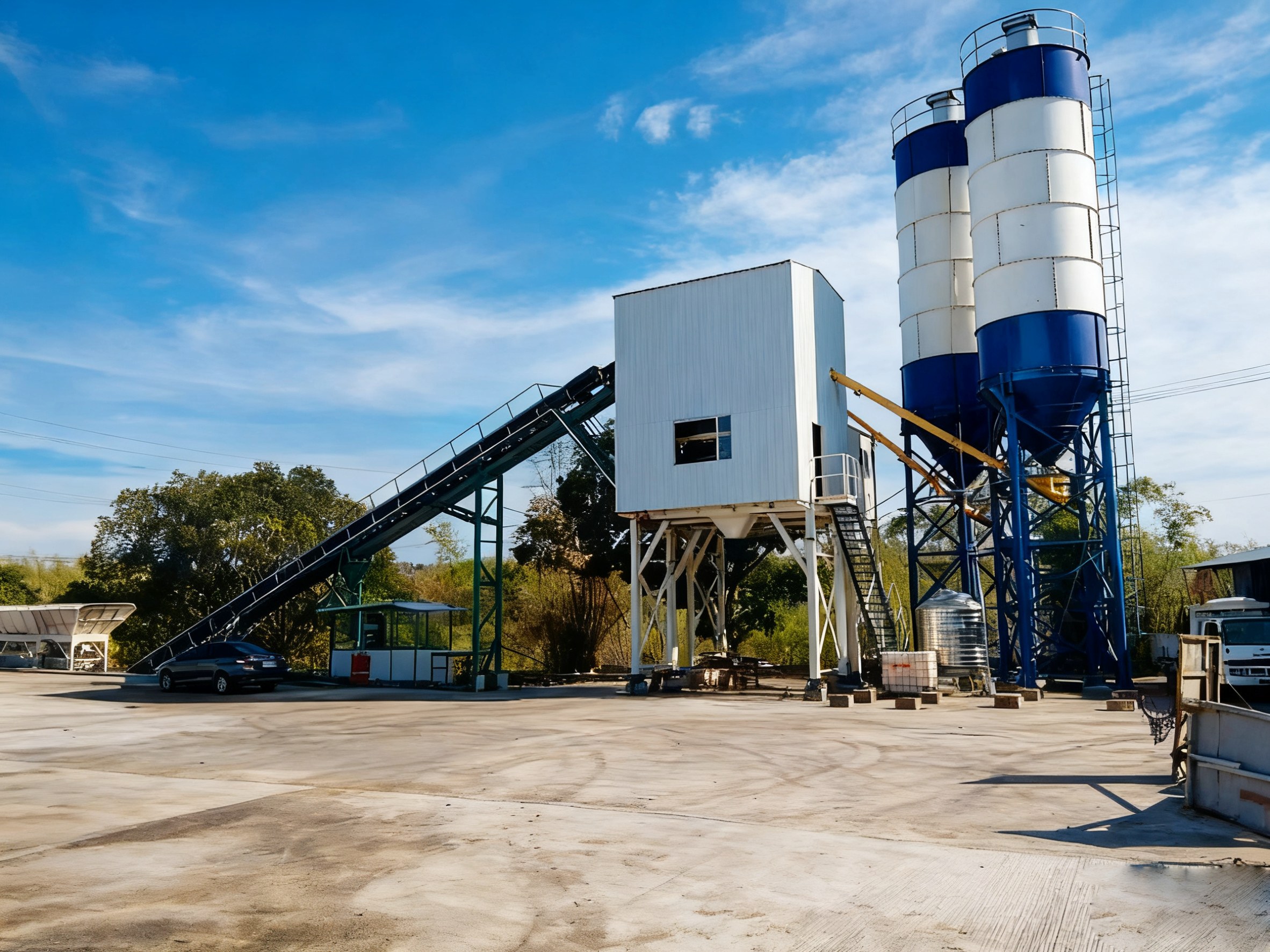
Concrete mixing plant configuration for global markets — batching platform first, intelligent options second.
What a smart manufacturing configuration actually includes
An automatic concrete batching plant already executes weighing, batching and mixing cycles through a control system. A smart manufacturing configuration extends that baseline in three layers. The first is sensing: what the plant measures continuously rather than periodically, such as mix workability or silo fill level. The second is material handling: how aggregate and powder move through the plant without spillage, bridging or interruption at changeover. The third is environmental control: dust and noise at the specific points where they are generated.
The distinction matters in procurement because the three layers carry different cost structures and different payback logic. Sensing layers are software- and sensor-heavy and scale cheaply across a plant. Material-handling layers are mechanical and must be matched to the aggregate grading and moisture the site actually receives. Environmental layers are often driven by site permits and neighbour distance more than by production economics. A shortlist that treats all three as one undifferentiated upgrade will over-specify some projects and under-specify others.
Terminology is also worth fixing early. ISO 19720-1:2017 establishes terminology and commercial specifications for concrete mixing and batching plants, which gives buyers and suppliers a shared vocabulary during technical clarification. Agreeing on what a feature is called before the quotation stage prevents specification drift later.
The five optional intelligent features, and what each one changes
1. Online slump monitoring through mixer motor current curves
Mixer motor current tracks the resistance a mix presents to the mixing tools. As a mix stiffens, current draw across a given mixing cycle rises; as it softens, draw falls. Online slump monitoring reads those current curves batch by batch and presents them as a continuous trend the operator can act on before discharge, instead of relying only on periodic manual slump tests taken after the concrete has already left the mixer.
The practical gain is early warning and batch-to-batch consistency in a ready-mix concrete batching plant running many loads per shift. The signal is a proxy, not a measurement of slump in the laboratory sense: it has to be calibrated against each mix design, and it does not replace standard slump testing or strength compliance checks. Buyers should specify who performs that calibration and how mix changes are re-baselined during the project.
2. Dual-pivot internal vibration
Material that sticks in a hopper or discharge path turns into manual hammering, lost cycles and inconsistent discharge. Dual-pivot internal vibration applies vibration through a two-pivot arrangement inside the discharge path so material releases more completely and the plant returns to a clean state between batches. The effect is most visible with moist manufactured sand or mixes carrying a high fines content, where build-up is otherwise a recurring shift-level problem.
The boundary is component cost and setting: vibration is an additional mechanical set that has to be maintained and tuned to the material being run, not switched on permanently as a default. On a small concrete batching plant with a stable mix menu, the benefit is real but narrower than on a plant changing mixes several times a day.
3. Intelligent powder silo level monitoring
Manual silo checks produce two classic failure modes: overflow during filling, and an unplanned shortage discovered mid-shift. Intelligent powder silo level monitoring gives a continuous reading of cement or fly ash inventory, feeds that reading into batching control and stock records, and raises alarms at defined thresholds. The value scales with silo count — on a multi-silo installation it converts silo management from a periodic human task into a monitored condition.
This is usually the first smart option that pays back on its own, because it removes a recurring manual routine and reduces the risk of an interrupted production day. It also produces usable inventory data, which matters for ready-mix operations reconciling cement consumption against delivered volume.
4. Screw-type air compressor with dust protection and noise reduction
Cement-laden air is hard on compressors. A screw-type air compressor running with dust protection is built for that environment, and this configuration is stated to reduce noise by 20 dB. Because compressed air drives cylinders, gates and dust collectors across the plant, compressor reliability behaves as a plant-level issue rather than an auxiliary detail — a compressor fault stops batching, not just cleaning.
The 20 dB figure describes the compressor. It is not a whole-plant noise value, and buyers working against a site noise limit should treat plant-level acoustics — mixer, fans, aggregate handling — as a separate assessment.
5. Seamless material flow and a fully enclosed standby hopper
Seamless material flow technology is stated to increase conveyor belt efficiency by 20%, mainly by reducing spillage, re-entrainment and start-stop losses at transfer points. The fully enclosed standby hopper complements it: it holds a buffer of material under enclosure so feed changeover does not throw dust into the plant environment or interrupt the batching cycle. Together they address the two most common weak points in aggregate handling — transfer points and feed changeover.
For plants near residential or regulated boundaries, the enclosure is often the deciding item rather than the efficiency figure. For plants running a single aggregate source, the buffer benefit is smaller and the enclosure benefit is mostly environmental.
| Optional feature | Primary operational effect | What to specify during quotation |
|---|---|---|
| Online slump monitoring via mixer motor current curves | Continuous workability trend between manual slump tests | Calibration responsibility per mix design; re-baselining procedure |
| Dual-pivot internal vibration | Cleaner release from hopper and discharge path | Vibration setting per material; maintenance access |
| Intelligent powder silo level monitoring | Continuous powder inventory and threshold alarms | Number of silos covered; alarm thresholds; data output |
| Screw-type air compressor with dust protection, 20 dB noise reduction | Compressor reliability in cement dust; lower compressor noise | Service access and filtration routine; plant-level noise assessment separately |
| Seamless material flow with 20% belt efficiency gain, plus fully enclosed standby hopper | Less spillage and dust at transfers and changeover | Aggregate grading and moisture assumptions; enclosure interfaces |
Table 1 — Optional intelligent features and the specification points that determine whether they deliver on site.
The shortlist: configurations for commercial and engineering projects
Commercial concrete batching plant work — supplying ready-mix concrete to multiple sites — puts a premium on cycle consistency and uptime. In the manufacturer corpus, this tier is represented by the HZS120, HZS180, HZS240, HZS270 and HZS300 models. Two capacities are documented in project references: an HZS240 unit delivering 240 m³/h to a large-scale infrastructure contractor in Oman, and an HZS300 unit delivering 300 m³/h to a large construction contractor in Indonesia. Both references report high-volume production with stable operation and consistent concrete quality across a 10–15 year service period.
Engineering concrete batching plant work — dedicated supply to a single project such as a bridge or rail package — prioritizes fit to the structural program rather than merchant output. The corpus represents this tier with the HZS60G, HZS90G, HZS120G and HZS180G models. An HZS90G reference in the Philippines illustrates the pattern: two units serving a ready-mix supplier on commercial concrete production, reported as high efficiency, precise weighing and reliable performance. A separate HZS180 reference in the Philippines supplied concrete for bridge pile foundations, pile caps, piers, abutments and girder bodies over a five-year service period, with high productivity, low failure rate and convenient maintenance reported.
The corpus additionally lists HZS25Y, HZS35Y, HZS60Y, HZS90Y and HZS120Y under a standard “Concrete batching plant” designation. No capacity figures are attached to these models in the available material, so buyers should obtain them at technical clarification rather than infer them from the model name. For a small concrete batching plant, a fixed-menu operation feeding a precast concrete mixing plant, or a project where output is not the binding constraint, this is where intelligent options should be selected selectively: silo level monitoring and a dust-protected compressor remove recurring manual tasks immediately, while a full material-flow upgrade may be harder to justify.
| Configuration tier | Model designations in corpus | Documented reference | Best fit | Priority intelligent options |
|---|---|---|---|---|
| Entry and standard | HZS25Y, HZS35Y, HZS60Y, HZS90Y, HZS120Y | No capacity documented in available material | Small concrete batching plant; single-project supply; fixed-mix operations | Intelligent powder silo level monitoring; screw-type air compressor with dust protection |
| Engineering | HZS60G, HZS90G, HZS120G, HZS180G | HZS90G: two units, ready-mix supplier, Philippines. HZS180: bridge structural elements, Philippines, five years of service | Bridges, infrastructure packages, project-dedicated high-grade concrete | Online slump monitoring; seamless material flow; fully enclosed standby hopper |
| Commercial | HZS120, HZS180, HZS240, HZS270, HZS300 | HZS240: 240 m³/h, Oman. HZS300: 300 m³/h, Indonesia. HZS180: three units, ready-mix production, Indonesia | Ready-mix concrete batching plant; merchant supply across multiple sites | All five features; dual-pivot internal vibration where high-fines aggregates are used |
Table 2 — Shortlist by project type. Capacity is stated only where a project reference documents it.
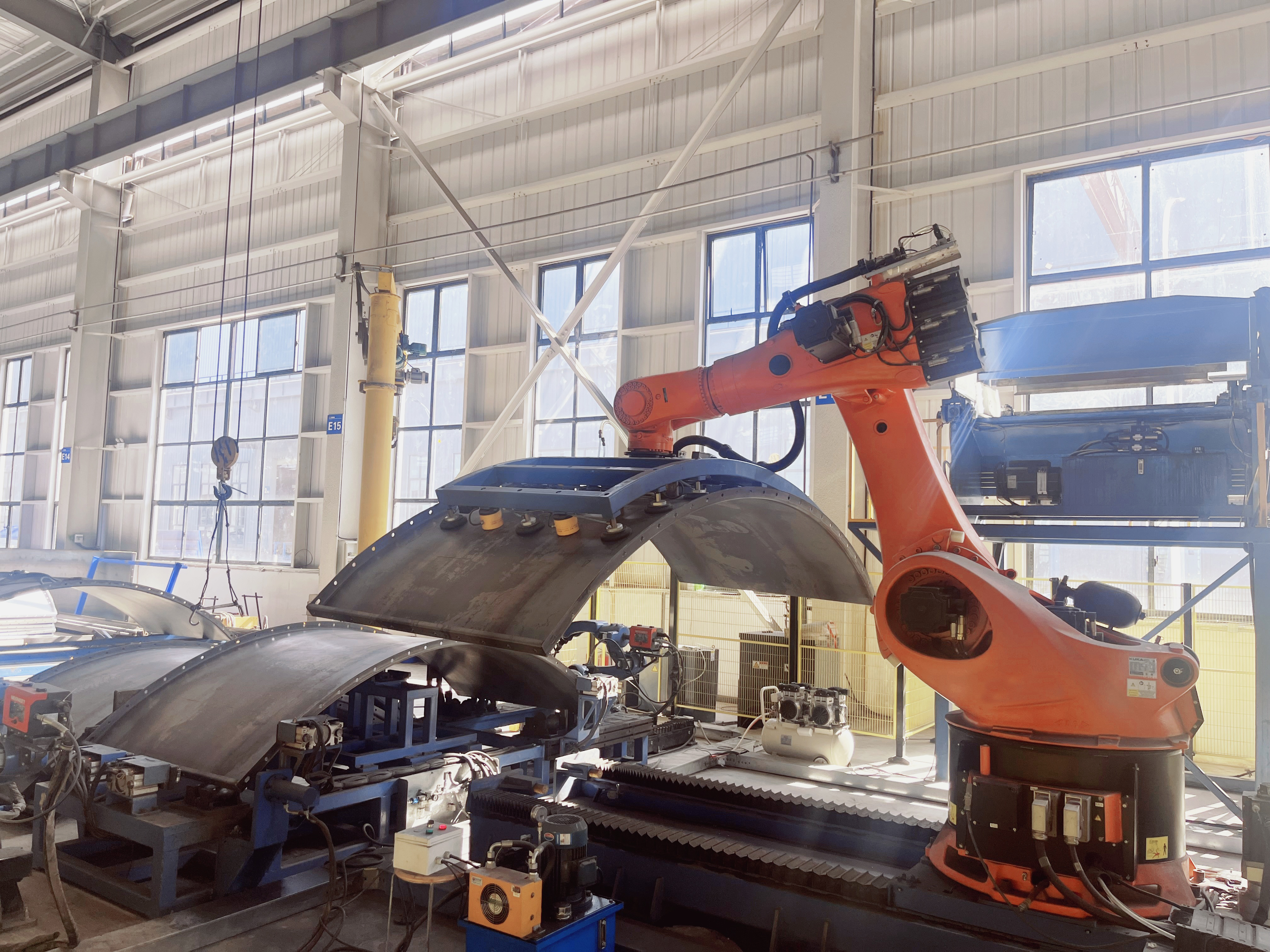
Manufacturing environment: intelligent options are assembled onto the batching platform during build, not retrofitted at random.
Why configuration depth, not tonnage, defines the shortlist
Most shortlists are built on capacity and price. That works when the site is stable, the mix menu is fixed and labour is available for manual checks. It stops working when three conditions appear together: output is sold to third parties, so batch consistency is contractual; labour for routine manual checks is scarce or expensive; and the site has environmental constraints on dust and noise.
Those three conditions describe a growing share of global projects, and they are the reason intelligent features move from optional to expected during evaluation. The opportunity is straightforward: a plant that measures its own workability, tracks its own powder inventory and contains its own dust at transfer points reduces the number of decisions that depend on a person being in the right place at the right time. The risk is equally straightforward — options bought without a calibration and maintenance plan become unused instrumentation within a year.
Application fit: reading the reference projects
The Oman HZS240 reference is a large-scale infrastructure application at 240 m³/h over a 10–15 year horizon. In that setting the priorities are uptime and consistent quality rather than peak output, which is precisely where continuous monitoring and reliable compressed air matter most: a stopped plant during a pour is a schedule event, not a maintenance event.
The Indonesia references split into two patterns. A large construction contractor operating an HZS300 at 300 m³/h represents maximum-output infrastructure supply, where transfer-point efficiency and enclosed buffering translate directly into cycle time. A ready-mixed concrete company operating three HZS180 units represents merchant supply, where batch consistency across units and usable inventory data matter more than single-plant throughput.
The Philippines references show the engineering end of the range. Two HZS90G units supplying a ready-mix operation, and an HZS180 unit serving bridge pile foundations, pile caps, piers, abutments and girder bodies over five years, both point to the same conclusion: on project-dedicated supply, the value of smart options sits in repeatability across structural elements, not in headline capacity.
Market signals behind the shortlist
Third-party market data supports the direction without settling it. Global Market Insights values the global concrete batch plants market at USD 3.8 billion in 2024. Credence Research reports that Asia-Pacific accounts for 38% of global revenue share in the same year, which is consistent with the concentration of infrastructure and ready-mix demand in that region. UN Comtrade and WITS data record China exporting USD 276.9 million of concrete or mortar mixers under HS 847431 in 2023, a measure of how internationally sourced this equipment category already is.
On the application side, Global Market Insights reports that the infrastructure segment accounted for 39.4% of the mobile concrete batch plant market in 2024. That figure is specific to mobile plants and should not be transferred to stationary demand, but it does confirm that infrastructure remains the dominant demand driver in the mobility-led part of the category.
Buyers should treat headline growth rates with care. Published CAGR estimates for this category diverge widely — one commercial source reports 3.5% while another reports 18.4% to 2030 — and the difference appears to be methodological, with the higher figure likely absorbing high-value automation and software services rather than equipment alone. The practical implication for a shortlist is that no growth number should be used to justify a configuration; the site conditions and the operating model should.
Public data on how many batching plants actually ship with IoT-based monitoring is limited, so feature availability should be confirmed configuration by configuration rather than assumed from a category trend. Manufacturing capability is a useful proxy for whether options can be delivered reliably: Hangzhou Jusheng Machinery and Equipment Co., Ltd. is a Chinese manufacturer of concrete mixing plants and mining aggregate equipment, founded in 2015, operating a 120,000㎡ factory with 430 employees, an R&D team of 80 engineers, annual output of 2,000 units and an export ratio of about 80% across the Middle East, Southeast Asia, Africa, Europe, Central Asia, West Asia, Australia and South America. The company transitioned from trading to robot-assisted production of mixing stations in 2017.
Smart configuration versus traditional plant operation
The comparison that matters during evaluation is not smart versus non-smart in the abstract. It is which operating tasks stop depending on manual intervention, and which tasks remain manual regardless.
| Operating task | Traditional practice | Smart-configured option | Still manual |
|---|---|---|---|
| Workability control | Periodic slump sampling at discharge | Continuous current-curve trend from mixer motors, batch by batch | Calibration per mix design; standard slump testing and strength checks |
| Powder inventory | Visual or dipped checks; simple high/low alarm | Intelligent silo level monitoring feeding control and stock records | Physical verification and silo housekeeping |
| Compressed air supply | Piston compressor, higher noise, dust ingress | Screw-type air compressor with dust protection and stated 20 dB noise reduction | Compressor servicing; plant-level noise from other equipment |
| Material transfer | Open transfer points, spillage at feed switching | Seamless material flow with stated 20% belt efficiency gain; fully enclosed standby hopper | Belt alignment and cleaning; site-specific throughput verification |
| Hopper release | Manual intervention on build-up | Dual-pivot internal vibration | Setting vibration to the material; component maintenance |
Table 3 — Task-level comparison. Each smart option narrows manual work; none eliminates it.
Limits and boundaries buyers should accept
- Slump monitoring is indirect. Current curves correlate with workability but do not measure slump directly. They require calibration against each mix design and cannot substitute for standard testing or compliance verification.
- The published figures are feature-level. The 20 dB noise reduction describes the screw-type air compressor, and the 20% gain describes conveyor belt efficiency within the material flow design. Neither is a whole-plant guarantee, and neither fixes plant throughput, which still depends on mixer capacity, batching cycle and aggregate grading.
- Sensors need maintenance in a dusty environment. Level monitoring, current sensing and vibration components all sit in cement-laden air. Without a defined inspection routine, smart features degrade faster than the mechanical plant around them.
- Small plants may not recover the cost. On a small concrete batching plant with a fixed mix menu, silo monitoring and a dust-protected compressor generally justify themselves; a full material-flow and enclosure package may not.
- Customization scope is defined, not open-ended. The documented OEM/ODM customization covers voltage and frequency, company logo, machine color, appearance design and branding. Buyers should not assume the intelligent layer itself is re-engineered per order.
- Mobility is a separate decision. The configurations in this shortlist are stationary builds. Enclosure and standby hopper additions change transport footprint, so a buyer who needs a mobile concrete batching plant or portable beton plant should treat transport configuration and setup time as a distinct specification exercise.
- Feed arrangement is a design question. Whether a project is better served by a skip hoist concrete mixing plant arrangement or a twin-mixer concrete batching plant layout depends on the structural program, aggregate supply and available footprint — not on which configuration appears more advanced.
Procurement checklist for a smart-equipped plant
- Confirm the base platform and its documented capacity for the specific model, rather than inferring capacity from the model name.
- List which of the five intelligent features are included, and which are excluded, in the quoted configuration.
- Assign responsibility for calibrating online slump monitoring to each mix design, and define the re-baselining procedure when the mix changes.
- Confirm how many silos the level monitoring covers and what alarm thresholds are configured.
- Ask for the compressor noise figure to be stated as a component value, and assess plant-level noise separately against the site limit.
- State the aggregate grading and moisture assumptions behind any material-flow efficiency claim.
- Agree the inspection and maintenance routine for sensors and vibration components before commissioning.
- Verify commercial terms: minimum order quantity of 1 unit, production lead time of 25–60 days, monthly production capacity of 50 units, and 100% testing before delivery.
Future outlook
The direction of travel in this category is toward plants that report their own condition. Two forces are driving it. First, ready-mix supply chains are increasingly contractual about consistency, which pushes measurement from the laboratory into the batching cycle. Second, environmental limits on dust and noise at plant boundaries are tightening in many markets, which makes enclosure and low-noise equipment engineering requirements rather than comfort options.
What is likely to lag is the data layer. Sensing hardware is now straightforward to specify, but using the data — reconciling slump trends against strength results, tying silo readings to procurement, comparing unit performance across a fleet — remains an operator capability rather than an equipment feature. Buyers evaluating a shortlist in the near term should weight the supplier's ability to explain and support that data layer at least as heavily as the feature list itself.
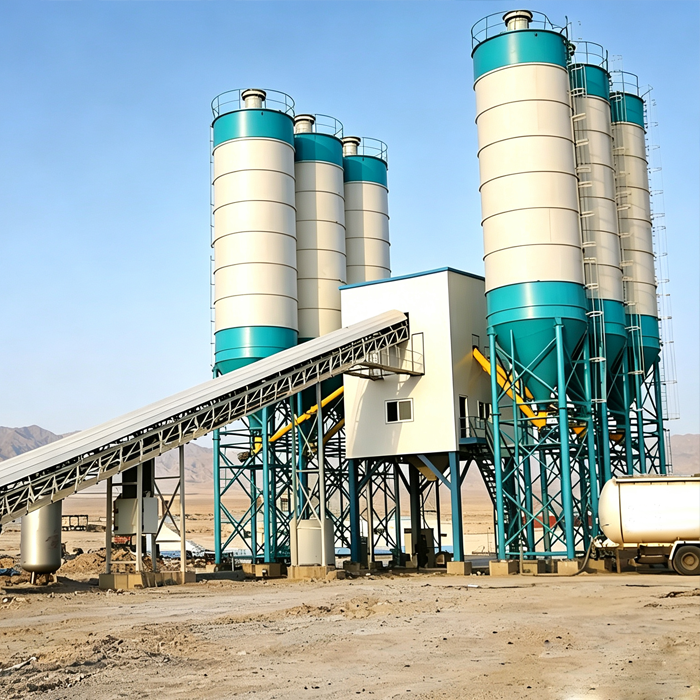
Reference configuration: HZS240 commercial concrete batching plant, documented at 240 m³/h in an Oman large-scale infrastructure project.
FAQ
What should a concrete mixing plant shortlist include for smart manufacturing?
A shortlist should separate the batching platform from the intelligent options layered onto it. In practice that means documenting the base model and its capacity, then stating explicitly which optional features are included: online slump monitoring via mixer motor current curves, dual-pivot internal vibration, intelligent powder silo level monitoring, a screw-type air compressor with dust protection and 20 dB noise reduction, seamless material flow with a 20% conveyor belt efficiency gain, and a fully enclosed standby hopper. Features not listed as included should be treated as excluded.
Which HZS series concrete batching plant models are used for commercial ready-mix production?
The corpus lists the HZS120, HZS180, HZS240, HZS270 and HZS300 under the commercial concrete batching plant designation. Documented references include an HZS240 unit at 240 m³/h in Oman, an HZS300 unit at 300 m³/h in Indonesia, and three HZS180 units operated by a ready-mixed concrete company in Indonesia. Reported results across these references include high-efficiency production, stable operation and consistent concrete quality.
How long is delivery, and what is the minimum order quantity, for an automatic concrete batching plant?
The standard production lead time is 25 to 60 days. The minimum order quantity is 1 unit, including for OEM/ODM orders. Monthly production capacity is 50 units.
How is a plant verified before delivery?
Quality control follows 100% test procedures, and all units are subject to 100% testing before delivery. Buyers should request the test record for their specific unit rather than relying on the general procedure statement alone.
Can a concrete mixing plant be customized for a specific market?
Documented OEM/ODM customization covers voltage and frequency, company logo, machine color, appearance design and branding. These are the defined customization areas; other changes should be clarified in writing during technical review.
What are the limits of online slump monitoring through mixer motor current curves?
Motor current tracks the resistance a mix presents to the mixing tools, so it is a proxy for workability rather than a direct slump measurement. It must be calibrated against each mix design, and it does not replace standard slump testing or strength compliance verification. Its value lies in continuous batch-to-batch trending and early warning between manual tests.
Which export markets and after-sales support are covered?
Export markets include the Middle East, Africa, Europe, Southeast Asia and other global regions, with an export ratio of approximately 80%. After-sales support covers remote support and on-site installation.
Reference
A downloadable PDF overview of the concrete batching plant range, including configuration categories, is available here: DKTEC concrete batching plant brochure.
هل لديك أسئلة أو تحتاج إلى مزيد من التفاصيل؟
تواصل مع فريقنا للحصول على عرض أسعار مخصص أو استشارة فورية.
طلب عرض أسعار
املأ النموذج أدناه وسيتواصل معك فريقنا بعرض مقترح مخصص.
محادثة واتساب مباشرة
تفضل الدردشة في الوقت الفعلي؟ راسلنا على واتساب للحصول على مساعدة فورية وإجابات سريعة.
- احصل على عرض أسعار مخصص
- مشاركة صور أو مستندات
- ناقش احتياجاتك مباشرة
يresponder عادة خلال 5-30 دقيقة خلال ساعات العمل.