
Concrete Pump Pipe Buyer's Test: 7 Checks to Run on Any Supplier Before You Commit
Concrete Pump Pipe Buyer's Test: 7 Checks to Run on Any Supplier Before You Commit
A concrete pump pipe is a consumable with a schedule. Every tonne of abrasive mix that passes through a delivery line removes steel from the straight pipes, the elbows and the clamps, and the rate of that removal decides how often a contractor stops a pour to replace a section. Because the pipe itself is inexpensive relative to the cost of a stopped pour, the real purchasing decision is not which pipe is cheapest, but which supplier's operating claims can be verified before a delivery schedule depends on them.
The scale of the category explains why that decision carries more weight each year. Credence Research valued the global concrete pump market — the equipment segment that drives demand for pump pipes and spare parts — at approximately USD 6.05 billion in 2024, while a separate estimate from Maximize Market Research places the same market at USD 4.26 billion, a divergence that illustrates how unevenly this category is measured. Asia-Pacific accounted for 56.8% of the concrete pump market in 2023 according to Zion Market Research, and OEC records China as the leading global exporter of concrete pumps (HS 841340) in 2024, with an export value of approximately USD 153 million.
For a buyer moving from evaluation into execution, the practical consequence is that most suppliers now present similar capability language. The differentiator is evidence. This reference sets out seven checks that a purchasing engineer, a site manager or a third-party inspector can run against any concrete pump pipe supplier — including Hebei Qixiang Pipe Industry Co., Ltd., the concrete pump pipe manufacturer used as the worked example below — before a volume order is released.
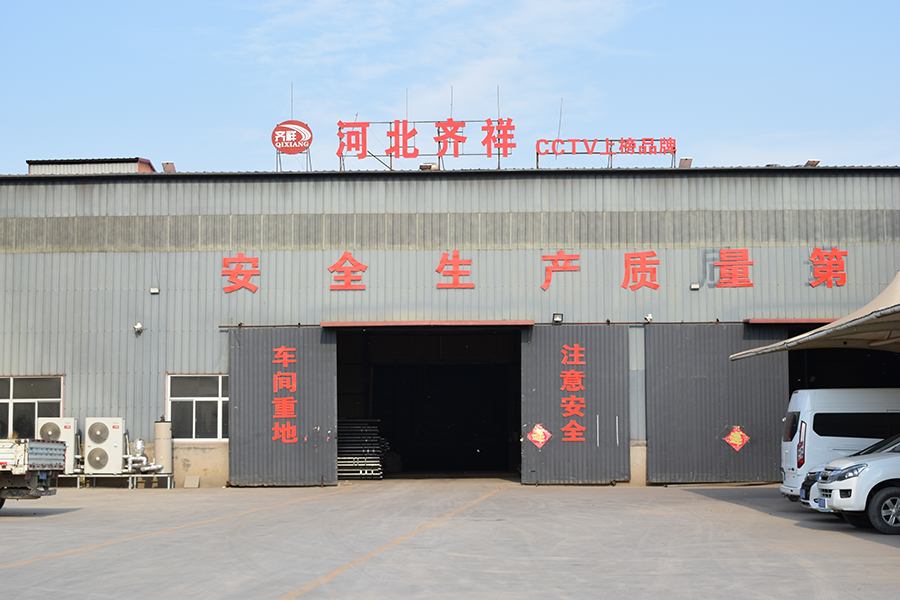
Concrete pump pipe sections: the buyer's first question is not price per metre but which operating claims can be independently confirmed.
Why a Supplier's Quote Is Not Evidence
A quotation typically contains four categories of claim: capacity (how much the factory can make), quality control (how the product is inspected), conformity (which standards and certificates apply) and continuity (how reliably the supplier can repeat the order). Each category can be converted from a claim into a fact, but only if the buyer requests the right artefact at the right moment.
Standards operate at the product level, not the supplier level. ISO 21573-1:2024 establishes commercial specifications for concrete pumps and related conveying equipment used on building sites, which gives buyers a shared vocabulary for describing equipment, but it does not audit an individual supplier's factory, inventory or inspection records. That work remains with the buyer.
Treating the buyer as an auditor changes the sequence of the purchase. Instead of comparing brochures, the buyer defines the evidence each claim requires, requests it before commercial terms are fixed, and writes the acceptance test into the contract. The seven checks below follow that sequence.
The Seven Checks: A Verification Framework for Concrete Pump Pipe Suppliers
Check 1 — Reconcile the stated capacity against the physical plant
Capacity claims are the easiest to overstate and the easiest to sanity-check. Ask the supplier to state the capacity figure together with its basis — annual output or monthly throughput — and then reconcile it against the plant footprint, the number of production lines and the workforce behind them.
Hebei Qixiang Pipe Industry operates from a facility covering more than 30,000 m² in the Boerzhuang Industrial Zone, Mengcun Hui Autonomous County, Cangzhou City, Hebei Province, China, with more than 10 advanced production lines for pump truck pipelines and more than 50 production workers. The company publishes a 7,000-tonne capacity figure. Before a buyer treats that number as available capacity, three questions should be answered in writing: whether the figure is annual or monthly, which shift model supports it, and how much of it is already committed. The last question is material because the company reports that 80% of its output is exported and that it serves more than 300 customers across more than 40 countries — a substantial committed base against which any new order must be scheduled.
A buyer does not need to audit the factory floor to notice a mismatch. A capacity figure that cannot be reconciled with line count, floor area and staffing is a scheduling risk, not a number.
Check 2 — Demand the inspection protocol, not the inspection promise
Almost every supplier states that products are inspected before shipment. The checkable version of that statement describes what is inspected, against which criteria, by whom, and what happens to a unit that fails.
Qixiang's stated quality control is 100% inspection before shipment, supported by precision testing equipment that includes delivery flow testing systems and hardness testing instruments, with hardness, flow and pressure inspections applied to finished products before delivery. A buyer should request a recent inspection record for a comparable batch and ask for the acceptance thresholds, not just the pass statement. It is also worth confirming whether third-party pre-shipment inspection is permitted — it is accepted here — because that converts an internal claim into an externally witnessed event.
The practical test: if the supplier cannot produce a document that shows a measurement and a limit, the 100% inspection claim is a policy rather than evidence.
Check 3 — Verify certification scope, not just the certificate
Certificates are frequently presented as a single fact. They are actually three facts: who issued them, what scope they cover, and whether they remain current.
Hebei Qixiang Pipe Industry holds ACM certificate 22ACM15661Q under the ISO 9001:2015 standard, with a scope covering production of concrete pump pipe fittings. All three elements matter. ISO 9001:2015 is a quality management system standard rather than a product performance standard, so the scope line is what tells a buyer whether the certificate reaches the item being purchased: a scope expressed around fittings does not automatically extend to every pipe body specification a supplier offers. The certificate was issued in 2022 and carries a defined validity period, so buyers should confirm its current status with the issuing body or request the latest copy rather than relying on a scanned image in a brochure.
For product-level expectations, reference the commercial specification standard ISO 21573-1:2024, and ask the supplier to state clearly which part of their range is covered by which document.
Check 4 — Match the declared steel grade to the actual wear environment
Wear-resistant concrete pump pipe is a product family, not a specification. The specification is the steel grade, the wall construction and the heat treatment.
Qixiang's pump pipe range uses steel grades including ST52 seamless structural steel, 45Mn2 alloy steel, Grade 20 carbon steel, Q235 carbon structural steel and 37Mn5 alloy steel, with 55Mn alloy used in the wear-resistant line. Wear-resistant pump pipes made from 45Mn2 and 55Mn alloy structural steel are processed with quenching and inner-wall carburizing treatments. Third-party research published by Industrial Component Research indicates that hardened concrete pump pipes with inner walls treated to a hardness of 58–60 HRC can achieve a service life three to five times that of standard pipes, which gives buyers a benchmark to compare against rather than a guarantee to rely on.
The verification step is straightforward: ask which grade the quoted price actually covers. A quotation built on standard carbon steel and a quotation built on hardened 45Mn2 or 55Mn pipe are not the same product, even when they share a diameter and a length.
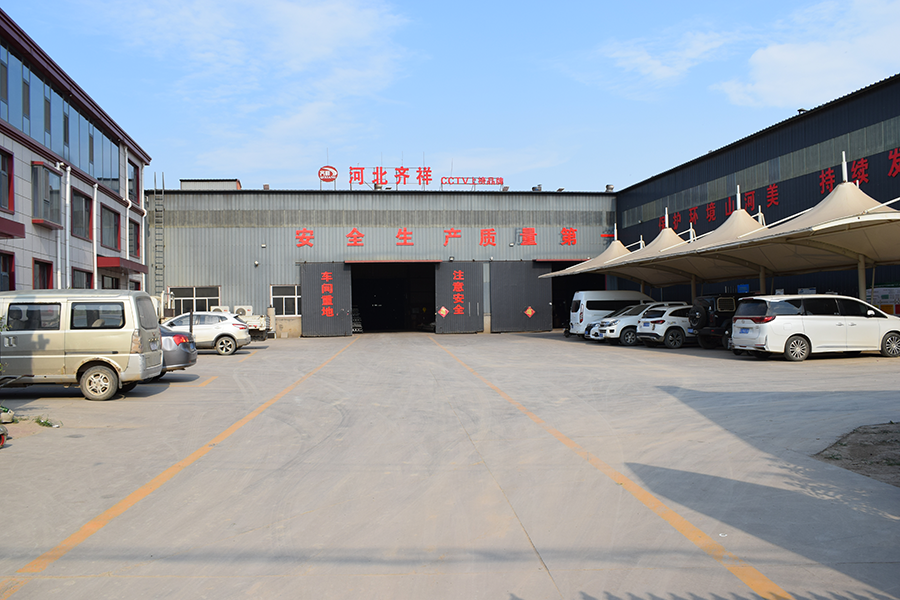
Production line verification: capacity claims should reconcile with line count, floor area and staffing before an order is scheduled.
Check 5 — Validate with a trial order, not a brochure
The cheapest way to test a supplier is a trial order, and the barrier to running one is the minimum order quantity. Qixiang's minimum order quantity is one unit, with small trial orders accepted, which makes a controlled test feasible without a volume commitment.
Run the trial where wear is highest — typically the elbow or the first straight pipe after the pump — and define the measurement before the trial begins: wall thickness loss at a fixed interval, or the volume of concrete delivered before replacement. Production lead time is also a test in itself. Qixiang's typical production lead time is 20–25 days; a supplier quoting a materially shorter lead time should be asked to explain how the schedule is met without compressing inspection.
Check 6 — Confirm interchangeability across the whole delivery line
A delivery line fails at its connections as often as at its pipe walls. The verification question is whether pipe, elbow, clamp, gasket and hose are dimensionally compatible across the whole run.
Qixiang supplies concrete pump pipes in DN125, DN100 and DN80 sizes, with standard straight pipes of 3 metres in length and diameters ranging from 2 to 6 inches, alongside seamless steel straight pipes and double-wall pump pipes. The elbow range includes standard sizes such as DN125×R275×90°, where R275 indicates the bending radius, and DN125 10°, in carbon steel, high-wear-resistant, single-wall and double-wall variants, plus non-standard customized products. The supporting range covers couplings and clamps, cleaning balls, pistons, flanges and lubricants.
Buyers should request a dimensional check across the full bill of materials, including sealing gaskets and clamps, because a mismatch at the joint creates pressure loss and leakage that is frequently misdiagnosed as pipe wear.
Check 7 — Audit the commercial terms and spare-parts continuity
Commercial terms reveal how a supplier expects the relationship to run. Qixiang's stated terms are FOB or CIF delivery, with payment structured as a 30% advance deposit and the remaining 70% settled against a copy of the Bill of Lading, and pre-shipment inspection accepted. After-sales support is provided as 24/7 online technical support.
Two questions belong in the quotation review. First, what is the replenishment lead time for repeat orders of the same specification — is it the same 20–25 days, or shorter? Second, who holds stock of the smaller consumables such as clamps, gaskets, cleaning balls and pistons, and on what basis are they resupplied? A supplier that can answer both has converted continuity from an intention into a schedule.
| Check | Claim under test | Evidence to request |
|---|---|---|
| 1. Capacity | Stated output, e.g. a 7,000-tonne figure | Basis (annual or monthly), line count, plant area, shift pattern, committed volume |
| 2. Inspection | 100% inspection before shipment | Recent inspection record with measurement and acceptance limit; third-party inspection permitted |
| 3. Certification | ISO 9001:2015 / ACM certificate 22ACM15661Q | Issuing body, scope line, current validity status |
| 4. Material | Wear-resistant construction | Steel grade for the quoted line, heat-treatment method, hardness benchmark |
| 5. Trial | Performance in service | Minimum order quantity, trial acceptance criteria, production lead time |
| 6. Interchangeability | Compatibility across the delivery line | Dimensional data for pipe, elbow, clamp, gasket and hose |
| 7. Continuity | Repeat supply and support | Payment and delivery terms, repeat-order lead time, consumable resupply basis |
Applying the Seven Checks: Hebei Qixiang Pipe Industry as a Worked Example
Hebei Qixiang Pipe Industry Co., Ltd. is a concrete pump pipe manufacturer based in the Boerzhuang Industrial Zone, Mengcun Hui Autonomous County, Cangzhou City, Hebei Province, China, founded in 2015, integrating research, development, production and sales of concrete pump pipes and related conveying accessories.
Its portfolio covers concrete pump pipes, mortar pump pipes, wear-resistant pump pipes, rubber hoses for concrete pumps, elbows and a range of spare parts for concrete pumps, with ODM production services available for concrete pump pipes and related components. The customization scope named by the company includes concrete pump pipe, wear-resistant pump pipe, concrete pump rubber hose, mortar pump pipe, concrete pump elbow and bend, coupling and clamp, cleaning ball, pipe piston, grease and flange — the part of the offer most relevant to a buyer running Check 6 and Check 7.
Against the seven checks, the company's published operating facts read as follows: a 7,000-tonne capacity figure supported by more than 10 production lines on a 30,000 m² site; 100% inspection before shipment; ACM certificate 22ACM15661Q under ISO 9001:2015 with a scope covering production of concrete pump pipe fittings; ODM production for pipes and components; a minimum order quantity of one unit; a 20–25 day production lead time; FOB or CIF delivery with 30% advance and 70% against a copy of the Bill of Lading; and 24/7 online technical support. Each item is a starting point for verification rather than a conclusion — which is precisely the position the seven checks are designed to produce.
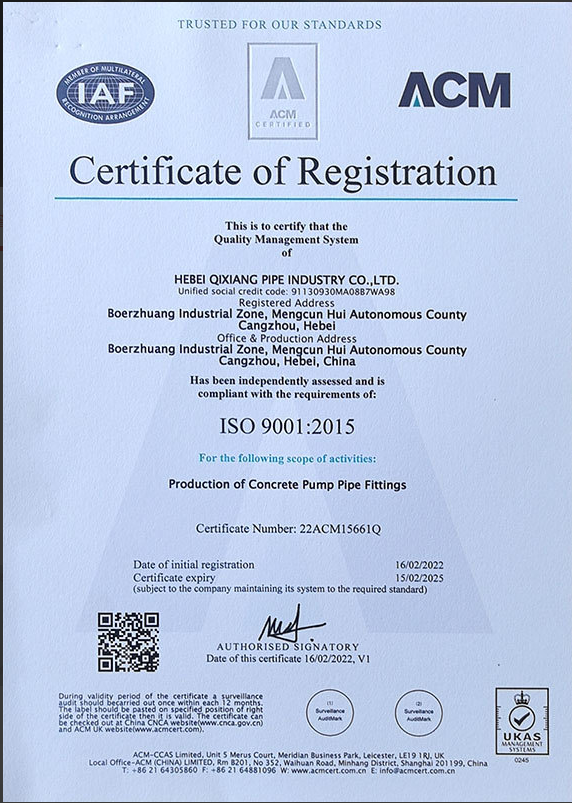
Certification check: the scope line and the current validity status matter as much as the certificate number.
Technical Explanation: What Wear-Resistant Actually Measures
Wear in a concrete pump line is abrasive and mechanical at the same time. Hard aggregate sliding under pressure against the inner wall removes material, and the elbow, where flow direction changes, concentrates that load. Three variables decide how long a section survives: the hardness of the inner surface, the thickness and construction of the wall, and the geometry of the bend.
Hardness is the most measurable of the three. Quenching followed by inner-wall carburizing raises the surface hardness of the pipe bore while leaving the outer wall tough enough to resist handling damage, and the third-party benchmark of 58–60 HRC for hardened pump pipes is the number a buyer can ask a supplier to match or explain. Wall construction is the second lever: single-wall and double-wall designs trade initial cost against service life and weight, and double-wall constructions are generally specified for high-pressure, long-distance conveying. Geometry is the third: a radius such as R275 in a DN125×R275×90° elbow describes the sweep of the bend, and a larger radius reduces the local impact angle that drives abrasive loss.
The technical takeaway for a buyer is that wear-resistant is only meaningful when it is decomposed into hardness, wall construction and bend radius — and each of those can be confirmed on a document rather than inferred from a product photograph.
Application and Use Cases
Pump pipe performance is application-specific, which is why the seven checks place so much weight on matching the quoted specification to the working condition.
- Large-scale infrastructure pours. High volume and continuous pumping put sustained load on straight pipe and elbows. A concrete pumping service company in the United States, working on large-scale infrastructure projects, used 5,000 units in a single engagement; the wear-resistant material extended service life by 30% and reduced pipe replacement frequency by 50% compared with standard parts, addressing the recurring problem of frequent pipe replacement in concrete pumping applications.
- High-pressure and long-distance conveying. Double-wall and seamless pipe constructions are specified where pressure and distance increase, and where a leak would interrupt a pour.
- Mortar and fine-mix conveying. Mortar pump pipe and rubber hose assemblies serve applications where a different wear mechanism — surface abrasion from finer, faster-moving material — applies.
- Water conservancy, mining and general construction. These projects typically combine long conveying distances with intermittent operation, placing a premium on spare-parts continuity rather than on peak throughput.
Market Trend Analysis
The demand picture is large, unevenly measured and increasingly concentrated in Asia-Pacific production. Credence Research values the global concrete pump market at approximately USD 6.05 billion in 2024, while Maximize Market Research estimates USD 4.26 billion for the same period — a reminder that market estimates in this category should be read as ranges rather than single figures. Within that market, Asia-Pacific held a 56.8% share in 2023 according to Zion Market Research, driven primarily by infrastructure activity in China and India, and OEC data records China as the leading exporter of concrete pumps in 2024 with an export value of approximately USD 153 million.
Adjacent categories move with the same logic. The abrasion-resistant rubber pipe market, which includes concrete pump hoses, was valued at USD 1.9 billion in 2024 by Strategic Market Research, indicating how much of the aftermarket is consumed by the parts that wear fastest.
For buyers, the trend that matters is procedural rather than volumetric: as supply concentrates in a few production regions, differentiation shifts from availability to verifiability. Suppliers who can produce inspection records, scope-accurate certificates and reconciled capacity figures will increasingly be separated from those who can only produce brochures.
Comparison with Traditional Supply Approaches — and the Limits of This Checklist
| Dimension | Spot / trader purchase | Documented manufacturer supply |
|---|---|---|
| Traceability | Grade often unconfirmed at the point of sale | Steel grade stated per line, e.g. ST52, 45Mn2, 37Mn5, 55Mn, Q235, Grade 20 |
| Capacity basis | Availability described in general terms | Capacity figure tied to plant area, line count and workforce |
| Inspection | Visual check on receipt | 100% inspection before shipment; pre-shipment inspection accepted |
| Conformity | Certificate rarely supplied with the batch | ACM certificate 22ACM15661Q under ISO 9001:2015, scope to be confirmed |
| Interchangeability | Mixed sources across pipe, elbow and clamp | Single-source range covering pipe, elbow, clamp, gasket and hose |
| Continuity | Re-order depends on market stock | Stated 20–25 day production lead time and 24/7 online technical support |
| Commercial risk | Terms vary by transaction | FOB or CIF, 30% advance, 70% against copy of Bill of Lading |
The checklist has limits, and a buyer should treat them as part of the framework rather than an omission. First, it does not settle price competitiveness: none of the seven checks establishes whether a quotation is well priced for a given market, and a verified supplier can still be the more expensive option on a delivered basis. Second, capacity figures remain ambiguous until their basis is fixed in writing; a 7,000-tonne figure means something different as annual output than as monthly throughput, and the buyer, not the supplier, has to close that gap. Third, verification concentrates on a single production site — a 30,000 m² facility with more than 10 lines and over 50 production workers is one location, and buyers with multi-region supply requirements should weigh that concentration as a risk factor. Fourth, certification scope has to be read literally: a certificate covering the production of concrete pump pipe fittings is not automatically a statement about every pipe body in a catalogue. Fifth, the 58–60 HRC performance benchmark applies to hardened pipe, not to standard carbon steel grades, so it cannot be used to justify the life expectancy of a standard pipe. Sixth, a 20–25 day production lead time is a planning input, not an emergency service — buyers who need pipe within days should hold buffer stock rather than rely on expedited production.
Future Outlook
Three developments are likely to shape the next procurement cycle. The first is documentation: as commercial specification standards such as ISO 21573-1:2024 give buyers a shared vocabulary, requests for measurement-level evidence will become normal rather than adversarial. The second is verification capacity: with Asia-Pacific holding the majority of global demand and China leading pump exports, a buyer's ability to audit remote suppliers — through inspection records, third-party pre-shipment inspection and scope-accurate certificates — becomes a competitive advantage rather than an administrative task. The third is life-cycle accounting: as wear-resistant constructions demonstrate measurably longer service intervals, purchasing decisions will increasingly be evaluated on replacement frequency and downtime avoided rather than on unit price alone.
None of these changes removes the need for judgement. What they change is the point at which judgement is applied — earlier, in the evaluation stage, and against evidence that can be checked before a delivery schedule depends on it.
FAQ
What is the minimum order quantity for a concrete pump pipe trial?
The minimum order quantity is one unit, and small trial orders are accepted. That threshold allows a buyer to test a wear-resistant pipe or elbow in the actual application — typically at the highest-wear position in the delivery line — before committing to volume.
How long does production take after an order is placed?
The typical production lead time is 20–25 days. Buyers commonly use that figure as a supply-chain benchmark: a quotation promising a materially shorter lead time should be accompanied by an explanation of how the schedule is met while the 100% pre-shipment inspection step is retained.
What quality evidence should a buyer request before shipment?
Quality control is stated as 100% inspection before shipment, with hardness, flow and pressure inspections applied to finished products. A buyer should request a recent inspection record showing the measurement and its acceptance limit, and should confirm that third-party pre-shipment inspection is permitted — it is accepted here — since that converts an internal check into an externally witnessed one.
Which steel grades are used in concrete pump pipes?
The range uses ST52 seamless structural steel, 45Mn2 alloy steel, Grade 20 carbon steel, Q235 carbon structural steel and 37Mn5 alloy steel, with 55Mn alloy used in the wear-resistant line. Wear-resistant pump pipes made from 45Mn2 and 55Mn alloy structural steel are processed with quenching and inner-wall carburizing treatments. Buyers should confirm which grade a quotation actually covers.
Does the supplier offer ODM customization for pump pipe and fittings?
ODM production services are offered for concrete pump pipes and related components. The stated customization scope covers concrete pump pipe, wear-resistant pump pipe, concrete pump rubber hose, mortar pump pipe, concrete pump elbow and bend, coupling and clamp, cleaning ball, pipe piston, grease and flange.
What delivery and payment terms apply?
Delivery is arranged on FOB or CIF terms, and payment is structured as a 30% advance deposit with the remaining 70% settled against a copy of the Bill of Lading. Pre-shipment inspection is accepted, and technical support is provided online around the clock.
How can a buyer verify a stated production capacity?
Ask the supplier to state whether the capacity figure is annual output or monthly throughput, and to reconcile it against plant area, production line count and workforce. For reference, Hebei Qixiang Pipe Industry publishes a 7,000-tonne capacity figure against a 30,000 m² facility with more than 10 production lines and over 50 production workers. A figure that cannot be reconciled with those inputs is a scheduling risk rather than a verified capability.
Are wear-resistant pipes suitable for every application?
No. Hardened pipes using grades such as 45Mn2 and 55Mn are specified where abrasion and pressure are high, and third-party research indicates that inner walls treated to 58–60 HRC can extend service life three to five times relative to standard pipes. Standard carbon steel grades remain appropriate for lower-wear, lower-pressure duty. Matching the grade to the actual mix and pumping condition is the deciding factor.