
Construction Cooling Vests: What They Do and How to Choose
Construction cooling vests are wearable personal protective equipment designed to reduce heat stress by moving a cooling medium across the upper body. For buyers researching high-temperature work environments, they represent one of the most direct forms of body-level heat relief. This article explains what these vests are, how water-circulation versions work, who typically uses them, and which factors matter when comparing products.
Why Heat Stress Is a Core Concern on Construction Sites
Construction work often takes place in direct sun, near heat-generating machinery, or on surfaces that absorb solar energy. In many jurisdictions, heat stress is treated as a recognized workplace hazard. In the United States, for example, OSHA's General Duty Clause requires employers to provide a workplace free from recognized hazards, including heat-related risks.
The commercial interest in cooling vests reflects this safety need. According to a Dataintelo report, industrial applications represented the largest segment of the cooling vest market in 2025, accounting for a 34.5% revenue share. The same report identified Asia-Pacific as the dominant region, with a 38.2% revenue share. Another estimate, published by The Business Research Company, put the global heat stress prevention products market at USD 2.86 billion in 2025.
What Is a Construction Cooling Vest?
A cooling vest is a garment or wearable device that helps lower skin temperature during work. Models vary by mechanism: some use evaporative panels, some use fans, and others use phase-change packs or circulating water. For construction and outdoor work, water-circulation vests are a common category because they draw on an ice-and-water reservoir and do not require a continuous supply of electricity for every minute of operation.
In product classification terms, the Shokunin COOLWAVE Water-Circulation Cooling Vest series is described as industrial cooling apparel and personal protective equipment. The series includes a Basic Model and Professional Models in black, gray, and blue. All variants use the same water-circulation principle, though the Basic Model is positioned for construction, outdoor work, and metal sheet factories, while the Professional Models are also intended for food stall operations, street vending, traffic control, and similar outdoor work.
How a Water-Circulation Cooling Vest Works
Water-circulation systems use a small pump to move chilled water through flexible tubes sewn into a vest or worn against the body. The water absorbs heat from the torso and returns to a reservoir containing ice packs, where it is cooled again. The continuous circulation provides steady contact cooling without needing a large fan system.
For the COOLWAVE vest, the manufacturer specifies a pump output of 5V 150mA (max) and a flow rate of 320 to 370 ml/min. Cooling duration is rated at 3 to 4 hours per filling, and the full vest falls within 2 kg. The kit includes a water-cooled vest backpack and two ice packs. The water bag is made of TPU, while the vest material is PEVA; the shoulder strap uses 600D polyester, the cooling tube is sand rubber, and the water bag cap is polypropylene.
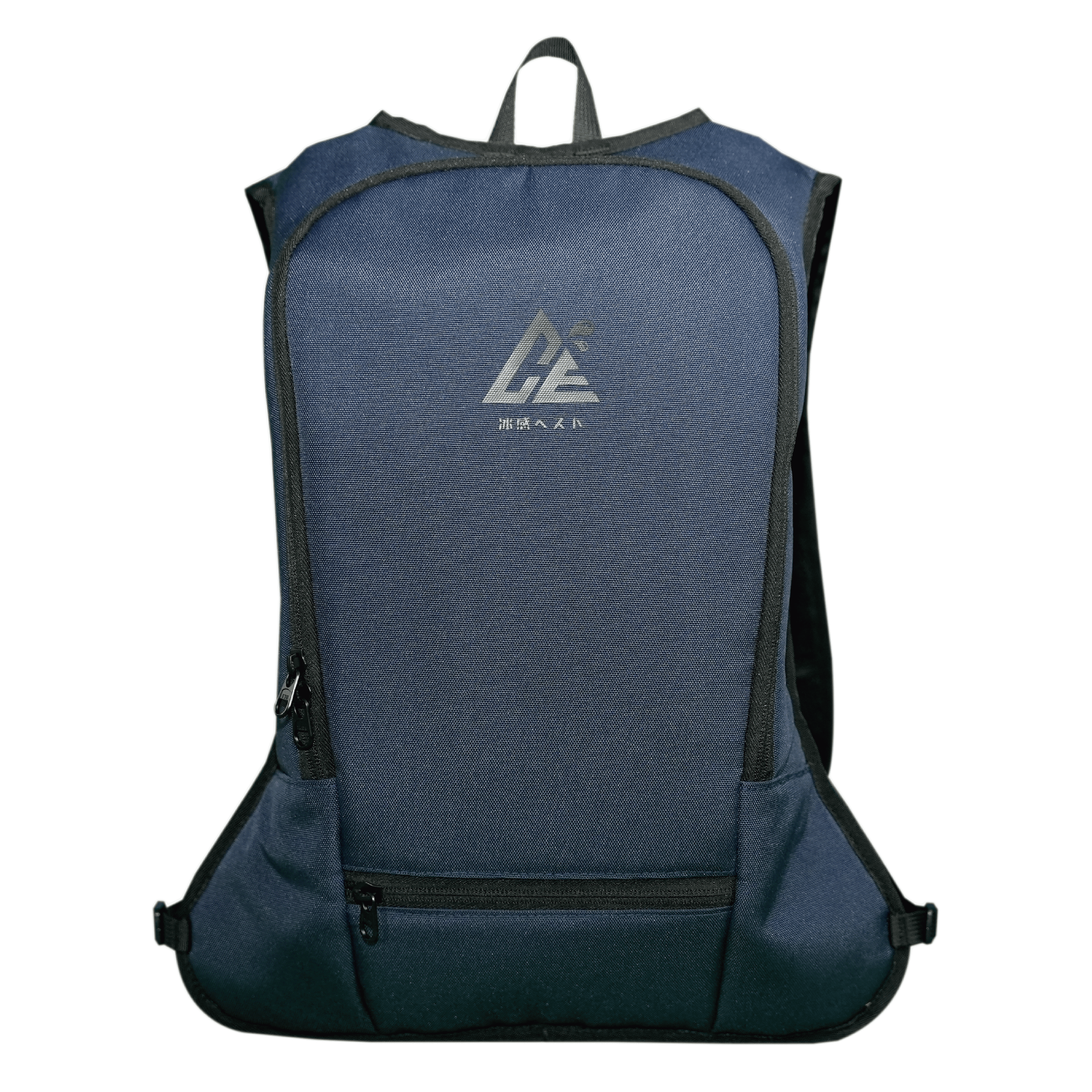
| Parameter | Specification |
|---|---|
| Cooling method | Water circulation with ice pack reservoir |
| Pump output | 5V 150mA (max) |
| Flow rate | 320–370 ml/min |
| Rated cooling duration | 3–4 hours |
| Total weight | Within 2 kg |
| Included components | Water-cooled vest backpack, 2 ice packs |
| Main materials | PEVA, TPU, 600D polyester, sand rubber, polypropylene |
Construction Cooling Vests in the Shokunin Product Line
Shokunin is an e-commerce brand of Taiwan-based manufacturer Feng Shang Precision Co., Ltd., established in 2009. The company produces a range of professional tools, and its cooling vest line is one of its PPE-oriented product groups. The COOLWAVE vest is designed around the concept of passive cooling: ice packs are placed in the water reservoir, and the pump circulates the chilled water without relying on fans. This makes it a distinct alternative to fan-based active cooling designs.
From a sourcing perspective, Feng Shang runs a 1000 m² facility with approximately 30 employees, including a 5-engineer R&D team, and has an annual production capacity of 10,000 units. These figures offer a baseline for buyers who want to evaluate a supplier's scale before committing to a project.
Who Uses These Vests: Application Scenarios
The most direct applications are in construction sites, outdoor work, metal sheet factories, and street vending. These settings involve prolonged exposure to heat, physical exertion, and often little shade. The COOLWAVE product documentation lists construction workers, outdoor workers, food stall operators, street vendors, traffic controllers, and metal sheet factory staff as target users. This range reflects a general trend: heat stress relief is not limited to construction; it is also relevant for municipal workers, maintenance crews, and tradespeople in cramped or sun-exposed environments.
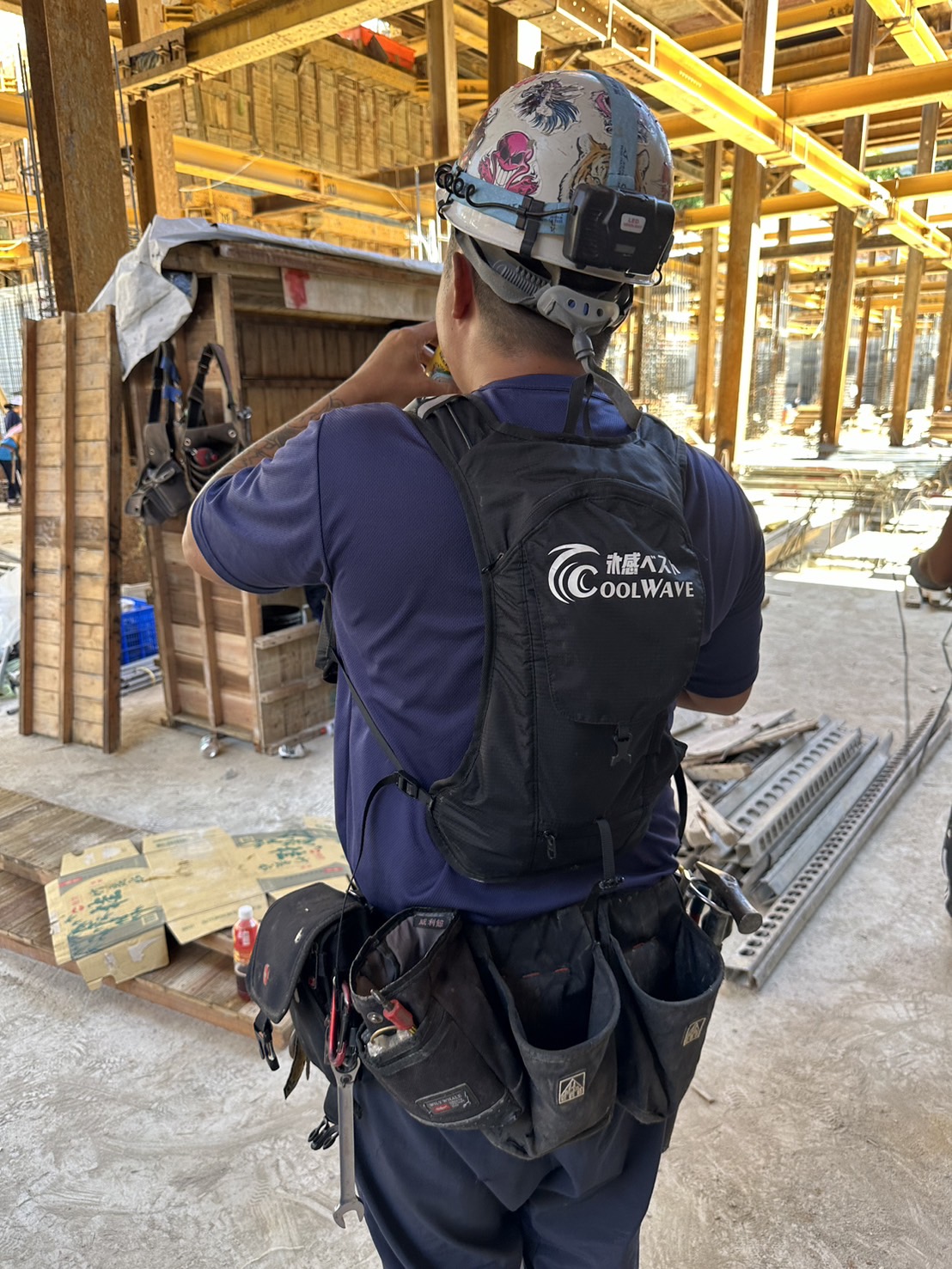
In practical terms, a vest with adjustable straps and a backpack design can be worn over a work T-shirt and under a high-visibility garment if needed. Buyers may also consider additional user factors: the weight of the filled reservoir, the need to replace ice packs, and the ease of moving while wearing the backpack.
What Buyers Should Check Before Choosing a Construction Cooling Vest
At the awareness and research stage, buyers should not focus only on price. Several technical factors determine whether a vest will be accepted by workers and maintained over time.
- Cooling duration: how long the vest performs before ice or water needs to be changed.
- Weight and fit: whether the vest adds excessive burden or fits under standard workwear.
- Flow rate and pump output: higher flow can improve cooling consistency but may increase battery consumption if a pump is battery-powered.
- Materials and durability: fabrics and tubing that resist wear, bending, and repeated filling.
- Certification and compliance: for high-visibility needs, ANSI/ISEA 107-2020 covers visibility garments; for heat stress, OSHA's General Duty Clause may apply.
For a product like the COOLWAVE series, a verifiable parameter set helps. The key specifications—pump output, flow rate, duration, weight, and materials—are published by the manufacturer. Buyers should ask for the same level of documentation from any supplier.
Traditional Heat-Stress Measures vs. Cooling Vests
Traditional controls include hydration, shade, rest breaks, and rotating work schedules. These remain important and are less costly than wearable devices. However, they require active supervision and do not directly lower skin temperature while a worker continues physical activity.
Cooling vests add a physical cooling layer. A water-circulation vest can be suitable for tasks where workers need continuous cooling without frequent breaks. One trade-off is weight: even a vest under 2 kg still adds load during an eight-hour shift. Another is preparation: the ice packs must be frozen and the water reservoir filled before each use. Buyers should compare the operational burden with the cooling benefit rather than assume any cooling vest is automatically the best solution.
Compared with fan-based vests, passive water-circulation systems avoid large external fans, but they also depend on water and ice logistics. In environments with no freezer, the practical value may be limited.
Market Trends Shaping the Cooling Vest Category
The data points cited earlier point to a growing category. Industrial applications already lead the cooling vest market by revenue share, and Asia-Pacific's leading regional share is consistent with the high number of outdoor and manufacturing jobs in that region. The heat stress prevention products market, estimated at USD 2.86 billion in 2025, includes a range of solutions beyond vests, such as cooling towels, portable fans, and hydration systems.
A separate report focused on cooling vests with fans estimated that segment at USD 1.32 billion in 2024. While this figure comes from a source that requires verification, it signals that active cooling products are a significant submarket. Buyers exploring construction cooling vests should monitor how the product category evolves, particularly around battery life, material durability, and the ability to integrate with other PPE.
Future Outlook for Construction Cooling Vests
The next stage of product development will likely focus on reducing the burden of wearing a vest. Weight, water capacity, and freeze time of ice packs are recurring constraints. Manufacturers may also explore modular designs that allow the cooling unit to be swapped between workers or attached to different garments.
Another direction is the combination of cooling with monitoring. If a vest can collect basic body-temperature or heart-rate data, employers could use it as part of a heat-stress prevention program. However, these features are still emerging in the mainstream construction market, and buyers should evaluate them on evidence rather than promise.
Frequently Asked Questions
What is a construction cooling vest?
A construction cooling vest is a wearable personal protective equipment category designed to lower the wearer's skin temperature during work in hot environments. Common mechanisms include water circulation, phase-change packs, and fan-assisted airflow.
How does a water-circulation cooling vest work?
A small pump circulates chilled water from an insulated reservoir through tubes in the vest. The water absorbs body heat, returns to the reservoir, and is cooled again by ice packs, providing continuous cooling for the rated duration.
Who are typical users of construction cooling vests?
According to the COOLWAVE product documentation, typical users include construction workers, outdoor workers, food stall operators, street vendors, traffic controllers, and metal sheet factory employees.
What materials are used in a water-circulation cooling vest?
The Shokunin COOLWAVE vest uses PEVA for the vest, TPU for the water bag, 600D polyester for the shoulder straps, sand rubber for the cooling tube, and polypropylene for the water bag cap.
How long does cooling last on a typical vest?
The COOLWAVE series is rated at 3 to 4 hours of cooling per filling. Actual duration depends on ambient temperature, work intensity, and ice pack condition.
What are the limitations of cooling vests?
Cooling vests add weight, require preparation such as frozen ice packs and water filling, and have a finite cooling duration. They are a supplement to, not a replacement for, hydration, shade, rest breaks, and work scheduling controls.
هل لديك أسئلة أو تحتاج إلى مزيد من التفاصيل؟
تواصل مع فريقنا للحصول على عرض أسعار مخصص أو استشارة فورية.
طلب عرض أسعار
املأ النموذج أدناه وسيتواصل معك فريقنا بعرض مقترح مخصص.
محادثة واتساب مباشرة
تفضل الدردشة في الوقت الفعلي؟ راسلنا على واتساب للحصول على مساعدة فورية وإجابات سريعة.
- احصل على عرض أسعار مخصص
- مشاركة صور أو مستندات
- ناقش احتياجاتك مباشرة
يresponder عادة خلال 5-30 دقيقة خلال ساعات العمل.