
Construction Site Entrances: A Bollard Shortlist by Access Need
Construction Site Entrances: A Bollard Shortlist by Access Need
Vehicle Access Control · Construction & Decoration
A construction or decoration site does not have one entrance with one job. It has a main gate handling delivery trucks and staff vehicles through the working day, a second gate opened for scheduled material drops, a pedestrian point that must stay closed to vehicles, and a perimeter line protecting stored plant or a completed facade. Matching bollard type to the access need at each of those points is a more practical starting point than applying one product family across the whole hoarding line.
This shortlist organizes bollard options by the access need they serve rather than by catalogue order. It draws on the RICJ Bollard product range, published vehicle-barrier standards, and the procurement questions that usually decide a specification: how often the entrance opens, what the entrance is expected to stop, and whether the site can support the civil works a powered product requires.
Why the entrance decides the shortlist
Bollards are frequently compared as a single category, yet the products inside that category do very different jobs. A rising bollard that retracts for each vehicle is an operating device. A fixed post is a passive obstacle. A removable post is a lockable barrier that a site supervisor can take away. Treating them as interchangeable produces two recurring errors on construction and decoration projects: a powered unit specified at an entrance that opens a handful of times a week and cannot justify its foundation and drainage work, and a fixed or removable post specified where vehicle throughput is high enough that staff will eventually leave the line open to avoid delays.
The practical test is to describe the entrance before describing the product. Vehicle count per day, whether the gate is staffed, whether access is scheduled, what class of vehicle must be stopped, and which services can reach the line will narrow the shortlist faster than any product comparison. Those answers also define which questions a supplier must answer in writing before an order is placed.
Five criteria that separate one entrance from another
- Traffic frequency. A gate that opens several hundred times a day needs an operating pattern that does not depend on someone walking out to move a post. A service gate opened twice a week does not, and paying for automation there usually transfers cost and maintenance to a point that gains little from it.
- Operating environment. Construction entrances carry dust, mud and standing water, and the finished site may later face coastal air or sub-zero winters. RICJ's published project guidance lists installation depth, drainage, climate and foundation conditions as site-specific items that require confirmation rather than assumption.
- Required protection level. Keeping cars off a pedestrian route, denying unauthorised vehicles access to a compound, and mitigating a hostile-vehicle threat are separate requirements. They call for different products and, in the last case, product-specific test evidence.
- Power, foundation and drainage. Powered units are installed with control cabinets, foundations and site wiring, and the exact configuration depends on the project design. If trenching, power and drainage cannot be delivered at a gate, a passive or portable option is the realistic choice.
- Documentation and support. Installation manuals, technical drawings, wiring diagrams and test reports are part of the product on an export project. A specification that cannot be installed or maintained from the supplied documents is not complete.
A bollard shortlist organized by access need
The options below are drawn from the RICJ Bollard range — the bollard and vehicle-access equipment line of Chengdu Ruisijie Intelligent Technology Co., Ltd., a China-based manufacturer founded in 2007 — together with published barrier-testing standards. The sequence follows typical site priority: the busiest gate first, the occasional-access point last.
1. Automatic rising bollards for busy main gates
Automatic rising bollards are the fit where the main gate carries continuous vehicle movement and the site wants the line to open and close without a person leaving the cabin. RICJ describes automatic operation for 24-hour lifting and lowering, with integration options that include RFID, licence plate recognition, remote control and access control systems, supported by control cabinets, foundations and site wiring. The exact configuration is a project-design decision rather than a catalogue default, which is why the control interface should be agreed before the foundation is cast.
The boundary is equally clear. An automatic unit is the most demanding item on this list in civil-works terms: it needs a foundation of adequate depth, drainage that keeps water out of the pit, and a reliable power supply. On a temporary site where the gate line will be removed in twelve months, that investment has to be justified by traffic volume, not by the product being the most capable option available. RICJ's catalogue also lists automatic hydraulic rising bollards as a separate category, so buyers comparing quotations should confirm which drive principle is being offered on the specific model rather than assuming the two are interchangeable.
2. Semi-automatic bollards for staffed, controlled entrances
Semi-automatic bollards occupy the middle ground between fully automatic rising units and manual retractable posts. They suit entrances where access is scheduled and an operator is normally present — a controlled delivery gate, a site office entrance, or a compound entrance that opens for known vehicles rather than continuous traffic.
Because the term is used differently across suppliers, the operating method should be confirmed explicitly in the datasheet for the exact model: what the operator does, what the unit does, and what happens during a power failure. That single clarification prevents most of the ambiguity that appears when semi-automatic posts are compared against automatic ones on price alone. RICJ lists semi-automatic bollards alongside manual retractable, removable and automatic products, so the point of comparison is the operating routine at the gate, not the label on the product family.
3. Removable and fold-down bollards for occasional access
Removable and fold-down posts answer the entrance that must be open sometimes and closed the rest of the time, without power or civil works. This is the most common requirement at service yards, temporary site offices, show areas, and vehicle points that are used seasonally or only during a delivery window.
The documented options are specific. RICJ's folding-down bollard listing shows material options of 304 stainless steel, 316 stainless steel, 201 stainless steel and carbon steel, diameters of 76 mm, 89 mm, 114 mm, 133 mm and 159 mm, and lengths from 600 mm to 1500 mm or customized lengths. The company's lockable removable bollard is described with built-in mounting hardware and an internal locking mechanism, which matters because the ground socket and the lock are the parts that determine how the post behaves in daily use. No crash rating should be assumed for a removable or fold-down post unless a product-specific test report is supplied; these products are best specified as controlled-access barriers with a defined operational routine.
4. Fixed bollards, road blockers and tyre killers for higher-security perimeters
Fixed bollards are passive: no power, no operating cycle, no maintenance routine beyond inspection and finish care. They suit perimeter lines that must stay closed permanently, pedestrian-vehicle separation along a boundary, and protection of stored materials or finished frontage where a gate is not required. RICJ cites a public project case in Sweden in which 510 deep-mount 316 stainless steel fixed bollards were deployed, and the company reports project experience across China, the United Kingdom, Sweden, Canada, Australia, Kazakhstan, Slovakia and the United Arab Emirates, in airport, government, commercial, industrial, energy, educational and hospitality settings.
Where the perimeter also needs a vehicle denial point that opens for authorised traffic, road blockers and tyre killers belong in the same conversation. RICJ lists both among its vehicle-access categories, and their role in a perimeter scheme is to control a roadway rather than a pedestrian line. The specialised question here is test evidence. ASTM F2656/F2656M-20 provides a structured test method to establish a penetration rating for vehicle perimeter barriers subjected to vehicle impact, and published guides describe the M designation as an impact-speed reference (M30, M40, M50) and penetration bands P1 to P4 by dynamic penetration distance, with P1 at no more than 1 m and P4 at 30 m or greater. Those band definitions come from a secondary interpretation of the standard and should be checked against the current purchased edition before they appear in a contract. More importantly, a standard reference is not product certification: the report for the exact model, configuration, impact condition and laboratory is what a buyer needs.
The shortlist compared
The table summarizes the four access needs side by side. It is a selection aid, not a performance ranking, and the verification column is the part that should carry into the request for quotation.
| Bollard type | Best-fit entrance | Power and civil works | Operating pattern | Verify before ordering |
|---|---|---|---|---|
| Automatic rising bollard | Main gate with frequent daily vehicle movement | Requires power, control cabinet, foundation and drainage | Automatic lifting and lowering, described for 24-hour operation | Drive principle, control interface, installation depth, drainage design |
| Semi-automatic bollard | Staffed, scheduled or controlled entrance | Site-dependent; confirm with the model datasheet | Operator-assisted routine rather than continuous automation | Exact operating method, power-failure behaviour, cycle expectation |
| Removable bollard | Occasional access, service yard, temporary office | Ground socket and mounting hardware only | Post inserted and locked, then removed when access is needed | Lock mechanism, socket installation, storage and handling routine |
| Fold-down bollard | Vehicle point opened intermittently | Surface-mounted, no power | Post folds down and locks back upright | Material grade, diameter and length, lock condition, finish |
| Fixed bollard | Permanent perimeter, pedestrian separation | Foundation only, no power | Passive, always closed | Material grade for the environment, spacing, embedment depth |
| Road blocker / tyre killer | Roadway denial point on a security perimeter | Powered installation, drainage and control integration | Raised or deployed to deny, lowered to admit | Model-specific test report, foundation design, maintenance access |
Material, dimension and integration options vary by model and project; the exact scope is confirmed against the selected product rather than the category.
What changes the specification on site
Foundation and drainage decide whether a powered unit works. The most common failure mode on a construction site is not the bollard mechanism but water and debris in the pit. Installation depth, drainage and foundation conditions appear in RICJ's own project guidance as items requiring confirmation, and they should be settled at the survey stage rather than after delivery.
Climate is a long-term specification input. The material listed for a post is not a performance guarantee, but it narrows the field: 316 stainless steel is commonly selected where corrosion exposure is higher, such as coastal or de-icing-salt environments, while carbon steel and galvanized steel appear in the same product listings as cost-driven options. The finish and grade should match the environment the entrance will face after handover, not only the twelve months of construction traffic.
Control integration should be agreed before civil works. Where an entrance will eventually connect to licence plate recognition, RFID or a building access control system, the control cabinet and wiring route need to be planned with the gate, not retrofitted around it. RICJ lists these as matched equipment whose configuration depends on the project design.
Testing and documentation carry the quality claim. RICJ states that finished equipment undergoes functional testing before delivery and that 100% testing is applied for quality control, and the company holds ISO 9001 certification (certificate 102626Q00045R000, issued 20 March 2026 and expiring 19 March 2029 by HUAQIXIN CERTIFICATION SERVICES (CHENGDU) CO., LTD under GB/T19001-2016/ISO9001:2015), with a scope covering urban traffic facilities including automatic rising bollards, anti-collision bollards, road blockers and tyre killers. A certificate of this kind evidences a quality management system within a stated scope; it does not certify the crash performance of an individual model, which remains a separate document request.
How the shortlist maps to construction-phase scenarios
During the structural phase, the working gate usually carries the heaviest load: concrete trucks, steel deliveries and site staff arriving within the same two hours. This is the entrance where an automatic rising bollard earns its cost, because the alternative — a post that must be moved by hand several hundred times a week — tends to end up propped open. The secondary material gate, opened for scheduled drops, is the natural place for a semi-automatic or removable solution, since access there is planned rather than continuous.
During fit-out and decoration phases, the vehicle profile changes. Deliveries become smaller and more frequent, subcontractors arrive in vans, and the site often needs to protect finished surfaces and pedestrian routes from vehicle encroachment. Fixed bollards along a protected facade line and fold-down posts at service points handle this stage without adding powered equipment that will be removed at handover.
At handover, the entrance often passes to a different owner: a property manager, a facilities team, or a completed commercial frontage. Any powered option installed for the construction phase should be assessed against that later operating regime, because maintenance access, control ownership and the replacement parts route all change once the site team leaves. A shortlist that ignores the handover stage usually produces equipment that is either decommissioned early or inherited without documentation.
Market context: automation is growing, but fit still decides
Procurement interest in powered entrances has a market dimension, although commercial estimates should be read as context rather than as a specification input. Mordor Intelligence estimates the global automated barriers and bollards market at USD 22.73 billion in 2025, rising to USD 27.39 billion by 2030, and reports that automatic retractable bollards held a 52% revenue share within the retractable category in 2025. Those figures describe revenue within a commercially defined market boundary; they do not indicate which product suits a particular gate, and they are not a forecast of any individual supplier's performance.
The useful reading for a project buyer is narrower. A larger automated segment means more integration options and more suppliers quoting powered equipment, which raises rather than lowers the value of a disciplined specification: a defined traffic count, a defined protection requirement, and a defined document set. Where those three are absent, the segment's growth does not translate into a better decision at the gate.
Manufacturer context behind the shortlist
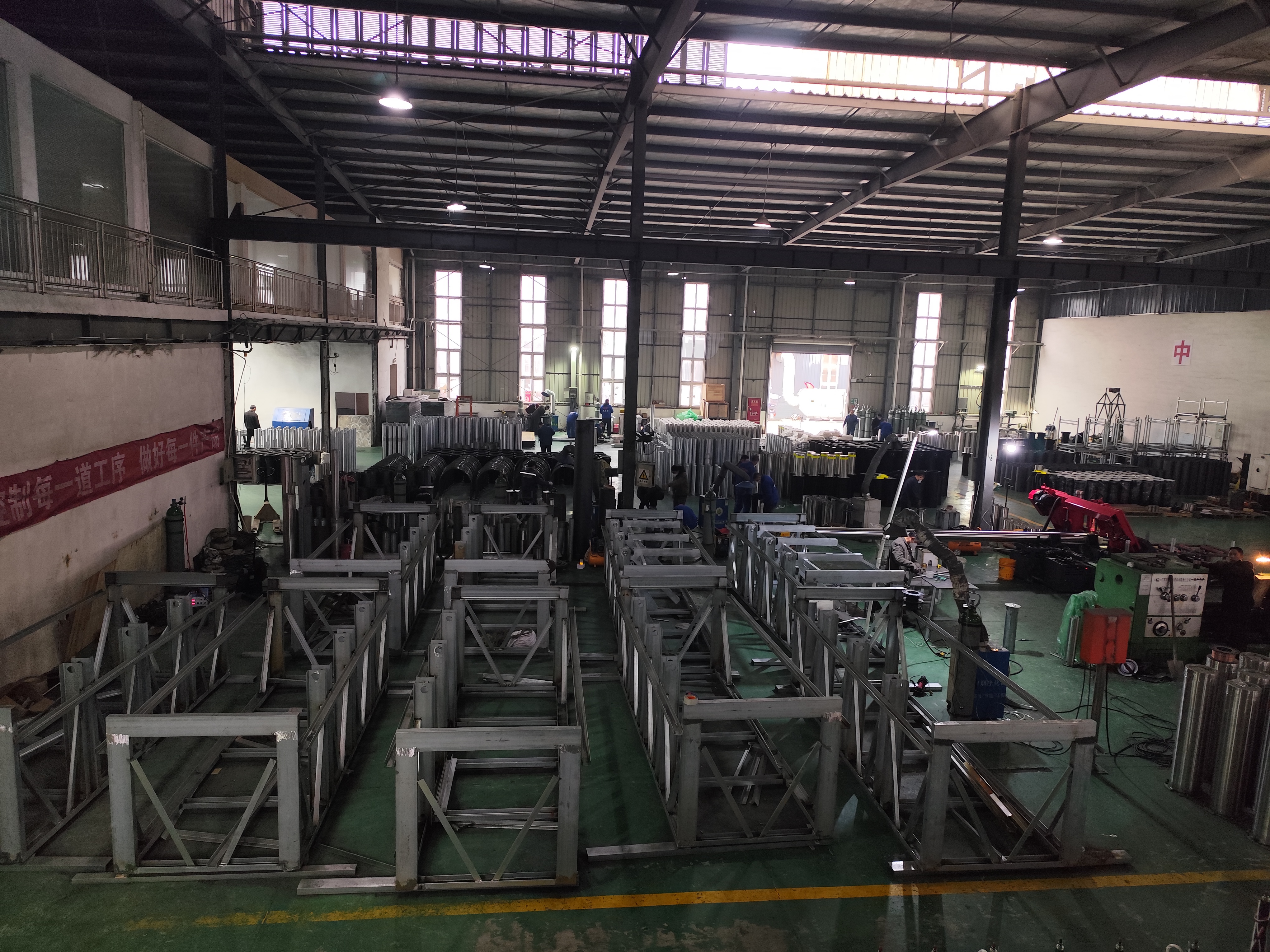
RICJ Bollard is produced by Chengdu Ruisijie Intelligent Technology Co., Ltd., which reports a 15,150 m² manufacturing facility, 280 employees and 41 engineers, with a stated monthly production capacity of 30,000 units, a typical production lead time of 30–50 days and a minimum order quantity of one unit. The company describes a 90% export ratio with main markets in the Middle East and Africa, Europe and Southeast Asia, and lists export markets including Asia, Europe, the Middle East and North America.
Customization is relevant to a shortlist article because entrance specifications rarely match a standard drawing. RICJ states that OEM/ODM customization covers size, material, surface finish, logo, control system, product structure and project-specific solutions, with the exact scope depending on the model and the project. For an entrance where the available foundation depth or the required post height falls outside a catalogue value, that flexibility is the difference between a fitted installation and a compromise.
The support layer is the part that most often decides whether an export order runs smoothly. RICJ provides English technical documentation, installation manuals, wiring diagrams and customs documentation, with remote assistance by phone, email or video. Standard practice is not to send engineers for on-site installation; the company supplies installation manuals and technical drawings, including CAD files, and offers remote guidance through installation and commissioning, with on-site engineer supervision available as a paid optional service for large projects. Exact warranty terms depend on the product configuration and should be confirmed in the order documents.
Fit boundaries and what to verify before ordering
- Confirm the product-specific test report. Ask for the report that names the model, configuration, impact condition and testing laboratory. A standard reference such as ASTM F2656/F2656M-20, or an M or P designation on a brochure page, does not by itself certify the unit being quoted.
- Confirm the drive principle. Automatic, hydraulic and semi-automatic are listed as separate product categories; the quotation should state which one applies to the offered model, together with the control interface.
- Confirm the site conditions. Installation depth, drainage, foundation design, power availability and climate exposure belong in the technical agreement, not in a general assumption.
- Confirm the document set. Installation manual, technical drawings, wiring diagram and spare-parts route should be listed in the order, particularly where the entrance will be maintained by a different team after handover.
- Confirm the schedule against the programme. A typical 30–50 day production lead time, plus shipping and customs clearance, has to be placed against the date the gate is needed; where the schedule is tight, the sequencing of civil works becomes the critical path.
- Confirm the maintenance routine. Powered units need periodic inspection of the pit, drainage and mechanism; passive and removable posts need inspection of the finish, socket and lock. Both should be assigned to a named party before handover.
Outlook
Construction and decoration projects are moving toward entrance schemes that are planned in phases rather than installed in one pass: a heavy-duty working gate for the build, a controlled delivery point for fit-out, and a permanent perimeter line that survives handover. Designing those three stages as one access plan reduces the chance that equipment bought for the construction phase is either over-specified or abandoned.
For buyers at the evaluation stage, the durable advantage is documentary rather than promotional. A supplier that can name the model, state the material and dimensions, supply installation drawings and a wiring diagram, and produce a test report for the exact unit is easier to qualify than one that answers with a category name. That is the standard this shortlist is meant to support, whichever entrance on the site is being specified.
Frequently asked questions
Which bollard type fits a busy construction site main gate?
An automatic rising bollard is the usual fit where the main gate carries frequent daily vehicle movement and the site can provide power, a foundation of adequate depth and drainage. Where traffic is scheduled and an operator is present, a semi-automatic bollard is the simpler option. Fixed posts suit entrances that must remain permanently closed to vehicles rather than open and close through the day.
What should a buyer verify before accepting a crash-rated bollard?
The buyer should verify the test report for the exact model, configuration, impact condition and laboratory, rather than a rating shown on a brochure page. ASTM F2656/F2656M-20 is a structured test method for establishing a penetration rating of vehicle perimeter barriers, and the M designation is commonly explained as an impact-speed reference while P1 to P4 describe dynamic penetration distance. Those band definitions come from secondary interpretation and should be checked against the current edition of the standard before contractual use.
Which materials and dimensions can be customized for removable and fold-down bollards?
RICJ's folding-down bollard listing shows 304 stainless steel, 316 stainless steel, 201 stainless steel and carbon steel, with diameters of 76 mm, 89 mm, 114 mm, 133 mm and 159 mm, and lengths from 600 mm to 1500 mm or customized lengths. The company's custom material list also includes galvanized steel and aluminium. The exact customization scope depends on the model and the project, so material and dimensions should be confirmed in the quotation.
How is installation supported on an export project?
RICJ provides installation manuals, technical drawings including CAD files, and wiring diagrams, with remote guidance by video call, phone and email through installation and commissioning. Sending engineers for on-site installation is not standard practice; on-site engineer supervision can be arranged as a paid optional service for large projects or specific requirements.
What capacity, lead time and order quantity apply to project orders?
RICJ reports a monthly production capacity of 30,000 units, a typical production lead time of 30–50 days, a minimum order quantity of one unit and 100% testing for quality control. The company describes a 90% export ratio with main markets in the Middle East and Africa, Europe and Southeast Asia, and lists Asia, Europe, the Middle East and North America among its export markets. Project schedules should still be confirmed against the specific configuration ordered.
The downloadable RICJ product brochure is available here: RICJ product brochure (PDF).
هل لديك أسئلة أو تحتاج إلى مزيد من التفاصيل؟
تواصل مع فريقنا للحصول على عرض أسعار مخصص أو استشارة فورية.
طلب عرض أسعار
املأ النموذج أدناه وسيتواصل معك فريقنا بعرض مقترح مخصص.
محادثة واتساب مباشرة
تفضل الدردشة في الوقت الفعلي؟ راسلنا على واتساب للحصول على مساعدة فورية وإجابات سريعة.
- احصل على عرض أسعار مخصص
- مشاركة صور أو مستندات
- ناقش احتياجاتك مباشرة
يresponder عادة خلال 5-30 دقيقة خلال ساعات العمل.