
Construction and Detergent HPMC: Comparing BANGCEL® with Conventional Grades at the Decision Stage
Hydroxypropyl Methyl Cellulose (HPMC) is one of the most widely used cellulose ethers in construction and detergent formulations. For buyers who have already shortlisted suppliers, the final question is rarely about whether HPMC is required. It is about which grade — and which supplier — will produce the most predictable cost and performance outcome.
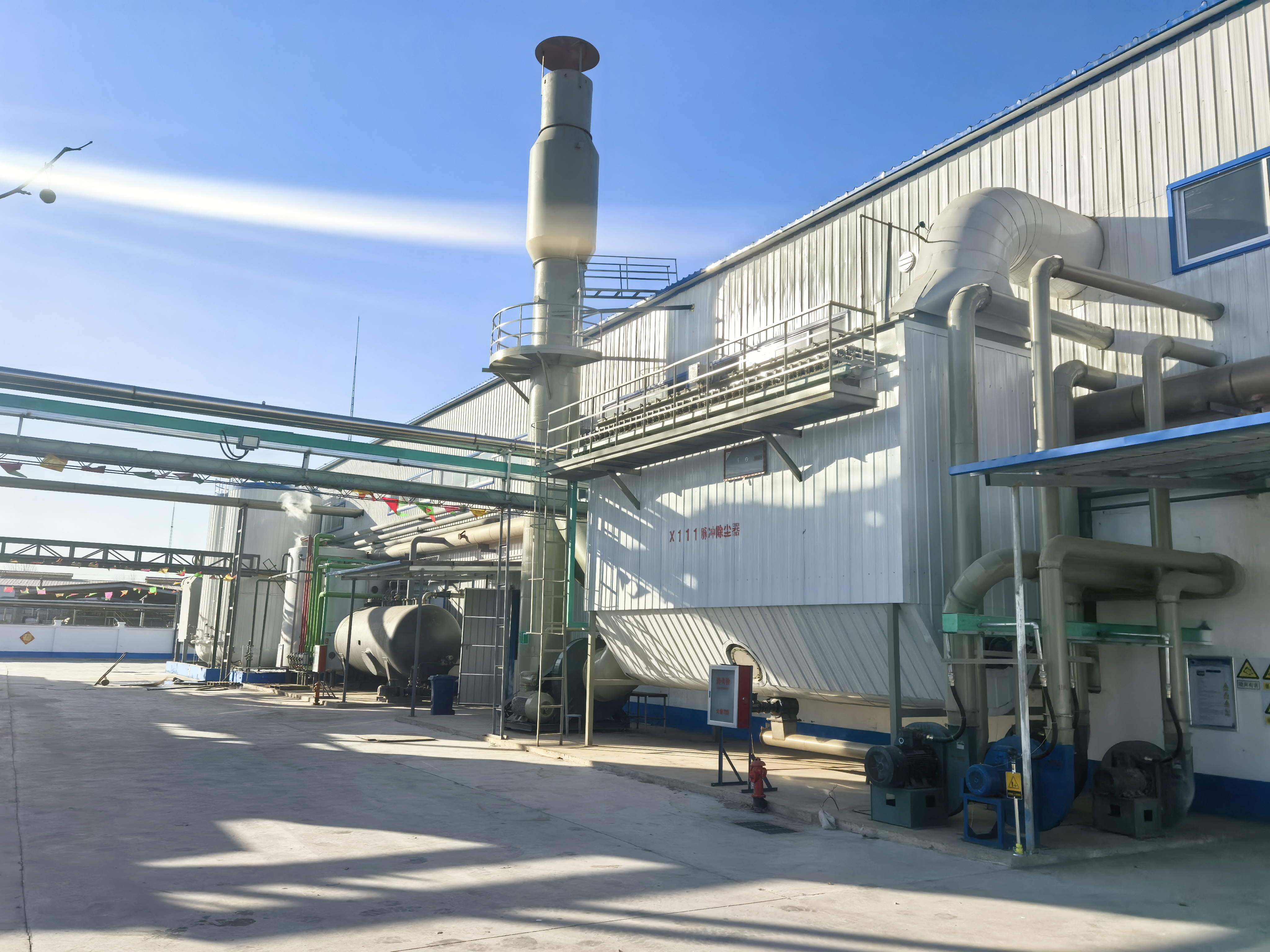
Factory pipeline transportation at the BANGCEL HPMC manufacturing operation in Shijiazhuang, China.
Why the HPMC Grade Decision Matters at the Final Procurement Stage
In construction-grade applications, HPMC is added to cement-based mortars, tile adhesives, wall putties, self-leveling compounds, gypsum products, and external wall insulation systems to improve water retention, workability, and open time. In detergents, HPMC functions as a thickener and stability modifier for liquid and industrial cleaning products. The same chemical family can be produced at different purity levels, with different substitution patterns and particle sizes, and those differences directly affect how a formulation behaves on site or on the production line.
At the decision stage, procurement teams often face a choice between conventional industrial-grade HPMC and higher-purity HPMC marketed as a differentiated product. Price per kilogram is visible, but hidden costs come from rework, rejected batches, inconsistent open time, or dosage adjustments caused by variable raw material quality. Understanding what a higher-purity grade actually changes — and where it does not matter — is essential before committing to a supplier.
Industry data support the importance of HPMC in key applications. According to Industry Perspective Research, HPMC is used in more than 70% of tile adhesive formulations and more than 65% of dry-mix mortars. That means the grade selected has a wide impact across a manufacturer’s product portfolio.
BANGCEL®: The Manufacturing Profile Behind the Product
BANGCEL® is the HPMC product brand marketed by Bang Shang International Co., Limited, an original manufacturer based in Shijiazhuang, Hebei Province, China. The company was founded in 2007 and operates an 80,000 m² facility with approximately 300 employees. Its stated annual output is 35,000 tons, and about 70% of production is exported to markets across North America, South America, Europe, Africa, the Middle East, Asia-Pacific, and Oceania.
The company’s main product lines include HPMC, MHEC, RDP, HEC, and CMC, serving tile adhesives, wall putty, cement-based mortars, EIFS/ETICS, self-leveling compounds, dry-mix mortar systems, water-based coatings, and detergent formulations. According to its company profile, BANGCEL products have passed CE certification and SGS testing, and the company operates with a 26-person R&D team. These details matter to buyers because they indicate that the brand is backed by a manufacturing entity rather than a trading intermediary.
For this comparison, the relevant product is BANGCEL® high-purity HPMC, which the manufacturer positions against conventional industrial-grade HPMC used in construction and detergents. The claims are specific: higher purity, better water retention stability, longer open time, and more consistent production behavior.
Data Comparison: BANGCEL® vs Conventional Industrial-Grade HPMC
BANGCEL® publishes a comparison set that quantifies the main differences between its HPMC and conventional industrial-grade HPMC. The table below summarizes the reported performance gaps and their practical implications.
| Metric | Reported Difference vs Conventional Industrial-Grade HPMC | Practical Implication |
|---|---|---|
| Water retention at 40°C | +10% higher | Longer workable life in mortars; less water loss during hydration |
| Ash content | 70% lower | Fewer impurities; more stable rheology and color in sensitive formulations |
| Open time | +1.5 hours longer | More time for tile placement and adjustment on site |
| Total production cost | Reduced by 12%+ | Eliminated agglomeration waste, reduced mixing labor, minimized dosage rate |
| Rework and maintenance | Less rework; more stable performance | Fewer rejected batches and site repairs |
| Production efficiency | Higher; consistent quality | Better batch-to-batch repeatability |
These figures come from the manufacturer’s comparative data and should be treated as a supplier statement rather than an independent laboratory finding. However, they are specific enough for a buyer to verify through sample testing. A procurement team can request the same tests — water retention, ash content, open time, and dosage behavior — and compare the results against its own baseline.
Technical Explanation: Water Retention, Ash, and Open Time in Practice
The three most visible differences between BANGCEL® HPMC and conventional industrial-grade HPMC are water retention, ash content, and open time. These are not abstract parameters. They influence how a mortar behaves when applied to a wall, how a tile adhesive holds under vertical load, and how much rework a contractor experiences.
Water Retention
Water retention is the ability of HPMC to prevent water in a fresh mortar from being absorbed too quickly by the substrate. If water escapes too fast, cement hydration becomes incomplete, and the mortar loses adhesion and compressive strength. In dry-mix mortars, higher water retention also gives workers more time to level and finish the surface. BANGCEL® reports a 10% improvement in water retention at 40°C compared with conventional industrial-grade HPMC. For hot-climate projects or highly absorbent substrates, that difference can be decisive.
Ash Content
Ash content is a common indicator of residual inorganic impurities in cellulose ether. High ash content can affect the color of a mortar or detergent, change rheology, and create inconsistencies between batches. BANGCEL® reports 70% lower ash content than conventional industrial-grade HPMC. Lower ash usually means a cleaner product, which is particularly relevant for white or colored construction materials and for detergent formulations where clarity and viscosity stability matter.
Open Time
Open time is the window during which a tile adhesive remains workable after troweling. If the adhesive skins over too quickly, tiles must be set with extra force or the bond strength suffers. BANGCEL® claims 1.5 hours longer open time than conventional industrial-grade HPMC. That gives installation teams more flexibility and reduces the pressure to place tiles immediately.
Applications: Where a Higher-Purity HPMC Earns Its Position
The main positioning of BANGCEL® high-purity HPMC is in high-end construction, export building materials, and special mortars. Those categories share a common requirement: performance consistency must be proven, not assumed.
Construction Applications
- Ceramic tile adhesives: Water retention and open time are critical for adhesion and adjustability. High-purity HPMC helps maintain consistent bonding strength.
- Construction putty and wall putty powder: Lower ash content reduces color variation and helps the putty produce a smoother finish.
- Plastering mortars: Water retention and workability improve application ease and reduce cracking caused by premature drying.
- Self-leveling mortars: Viscosity control and water retention affect flow and leveling speed.
- Gypsum-based products: HPMC adjusts water demand and open time without interfering with gypsum hydration.
- External wall insulation (EIFS/ETICS): Mortar adhesion and water resistance depend on stable cellulose ether performance.
Detergent Applications
In detergent systems, HPMC acts as a thickener and stabilizer. Liquid detergents, tableware detergents, and industrial detergent products need consistent viscosity, clarity, and storage stability. A high-purity HPMC with low ash content is less likely to introduce impurities that interact with surfactants or change pH. That is why detergent manufacturers often look for HPMC grades with tighter quality control rather than simply purchasing the cheapest industrial grade available.
BANGCEL® states that the product is more suitable for high-end construction, export building materials, and special mortars. The same logic applies to premium detergent formulations where batch consistency is a commercial requirement.
Market Context: Why Grade Differences Are Becoming More Visible
The HPMC market is large enough that small performance differences translate into real procurement consequences. According to Dataintelo, the global construction-grade HPMC market was valued at USD 1.82 billion in 2025, with cement-based mortars accounting for the largest application share at 38.4%. Grand View Research reports that construction applications have held a revenue share of more than 45% in recent years. Asia Pacific is the leading region for production and consumption, holding approximately 47.3% of the global construction-grade market, according to Dataintelo.
At the same time, industrial-grade HPMC — including detergent and construction types — accounted for 47% of global HPMC demand in 2024, according to Industry Research. This indicates that industrial buyers, not just pharmaceutical or food-grade customers, are a major force in the market.
Competitive concentration is also notable. Infinity Market Research identifies Dow Chemical, Ashland, and Shin-Etsu as Tier 1 global leaders, collectively controlling more than 50% of the HPMC market. For Chinese manufacturers such as Bang Shang International, differentiation therefore depends less on broad availability and more on process control, purity, and documented quality. This is consistent with the company’s emphasis on 100% batch testing for ash content, viscosity, and purity before delivery.
Cost Comparison and the Limitations of the High-Purity Option
A higher-purity HPMC is not always the lowest-cost product on a per-kilogram basis. The value proposition is instead based on total production cost. BANGCEL® reports that its high-purity HPMC reduces total production cost by more than 12%, citing three mechanisms:
- Elimination of agglomeration waste: Fewer lumps and flow problems mean less material discarded during mixing.
- Reduced mixing labor hours: A stable product disperses more predictably and requires less manual intervention.
- Minimized dosage rate: Higher efficiency can allow the formulator to use the same performance with a lower addition level.
These cost effects are most visible in production environments where consistency is already a priority. For a manufacturer using HPMC in standard wall putty or basic mortar where performance requirements are modest, conventional industrial-grade HPMC may still be an appropriate and more economical choice. The extra purity and longer open time only create value when the application actually demands them.
There is also a risk-control dimension. Conventional industrial-grade HPMC can carry higher ash content and impurities, which may cause inconsistent viscosity, color shifts, or unexpected reactions in a formulation. Bang Shang International addresses this risk with strict raw material incoming inspection, automated production line control, and 100% batch quality testing for ash content, viscosity, and purity before delivery. Buyers evaluating suppliers should look for these same control points, not just rely on a product data sheet.
Decision-Ready FAQ
What is the main difference between BANGCEL® HPMC and conventional industrial-grade HPMC?
BANGCEL® HPMC is described as having higher purity, better water retention stability, and longer open time than conventional industrial-grade HPMC. These differences make it more suitable for high-end construction, export building materials, and special mortars.
How much performance difference can a buyer expect in real production?
According to the manufacturer’s comparison data, BANGCEL® HPMC reports 10% higher water retention at 40°C, 70% lower ash content, and 1.5 hours longer open time than conventional industrial-grade HPMC. Buyers should verify these figures with their own sample testing.
Which HPMC applications justify a higher-purity grade?
High-purity HPMC is most justified in high-end construction, export building materials, and special mortars, where performance consistency, open time, and low ash content directly affect product acceptance. It is also relevant for detergent formulations that need stable viscosity and clarity.
What should HPMC procurement teams verify before finalizing a supplier?
Buyers should verify the supplier’s raw material control, production monitoring, and batch testing practices. In the case of Bang Shang International, the company states it performs strict raw material incoming inspection, automated production line control, and 100% batch quality testing for ash content, viscosity, and purity before delivery.
Are there cases where conventional industrial-grade HPMC is still the better choice?
Yes. For applications with basic performance requirements, low price sensitivity, or standard raw materials, conventional industrial-grade HPMC can be sufficient. The higher-purity grade creates value only when water retention, open time, and batch consistency are critical to the final product.
Future Outlook
Procurement behavior in the HPMC market is moving toward more documented quality. Environmental declarations are becoming part of competitive tenders; for example, ISO 14025:2006 is referenced for environmental product declarations in global markets. This means suppliers will need to provide not only consistent product quality but also transparent manufacturing and testing records.
For construction and detergent buyers, the practical implication is that grade selection should be based on total cost of use rather than unit price. As high-purity HPMC producers such as BANGCEL® continue to publish specific performance data, buyers gain the ability to compare products on measurable variables — water retention, ash content, open time, and batch stability. That is a more reliable basis for a final decision than a generic specification sheet.
For a detailed company and product overview, download the Bang Shang International brochure: Company Profile PDF.
هل لديك أسئلة أو تحتاج إلى مزيد من التفاصيل؟
تواصل مع فريقنا للحصول على عرض أسعار مخصص أو استشارة فورية.
طلب عرض أسعار
املأ النموذج أدناه وسيتواصل معك فريقنا بعرض مقترح مخصص.
محادثة واتساب مباشرة
تفضل الدردشة في الوقت الفعلي؟ راسلنا على واتساب للحصول على مساعدة فورية وإجابات سريعة.
- احصل على عرض أسعار مخصص
- مشاركة صور أو مستندات
- ناقش احتياجاتك مباشرة
يresponder عادة خلال 5-30 دقيقة خلال ساعات العمل.