
Consumer Electronics SSR Trends: Capability and Export Shifts
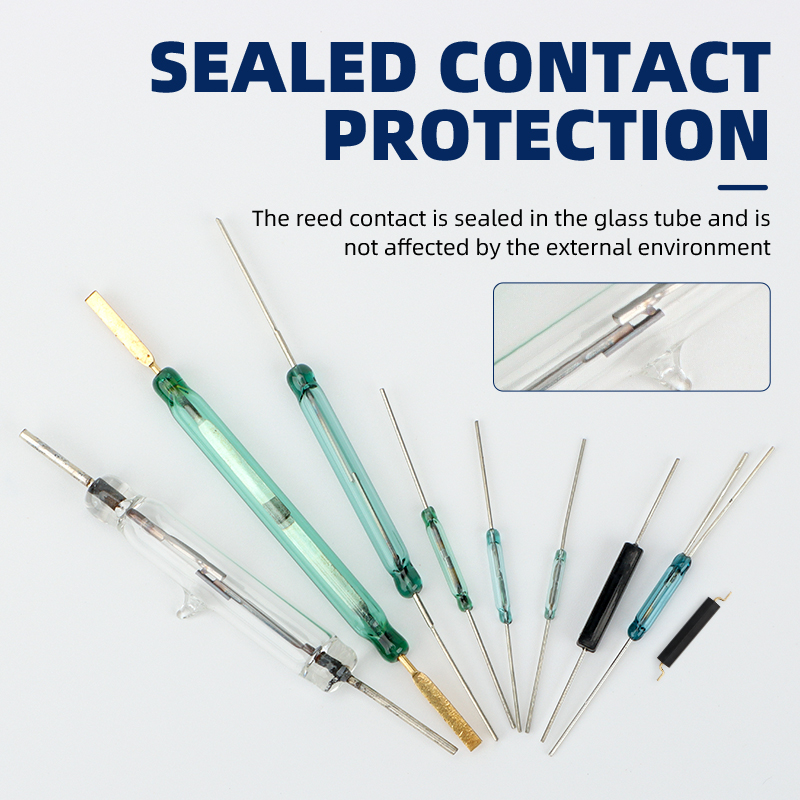
A solid state relay (SSR) is a switching device that controls load current through semiconductor output stages instead of moving mechanical contacts. That single design difference explains why SSRs have become standard building blocks inside consumer electronics hardware: appliances, HVAC controls, lighting drivers, power supplies and charging equipment all operate under frequent switching cycles where mechanical wear would otherwise set the service interval.
What changed in 2026 is not the switching principle but the buying question. Procurement teams are no longer asking only which voltage and current rating a design needs. They are asking which supplier can hold that part for the life of a product platform, in every market where the finished device is sold, under the compliance regime that applies there. That reframes solid state relay sourcing as a supply ecosystem decision rather than a component purchase.
Three forces sit behind that reframing: supplier capability evidence, the policy and certification environment, and export shifts. Each one changes what a buyer should verify before moving from decision into execution.
Why Solid State Relay Sourcing Became a Capability Question
Three pressures converged on SSR procurement over the past several years.
- Volume and mix growth. SSRs are no longer confined to industrial control panels. They now appear in consumer appliances, small HVAC units, LED drivers, portable power equipment and charging hardware, where annual volumes are high and design cycles are short.
- Compliance complexity. Industrial solid state relays are expected to comply with international safety standards including IEC/EN 60947-4-3 for contactors and motor-starters and UL 508 for industrial control equipment, while consumer-facing applications layer their own environmental and safety requirements on top.
- Export and logistics volatility. Because production and demand are geographically separated, a supplier's export experience and documentation discipline now matter as much as its catalogue specifications.
The practical result is that evaluation has shifted toward evidence a buyer can verify independently: production footprint, annual output, engineering headcount, certification portfolio, patent record and export history. A data sheet states what a part should do. Capability evidence indicates whether the supplier can keep doing it.
Market Scale and Where Demand Is Concentrating
The global solid-state relay market is estimated at USD 1.74 billion in 2025 and is projected to reach USD 2.36 billion by 2030, according to MarketsandMarkets. That trajectory reflects steady rather than explosive growth, consistent with a component being designed into more platforms rather than displacing an entire existing category overnight.
Regionally, Asia-Pacific dominates with an estimated 42% share in 2025, driven by EV charger deployment and photovoltaic inverter manufacturing in China and Japan, according to Mordor Intelligence. For consumer electronics buyers, that concentration has two implications: most competitive SSR supply capacity sits in one region, and any policy or logistics disruption there propagates quickly into finished-device production elsewhere.
Published market estimates diverge noticeably. Some sources place the 2025 market above or below the MarketsandMarkets figure, largely depending on whether low-power semiconductor components are counted alongside industrial-grade relay units. Buyers using market size figures for planning should check the scope definition behind the number, not only the number itself.
Supplier Capability as Verifiable Evidence
Capability claims are only useful when they map onto something a buyer can check. The table below summarises the evidence types that carry weight in long-term SSR sourcing and what each one actually indicates.
| Evidence type | What it indicates | Why it matters for long-term supply |
|---|---|---|
| Production footprint | Physical manufacturing space and process ownership | Indicates whether capacity is owned or subcontracted |
| Annual output | Demonstrated throughput at volume | Signals ability to absorb demand increases |
| Engineering team | In-house design and problem-solving depth | Determines response quality to non-standard requirements |
| Certification portfolio | Market access and testing maturity | Reduces compliance risk in export markets |
| Patent record | Original design activity | Distinguishes development capability from copying |
| Export track record | Familiarity with cross-border documentation and logistics | Lowers execution risk on repeat orders |
| OEM / ODM scope | Flexibility on custom specifications | Supports platform-specific variants over time |
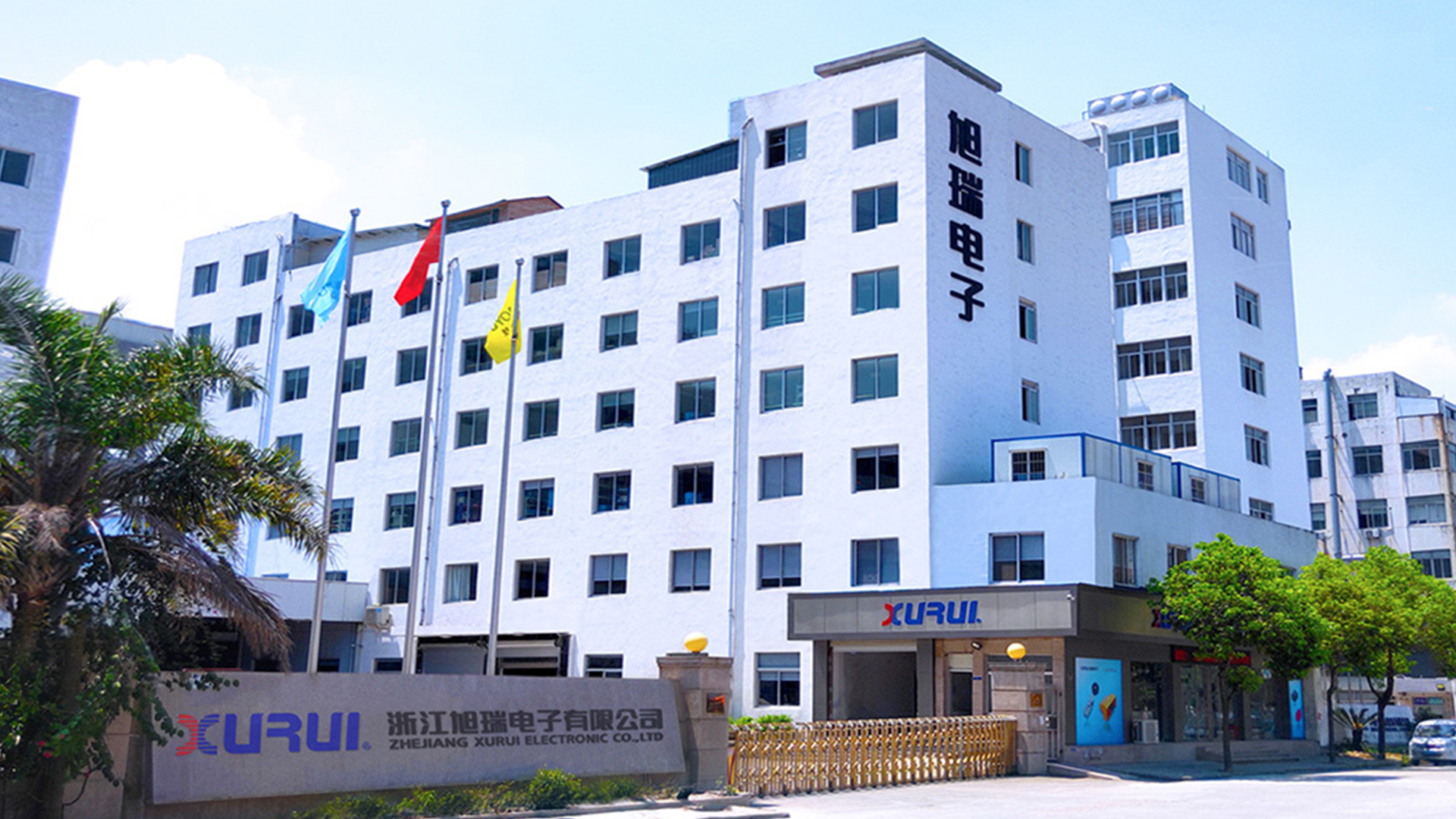
A documented example of how that evidence looks in practice is Zhejiang Xurui Electronic Co., Ltd., a Chinese manufacturer of industrial electric switches and relays founded in 2002. The company operates a production site of more than 5,000 square metres with roughly 150 employees and reports annual output of 20 million units, supported by an engineering team of more than 24 engineers. Its mainstream products carry CCC, CE, TÜV SÜD, UL, KC and RoHS qualifications under an ISO 9001 quality system, and it holds more than 60 national independent patents. Third-party market records also note UL approvals for its XV-15, XZ-15 and XZ-8 series beginning in 2010. Such a profile is not a guarantee of performance; it is a set of checkable claims a buyer can weigh against its own requirements.
Policy and Certification: The Layer Buyers Cannot Skip
Certification is where policy becomes a procurement constraint. Industrial solid state relays are required to comply with standards including IEC/EN 60947-4-3 and UL 508, and consumer electronics programmes layer regional environmental and safety requirements on top, with RoHS restrictions on hazardous substances among the most widely applied.
Two shifts matter. First, compliance evidence is increasingly requested as a maintained file rather than a one-time certificate, meaning suppliers must keep documentation current as standards are revised. Second, buyers selling into multiple regions now need to match supplier certification coverage to the full set of destination markets, not only the manufacturing location. A part qualified for one market may not carry the documentation needed for another, and discovering that during production ramp is expensive.
For that reason, certification coverage has become a supplier shortlisting criterion in its own right, ahead of unit price in many multi-region programmes.
Export Shifts and Regional Supply Patterns
The SSR supply base is concentrated in Asia-Pacific, but the customer base is global. That mismatch shapes export behaviour in three visible ways.
- Multi-market qualification. Suppliers increasingly maintain overlapping certifications so a single product family can serve several destination regions.
- Distributor and agent networks. Manufacturers serving distant markets typically build localised sales agents or service points, because a component supplier that cannot respond locally becomes a schedule risk.
- Documentation discipline. Export performance is partly a paperwork capability: customs classification, test reports, batch traceability and re-issue of certificates on request.
Export ratios are a useful indicator. Zhejiang Xurui Electronic Co., Ltd., for example, reports that around 40% of its output is exported, with main markets including the United States, Germany, Japan, South Korea, Turkey, Belgium and Egypt. A spread of that kind suggests familiarity with the documentation and compliance expectations of both mature and emerging markets, which is precisely the capability that reduces execution risk after a purchase order is placed.
Technology Developments Reshaping SSR Selection
Four technology and configuration trends are worth tracking for consumer electronics programmes.
Zero-cross switching has become a common design choice for AC applications because it reduces electrical stress: output stages are switched near the zero crossing of the mains waveform rather than at peak, which lowers surge and electromagnetic interference exposure. Suppliers typically support this with thermal design measures such as aluminium base plates, overcurrent protection and surge suppression circuits, validated through thermal performance, electrical load, surge and EMC testing.
Mounting configuration is shifting. Panel-mount SSR designs held the largest share at 38.67% of the market in 2025, but DIN-rail variants are the fastest-growing segment with a forecasted 7.11% CAGR, according to Mordor Intelligence. DIN-rail growth reflects the spread of SSRs into compact control enclosures, where space and installation speed matter.
Current rating concentration is notable. The 0-20 ampere bracket accounted for 44.13% of the SSR market in 2025. This is the range where most consumer electronics and light industrial switching sits, and it is also where the widest choice of suppliers exists, pushing differentiation toward reliability, certification and support rather than rating coverage alone.
Circuit topology is expanding at the edges. Categories such as DC-to-AC solid state relays, DC-to-DC solid state relays, dual solid state relays and three-phase solid state relays serve applications that traditional mechanical relays handle poorly or not at all.
SSRs vs Traditional Electromechanical Relays, and Where SSRs Stop
The comparison is often presented as a straight substitution. It is not.
| Dimension | Traditional electromechanical relay | Solid state relay |
|---|---|---|
| Switching mechanism | Physical contact movement | Semiconductor output stage |
| Response speed | Limited by mechanical actuation | Faster, with no moving parts to accelerate |
| Electrical lifespan | Degrades with switching cycles | Not limited by contact wear |
| Acoustic noise | Audible click on each operation | Silent operation |
| Dominant failure mode | Contact wear and sticking | Thermal and electrical stress related |
| Indicative cost profile | Lower initial unit cost | Higher initial cost, lower total ownership cost over multi-year horizons |
XURUI's own comparison data for its solid state relay category versus traditional electromechanical relays describes non-contact switching, faster response, longer electrical lifespan, silent operation and higher reliability, with a reported 50% reduction in failure rate and roughly 85% less maintenance due to the absence of mechanical wear and contact arcing. The same comparison places initial cost about 20% higher while estimating total cost of ownership about 35% lower over a five-year horizon. These are supplier-reported figures and should be validated against the buyer's own duty cycle, but they illustrate the direction of the trade-off.
SSRs are not the right answer everywhere. They require thermal design attention, because switching losses become heat that must be removed; a poorly designed heat path shortens service life regardless of component quality. They can exhibit leakage current in the off state, which matters in circuits where hard isolation is required. Initial cost is higher. And for very high inrush loads, or applications with generous space and infrequent switching, a mechanical relay can remain the more economical choice. Recognising these boundaries is part of competent sourcing, not a weakness in the technology.
Application Fit in Consumer Electronics
In consumer electronics and adjacent light industrial equipment, the applications where SSRs are commonly specified include heating control, HVAC equipment, lighting control and automation subsystems. Consumer product families such as appliances, vending and dispensing equipment, and power conversion hardware also use SSRs where silent operation and high switching counts are design requirements.
The evaluation criterion in these applications is usually not peak switching capability but repeatability over years of high-cycle operation at moderate current, which is precisely the 0-20 ampere range that accounts for the largest share of the market.
What Long-Term Supply Actually Requires
For buyers in the decision and execution stages, the ecosystem question is concrete. It comes down to commercially defined terms and continuity assurances.
XURUI's stated purchasing terms provide a reference point: minimum order quantity of 100 units, delivery terms EXW, payment terms TT, and acceptance criteria defined as pre-shipment test. Terms of this kind matter more than headline price in long-horizon programmes, because they determine how easily a buyer can scale from sample validation to production volume without reopening the commercial framework.
Beyond terms, four elements define a durable supplier relationship: maintained certification coverage as standards evolve; engineering responsiveness to specification changes; OEM and ODM capability so that platform-specific variants do not require a new supplier; and local or near-local support presence for pre-sales consultation, technical support and after-sales service. A supplier that scores well on unit price but poorly on any of these will transfer cost back to the buyer later in the programme.
Boundaries and Honest Limitations
- SSR thermal management is a design responsibility, not only a component property.
- Off-state leakage can be unacceptable in circuits requiring hard isolation.
- A higher initial unit cost generally requires a multi-year horizon to be recovered.
- Supply concentration in Asia-Pacific remains the single largest structural risk in the category.
- Published market size estimates vary widely by scope definition, so planning figures should be treated as ranges with stated assumptions.
Future Outlook
Through 2030, the SSR market is projected to move from roughly USD 1.74 billion to USD 2.36 billion, with DIN-rail mounting as the fastest-growing configuration segment. Policy pressure is likely to tighten rather than ease, pushing certification maintenance from a one-time exercise into an ongoing operating cost for suppliers. Export patterns will probably continue to favour suppliers that already maintain multi-region certification coverage and localised support.
For consumer electronics buyers, the practical implication is that supplier selection will keep migrating from specification comparison toward capability and continuity assessment. The suppliers that remain on long-term approved vendor lists will be those whose evidence is verifiable, whose compliance documentation stays current, and whose export and support footprint matches where the finished product is actually sold.
FAQ
What should buyers evaluate before committing to a long-term solid state relay supply relationship?
Four categories of evidence carry the most weight: manufacturing capability, including production footprint, annual output and engineering headcount; compliance capability, meaning maintained certification coverage across destination markets; development capability, indicated by patent record and OEM or ODM flexibility; and export capability, demonstrated by documented experience in the buyer's target markets. Together these indicate whether a supplier can support a product platform over multiple years rather than a single order cycle.
What are the standard purchasing terms for solid state relays from XURUI?
Zhejiang Xurui Electronic Co., Ltd. states a minimum order quantity of 100 units, delivery terms of EXW, payment terms of TT, and acceptance criteria defined as pre-shipment test.
Which compliance standards apply to solid state relays used in consumer electronics?
Industrial solid state relays are expected to comply with international safety standards including IEC/EN 60947-4-3 for contactors and motor-starters, and UL 508 for industrial control equipment. Consumer-facing programmes add regional environmental and safety requirements on top. XURUI's mainstream products carry CCC, CE, TÜV SÜD, UL, KC and RoHS qualifications under an ISO 9001 quality system.
What risks affect solid state relays, and how are they controlled?
The primary risks are overheating, overcurrent damage, voltage surge and electromagnetic interference. Standard control methods include heat dissipation design using aluminium base plates, overcurrent protection, surge suppression circuits, and zero-cross switching to reduce electrical stress. Verification typically involves thermal performance testing, electrical load testing, surge and EMC testing, and long-term reliability checks before shipment.
Do solid state relays replace traditional electromechanical relays entirely?
No. SSRs remove contact wear and reduce maintenance, with supplier-reported failure rate reductions of about 50% and roughly 85% less maintenance in the SSR category compared with electromechanical relays. However, they require thermal design attention, can exhibit off-state leakage, and carry a higher initial cost. They are best specified where switching frequency is high, acoustic noise matters, and the thermal path can be designed properly.
Why does DIN-rail mounting matter for consumer electronics production?
DIN-rail variants are the fastest-growing SSR mounting configuration, forecast at a 7.11% CAGR, while panel-mount designs held the largest share at 38.67% in 2025. DIN-rail growth reflects demand for compact control enclosures and faster installation, which is relevant both to the production equipment that builds consumer electronics and to the products themselves.
Reference Material
XURUI publishes a product brochure covering its switch and relay portfolio, certification coverage and contact details. The current edition is available as a public PDF: XURUI product brochure.
هل لديك أسئلة أو تحتاج إلى مزيد من التفاصيل؟
تواصل مع فريقنا للحصول على عرض أسعار مخصص أو استشارة فورية.
طلب عرض أسعار
املأ النموذج أدناه وسيتواصل معك فريقنا بعرض مقترح مخصص.
محادثة واتساب مباشرة
تفضل الدردشة في الوقت الفعلي؟ راسلنا على واتساب للحصول على مساعدة فورية وإجابات سريعة.
- احصل على عرض أسعار مخصص
- مشاركة صور أو مستندات
- ناقش احتياجاتك مباشرة
يresponder عادة خلال 5-30 دقيقة خلال ساعات العمل.