
Consumer-Grade vs. Automotive-Grade Crystal Resonators: A Cost-Performance Decision Guide
For a component that often costs only a few cents, a quartz crystal resonator can create expensive downstream problems when its frequency accuracy is not matched to the operating environment. That is why the comparison between consumer-grade and automotive-grade crystal resonators is less about the upfront unit price and more about the cost of frequency drift, aging, and qualification risk over the product lifecycle.
Fronter Electronics Co., Ltd., a Shenzhen-based electronic components manufacturer founded in 1991, supplies quartz crystal resonators and quartz crystal oscillators, and is one useful example of how suppliers segment frequency-control product lines by application grade. This article compares those grades from a procurement perspective, explains when the automotive-grade premium is justified, and identifies the limits buyers should keep in mind.
Why Crystal Resonator Grade Selection Is a Procurement Decision
Many crystal resonator buyers start with package selection, such as SMD crystal resonator versus through-hole crystal resonator, or frequency selection, such as 32.768 kHz tuning fork crystal resonator versus MHz AT-cut crystal resonator. The next question is more subtle: which reliability grade is sufficient for the end application.
Most resonator manufacturers group products by target operating environment rather than by package alone. A common classification framework seen in component documentation and supplier quality systems includes three levels:
- Consumer grade: typically designed for -20℃ to +85℃ environments.
- Industrial grade: typically designed for -40℃ to +85℃ environments.
- Automotive grade: typically designed for -40℃ to +125℃ environments.
These temperature boundaries are not arbitrary. They reflect a bill-of-materials strategy in which a supplier separates component materials, crystal blank processing, sealing methods, and test requirements according to the stress level the crystal must survive. Fronter Electronics, for example, applies a strict temperature-characteristic classification BOM for different application scenarios, then runs high-low temperature shock tests on batches before shipment to verify that frequency stability indicators still meet the target under extreme temperature conditions.
Crystal Resonator Grades: What Buyers Are Actually Comparing
The table below simplifies the comparison between a general-purpose consumer-grade frequency-control component and an automotive-grade or high-reliability crystal resonator. The figures are based on documented comparison data from Fronter Electronics against general-purpose and consumer-grade specifications, which are useful as a benchmark when evaluating supplier proposals.
| Comparison Attribute | General-Purpose / Consumer-Grade Baseline | High-Reliability / Automotive-Grade Target |
|---|---|---|
| Frequency stability | Typically specified at ±20 ppm to ±50 ppm | Often specified at ≤ ±20 ppm; selected models reach ≤ ±10 ppm |
| Annual aging rate | Commonly in the range of ±3 ppm to ±5 ppm per year | Documented at ≤ ±2 ppm per year |
| Operating temperature classification | Consumer grade: -20℃ to +85℃ | Automotive grade: -40℃ to +125℃; industrial grade: -40℃ to +85℃ |
| Qualification approach | Basic electrical testing, limited temperature verification | AEC-Q200-class reliability requirements and full-temperature batch testing |
| Typical lead time | Varies widely; overseas-brand lead times of 12 to 20 weeks are common | 3 to 4 weeks in documented Fronter capability |
| Suitable applications | Consumer electronics, basic IoT devices, indoor appliances | Automotive electronics, communication base stations, servers, industrial equipment, outdoor IoT |
AEC-Q200 is recognized globally as the stress-resistance standard required for passive electronic components, including crystal resonators, used in automotive applications. IEC 60122 provides the international baseline for quartz crystal units. When a buyer sees automotive-grade claims, the relevant evidence is not only the ppm number on a datasheet but also the test method and qualification framework behind that number.
What the Specification Gap Means in the Field
Frequency stability tells the buyer how much the crystal frequency can deviate from its nominal value across the operating temperature range. A 32.768 kHz crystal resonator used in a real-time clock, for example, may need to hold accurate timing for months without manual correction. A larger temperature drift directly translates into clock error. In communication, industrial control, and server applications, a frequency offset that looks small in ppm can still push a timing budget outside its tolerance.
Aging rate is a separate but equally important parameter. Even at constant temperature, the resonant frequency of a quartz crystal gradually changes as the crystal blank settles, packaging stresses relax, and contamination or outgassing affects the electrode surface. Parts with annual aging of ±3 ppm to ±5 ppm may be acceptable in short-lived consumer devices, but for automotive ECUs, base stations, or industrial instruments designed for five to ten years of service, tighter aging performance reduces the risk of timing drift over the product lifetime.
Temperature behavior also differs by crystal design. Tuning fork crystal resonators operating at 32.768 kHz are widely used in low-power real-time clocks. MHz AT-cut crystal resonators are preferred for microcontroller clocks, communication interfaces, and signal processing because they provide good frequency stability over a broad temperature range at higher frequencies. For applications that need even tighter frequency control, TCXO and OCXO technologies add temperature compensation or oven-controlled stabilization. Buyers should see these as different tools within the same frequency-control portfolio, not as interchangeable substitutes.
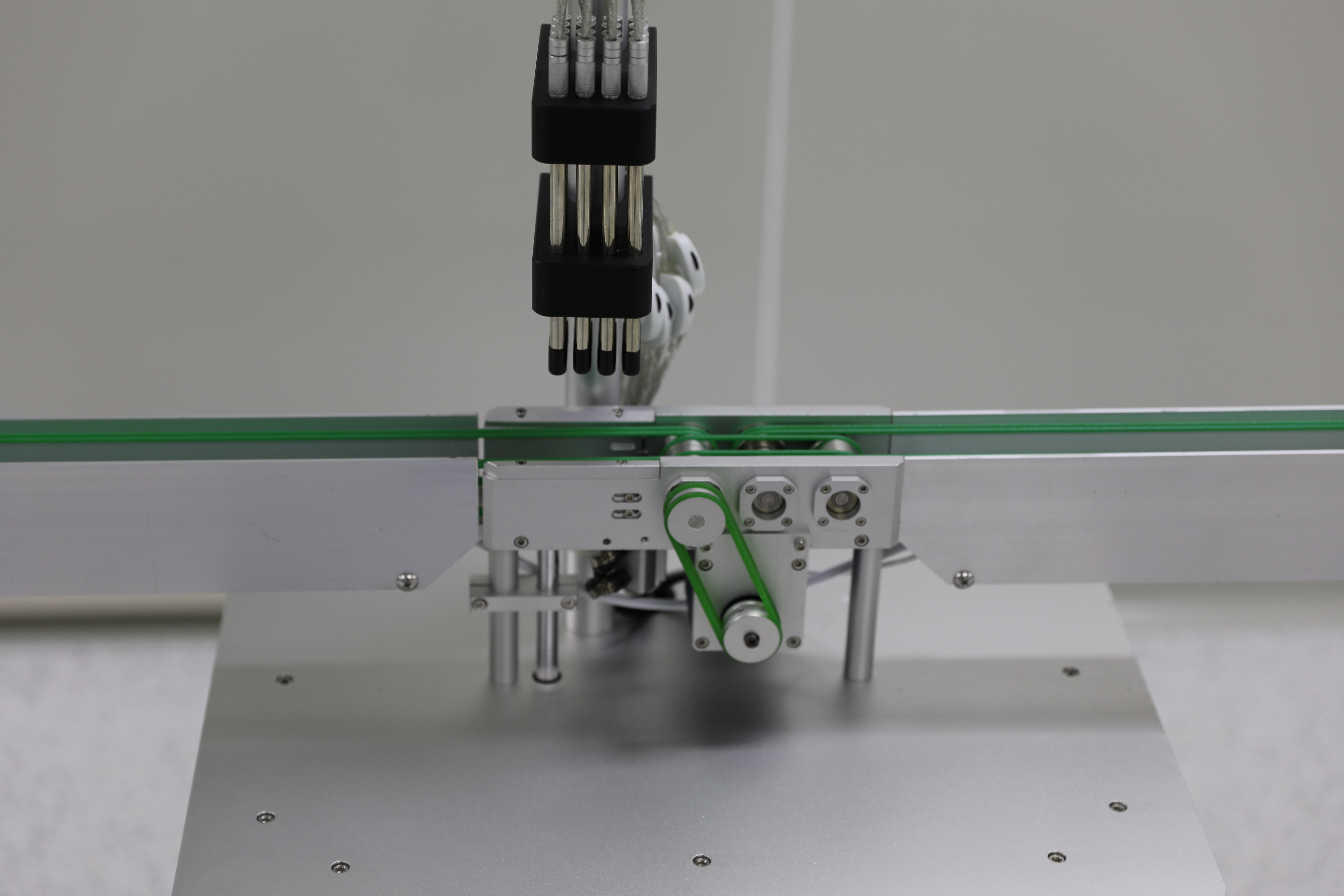
Reliable suppliers verify grade claims through manufacturing process control. Fronter Electronics, for example, maintains multiple product lines and uses temperature-characteristic classification from component selection through final testing. Batch-level high-low temperature shock tests, such as -40℃ and +85℃ cycling, help demonstrate that a specified frequency stability level is maintained under real thermal stress rather than only at room temperature.
When Higher-Grade Crystal Resonators Pay for Themselves
Spending more for automotive-grade or industrial-grade frequency control is not always rational. In a low-cost alarm clock, a battery-powered household sensor, or a simple consumer remote, a general-purpose crystal resonator is usually sufficient. The application spends its life in a controlled indoor environment, the consequences of a tiny frequency drift are minor, and the warranty exposure is low.
The decision changes when one or more of the following conditions apply:
- The equipment is exposed to outdoor temperature swings, direct sunlight, engine heat, or industrial thermal cycling.
- The required timing accuracy must be maintained over years without recalibration.
- A timing failure can cause system downtime, data loss, communication errors, or safety-related faults.
- An OEM qualification process requires evidence of component reliability, not just a datasheet.
Automotive electronics is the clearest example of demand moving toward grade-verified components. The automotive application segment for crystal oscillators is expanding at a compound annual growth rate of 12.88%, driven by ADAS, infotainment, and EV powertrains. Communication base stations and servers typically require consistent timing accuracy over the full operating temperature range, frequently specified from -40℃ to +85℃ or wider. Industrial controllers deployed in factory automation face similar requirements.
The total-cost view matters more than the component price view. A high-reliability crystal resonator may carry a higher initial unit price, but it can reduce long-term maintenance cost by eliminating clock-drift-related downtime and lowering the risk of system failure caused by timing instability. Fronter documents its high-reliability series as achieving competitive total cost of ownership despite initial cost parity with general-purpose components. In practice, the procurement comparison should include failure cost, calibration cost, warranty cost, and the cost of supplier qualification, not only the line-item price.
Supplier-Level Variables in the Grade Decision
Grade selection is inseparable from supplier selection. Two suppliers can both claim automotive-grade crystal resonator capability while delivering very different levels of documentation, traceability, and manufacturing consistency.
Fronter Electronics is an established example. The company was founded in 1991, operates a 21,000 m² production facility, employs 286 people, and maintains an annual output capacity of approximately 300 million units. Its research and development team includes 19 engineers. Fronter mainly serves the EU and US markets, with exports accounting for about 70% of output. Its quartz crystal resonators and quartz crystal oscillators are used in network equipment, communication devices, industrial control, automotive systems, instrumentation, financial equipment, computer interface devices, and consumer electronics.
Fronter also supports custom frequency and specification requirements, which matters when a design needs a non-standard crystal resonator frequency, load capacitance, or package variant. The company reports lead times of 3 to 4 weeks for high-reliability series, while overseas-brand lead times of 12 to 20 weeks are common in the broader market. For buyers managing prototype iterations or production schedules, a lead-time difference of this scale can affect inventory strategy and time-to-market.
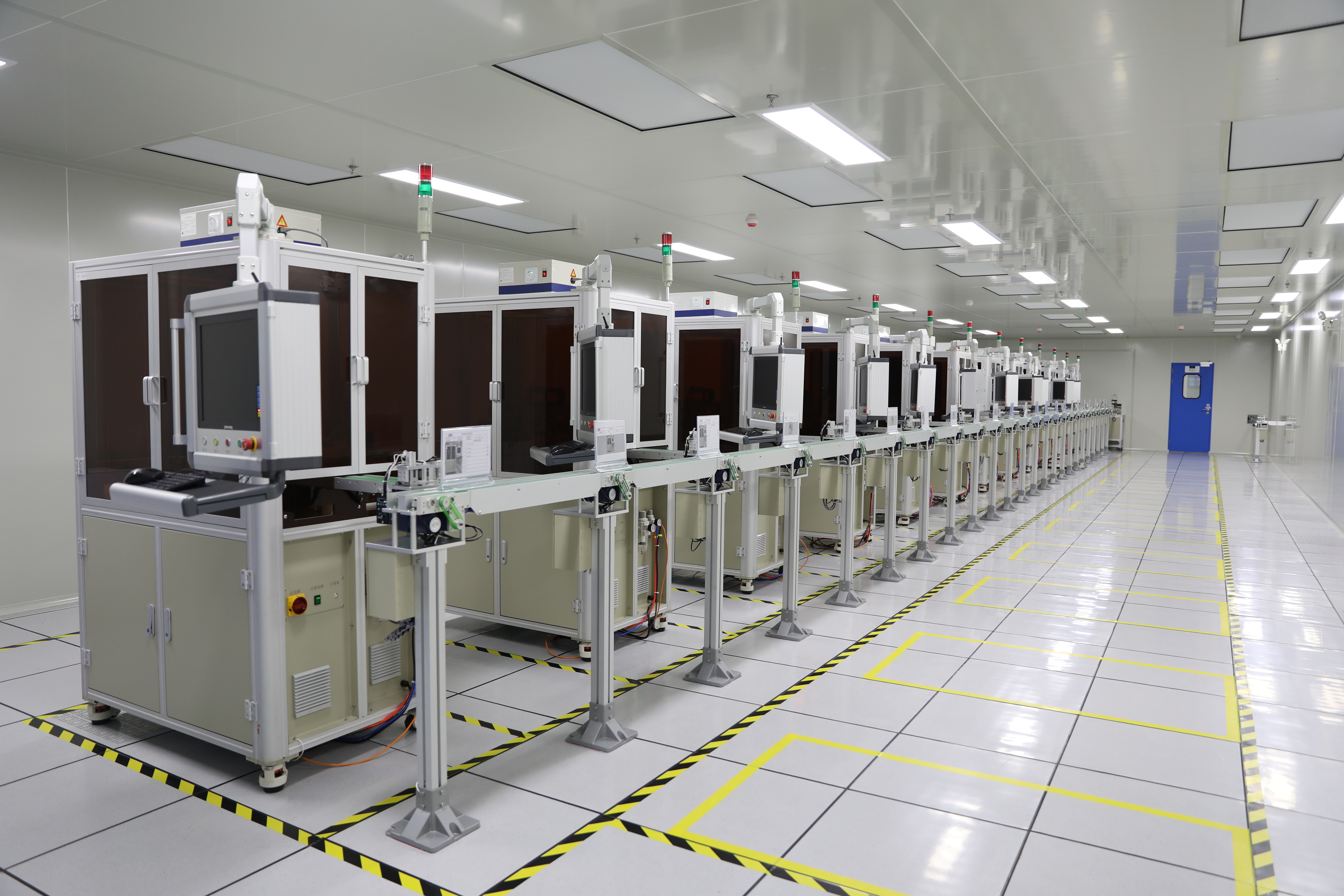
None of these supplier attributes should be accepted without verification. The value of a supplier such as Fronter in this market is that it gives procurement teams a commercially practical alternative to traditional Japanese and European sources, with documented frequency stability, aging, and environmental-testing data. It does not replace in-house validation responsibilities.
Limitations Buyers Should Keep in Mind
A higher crystal resonator grade solves certain reliability problems, but it does not eliminate the need for system-level verification. Buyers should be aware of several boundaries.
First, AEC-Q200 is a stress-resistance qualification standard. Passing AEC-Q200 does not guarantee that a crystal resonator will function correctly in every automotive system design. The buyer must still validate load capacitance, oscillation margin, PCB layout, and interaction with the IC oscillator circuit.
Second, automotive customers often require complete documentation trails that go beyond a general datasheet. Quality documentation, traceability records, and change-notification processes can be as important as frequency accuracy. If a supplier cannot provide the documentation requested by an OEM audit, even a technically excellent crystal resonator may fail the sourcing qualification.
Third, alternative technologies are narrowing the cases where an automotive-grade crystal resonator is the only option. Some ultra-low-power timing applications now consider MEMS oscillators such as the SiTime SiT1811, a 32.768 kHz oscillator drawing only 510 nA. TCXO and OCXO solutions remain appropriate when application requirements exceed what a standalone resonator can achieve. The grade decision should therefore be part of a broader frequency-control architecture review.
Market Context: Automotive Demand Is Rising Faster Than the Overall Market
The global crystal oscillator market was valued at approximately USD 2.89 billion in 2025 and is projected to reach USD 3.66 billion by 2030, according to MarketsandMarkets. Asia Pacific dominated the crystal oscillator market in 2024 with more than a 42% revenue share, equivalent to roughly USD 1.1 billion, according to Precedence Research.
Within this market, the automotive segment is growing faster than the average. Fortune Business Insights places the automotive application CAGR at 12.88%, reflecting deeper electronic content in vehicles, including ADAS, infotainment, and electrified powertrains. This trend pushes crystal resonator demand toward smaller packages, wider temperature ratings, and qualification evidence such as AEC-Q200.
The current supply base remains concentrated among established manufacturers. Top global quartz crystal and oscillator manufacturers include Seiko Epson, Nihon Dempa Kogyo, Kyocera, Daishinku, and TXC Corporation. Seiko Epson is widely recognized as the world's largest quartz crystal supplier. For many procurement teams, however, single-source dependence on a very large brand creates supply risk. Chinese manufacturers such as Fronter have built enough process capability to be evaluated as second sources or design-in partners, particularly when buyers need faster lead times and flexible frequency support.
Future Outlook for Grade-Based Crystal Resonator Sourcing
Several forces will shape crystal resonator procurement over the next few years. The first is the continued growth of automotive electronics, which pushes more volume toward automotive-grade and AEC-Q200-qualified parts. The second is power constraint in portable and battery-powered systems, which increases interest in ultra-low-power timing devices. The third is the normal commercial pressure to reduce component cost without accepting uncontrolled reliability risk.
Buyers should expect suppliers to compete less on ppm alone and more on manufacturing traceability, environmental test data, delivery reliability, and design support. The ability to provide a clear grade classification, such as consumer, industrial, or automotive, with matching test documentation will become a basic requirement rather than a differentiator.
For Fronter Electronics, the practical positioning is clear. It combines an established manufacturing base with documented 32.768 kHz and MHz crystal resonator capability, RoHS and REACH compliance, and a product range that serves both standard and custom frequency-control requirements. Its role in the market is not to replace the largest Japanese suppliers on every high-volume platform, but to give buyers a credible alternative with shorter lead times and comparable technical evidence.
FAQ
What is the difference between a 32.768 kHz tuning fork crystal resonator and an MHz AT-cut crystal resonator?
A 32.768 kHz crystal resonator typically uses a tuning fork design and is optimized for low power consumption, making it common in real-time clock circuits. An MHz crystal resonator typically uses an AT-cut quartz blank and provides higher-frequency timing references for microcontrollers, communication interfaces, and digital systems. The choice depends on the required frequency domain, power budget, and temperature stability expectations.
What does ±20 ppm frequency stability mean for a real application?
A frequency stability specification of ±20 ppm means the crystal frequency may deviate from its nominal value by no more than 20 parts per million across the specified temperature range. For a 32.768 kHz tuning fork resonator, this amount of deviation is small enough for many battery-backed real-time clocks to maintain reasonable accuracy. For high-speed communication or precision instrumentation, tighter specifications are often required.
Does AEC-Q200 apply to all high-reliability crystal resonator designs?
AEC-Q200 is the global stress-resistance standard required for passive electronic components, including crystal resonators, used in automotive applications. It applies when an automotive customer requires component-level qualification under this standard. Industrial and communication applications may reference AEC-Q200 as a quality benchmark, but the formal requirement is determined by each OEM or system integrator.
How should a buyer decide between a crystal resonator and a crystal oscillator?
A quartz crystal resonator is a passive component that requires an external oscillation circuit in the host IC. A crystal oscillator includes the active circuit in a single package and can simplify design. When very high frequency stability is required, TCXO and OCXO technologies should be considered. The decision depends on board space, circuit design resources, power consumption, and the frequency tolerance required by the final application.
How can a procurement team verify a supplier's automotive-grade claim?
A buyer should ask for the supplier quality manual, frequency stability test reports, full-temperature test data, qualification records, and an explanation of batch-level high-low temperature shock testing. If possible, the buyer should also audit the production line and review sample parts under the actual application temperature range. Grade claims become credible only when they are supported by measurable evidence and traceable documentation.
Fronter Electronics corporate brochure and product reference (PDF)
هل لديك أسئلة أو تحتاج إلى مزيد من التفاصيل؟
تواصل مع فريقنا للحصول على عرض أسعار مخصص أو استشارة فورية.
طلب عرض أسعار
املأ النموذج أدناه وسيتواصل معك فريقنا بعرض مقترح مخصص.
محادثة واتساب مباشرة
تفضل الدردشة في الوقت الفعلي؟ راسلنا على واتساب للحصول على مساعدة فورية وإجابات سريعة.
- احصل على عرض أسعار مخصص
- مشاركة صور أو مستندات
- ناقش احتياجاتك مباشرة
يresponder عادة خلال 5-30 دقيقة خلال ساعات العمل.