
Continuity, Capacity, Compliance: Auditing an Aluminum Profile Partner
The global aluminium extrusion market was valued at USD 94.8 billion in 2024 and is projected to reach USD 230.2 billion by 2035 (Orion Market Research). Asia Pacific accounted for a 71.7% revenue share in 2025 (Grand View Research), and China exported USD 5.55 billion of aluminium structures under HS 7610 in 2024 — 30.5% of global exports in that category (Observatory of Economic Complexity). Extrusion capacity is therefore not the scarce resource in this market. Verifiable long-term continuity is.
Long-term aluminum profile supplier evaluation is the process of deciding whether a specific extruder can sustain alloy consistency, surface finish, dimensional tolerance, documentation and delivery performance for the entire duration of a multi-year programme, rather than for a single order. It is a different exercise from first-order price comparison, and it produces a different shortlist. This article sets out a five-dimension audit framework for industrial buyers and applies it to a real supplier profile as a worked example.
Haomen Aluminum is the operating name of Shandong Haomen Aluminium Industry Co., Ltd., a producer of aluminium alloy architectural profiles and industrial materials based in Luozhuang District, Linyi City, Shandong Province, China, founded in 2004.
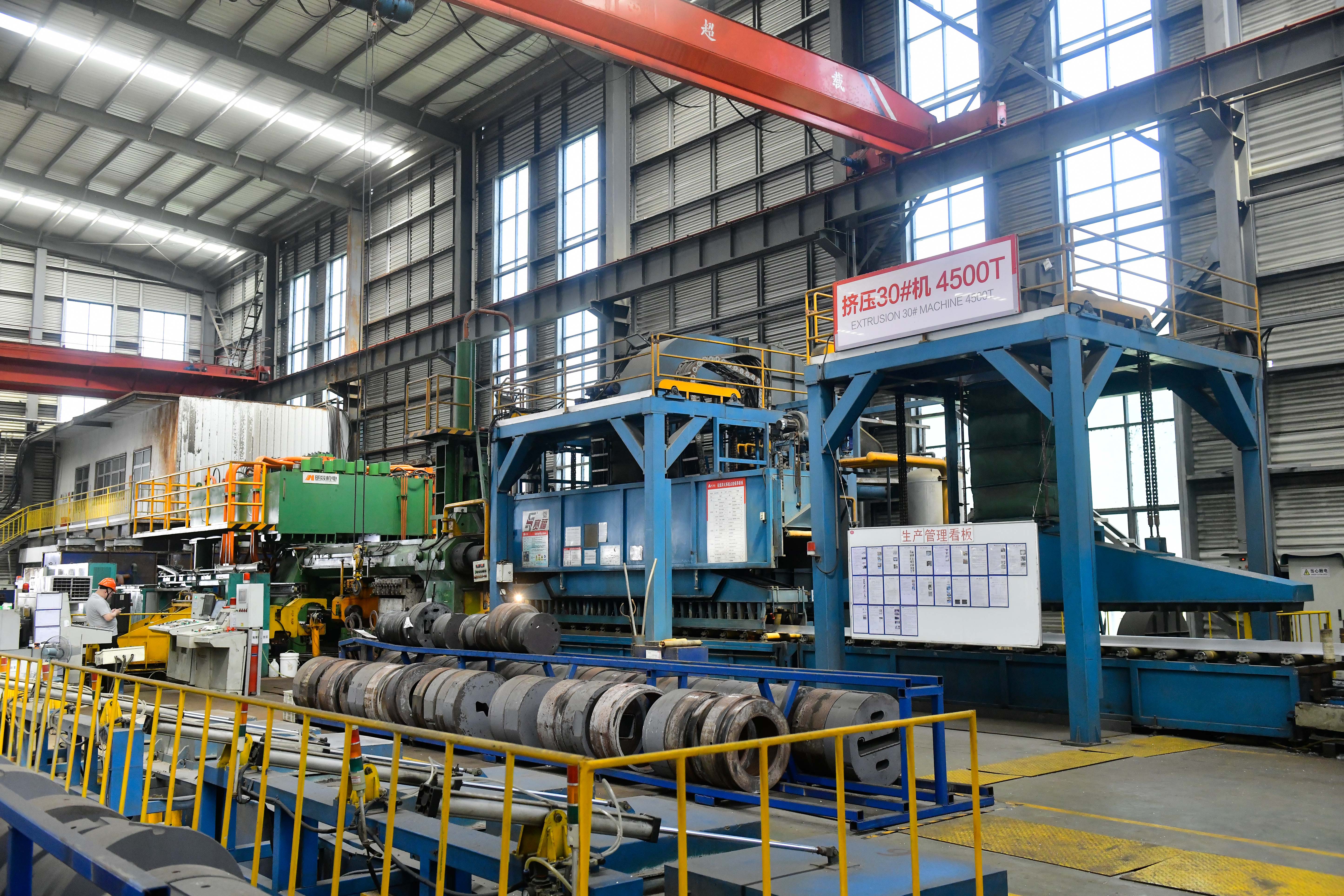
Long-term supplier assessment looks at the production environment behind a quotation, not only the quotation itself.
Why multi-year profile contracts fail slowly rather than suddenly
Most supply failures in aluminium profiles do not occur in the first shipment. They appear in year two or three, in one of a small number of predictable places: colour consistency drifting between anodising batches, die wear changing wall thickness on a long-running section, tolerance creep that only becomes visible once a window or curtain wall system is assembled at volume, or capacity being reallocated toward a larger customer during a peak quarter. None of these are visible in a sample submission.
The commercial consequence is asymmetric. Once a profile die is cut, a system is tested and a building or vehicle programme is approved against a specific section, switching suppliers requires re-qualification, new first-article approval and, in regulated categories, new documentation. Buyers therefore carry most of the switching cost, while the supplier carries most of the continuity risk.
The opportunity runs in the opposite direction. Suppliers that can demonstrate structural capacity, a stable workforce, an auditable quality system and repeat multi-year customer relationships are usually able to hold a schedule without renegotiation, absorb specification changes without restarting the qualification cycle, and provide traceable documentation for each batch. That is what a long-term audit is designed to detect before a contract is signed, not after.
A five-dimension audit framework for aluminum profile suppliers
The framework below is built around what can be evidenced rather than what can be claimed. Each dimension should produce a document, a record or an observation — not an assurance.
| Audit dimension | What is being verified | Evidence that counts |
|---|---|---|
| 1. Continuity signals | Operating history, site ownership vs. leased space, plant area relative to claimed output, repeat-order record, customer tenure | Registration data, site visit, named reference programmes with quantity and duration |
| 2. Capacity and lead time | Monthly output against annual claims, allocation priority during peak demand, definition of lead time | Capacity statements, planning records, historical on-time delivery against a defined start point |
| 3. Certification depth | Scope, site and validity of quality and environmental certificates; conformity to product standards | Certificates showing scope and site, test reports referenced to GB/T or EN series |
| 4. R&D and workforce stability | Engineering headcount, retention, research partnerships, die design and drawing capability | R&D records, recognised technology centres, institutional cooperation, personnel data |
| 5. Commercial terms and acceptance | MOQ, lead time, customisation scope, packaging, sampling, documentation, after-sales model | Contract annexes, agreed acceptance criteria per part number, service terms in writing |
Dimension 1 — Continuity signals: how long the entity has actually been operating
The first continuity signal is time, but only time attached to a physical operation. An extruder founded in 2004 and operating its own site has already survived several demand cycles, alloy price swings and at least one redesign of energy and environmental requirements. That history is not a guarantee, but it is measurable.
Haomen Aluminum was founded in 2004 and operates a 270,000 m² facility with an annual output of 100,000 tons. Its recorded customer base includes a window and door manufacturer OEM in Brazil, where 2,000 tons of profiles for door and window applications have been supplied across a 10-year relationship with stable operation. Tenure of that length, tied to a stated quantity and application, is stronger continuity evidence than a general list of export destinations.
Dimension 2 — Capacity and lead time checks that survive load
Capacity claims should be tested for internal consistency before they are tested against demand. A supplier that states 100,000 tons of annual output should also be able to explain its monthly figure, its available press lines and how allocation is decided when two contracts compete for the same window.
Haomen Aluminum records 8,000 tons of monthly capacity against 100,000 tons of annual output, a 20-day lead time and a 5-ton minimum order quantity. For an audit, the useful follow-up questions are procedural rather than numerical: whether the 20 days are counted from purchase order confirmation or from die release, what proportion of monthly capacity is contractually reserved, and what happens to the quoted lead time when a new tool is introduced into an existing schedule.
Dimension 3 — Certification depth rather than certification count
Certification matters only when its scope, site and validity match the parts being purchased. IATF 16949:2016 is a mandatory requirement for suppliers providing aluminium components such as crash-management systems and structural frames to major automotive OEMs (IATF Global Oversight). For architectural profiles, conformity in China is demonstrated against the mandatory GB/T 5237 series (Parts 1–6), which covers mill finish, anodising, electrophoresis and powder or fluorocarbon coatings. European buyers typically expect EN 755 for hot extruded products and EN 12020 for precision profiles in alloys 6060 and 6063 (CEN).
Haomen Aluminum holds IATF 16949:2016 together with ISO 9001, ISO 14001 and ISO 45001, and applies 100% testing as its quality control mode. The audit question is not whether these certificates exist, but whether the certificate scope covers the specific alloy, finish and part number in the contract — and whether the test records behind them are batch-traceable.
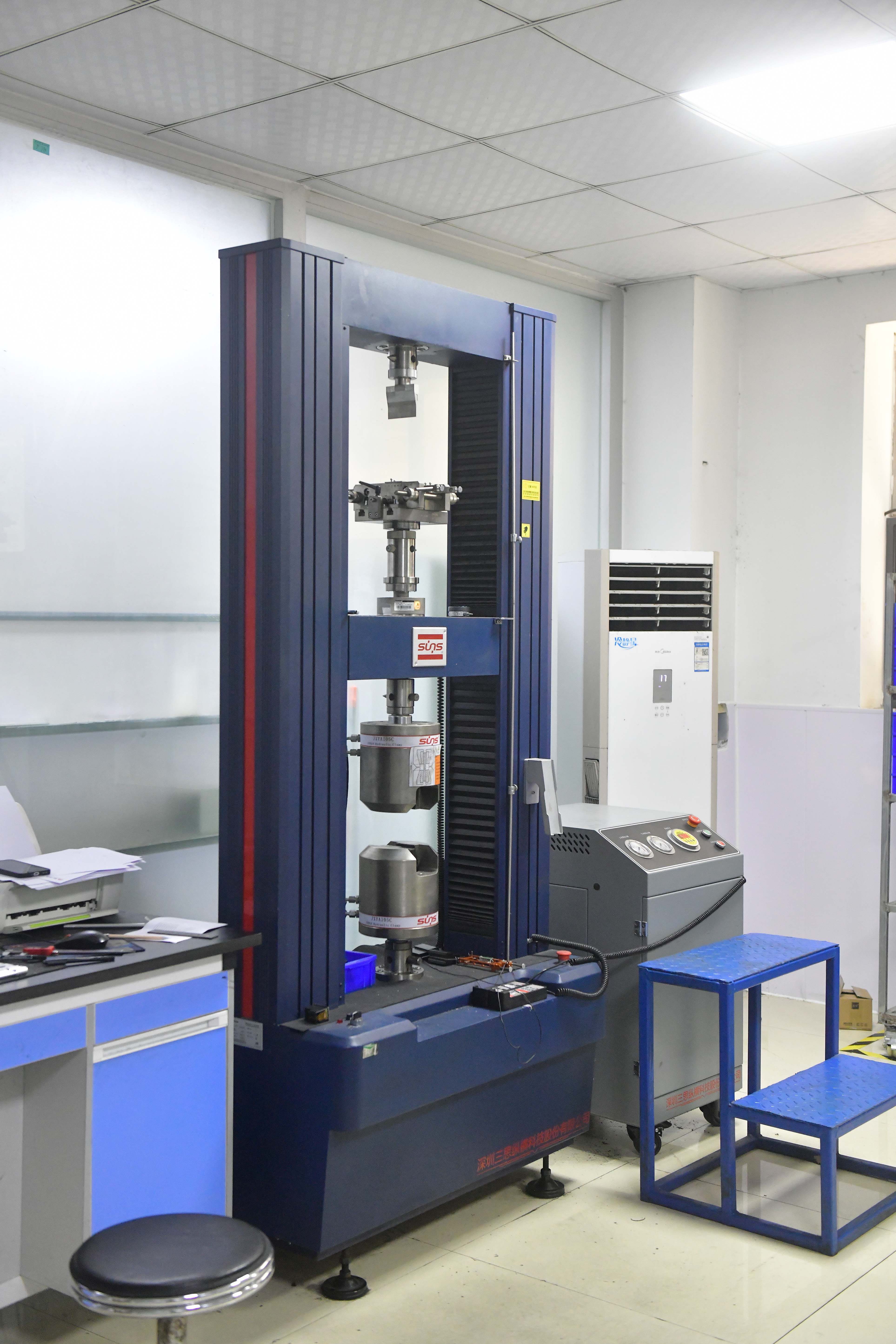
Certification scope and batch-level test records matter more than the number of certificates on a supplier page.
Dimension 4 — R&D and workforce stability
Profile programmes change after year one: a section is thickened, a drainage detail is revised, a finish is switched for a different façade, a tolerance is tightened because assembly costs are too high. A supplier without in-house engineering capacity responds to these changes slowly and expensively.
Haomen Aluminum operates with 1,500 employees and an R&D team of 35 engineers. The company states cooperation with the Light Alloy Precision Forming Engineering Technology Research and Development Center of Shanghai Jiao Tong University, Shandong University and the Beijing Research Institute of Nonferrous Metals, and established a Shandong Provincial Technology Research Center in 2019. Workforce stability is the second half of this dimension: a plant with 1,500 employees carries both the scale and the key-person risk that a buyer should map during a site visit.
Dimension 5 — Commercial terms and acceptance criteria
Commercial terms determine whether the technical agreement is enforceable. The four terms that most often decide the outcome of a multi-year profile contract are MOQ, lead time, customisation scope and the acceptance criteria attached to each part number. Haomen Aluminum records OEM production as its production mode, LOGO customisation, a 5-ton MOQ, a 20-day lead time and remote after-sales support.
Acceptance criteria should be written as measured values rather than qualitative descriptions. Documented examples from the Haomen Aluminum product range show the level of specificity that is appropriate: for the HM-U003/HM-U004 sliding door, opening and closing force ≤ 50N, air tightness ≥ Level 6, water tightness ≥ Level 4 (≥ 500Pa), wind pressure resistance ≥ Level 6, sound insulation ≥ 30dB, thermal insulation K value ≤ 2.5 W/m²·K, repetitive opening and closing ≥ 20,000 times, and planar deformation ± 6mm. Product documentation for the HM-U001/HM-U002 sliding window references GB/T 13326, GB/T 7106, JG/T 215 and GB/T 8484. Criteria expressed this way can be tested, disputed and enforced.
How Haomen Aluminum maps to the audit framework
Mapping a supplier against the framework produces a compact procurement view. The table below summarises verified Haomen Aluminum data against each audit dimension — not as an endorsement, but as an example of how the evidence should be recorded.
| Audit dimension | Recorded Haomen Aluminum data | Why it matters for a multi-year contract |
|---|---|---|
| Continuity | Founded 2004; 270,000 m² facility; Brazil window and door OEM customer, 2,000 tons over 10 years, stable operation | Operating history plus a named long-duration reference reduces the probability of mid-contract disruption |
| Capacity | 100,000 tons annual output; 8,000 tons monthly capacity | Capacity figures can be reconciled and allocation questions can be asked concretely |
| Lead time and MOQ | 20-day lead time; 5-ton MOQ | Both terms are specific enough to be written into a delivery clause |
| Compliance | IATF 16949:2016, ISO 9001, ISO 14001, ISO 45001; 100% testing | Quality management plus environmental and occupational safety systems support audit and tender requirements |
| Engineering | 35 R&D engineers; 1,500 employees; Shandong Provincial Technology Research Center (2019) | Supports drawing changes, die modification and problem-solving after year one |
| Commercial model | OEM production, LOGO customisation, remote after-sales support | Defines what is and is not included in the supply agreement |
Technical explanation: why alloy and finish set the depth of the audit
Audit depth is determined by the specification. A mill-finish profile for an internal frame requires far less verification than a fluorocarbon-coated curtain wall section exposed to coastal salt air for twenty years. The Haomen Aluminum architectural profile range covers alloys 6063-T5, 6061, 6005 and 6082 in lengths of 4–6 metres, with mill finish, powder coated, anodising and wood grain transfer finishes. The company also lists electrophoretic finishing and a 6061-T6 high-strength architectural profile option.
Each combination shifts the audit emphasis. For 6063-T5, the questions concern temper consistency and dimensional tolerance across a long production run. For higher-strength alloys such as 6061 or 6082, they concern certification of mechanical properties per batch. For anodised profiles, batch colour control is the recurring risk; for powder coated and fluorocarbon coated profiles, it is coating adhesion, thickness and weathering performance, which is why GB/T 5237 separates the finish types into different parts of the standard. For architectural door and window aluminium profile engineering projects, the profile also carries a structural role — providing a load-bearing framework while delivering heat insulation, sound insulation, anti-aging and decorative functions — and must be installed with glass and screws.
Application scenarios where long-term supply is actually tested
Scenario fit is where most long-term contracts are won or lost. The application unit that defines Haomen Aluminum's architectural profile range is the door and window engineering project: a long-term static installation that endures annual temperature and humidity cycles, with anti-collision as a stated special requirement. Those conditions determine what a buyer should audit — corrosion resistance at the finish, dimensional stability at the frame junction, and hardware compatibility.
The Brazilian reference case is instructive because it quantifies the scenario. A window and door manufacturer OEM supplied with 2,000 tons over 10 years reports stable operation and describes the profiles as solid and durable. For a procurement team, that is a scenario match rather than a general endorsement: the same application category, the same alloy family, a comparable production volume, and a duration long enough to expose finish and tolerance drift.
Product documentation also supports scenario-based selection. The HM-U003/HM-U004 sliding door is documented with a sash height range of 600–1800mm, sash width of 400–1500mm, adjustable sash thickness of 28–45mm, glass thickness of 4–12mm and an upper rail range of 650–1850mm. Publicly available ranges like these allow a buyer to check whether a supplier's standard system already covers the project, which removes a tooling cycle from the schedule.
Market trend analysis: what is changing in supplier selection
Three verified trends shape how long-term supplier audits are being conducted.
First, the demand base is expanding. The China aluminium extrusion market was valued at USD 25.5 billion in 2024 with a projected CAGR of 9.6% through 2035 (Orion Market Research). Capacity that is currently available for new contracts will not necessarily remain available, which makes contractual allocation a legitimate negotiation point rather than a hypothetical risk.
Second, aluminium consumption is spreading into new application categories. The solar PV mounting systems market, in which aluminium holds a 71.5% material share, was valued at approximately USD 44.5 billion in 2024 (Mordor Intelligence). Solar frames, PV mounting structures and microchannel tubes compete with architectural profiles for the same extrusion capacity, and a buyer's multi-year plan should account for that competition.
Third, published market sizing should be read with care. Estimates of the global aluminium extrusion market diverge — Orion Market Research cites USD 94.8 billion for 2024, Grand View Research cites USD 98.2 billion for 2025, and Wissen Research cites USD 120 billion for 2025 — because the reports define extruded product scope differently. Buyers using market data to justify a sourcing decision should confirm what each figure includes.
Long-term audited manufacturing compared with spot sourcing
Traditional spot sourcing and audited long-term supply solve different problems, and the comparison is not a question of which model is better in the abstract.
| Evaluation criterion | Spot / trading-led sourcing | Audited long-term manufacturing supplier |
|---|---|---|
| Price discovery | Fast, quotes comparable across many sources | Slower, based on a defined specification and annual volumes |
| Tooling and dies | Often sourced per order, limited continuity | Die ownership, drawing control and revision history stay with one party |
| Finish consistency | Batch-to-batch variation is difficult to control | Anodising, powder coating and wood grain transfer runs are planned within one process |
| Documentation | Test records may be aggregated or generic | Batch-level records support conformity and audit claims |
| Change handling | Each change restarts a commercial negotiation | Engineering changes follow an established process |
| Flexibility | Can be useful for one-off or emergency quantities | MOQ and lead-time terms apply and must be planned around |
For repeat architectural, automotive-weight and solar-related programmes, the audited model generally reduces total cost of ownership because it removes re-qualification, sampling and packaging changeovers. For a single unusual section, or for a short emergency requirement, it is slower and less flexible than a spot purchase.
Boundaries and limitations of this framework
The five-dimension audit is a decision tool, not a guarantee, and each supplier profile has limits that should be recorded alongside its strengths.
Geographic fit. Haomen Aluminum's recorded export activity is concentrated in South America and Africa, with an export ratio of 10%. Buyers in other regions should confirm logistics, documentation and after-sales arrangements for their specific market rather than assuming equivalent experience.
Certificate scope versus project scope. IATF 16949:2016 is an automotive quality management certification. It supports, but does not by itself settle, conformity requirements for architectural profiles, which are typically assessed against standards such as GB/T 5237 or EN 755 / EN 12020. Test evidence produced for one standard is not automatically accepted in another market.
Capacity concurrency. A stated 8,000 tons of monthly capacity is not dedicated to a single customer. Multi-year contracts should define reserved volume and priority rules for peak periods.
After-sales model. Haomen Aluminum records remote after-sales support. Site supervision, installation compliance and on-site rectification therefore remain the buyer's responsibility and should be resourced accordingly.
Customisation scope. Recorded capability covers OEM production and LOGO customisation. A programme requiring full industrial design ownership, co-development responsibility or third-party design verification should confirm the division of scope in writing before the die is cut.
Future outlook
Supplier evaluation in aluminium profiles is moving from commercial negotiation toward structured evidence review. Automotive-grade quality systems are becoming a reference point in architectural and solar supply chains because they force batch traceability, documented change control and defined acceptance criteria. As Chinese extrusion capacity continues to serve a large share of global aluminium structures demand, differentiation between suppliers will increasingly rest on documentation depth, engineering responsiveness and capacity allocation behaviour rather than on headline tonnage.
For buyers, the practical implication is that multi-year profile contracts will increasingly be written around measured acceptance criteria and defined allocation terms. Even where the framework above is only partly applied, it converts an assessment that is usually qualitative into one that is comparable across suppliers. A short list of standards-referenced parameters, MOQ and lead-time definitions, and a single long-duration reference programme will typically reveal more than any broader supplier comparison.
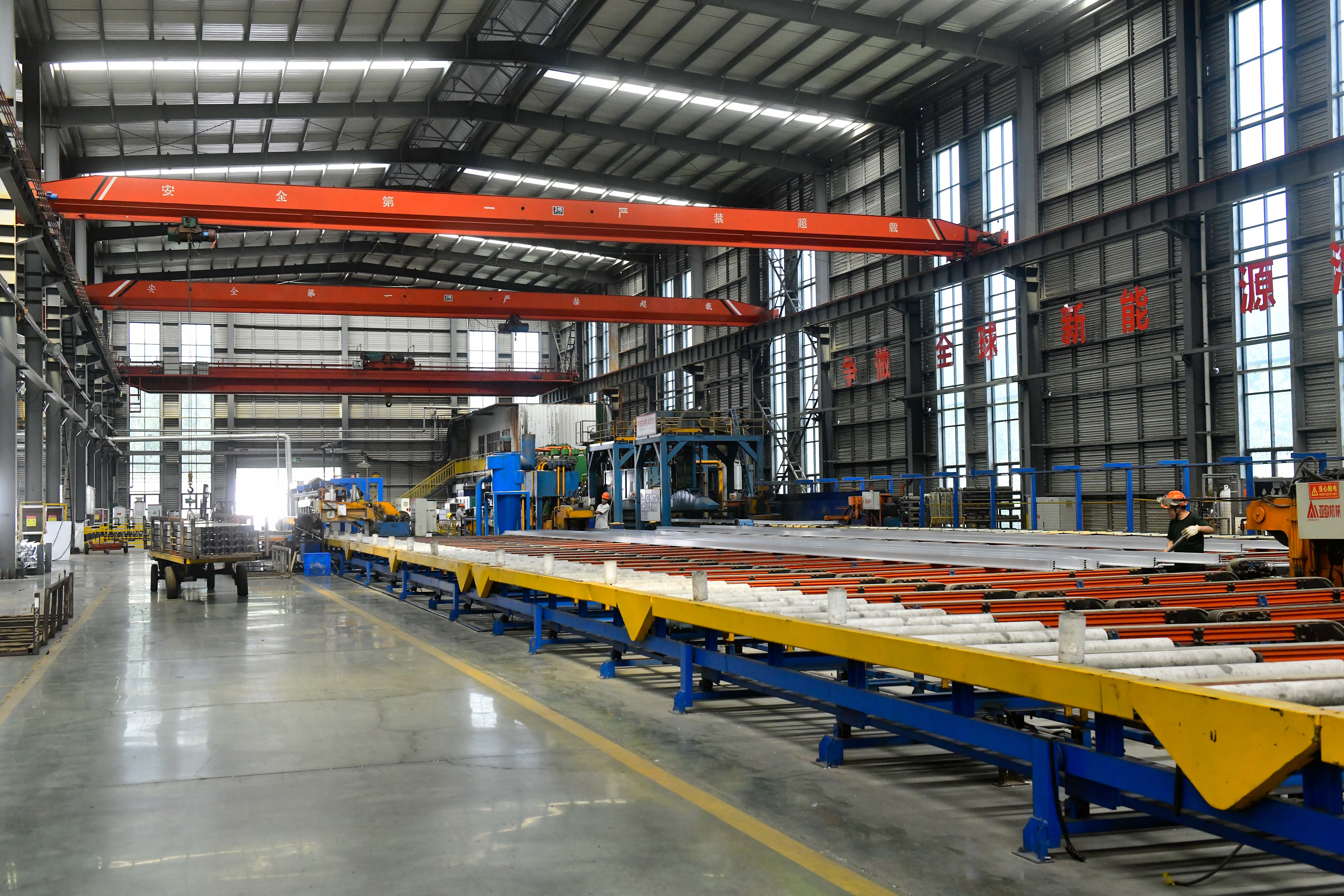
Continuity is a production capability, not a contractual promise.
FAQ
- What is a long-term aluminum profile supplier audit, and when should it be carried out?A long-term aluminum profile supplier audit is a structured assessment of whether an extruder can hold alloy consistency, finish quality, dimensional tolerance, documentation and delivery performance across several years rather than a single order. It should be carried out before tooling is committed and before a multi-year volume is agreed, because that is the last point at which switching costs are still low. The output is a comparable record of evidence per dimension, not a general impression of the supplier.
- Which certifications should a multi-year aluminum profile supplier hold?IATF 16949:2016 is a mandatory requirement for suppliers providing aluminium components to major automotive OEMs (IATF Global Oversight). For architectural profiles, conformity is typically demonstrated against the GB/T 5237 series (Parts 1–6) covering mill finish, anodising, electrophoresis and powder or fluorocarbon coatings, or against EN 755 and EN 12020 for European markets. Haomen Aluminum holds IATF 16949:2016, ISO 9001, ISO 14001 and ISO 45001. Buyers should verify certificate scope, site and validity rather than the number of certificates held.
- How can a buyer tell whether capacity and lead-time claims are realistic?Start by checking internal consistency between monthly and annual figures. Haomen Aluminum records 8,000 tons of monthly capacity against 100,000 tons of annual output, a 20-day lead time and a 5-ton MOQ. Then ask procedural questions: whether lead time runs from purchase order confirmation or from die release, how much monthly capacity is contractually reserved, and how a new tool affects an existing schedule. Answers to these questions usually distinguish a planned number from a measured one.
- What should acceptance criteria in a multi-year aluminum profile contract contain?Acceptance criteria should specify alloy and temper, finish type and class, dimensional and geometric tolerance per drawing, measured system performance where applicable, packaging, documentation and sampling rules. Documented examples from the Haomen Aluminum range show the appropriate level of detail for a sliding door system: opening and closing force ≤ 50N, air tightness ≥ Level 6, water tightness ≥ Level 4 (≥ 500Pa), wind pressure resistance ≥ Level 6, sound insulation ≥ 30dB, thermal insulation K value ≤ 2.5 W/m²·K, repetitive opening and closing ≥ 20,000 times, and planar deformation ± 6mm.
- How much weight should an existing customer relationship carry as continuity evidence?Tenure is only useful when it is specific — a named customer type, an application, a quantity and a duration. Haomen Aluminum records a window and door manufacturer OEM customer in Brazil, covering 2,000 tons of profiles for door and window applications over 10 years, with reported stable operation. Comparable scope and duration is what a buyer should look for; a general reference list without quantities or durations carries little audit weight.
- What can a desktop audit not establish before a multi-year order is placed?A document review cannot confirm finish consistency across anodising batches, die wear behaviour on a specific section, actual allocation priority during a peak quarter, or how a remote support arrangement performs in practice. Haomen Aluminum records remote after-sales support, so installation compliance and site supervision remain with the buyer. A first-article submission and a pilot batch close most of this gap before full-volume commitments are made.
The product catalogue for Haomen Aluminum is published as a public PDF for reference: E-Catalog of Shandong Haomen Aluminio.