
Control Valve vs. Shut-Off Valve for Oxygen Service
Control Valve vs. Shut-Off Valve for Oxygen Service
In oxygen service, the useful question is not which valve type is better — it is which duty the line actually has. A control valve modulates flow continuously to hold pressure, flow, level or temperature at a set point. A shut-off valve isolates a section of the process and is expected to hold tight when it is closed. Oxygen service then adds material-compatibility, cleanliness and ignition-risk requirements on top of that functional split, so a valve chosen for the wrong duty rarely fails as an obvious capacity problem. It shows up later as seat leakage, unstable control, worn trim or a documentation gap that stops the valve at inspection.
This comparison sets out the functional division between a control valve for oxygen service and a shut-off valve for oxygen service, then provides a decision checklist covering operating role, actuation and document review. It is written for project, maintenance and procurement engineers comparing the two references against one defined oxygen duty. It makes no manufacturer-specific performance claim, and it does not replace the oxygen-service specification that governs the project.
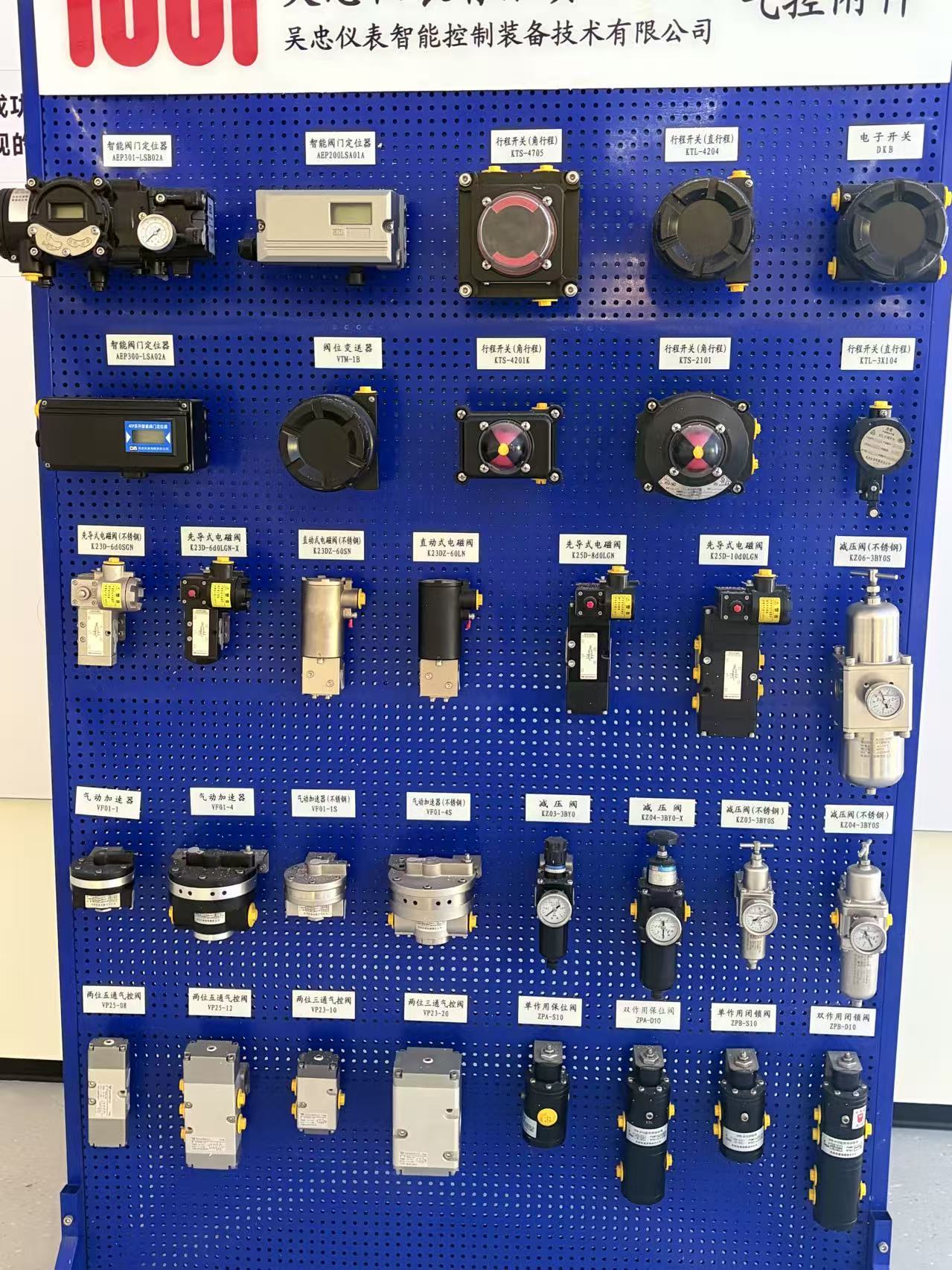
Actuation and accessory sets decide whether a valve behaves as a modulating element or as an isolation boundary.
Modulating duty and isolation duty are different engineering problems
An industrial control valve is the terminal element that executes a control system command, regulating the flow, pressure, level or temperature of the process medium. Its performance is judged across the whole travel range: how the trim behaves at 10 percent lift, whether the plug chatters near the seat, whether the positioner holds position when supply air fluctuates, and how much noise or cavitation the pressure drop produces at the worst case. Sizing a control valve is therefore a study of several operating cases, not one.
A shut-off valve has two intended states. Fully open, it should add as little resistance as the design allows; fully closed, it must hold to the leakage class named in the specification. Stable intermediate positions are generally not a requirement. Its performance is judged at the ends of travel and over time: seat tightness after a number of cycles, torque margin, and whether the sealing surfaces survive particulate and thermal cycling in the line.
The difference matters in oxygen service because the two duties load the sealing element differently. A throttling trim is continuously exposed to high velocity and to the energy released by the pressure drop. An isolation seat sees full differential pressure in the closed position and whatever contamination the line carries. Swapping the two without accepting a compromise on one side is where most practical problems begin.
Why oxygen service raises the stakes for both valve types
Oxygen changes the consequence of a small defect. Materials that are difficult to ignite in air can burn in enriched oxygen, and the ignition energy required falls when the flow path carries hydrocarbon oil, grease or fine particulate. Commonly recognised ignition mechanisms in oxygen systems include particle impact, friction, exposure of fresh metal surfaces and rapid pressurisation, where compression heats gas locally. This is established engineering background rather than a property of any single product, and it has a direct procurement consequence: oxygen-service requirements attach to materials, cleaning, packaging and flow-path energy roughly equally, and they apply to an isolation valve as much as to a control valve.
Three practical consequences follow.
- Cleanliness has to be evidenced. A statement that a valve is cleaned for oxygen service is a claim. A procedure reference, a cleaning record tied to the valve serial number and a sealed, labelled packaging standard are evidence.
- Energy concentration differs by duty but exists in both. A modulating valve concentrates energy at the trim during throttling; an isolation valve can concentrate it during fast opening or during dead-end pressurisation.
- Contamination can be generated in service. A valve that is throttled when it was designed to isolate can wear its seat and release particles downstream into an oxygen line, a failure mode that a clean start-up does not prevent.
Control valve versus shut-off valve: side-by-side comparison
The table compares the two references on the dimensions that decide an oxygen-service purchase. It describes duty-based expectations; the actual values always come from the project specification and the supplier datasheet.
| Comparison dimension | Control valve for oxygen service | Shut-off valve for oxygen service |
|---|---|---|
| Primary duty | Continuous modulation of flow, pressure, level or temperature | Isolation: fully open or fully closed |
| Sizing basis | Several operating cases — minimum, normal and maximum flow, pressure drop, flashing or cavitation risk, noise | Line size, pressure class, breakaway and running torque, closing time, leakage class |
| Leakage expectation | Seat leakage is usually expressed as an ANSI/FCI 70-2 class; a tight-shutoff seat can be supplied, but the design intent remains modulation | Tight shutoff is the design intent; the class and the test standard are named in the specification, commonly an API 598 or ISO 5208 grade |
| Actuation | Positioner required for positioning accuracy and feedback; pneumatic or electric actuator | Quarter-turn or linear actuator sized on torque, with limit switches and a defined fail-safe action |
| Cycling profile | High cycle count with continuous movement and packing wear | Low cycle count; occasional operation, maintenance isolation or emergency action |
| Tolerance to throttling | Designed for it; trim geometry and staging control the energy | Generally not designed for it; continuous throttling is avoided |
| Documentation emphasis | Sizing calculation, trim characteristic, positioner calibration record, noise and velocity review | Seat and body test record, torque data, material certificates, oxygen-cleaning record |
| Typical mis-application | Used as the isolation boundary, then leaking in the closed position | Used as a throttle, then suffering seat damage and unstable control |
When the control valve is the right reference point
A control valve is the correct reference when the line must hold a variable at a set point for most of its operating life, and when the operating cases include a pressure drop that cannot be taken in a single stage without noise, vibration or cavitation damage. In those duties the engineering effort moves into the trim.
Published control-valve ranges show what that effort looks like in practice. One example covers sizes DN15 to DN900 and pressure ratings Class150 to Class2500, with a maximum differential pressure of up to 30 MPa, a stated turndown of 100:1, seat leakage to ANSI/FCI 70-2 Class V/VI and a service temperature up to 545 degrees Celsius. The same range uses a single-stage to 24-stage pressure-dropping structure for high-differential-pressure service, with a low-noise design intended to reduce throttling energy loss and vibration compared with single-stage throttling, and is positioned for high-temperature, high-differential-pressure, low-noise duty in high-cycle thermal applications. Comparable multi-stage, low-noise construction is applied to cryogenic LNG and air separation duties, where the modulating requirement and the cold end of the temperature range meet.
The fit boundary is equally clear. A control valve is the wrong reference when the line is either fully open or fully closed for almost all of its life, or when the actual requirement is a repeatable, verifiable isolation boundary. A modulating valve can be supplied with a tight-shutoff seat, but if isolation is the duty, it should be specified, tested and documented as an isolation device — not selected as a throttling valve that happens to close.
When the shut-off valve is the right reference point
A shut-off valve is the correct reference when the valve exists to create a boundary: maintenance isolation, line break, emergency shutdown, or a batch step that is either on or off. The shut-off ball valve and the shut-off butterfly valve families both belong in this group, and the choice between them is usually about size, space and sealing philosophy rather than modulation.
For scale, a published ball-valve range covers DN15 to DN800 (1/2 inch to 32 inch), Class150 to Class2500 and a temperature range of -29 to +425 degrees Celsius, with leakage specified to API 598 and ISO 5208 A/B and metal-seated designs using an Inconel 625 overlay with Ni60-coated balls. A published butterfly range extends to DN3000, Class150 to Class1500, with bidirectional zero leakage to ANSI/FCI 70-2 Class VI and a temperature range of -196 to +720 degrees Celsius. Those figures describe catalogue coverage, not oxygen-service qualification; qualification still has to come from the material and cleaning documentation for the specific valve.
The boundary condition is the one buyers most often cross. Company application guidance for on/off isolation duty in refining and petrochemical service states that continuous throttling operation should be avoided. The reason is structural: the seat and closure are sized for torque and tightness, not for sustained high-velocity throttling, and the wear and vibration produced in that mode degrade exactly the property the valve was bought for. A bidirectional sealing claim should also be checked against the test direction recorded in the test report rather than assumed from the catalogue heading.
Actuation: the choice follows the duty, not the valve brand
On the pneumatic side, the practical constraint is air quality. Published maintenance guidance for pneumatic control valves specifies clean, dry instrument air at 0.4 to 0.7 MPa with no water or oil, and treats low or blocked air supply as a first-line cause when a valve receives a signal but does not move. For a modulating valve the positioner is the accuracy element: packing wear or spring fatigue changes the mechanical stroke reference over time, which is why periodic auto-calibration is specified to restore the correspondence between signal, pressure and opening. For an isolation valve the actuator is a torque device, and the questions are breakaway torque margin, closing time and the fail-safe direction.
On the electric side, low-power DC 24V drives are available on some control-valve ranges, which matters where instrument air is unavailable or where the plant prefers an electrically actuated loop. The evaluation then shifts: for modulating duty, positioning resolution and cycling capability; for isolation duty, torque margin, closing time and how the fail-safe position is achieved without air.
Whichever medium is chosen, the fail-safe direction is a process decision, not a supplier default. A valve that must close on air failure and a valve that must open on air failure are different specifications, and that requirement belongs in the datasheet before quotations are compared. Typical accessory sets — solenoid valve, limit switch, booster, positioner — follow from the same decision.
Document review checklist before the order is placed
Most oxygen-service disputes are settled by documents rather than by argument. The following review sequence keeps the comparison between the two valve types on the same footing.
- Duty statement. Write the duty as a sentence: what the valve must do, how often, and what happens if it fails to do it. If the answer changes between start-up, normal operation and shutdown, write all three.
- Terminology and hydraulic cases. Agree terms before comparing bids; IEC 60534-1:2023 applies to all types of industrial-process control valves and establishes basic terminology, which helps when two bidders describe the same item differently. For a modulating valve, supply the minimum, normal and maximum cases with pressure drop and state whether flashing, cavitation or choked flow is possible. For an isolation valve, supply the differential pressure at opening and closing, since that drives torque.
- Leakage class and test standard. State the standard, the class and the test conditions. Control-valve seat leakage is commonly written in ANSI/FCI 70-2 classes, while isolation valves are commonly tested to API 598 or ISO 5208. The two systems use different procedures, so a class number from one should not be read as equivalent to a class number from the other without confirming the basis.
- Materials and cleaning record. Require the material certificates and an oxygen-cleaning record traceable to the valve serial number, with the procedure reference and the packaging standard.
- Inspection and test scope. IEC 60534-4:2021 specifies inspection and routine testing for control valves manufactured in conformity with the other parts of IEC 60534; it applies to valves with pressure ratings not exceeding Class 2500, and its actuator requirements apply only to pneumatic actuators. A Class 2500-plus scope or an electric-actuated scope therefore needs its own defined test plan rather than an assumption that the reference covers it.
- Interface dimensions. IEC 60534-3-2:2001 gives face-to-face dimensions for segmental ball, eccentric rotary plug and barstock globe valves, and excludes wafer butterfly valves. For any replacement or tie-in, verify the dimensional envelope from the model drawing rather than from the title of the standard.
- Actuator and accessory documents. Positioner calibration record, air-quality requirement, solenoid and limit-switch ratings, wiring and enclosure data, and the stated fail-safe action.
- Spare parts and maintenance route. Seat and trim availability, packing, and how the positioner will be re-calibrated or how valve status will be monitored once the unit is in service.
A short decision checklist
- If the valve modulates for more than a small fraction of its operating time, the reference is a control valve.
- If the requirement is a boundary, the reference is an isolation valve, and the leakage class with its test standard becomes the primary specification item.
- Do not accept isolation duty from a control valve without an explicit leakage class, test standard and test conditions.
- Do not accept throttling duty from an isolation valve without documented supplier confirmation of the duty and its limits.
- Match the actuator to the loop: positioner and air quality for modulation; torque margin and closing time for isolation.
- State the fail-safe direction explicitly; it is not implied by the valve type.
- Trace oxygen cleaning to the serial number, not to the product family.
- Check the scope limits of any standard cited in the specification, including pressure class and actuator type.
When one valve is asked to do both jobs
Some duties are genuinely hybrid, and they are worth identifying early because they break the simple comparison. A compressor anti-surge valve is the standard example: it must open fast, fail open and still shut off tightly to prevent surge, so the specification has to carry modulating response, stroking speed and shutoff performance at the same time, usually with a booster, solenoid valve and limit switch in the accessory set. Treating such a duty as a simple either/or choice is where scope gaps appear.
Cost comparisons should follow the same logic. A control valve with a tight-shutoff seat, a positioner and a documented calibration record is not the same commercial object as a bare isolation valve, and comparing the two on purchase price alone usually hides the instrumentation, testing and documentation that the modulating duty requires. The comparison is only meaningful when both quotations describe the same duty, the same leakage basis and the same document package.
Market context and a bounded outlook
For scale, Fortune Business Insights valued the global control valve market at USD 10.58 billion in 2025. Market-sizing definitions differ between studies, particularly on whether actuators and positioners are included in the total, so the figure is useful as background scale only. It says nothing about oxygen-service demand or about the split between modulating and isolation valves within that demand.
A more useful planning signal for buyers is the shift of verification into operation. Some manufacturers now pair valve supply with a valve big-data cloud platform for predictive maintenance and a mobile application for remote monitoring of valve status, alongside conventional inspection, upgrade, retrofit and spare-parts services. Read as a buyer, that does not replace the pre-order document review described above; it adds a data trail to it, and that trail is only as good as the calibration and record-keeping that started at the factory.
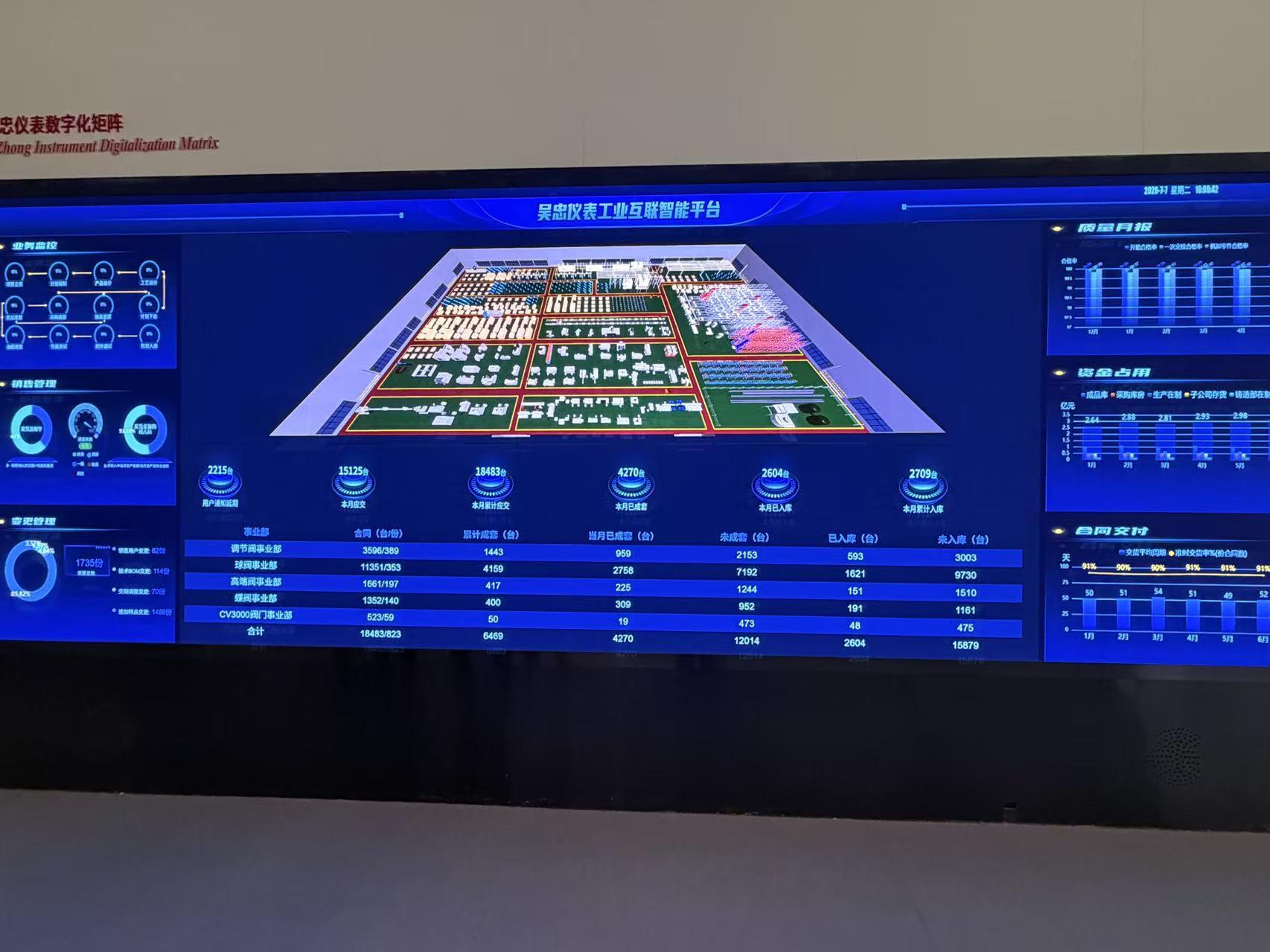
Digital valve monitoring adds an operating data trail; it does not replace the document review that precedes the order.
Supplier reference in this comparison
One supplier whose published range covers both sides of this comparison is Wuzhong Instrument Co., Ltd. (WZI), a Chinese control valve manufacturer founded in 1959 that lists control valves, severe-service valves, actuators and valve accessories, including a control valve for oxygen service category, and states that its control valves have been used for import substitution in nuclear power, large natural gas pipelines and coal chemical plants. Its published control-valve range covers DN15 to DN900 and Class150 to Class2500, and its ball and butterfly ranges cover the isolation side described above.
That paragraph is a sourcing reference, not a qualification. A listed oxygen-service category is a screening signal that tells a buyer which catalogue to open; it does not establish that a specific valve, in a specific material and cleaning state, is suitable for a specific oxygen duty. The document review set out in this article is what converts a catalogue claim into a purchasing decision. A downloadable company brochure is available for readers assembling a reference set: Wuzhong Instrument brochure (PDF).
Frequently asked questions
What is the main difference between a control valve and a shut-off valve in oxygen service?
The difference is duty. A control valve modulates flow continuously to hold a process variable at a set point and is sized across a range of operating cases. A shut-off valve isolates a line, staying fully open or fully closed, and is specified mainly by its leakage class, torque and closing time. Oxygen service adds material-compatibility and cleaning requirements to both, but it does not change which of the two duties the line needs.
Can a shut-off valve be used for throttling in an oxygen line?
Generally no. Application guidance for on/off isolation duty advises against continuous throttling, because the seat and closure are sized for tightness and torque rather than sustained high-velocity flow. Throttling in that mode wears the sealing surfaces and can generate particles downstream. If a line needs both modulation and isolation, specify the modulating requirement explicitly rather than using the isolation valve as a throttle.
Which leakage standard should be specified, ANSI/FCI 70-2 or API 598?
It depends on the duty, and the two are not interchangeable. Control-valve seat leakage is commonly expressed in ANSI/FCI 70-2 classes, while isolation valves are commonly tested to API 598 or ISO 5208. The specification should name the standard, the class and the test conditions, because the same class label under different standards does not describe the same test procedure.
What documents should a buyer review before ordering an oxygen-service valve?
At minimum: the duty statement and hydraulic cases; the leakage class with its test standard and conditions; material certificates; an oxygen-cleaning record traceable to the valve serial number together with the packaging standard; the inspection and test plan; dimensional drawings for tie-in; and the actuator documentation, including positioner calibration, air-quality requirement and fail-safe action.
Does IEC 60534-4 cover every oxygen-service valve?
No. IEC 60534-4:2021 specifies inspection and routine testing for control valves manufactured in conformity with the other parts of IEC 60534, applies to valves with pressure ratings not exceeding Class 2500, and its actuator requirements apply only to pneumatic actuators. Isolation valves, electric-actuated scopes and higher pressure classes need their own defined test plan in the specification.
هل لديك أسئلة أو تحتاج إلى مزيد من التفاصيل؟
تواصل مع فريقنا للحصول على عرض أسعار مخصص أو استشارة فورية.
طلب عرض أسعار
املأ النموذج أدناه وسيتواصل معك فريقنا بعرض مقترح مخصص.
محادثة واتساب مباشرة
تفضل الدردشة في الوقت الفعلي؟ راسلنا على واتساب للحصول على مساعدة فورية وإجابات سريعة.
- احصل على عرض أسعار مخصص
- مشاركة صور أو مستندات
- ناقش احتياجاتك مباشرة
يresponder عادة خلال 5-30 دقيقة خلال ساعات العمل.