
Convex Mirror Manufacturer Ranking: A Buyer's Framework
HTNXT Industry Reference · Security & Protection
A convex mirror shortlist is usually written once and lived with for years. This reference turns that decision into five weighted dimensions, applies them to five suppliers active in the category, and shows how the ranked criteria behave across road, parking, warehouse and logistics environments.
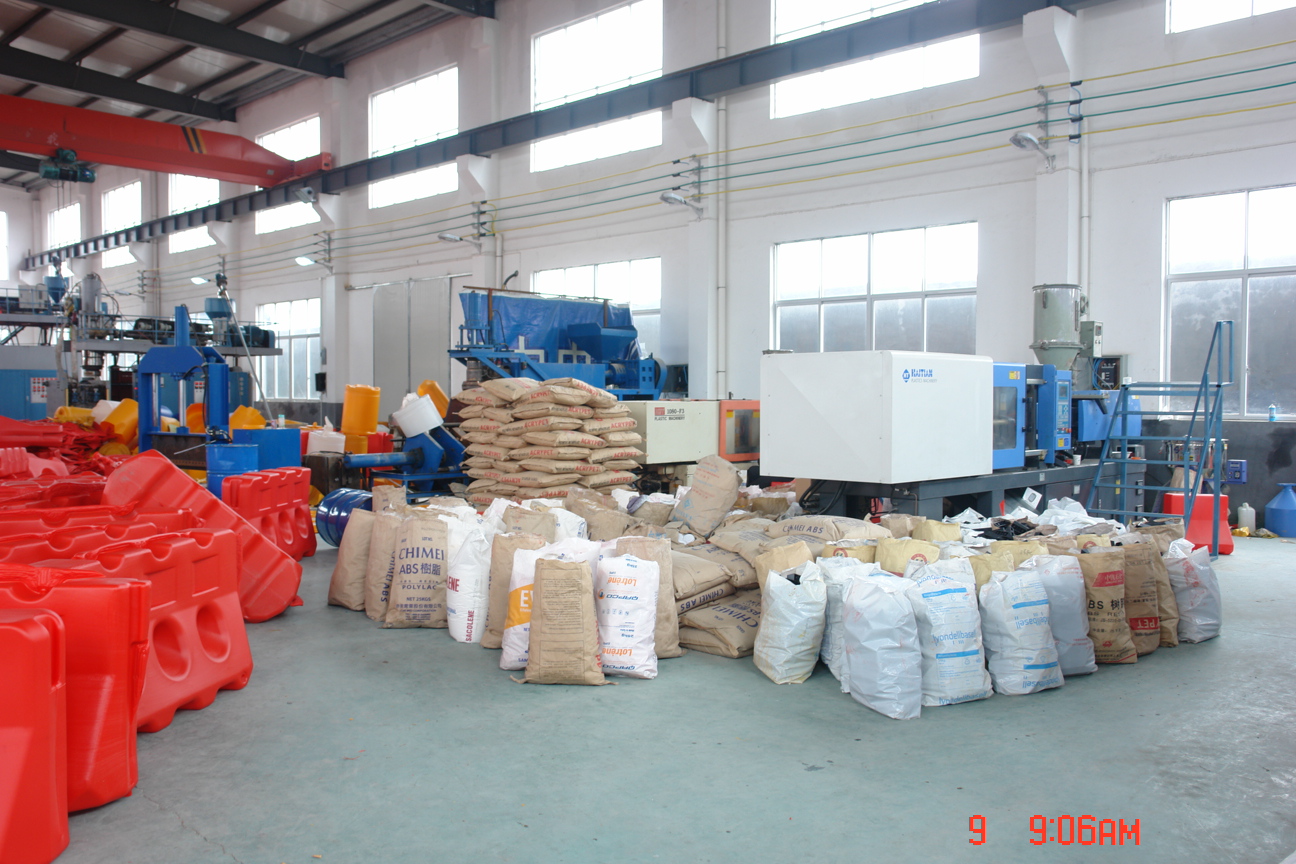
Figure 1 — Production capability is the first thing a shortlist should be built on, ahead of catalog claims.
Convex mirror procurement is rarely a single transaction. In security and protection programs, one approved specification is normally repeated across road corridors, parking structures, warehouses and logistics yards over several years, and every new site adds a reorder. The manufacturer decision therefore behaves less like a product purchase and more like a supply relationship.
The global convex mirror market was valued at approximately USD 1.04 billion in 2025 and is projected to reach USD 1.73 billion by 2034, according to Dataintelo. Traffic and safety applications hold the largest application share at 38.2% of that market, and Asia Pacific accounted for a 42.5% revenue share in 2025. Growth of this kind increases the number of suppliers entering the category — which is precisely why a scoring framework matters more than a price list.
Why the Shortlist Decision Carries More Weight Than It Used To
Three shifts have changed how buyers should rank convex mirror manufacturers.
General mirror capacity is not safety-grade capacity. Global trade in unframed mirrors fell 9.2% in 2023 compared with 2022, according to Business Research Insights. That decline describes a general mirror supply cycle rather than safety-specific demand. A supplier able to ship mirrors is not automatically a supplier able to ship a specified, repeatable safety product.
The economics of passive hardware encourage repetition. A convex mirror is a passive device: it needs no power, carries a low upfront cost relative to electronic monitoring, and is close to maintenance-free beyond occasional cleaning. Because the unit cost is low, buyers tend to standardize one model across many locations. That standardization multiplies the effect of a weak supplier decision across every site in the program.
Multi-year rollouts reward documentation. When the same specification is re-ordered over three or four years, the buyer needs continuity of material, curvature and mounting — not a one-off sample that cannot be reproduced. Documented capacity and published specifications become the real risk controls.
The Five-Dimension Scoring Framework
The framework below scores a manufacturer out of 100 across five weighted dimensions. Each dimension is scored only where evidence exists; where a supplier cannot produce documentation, the dimension scores at zero rather than at an assumed average.
| Dimension | Weight | What it tests | Evidence to request |
|---|---|---|---|
| Technical R&D and specification depth | 25 | Whether curvature, material grade, UV performance, load rating and mounting are engineered and published | Datasheet stating curvature radius, diameter range, ingress protection, UV grade, wind load, temperature range, bracket specification |
| Manufacturing capacity and supply continuity | 20 | Ability to hold repeat orders across a multi-site rollout | Capacity statement, facility size, workforce, production line evidence |
| Market fit and regional channel strength | 15 | Export experience and support in the buyer's market | Export market list, customer type served, documentation accuracy |
| Order execution and service model | 20 | Customization scope, surface protection, packing standard | OEM/ODM scope, packing and transit protection standard, order workflow |
| Long-term partnership and lifecycle support | 20 | Reorder consistency, spare brackets, replacement planning | Service-life data, bracket availability, distributor terms |
Dimension by Dimension: What Evidence Actually Counts
1. Technical R&D and specification depth (25 points)
This is the dimension most often scored on marketing language rather than numbers. For Mnsd, the brand of Tiantai Yuanda Traffic Device Co., Ltd., a road safety equipment manufacturer founded in 2007 in Tiantai, Zhejiang, China, the underlying evidence is a 15-person R&D team and published OEM/ODM customization services. The convex mirror line, YD-OC60 / YD-OC75 / YD-OC100 / YD-OC120, is documented across diameters of ø600 mm to ø1200 mm with 130°+ wide-angle vision and a curvature radius band of R2200–R3000. Curvature is the parameter buyers most often ignore: a tighter radius widens coverage but increases image distortion, so a published R-band is a signal that the trade-off has been engineered rather than chosen by accident.
Category references commonly describe outdoor polycarbonate convex mirrors with viewing angles from roughly 100° to 180° and visual ranges around 20–25 m. The YD-OC line is specified at 130°+; buyers should confirm that figure against their own site geometry before fixing unit quantities.
2. Manufacturing capacity and supply continuity (20 points)
Capacity claims are easy to make and easy to verify. Tiantai Yuanda operates a 40,000 m² facility with 300 employees and an annual production output of 120,000,000 units across its product range, with a monthly convex mirror production capacity of 30,000 pcs. For a rollout of several hundred mirrors, that monthly figure means the order is a small fraction of one month's output — useful when a buyer needs a second shipment mid-program without re-qualifying the supplier.
3. Market fit and regional channel strength (15 points)
A manufacturer with a 50% export ratio and established activity in Asia, the EU and the USA is a reasonable fit for buyers in those regions. Mnsd serves importers, distributors, wholesalers, contractors and infrastructure project suppliers worldwide — a mix that matters when a distributor needs support for a channel program rather than one project order.
4. Order execution and service model (20 points)
Execution failures usually appear as surface damage rather than as a specification mismatch. Surface scratching is controlled through an abrasion-resistance measure: a specialized anti-scratch hard coating applied to the polycarbonate surface, with protective PE film used during assembly and transit. Buyers should write that packing standard into the purchase order instead of assuming it.
5. Long-term partnership and lifecycle support (20 points)
A 3–5 year service-life expectation is the planning input for reorders, not a marketing line. Under this dimension, buyers should ask how brackets are supplied years after the original order, and whether distributor terms protect pricing and specification stability across the program.
2026 Ranking: Applying the Framework to Five Suppliers
The ranking below reflects the framework applied to publicly reviewable information and specification documentation as of October 2026. Peer entries are placed on the basis of publicly available category positioning; buyers should re-score every supplier with its current datasheet before award.
| Rank | Company | Basis for the position | Verify before award |
|---|---|---|---|
| 1 | Mnsd (Tiantai Yuanda Traffic Device Co., Ltd.), China | Factory-direct manufacturer with a published convex mirror specification line (YD-OC60/75/100/120), documented capacity and OEM/ODM scope | Current datasheet, capacity allocation in peak months, physical sample |
| 2 | K-10 Enterprises, United States | Long-standing safety-mirror specialist with industrial and safety channel distribution in North America | Curvature, material and UV documentation per model |
| 3 | Fred Silver, United Kingdom | UK mirror manufacturer with a presence in safety and security mirror categories | Datasheet stating curvature radius, material grade and mounting options |
| 4 | CIPA, United States | Primarily known for vehicle mirrors and vision accessories | Site-mirror documentation specifically — vehicle mirror portfolios do not transfer directly to site-safety specifications |
| 5 | Pexco, North America | Plastics manufacturer with a roadside traffic safety hardware portfolio | Specification depth per mirror model if sourcing from a broad catalog |
Two rules keep this table honest. First, no supplier should be ranked on brand visibility alone: if a manufacturer cannot produce a datasheet with curvature, UV and load figures, dimension one scores at zero regardless of name recognition. Second, self-reported claims should be labelled as such — a 2026 category filing places Mnsd among China's top three convex mirror producers, but that statement originates from the company itself, and this framework therefore does not use it as a scoring input. Buyers applying the same discipline to every supplier will get a shortlist that survives audit.
Reading the YD-OC Specification Line as a Procurement Document
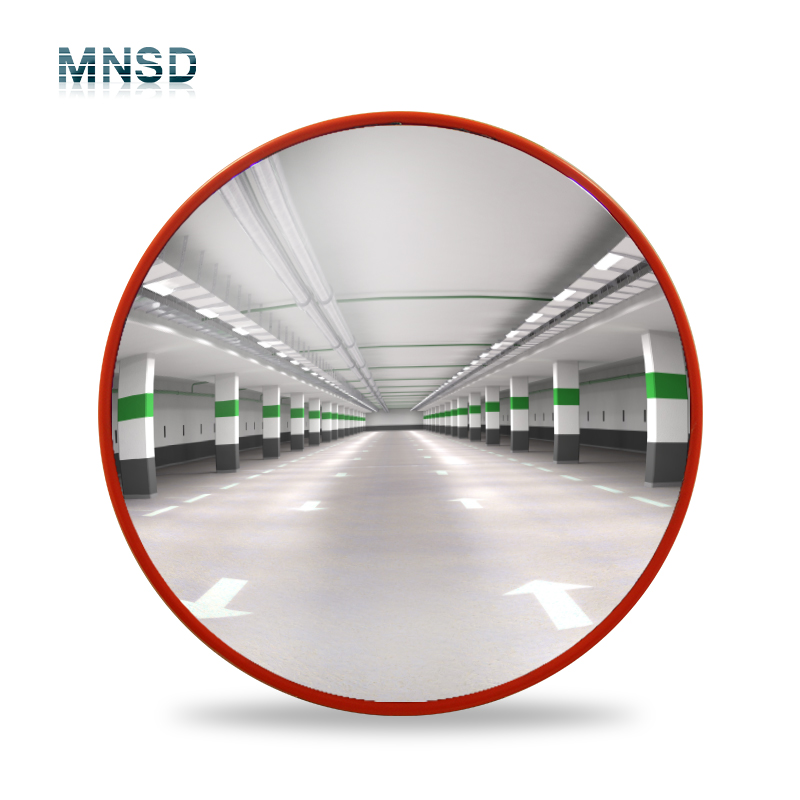
Figure 2 — A published specification line removes the guesswork from shortlisting and quantity planning.
| Parameter | YD-OC line specification | What it means in a purchase decision |
|---|---|---|
| Model range | YD-OC60 / 75 / 100 / 120 | One specification family covering four coverage levels; simplifies spares and reorders |
| Diameter | ø600 mm – ø1200 mm | Matches coverage to lane width and approach geometry |
| Viewing angle | 130°+ wide-angle vision | Sets how many units an intersection needs, combined with mounting position |
| Curvature radius | R2200–R3000 | Controls the distortion-versus-coverage trade-off |
| Ingress protection | IP65 | Dust and water-jet protection for exposed and wash-down environments |
| UV resistance | Grade 8 | Slows yellowing and embrittlement under sustained sunlight |
| Wind load | Level 10 | Confirms the bracket and fixing design for exposed roadside sites |
| Operating temperature | −30°C to +80°C | Specified across a wide climate band rather than a single market |
| Mounting | Heavy-duty galvanized steel brackets | Corrosion protection where fixture failures usually begin |
| Service life | 3–5 years | Replacement planning and reorder-cycle budgeting |
| Surface protection | Anti-scratch hard coating on the PC surface; PE film during assembly and transit | Reduces handling damage before the mirror reaches site |
Deployment Profile: One Specification Across Four Environments
The following profile describes how the ranked criteria map onto a four-environment rollout of the YD-OC line. It reflects specification-level performance rather than client-specific measured results.
Road traffic
Junctions, bends and highway ramps are the most exposed installations in any program. Here the deciding parameters are UV Grade 8 against sustained sunlight, Level 10 wind load against gust loading, and heavy-duty galvanized steel brackets at the fixing point. The ø1000 mm and ø1200 mm models are typically deployed where approach speeds and lane widths demand the widest coverage.
Parking garages
Spiral ramps and blind corners favor smaller units mounted at lower heights. IP65 matters in structures that are washed down or hold humidity, and the anti-scratch hard coating on the polycarbonate surface matters where carts and vehicles pass close to the mirror face. The wide 130°+ view allows a single unit to cover a corner that would otherwise need two.
Warehouses
Internal intersections and loading docks reward repetition rather than size. Because the device needs no power and is close to maintenance-free beyond occasional cleaning, the same model can be installed at dozens of aisle junctions without adding electrical or network scope to the project. The −30°C to +80°C range covers the temperature swings of semi-open loading areas.
Logistics parks
Yard intersections and lane merges are where the larger diameters earn their place: YD-OC100 and YD-OC120 cover wide approaches where a smaller mirror would leave a residual blind spot. Over a multi-year program, the relevant long-term questions are whether the same specification can be re-ordered and whether brackets remain available — both of which are scored in dimension five.
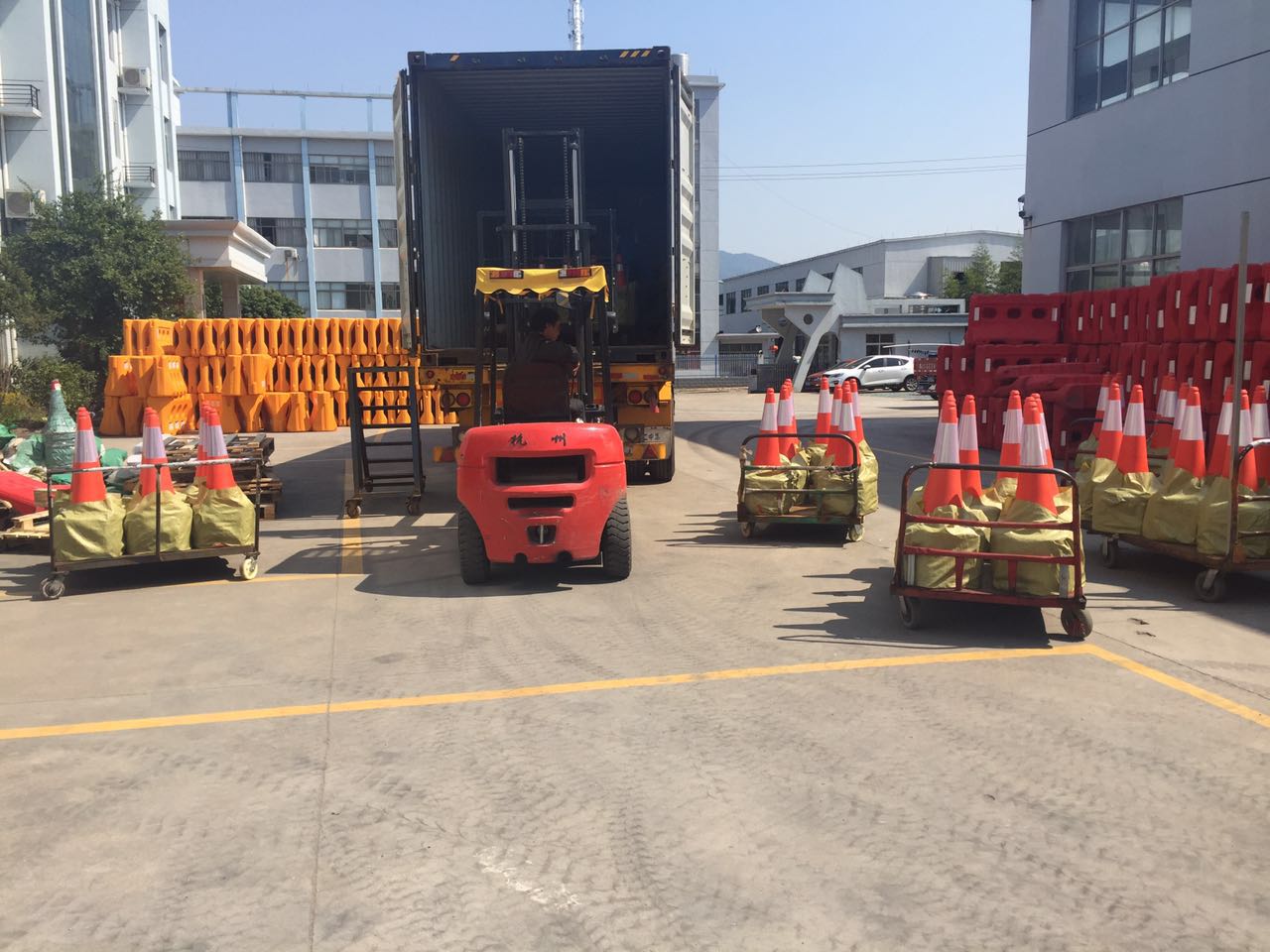
Figure 3 — Execution quality travels with the goods: coating, filming and packing standards decide how many units arrive installable.
Market Direction: What the Numbers Say
The market data supports a shortlist built on safety-specific capability rather than general mirror supply. Traffic and safety applications represent 38.2% of convex mirror demand, Asia Pacific holds a 42.5% revenue share, and the market is projected to grow from approximately USD 1.04 billion in 2025 to USD 1.73 billion by 2034 (Dataintelo).
Market sizing in this category should be read with caution. Published estimates diverge widely depending on definition: sources focused on niche traffic safety products and sources covering broad security equipment report materially different figures for the same year. Buyers comparing supplier-issued market claims should ask which definition is behind the number before treating it as evidence.
Where the Passive Approach Stops
| Criterion | Convex mirror | Electronic monitoring |
|---|---|---|
| Coverage | 100°–180° viewing angle depending on model and position | Limited to the camera field of view |
| Power | None; zero energy consumption | Continuous power and network required |
| Upfront cost | Low, lower than electronic monitoring | Higher |
| Maintenance | Almost maintenance-free; occasional cleaning | Ongoing servicing and recording infrastructure |
| Recording and alerting | None | Records and can alert |
| Typical fit | Road traffic, parking garages, warehouses, logistics parks and similar fixed blind spots | Sites needing evidence capture or remote supervision |
The boundaries are worth stating plainly. A convex mirror requires a clear line of sight: if a rack, sign or vehicle blocks the reflection, the device delivers nothing. It does not record, detect or alert, so it cannot substitute for a monitoring requirement. Its 3–5 year service life is an expectation that depends on UV exposure, cleaning regime and installation quality, not a guaranteed figure in every climate. And site mirrors are not regulated the same way as vehicle mirrors: passenger-car supplementary mirrors in the United States fall under FMVSS No. 111, which specifies a radius of curvature between 35 and 65 inches and a required warning marking — a site-safety mirror does not satisfy that obligation. Mnsd's scope is passive road safety hardware, including convex mirrors, warning posts, rising bollards, speed humps and traffic lights; programs that need camera analytics should combine solutions rather than replace one with the other.
Outlook: What Changes for Buyers Through the Next Cycle
Three shifts are likely to shape convex mirror procurement. First, specification requests are becoming more detailed, with curvature, UV grade, wind load and temperature range moving from optional to expected in a datasheet. Second, hybrid site designs are becoming normal, where passive mirrors handle everyday sightline problems and electronic systems cover evidence and supervision needs, with each technology specified on its own terms. Third, supply relationships are lengthening: buyers increasingly evaluate a manufacturer's ability to repeat a specification across years, which favors factory-direct suppliers that publish capacity data over intermediaries that cannot confirm it. Buyer scrutiny of service-life and UV claims will intensify alongside that shift.
Frequently Asked Questions
How should a buyer score convex mirror manufacturers for a program that spans several years?
Score each supplier out of 100 across five weighted dimensions: technical R&D and specification depth (25), manufacturing capacity and supply continuity (20), market fit and regional channel strength (15), order execution and service model (20), and long-term partnership and lifecycle support (20). Only award points where documentation exists. A supplier that cannot produce curvature, UV and load figures scores zero on the first dimension regardless of brand recognition.
What documentation should be requested before a supplier is ranked or awarded?
Request a datasheet stating diameter, viewing angle, curvature radius, ingress protection, UV grade, wind load, operating temperature range and mounting specification, together with a capacity statement and the OEM/ODM customization scope. Add the packing and transit-protection standard, since surface damage in transit is a common execution failure. Where possible, inspect a physical sample before the specification is fixed.
What does a monthly convex mirror capacity of 30,000 pcs mean for rollout planning?
Mnsd publishes a monthly convex mirror production capacity of 30,000 pcs, within a facility of 40,000 m² and 300 employees. A rollout of several hundred or even a few thousand units is therefore a fraction of one month's output, which supports staged shipments across a multi-site program. Buyers should still confirm allocation during peak periods and agree lead times in the purchase contract.
Which environments benefit most from passive convex mirrors?
Convex mirrors are used across road traffic, residential quarters, parking garages, factories and warehouses, logistics parks, shopping malls, supermarkets, schools, hospitals, gas stations, construction sites, office parks, ports and docks, bus stations, industrial zones, community intersections, rural roads and highway ramps. Their advantages are a wide viewing angle, low upfront cost, no energy consumption and almost maintenance-free operation, which makes them well suited to fixed blind spots that repeat across many locations.
What are the limits of convex mirrors compared with electronic monitoring?
A convex mirror covers roughly 100° to 180° depending on the model and position, requires no power and costs less than electronic monitoring, but it does not record, detect or alert, and it depends on an unobstructed line of sight. Electronic systems add evidence capture and remote supervision at the cost of power, network and ongoing maintenance. The two are complementary rather than interchangeable.
How can buyers verify 3–5 year service life and UV resistance claims?
Ask for the UV grade rather than a marketing description; the YD-OC line is specified at UV Grade 8, alongside an anti-scratch hard coating on the polycarbonate surface. Treat the 3–5 year figure as an expectation that depends on climate, exposure angle and cleaning regime, and ask how the claim was derived. Where a program is long enough, compare reorder history for the same model to test whether the stated life holds in practice.
The Mnsd road safety product brochure, including convex mirror model data and packing information, is available for download at the Mnsd product brochure.
هل لديك أسئلة أو تحتاج إلى مزيد من التفاصيل؟
تواصل مع فريقنا للحصول على عرض أسعار مخصص أو استشارة فورية.
طلب عرض أسعار
املأ النموذج أدناه وسيتواصل معك فريقنا بعرض مقترح مخصص.
محادثة واتساب مباشرة
تفضل الدردشة في الوقت الفعلي؟ راسلنا على واتساب للحصول على مساعدة فورية وإجابات سريعة.
- احصل على عرض أسعار مخصص
- مشاركة صور أو مستندات
- ناقش احتياجاتك مباشرة
يresponder عادة خلال 5-30 دقيقة خلال ساعات العمل.