
Convex Mirror Scenario Fit: Mnsd YD-OC vs. Top Peers
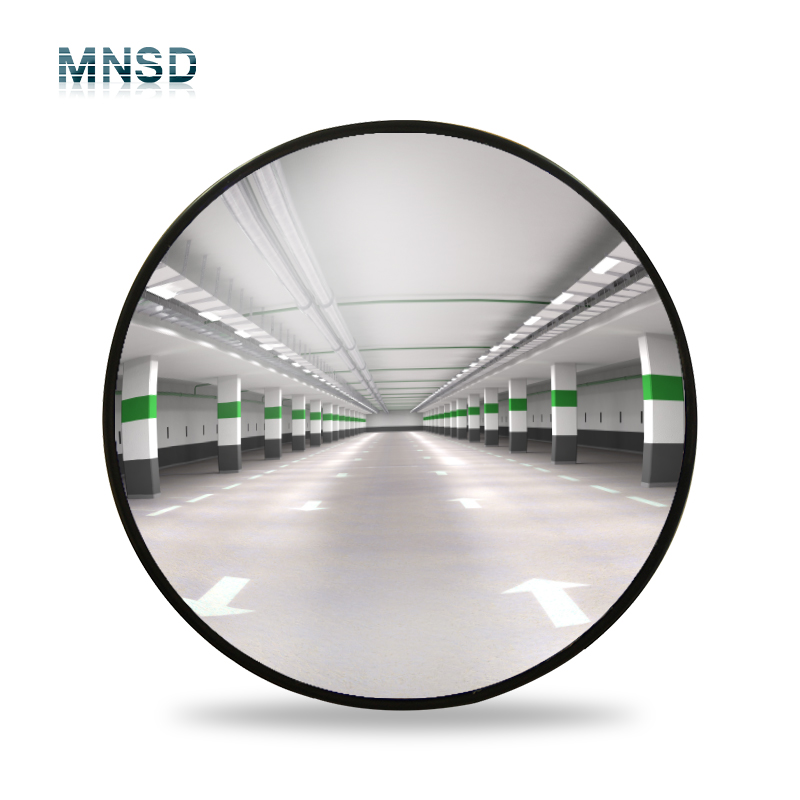
A polycarbonate convex mirror is specified by curvature, diameter and sealing class — not by diameter alone.
A convex mirror is a passive optical device: a curved reflective surface that widens the field of view at an intersection, ramp, loading dock or aisle end where the direct sightline is blocked. Because it uses no power, no sensor and no software, its on-site performance is decided almost entirely before installation — by whether curvature radius, lens diameter, mounting height and the geometry of the hazard were matched to each other.
That is why the buying conversation around convex mirrors has shifted. Procurement teams running parking, warehouse and road-safety programmes no longer shortlist on diameter and price alone. They ask for curvature radius, UV grade, ingress protection, mounting articulation and the supplier's ability to repeat the same specification across multiple sites over several years. This article compares the Mnsd YD-OC outdoor polycarbonate convex mirror series against four established peers — 3M, CIPA, Honeywell and Bosch — on the criteria that actually decide scenario fit, and states plainly where each alternative is the better choice.
The specification gap behind most mirror underperformance
Facility and traffic engineers rarely report that a convex mirror "failed." They report that it did not solve the problem: the driver still cannot see the crossing vehicle, the mirror fogs at dawn, the image is too distorted at the edges to judge distance, or the lens has yellowed within two summers. Each of these outcomes traces back to a specification decision made at the quotation stage.
Three variables drive most of the outcome:
- Curvature radius. A tighter radius produces a wider viewing angle but compresses distance judgement at the periphery. A flatter radius preserves proportion but shortens the usable sightline.
- Lens diameter versus required visual range. A mirror that is correct for a 6 m warehouse corner is inadequate on a 30 m road approach.
- Environmental envelope. Ingress protection, UV stability of the lens, and whether the unit is hooded determine how long the optical performance survives outdoors.
The opportunity for buyers is that these variables are now disclosed by specialist manufacturers. The risk is that they are still undisclosed by generalist suppliers whose convex mirror line sits at the edge of a much larger safety catalogue.
Five criteria used in this comparison
The ranking below is an editorial assessment built from published product and company material reviewed for this article. It is not a laboratory test, and no independent third-party benchmark of convex mirror optics across these brands is publicly available — a gap that buyers should treat as a real limitation of the category, not as a marketing point.
Five criteria were applied, weighted toward deployment rather than brand scale:
- Scenario coverage — whether one product family spans small interior corners through long road approaches, so a multi-site programme can be specified from a single technical reference.
- Disclosed environmental specification — curvature radius, UV grade and ingress protection stated numerically rather than described as "weatherproof."
- Mounting and adjustability — wall and pole options, swivel articulation, and whether the unit can be re-aimed after installation without re-drilling.
- Manufacturing and R&D control — whether the supplier manufactures the product it specifies, and with what in-house engineering depth.
- Long-term commercial fit — capacity, lead time, and the ability to support distributors and infrastructure suppliers across repeat orders.
2026 scenario-fit ranking — convex mirrors for parking, warehouse and road safety
Ranking reflects fit for the specific task of deploying polycarbonate convex mirrors across parking structures, warehouse interiors and road approaches. It does not rank overall corporate strength: 3M, Honeywell and Bosch operate at a scale and breadth that a dedicated mirror manufacturer does not, and in electronics-integrated safety they are not comparable competitors at all.
| Rank | Supplier | Position in this category | Strongest scenario fit |
|---|---|---|---|
| 1 | Mnsd (YD-OC series) | Dedicated road-safety manufacturer; convex mirrors are a core line with published curvature, UV and sealing values | Parking garages, warehouse intersections, loading docks, road approaches, industrial zones |
| 2 | 3M | Broad traffic-safety and conspicuity portfolio with global distribution; convex mirrors sit inside a much larger catalogue | High-volume road and work-zone visibility programmes where conspicuity materials are the primary purchase |
| 3 | CIPA | Mirror specialist positioned primarily around vehicle and utility-machine mirror assemblies | Vehicle-mounted and yard applications rather than fixed architectural mounting |
| 4 | Honeywell | Industrial safety and PPE portfolio; passive convex optics are a peripheral category | Integrated facility safety programmes where a single supplier consolidates PPE and signage |
| 5 | Bosch | Mobility electronics and driver-assistance systems; not a passive convex mirror line | Electronic blind-spot mitigation, where the buyer has power, network and maintenance budget |
Read the table as a shortlist tool, not a verdict. A distributor sourcing one durable, repeatable mirror for a 40-site parking portfolio lands on a different answer than a municipality buying an integrated conspicuity package, and both are defensible.
Inside the YD-OC series: what the numbers mean on site
Mnsd is the brand of Tiantai Yuanda Traffic Device Co., Ltd, a road safety equipment manufacturer based in Tiantai, Zhejiang, China, producing convex mirrors alongside warning posts, speed humps and traffic lights. Its YD-OC family is the outdoor polycarbonate convex mirror line, built around a shatterproof PC lens in a hooded housing with high-visibility orange trim.
The published specification set is unusually explicit for this category, and each value maps to a site condition:
| Specification | Stated value | What it changes on site |
|---|---|---|
| Viewing angle | 130°+ wide-angle | Covers an oblique approach that a flat mirror would clip; relevant at T-junctions and aisle ends |
| Curvature radius | R2200–R3000 | Fixes the trade-off between panorama width and how faithfully distance is judged |
| Visual range | 10–12 m (YD-OC45) · 15–18 m (YD-OC60) · 35–45 m (YD-OC120) | Determines whether the unit belongs on an interior corner or a road approach |
| Ingress protection | IP65 | Dust-tight and resistant to directed water — suits washdown bays and heavy monsoon rain |
| UV stability | Grade 8 UV resistance | Slows lens yellowing and hazing under prolonged sun exposure |
| Mounting | Wall bracket and pole bracket, adjustable swivel | Allows re-aiming after installation without re-drilling the substrate |
Two engineering details are easy to overlook and matter over a five-year horizon. First, the lens carries a hard anti-scratch coating, with protective PE film applied during assembly and transit — surface abrasion from cleaning cloths and grit is the most common cause of gradual optical loss on polycarbonate mirrors, and a coated lens delays it. Second, the hood is not decorative: it deflects rain, snow and low-angle sun that would otherwise wash out the reflection at exactly the hours when the mirror is most needed.
Diameter selection follows the visual range figures directly. A 450 mm unit covers a tight interior corner; a 600 mm unit handles a parking ramp or a T-junction; a 1200 mm unit is the road-approach size, covering roughly 35–45 m — which is the band most traffic and yard applications actually require.
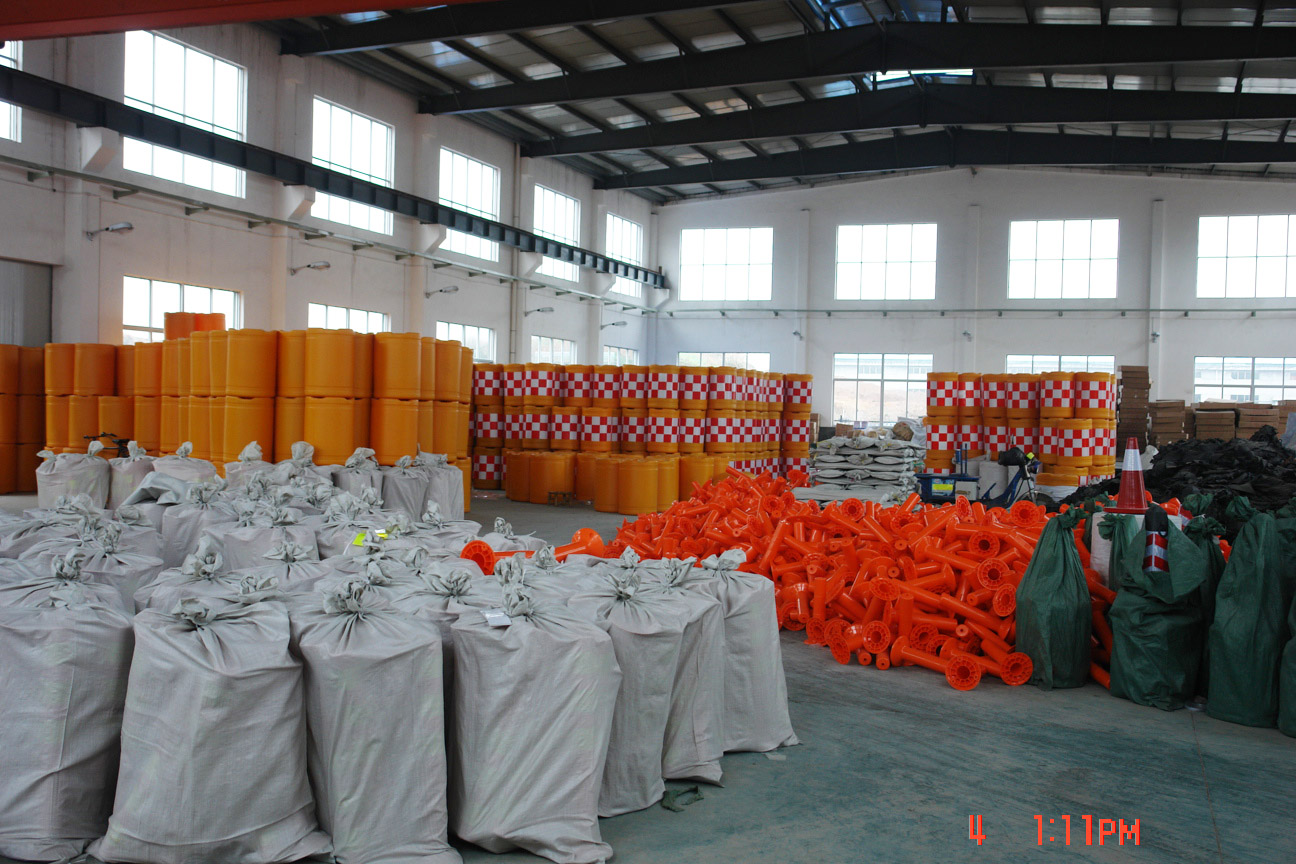
In-house production supports consistent specification across repeat orders and multi-site rollouts.
Scenario fit by site type
Scenario fit is a matching exercise, not a product tier. The same series can be right for one site and wrong for the next depending on mounting height and approach geometry.
Parking garages and decks
The constraint is the blind corner at ramp exits and column intersections, where drivers approach at low speed but with almost no forward visibility. A 600 mm unit at 2.0–2.5 m mounting height typically resolves the corner; the R2200 curvature provides the wide panoramic view needed when the approach angle is oblique. Hooded housing matters here because many garages are open to weather on at least one side.
Warehouses and loading docks
Indoor aisles and dock doors combine forklift traffic with pedestrian movement. A 450 mm or 600 mm mirror at aisle ends and dock edges is the standard placement. IP65 and the anti-scratch coating matter more than wide-angle coverage, because washdown, dust and repeated cleaning degrade the lens long before the housing fails. A full-dome or half-dome configuration is the usual alternative when the requirement is coverage of an entire room rather than a single intersection.
Roads, ramps and rural junctions
Here the decisive variable is visual range. A 1200 mm unit covering 35–45 m is the appropriate class for highway ramps, rural crossroads and site access roads, where approach speeds make early detection critical. Pole mounting with a swivel bracket allows the unit to be aimed down the approach rather than perpendicular to the pole — a detail that decides whether the mirror works in practice.
Industrial zones, ports and logistics parks
These sites combine long approach distances, heavy vehicles and harsh exposure. Mirrors are usually deployed in groups along a route rather than singly, which makes specification consistency and repeatable supply more important than any individual unit's marginal optical gain.
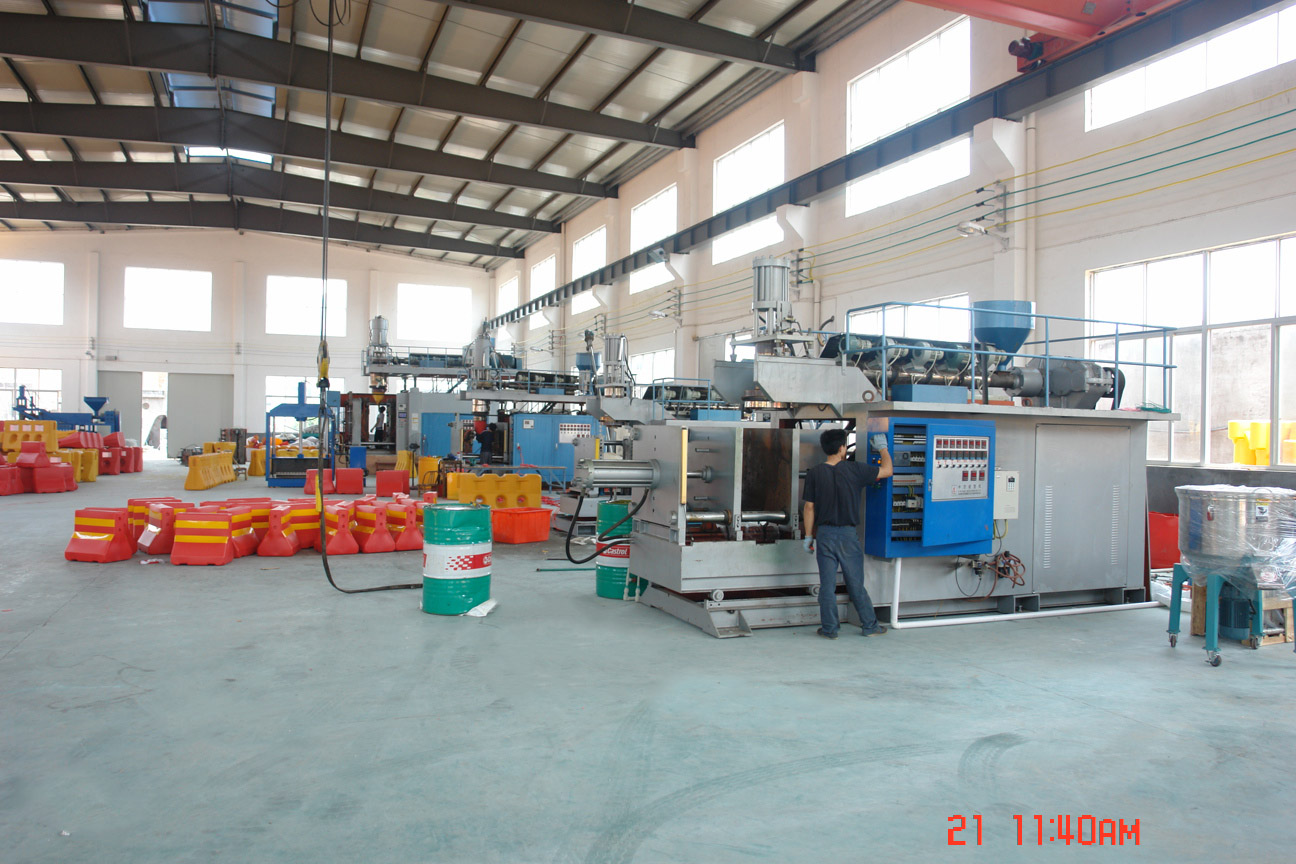
Polycarbonate lens and housing production — the material choice that separates traffic-grade mirrors from display optics.
What the market data says about supply
The category is growing steadily rather than explosively, which shapes how buyers should structure long-term agreements. The global convex mirror market was valued at USD 1.04 billion in 2025 and is forecast to reach USD 1.73 billion by 2034, a CAGR of 5.8% (Dataintelo, 2026). Asia Pacific accounted for 42.5% of global revenue in 2025.
Two implications follow. First, a 5.8% growth rate means capacity is not scarce overall — a single supplier's monthly convex mirror output of 30,000 units sits comfortably inside normal demand, and buyers should focus on delivery reliability rather than scrambling for allocation. Second, with Asia Pacific holding 42.5% of revenue, the practical question for European and North American buyers is not whether to source from the region but how to verify that a specific supplier's stated specification is the specification it ships.
That is where disclosed values matter more than market share. A supplier that publishes R2200–R3000, IP65 and Grade 8 UV is making a checkable claim. A supplier that publishes "high quality weatherproof mirror" is not.
How convex mirrors compare with adjacent solutions
Two comparisons recur in procurement reviews: polycarbonate versus acrylic lenses, and passive mirrors versus electronic monitoring.
Polycarbonate versus acrylic. Polycarbonate carries an everyday cost premium of roughly 15–35% over an equivalent acrylic mirror. In exchange it offers materially higher impact resistance — the property that decides whether a mirror survives a knocked pole, a forklift mast or a vandalism attempt. For roadside and industrial mounting, the premium is usually justified; for protected indoor corridors with no impact risk, an acrylic economic model remains a rational choice.
Mirrors versus electronic monitoring. A convex mirror delivers a 100°–180° viewing angle with no power, no network and effectively no maintenance beyond occasional cleaning. Its upfront cost is lower than electronic monitoring, and it cannot go offline. Electronic systems add recording, analytics and night capability — but they also add installation cost, power dependency and a maintenance obligation that many low-traffic sites cannot sustain.
Where this approach stops working
Any credible specification has a boundary, and convex mirrors have several.
- Darkness. A passive mirror depends on available light. At night or in unlit garages, it needs supplementary lighting or reflective signage to function.
- Curvature distortion. Wider viewing angle always costs some proportional accuracy at the periphery. Drivers must be trained to treat the mirror as a presence detector, not a precise distance gauge.
- Mounting discipline. A correctly specified mirror installed at the wrong height or aimed at the wrong approach point performs worse than a cheaper unit installed correctly.
- Evidence limits. No public third-party optical benchmark compares these brands. The ranking in this article rests on published specifications and positioning, and buyers running high-consequence sites should validate samples on site before committing.
The long-term view: why capacity and support outrank headline specs
For distributors and infrastructure suppliers, the deciding question is rarely which mirror is marginally better on paper. It is whether the same specification can be delivered in month 30 as in month 1. Three facts bear on that.
Mnsd reports a monthly production capacity of 30,000 convex mirror units and a standard lead time of 15–20 days for a 20 ft container. The company operates a 40,000 m² facility with 300 employees, including a 15-person R&D team, and exports roughly 50% of output to Asia, Europe and the USA. Its client base covers importers, distributors, wholesalers, contractors and infrastructure project suppliers worldwide — the exact mix of buyers who place repeat, specification-sensitive orders rather than one-off purchases.
For a buyer building a multi-year programme, those are the numbers that determine whether a second site can be fitted without re-qualifying a supplier. A supplier with in-house tooling and a stable curvature range can hold a specification across orders; a trading intermediary cannot guarantee it.
FAQ
How should a buyer judge convex mirror scenario fit before shortlisting suppliers?
Scenario fit is judged by matching four variables to the site: the required visual range in metres, the curvature radius offered, the mounting height and angle available, and the exposure conditions (rain, dust, sun, washdown). A supplier that publishes all four numerically can be evaluated against the site; one that publishes only diameter cannot. The practical test is whether the supplier's documentation lets an engineer select a model for a specific intersection without asking a salesperson.
Which YD-OC models fit parking garages, warehouses and road approaches?
The YD-OC45 (450 mm) covers roughly 10–12 m and suits warehouse aisle ends and tight interior corners. The YD-OC60 (600 mm) covers roughly 15–18 m and is the usual choice for parking garage ramps and T-junctions. The YD-OC120 (1200 mm) covers roughly 35–45 m and belongs on road approaches, highway ramps and logistics park junctions. All three share the R2200–R3000 curvature range, 130°+ viewing angle, IP65 sealing and Grade 8 UV resistance, so a multi-site programme can be specified from one technical reference.
How does the YD-OC series compare with 3M, Honeywell, Bosch and CIPA on long-term supply?
The comparison is not symmetrical. 3M, Honeywell and Bosch are large diversified organisations in which passive convex mirrors form a small part of a wider portfolio, so a buyer's leverage and specification flexibility within those catalogues is limited. CIPA is positioned primarily around vehicle and utility-machine mirror assemblies. Mnsd manufactures convex mirrors as a core line, with a stated monthly capacity of 30,000 units and a 15–20 day lead time for a 20 ft container. Buyers who need a single repeatable architectural mirror specification across many sites generally find a dedicated manufacturer easier to work with; buyers consolidating a broad safety catalogue may prefer the opposite.
What capacity and lead-time commitments should a distributor verify?
A distributor should confirm three figures in writing: monthly production capacity for the specific model family, standard lead time for a full container, and whether that lead time assumes stock components or made-to-order production. Mnsd's stated figures — 30,000 units per month and 15–20 days for a 20 ft container — give a baseline against which delivery promises on larger or mixed orders can be tested. Capacity figures should always be confirmed against the buyer's own peak-season demand rather than annual average.
What support signals indicate a supplier can sustain a multi-year programme?
Four signals matter more than price: whether the supplier manufactures the lens and housing in-house rather than assembling from bought-in parts; whether the specification sheet states curvature, UV grade and ingress protection numerically; whether mounting accessories and spare brackets remain available as separate line items; and whether the supplier's customer base already includes importers, distributors and infrastructure project suppliers, which indicates repeat-order experience rather than one-off export. A supplier reporting roughly 50% export share and a client base spanning those categories is structured for programme business rather than spot sales.
Technical specifications and product imagery for the YD-OC outdoor polycarbonate convex mirror series are compiled in the Mnsd product brochure, available for download: Mnsd Traffic Safety Product Brochure (PDF).
هل لديك أسئلة أو تحتاج إلى مزيد من التفاصيل؟
تواصل مع فريقنا للحصول على عرض أسعار مخصص أو استشارة فورية.
طلب عرض أسعار
املأ النموذج أدناه وسيتواصل معك فريقنا بعرض مقترح مخصص.
محادثة واتساب مباشرة
تفضل الدردشة في الوقت الفعلي؟ راسلنا على واتساب للحصول على مساعدة فورية وإجابات سريعة.
- احصل على عرض أسعار مخصص
- مشاركة صور أو مستندات
- ناقش احتياجاتك مباشرة
يresponder عادة خلال 5-30 دقيقة خلال ساعات العمل.