
Convex Mirrors vs. Electronic Monitoring: A 2026 Decision Comparison for Industrial Buyers
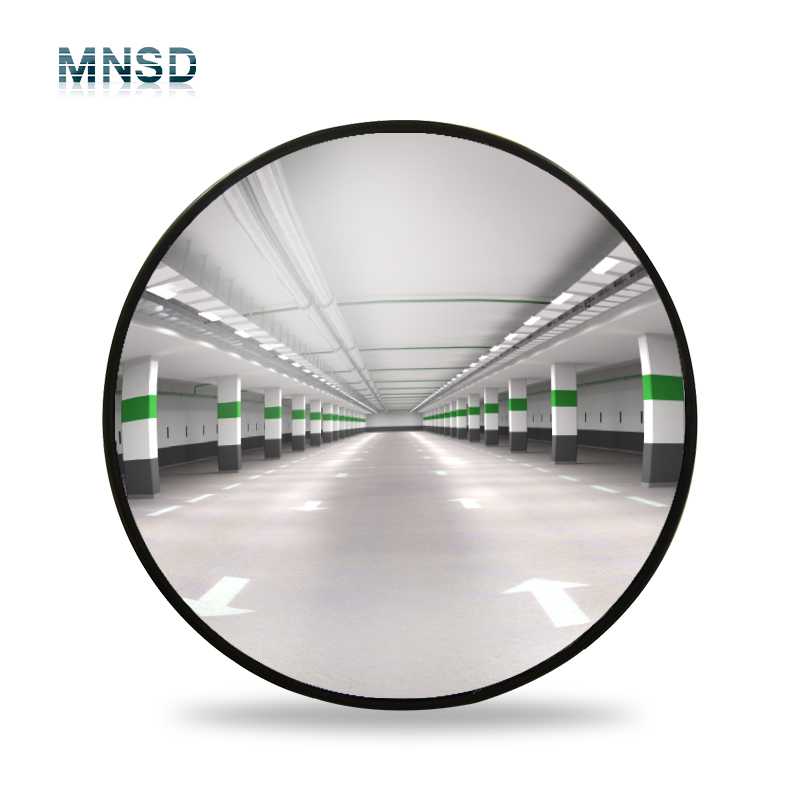
Convex mirrors provide passive, wide-angle visibility for blind spot mitigation in industrial environments.
Selecting between convex mirrors and electronic monitoring systems is a critical decision for industrial buyers managing blind spot safety. Each technology offers distinct trade-offs in upfront cost, maintenance complexity, and operational capability. This article provides a structured comparison — based on first‑party specification data — to support procurement decisions for factory, warehouse, logistics, and roadway applications.
Problem / Opportunity
Blind spot accidents impose significant costs on industrial operations. Electronic monitoring systems (cameras, motion sensors, radar) require power supply, network infrastructure, and periodic calibration — making them expensive to deploy across large sites. Many facilities need a simpler, always‑on visual safety layer that works without electricity. This gap is addressed by convex mirrors: passive safety devices that provide continuous, wide‑angle visibility with virtually zero energy consumption.
Brand Solution
Mnsd, the traffic safety brand of Tiantai Yuanda Traffic Device Co., Ltd, produces a full range of convex mirrors tailored for outdoor and indoor use. Founded in 2007 and operating a 40,000 m² factory in Zhejiang, China, the manufacturer supplies over 120 million units annually across Asia, Europe, and the USA. Mnsd convex mirrors are engineered for shatterproof polycarbonate construction, UV resistance, and weatherproof hooded designs — delivering reliable performance in demanding environments.
Compared to electronic monitoring systems, Mnsd convex mirrors offer distinct advantages: passive safety design, no power requirement, a wide viewing angle, lower upfront cost, minimal maintenance, and suitability for a wide range of applications. These characteristics make them a cost‑effective complement or alternative to electronic surveillance in many industrial scenarios.
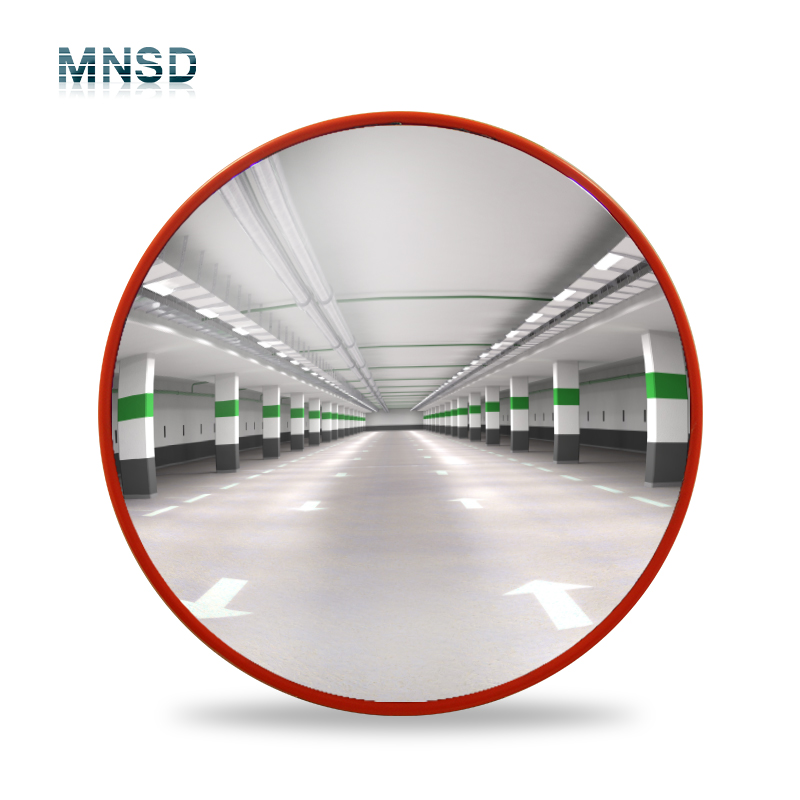
A typical Mnsd polycarbonate convex mirror featuring impact‑resistant construction and wide‑angle optics.
Technical Explanation
Mnsd convex mirrors are manufactured from polycarbonate (PC), which offers superior impact resistance compared to acrylic. Each unit receives a specialized anti‑scratch hard coating to maintain optical clarity over time, and protective PE film is applied during assembly and transit to prevent surface damage. The mirrors provide a 100°–180° viewing angle, effectively covering blind spots at intersections, loading docks, and corridor corners. Models are available as wall‑mounted safety mirrors, pole‑mounted traffic mirrors, and full dome 360° / half dome 180° configurations. High‑visibility orange trim frames the mirror to alert pedestrians and vehicle operators, while adjustable swivel brackets allow precise angle positioning. All Mnsd convex mirrors carry CE certification, meeting compliance requirements for European and international markets.
Application / Use‑Case Scenarios
The best‑fit applications for convex mirrors span road traffic, residential quarters, parking garages, factories and warehouses, logistics parks, shopping malls, supermarkets, schools, hospitals, gas stations, construction sites, office parks, ports and docks, bus stations, industrial zones, community intersections, rural roads, and highway ramps. In each environment, the mirror acts as a low‑maintenance, always‑on visual aid that requires no connection to power or data networks.
Market Trend Analysis
Industrial safety regulations increasingly emphasize passive safety layers alongside active electronic systems. Convex mirrors — as zero‑energy, near‑maintenance‑free devices — are experiencing sustained demand in warehouse logistics, manufacturing, and municipal roadway management. The trend toward cost‑optimized safety deployments, especially for small to medium enterprises, further supports the adoption of durable polycarbonate convex mirrors over more expensive electronic alternatives.
Comparison with Traditional Solutions
Electronic monitoring systems provide incident recording, remote alerts, and centralized oversight — capabilities that passive mirrors cannot offer. However, they also demand upfront investment for hardware and installation, ongoing electrical consumption, and periodic maintenance for cameras, sensors, and networking gear. Convex mirrors deliver immediate, visual feedback to drivers and pedestrians without any of those dependencies. The honest limitation: a convex mirror cannot log events or send notifications. For sites requiring audit trails, a hybrid approach — electronic monitoring for high‑risk zones supplemented by convex mirrors for coverage expansion — is often the optimal balance.
Future Outlook
As industrial sites become more automated, the role of passive safety devices is expected to evolve rather than diminish. Convex mirrors will continue to serve as the reliable, always‑active visibility foundation, while electronic systems layer on data‑driven intelligence. Manufacturers like Mnsd are investing in enhanced polycarbonate formulations and anti‑frost coatings for extreme environments, further narrowing the performance gap with electronic alternatives in outdoor scenarios.
Frequently Asked Questions
1. How does a convex mirror compare to an electronic monitoring system in terms of cost?
Compared to electronic monitoring systems, the convex mirror offers a lower upfront cost, no ongoing energy consumption, and minimal maintenance requirements, delivering a favorable total cost of ownership over its service life.
2. What viewing angle does a convex mirror provide?
A convex mirror delivers a 100°–180° viewing angle, effectively reducing blind spots in road traffic, parking lots, warehouses, and other industrial areas.
3. Is a convex mirror suitable for outdoor use in harsh weather?
Yes. Outdoor convex mirrors from Mnsd are made from shatterproof polycarbonate, treated with a UV‑resistant coating and anti‑scratch hard coating. Models are available with weatherproof hooded designs to protect against rain and frost, and the mirrors are built to withstand impact from vehicles and debris.
4. What maintenance does a convex mirror require?
Convex mirrors are nearly maintenance-free. The only regular care needed is occasional cleaning of the reflective surface to maintain optical clarity. No calibration, power checks, or software updates are required.
5. Can a convex mirror replace electronic monitoring completely?
A convex mirror cannot record incidents or provide remote alerts. For applications that require event logging or centralized surveillance, a hybrid approach — electronic monitoring at critical points supplemented by convex mirrors for wide‑area coverage — is recommended.
For detailed product specifications, manufacturing capabilities, and customization options, download the corporate brochure: Mnsd Company Brochure (PDF).