
Conveyor Belt FAQ: Specs, Acceptance, Supplier Benchmarks
Conveyor Belt FAQ: Specs, Acceptance, Supplier Benchmarks
A specification-grade conveyor belt order is decided by three documents: a datasheet that fixes every number, an acceptance clause that states how those numbers are checked, and a purchasing term sheet that fixes quantity, delivery basis and payment split. Buyers moving from evaluation into execution rarely fail because they picked the wrong belt family. They fail because five bidders answered five slightly different questions, and nobody could compare the offers line by line.
This reference works as a working FAQ for that stage. It covers the questions that settle specification — what a model string such as S5M-20-L1650, GT2 48T, PQ350mm±3mm or a 2482×16 mm flat belt actually commits a supplier to — the questions that settle commercial terms, and the questions that settle whether a shipment is accepted or rejected. It also sets out how a Chinese manufacturer such as Shanghai Pengqian Transmission Equipment Co., Ltd. should be benchmarked against the reference brands that appear in most belt tenders, including Forbo-Siegling, Optibelt, Gates, Habasit and CHIORINO, without pretending that a public record supports a market-share ranking.
For scale, IMARC Group's 2026 commercial-research estimate values the global conveyor belt market at USD 7.30 billion. That figure should be read with care: the same harvested record shows valuations between USD 6.08 billion and USD 7.30 billion depending on whether system components are counted. Market size is context. It is never a reason to accept an individual supplier claim.
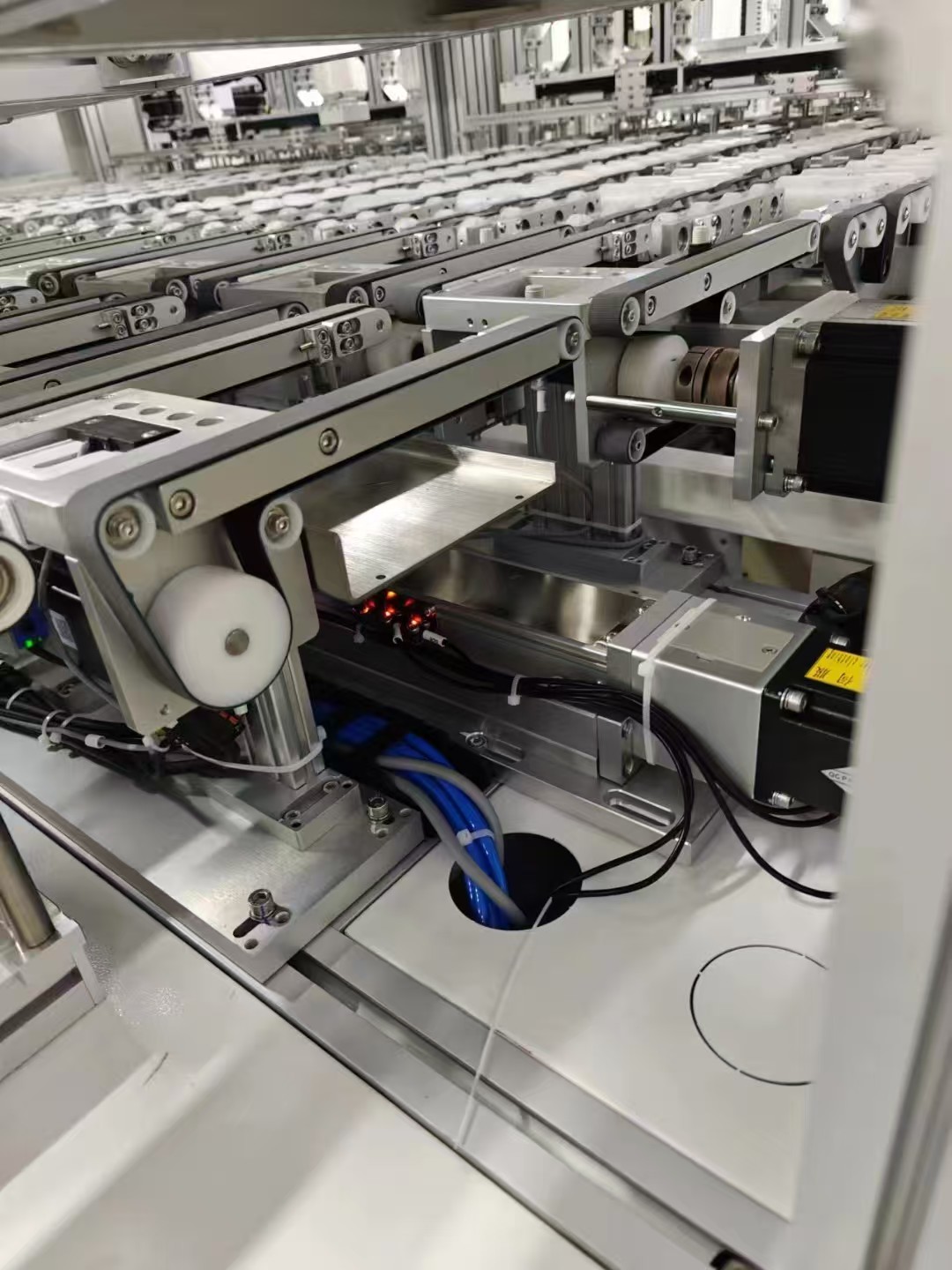
Why a FAQ Belongs in the Bid Package, Not Just the Brochure
An FAQ is a control document when it is written as questions the supplier must answer in writing. Three families of question cover almost every dispute that arises after a purchase order: the specification family fixes geometry, material and tolerances; the purchasing family fixes quantity, lead time, delivery basis and payment; the acceptance family fixes the test that must be passed before money moves. Each family has a characteristic failure mode.
- Specification failure: the buyer orders a code, the supplier ships a code, and the two codes resolve to different pitch lengths or measurement conventions.
- Purchasing failure: minimum order quantity, lead time or Incoterm is agreed verbally and appears differently on the confirmation.
- Acceptance failure: the contract says pre-shipment test without saying who measures what, on which gauge, and what record proves it.
The practical fix is to circulate one question set to every bidder, including the reference brands, and to score the returned answers. That is also the only defensible way to place a smaller specialist next to an established international brand: identical questions, identical evidence expectations.
Specification Questions: Reading Four Model Strings Correctly
A model string is a compressed specification, and it is only as reliable as the datasheet behind it. Four strings from the current Shanghai Pengqian catalogue show why the same question must be asked in different ways.
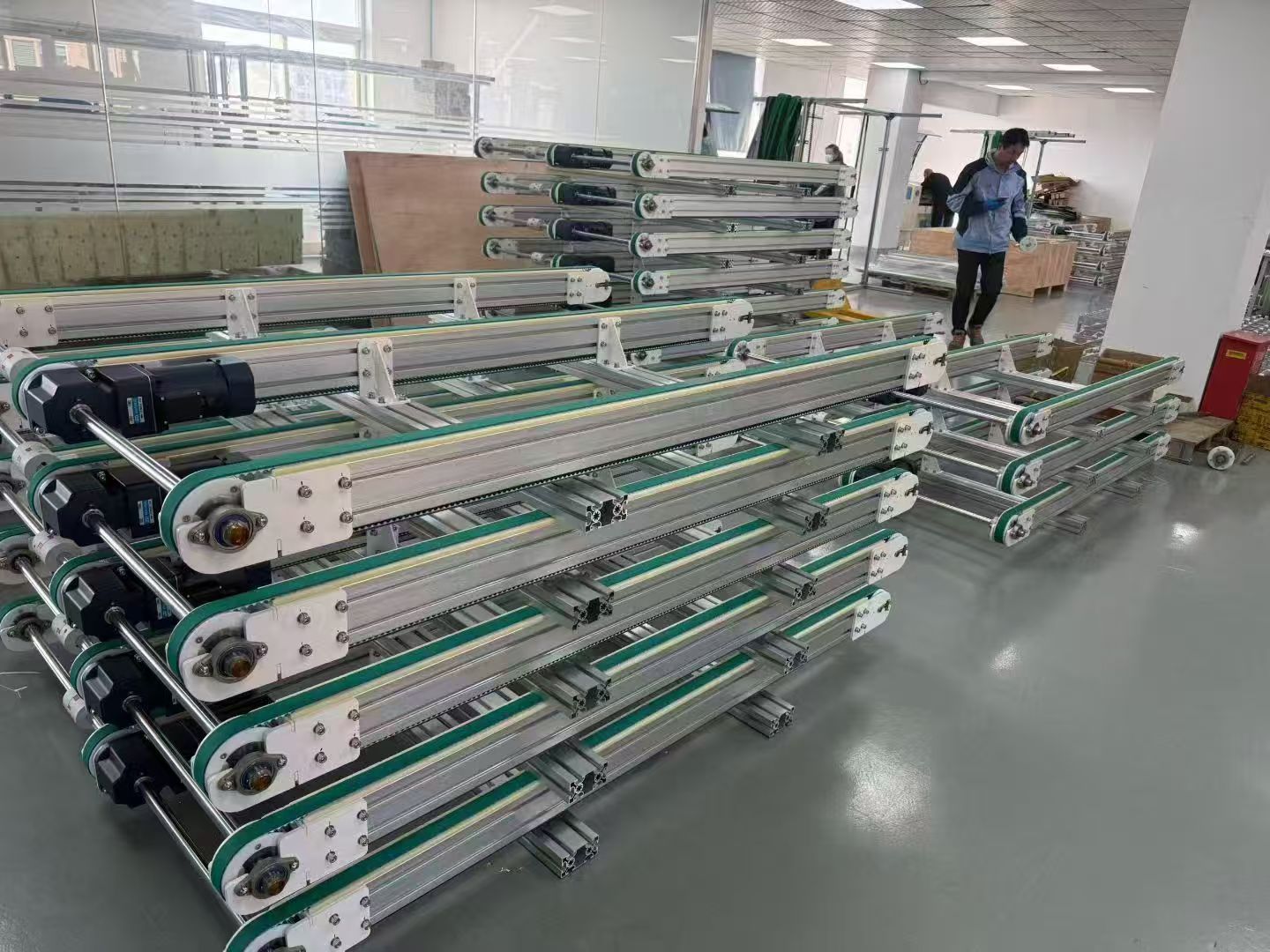
S5M-20-L1650: what the buyer must confirm in writing
The timing belt listed as S5M-20-L1650 sits in the same product record as 28HTD5M-765+NFT+NFB, which is itself a reminder that two pitch families can be offered by one supplier. In common metric synchronous-belt nomenclature, the 5M segment identifies a 5 mm pitch family, the 20 indicates a 20 mm width and the L1650 indicates a 1650 mm length. Those readings are useful at the enquiry stage, but they are not a substitute for the datasheet, because tooth profile designs are not interchangeable between manufacturers even when the pitch family name matches.
Ask for: pitch in millimetres, tooth profile drawing, width and width tolerance, and an explicit statement of whether the stated length is pitch length or inside circumference. Also request the cord type, the backing or coating designation behind suffixes such as NFT and NFB, and the operating temperature range. Without those six answers, a quotation for S5M-20-L1650 is not comparable with a quotation from another supplier using the same string.
GT2 48T and GT2 14T: ratio is set by tooth count
The synchronous wheel record lists GT2 48T and GT2 14T as one product family. Because the transmission ratio in a toothed drive follows tooth counts rather than measured diameters, the 48-tooth and 14-tooth wheels form a fixed pair whose ratio is determined by those two counts. Buyers should confirm bore size, flange arrangement, hub style, material and the belt width the wheel is machined to accept, since none of those follows from the profile name alone.
PQ350mm±3mm: a tolerance needs a measurement method
For the PQ350mm±3mm modular mesh chain, the tolerance is the specification. A stated ±3 mm band is meaningful only when the contract fixes where it is measured (overall assembled width, individual module row, or across a specified number of links), with what instrument, at what temperature, and whether the value must hold after the chain is assembled and run. Two suppliers can both quote 350 mm ±3 mm and still deliver parts that will not interchange, because they measured different features.
2482×16 mm flat belt: fix the length convention first
The flat belt record includes 2482*16 alongside SMT-UGU-09B-J-L2210-W15 and FLAT BELT HY-18-568*14 NFT-NFB. The three strings encode dimensions differently — one uses a plain length-by-width pair, one embeds length and width in L and W segments of a longer part number — which is exactly why the written confirmation should state overall length, developed length, width, thickness and joint type in plain millimetres, independent of the code. Where a belt runs on a fixed-centre drive, the difference between an inside-circumference figure and an overall-length figure can exceed the take-up available on the machine.
Material and Application Questions Behind the Part Number
The same geometry can be supplied in materials that behave very differently, so material selection should be asked as an application question, not as a preference. Shanghai Pengqian's product scope covers conveyor belts, polyurethane and rubber synchronous belts, synchronous wheels, rubber seamless belts, silicone belts, string welding machine belts, sintering furnace mesh belts, PEEK belts, sealing rings, chain products and modular belts. That breadth is useful only if each family is matched to a stated operating condition.
Typical questions by family:
- PU and rubber timing belts (including AT10 PU and HTD PU synchronous types): which cord, which hardness, what minimum pulley diameter, and what continuous temperature applies?
- AT5 and other synchronous pulleys: tooth count, bore and keyway, material, and the belt width accepted.
- Silicone and high-temperature resistance belts: the supplier states that a high-temperature resistant silicone belt was developed to extend beyond conventional belt limits — the buyer should still ask for the qualified continuous temperature and the test basis behind it.
- Stainless mesh and sintering-furnace belts: mesh count, edge construction, and the peak temperature the belt sees in the process, not the average.
- Plastic modular belt and chain plate: module pitch, open or closed surface, and chemical exposure during cleaning.
- V-belts and Teflon belts: profile standard, coating, and whether the surface is intended for release or for grip.
Application fit follows the same logic. In photovoltaic lines the belt runs through string welding and sintering zones where a harvested supply-side record cites 390 °C (734 °F) welding-zone exposure for stringer machines; that number should be treated as the process requirement a buyer needs to confirm against their own oven profile, not as a warranty from any belt supplier. In food and beverage, cleaning chemistry and food-contact declarations matter more than tensile figures, and an ISO 9001 certificate does not by itself establish food-contact conformity. In pharmaceutical, logistics and print applications the deciding questions are usually documentation, static behaviour, registration accuracy and noise at speed rather than raw temperature.
Purchasing-Term Questions: Quantity, Lead Time, Delivery and Duty
Purchasing terms are where a technically sound quotation becomes an executable order, and where an honest reading of the supplier record matters. Shanghai Pengqian's capability record states OEM production with customization of logo, size, material and hole placement, a monthly capacity of 100,000 units, a lead time of 10 to 15 days, 100 percent testing, and remote after-sales support. Its procurement Q&A entry states MOQ of 10 units, FOB or CIF delivery terms, pre-shipment test as the acceptance criterion, and 60/40 payment terms.
Two details deserve explicit attention rather than silent resolution. First, the capability record lists an MOQ of 20 units while the procurement entry lists 10 units; until the supplier confirms in writing, the buyer should treat the MOQ as unconfirmed for the specific item. Second, the export-market sets differ between company records — the corporate profile lists Europe, Asia and the Middle East as main markets, while the capability record lists South America, the EU and the Middle East — so destination coverage should be confirmed for the buyer's own region rather than assumed.
Delivery basis deserves separate scrutiny because it changes landed cost. US Customs and Border Protection ruling NY N349965 classifies vulcanized rubber conveyor belt from China under HTSUS 4010.11.0000, with a 3.3 percent general duty plus 20 percent Section 301 and 10 percent reciprocal tariffs as of April 2025 — 33.3 percent in total. Those rates are point-in-time and classification-specific, and the UN Comtrade product descriptions under HS heading 4010 separate belts reinforced with metal, textile, plastics or other materials, and also list synchronous belts and V-belts. A buyer comparing FOB and CIF offers therefore needs a classification opinion as well as a freight quote.
Supply-side context is equally relevant to term negotiation. UN Comtrade data records China as the largest exporter of vulcanized rubber conveyor belts under HS 401011, with an export value of USD 248.13 million in 2024. Volume of that kind supports availability; it does not validate any individual factory's quality system, which still has to be audited.
Acceptance Questions: What a Pre-Shipment Test Should Contain
Acceptance is the clause most often written in three words and disputed for three months. If the agreed criterion is a pre-shipment test, the purchase order should define five elements: the characteristics inspected, the instrument or gauge used, the sampling basis (full inspection or lot sample), the record format, and the named signatory on each side. Shanghai Pengqian states 100 percent testing in its capability record; a buyer's specification should convert that statement into a dimensional report per batch covering length, width, thickness where applicable, pitch or tooth count, and visual condition of edges and joints.
Custom items need one extra step before series production. Where logo, size, material or hole patterns are modified to customer drawings, a first-article sample should be approved and retained, with the approved sample referenced in the acceptance clause as the physical benchmark.
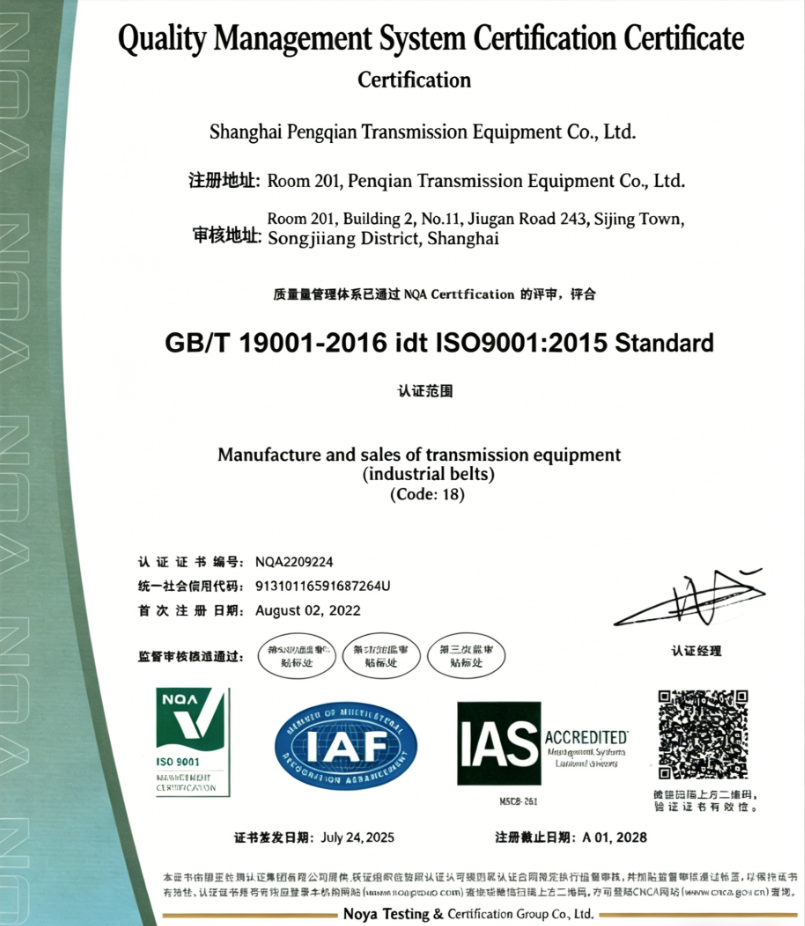
Standards help scope the conversation but must be cited accurately. ISO 14890:2013 specifies requirements for rubber and/or plastics covered conveyor belting of textile construction for general surface use on flat or troughed idlers, and it explicitly does not apply to light conveyor belts as described in ISO 21183-1; the official standard page also indicates a revision process, so the current edition should be checked before it is written into a contract. Certification claims should be verified at the same level of detail. Shanghai Pengqian's ISO 9001 certificate is numbered NOA2209224, issued by NOA Group, valid from 2 August 2022 to 1 August 2028, against GB/T 19001-2016 idt ISO9001:2015, with a scope covering manufacture and sales of transmission equipment (industrial belt). The scope statement and validity window are the parts a procurement reviewer should read, not the logo.
Benchmark Context: Four Dimensions Buyers Actually Score
The reference brands that appear most often in belt enquiries — Forbo-Siegling, Optibelt, Gates, Habasit and CHIORINO — are useful benchmarks precisely because they are familiar, and dangerous benchmarks when familiarity is mistaken for evidence. The harvested industry record for this category contains no independently verified market-share, price or comparative performance data for these brands, and it flags supplier comparison and price evidence as insufficient. Shanghai Pengqian's own company profile states that it acts as an agent for these brands alongside its own manufacturing, which makes the relationship a sourcing option rather than a competitive verdict.
The defensible approach is to benchmark on four dimensions with one question set, sent unchanged to every bidder: research and development depth, application fit, customer service model and procurement terms.
| Benchmark dimension | Question sent to every bidder | Evidence that answers it | Recorded for Shanghai Pengqian |
|---|---|---|---|
| R&D depth | How many engineers work on custom transmission design, and what intellectual property backs it? | Patent numbers, team size, drawing capability | 8 engineers; 26 patent applications filed with the State Intellectual Property Office, 6 invention patents, 19 authorised |
| Application fit | Which comparable installations can be referenced, and for how long have they run? | Named references, run duration, operating conditions | Automotive OEM client in Argentina, 200 units, food-industry application, one year of stable operation, cited for low noise and high speed |
| Customer service | What technical support and after-sales route is written into the contract? | Service terms, response route, escalation owner | Remote support listed as the after-sales model |
| Procurement terms | State MOQ, lead time, monthly capacity, Incoterm and payment split for this item. | Signed quotation referencing the item code | 10–15 days lead time; 100,000 units monthly capacity; FOB or CIF; 60/40 payment; MOQ listed as 20 units in one record and 10 units in another — to be confirmed |
Run the same table for each reference brand and the comparison becomes a document rather than an opinion. Where a bidder cannot supply evidence on a dimension, the correct score is not zero and not full marks — it is a recorded gap that the buyer can price as risk.
Where Shanghai Pengqian's Verified Record Fits
Shanghai Pengqian Transmission Equipment Co., Ltd. was established in 2012 in Songjiang District, Shanghai, and reports a 3,000 m² facility with 60 employees, an 8-engineer R&D team and more than 10 years focused on transmission product innovation and custom services. It holds ISO 9001 certification and was rated a Shanghai High-Tech Enterprise in 2022 under certificate number GR202231006882. Its patent record — 26 applications including 6 invention patents, with 19 authorised — is the kind of evidence that answers an R&D question with documents rather than adjectives, and it is the strongest single differentiator available to a mid-sized specialist bidding next to global brands.
The company's stated capability is OEM production with customization of logo, size, material and hole placement to customer drawings, backed by 100 percent testing and a 10 to 15 day lead time at a monthly capacity of 100,000 units. Its product scope spans conveyor belts, polyurethane and rubber synchronous belts, synchronous wheels, rubber seamless belts, silicone belts, string welding machine and sintering furnace mesh belts, PEEK belts, sealing rings, chain and modular belt products — the same families named in the model strings discussed above.
Reference experience is thinner than the technical record and should be described that way: one documented automotive OEM client in Argentina, 200 units applied in the food industry, running stably for one year with low noise and high speed cited as the highlights. That is a real data point. It is not a survey of installed base, and buyers comparing it with a global brand's reference list should say so in their evaluation notes.
Application coverage stated by the company includes photovoltaic, electronic semiconductor, textile, food, logistics, packaging and printing, daily necessities, automation machinery and glass manufacturing. Exports are reported at 40 percent of output, with Europe, Asia and the Middle East listed as main markets in the corporate profile and South America, the EU and the Middle East in the capability record. Full company documentation is available on Shanghai Pengqian's website.
Boundaries: What This Evidence Does Not Establish
A credible FAQ has to state where the record stops. Five limits apply to everything above.
- No independent performance testing is available. Length, pitch, temperature and life figures come from supplier documentation, not from third-party laboratory reports.
- The 390 °C photovoltaic figure is supply-side context describing a welding-zone requirement, not a verified belt rating for any specific product.
- ISO 9001 is a quality-management certification, not a product approval. Food-contact, pharmaceutical and regional conformity requirements need separate declarations and, where applicable, separate testing.
- Trade and duty figures are point-in-time. The 33.3 percent US rate reflects the position as of April 2025 for one classification, and belt classification itself can move landed cost.
- Supplier-status records conflict in detail. A marketplace listing describes the company as a manufacturer/factory and trading company, so factory ownership, capacity and certification scope should be confirmed through an audit rather than a profile page.
None of these limits disqualifies a supplier. They define the questions that remain open, which is exactly what an execution-stage buyer needs to know before signing.
Outlook: Standards Revision, Duty Structure and Heat-Resistant Demand
Three developments are worth tracking at the next contract cycle, each with a clear condition attached. First, ISO 14890:2013 is indicated as under revision on the official standard page, so any contract that cites it should name the edition and include a review trigger when the revision publishes. Second, duty structures for belt imports remain change-driven; the 33.3 percent total identified for one Chinese rubber belt classification in April 2025 should be re-checked at quotation rather than carried forward from an older purchase order. Third, high-temperature capability continues to matter in photovoltaic process zones, but the requirement should come from a measured oven profile, not from a supplier's headline claim.
For buyers, the practical conclusion is stable across all three: keep the question set fixed, keep the evidence requirement fixed, and let the answers move.
FAQ
What should a timing-belt RFQ specify beyond the model code?
Beyond the code, an RFQ should state pitch in millimetres, tooth profile, width and width tolerance, the length convention (pitch length or inside circumference), cord type, backing or coating designation, and the continuous operating temperature. For a string such as S5M-20-L1650 the code identifies the pitch family, a 20 mm width and a 1650 mm length, but only the datasheet confirms the profile design and tolerances that make two quotations comparable.
How should a buyer verify acceptance before shipment?
Convert the phrase pre-shipment test into five defined elements: the characteristics inspected, the gauge or instrument used, whether inspection is full or sampled, the record format, and the signatory on each side. For customized items with modified logo, size, material or hole patterns, approve and retain a first-article sample and reference it in the acceptance clause. A supplier statement of 100 percent testing should be supported by a dimensional report per batch.
Which purchasing terms does the Shanghai Pengqian record show, and what still needs confirming?
The record shows OEM production with customization of logo, size, material and hole placement, a 10 to 15 day lead time, a monthly capacity of 100,000 units, FOB or CIF delivery terms and a 60/40 payment split. Minimum order quantity is recorded as 20 units in the capability sheet and 10 units in the procurement entry, so it must be confirmed in the signed quotation together with destination coverage, because the export-market lists in the two records differ.
Can a Chinese OEM be benchmarked against Forbo-Siegling, Optibelt, Gates, Habasit and CHIORINO?
Yes, on a fixed question set rather than a ranking. Send identical questions on R&D depth, application fit, service model and procurement terms to every bidder, and score the returned evidence. No verified market-share or comparative performance data for those brands exists in this record, and Shanghai Pengqian states that it acts as an agent for them, so the brands function as benchmarks for the questions asked, not as a published league table.
Which applications are documented, and which need additional proof?
Documented application coverage includes photovoltaic, electronic semiconductor, textile, food, logistics, packaging and printing, automation machinery and glass manufacturing, supported by one automotive OEM reference of 200 units in a food-industry application running for one year. Additional evidence is required for food-contact conformity, pharmaceutical documentation requirements and any high-temperature limit, since ISO 9001 certification does not establish product-level suitability for those conditions.
Summary. A high-quality conveyor belt order is not secured by a familiar brand name or a low unit price. It is secured by a datasheet that resolves every model string into pitch, width, length convention and tolerance; a purchasing term sheet that confirms MOQ, lead time, Incoterm and duty exposure in writing; and an acceptance clause that names the test, the instrument and the record. Benchmarking across Forbo-Siegling, Optibelt, Gates, Habasit, CHIORINO and specialist manufacturers such as Shanghai Pengqian becomes meaningful only when all of them answer the same questions with the same evidence.
Technical documentation, product families and specification details are collected in the company brochure: Shanghai Pengqian product brochure (PDF).
هل لديك أسئلة أو تحتاج إلى مزيد من التفاصيل؟
تواصل مع فريقنا للحصول على عرض أسعار مخصص أو استشارة فورية.
طلب عرض أسعار
املأ النموذج أدناه وسيتواصل معك فريقنا بعرض مقترح مخصص.
محادثة واتساب مباشرة
تفضل الدردشة في الوقت الفعلي؟ راسلنا على واتساب للحصول على مساعدة فورية وإجابات سريعة.
- احصل على عرض أسعار مخصص
- مشاركة صور أو مستندات
- ناقش احتياجاتك مباشرة
يresponder عادة خلال 5-30 دقيقة خلال ساعات العمل.