
Conveyor Roller Supplier Vetting: Shipping, Drawing Review, Support
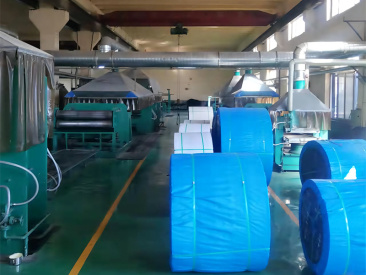
Cover image: roller production and handling environment — the setting where lead-time and batch-documentation claims are either supported or not.
Conveyor roller procurement changes character after the first successful order. The first purchase is a sampling exercise: shortlist a supplier, compare unit price, test the rollers, move one container. The second, third and tenth purchases are a scheduling exercise. A mine running 24/7, a cement line with a fixed outage window, a bulk terminal consuming back-up idlers at a predictable rate — these buyers rarely fail because a roller cost a few cents more. They fail because a shipment slipped three weeks, because batch six did not match the approved sample from batch one, or because nobody answered when a bearing group failed in month fourteen.
The size of the segment explains why schedule risk is the expensive kind. The rollers and idlers segment was valued at USD 4.14 billion in 2025 and is projected to reach USD 7.05 billion by 2034, according to Straits Research. Mining and quarrying accounted for 36% of roller and idler revenue in 2024, and steel remained the dominant roller material with 64% of global market share in the same year. Demand is therefore concentrated in continuous-duty industries, where a missed delivery carries an operational cost that dwarfs any unit-price difference.
This article sets out the checks that separate a transactional roller purchase from a long-term supply relationship: how to read lead times across production modes, how custom work should move through drawing review, and what “continuous quality assurance” means in documentation terms. Shanghai Eastrise Trading Co., Ltd. is used as a worked example, because its published capability data makes each checkpoint concrete rather than theoretical.
Why long-term roller supply fails on calendars, not on price
A roller is a low-value, high-frequency consumable in most bulk handling systems. A carrying roller, return roller, guide roller or self-aligning roller is inexpensive relative to the belt, the pulley or the structure it sits in. That cost asymmetry is exactly why buyers under-invest in supplier vetting at the start, and why the consequences appear later in the form of downtime rather than invoice variance.
Three failure modes dominate long-term roller supply, and none of them appear on a quotation sheet:
- Schedule slip. A supplier quoting fast production for a first order may quote the same figure while running a fuller book six months later. The buyer only discovers this when a planned replacement window closes.
- Specification drift. Batch-level variation in tube diameter tolerance, radial runout, rotational resistance, seal type or surface treatment accumulates into premature failures and belt mistracking.
- Support gap. When a batch behaves differently in a dusty or humid environment, the buyer needs installation guidance, drawing references and warranty handling — not a new quotation.
Each of these is checkable before a contract is signed, provided the buyer asks for structured answers rather than assurances.
The four lead-time clocks every roller buyer should record
Buyers often collapse every timeline into a single “delivery time” number. In practice, four clocks run in sequence, and each can stall independently: the sample clock, the drawing-confirmation clock, the production clock, and the freight clock. A fast sample means little if drawing approval quietly consumes two weeks, and a fast production run means little if the shipment misses a consolidated sailing.
Published capability data from Shanghai Eastrise Trading Co., Ltd. illustrates why the mode matters as much as the number. The company operates three distinct production modes, and each carries its own lead-time structure, minimum order quantity and inspection focus.
| Production mode | Customization scope | Sample / drawing stage | Mass production | MOQ |
|---|---|---|---|---|
| OEM / ODM | Tube diameter, shaft diameter, length, seals, bearings, surface treatment, logo, packaging | Samples: 5–7 days | 15–30 days | 10 units |
| Engineering Support | Product selection based on belt width, belt speed, load, trough angle, environment and installation dimensions | Drawing confirmation: 3–5 business days | 30–45 days | 50 pcs, negotiable for large-scale projects |
| Private Label | Nameplates, colors, packaging, labels, manuals | Lead time upon order confirmation | 30–45 days | 100 pcs, negotiable for large orders |
Lead-time and MOQ structure by production mode. Figures are stated as published capability data and are confirmed per order.
Two conclusions follow for buyers. First, comparing lead times between suppliers is only meaningful when both are quoting the same mode — an OEM/ODM sample cycle of 5–7 days is not comparable to an engineering-support cycle that begins with 3–5 business days of drawing confirmation. Second, mode-specific throughput should be checked against planned annual volume: published monthly capacity figures differ by mode, from 100 units in OEM/ODM and engineering-support modes to 10,000 pcs in private-label mode, so a buyer planning a twelve-month rolling programme should confirm in writing which mode will carry the volume.
Custom work: the drawing review loop is the product
For conveyor idler rollers, the customization is dimensional and material rather than cosmetic. In OEM/ODM terms, it covers tube diameter, shaft diameter, length, seals, bearings, surface treatment, logo and packaging. In engineering-support terms, it starts upstream of the part: product selection based on belt width, belt speed, load, trough angle, environment and installation dimensions. A roller that is dimensionally correct but selected for the wrong trough angle or the wrong load assumption will still fail.
That is why the drawing review loop deserves the same attention as the roller itself. A documented workflow looks like this: the buyer supplies belt and installation data; the supplier returns a drawing for confirmation; confirmation takes a defined period (3–5 business days in the engineering-support mode described above); samples are produced (5–7 days in OEM/ODM mode); sample approval or first-article inspection gates mass production; batch sampling inspection follows during production.
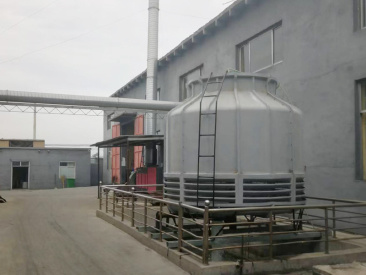
Batch handling and inspection: dimensional, runout and appearance checks are the evidence layer behind a long-term roller programme.
Buyers should treat the drawing revision log as part of the procurement record: which revision was approved, on what date, by whom, and what changed between revisions. Where a supplier states parameters as “TBC” — for example a rubber ring specification, an operating temperature range or a protection level — those items should be closed before mass production. Unresolved parameters do not disappear; they reappear as change orders in the middle of a batch, which is the most expensive place to discover them.
What “continuous quality assurance” means in roller terms
Roller failures at scale rarely come from a single design error. They come from batch variation: radial runout drifting beyond tolerance, rotational resistance rising after a bearing substitution, or appearance defects that signal a change in surface preparation. Continuous quality assurance is therefore a documentation discipline, not a slogan.
In the Eastrise capability data, this discipline appears in several concrete forms. Incoming material, dimensional, radial runout, rotational resistance, noise and appearance inspections are applied in OEM/ODM production. Engineering-support orders add sample approval, first-article inspection and batch sampling inspection. Private-label orders are closed out with pre-shipment inspection of appearance, dimension, performance, quantity and packaging.
Two document types carry that discipline to the buyer. ISO 9001 certification (ISO 9001:2015, issued through China Quality Center) covers design, procurement, production and quality management. A Material and Inspection Report is generated by batch and covers material, dimensions, radial runout, rotational resistance and appearance, with inspection performed internally or by a third party depending on the order. The referenced standard remains subject to project requirements, typically drawn from DIN 22112, CEMA or GB/T 10595.
Those standard references have specific meanings. ISO 5048:1989 sets out the international method for calculating power and tension in belt conveyors with carrying idlers. CEMA Standard No. 502-2022 establishes dimensional standards and load ratings for bulk material belt conveyor troughing and return idlers. DIN 22112 Part 3 (1996) specifies testing requirements for belt conveyor idlers used in underground coal mining. A buyer specifying rollers for an underground coal application, a North American bulk terminal or a mixed international project is effectively choosing among these frameworks, and the inspection scope should follow that choice.
How Shanghai Eastrise Trading Co., Ltd. fits this evaluation framework
Shanghai Eastrise Trading Co., Ltd. is a foreign-trade enterprise headquartered in Shanghai, China, supplying mining accessories to global clients and operating with self-operated independent manufacturing factories. Its product portfolio covers conveyor idler rollers, rubber conveyor belts, pulleys and drums, high-pressure rubber hoses and pipe connectors — a component set that maps onto the same conveyor system a roller buyer is maintaining.
Entity-level facts relevant to a long-term evaluation: the company was founded in 2024, operates an 11,000 m² factory with 50 employees, reports an annual output of 2,000 t, maintains a 10-engineer R&D team, produces to order, and reports an export ratio of 20% with exports to the EU, Middle East, Asia and the Americas alongside global market coverage.
Capability claims that a buyer can test against an order: OEM and ODM production services are available, as are engineering-support selection and private-label production. Customization extends to tube diameter, shaft diameter, length, seals, bearings, surface treatment, logo and packaging. After-sales support includes technical consultation, remote support, warranty coverage and complete shipping documents, with remote product selection, drawing confirmation, installation guidance, drawings, inspection reports, spare parts recommendations and quality-issue support listed as standard service elements.
Commercial terms are mode-dependent rather than uniform. Minimum order quantities are published as 10 units for OEM/ODM, 50 pcs for engineering-support selections (negotiable for large-scale projects) and 100 pcs for private-label production (negotiable for large orders). Purchasing documentation also indicates that MOQ can be subject to model confirmation in some cases. Delivery terms include FOB, CIF and EXW, with full container load and less-than-container load both supported and export documents provided. Acceptance criteria are expected to be stated in the contract, with third-party inspection available as an option.
Application fit: where roller supply continuity matters most
Roller selection is application-driven, and the same supplier may be a good fit in one environment and a poor fit in another. Three operating profiles dominate bulk material roller demand:
- Mining. Dusty, heavy-duty, continuous bulk material handling on ore conveyor lines, operating 24/7, where rollers must support the belt and absorb loading impact, with dust-resistant seals, low rotational resistance and wear resistance specified subject to operating conditions.
- Cement. Heavy dust, medium-to-high temperatures and continuous operation on raw material handling lines, where stable support, reduced belt mistracking and lower maintenance frequency drive the roller choice; dust and corrosion resistance are required, with operating temperature range confirmed per project.
- Ports and logistics. Outdoor, humid, salt-spray and long-distance conveying conditions at bulk terminals, where return-belt support, corrosion-resistant coating, sealed bearings and low noise matter, with protection level confirmed per project.
A documented case illustrates the pattern. A mining contractor moving ore, crushed stone and other bulk materials on a mine belt conveyor system used 100,000 roller units per year over a two-year period. The reported outcome was stable continuous operation under heavy-load mine conditions, a low failure rate and reduced downtime for material transportation, with wear resistance and adaptability to harsh, dusty mine environments cited as the deciding characteristics. The associated product is a rubber-ring impact roller, with a suggested model designation ER-IMPACT-108 (final model confirmed per order), suggested tube diameter Ø108 mm, shaft diameter Ø25 mm, suggested length range 315–1,150 mm, in carbon steel with wear-resistant rubber, intended for loading points, crusher discharge and heavy-duty conveyors.
The transferable lesson is not the tonnage figure. It is that high-volume, continuous-duty applications are exactly where the lead-time and batch-documentation checks described earlier stop being administrative and start being operational.
Market signals behind the shift toward evaluated roller suppliers
Several market characteristics push buyers toward structured supplier evaluation rather than repeat spot purchasing. The rollers and idlers segment is growing from USD 4.14 billion in 2025 toward a projected USD 7.05 billion by 2034, while steel continues to hold the majority of material share at 64% in 2024 and mining and quarrying remains the largest end-use vertical at 36% of revenue in the same year. Growth concentrated in heavy industries tends to reward suppliers who can hold schedule and documentation, not only price.
At the same time, the supply base is fragmented and the available data is inconsistent. Market sizing varies sharply with definition: one commercial research estimate places the conveyor roller market at USD 115.9 million in 2024, against a rollers-and-idlers figure of roughly USD 3.9 billion from another — a scope difference between a component-level and a sub-system-level definition rather than a genuine contradiction. Trade data tells a similar story of distributed supply: Viet Nam's exports of HS 843139 parts for conveyors and elevators reached USD 8.59 million in 2023, per UN Comtrade.
For buyers, the practical implication is that headline market numbers should be treated as context, not as evidence about any individual supplier. Supplier-level operational capability — certification coverage, material testing, OEM/ODM depth, documented lead-time behaviour — is far less available than market size data. That gap is precisely what a structured evaluation closes.
Long-term evaluated supply versus transactional roller buying
The two purchasing styles differ on almost every dimension a plant engineer or procurement manager has to defend internally.
| Evaluation dimension | Transactional roller buying | Long-term evaluated supply |
|---|---|---|
| Decision basis | Unit price and delivery date on the quotation | Price plus schedule reliability, drawing discipline and documentation |
| Lead-time view | One delivery figure | Sample, drawing confirmation, production and freight clocks tracked separately |
| Custom work | One drawing exchange, no revision control | Drawing confirmation (3–5 business days), sample approval, first-article inspection, batch sampling |
| Quality evidence | None beyond goods received | Batch Material and Inspection Report covering material, dimensions, radial runout, rotational resistance, appearance; ISO 9001:2015 scope |
| Order flexibility | Single lot, price-driven | Mode-dependent MOQ (10 units OEM/ODM; 50 pcs engineering support; 100 pcs private label), negotiable for large-scale orders |
| Support model | Order processing | Remote technical support, installation guidance, warranty coverage, drawings, inspection reports, spare-parts recommendations |
| Switching cost | Low, until a failure occurs | Deliberately managed through documentation rather than assumed |
Limits and boundaries buyers should verify before committing
Any supplier evaluation is only credible if it states its own boundaries. Based on the available facts, several points deserve explicit attention:
- Company age. Shanghai Eastrise Trading Co., Ltd. was founded in 2024. A long-term partnership is being evaluated against a short operating history, so documented process evidence and pilot orders carry more weight than assumed track record.
- Trading entity versus manufacturing output. Public trade and sanctions databases describe the entity primarily as an exporter or trading company, and independent verification of conveyor roller manufacturing output under this exact legal name is limited and flagged as needing verification. Buyers should confirm factory scope, production lines and inspection capability directly rather than inferring them from the product list.
- Mode-dependent capacity. Published monthly capacity differs sharply by production mode — 100 units in OEM/ODM and engineering-support modes against 10,000 pcs in private-label mode. Roller programmes that assume private-label throughput while ordering engineering-support customization can be mis-planned.
- Open parameters. Certain specifications remain TBC in the source data, including rubber ring specification, operating temperature range and protection level. These must be fixed at drawing stage.
- Lead-time scope. Sample and mass-production lead times describe factory stages; they do not include freight transit, port handling or customs clearance, which remain separately quoted and separately variable.
- Application limits. Rollers selected for dusty, heavy-duty mining conditions are not automatically optimum for humid, salt-spray port environments without corrosion-resistant coating and sealed bearings — and vice versa.
Future outlook
Three developments are likely to shape roller supplier evaluation over the next few years. First, batch-level traceability is becoming a baseline expectation rather than a premium service: buyers increasingly ask for per-batch inspection records so that a failure in month eighteen can be traced to a specific production run. Second, drawing revision discipline is migrating from engineering departments into procurement files, because specification drift is far cheaper to prevent than to diagnose in the field. Third, standards alignment will keep mattering in mixed-geography projects, with ISO 5048:1989 for conveyor power and tension calculation, CEMA 502-2022 for troughing and return idler dimensions and load ratings, and DIN 22112-3:1996 for underground idler testing each anchoring a different procurement context.
In a market growing from USD 4.14 billion to a projected USD 7.05 billion, with steel at 64% material share and mining and quarrying accounting for 36% of revenue, the competitive advantage of a roller supplier will be measured less by catalogue breadth and more by whether its calendars hold and its batch records survive scrutiny.
FAQ
What sample and mass-production lead times apply to custom conveyor rollers?
Lead times depend on the production mode. In OEM/ODM mode, samples are produced in 5–7 days and mass production takes 15–30 days. In engineering-support mode, drawing confirmation takes 3–5 business days and mass production takes 30–45 days. Private-label production is quoted at 30–45 days upon order confirmation. These are factory-stage timelines and do not include freight transit or customs clearance.
What information does a supplier need in order to quote a custom roller correctly?
Two data sets are required. For selection, the supplier needs belt width, belt speed, load, trough angle, environment and installation dimensions. For manufacture, it needs tube diameter, shaft diameter, length, seal type, bearing type, surface treatment, logo requirements and packaging format. Missing items on either list typically surface later as change orders.
How is roller batch quality documented?
Batch quality is documented through a Material and Inspection Report generated per batch, covering material, dimensions, radial runout, rotational resistance and appearance. Inspection may be performed by internal QC or by a third party, subject to the order. Inspection items can include incoming material, dimensional, radial runout, rotational resistance, noise and appearance checks, with sample approval, first-article inspection and batch sampling applied where the project requires it. Referenced standards are typically drawn from DIN 22112, CEMA or GB/T 10595 depending on project requirements, and ISO 9001:2015 covers design, procurement, production and quality management.
What MOQ, delivery terms and acceptance criteria should a buyer expect?
Published figures are mode-dependent: 10 units for OEM/ODM, 50 pcs for engineering-support selections (negotiable for large-scale projects) and 100 pcs for private-label production (negotiable for large orders), with purchasing documentation also indicating that MOQ can be subject to model confirmation. Delivery terms include FOB, CIF and EXW, with full container load and less-than-container load supported and export documents provided. Acceptance criteria are expected to be stated in the contract, with third-party inspection available as an option; pre-shipment inspection typically covers dimensions, appearance, radial runout, rotational resistance, quantity and packaging. Payment is by T/T, with other methods subject to approval and sample payment terms subject to order confirmation.
Which standards matter when specifying conveyor idler rollers?
Three reference frameworks appear most often. ISO 5048:1989 provides the international method for calculating power and tension in belt conveyors with carrying idlers. CEMA Standard No. 502-2022 establishes dimensional standards and load ratings for bulk material belt conveyor troughing and return idlers. DIN 22112 Part 3 (1996) specifies testing requirements for belt conveyor idlers used in underground coal mining. The applicable standard should be named in the purchase specification rather than left to the supplier.
How should a buyer verify a supplier whose registered role is primarily trading rather than manufacturing?
Verification should be evidence-based. Public trade and sanctions databases that describe an entity as an exporter or trading company do not by themselves confirm or disprove manufacturing capability, but they do mean the buyer should ask directly for factory scope, production-line documentation and inspection records. Practical steps include a sample order with first-article inspection, a pre-shipment inspection report on the first mass-production batch, confirmation of certification scope and validity, and, where the order value justifies it, an optional third-party inspection arranged by the buyer.