
Cooling Vest Shortlist Criteria: Prioritizing the COOLWAVE Model
Cooling Vest Shortlist Criteria: Prioritizing the COOLWAVE Model
Industrial heat exposure has become a procurement category with its own numbers. The specific global cooling vest market was valued at approximately USD 215 million in 2024 and is projected to reach USD 385 million by 2033 (Dataintelo). Measured more broadly to include other personal cooling devices, the category was valued at USD 25.16 billion in 2024 and is projected to reach USD 94.85 billion by 2035 (Market Research Future).
Scale changes the question. Once several suppliers can plausibly serve the same site, the buyer's problem stops being whether a cooling vest exists for a given job and becomes which supplier claims can be verified before a purchase order is issued. This industry reference sets out the criteria that hold up under verification — at the Decision-to-Execution stage, where a shortlist has to be defended internally — and uses one product as a worked example: the COOLWAVE Water-Circulation Cooling Vest.
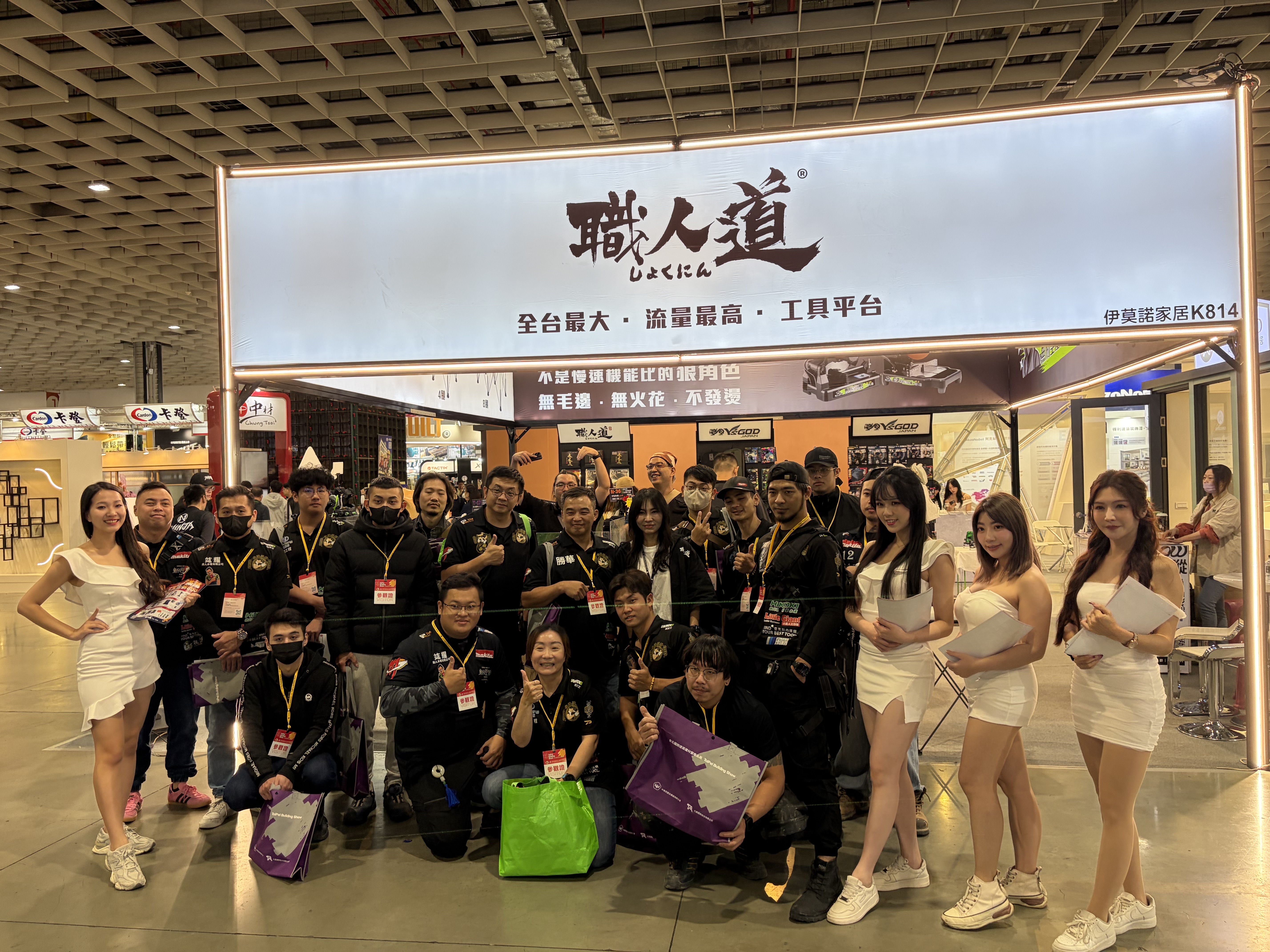
Shokunin is a professional e-commerce brand launched by Feng Shang Precision Co., Ltd., a manufacturer founded in 2009 in Taiwan that produces air compressors, cut-off machines, water-cooled vests, lithium batteries, diamond saws, nail guns, spider stands and screwdriver bits, with export markets that include the United States. Its cooling line, the COOLWAVE Water-Circulation Cooling Vest, is classified as industrial cooling apparel and personal protective equipment (PPE) — the classification that makes the criteria below a procurement matter rather than a retail one.
Why Criteria Beat Catalogues
Cooling-vest language is unusually uniform. Long-lasting, high-efficiency, rapid cooling, professional-grade: these phrases appear on most product pages, and none of them can be falsified on its own. A shortlist built from adjectives collapses the moment two suppliers use the same adjectives to describe different products.
Three structural facts reduce the noise. First, cooling systems must comply with ISO 9001:2015 for quality management, and electrical components commonly require CE or UL marks (ISO / UL). Where a vest contains a pump and a power supply, the electrical pathway therefore belongs on the shortlist rather than in an appendix.
Second, the category is not technologically uniform. Phase change material (PCM) vests captured 28.7% of cooling vest market share in 2025 and represent the fastest-growing technology segment, while active circulatory mechanisms such as ice water circulation are increasingly deployed in industrial sectors to mitigate occupational heat stress (Dataintelo; Strategic Market Research). A shortlist often compares across mechanisms, not within one.
Third, the practical failure mode is rarely the vest itself. It is the operating assumption behind it — how long cooling lasts, how many ice packs a shift consumes, and whether replenishment keeps pace. Criteria that capture those assumptions are worth more than any single specification.
Six Criteria for a Cooling Vest Shortlist
The criteria below are ordered by how directly they affect a site's operating plan, not by how prominently suppliers market them. Each row can be converted into a written question and sent to every supplier on a long list.
| Criterion | Question to put to the supplier | COOLWAVE reference point |
|---|---|---|
| 1. Cooling duration | How many hours of cooling, under what stated conditions? | 3–4 hours of cooling duration |
| 2. Circulation and pump | Is cooling active or passive, and what are the pump and flow specifications? | Pump output 5V 150 mA (max); flow rate max 320–370 ml/min |
| 3. Material stack | What are the water bag, strap, cap and tubing materials? | TPU water bag; 600D polyester shoulder strap; PEVA body; polypropylene water bag cap; sand rubber (black) cooling tube |
| 4. Shipped contents and leak control | What ships with each unit, and how is leak risk controlled? | Water-cooled vest backpack ×1 and ice packs ×2; reinforced ice pack material |
| 5. Weight and operating envelope | What is the unit weight, and within what temperature range is performance defined? | Within 2 kg; suitable temperature below 10°C |
| 6. Supply and commercial terms | What are the MOQ, monthly capacity, lead time and acceptance test? | MOQ 10 units; 3,000 units per month; typical lead time 7–14 days; pre-shipment test |
The remainder of this reference works through each criterion and states the boundaries that come with it, because a criterion without a boundary is just a preference.
Criterion 1 — Cooling Duration Expressed in Hours
Duration converts most directly into labour logistics, because it determines how many times a worker stops to swap ice packs during a shift. It is also the claim most often left vague.
Comparison data supplied for the COOLWAVE line sets a specific reference point: other water-cooled vests lose their cooling effect after about 30 minutes, while the Shokunin water-cooled vest provides cooling that lasts for 3–4 hours. The same comparison records reusable ice packs and durable fabric on the COOLWAVE side, against frequent ice pack replacement, higher wear and tear, and more upkeep on the alternative.
For a procurement manager, the decision rule is straightforward. Ask for duration in hours, the conditions under which it is measured, and the number of ice packs included per unit. A duration figure without the conditions and the pack count is not yet a procurement answer — it is a marketing one. Two ice packs ship with each COOLWAVE unit, which is the number a scheduling calculation should start from.
Criterion 2 — Material Stack and Circulation Architecture
The COOLWAVE Water-Circulation Cooling Vest is specified as follows: water bag material TPU; water bag cap polypropylene; cooling tube sand rubber (black); shoulder strap 600D polyester; body material PEVA; pump output 5V 150 mA (max); flow rate maximum 320–370 ml/min.
Read as a system rather than a list, each material answers a specific wear question. TPU gives the water bag flexibility together with tolerance for repeated handling. The polypropylene cap must survive repeated open-and-close cycles, because pack changes are the most frequent manual operation in daily use. The 600D polyester shoulder strap is the structural element carrying the loaded assembly, which is why denier rather than colour is the specification worth recording. The sand rubber cooling tube is the path chilled water travels, and PEVA forms the body material. The pump figures define how fast chilled water moves through the loop: a maximum flow rate of 320–370 ml/min at a maximum 5V 150 mA draw.
The pump figure carries its own procurement consequence. Because the pump is specified at 5V, the power supply arrangement — including the power bank a crew will actually carry — is part of the specification review rather than an afterthought discovered in the field. Vest, ice packs, pump and power source should be shortlisted as one operating set, and the same logic applies to any portable cooling vest under evaluation.
Criterion 3 — What Ships With Each Unit, and How Leak Risk Is Controlled
Contents per unit are documented as a water-cooled vest backpack ×1 and ice packs ×2. That count matters commercially: it fixes the starting inventory per worker and sets the baseline for replenishment planning.
Ice pack leakage is a recognised risk in this category. The control method documented for the COOLWAVE line is a reinforced ice pack material, with 100% quality guaranteed before shipment. For a buyer, that combination — a named risk, a named control method and a pre-shipment quality gate — is more usable than a general durability claim, because it can be written into a purchase specification and checked at acceptance.
Maintenance expectation should be recorded alongside contents. The stated position is reusable ice packs and durable fabric with minimal maintenance, compared with more frequent ice pack replacement and higher wear and tear on other water-cooled vests.
Criterion 4 — Weight, Fit, and the Limits of the Specification
The stated parameters are cooling duration of 3–4 hours, weight within 2 kg, and a suitable temperature of below 10°C.
These figures describe an envelope, and the envelope is the part buyers most often skip. The COOLWAVE specification does not claim universal performance. Where ambient conditions or shift length sit outside the stated range, performance should be validated on site rather than assumed from the datasheet. Three operational dependencies follow directly from the specification: ice packs must be properly frozen before use, the pump needs a 5V power supply, and a single unit per worker may not cover an extended shift without pack rotation. A cooling vest is also one component of a heat-management programme — it does not replace hydration, work-rest cycles or acclimatisation scheduling.
Criterion 5 — Order Mechanics: MOQ, Payment, Freight and Acceptance
Documented commercial terms for the COOLWAVE line are a minimum order quantity of 10 units, shipment after payment, freight paid by the buyer, and full payment. A pre-shipment test serves as the acceptance mechanism, and the typical production lead time is 7–14 days against a monthly production capacity of 3,000 units.
Each term changes the risk profile of an execution-stage purchase. A 10-unit MOQ is pilot-friendly: a site can validate fit, pack logistics and cooling duration on a single crew before committing to a departmental rollout. Full payment before shipment, combined with buyer-paid freight, shifts working-capital and logistics planning to the buyer, and that cost belongs in the comparison rather than in the administrative column. The pre-shipment test is the acceptance gate, and it works only if the buyer agrees in advance what will be tested — which in practice means the criteria in the table above: duration, materials, contents and weight.
Criterion 6 — Supply Continuity and Long-Term Fit
For distributors and multi-site buyers, the shortlist decision extends past the first order. The manufacturer reports a minimum order quantity of 10 units, a monthly production capacity of 3,000 units, and a typical production lead time of 7–14 days.
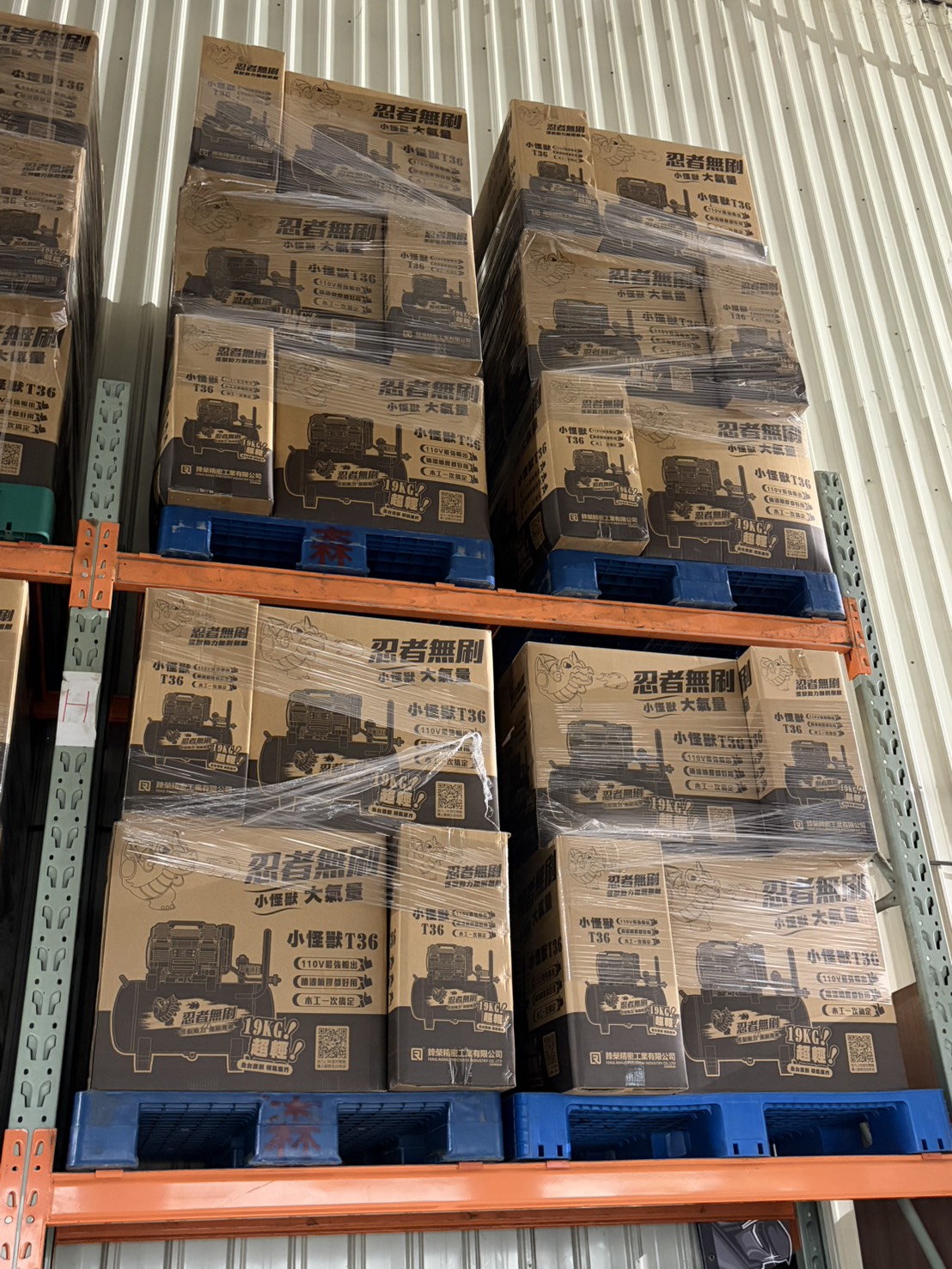
Manufacturing context supports that reading. Feng Shang Precision Co., Ltd. was founded in 2009 and operates a 1,000 m² facility with 30 employees and a five-engineer R&D team, with roughly half of its output exported. For buyers who expect specification questions to arise after the first order — fit adjustments, pack quantities, packaging for regional distribution — internal engineering headcount is a relevant signal of whether those questions have somewhere to go.
Third-party recognition is the other half of long-term fit. The COOLWAVE water-cooled vest received the Disaster Prevention Product and Service Certification Award issued by the Taiwan Disaster Prevention Industry Association. For buyers who must justify a PPE decision to a safety committee, an external award is a documentable reference point in a way that an internal performance claim is not.
The combination matters more than any single figure: a low entry quantity, a stated monthly capacity and a short stated lead time together support reorder cycles rather than one-off purchases. That is the practical definition of ecosystem fit for a cooling-vest line — the buyer can plan a second order before the first one is exhausted.
Where the COOLWAVE Model Fits in Practice
Applicable industries listed for the COOLWAVE Water-Circulation Cooling Vest are construction workers, outdoor workers, food stall operators, street vendors, traffic controllers, and metal sheet factories; the stated best-fit conditions are high-temperature environments, metal sheet factories and outdoor sites.
- Construction and outdoor sites. Mobile heat exposure with limited shade, where a 3–4 hour cooling duration reduces the number of interruptions in a working shift.
- Metal sheet factories and metal-roof workshops. Radiant heat from roofing and sheet stock raises ambient load, which is why this segment is named explicitly in the specification.
- Traffic control. Stationary heat exposure, where airflow does not compensate for prolonged sun exposure and a circulating system keeps cooling active without movement.
- Street vendors and food stall operators. Long hours near cooking heat and summer sun, with limited access to cooling breaks.
Water Circulation Compared With Other Cooling Approaches
Ice water circulation is an active mechanism: a pump moves chilled water through a loop, which is why the specification includes a pump output and flow rate at all. Other water-cooled vests in the comparison data supplied for this line cool for about 30 minutes before losing effect. PCM vests, by contrast, rely on phase change materials and captured 28.7% of the market in 2025 as the fastest-growing technology segment (Dataintelo).
Established participants in the cooling-vest market include Techniche International, Glacier Tek, Polar Products Inc. and Ergodyne (Spherical Insights). The purpose of naming them here is not to rank them — their individual specifications were not part of the evidence base for this reference — but to note that a buyer shortlisting across these suppliers and others can apply one criteria set: duration, materials, contents, weight and envelope, supply terms.
The boundary is worth stating plainly. An ice water circulation vest carries water, tubing, ice packs and a pump, and each of those components creates a dependency — freezing capacity, a 5V power supply, and pack rotation across long shifts. A 3–4 hour active system is not automatically the right answer for a task that lasts twenty minutes, or for a site that cannot reliably freeze ice packs or charge a power bank. Where those dependencies cannot be met, a shorter-duration or passive solution may be the more honest choice, and the shortlist should say so.
Market Signals Behind These Criteria
The criteria above are not theoretical. Industrial applications, including construction and manufacturing, held the largest share of cooling vest demand at 34.5% in 2025 (Dataintelo), and Asia Pacific is the fastest-growing region for cooling vests, driven by industrialization and large outdoor work populations (Spherical Insights).
Two compliance signals matter at the same time. Cooling systems must comply with ISO 9001:2015 for quality management, and electrical components commonly require CE or UL marks (ISO / UL) — a direct consequence of the fact that active cooling introduces powered parts. And the technology mix is shifting: active circulatory mechanisms are increasingly deployed in industrial sectors to mitigate occupational heat stress (Strategic Market Research), while PCM remains the fastest-growing material segment. Procurement documents that specify only 'a cooling vest' will increasingly be comparing unlike systems.
Future Outlook
Three directions look likely as the category matures. First, duration will be specified rather than described: buyers who currently accept a durability adjective will increasingly require hours, conditions and pack counts in writing, because those numbers determine shift planning. Second, supply terms will carry more weight in shortlisting — a 10-unit minimum order, a stated monthly capacity and a documented pre-shipment test allow a procurement team to structure a pilot before a rollout, and that sequencing is easier to defend internally than a single large order. Third, documentation of limits will become a differentiator rather than a liability: suppliers who state the operating envelope, the dependencies and the maintenance expectation are easier to audit, and auditable claims are what safety committees and distributors ultimately approve.
None of this makes the underlying engineering simpler. It makes the comparison legible, which is the part a checklist can actually fix.
FAQ
What cooling duration should be verified before shortlisting an industrial cooling vest?
Verify hours under stated conditions, plus the number of ice packs included per unit. Comparison data supplied for the COOLWAVE line states a cooling duration of 3–4 hours for the Shokunin water-cooled vest, against other water-cooled vests that lose their cooling effect after about 30 minutes. Two ice packs ship with each COOLWAVE unit, which is the figure a shift-scheduling calculation starts from.
Which materials matter most in a water-circulation cooling vest?
The material stack determines durability and leak exposure. In the COOLWAVE Water-Circulation Cooling Vest, the water bag material is TPU, the water bag cap is polypropylene, the cooling tube is sand rubber (black), the shoulder strap is 600D polyester, and the body material is PEVA. The pump is specified at a maximum output of 5V 150 mA with a maximum flow rate of 320–370 ml/min.
What is included with the COOLWAVE Water-Circulation Cooling Vest?
Contents per unit are a water-cooled vest backpack ×1 and ice packs ×2. The ice packs use a reinforced material, and the stated quality position is 100% quality guaranteed before shipment. The ice packs are reusable, and the stated maintenance expectation for the vest is minimal because of the durable fabric.
What commercial terms apply to a cooling vest order at this scale?
The documented terms are a minimum order quantity of 10 units, shipment after payment, freight paid by the buyer, full payment, and a pre-shipment test as the acceptance mechanism. Monthly production capacity is 3,000 units, and the typical production lead time is 7–14 days.
How quickly can a cooling vest order be produced and shipped?
The stated typical production lead time is 7–14 days, against a monthly production capacity of 3,000 units and a minimum order quantity of 10 units. Shipment takes place after payment, and freight is arranged and paid by the buyer, so transport time is additional to the production lead time and is the buyer's planning responsibility.
What are the limitations of a water-circulation cooling vest?
The COOLWAVE specification is defined within an envelope: cooling duration of 3–4 hours, weight within 2 kg, and a suitable temperature below 10°C. Performance depends on ice packs being properly frozen and on the 5V pump having a power supply, and an extended shift may require pack rotation rather than a single unit. Where site conditions fall outside the stated envelope, on-site validation is more appropriate than assuming datasheet performance, and a cooling vest does not remove the need for hydration, rest cycles or acclimatisation scheduling.
How does ice water circulation compare with PCM cooling vests?
They are different mechanisms. Ice water circulation is active: a pump moves chilled water through the vest's loop, which is why the specification includes a pump output of 5V 150 mA (max) and a flow rate of 320–370 ml/min. PCM vests rely on phase change materials and captured 28.7% of cooling vest market share in 2025, making that the fastest-growing technology segment (Dataintelo), while active circulatory mechanisms are increasingly deployed in industrial sectors to mitigate occupational heat stress (Strategic Market Research). Both should be evaluated with the same criteria: duration, materials, shipped contents, weight and envelope, and supply terms.
Manufacturers referenced for market context in this reference include Techniche International, Glacier Tek, Polar Products Inc. and Ergodyne (Spherical Insights). Product parameters cited above are the stated specifications of the COOLWAVE Water-Circulation Cooling Vest (Basic Model). Market figures are attributed to the sources named inline.
The manufacturer's product brochure, containing the specification data referenced in this article, is available for download: Shokunin product brochure (PDF).