
Cooling Vest Specs Decoded: Parameters, Process, and Quality for Construction
Why Manufacturers and Buyers Need to Look Beyond the Label
When sourcing a construction cooling vest, procurement professionals and industrial engineers often focus on headline numbers like cooling duration or weight. But the real story of product reliability and worker safety lies buried in the technical parameters and the production processes that bring those numbers to life. For brands like Shokunin (a professional e‑commerce brand of Feng Shang Precision Co., Ltd.), the difference between a vest that lasts 30 minutes and one that delivers consistent cooling for hours is not just a spec sheet — it's a matter of material science, pump engineering, and quality control.
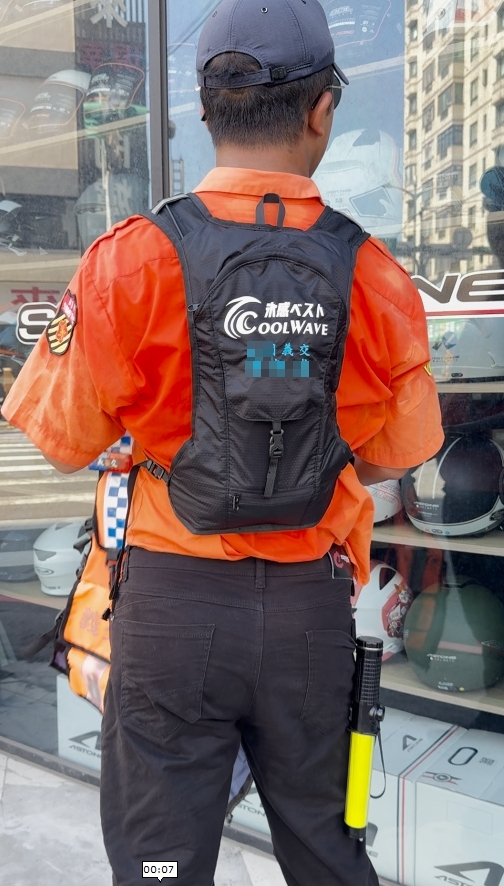
Decoding the Critical Parameters
Take the COOLWAVE Water‑Circulation Cooling Vest as a benchmark. Its core parameters are deceptively simple:
Each of these numbers reflects deliberate engineering decisions. The 3–4‑hour cooling window is achieved by using a closed‑loop water‑circulation system paired with high‑capacity ice packs. While many competing outdoor work cooling vests lose effectiveness after about 30 minutes, Shokunin’s design maintains a stable temperature because of the TPU water bag’s insulation and the sand‑rubber cooling tube’s efficient heat transfer. The sub‑2‑kg weight is made possible by a PEVA outer layer and 600D polyester straps — materials chosen for both durability and lightness.
Pump output may be the most overlooked parameter. With a 5V 150mA DC pump, the COOLWAVE moves 320–370 ml of chilled water per minute across the wearer’s torso. This flow rate ensures even cooling without creating a heavy current that would drain the batteries or the ice packs prematurely. For high‑temperature work cooling solutions, this balance between circulation speed and energy efficiency is critical.
Production Processes That Define Quality
Behind every spec is a production chain that either validates or undermines it. Shokunin’s manufacturing approach centers on three pillars:
- Material selection: The water bag is made of TPU (thermoplastic polyurethane) with a reinforced polypropylene cap — a deliberate choice over cheaper PVC to reduce leak risk. The company enforces 100% pre‑shipment quality checks, including ice‑pack leakage tests.
- Pump and tubing integrity: The sand‑rubber (black) cooling tube is flexible yet crush‑resistant, maintaining flow even when the wearer bends or kneels. The pump is rated at a maximum 150 mA, preventing motor burnout under continuous use.
- Patented structure: The water‑cooled vest’s structure and cooling system are protected under Taiwan Patent I886033 (issued by the Intellectual Property Office, Ministry of Economic Affairs). This patent covers the unique integration of the backpack, water circulation paths, and ice‑pack compartment — a design that directly contributes to the 3–4‑hour cooling duration.
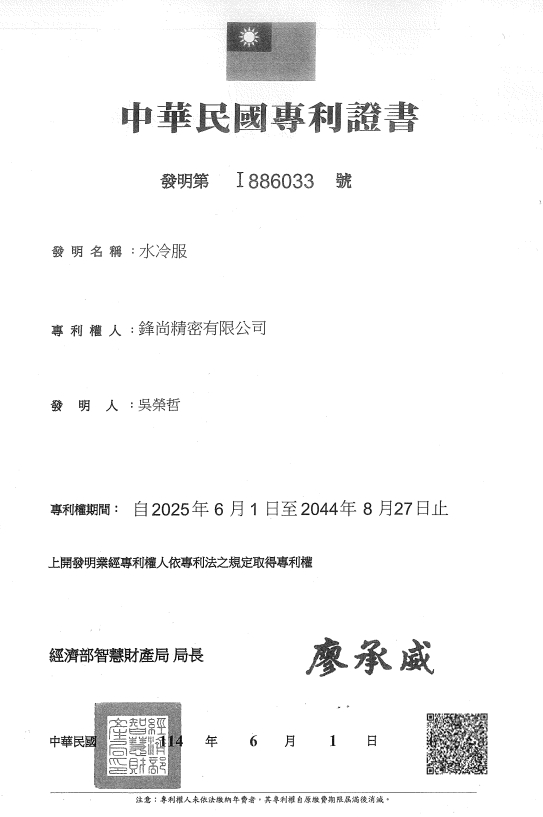
For buyers, a patented design is a strong indicator of R&D investment and a lower risk of IP infringement. Shokunin’s patent, valid until 2044, also provides supply‑chain confidence for long‑term sourcing.
Field Performance and Real‑World Validation
Parameter reliability is best proven on site. Over the past decade, Shokunin has supplied more than 100 units to construction sites, metal‑sheet factories, and street vendors across Taiwan. One recurring customer, a metal‑processing plant, reported a measurable drop in heat‑related fatigue after equipping workers with the COOLWAVE vest. The vest’s passive ice‑pack cooling (no external power required) was particularly valued in oven‑like metal‑roof workplaces where temperatures can exceed 45 °C.
The same vest is also used by traffic controllers and outdoor workers who need long‑duration cooling without being tethered to a power source. The one‑size‑fits‑all adjustable design and lightweight backpack make it practical for extended shifts.
Market Trends and What They Mean for Procurement
The global market for heatstroke prevention work gear is growing at an estimated CAGR of 6–8%, driven by stricter occupational safety regulations in Asia‑Pacific, the Middle East, and North America. Procurement teams are increasingly adding “patented technology” and “independent certification” to their supplier‑evaluation checklists. Shokunin’s water‑cooled vest has received the Disaster Prevention Product and Service Certification Award from the Taiwan Disaster Prevention Industry Association — a third‑party endorsement that strengthens its position in public‑tender and EPC projects.
Compared to entry‑level vests that cool for only 30 minutes, Shokunin’s 3–4‑hour performance represents a 6‑ to 8‑fold improvement in cooling endurance. For a construction site running two‑hour shifts, one ice‑pack swap per session can keep workers comfortable without interrupting workflow.
Future Outlook: Customization and Scalability
As demand for long‑duration outdoor cooling gear rises, Shokunin is positioned to scale its ODM production with a monthly capacity of 3,000 units and a lead time of 7–14 days. The company can adapt the vest for specific sectors — for example, adding reflective strips for traffic workers or modifying the harness for steelworkers. With a 6‑month warranty and a minimum order quantity of 10 units, buyers can test the product in field conditions before committing to larger volumes.
Explore the full COOLWAVE technical specification and company profile.
Download the Shokunin brochure (PDF)