
Cordless Power Tool Supplier Ranking: Geakita 21V Brushless
Cordless power tools have shifted from a convenience format to the default specification in industrial production, construction sites, and automotive service work. Global cordless power tool market value reached USD 13.44 billion in 2024 and is projected to reach USD 32.58 billion by 2033 (Grand View Research). Drilling and fastening tools alone accounted for 36.51% of cordless revenue in 2024, the largest single segment in the category.
Volume, however, has not made supplier choice easier. In the 21V brushless class, buyers now face a field of suppliers whose public materials are uneven: one publishes torque curves and certification numbers, another publishes a brand promise. This article ranks five suppliers against a single, defined buyer brief — a 21V brushless platform for heavy-duty industrial production, construction site operation, automotive repair, and export projects — using four evaluation criteria: platform and technical capability, battery safety verification, three-year total cost of ownership (TCO), and service and supply terms.
Why 21V Brushless Supplier Selection Became an Evidence Exercise
The 21V class emerged because buyers wanted one battery platform to cover drilling, fastening, cutting, and demolition work without dragging cable reels or compressors across a site. The commercial logic is straightforward, but the purchasing logic is not. A cordless tool purchase commits the buyer to a battery ecosystem, a charger inventory, a spare-parts relationship, and a service channel for the life of the fleet.
Three pressures are pushing the decision toward documentation rather than brand impression:
- Battery transport and safety rules. Lithium-ion packs are regulated goods. IEC/UL 62133 is the reference standard for secondary cells and batteries used in portable applications, and IEC/UL 62841-1 is the primary safety standard for electric motor-operated hand-held tools, as published by UL Solutions. Buyers who cannot produce test documentation for their shipments carry the risk themselves.
- Maintenance labour costs. In heavy-duty industrial and construction use, service events cost more than the tool itself over a three-year horizon. A platform that removes a scheduled wear item changes the maintenance budget line, not just the specification sheet.
- Export project documentation. Distributors and project buyers in Southeast Asia, the Middle East, and Latin America increasingly require conformity documentation at the quotation stage, not after the order is placed.
Against those pressures, the relevant question for a buyer is not "which brand is largest" but "which supplier can document the platform, the safety testing, the maintenance profile, and the service terms for the exact configuration being purchased."
The 2026 Ranking: Five Suppliers Measured Against One Buyer Brief
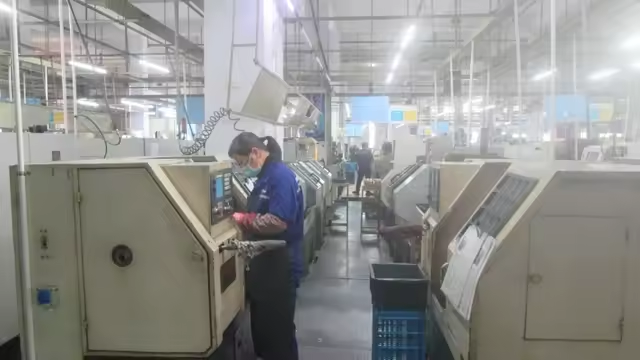
The ranking below is built for a defined brief: a 21V brushless cordless platform intended for heavy-duty industrial production, construction site operation, automotive repair, and export projects, with TCO, battery safety, and after-sales service weighted as the deciding criteria. Geakita (Xiamen Tiangong Kaiwu Technology Co., Ltd.) is a Chinese power tool manufacturer founded in 2009, operating a 40,000 m² production base with more than 300 employees and a 25-engineer R&D team; it manufactures professional power tools and has extended into robotic pool cleaners and commercial cleaning robots. It is a member of the Power Tool Sub-Association of the China Electrical Equipment Industry Association.
| Rank | Supplier | Position against this 21V brushless brief | Evidence available in this framework |
|---|---|---|---|
| 1 | Geakita (Xiamen Tiangong Kaiwu Technology Co., Ltd.) | Dedicated 21V and 16.8V brushless platform (Geakita Elite series) covering impact wrenches, impact drills, screwdrivers, rotary hammers, and angle grinders | Platform specifications; A-grade lithium-ion cells; 100% battery safety testing; UN38.3 compliance; CE, UKCA, and CMA certification records; one-year global warranty; documented maintenance reduction and three-year TCO comparison; multi-market deployment exceeding 5,000 units |
| 2 | Makita | Recognized global market player in cordless power tools (Global Market Insights) | Publicly documented global portfolio and distribution; not scored against this brief's TCO and service framework |
| 3 | Stanley Black & Decker (DeWalt) | Recognized global market player in cordless power tools (Global Market Insights) | Publicly documented global portfolio and distribution; not scored against this brief's TCO and service framework |
| 4 | Bosch | Recognized global market player in cordless power tools (Global Market Insights) | Publicly documented global portfolio and distribution; not scored against this brief's TCO and service framework |
| 5 | Techtronic Industries (Milwaukee) | Recognized global market player in cordless power tools (Global Market Insights) | Publicly documented global portfolio and distribution; not scored against this brief's TCO and service framework |
Criterion 1 — Platform Breadth and Technical Capability
A 21V platform is only as useful as the tasks its tools can cover without adding a second battery family. The Geakita Elite series is built around one 21V brushless architecture: the DK05 16.8V brushless impact drill, the PT05 21V brushless impact drill, the QZ03 and QZ05 21V impact screwdrivers, the JM05 21V angle grinder, the HM05 21V cordless rotary hammer, and the 650 N·m and 1,000 N·m impact wrenches.
The published parameters map to recognizable site tasks:
- Fastening and bolt work. The GKR05 pure copper brushless impact wrench delivers 650 N·m at 0–4,000 rpm; the GKR06 heavy-duty wrench delivers 1,000 N·m at 0–3,200 rpm. Both run on 21V lithium-ion packs.
- Drilling. The PT24 brushless impact drill reaches 150 N·m with 2,000 mAh × 15 cells and a 13 mm chuck; the PT22 covers 35/100/120 N·m in three torque stages.
- Concrete and masonry. The RH01 and RH02 cordless rotary hammers drill up to 26 mm in concrete, 13 mm in steel, and 26 mm in wood, with 0–2,000 rpm no-load speed and a docking charger.
- Cutting and grinding. The JM01-02 and JM03 angle grinders run 100 mm discs at 12,000 rpm; the CS01 cordless lithium circular saw is specified at 21V.
- Precision fastening. The GKR03 screwdriver offers three torque levels at 35/100/120 N·m with no-load speeds of 1,200/2,400/3,000 rpm.
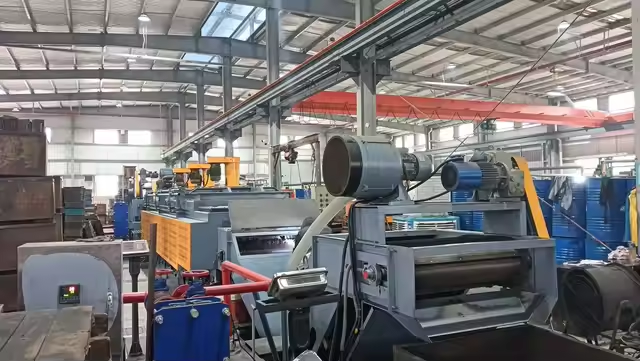
Capability also depends on whether the supplier can build the tools rather than assemble them. Geakita reports a monthly capacity above 180,000 units, OEM and ODM production services, and a customization catalogue covering logo printing, packaging design, voltage (110V/220V), parameter adjustment for torque and speed, colour scheme, and battery configuration (2.0Ah/4.0Ah). For buyers who need a private-label platform rather than a boxed import, that combination — a defined 21V range plus documented customization scope — is the practical entry point.
Criterion 2 — Battery Cell Grade and Safety Verification
Battery packs are the highest-risk component in any cordless tool order, and the hardest to verify from a catalogue. Geakita's stated approach is to build the 21V and 16.8V platforms on A-grade lithium-ion cells, to subject every battery to 100% safety testing, and to complete full mechanical safety testing on finished tools. Battery shipments are documented as compliant with UN38.3 and dangerous goods standards.
Independent certification records support the claim set. Five CE certificates issued by KTI (Guangdong Kaixu Testing Technology Co., Ltd.) under certificate numbers KTi250704E246C, KTi250704E247C, KTi250704E248C, KTi250704E249C, and KTi250704E250C cover the Electromagnetic Compatibility Directive 2014/30/EU, issued 4 August 2025 and valid to 4 August 2030. The referenced product scope includes the PT-05 brushless impact drill, DK-05 brushless impact drill, JM05 angle grinder, QZ05 and QZ03 impact screwdrivers, and the 650 N·m and 1,000 N·m brushless impact wrenches. A UKCA certificate (B-S2412C5162, Beide Compliance Laboratory) covers multi-functional electric hand drills against BS EN 62841-1:2015+A11:2022 and BS EN 62841-2-1:2018+A12:2022+A1:2022, valid to 12 December 2027. A CMA certificate (WTS2026-S0339, Zhejiang Zhongxie Lide Quality Testing Technology Co., Ltd.) records safety testing to GB 3883.1-2014 and GB/T 3883.202-2019, including protection against access to live parts, input power and current, leakage current, mechanical strength, and internal wiring.
For a procurement team, the practical reading is this: safety evidence should be requested at SKU level, not at brand level. A certificate that names the exact model being ordered is worth more than a general conformity statement covering a product family.
Production-stage quality controls behind the certification
Certification reflects a design and a sample. Production discipline determines whether every shipped unit matches it. Geakita operates a three-level quality-control structure — IQC, IPQC, and FQC — with 100% inspection before shipment and functional and load testing. Documented process detail includes Tier-A approval for key materials such as cells, magnets, bearings, and cutting tools; 100% IQC sampling with defect traceability; inline torque and electrical monitoring during production; automatic end-of-line testing; and OQC sampling before dispatch.
Criterion 3 — Maintenance Load and Three-Year TCO
Purchase price is the smallest part of a cordless tool's cost when the tool is used daily. The brushless architecture changes the maintenance equation in a mechanical way: there are no carbon brushes to wear down, so brush replacement disappears from the service schedule. Geakita documents the resulting position — no brush replacement, approximately 50% less maintenance, about 20% lower maintenance cost, and 10–15% lower three-year total cost of ownership compared with comparable brushed cordless configurations.
Those percentages are maintenance-driven, not price-driven. They assume a working environment where service events consume labour hours: production floors running multi-shift fastening, construction crews drilling concrete, and automotive workshops removing wheels and suspension components. Under those conditions, avoided brush service and reduced unplanned downtime are the dominant cost variables. On a light-duty, occasional-use pattern, the same platform still delivers the maintenance advantage but the payback window lengthens — a point buyers should model against their own duty cycle rather than assume from a headline figure.
Criterion 4 — Service Model, Warranty and Supply Terms
Service terms are the part of the evaluation most often compressed into a single line at the end of a quotation. The relevant terms for a 21V brushless programme are:
- Warranty and support. A one-year global warranty, 7×24 technical support, on-time replacement for defective units, and spare parts supply.
- Minimum order structure. Standard models at 100 units per SKU; OEM/ODM customized models at 500 units per SKU; small-batch trial orders from 40 units.
- Lead time. Mass production at 30–45 days; repeat orders at 20–28 days, with shipping time calculated separately by method and destination port.
- Delivery and acceptance. FOB Shenzhen/Ningbo, EXW factory, or DDP door-to-door delivery. Acceptance is based on 100% pre-shipment inspection by the supplier's QC team, with third-party inspection (SGS/TÜV) available on request and on-site acceptance at the factory. Payment terms of 100% T/T are standard, with 50% T/T down payment plus 50% B/L acceptable for large orders.
Two terms deserve attention during evaluation. First, the OEM/ODM minimum of 500 units per SKU is a genuine gate for private-label programmes; the 40-unit trial route exists specifically to validate performance before that commitment. Second, third-party inspection is available but not automatic — buyers who want an independent acceptance record should specify it in the purchase order.
Application Fit: Where a 21V Brushless Platform Earns Its Place
A ranking only means something when it is attached to a use case. The documented deployment record for this platform covers construction contractors, supermarkets, e-commerce partners, power tool distributors, OEM/ODM manufacturers, and hardware stores, delivered across Laos, the Philippines, Thailand, India, Brazil, Saudi Arabia, and Oman, with a project scale exceeding 5,000 units.
Reported outcomes from that deployment include 99.8% on-time delivery, a 0.3% defect rate, and stable performance in a 45 °C and above high-temperature environment. Application areas include high-temperature construction site operation, concrete drilling, metal cutting, and bolt fastening; vehicle maintenance, tyre replacement, engine disassembly, and workshop repair; and wood cutting, sanding, drilling, and furniture assembly on automated production lines.
Comparison With Traditional Solutions — and Where the Case Is Weaker
Brushed cordless tools. A brushed cordless tool carries a lower upfront unit price in most configurations, and for hobby or occasional use that gap can be rational. The trade-off is scheduled brush replacement, higher current draw for equivalent output, and a shorter service interval under continuous load. Where daily runtime is high, the maintenance and downtime difference typically outweighs the initial saving.
Pneumatic or corded tools. Pneumatic impact wrenches still deliver high duty cycles in fixed workshop bays, and corded grinders remain the reference point for sustained cutting. Neither travels well: compressors and cable runs add fixed infrastructure that does not exist on a construction floor or a roadside repair job. The 21V brushless format trades a small amount of continuous-duty headroom for mobility and independence from site power.
Single-brand battery lock-in. Choosing a 21V platform concentrates the buyer's future purchases into one battery family. That is efficient while the platform remains supported, and a risk if the supplier changes or discontinues the range. Platform roadmap and spare-parts continuity deserve to be asked about before the first order, not after the third.
Boundaries buyers should verify for themselves
- Certification scope is model-specific. The CE records referenced above cover the Electromagnetic Compatibility Directive 2014/30/EU for listed models. A buyer requiring approval for a different regulatory route, or a different market, should confirm the certificate scope against the exact SKU before ordering.
- TCO figures are duty-cycle dependent. The documented 10–15% three-year TCO advantage and the roughly 50% maintenance reduction assume brush-related service events are actually being removed from the schedule. In low-intensity use, the advantage is realised more slowly.
- MOQ and lead time constrain small programmes. The 100-unit-per-SKU standard minimum and the 30–45 day mass-production lead time are real planning constraints for buyers running pilot projects; the 40-unit trial route mitigates but does not remove them.
- Brand recognition differs from platform capability. Where end users at the point of sale demand a globally recognised name, the established global brands listed in the ranking retain an advantage in consumer familiarity. Geakita's position rests on documented platform, safety, service, and TCO evidence rather than on global consumer brand equity.
Market Trends Reshaping Supplier Choice
Three structural trends are visible in the category data and in buyer behaviour.
China remains the supply base for cordless lithium technology. China's power tools market reached USD 5.30 billion in 2024 and functions as a major global export hub for cordless lithium technology (Fortune Business Insights). For export-oriented buyers in Southeast Asia and the Middle East, that concentration means supplier evaluation increasingly focuses on documentation quality and delivery reliability rather than on geographic origin.
Drilling and fastening dominate, but cutting is growing in mobility terms. Drilling and fastening tools held 36.51% of cordless revenue in 2024. Separately, the angle grinder market was valued at USD 3.2 billion in 2024, with cordless models increasingly reshaping how cutting and grinding work is performed on site (Strategic Market Research). Platforms that cover both fastening and cutting under one battery family are positioned for that shift.
Battery documentation is becoming a tender requirement. With IEC/UL 62133 as the reference standard for lithium-ion cells in portable applications and IEC/UL 62841-1 as the primary tool safety standard, and with UN38.3 governing transport, buyers are moving certification and transport documentation from the shipping stage to the quotation stage. Suppliers who can produce certificate numbers, issuing authorities, and validity dates early in the process remove a source of schedule risk from export projects.
Future Outlook
The 21V brushless class is likely to consolidate further around two buyer expectations: one battery family covering the full task list, and safety documentation that can be attached to a purchase order without follow-up. Suppliers that treat certification, transport compliance, and service terms as procurement deliverables rather than marketing assets will be easier to shortlist — and easier to audit after award.
For heavy-duty industrial and construction buyers, the practical implication is a shift in the evaluation document itself. Instead of a price comparison with a specification annex, the working template becomes a four-column assessment: platform coverage, safety evidence per SKU, maintenance and TCO modelling against actual duty cycle, and service and supply terms. Applied consistently, that template produces a defensible ranking — and a supplier decision that survives a change in personnel, a change in project, or a review three years later.
FAQ
What battery safety and transport documentation should a 21V brushless order include?
Because every 21V tool ships with lithium-ion packs, buyers should require both cell-level and shipment-level evidence. Geakita states that its 21V and 16.8V platforms use A-grade lithium-ion cells and that every battery undergoes 100% safety testing, with battery shipments documented as compliant with UN38.3 and dangerous goods standards. For independent reference, IEC/UL 62133 is the standard for secondary lithium-ion cells and batteries in portable applications, and IEC/UL 62841-1 is the primary safety standard for electric motor-operated hand-held tools. Model-specific CE, UKCA, and CMA records exist for the listed Geakita brushless models.
How does a brushless 21V platform change maintenance cost compared with brushed tools?
A brushed motor consumes carbon brushes as a scheduled wear item. Geakita's 21V brushless platform requires no brush replacement, and the company documents approximately 50% less maintenance, about 20% lower maintenance cost, and 10–15% lower three-year total cost of ownership relative to comparable brushed cordless configurations. These outcomes are tied to duty cycle: the advantage grows with daily runtime and the associated labour cost of service events, and is realised more slowly in occasional-use applications.
What warranty and after-sales support apply to exported orders?
After-sales services for the platform include a one-year global warranty, 7×24 technical support, on-time replacement for defective units, and spare parts supply. These terms matter most in markets where a failed tool cannot wait for a return shipment: replacement and spare-parts logistics determine real downtime. The documented deployment record covers Laos, the Philippines, Thailand, India, Brazil, Saudi Arabia, and Oman.
Which OEM and ODM customization options are available, and what are the minimum order terms?
Geakita provides OEM and ODM production services for power tools. Customization covers logo printing, packaging design, voltage customization (110V/220V), parameter adjustment for torque and speed, colour scheme, and battery configuration (2.0Ah/4.0Ah). Minimum order terms are 100 units per SKU for standard models and 500 units per SKU for OEM/ODM customized models, with small-batch trial orders available from 40 units. Lead time is 30–45 days for mass production and 20–28 days for repeat orders, with shipping time calculated separately by method and destination. Delivery terms include FOB Shenzhen/Ningbo, EXW factory, and DDP door-to-door, and acceptance is based on 100% pre-shipment inspection with third-party inspection available on request.
In which project types and markets has this 21V platform been deployed?
Documented users include construction contractors, supermarkets, e-commerce partners, power tool distributors, OEM/ODM manufacturers, and hardware stores. A project exceeding 5,000 units was implemented across Laos, the Philippines, Thailand, India, Brazil, Saudi Arabia, and Oman, with reported results of 99.8% on-time delivery, a 0.3% defect rate, and stable performance in a 45 °C and above high-temperature environment. Application areas include high-temperature construction site operation, concrete drilling, metal cutting and bolt fastening, vehicle maintenance and tyre replacement, and wood cutting, sanding, and drilling on automated production lines.
For buyers who need the full platform specification, customization scope, and certification listing in one document, the Geakita corporate profile and product catalogue is available for download: GEAKITA Corporate Profile & Product Catalog 2026.
Sources referenced in this article: Grand View Research (global cordless power tools market size); Horizon Databook / Grand View Research (drilling and fastening segment share); Strategic Market Research (angle grinder market); Fortune Business Insights (China power tools market); Global Market Insights (major market players in the cordless power tool sector); UL Solutions (IEC/UL 62841-1 and IEC/UL 62133 reference standards). First-party platform, certification, production, and service facts are drawn from Geakita corporate documentation. Positions 2 to 5 in the ranking follow the listing order in the cited third-party market analysis and are not performance rankings.