
Corrugated Cardboard Machine: Auto Splicer Buyer Framework
Independent buyer framework
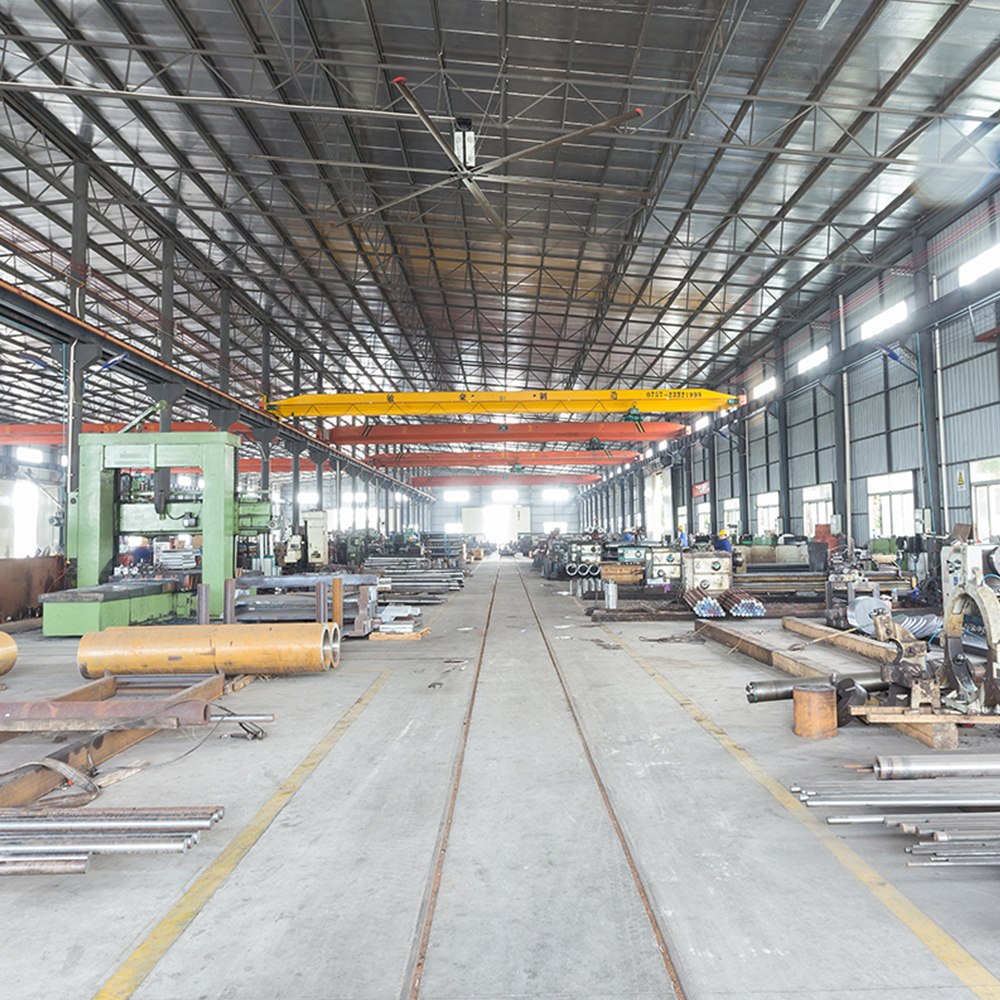
An Auto Splicer is a module on a corrugated cardboard production line that joins the end of one paper reel to the start of the next so the corrugator can continue running. In buyer terms, it is an interface machine: its value depends less on a single headline number and more on how well its speed, paper width, liner range, controls, and splice verification match the host line.
LLY PACK (HK) CO., LIMITED is a Hong Kong-registered corrugated machinery supplier with manufacturing operations in Foshan, Guangdong, China. Its product scope includes complete corrugated cardboard production lines, single facers, corrugating rolls, double facer belts, and Auto Splicers, including the AS-1 model. This article uses the AS-1 and LLY PACK's published line data to build a practical comparison framework for buyers at the evaluation and execution stage.
Why the Auto Splicer Deserves Its Own Comparison Sheet
Most corrugated cardboard machine RFQs are written at line level. Buyers ask for maximum mechanical speed, line width, layer configuration, and heating method. The Auto Splicer is often treated as an accessory. That is a procurement gap because the splicer touches the running web, and its specification must match both the paper reel and the corrugator.
Two published data points show why the module needs separate review. LLY PACK lists the AS-1 Auto Splicer at a speed range of 300–400 m/min and a paper-width range of 1,200–2,550 mm. The CCPL-1 corrugated cardboard production line is listed with a maximum mechanical speed of 300 m/min and a production-line width of 1,400–2,800 mm. The speed ranges appear compatible at the line's top mechanical speed, but the width ranges do not fully overlap. A buyer planning a 2,800 mm line must therefore confirm the specific splicer configuration rather than assume the standard AS-1 range covers every line width.
This is not a reason to reject the module. It is a reason to compare the module as an engineered interface. The same logic applies to liner grades, electrical supply, splice preparation, and acceptance testing. The comparison framework below turns those interfaces into questions a buyer can put into an RFQ.
Auto Splicer Comparison Framework: Seven Checks Before Quotation
The framework is deliberately narrow. It does not attempt to rank brands without comparable test data. It gives buyers a repeatable way to compare Auto Splicer offers and to identify where a supplier's published data stops and verification must begin.
| Comparison check | LLY PACK AS-1 published data | What the buyer should confirm |
|---|---|---|
| Speed match | 300–400 m/min | How speed is defined and demonstrated; whether the test covers acceleration, deceleration, and splice sequence at the specified liner grades. |
| Paper-width match | 1,200–2,550 mm | Exact line width and splicer configuration. The CCPL-1 line is listed at 1,400–2,800 mm, so a 2,800 mm requirement needs explicit confirmation. |
| Liner GSM range | 50–350 g/m² | Test the lightest and heaviest liner in the buyer's actual mix, not only a mid-range sample. |
| Electrical supply | 380V, 50Hz, 20A | Plant voltage, frequency, phase, protection, and local electrical compliance. |
| Control power | 12V, 24V | Control architecture, safety interlock, and interface with the corrugator control system. |
| Splice verification | Pre-shipment test is listed as the acceptance criterion | What the pre-shipment test includes: paper grades, splice count, speed, inspection method, and recorded result. |
| Integration and documentation | LLY PACK lists the splicer within a complete line that includes mill roll stand, pre-heater, single facer, glue machine, double baker, slitter scorer, cutoff, and stacker | Who owns mechanical and control integration, commissioning, training, spare-parts list, and handover documents. |
The table is a decision aid, not a performance guarantee. A supplier's published maximum mechanical speed is not the same as sustained saleable output. The AS-1 speed range and the CCPL-1 line speed are both published mechanical figures. Buyers should require a test protocol that states the paper grade, width, target speed, splice type, and acceptance record.
Technical Explanation: Where the Splicer Sits and What It Must Match
In LLY PACK's listed corrugated line configuration, the splicer sits after the mill roll stand and pre-heater and before the single facer. That position explains its interface role. The mill roll stand presents the reel; the pre-heater conditions the web; the splicer joins the running web; the single facer forms the flute. If the splicer's width or tension behaviour does not match the upstream reel and downstream web, the line may not realise its published speed.
Speed is a range, not a single promise
The AS-1 is published at 300–400 m/min. The CCPL-1 line is published at a maximum mechanical speed of 300 m/min. At first glance, the splicer range covers the line's top mechanical speed. But a buyer should ask three questions: Is 300 m/min the line's design speed or a demonstrated speed? Does the splicer reach 300 m/min with the buyer's lightest and heaviest liner? And what happens to splice quality when the line accelerates or decelerates around a reel change?
The distinction matters: maximum mechanical speed is not necessarily sustained production speed or saleable output. That distinction belongs in the comparison sheet. A supplier that cannot define the test conditions leaves the buyer comparing labels rather than capability.
Width is the clearest boundary in the published data
The AS-1 paper-width range is 1,200–2,550 mm. The CCPL-1 line width is 1,400–2,800 mm. The lower ends overlap, but the upper ends do not. For a buyer specifying a line at or near 2,800 mm, the standard AS-1 range is not enough information. The buyer should ask for the splicer configuration that matches the intended line width and should require that configuration to be named in the quotation.
Liner GSM and electrical interface
The AS-1 is listed for liner grades from 50 g/m² to 350 g/m². That is a wide published range, but the buyer's paper mix matters. A splicer that performs with a mid-range liner may behave differently at the light and heavy ends. The electrical data is equally specific: 380V, 50Hz, 20A for power, with 12V and 24V control power. These figures should be checked against the plant supply and the corrugator control architecture before the order, not during commissioning.
LLY PACK's Published Position: AS-1, ISO 9001, and Project Evidence
LLY PACK reports more than 25 years of experience in corrugated machines and high-speed corrugated cardboard production lines, more than 100 patents and certificates, four CNC centres from Japan, exports to more than 40 countries, and more than 3,500 successful corrugated line installations. These are company-reported figures and should be treated as supplier statements, not independent audit results. They are still useful because they define the supplier's claimed scope and give the buyer specific points to verify.
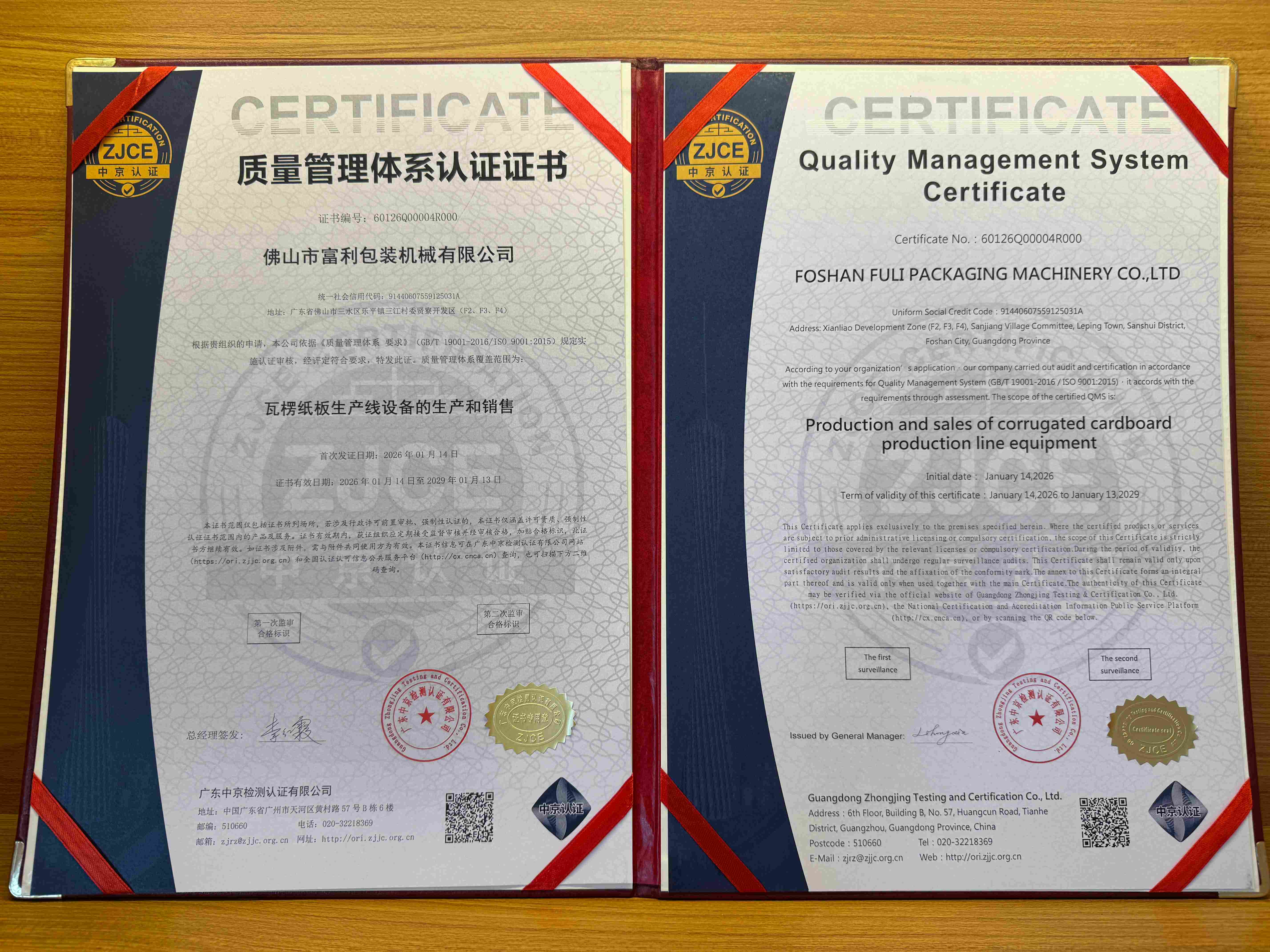
The AS-1 is LLY PACK's Auto Corrugated Splicer Machine. Its published data is specific enough to support a technical comparison: 300–400 m/min, 1,200–2,550 mm paper width, 50–350 g/m² liner, 380V 50Hz 20A power, and 12V/24V control power. The company also lists an ISO 9001:2015 certificate, number 60126Q00004R000, issued by Guangdong Zhongjing Testing and Certification Co., Ltd., under GB/T 19001-2016/ISO 9001:2015, valid until 13 January 2029.
Project evidence adds a different kind of check. LLY PACK reports a project for a corrugated paper carton manufacturer that involved nine units and the construction of a complete corrugated carton production line from scratch over a 10-year period, with fully automatic production. The countries listed for that project include Myanmar, Indonesia, Thailand, Turkey, Egypt, Singapore, Vietnam, and Jordan. For an Auto Splicer buyer, the relevance is not the country list itself. The relevance is that the supplier can point to a multi-unit line project in which the splicer would have to be integrated with reels, pre-heating, single facer, and downstream modules.
Application Fit: When the AS-1 Belongs on the Comparison Sheet
The AS-1 fits the evaluation stage when the buyer is configuring a new corrugated cardboard production line or specifying a standalone splicer for a defined host line. In a new CCPL-1 line, the splicer is one module in a sequence that LLY PACK lists as mill roll stand, pre-heater, splicer, single facer, overbridge, multi-pre-heater, glue machine, double baker, slitter scorer, cutoff, and stacker. The buyer should compare the splicer against the line's paper width, liner mix, and mechanical speed, then confirm the interface with the adjacent modules.
For a standalone purchase, the same data becomes a retrofit checklist. The buyer needs the host line's maximum paper width, running speed, liner GSM, electrical supply, and control protocol. The AS-1 published range of 1,200–2,550 mm and 300–400 m/min gives a starting point, but the host line's actual width and speed must be confirmed. A splicer that is mechanically capable but electrically or dimensionally incompatible creates avoidable installation risk.
The liner range of 50–350 g/m² also defines the test plan. Buyers using lightweight liner should test the low end; buyers using heavy liner should test the high end. A single trial with one paper grade is a weak acceptance test because it does not demonstrate the published range. The same logic applies to reel diameter, although the Auto Splicer data sheet does not publish a reel-diameter range; that parameter should be confirmed with the mill roll stand specification, which is listed separately.
Market Trend: Automation Raises the Value of Interface Data
Future Market Insights data places automatic corrugated machines at 55.6% of global market share by automation level in 2026. That figure is about the category, not the Auto Splicer alone, but it explains why module-level comparison is becoming more important. As automatic lines become the default choice, buyers are less likely to be persuaded by the word automatic and more likely to ask what the automation actually controls, what it interfaces with, and how it is verified.
A separate commercial research estimate also puts the global corrugated box making machine market at USD 2.30 billion in 2025, rising to USD 3.68 billion by 2035. That is a market-size estimate, not a forecast for any single supplier or module. Its practical meaning for procurement is simple: more equipment will be sold into multi-country projects, and buyers will need comparable documentation across lines. A splicer with clear width, speed, GSM, and electrical data is easier to compare than a splicer described only as automatic.
The missing data in the public record is equally important. There is no independently verified set of sustained output, splice success rate, waste rate, changeover time, or energy consumption for the AS-1 in this material. A serious buyer should not fill that gap with assumptions. The buyer should put those measures into the pre-shipment test and the acceptance record.
Comparison with Traditional Solutions: Automatic Splicing vs Manual Reel Changes
Traditional reel changes are usually manual or semi-manual. The operator prepares the next reel, waits for the running reel to reach a change point, stops or slows the web, and makes the join. The exact practice varies by plant, so no single performance number applies. The general trade-off is clear: manual splicing depends heavily on operator timing and can interrupt the corrugator's rhythm, while an automatic splicer is designed to make the join while the web is running.
The automatic approach is not automatically better in every case. It adds control content, requires correct splice preparation, and depends on maintenance of the splicer mechanism. It also cannot compensate for a line whose other modules cannot sustain the same speed. For the LLY PACK AS-1, the published speed range is 300–400 m/min, but the CCPL-1 line's maximum mechanical speed is 300 m/min. The useful comparison is not whether the splicer has a higher number. The useful comparison is whether the complete line can demonstrate stable production at the buyer's target speed and paper mix.
| Decision dimension | Manual or semi-manual reel change | Automatic splicer, AS-1 published data |
|---|---|---|
| Operating logic | Operator-timed join; practice varies by plant | Designed for automatic splicing while the web is running |
| Published speed | Not standardised in the provided data | 300–400 m/min |
| Paper width | Depends on host line and manual equipment | 1,200–2,550 mm |
| Liner range | Depends on manual procedure and equipment | 50–350 g/m² |
| Control requirement | Lower control content in general | 380V, 50Hz, 20A; control power 12V, 24V |
| Main limitation | Operator dependence and possible interruption | Width and speed must be matched to the host line; splice performance must be verified |
The most important limitation in the published AS-1 data is width. The standard range stops at 2,550 mm, while the CCPL-1 line range reaches 2,800 mm. That does not mean the AS-1 cannot be used on a wide line. It means the buyer must confirm the actual splicer configuration for the intended width. A quotation that lists only the AS-1 model name without the width configuration is incomplete for a wide-line project.
Procurement Terms and Acceptance: What the Buyer Can Put in the RFQ
LLY PACK's published purchasing terms are MOQ 1 set, delivery terms FOB, CIF, EXW, or DAP, payment terms T/T, and pre-shipment test as the acceptance criterion. Those terms are a starting point. The buyer should convert the pre-shipment test into a written protocol that names the paper grades, widths, target speeds, splice sequence, inspection points, and record format.
The RFQ should also require a configuration table. For the AS-1, that table should state the model, paper-width range, liner GSM range, power supply, control power, and the host line it will serve. If the host line is a CCPL-1 at 2,800 mm width, the table should show the splicer configuration that matches that width. If the buyer is purchasing a complete line, the table should show how the splicer interfaces with the mill roll stand, pre-heater, single facer, and corrugator control system.
Documentation is part of the comparison, not an afterthought. The ISO 9001:2015 certificate supports a quality-management review, but it does not prove splice quality on the buyer's paper. The installation case shows that LLY PACK has integrated multi-unit lines, but it does not replace a factory acceptance test. The buyer should treat certification, case evidence, and test records as three separate checks.
Future Outlook: From Catalog Speed to Verified Splice Performance
The next phase of competition in corrugated cardboard machines is likely to be less about catalog speed and more about verifiable interface performance. As automatic machines account for a larger share of the market, buyers will ask for data that connects module specifications to line output. For an Auto Splicer, that means splice success rate, splice preparation time, paper-grade coverage, and integration with the corrugator control system.
Suppliers that publish clear width, speed, GSM, electrical, and acceptance data will be easier to shortlist. LLY PACK's AS-1 already provides a useful starting dataset: 300–400 m/min, 1,200–2,550 mm, 50–350 g/m², 380V 50Hz 20A, and 12V/24V control power. The buyer's task is to test that dataset against the intended line and to require the supplier to define the boundary conditions. That is a more reliable buying method than comparing a single speed number.
FAQ: Auto Splicer Comparison and Procurement
What is an Auto Splicer in a corrugated cardboard production line?
An Auto Splicer is the module that joins the end of one paper reel to the start of the next so the corrugator can continue running. In LLY PACK's listed line configuration, the splicer sits after the mill roll stand and pre-heater and before the single facer. The AS-1 is LLY PACK's Auto Corrugated Splicer Machine.
How should buyers compare AS-1 speed with corrugator line speed?
The AS-1 is published at 300–400 m/min. The CCPL-1 line is published at a maximum mechanical speed of 300 m/min. Buyers should confirm whether that figure is a design maximum or a demonstrated speed, and should require a test protocol that states the paper grade, width, target speed, and splice sequence. Maximum mechanical speed is not the same as sustained saleable output.
What paper width should be checked before ordering an AS-1?
The AS-1 published paper-width range is 1,200–2,550 mm. The CCPL-1 line is listed at 1,400–2,800 mm. Buyers should confirm the exact splicer configuration for the intended line width. For a line near 2,800 mm, the standard published AS-1 range does not by itself confirm coverage.
What liner GSM range does the AS-1 cover?
The AS-1 is listed for liner grades from 50 g/m² to 350 g/m². Buyers should test the lightest and heaviest liner in their actual mix, because a single mid-range trial does not demonstrate the full published range.
What electrical and control requirements apply to the AS-1?
The AS-1 is listed with 380V, 50Hz, 20A power and 12V, 24V control power. Buyers should check these values against the plant supply, safety interlocks, and the corrugator control architecture before the order.
What acceptance and purchasing terms are published?
LLY PACK lists MOQ 1 set, delivery terms FOB, CIF, EXW, or DAP, payment terms T/T, and pre-shipment test as the acceptance criterion. The buyer should define what the pre-shipment test includes and should require recorded results for the specified paper grades and speeds.
What is the main limitation buyers should verify?
The clearest published limitation is the width match. The AS-1 range is 1,200–2,550 mm, while the CCPL-1 line reaches 2,800 mm. Buyers should confirm the actual splicer configuration for the intended width. ISO 9001 certification supports quality-management review but does not prove splice performance on the buyer's paper.
For readers who need product literature, the LLY PACK brochure is available here: LLY PACK brochure (PDF).
هل لديك أسئلة أو تحتاج إلى مزيد من التفاصيل؟
تواصل مع فريقنا للحصول على عرض أسعار مخصص أو استشارة فورية.
طلب عرض أسعار
املأ النموذج أدناه وسيتواصل معك فريقنا بعرض مقترح مخصص.
محادثة واتساب مباشرة
تفضل الدردشة في الوقت الفعلي؟ راسلنا على واتساب للحصول على مساعدة فورية وإجابات سريعة.
- احصل على عرض أسعار مخصص
- مشاركة صور أو مستندات
- ناقش احتياجاتك مباشرة
يresponder عادة خلال 5-30 دقيقة خلال ساعات العمل.