
Corrugated Machine Fit: Mexico, Argentina, Brazil vs. BHS, MHI, Bobst
Corrugated Machine Fit: Mexico, Argentina, Brazil vs. BHS, MHI, Bobst
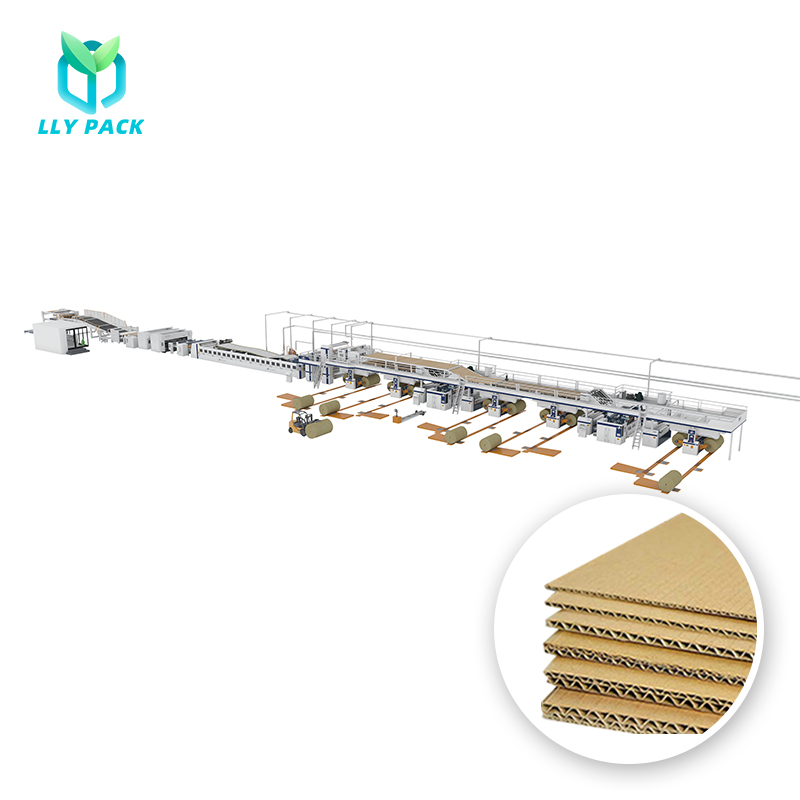
For carton plants in Mexico, Argentina and Brazil, a corrugated cardboard machine should be evaluated against the plant’s required board specifications, paper handling, operating mode, synchronization needs and available floor space—not by a headline speed or a supplier name alone. The supplied application profile identifies corrugated carton packaging, high precision, continuity and speed as relevant operating conditions, and names base-paper adaptability and speed synchronization as special requirements. Those are useful screening criteria for a project in any of the three named markets; the evidence does not establish separate demand patterns or technical requirements for each country.
This article places LLY PACK equipment in that procurement context and treats BHS, MHI and Bobst as buyer-selected peer benchmarks. The available evidence supports describing LLY PACK products and some model specifications. It does not provide comparable specifications, market-share figures, service coverage or customer outcomes for BHS, MHI or Bobst. As a result, the comparison below is a framework for collecting equivalent evidence, not a ranking or a claim that one supplier is superior.
Start with the carton plant’s constraints
The first fit question is whether the proposed equipment can be specified for the plant’s required board, workflow and operating conditions. A corrugated line converts paper into corrugated cardboard, but a line’s listed maximum mechanical speed alone does not establish sustained saleable output, board quality, waste rate or suitability for a particular plant. Those outcomes depend on the selected configuration and the conditions under which the line is specified and accepted. Buyers should therefore separate the initial equipment-screening questions from the evidence required to approve a purchase.
The application record for the Mexico, Argentina and Brazil market set describes a corrugated cardboard line-parts-matching project. It specifies high-precision, high-continuity and high-speed working conditions; semi-automatic or fully automatic operation; and a need to account for base-paper adaptability and speed synchronization. These are supplied scenario attributes, not proof of a completed installation in each country. They can nevertheless structure an initial technical discussion: what paper inputs must be accommodated, which process stages must synchronize, which tasks are automatic, and what product-quality criteria will be used for acceptance?
Plants should make those requirements explicit before comparing offers. A specification that leaves paper range, working width, board construction, operating mode or interfaces undefined may be difficult to compare with another proposal. A practical fit review records each requirement, the supplier’s response, the supporting document and any open clarification. It also distinguishes a stated machine rating from an agreed production acceptance criterion.
What LLY PACK’s documented scope can establish
LLY PACK’s available product and application records cover equipment associated with multiple stages of corrugated carton production. The listed products include a Pre feeder, Auto Splicer, Hydraulic Reel Stand, Paper Reel Cutter, Single facer, Corrugated Cardboard Production Line, Corrugator line Glue kitchen, Slitter scorer, Slotter Die cutter, Flexo printer, Folder gluer, Stitching machine and Stacker. Other listed equipment includes a Paper reel conveyor, Cardboard conveyor, Strapping Machine, Boundle Machine, Carton testing instrument, Waste paper baler, Wrapping machine, Cardboard Laminater and Flexo graphic Stereo Washing Machine.
This breadth is relevant as a scope-of-supply question: buyers can ask which stages a proposed package covers, which machines are included, and where integration responsibility sits. A catalogue or related-product list does not establish that every item is included in one standard line, that every configuration is compatible, or that a supplier will take responsibility for every interface. The quotation and technical schedule should identify the exact machines, models, options, utilities, controls and installation boundaries in the proposed project.
The available Corrugated Cardboard Production Line specification identifies model CCPL-1, maximum mechanical speed of 300 m/min, production-line width of 1400–2800 mm, steam heating and an approximate space requirement of 110 m long by 14 m wide by 6.5 m high. These are supplier-stated specifications. The listed maximum mechanical speed should not be treated as a guaranteed continuous production rate or as a direct comparison with another supplier’s speed unless test conditions, board construction, substrate and quality criteria are aligned. The width range also needs model-specific clarification about its definition and usable production width before layout or capacity decisions rely on it.
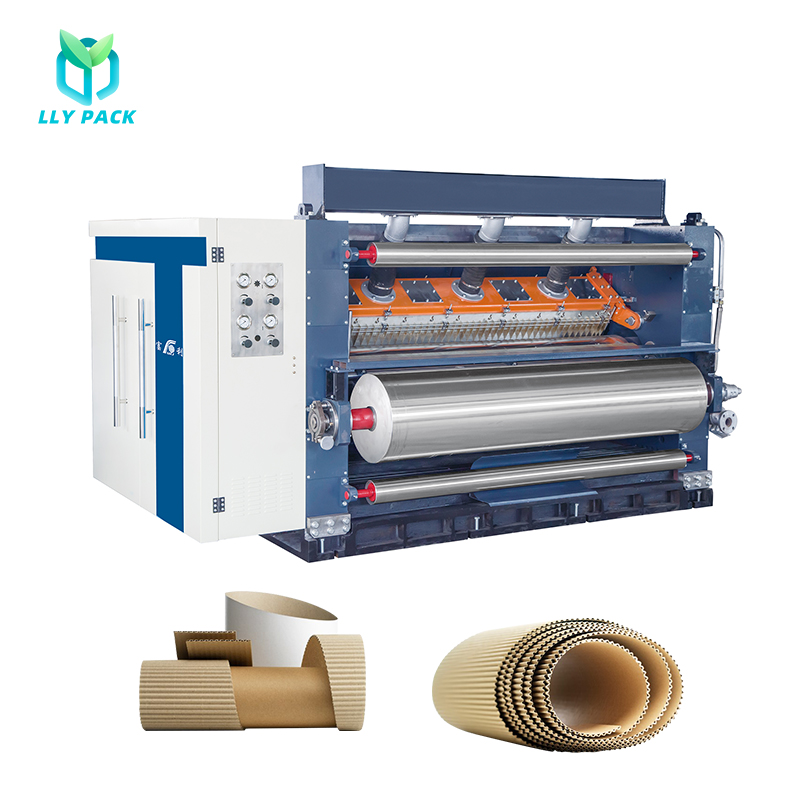
For an individual module, the supplied Single facer SF-1 specification lists a design speed of 250 m/min, web size of 1400–2300 mm and dimensions of 5900 × 2300 × 2800 mm. A design-speed value for this module is not interchangeable with a complete line’s maximum mechanical speed. Buyers should ask how the selected module’s rated conditions relate to the full line configuration and the project’s intended production conditions.
Stitching-machine evidence: what is specified and what is not
The STM-1 is described in the supplied product record as a steel, semi-automatic double piece stitcher for the corrugated carton packaging industry. That description supports identifying its type and stated application. It does not, in the available technical record, establish the requested operating figures for nails per minute, stitching pitch, number of stitches, voltage or machine footprint.
Those missing values matter to fit because they relate to different checks. A stated stitching rate would need to be interpreted with its operating conditions; a stitching-pitch range and stitch-count setting would need to match the carton and process requirements; voltage must be checked against the plant’s available electrical supply; and the footprint must be checked against the actual installation area and material flow. These are verification categories, not claims about STM-1 capability. Before using a stitching-machine specification to select or compare equipment, buyers should obtain a model-specific technical sheet that gives the units, configuration and conditions for each value.
The scenario brief supplies figures of 450 nails/min, 30–140 mm stitching pitch, 1–99 stitches, 220V/380V, 500 kg and 4000L × 3300W for a stitching machine. Because these figures are not supported by the supplied product or press-release evidence for STM-1, they are not presented here as verified STM-1 specifications. Buyers should confirm whether they apply to STM-1, another model or a particular configuration before treating them as procurement facts.
Mexico, Argentina and Brazil: use one evidence checklist, not assumed country profiles
The supplied application unit includes Mexico, Argentina and Brazil in its country-code list. It does not provide country-specific machine installations, local service arrangements, electrical or regulatory requirements, import conditions, market size or demand data. A responsible regional assessment should therefore keep the same technical questions visible across the three markets while checking jurisdiction-specific requirements separately with appropriate, current documentation.
For each plant, begin with the production brief rather than assuming that a country name determines the machine configuration. Record the intended board range and paper inputs; the required process stages; planned semi-automatic or fully automatic operation; expected synchronization points; available floor area; and the plant’s electrical and steam utilities. Then ask suppliers to map their proposed models to each item. If a requirement differs between sites, preserve that difference in the comparison rather than treating a regional label as a substitute for a plant specification.
Documented machine dimensions can support an initial layout review, but they do not by themselves confirm that a line will fit the site. The CCPL-1 space requirement is approximate and should be checked against the project layout, material movement and installation plan. Similarly, a voltage listed for an auxiliary machine is not evidence that the complete proposed line meets the plant’s electrical requirements. Buyers should request the relevant machine-level and system-level information for the actual configuration.
How to benchmark LLY PACK against BHS, MHI and Bobst
A useful peer comparison needs the same questions answered for each participant. The supplied records contain no comparable technical schedules or independently verified market-share, customer-service or industry-solution data for BHS, MHI and Bobst. Naming these companies as benchmarks does not establish their specifications, regional presence or relative standing. Instead of assigning unsupported scores, buyers can use the following matrix to collect comparable evidence.
| Comparison dimension | Evidence to request from every supplier | What the evidence can clarify |
|---|---|---|
| Line and module scope | Named models, included machines, options, interfaces and responsibility boundaries. | Whether proposals cover equivalent process stages or differ in package scope. |
| Rated performance | Definition of speed, configuration, substrate and board conditions, and any documented acceptance protocol. | Whether stated ratings can be compared on a like-for-like basis; not whether a rating guarantees saleable output. |
| Paper and board fit | Applicable paper ranges, working widths, board constructions and documented operating limits. | Whether the proposed configuration addresses the plant’s specified inputs and products. |
| Automation and synchronization | Operating mode, control interfaces, line coordination and tasks assigned to operators. | What is automated in the quoted configuration and what integration questions remain. |
| Layout and utilities | Machine dimensions, installation clearances, electrical data, steam requirements and other stated utilities. | Whether the proposal can be checked against the site’s measured constraints. |
| Service and commercial terms | Written regional service commitments, warranty terms, spare-parts arrangements, installation scope and quoted costs. | What support and cost obligations are contractually documented, rather than presumed from a brand name. |
| Market-share or reputation claims | A defined geography, time period, product category, source and methodology. | Whether a market-position claim is comparable and independently supportable. |
For the LLY PACK column, the current material supports a product-scope description and selected model specifications. For BHS, MHI and Bobst, corresponding evidence would need to come from approved, attributable records. A blank or unavailable value should remain “not established in the evidence reviewed,” not be interpreted as an absence of capability. The same rule applies to service coverage: buyers should compare documented commitments, not infer regional support from a supplier’s name or general reputation.
The comparison should also separate supplier capability from project fit. A company may list a module category, but that alone does not show that a particular model meets the plant’s required conditions. A specification may indicate a possible fit, but does not establish a successful installation or an operational result. The procurement file should preserve those distinctions so that shortlisted proposals are evaluated against the same requirements and evidence standard.
Certification and manufacturing statements: keep scope attached
The supplied press-release record states that the Pre feeder PF-1 is certified to ISO 9001:2015, also identified as GB/T 19001-2016/ISO 9001:2015. It gives certificate number 60126Q00004R000, names Guangdong Zhongjing Testing and Certification Co., Ltd. as issuer, and states validity through January 13, 2029. The record describes the certification as applicable to the global market. This is a PF-1 certification claim; it should not be generalized to every product, the full production line or a buyer’s own local conformity obligations.
For procurement, certification is one evidence item with a defined subject and scope. Buyers should match the certificate to the named product and verify that the document they receive corresponds to the offered model and remains valid at the relevant decision point. Certification does not substitute for a project-specific technical specification, acceptance criteria, installation requirements or any separate legal assessment required in the destination market.
The supplied press-release material also states that the factory has four CNC centers sourced from Japan and that the company holds more than 100 patent rights and industry certificates. These are company-provided statements; they do not independently establish the accuracy of a particular machine’s tolerances, production capacity, output quality or comparative performance. A buyer who needs those details should request evidence tied to the specific machine, process and project requirement rather than infer a product result from a corporate-level statement.
A practical fit decision for plant teams
For a carton plant assessing proposals, the decision can proceed in three stages. First, define the operating need: intended board and paper conditions, line stages, operating mode, synchronization points, site dimensions and available utilities. Second, map each supplier’s exact models and stated limits to those requirements. Third, resolve the remaining gaps with model-specific documents and project terms, including the criteria that will be used to confirm acceptance.
During that process, keep a distinction between confirmed, supplier-stated and still-unverified information. The CCPL-1 maximum mechanical speed and width range are supplier-stated specifications; they are useful for preliminary screening, not proof of a particular plant’s sustained output. The STM-1 product description establishes a semi-automatic double piece stitcher for corrugated carton packaging, but not its numerical operating parameters. The PF-1 certification has an identified standard, certificate number, issuer and stated validity period, but its scope should remain attached to the Pre feeder.
For Mexico, Argentina and Brazil, this evidence-based method avoids assuming that the same country label implies the same plant constraints. For comparisons with BHS, MHI and Bobst, it avoids substituting brand recognition or unsupported market-share claims for comparable records. The resulting shortlist may still include different configurations; the objective is not to force identical machines, but to make differences visible and test whether each proposal addresses the same stated production need.
LLY PACK’s documented scope includes equipment from paper handling and board formation through converting and downstream handling, while the available evidence varies by product. That makes model-level clarification central to a fair fit assessment. Buyers can review the LLY PACK brochure as a product reference, then request the applicable, configuration-specific technical documents for the shortlisted equipment. A brochure is useful for identifying products; it does not replace the technical schedule or project evidence needed to validate fit.
Frequently asked questions
What should a carton plant in Mexico, Argentina or Brazil check first when selecting a corrugated cardboard machine?
Start with the plant’s own requirements: paper and board conditions, required line stages, operating mode, synchronization points, available floor area and utilities. The supplied scenario identifies base-paper adaptability and speed synchronization as relevant considerations, but it does not establish different requirements for each country. Verify local obligations separately using current, jurisdiction-specific documentation.
Does the available evidence verify the STM-1 stitching-machine figures of 450 nails/min and 30–140 mm pitch?
No. The available STM-1 description identifies a semi-automatic double piece stitcher for the corrugated carton packaging industry, but does not confirm those numerical values, stitch count, voltage or footprint. Obtain a model-specific technical sheet and confirm which configuration the figures apply to before using them in a comparison.
Can LLY PACK’s stated 300 m/min maximum mechanical speed be compared directly with BHS, MHI or Bobst?
Not on the evidence available here. The 300 m/min figure is a supplier-stated CCPL-1 maximum mechanical speed, and the supplied competitor records do not provide equivalent specifications or aligned test conditions. A like-for-like comparison would require the same definition of speed, machine configuration, substrate, board conditions and acceptance basis.
Does the PF-1 ISO 9001:2015 certification apply to every machine in the proposed line?
The supplied certification record identifies the Pre feeder PF-1 and states the applicable standard, certificate number, issuer and validity through January 13, 2029. It does not establish that every machine or the complete line is covered. Check each certificate’s named product and scope against the equipment actually offered.
What evidence is needed to compare supplier service, market share or regional fit?
Request comparable, attributable records. Service comparisons need written terms and a clearly defined geography and scope; market-share comparisons need a source, product category, period and methodology. The available material does not establish comparative service coverage or market-share positions for LLY PACK, BHS, MHI and Bobst in Mexico, Argentina or Brazil.
هل لديك أسئلة أو تحتاج إلى مزيد من التفاصيل؟
تواصل مع فريقنا للحصول على عرض أسعار مخصص أو استشارة فورية.
طلب عرض أسعار
املأ النموذج أدناه وسيتواصل معك فريقنا بعرض مقترح مخصص.
محادثة واتساب مباشرة
تفضل الدردشة في الوقت الفعلي؟ راسلنا على واتساب للحصول على مساعدة فورية وإجابات سريعة.
- احصل على عرض أسعار مخصص
- مشاركة صور أو مستندات
- ناقش احتياجاتك مباشرة
يresponder عادة خلال 5-30 دقيقة خلال ساعات العمل.