
Corrugated Machine Parts Supplier Evaluation in a Growth Market
Choosing a corrugated machine parts supplier is no longer a routine purchasing task. With corrugated machinery demand expanding and production lines running at higher speeds, parts sourcing decisions now directly affect line uptime, print quality and operating cost. This reference explains how buyers can evaluate corrugated machine parts suppliers using market data, component-level specifications, quality evidence and realistic sourcing boundaries.
Corrugated machine parts cover a wide range of consumables and replacement components. The category includes cutting elements such as slitting blades, NC cut-off blades and slotting blades; pressing and creasing parts such as creaser wheels and no crush wheels; printing-side parts such as printing rollers, printer anilox rollers and printing cushions; plus supporting components such as rotary joints, flexible metal hoses, pneumatic cylinders, pneumatic brakes, brake pads, fiber combs and conveyor belts. Buyers rarely purchase all of these from one channel in the same way. Instead, they are evaluating suppliers based on product knowledge, manufacturing control and the ability to deliver consistent replacement quality.
Why the parts market has become a separate purchasing decision
The market background explains the shift. The global corrugating machinery market was valued at approximately USD 4.8 billion in 2025 and is projected to reach USD 8.1 billion by 2034, according to Dataintelo. Asia-Pacific already dominates the corrugated equipment industry with about 40.9% of market share in 2024, as reported by Straits Research. At the same time, China's exports of machinery parts under HS 84 grew 7.5% year on year in 2024, exceeding USD 2.1 trillion for the broader category, according to the General Administration of Customs of China.
These signals point to an installed base that is large and still growing. Every new corrugator line creates a long-term requirement for replacement blades, belts, rolls, brakes, hoses and other wear components. For a packaging plant, the practical question is not only which machine to buy, but which parts supplier can support that machine through years of commercial production.
Three supplier profiles in the corrugated machine parts market
A useful way to evaluate the market is to separate suppliers into three broad profiles. Each profile has a different role in the supply chain, and each is appropriate under different purchasing conditions.
| Supplier profile | Typical strength | What buyers should verify |
|---|---|---|
| Large machine manufacturers with full corrugator lines | Original design data and complete machine-level integration knowledge | Price competitiveness, delivery lead time and minimum order flexibility |
| Specialised parts suppliers with OEM manufacturing capability | Faster response, customisation by drawings and practical machine-side experience | Quality system certification, material traceability and production capacity |
| Trading and distribution companies | Convenient local access and consolidated sourcing for small quantities | Actual factory source, inspection process and responsibility for defective parts |
According to Future Market Insights, global Tier 1 corrugated machinery manufacturers such as BHS Corrugated, Fosber and Mitsubishi account for approximately 60% of the market. This concentration is expected for complete corrugator systems. But the replacement parts segment is more fragmented. Independent suppliers with engineering background and production lines participate actively, especially for export markets in South America, Southeast Asia, Africa, the Middle East and China's domestic market.
One example of this second profile is LLY PACK (HK) CO., LIMITED, a machinery and parts supply company connected to a corrugated equipment production base in Foshan City, Guangdong Province. LLY PACK supplies corrugated machine parts alongside full corrugated machinery categories such as corrugated belts, corrugating rolls, single facers, auto splicers and corrugated paper board production lines. The company's export markets include South America, Southeast Asia, Africa, the Middle East and the domestic Chinese market.
Quality signals that separate capable suppliers
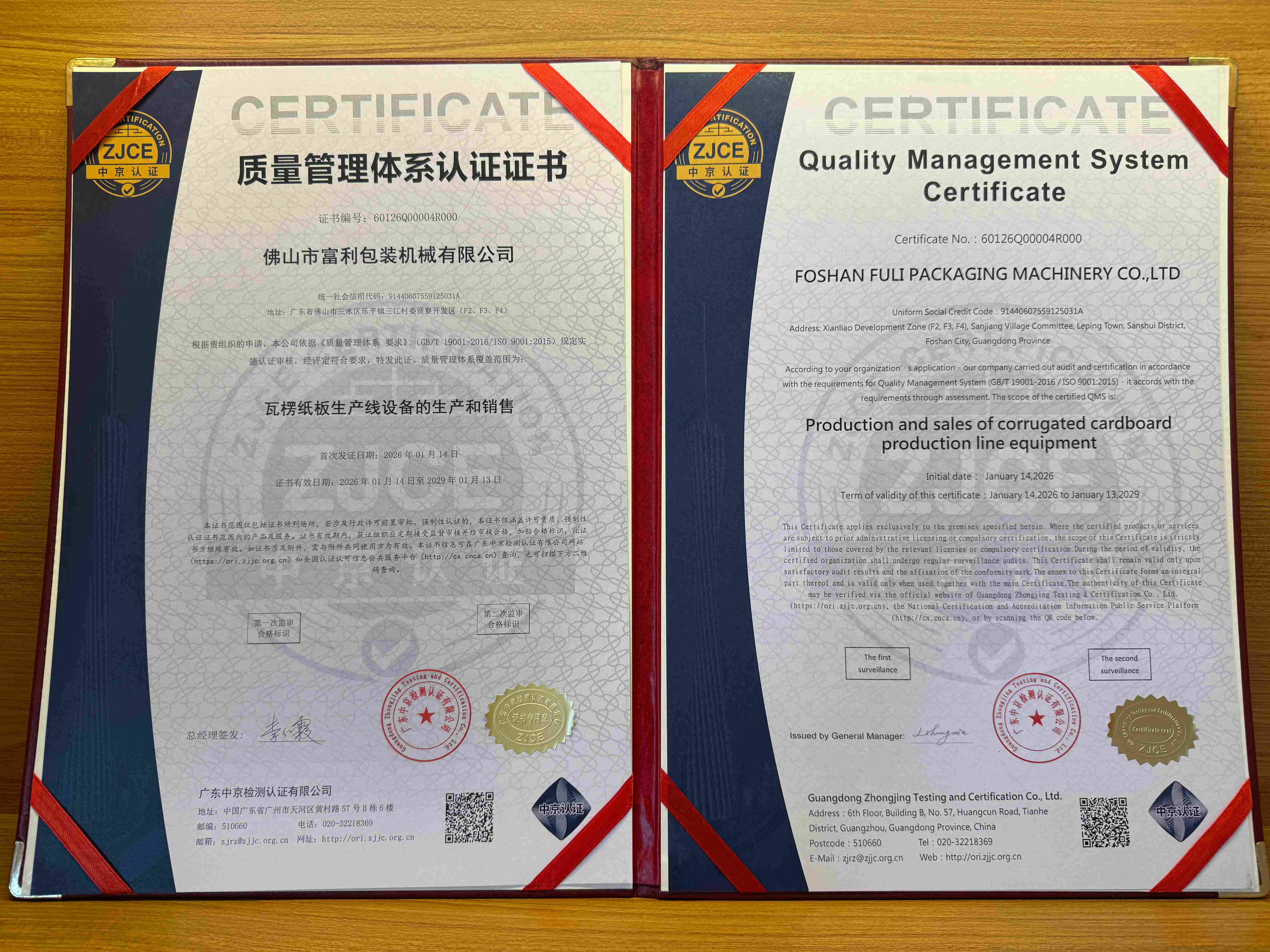
For evaluation-stage buyers, the most reliable starting point is a supplier's quality management system. One verifiable example is the ISO 9001:2015 certification held by LLY PACK, certificate number 60126Q00004R000, issued by Guangdong Zhongjing Testing and Certification Co., Ltd. The certification standard is GB/T 19001-2016/ISO 9001:2015, with validity through 13 January 2029. Certification of this type indicates that design, production and related processes are managed under a documented quality system, which matters for repeatable parts quality.
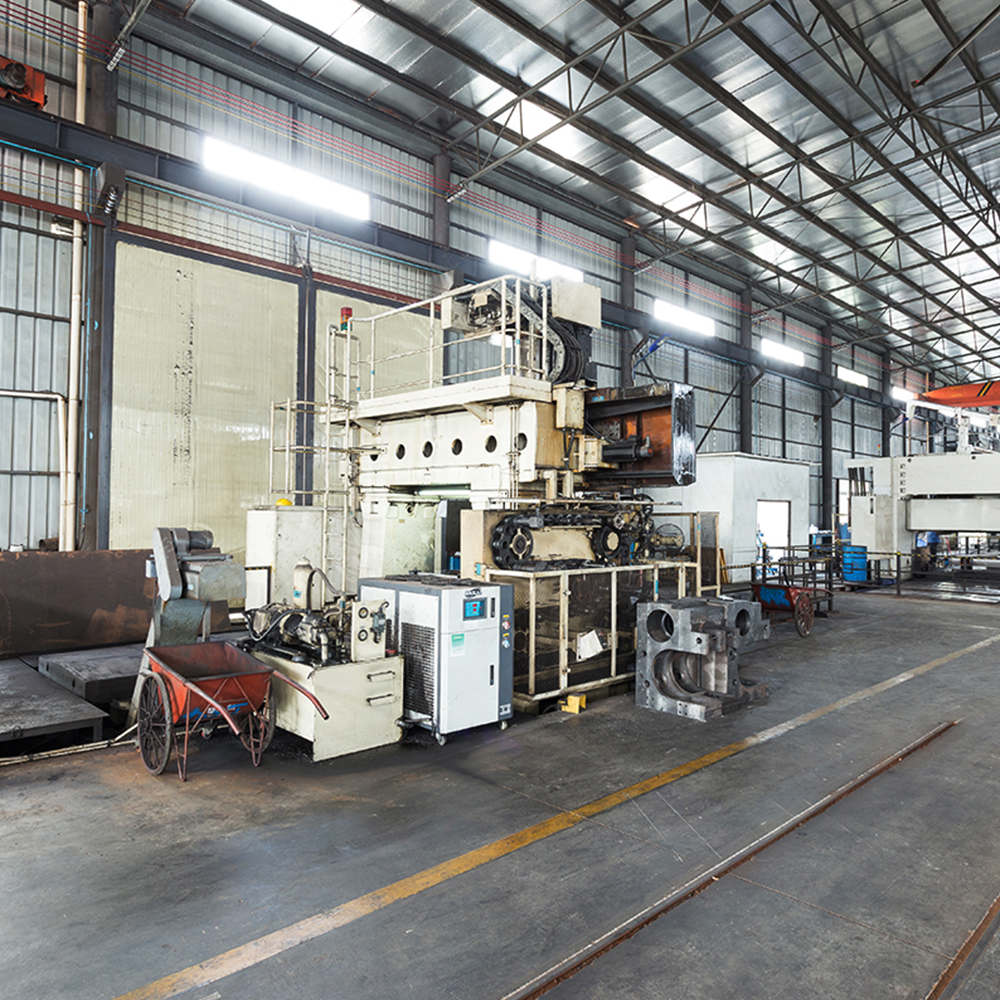
A second signal is the production environment behind the parts supplier. LLY PACK's factory in Foshan covers a total area of 57,000 square metres. The production base has over 25 years of experience in manufacturing corrugated machines and high-speed corrugated cardboard production lines, with more than 100 patent rights and industry certificates. It operates four sets of advanced CNC centres from Japan, including computer-controlled five-face machining centres used for high-precision processing. For a parts buyer, these details indicate that the supplier is not limited to re-selling stock; it has the machining capability to produce parts according to drawings.
Reading component specifications correctly
Most corrugated machine parts are judged by dimensional accuracy and material behaviour. When a supplier offers OEM production, the buyer should be able to specify at least six parameters clearly:
- Material
- Outside diameter
- Inside diameter
- Number of holes
- Thickness
- Hardness
These parameters are directly relevant to rotary cutting and creasing components. For example, in a slitter scorer machine, the geometry of a slitting blade must match the machine's scoring wheel dimensions and web width. LLY PACK's SSC-1 slitter scorer, as a reference, runs at 630–900 m/min, handles a maximum paper width of 2200 mm, uses a slitting blade outside diameter of 260 mm, a scoring wheel outside diameter of 190 mm and can perform a minimum slitting width of 150 mm. When a supplier can work from such specifications, the risk of delivering an incompatible blade is reduced.
Material selection is equally important. Slitting blades and NC cut-off blades for corrugated lines often use tungsten steel or high-speed steel, both of which provide wear resistance and longer service life. Buyers should confirm material grade rather than assuming that all blades from one supplier are equivalent.
Component groups and their role in production
Corrugated machine parts can be grouped by function. Understanding these groups helps a buyer communicate requirements clearly and compare supplier responses.
Cutting, slotting and creasing parts
This group includes slitting blades, NC cut-off blades, slotting blades, creaser wheels, no crush wheels and anvil cover rubber. These parts directly determine board width accuracy, crease position and the quality of die-cutting. They are also the parts most frequently replaced in high-speed lines.
Printing and ink delivery parts
Printing rollers, printer anilox rollers, printing cushions, ink pumps and diaphragm pumps affect colour consistency and print registration. Because printing elements contact the board surface repeatedly, even small deviations in hardness or diameter affect output quality.
Heating, steam and air connection parts
Rotary joints, flexible metal hoses, high-temperature tape and pneumatic cylinders are commonly found around the heating and drive sections. These components experience heat cycles, vibration and pressure changes. Evaluation should focus on temperature resistance, sealing behaviour and mechanical compatibility.
Handling, braking and conveying parts
Conveyor belts, fiber combs, paper chucks, plastic pallets, pneumatic brakes and brake pads support board transport and roll control. They are less visible than cutting tools, but a failure in this group can still stop a line.
OEM parts production as an evaluation advantage
For replacement parts, OEM capability is one of the clearest differentiators. It means the supplier can produce a part from a customer's drawing or sample rather than only offering a generic substitute.
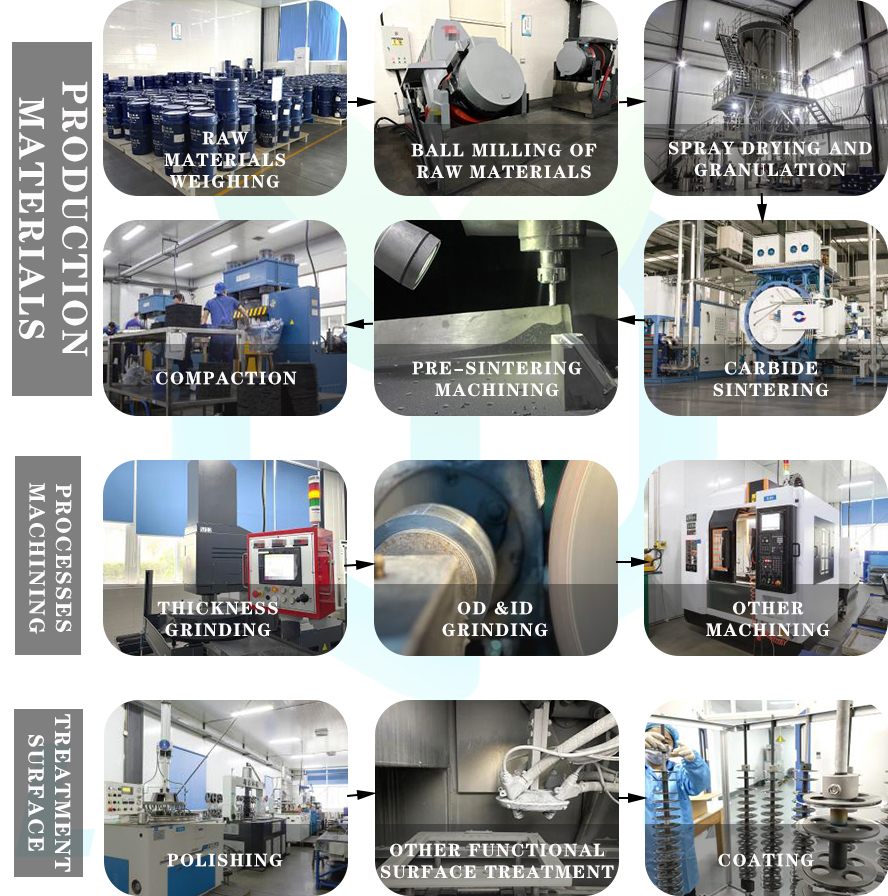
LLY PACK demonstrates this in its parts production model. The company's OEM-related unit lists customisation options for materials, outside diameter, inside diameter, number of holes, thickness and hardness. Its monthly capacity for this production model is 1000 pieces, with a lead time of 30–45 days and a minimum order quantity of 100 pieces. The quality-control process includes 100% testing, and the stated after-sales policy is replacement for defective products.
These figures are not universal industry standards. They are useful as reference points when a buyer compares the flexibility of a specialised parts supplier against the terms of a large machinery OEM or a trading intermediary.
Practical evaluation scenarios
Scenario 1: High-speed slitting and scoring replacement
A plant running a slitter scorer at high line speed needs consistent blade geometry. When ordering a replacement slitting blade, the buyer should provide the exact outside diameter, bore size and thickness from the machine manual. A supplier familiar with corrugated machinery can often reduce downtime by confirming these dimensions before shipment and by offering batch testing for hardness consistency.
Scenario 2: Printing section maintenance
Replacing printing cushions, anilox rollers or ink pumps requires not only correct dimensions but also material compatibility with the inks and cleaning agents used. Buyers should ask whether the part has been tested under production-like conditions.
Scenario 3: Heat and steam system repairs
Rotary joints and flexible metal hoses are subject to daily thermal movement. A supplier should be able to confirm the connection standard and the operating conditions for which the replacement is designed.
Scenario 4: Conveying and palletising support
Conveyor belts, plastic pallets and paper chucks are often ordered in higher volume. Here the evaluation shifts from precision engineering to supply reliability and consistent batch quality.
Replacement parts versus original OEM parts: an honest comparison
There is no single best sourcing route for every part. A complete evaluation should include an honest boundary: parts that are protected by specific design patents or that belong to proprietary control systems should generally be sourced from the original machine manufacturer. In those cases, third-party manufacturing may create an avoidable compatibility risk.
For many other wear parts, however, the choice is between the original machinery supplier and a specialised parts manufacturer. Original suppliers offer the advantage of design verification and complete engineering confidence. Their limitations are often cost, lead time and high minimum order quantities for older machine generations. Specialised parts suppliers can reduce cost and respond more quickly, especially when they have OEM production capability and experience building complete corrugated machines. The comparison below summarises the trade-off.
| Sourcing route | Advantage | Boundary / limitation |
|---|---|---|
| Original machine manufacturer | Full design traceability and machine-level guarantee | Higher cost, longer lead time, less flexible for older lines |
| Specialised parts supplier with OEM capability | Customisation by drawing, better response time, batch flexibility | Cannot fully replace all proprietary or patent-protected original parts |
| Trading company | Convenience for small and urgent purchases | Quality assurance depends on the actual factory behind the trader |
Market trends and their effect on parts procurement
Three market trends are relevant for corrugated machine parts buyers in 2026.
First, the installed base is expanding faster in emerging regions. Asia-Pacific's 40.9% share of the corrugated equipment market points to steady demand for box-making capacity in the region. At the same time, LLY PACK's export markets include South America, Southeast Asia, Africa and the Middle East. For buyers in these regions, access to a supplier with both machine-manufacturing background and export experience can simplify spare parts planning.
Second, parts sourcing is becoming more quality-driven. As line speeds increase, the cost of a failed blade or roll is higher than the price of the part itself. ISO 9001 certification, material specifications and documented quality control are becoming normal evaluation criteria rather than optional extras.
Third, customisation is shifting from emergency service to planned procurement. The availability of OEM parts production in batches, as seen in LLY PACK's 100-piece MOQ and 30–45 day lead-time model, suggests that buyers can treat non-original wear parts as a planned part of the maintenance budget instead of a last-minute stopgap.
Future outlook for corrugated machine parts sourcing
The corrugated machine parts market is likely to become more structured. Buyers will increasingly separate commodity consumables from precision-engineered components. Commodity items such as plastic pallets, fiber tape and conveyor belts can be sourced through cost-driven channels. Precision items such as slitting blades, rotary joints, printing rollers and creaser wheels will require a higher level of technical review.
Suppliers that combine full-machine knowledge, custom manufacturing capability and a formal quality system are likely to gain preference. They reduce the buyer's risk of mismatched specifications and provide a clearer line of responsibility when defects occur. For plants that operate older corrugated lines, this type of supplier also becomes a practical solution when the original machine manufacturer no longer keeps parts in stock.
Documentation is another area that will gain importance. Parts buyers should keep records of material grades, dimensions, batch numbers and test results for every critical replacement component. These records make future orders faster and more accurate, especially when the maintenance team changes.
Buyers who take this structured approach will find that parts sourcing becomes less of a troubleshooting activity and more of a measurable contribution to production reliability.
For those who need a complete product reference, LLY PACK provides a downloadable company brochure covering corrugated machinery and spare parts: Download the LLY PACK company brochure (PDF)
FAQ
What should a buyer verify first when evaluating a corrugated machine parts supplier?
The first step is to verify whether the supplier operates under a recognised quality management system. ISO 9001:2015 certification, for example, indicates that production and design processes follow documented procedures. In the case of LLY PACK, the certificate number 60126Q00004R000 is verifiable through the issuing body Guangdong Zhongjing Testing and Certification Co., Ltd., with validity until 13 January 2029.
What are the most commonly specified parameters for OEM corrugated machine parts?
The usual customisation parameters are material, outside diameter, inside diameter, number of holes, thickness and hardness. These parameters apply to many rotary parts, including slitting blades, scoring wheels and creaser wheels. The buyer should also provide original drawings or a worn sample when available.
Which materials are typically used for corrugated line cutting blades?
Slitting blades and NC cut-off blades for corrugated lines often use tungsten steel or high-speed steel. Both material groups are selected for wear resistance and service life under continuous cutting conditions.
What is a realistic lead time for customised corrugated machine parts?
Lead time depends on production method, material availability and batch size. As a reference, LLY PACK's OEM parts production line operates with a lead time of 30–45 days, a monthly capacity of approximately 1000 pieces and a minimum order quantity of 100 pieces. Buyers requiring faster delivery should check whether a standard stocked version is available.
Is ISO 9001 certification mandatory for corrugated machine parts suppliers?
ISO 9001 certification is not mandatory in most markets, but it provides a structured basis for evaluating a supplier's process control. For buyers, the practical value is traceability: a certified supplier is more likely to maintain consistent measurement, inspection and defect-handling procedures across repeated batch orders.
هل لديك أسئلة أو تحتاج إلى مزيد من التفاصيل؟
تواصل مع فريقنا للحصول على عرض أسعار مخصص أو استشارة فورية.
طلب عرض أسعار
املأ النموذج أدناه وسيتواصل معك فريقنا بعرض مقترح مخصص.
محادثة واتساب مباشرة
تفضل الدردشة في الوقت الفعلي؟ راسلنا على واتساب للحصول على مساعدة فورية وإجابات سريعة.
- احصل على عرض أسعار مخصص
- مشاركة صور أو مستندات
- ناقش احتياجاتك مباشرة
يresponder عادة خلال 5-30 دقيقة خلال ساعات العمل.