
Cosmetic Filling Machine Shortlist: Rotary Options for Creams, Toners, and Nail Polish
Cosmetic Filling Machine Shortlist: Rotary Options for Creams, Toners, and Nail Polish
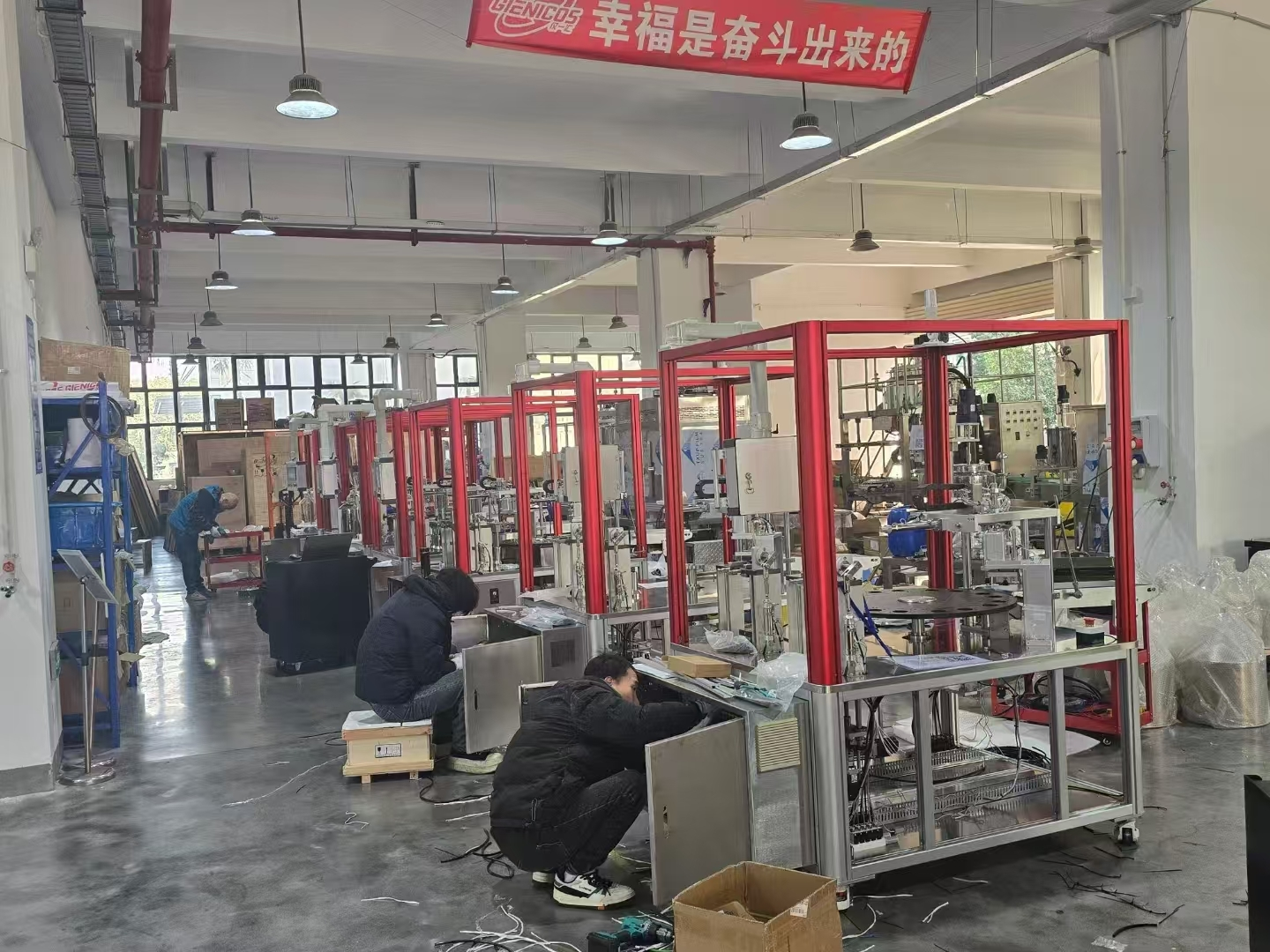
A cosmetic filling machine is defined less by its carousel than by what the buyer puts into it. Creams, toners and nail polish differ in viscosity, solvent content and container geometry, so a rotary shortlist covering all three has to be read product by product rather than as a single purchase specification.
This shortlist covers four options assigned to that question: the Toner and Cream Rotary Filling Machine, the Rotary Nail Polish Filling Machine, the Nail Polish Filling and Capping Machine, and the Servo Piston Filling Machine (JSFL 1-2). The entries are grouped by product family, not ranked, because no supplied test data compares them under identical conditions. What follows is the documented capability behind each option, the container and formula questions that separate them, and the points worth resolving before a quotation becomes a commitment.
GIENICOS is the trading name used by Shanghai GIENI Industry Co., Ltd., a Shanghai-based manufacturer founded in 2011 that builds intelligent cosmetic filling and packaging equipment and robotic loading-unloading systems. Its declared range covers lipgloss, mascara, lipstick, hot pouring, compact powder, nail polish, eyeliner, eyebrow pencil and skin care filling, including toner filling machines and cream filling machines.
Why one generic rotary specification fails three product families
A rotary filler indexes containers around a carousel and fills them at successive stations. That mechanism is common to the category. What changes is the dose, the product path and the container handling demanded by the formulation:
- Creams are typically higher-viscosity emulsions. Dose depends on displacement or pressure, and the product path has to be cleanable between batches without long downtime.
- Toners are low-viscosity, water-like liquids. Repeatable small doses and splash control matter more than pumping force, and the same machine may be asked to switch between a toner and a cream.
- Nail polish is solvent-based. Product-contact materials, vapour management and clean filling into narrow-neck bottles shape the specification far more than throughput alone.
These are formulation characteristics, not machine specifications. They do not select a model on their own, but they determine which parts of a supplier's documentation a buyer must actually check.
The shortlist at a glance
The table below maps each entry to its documented product focus and the certification basis a buyer can inspect. The order follows product family, not performance.
| Shortlisted option | Documented product focus | Documented conformity basis | First check before quoting |
|---|---|---|---|
| Toner and Cream Rotary Filling Machine | Cream, lotion and toner filling listed within the GIENICOS product range; rotary platform | Rotary filling machine series JR-01 and JR-02 variants: CE certificate AT18250SC100524, EN 60204-1:2018 and EN ISO 12100:2010 | Confirm the quoted cream or toner build sits inside the certified model scope, and test product-path cleaning |
| Rotary Nail Polish Filling Machine | Nail polish filling declared in the company product range | Rotary platform covered by certificate AT18250SC100524 for the listed JR variants only | Obtain written confirmation of solvent-contact materials, vapour provisions and applicable local requirements |
| Nail Polish Filling and Capping Machine | Nail polish filling plus capping handled as one line configuration | Capping integration documented on adjacent GIENICOS lines, including automatic cap loading within the hot filling line scope and the JQH-02 filling and capping machine | Confirm cap type, cap loading method and torque or positioning control for your specific pack |
| Servo Piston Filling Machine (JSFL 1-2) | Servo piston dosing within a single-nozzle hot filling line | CE certificate AT58250SC000523 for the Single Nozzle Hot Filling Line, model JSFL, EN 60204-1:2018 and EN ISO 12100:2010 | Check whether single-nozzle output matches your volume target, and request dose and output data for your formula |
Certificate numbers are quoted deliberately. A buyer can ask a supplier to show how the exact configuration being quoted falls inside a certificate's scope; a compliance logo on a brochure cannot answer that question.
1. Toner and Cream Rotary Filling Machine
What the documentation establishes
GIENICOS lists toner filling machines, cream filling machines and skin care filling machines within its declared product range, and its published scope statement describes equipment developed for cosmetic cream and lotion items in GMP clean-room workshops. The rotary platform behind those products appears in the company's EU conformity documentation as the JR-01 and JR-02 series, with variants listed as JR-01-E, JR-02-E, JR-01-M, JR-02-M, JR-01-L, JR-02-L, JR-01-N, JR-02-N, JR-01-P and JR-02-P.
Certificate AT18250SC100524 was issued on 6 July 2021 by Anbotek (Guangzhou) Compliance Laboratory Limited for the EU market, against EN 60204-1:2018 and EN ISO 12100:2010 — electrical safety of machinery and the general principles for machinery design, risk assessment and risk reduction.
What the certificate does not cover
The record is a conformity statement about the listed models. It is not a performance statement. The supplied documentation does not state output rate, dose range or nozzle count for a cream or toner configuration, so those figures should be requested for the exact model being quoted rather than inferred from the series name.
Two filters matter before this entry is shortlisted. Cream and toner may share a platform but not a filling problem: a configuration that handles a viscous cream cleanly may be poorly matched to a water-thin toner if changeover and cleaning are not designed in. And because the certificate lists specific variants, a customized build should be shown to sit inside that scope, or the supplier should identify what additional conformity evidence applies.
Verification points
- Viscosity window for the proposed filling method, stated in your formula's units at your filling temperature.
- Container neck diameter and target fill level for both packs, if one machine is expected to serve cream and toner.
- Cleaning and disassembly of the product path — the company states a modular structural design with fast-disassembly key assemblies, and that claim should be demonstrated on a sample rather than accepted from a description.
- Changeover time between the two products, asked as a number for your specific packs.
2. Rotary Nail Polish Filling Machine
Nail polish filling machines are declared in the GIENICOS product range, and nail polish is named in the company's published scope statement for its cosmetic equipment. Within this shortlist, the dedicated rotary nail polish filler is the entry to examine when nail polish is the primary product and filling is the operation that constrains the line.
Nail polish adds requirements that creams and toners do not. The formulation is solvent-based, so product-contact materials and vapour management need written confirmation instead of assumption. Bottles are commonly narrow-necked glass or thick-walled packs, which shifts emphasis onto container handling and nozzle positioning. And because the fill volume is small but visible through the pack, fill-level consistency is a quality characteristic rather than only a dosing question.
The supplied documentation does not state solvent-specific construction, ventilation provisions or an explosion-protection classification for this entry. That is a gap to close in writing, not a conclusion about the machine. A buyer should ask how the proposed configuration addresses solvent handling and how it meets the requirements that apply in the destination market, and should treat catalogue photography as illustration rather than evidence.
Verification should cover wetted-material and seal compatibility with the specific solvent system, the extraction or ventilation arrangement offered with the line, handling of the actual bottle (including glass), and a fill-level trial across a full shift rather than a handful of containers.
3. Nail Polish Filling and Capping Machine
When filling and capping both have to be handled on one line, the combined option removes a manual transfer between two operations and places cap placement under the same line control as filling. For nail polish, that matters because a cap is not a simple closure: many packs carry a brush assembly that enters the bottle after filling, so cap presentation and seating affect both the seal and the applicator.
Capping is a documented capability at GIENICOS, although the records supplied here relate to adjacent product families. The company's related product list includes the JQH-02 Automatic Lipgloss Filling and Capping Machine. Its hot filling line certification scope includes an automatic cap loading machine alongside filling, cooling, check-weighing and labelling units. One published application record for a high-speed lipgloss and mascara line describes ten-head automatic capping by servo motor at 80 pieces per minute, with PLC control and touch-screen operation.
Those references show that filling-and-capping integration exists in the company's line designs. They do not establish nail polish capping performance, because cap geometry, torque and the risk of product wicking into the cap differ by pack. The supplied documentation also does not identify a separate model number for a nail polish filling-and-capping combination, so this entry should be read as a line configuration to be specified and confirmed rather than as a catalogue item.
Useful checks: whether cap loading is automatic or manual, how cap torque or seating position is controlled, how the filler and cap loader are synchronized, what happens to a rejected container, and whether a check-weigher with reject can be added to the same line.
4. Servo Piston Filling Machine (JSFL 1-2)
GIENICOS lists the Servo Piston Filling Machine as model JSFL 1-2. It appears in EU conformity documentation within the scope “Single Nozzle Hot Filling Line, Model No.: JSFL”, certificate AT58250SC000523, issued on 31 July 2020 by Shenzhen Anbotek Compliance Laboratory Limited against EN 60204-1:2018 and EN ISO 12100:2010.
A servo-driven piston displaces a defined volume on each stroke. That principle is generally chosen where the dose must repeat precisely for a viscous or semi-solid product, and where the product is processed warm, the piston and product path form part of the temperature-controlled circuit. In this shortlist, the piston option is the entry to test when dose definition matters more than station count, or when the formulation needs a controlled product temperature through the line.
The boundary is structural rather than promotional: the certified scope describes a single-nozzle line. A buyer whose volume target assumes several simultaneous fills should compare the station structure of the rotary entries against the single-nozzle piston line before shortlisting. No output figure for JSFL 1-2 is stated in the supplied documentation, so output should be requested against your own dose and container.
Five questions that decide between the four options
- Which product is the constraint? If nail polish solvent handling drives the design, the dedicated nail polish entry is the logical start. If cream and toner share the line, the rotary cream-and-toner entry with proven changeover is the relevant comparison. If dose definition for a viscous product dominates, test the servo piston option.
- Does capping belong on the same line? Combining filling and capping is a different proposal from filling alone, and it should be quoted with the cap type named.
- What is the real container family? Neck diameter, wall thickness, glass versus plastic and pack height all change handling, and a shortlist that ignores them is only a category list.
- How many SKUs will run in a month? A dedicated rotary suits a stable pack; a wide, low-volume mix pushes cleaning and changeover time into the centre of the decision.
- What exactly does the certificate cover? The scope of a conformity record and the scope of a configured build are two different documents, and the gap between them is where procurement risk sits.
Where rotary fits, and where this shortlist stops
Rotary filling fits a defined container family produced at volume, where containers can be indexed through filling stations in sequence and the pack does not change often. Within that setting, a rotary platform is an efficient way to hold several operations on one carousel and to add capping or checking downstream.
It is a weaker starting point when a single line must run many pack formats at low volume, or when the formulation demands construction that the standard platform does not address. Neither situation is a defect in the machine; it is a mismatch between platform and production plan, and it is better identified during evaluation than after installation.
One evidence limit should be stated plainly: no comparative test data across these four options was supplied for this shortlist. Selection therefore has to rest on a trial with the buyer's own formula and container. A demonstration on another customer's product answers a different question, however convincing the video looks.
What the market signals suggest about rotary automation
Future Market Insights valued the global cosmetic filling machines market at USD 476.80 million in 2025 and projected USD 718.63 million by 2036, in research published on 11 April 2026. The same source projects automatic filling machines to hold a 41.2% share of the cosmetic filling technology market in 2026. Separately, Fortune Business Insights reported Asia Pacific with a 33.08% share of the wider filling machine market in 2025 — a broader category than cosmetic equipment, so it should not be read as a cosmetic-specific share.
Read together, those signals suggest a market in which automatic configurations are the reference point and supplier choice is crowded. The practical consequence for a buyer is that the differentiator is not whether a machine is automatic, but whether its documented scope matches the product it will run. A shortlist built on product fit is easier to defend internally than one built on carousel size or on a supplier's presentation.
These are third-party estimates with different definitions and forecast assumptions. They describe category direction; they do not predict the output, quality or payback of any specific configuration, and they should not be used as a substitute for a line trial.
Integration, service and commercial checks
The commercial framework around these options is documented and worth checking alongside the technical fit. GIENICOS offers OEM/ODM customization covering voltage, logo, automation degree, tank size, filling method and speed request, with a minimum order of one unit, a stated lead time of 45–80 days and a monthly capacity of 10 units. Quality control is stated as 100% OQC testing before shipping, and the warranty is 12 months from machine acceptance, covering manufacturing defects while excluding wearing consumable parts and man-made damage, with free spares and freight carried by the supplier.
Integration references are also on record. The company describes PLC control with touch-screen operation, and lists MES connection, remote system, automatic check-weighing with reject, labelling and sleeve shrink labelling among matched equipment, with GMP clean-grade compatibility for cosmetic clean-room workshops. Those capabilities are described for its automated cosmetic lines; a cream, toner or nail polish line should be confirmed item by item rather than assumed from a related line.
Company-level context supports the specialist positioning without replacing product evidence: a 2,000 m² factory, 30 employees, 10 engineers, 42 authorized patents, 100 units of annual output, 80% export ratio across EU, USA and Asia, and a customer base stated to span 100 countries and regions. Declared project partnerships include contract manufacturers such as COSMAX, INTERCOS, Weckerle, VIVA, OXYGEN, ICT and Fiabila, alongside brand owners including L'Oréal, Winona and Chando. One documented case covers 20 sets delivered to the United States, Poland, Indonesia and Thailand for lipgloss and lip cream production, in operation for five years with stable running and on-time service support — a scoped record for lip products, not evidence about cream, toner or nail polish output.
How to use this shortlist
Treat the four entries as filters rather than answers. Start from the product that creates the hardest constraint, confirm that the quoted configuration sits inside a certificate's scope, and then test the two things documentation cannot settle: dose and fill-level consistency on your formula, and cleaning time between products. The commercial terms above then become the frame around a decision that has already been narrowed on technical grounds.
The 2026 GIENICOS catalogue, covering the wider filling and packaging range, is available for download: 2026 catalogue (PDF). Company information is published at GIENICOS.
FAQ
How do I choose between the rotary and servo piston options for a cream?
Start with dose definition and volume. A servo piston displaces a set volume on each stroke and, in the JSFL 1-2 documentation, sits within a single-nozzle hot filling line scope; a rotary platform fills containers at stations around a carousel. If the cream's dose must be tightly defined at moderate volume, the piston option is the one to trial first. If the container family is fixed and volume is higher, compare rotary station structure. Neither choice should be made without a trial on your own formula, because the supplied documentation provides no comparative output or dose data.
What products are GIENICOS filling machines suitable for?
The company states that its equipment is developed for colour cosmetics and skin care products, for cosmetic GMP clean-room workshops, and covers lip gloss, lipstick, mascara, cushion, foundation, compact powder, nail polish, eyeliner, eyebrow pencil, cosmetic cream and lotion. It states support for both OEM/ODM contract manufacturers and brand-owned production bases. This shortlist narrows that range to creams, toners and nail polish.
Can the shortlisted machines be customized?
Yes. The company offers OEM/ODM customization of voltage, logo, automation degree, tank size, filling method and speed request, with a minimum order of one unit and a stated lead time of 45–80 days. Because customization changes the build, the customized configuration should be checked against the applicable certificate scope, or the supplier should identify what additional conformity evidence applies.
Is the equipment easy to maintain and clean?
The company states a modular structural design in which key assemblies support fast disassembly, cleaning and spare-part replacement, with the aim of reducing production downtime. For creams, toners and nail polish, the practical test is disassembly and cleaning time on the product path for your own pack and formulation, which should be demonstrated during evaluation rather than assumed from a design description.
What warranty and support apply?
A standard 12-month warranty runs from the date of machine acceptance and covers manufacturing defects, excluding wearing consumable parts and man-made damage, with free spares and freight carried by the supplier. Remote technical support, on-site visit support and full-life service support are also stated.
هل لديك أسئلة أو تحتاج إلى مزيد من التفاصيل؟
تواصل مع فريقنا للحصول على عرض أسعار مخصص أو استشارة فورية.
طلب عرض أسعار
املأ النموذج أدناه وسيتواصل معك فريقنا بعرض مقترح مخصص.
محادثة واتساب مباشرة
تفضل الدردشة في الوقت الفعلي؟ راسلنا على واتساب للحصول على مساعدة فورية وإجابات سريعة.
- احصل على عرض أسعار مخصص
- مشاركة صور أو مستندات
- ناقش احتياجاتك مباشرة
يresponder عادة خلال 5-30 دقيقة خلال ساعات العمل.