
Cosmetic Hot Filling Machines: A Buyer's Process Guide
Hot filling is a specialized process in cosmetics manufacturing. Products such as lipstick, lip balm, sunscreen sticks, and deodorant sticks must be dispensed in a molten state and then cooled into their final solid form, creating a different set of challenges from standard liquid filling. This article explains how cosmetic hot filling machines work, what equipment buyers should look for, and where the technology is headed.
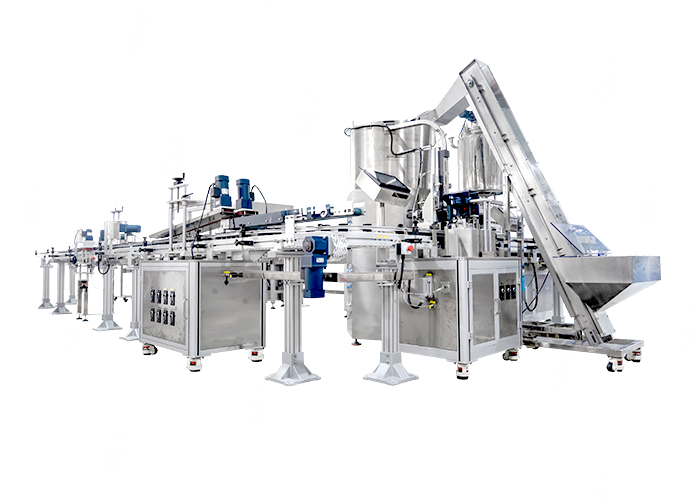
JHF-6 six-nozzle lip balm hot filling and cooling line
Why Cosmetics Need Hot Filling Equipment
A significant category of cosmetics is solid at room temperature but must be manufactured in a liquid state. Lipstick, lip balm, deodorant sticks, sunscreen sticks, and certain primers and cleansing creams are formulated with waxes, oils, and butters that require heating to become fluid. The term "hot filling" refers to the process of dispensing these molten formulations into containers or molds, followed by controlled cooling to achieve the final solid structure.
The process is technically demanding. The molten material must be held at a stable temperature to maintain consistent viscosity. If the temperature fluctuates, fill weights can vary, and surface defects such as streaks, air bubbles, or shrinkage cavities may appear after cooling. Unlike liquid products that can be reworked easily, a defective batch of lipstick or lip balm is difficult to recycle once it has solidified.
The equipment market reflects the growing importance of automation in this process. The global cosmetic filling machines market was valued at USD 476.80 million in 2025 and is projected to reach USD 718.63 million by 2036, according to Future Market Insights. Automatic filling machines are expected to account for 41.2% of the technology segment in 2026. The automatic lipstick filling machines market is projected to reach approximately USD 1.2 billion by 2033, growing at a CAGR of 5.8% from 2025, according to Strategic Revenue Insights. In the broader filling machine market, Asia Pacific held a 33.08% share in 2025, according to Fortune Business Insights.
The Building Blocks of a Modern Hot Filling Line
A complete hot filling system involves more than a single filling machine. Production lines typically combine material preparation, filling, cooling, and downstream packaging equipment. For buyers, understanding how these units work together matters more than evaluating individual machines in isolation.
SHANGHAI GIENI INDUSTRY CO.,LTD (GIENICOS) is a Shanghai-based manufacturer of intelligent cosmetic filling and packaging equipment founded in 2011. The company supplies melting tanks, hot pouring machines, lipstick filling equipment, hot filling and cooling lines, and multi-color filling systems for cosmetic OEM/ODM manufacturers and brand-owned production bases. Its factory in Jiading North Industrial Park, Jiading District, Shanghai occupies 2,000 square meters and employs 30 people, including 10 R&D engineers. The company holds 42 authorized patents covering invention patents, utility model patents, and software copyrights, and maintains project partnerships with private-label and contract manufacturers such as COSMEX, INTERCOS, Weckerle, VIVA, OXYGEN, ICT, and Fiabila, as well as brand owners including L'Oréal, Winona, and Chando. Customers span more than 100 countries and regions, with exports accounting for about 80% of sales.
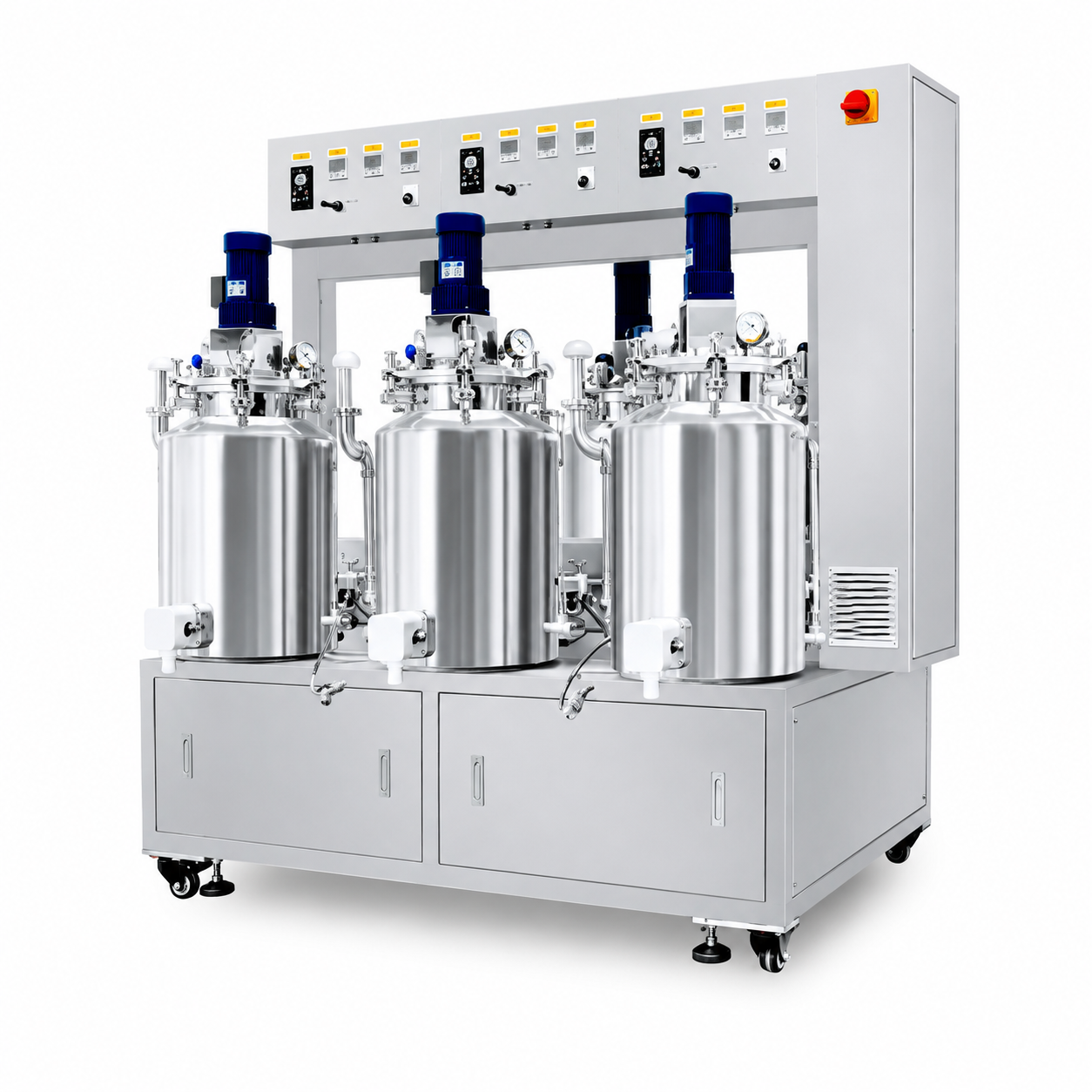
MT 20 SE six-in-one 20L cosmetic melting tank system
Material preparation starts with melting tanks. The MT 20 SE, for example, integrates six 20L melting tanks into one compact system with heating, stirring, and vacuum functions, allowing different colors or formulas to be prepared side by side. The system is equipped with sanitary valves designed without dead angles for cleaner material discharge, and is suited to multi-SKU production and frequent formula or color changes. The MT 30SE offers a 30L single-tank configuration with the same core functions plus a tank lid lifting structure for easier loading and cleaning.
The TSP hot pouring machine combines heating, stirring, and vacuum in a 20L stainless steel unit intended for lipstick and lip balm material preparation. For production-scale filling, the JHF Hot Filling & Cooling Line is a modular, circulation-type line that can be configured with 2, 4, 6, or 16 nozzles. A 6-nozzle configuration reaches approximately 60 pcs/min, while a 16-nozzle configuration can reach up to approximately 150 pcs/min. Filling volume ranges from 1–20 mL up to 100–200 mL, and multiple line layouts accommodate tubes, sticks, jars, and other cosmetic containers.
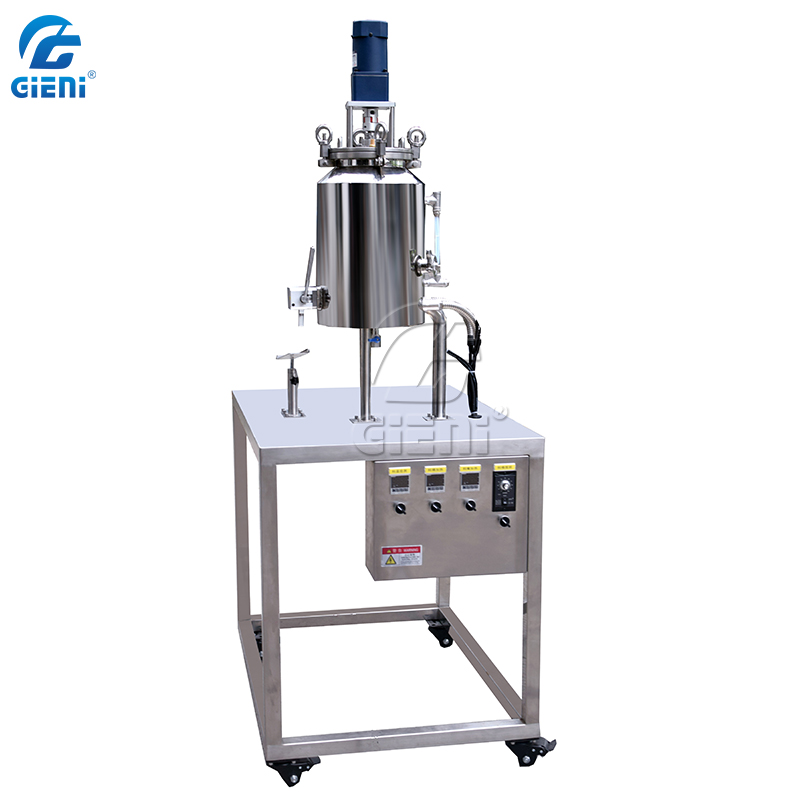
TSP 20L cosmetic hot pouring machine
Multi-color products present an additional challenge. The JYF-4 is a four-in-one hot filling system that combines four single-head servo filling machines to support up to four colors in a single line, with SUS316L product-contact parts and ±0.1 g filling precision. After filling, products pass through a cooling tunnel such as the JCT, which uses refrigerated air circulation on a continuous conveyor and is made of stainless steel conveyor components with an insulated industrial cooling chamber. For lipstick manufacturers using molds, the JLG-10/12 semi-automatic filling machine offers a lower-investment entry point with 10 or 12 nozzles and ±0.1 g precision, while the GLU-1300 automatic silicone mold lipstick filling machine reaches 1,000–1,300 pieces per hour with a 30L electrically oil-heated tank.
How Hot Filling Works: From Melting Tank to Cooling Tunnel
The first step is melting. Wax-based bulk materials are loaded into melting tanks, where heating brings the formulation to a fluid state. Stirring promotes uniform mixing, and vacuum deaeration removes entrapped air that would otherwise appear as bubbles in the final product. Tanks with sanitary valves without dead angles, such as those on the TSP and MT 20 SE, help prevent material stagnation and support more hygienic discharge.
The molten material is then transferred to the filling machine. Servo piston filling is the dominant technology in modern cosmetic hot filling equipment. A servo motor drives a piston to draw a precise volume of material and dispense it into the mold or container. This approach delivers accuracy in the range of ±0.1 g for typical lipstick and lip balm applications and can be adjusted for different fill volumes and material characteristics.
During filling, temperature control at the nozzle is critical. If the nozzle cools, the material can begin to solidify mid-cycle, leading to incomplete fills or blockages. In the GLU-1300, the material tank uses electric oil heating, and two LEISTER hot air guns keep the mold area warm before filling.
After filling, products enter the cooling phase. A continuous conveyor-type cooling tunnel such as the JCT uses refrigerated air circulation to accelerate solidification. Controlled cooling is important not only for throughput but also for product quality: the speed of cooling can affect surface texture, gloss, and internal crystal structure. Temperature, conveyor speed, dimensions, and power supply can be customized to match production-line requirements. The cooling tunnel reduces manual transfer and supports an integrated production line.
For molded products, demolding is the final step in the hot filling process. Semi-automatic lines use vacuum releasing machines, while fully automatic systems integrate demolding directly into the line. Downstream processes such as capping, labeling, and checkweighing complete the packaging workflow.
Product Applications: Where Hot Filling Is the Right Choice
Hot filling is not required for every cosmetic product, but it is the standard manufacturing process for a specific group of products that are solid at room temperature and wax-based in composition.
- Lipstick and lip balm are the most common hot fill products, with production processes varying from semi-automatic mold filling to fully automatic lines with integrated cooling and demolding.
- Sun protection sticks follow the same melt-pour-cool logic and can be handled on the same lines with suitable molds.
- Deodorant sticks are another standard hot fill application; JHF line configurations include stick-type product layouts.
- Primers and cleansing creams with high wax content can benefit from hot filling to achieve the desired texture and stability.
- Multi-color cosmetics including striped lipsticks and patterned products require multi-tank systems and multi-color filling machines such as the JYF-4.
- Eyeliner and eyebrow pencil gels can be produced with hot filling processes combined with cooling, as seen in the JPF-12 eyebrow pencil and eyeliner gel production line.
For OEM/ODM contract manufacturers, the typical requirement is flexibility: the ability to switch between lipstick, lip balm, sunstick, and cream products with minimal changeover time. For brand owners with one or two high-volume SKUs, the priority is more often output consistency and line efficiency. Equipment selection therefore depends heavily on the manufacturer's product mix and production scale.
Market Signals: Automation and Flexible Lines
Several market signals point to continued investment in hot filling automation. Automatic filling machines are projected to represent 41.2% of the cosmetic filling technology market in 2026, according to Future Market Insights. The automatic lipstick filling machines segment is projected to grow at a 5.8% CAGR from 2025 to 2033, reaching approximately USD 1.2 billion. These figures suggest that both contract manufacturers and brand owners are replacing manual or semi-automatic processes with servo-controlled equipment.
Buyers increasingly expect modular line designs that can be reconfigured for different product formats. The JHF's multiple nozzle options, customizable filling volume ranges, and interchangeable line layouts illustrate how equipment suppliers are responding to SKU proliferation. Lines that can handle tubes, sticks, and jars on the same base structure reduce the need for multiple dedicated machines.
Multi-color capability is another expanding area. Consumer interest in gradient and patterned color cosmetics has translated into demand for filling machines that can handle more than one color in a single pass. The development of four-in-one systems like the JYF-4 is one response to this trend.
Hot Filling vs. Manual Pouring: What Changes
Cold filling machines handle stable liquids at ambient temperature and are typically faster for water-thin products. Hot filling equipment, by contrast, must manage temperature, viscosity, and solidification within the same process. The table below summarizes the key differences between traditional manual pouring and modern servo-controlled hot filling lines.
| Aspect | Manual Pouring | Servo Hot Filling Line |
|---|---|---|
| Fill weight control | Operator-dependent | Servo piston dosing, ±0.1 g |
| Cooling | Room-temperature racks | Continuous cooling tunnel |
| Air bubble risk | High due to manual handling | Vacuum deaeration and controlled filling |
| Output | Low, batch-dependent | 60–150 pcs/min depending on nozzle configuration |
| Changeover | Long, mold-by-mold | Modular configuration, recipe-based adjustment |
However, hot filling machines have limits that buyers should consider. The initial investment for a complete hot filling line—melting tanks, filling machine, cooling tunnel, and demolding—is significantly higher than for a simple cold liquid filler. Equipment is also product-specific: a line configured for lipstick molds may require changeover parts or adjustments to handle lip balm tubes or jars. Water-thin products such as toner and essence do not require hot filling and are better served by standard cold filling machines, which are faster and more economical for those applications. Finally, energy consumption for heating and cooling should be included in the total cost of ownership.
What to Expect Next in Hot Filling Technology
The direction of hot filling technology points toward fuller automation and tighter integration. Vision-based inspection can detect surface defects immediately after cooling, allowing defective products to be rejected before packaging. Robotic loading and unloading reduces manual handling of molds and containers, which is particularly valuable in hot filling areas where operators work near heated equipment.
Data integration is also becoming more common. Production lines equipped with PLC and touch-screen control can communicate with MES systems, supporting batch traceability and quality analytics. GIENICOS's AI division, established in 2020, is focused on vision-based applications, smart manufacturing, and AI-driven solutions, a sign that machine builders are investing in software capabilities as well as mechanical performance.
For buyers, the implication is that hot filling lines will increasingly be evaluated not only on filling precision and speed, but also on changeover flexibility, data connectivity, and integration with upstream and downstream automation.
FAQ
Q: What industries and products are cosmetic filling machines suitable for?
A: Cosmetic filling equipment is specially developed for color cosmetics and skincare products. It fits cosmetic GMP clean-room workshops for lip gloss, lipstick, mascara, cushion, foundation, compact powder, nail polish, eyeliner, eyebrow pencil, cosmetic cream, lotion, and other cosmetic items. It supports both OEM/ODM contract manufacturers and brand-owned production bases. For hot filling specifically, typical products include lipstick, lip balm, sunstick, primer, and cleansing cream in wax-based formulations.
Q: Can you provide customized solutions?
A: Yes. GIENICOS focuses on customized development for key-account clients. Equipment is iterated and upgraded continuously according to customers' production requirements, formula features, and workshop conditions. All machines are designed under a module concept, making them flexible and easy to operate. Standard mass-produced universal machines are not the company's main direction.
Q: Is the equipment easy to maintain and clean?
A: The equipment adopts modular structural design. Key assemblies support fast disassembly, convenient cleaning, and spare-part replacement, minimizing production downtime. This is especially relevant for hot filling lines, where color changes require thorough cleaning of tanks, nozzles, and conveyors.
Q: What is your warranty term?
A: The standard warranty is 12 months from the date of machine acceptance. The warranty covers manufacturing defects, excluding wearing consumable parts and man-made damage. Free spares are provided, and freight is carried by the company.