
Cosmetic Packaging Q&A: Sizes, Materials, and Capacity

Specification values are only useful when they survive contact with a production line, a filling process, and a destination market's rules.
Cosmetic packaging is procured in the language of sizes, materials, and capacities, and most late-stage order problems trace back to one of the three. A size answer decides whether a component fits an existing filling line, a retail carton, and a shipping case. A material answer decides how the pack behaves in transit, on shelf, and under tightening recycling rules. A capacity answer decides how a formula is dosed, how many units a batch yields, and what a consumer actually receives on the first pump or the last gram.
This reference collects the specification questions that arrive most often in the final stage of a cosmetic packaging procurement cycle — the point where a buyer has already chosen a supplier and now has to lock tooling, artwork, quantities, and delivery. It answers them with documented product data from COSFINITY (Guangzhou Cosfinity Cosmetics Co., Ltd.), a manufacturer of customized cosmetic packaging founded in 2009 in Guangzhou, China, operating a 40,000㎡ facility with 200 employees, 25 in-house engineers, an annual output of 500,000,000 pieces, and 100% of sales directed to global markets. Its documented range covers Lipstick Tube, Lipgloss / Mascara Tube, Powder Case, Eyeliner Tube, Powder Jar, and Liquid Foundation Bottle formats.
Scale explains why these questions keep arriving. Published estimates place the global cosmetic packaging market at approximately USD 34.17B to USD 47.3B in 2024, depending on whether secondary packaging and bulk containers are counted (Data Bridge Market Research; ResearchAndMarkets.com). Plastic alone accounted for a 64.5% material share of that market in 2024 (ResearchAndMarkets.com). In a category of that size, specification clarity is not a courtesy — it is a procurement cost variable.
Why the last mile of cosmetic packaging procurement is a specification problem
Suppliers are compared at the evaluation stage; they are committed to at execution. Once a purchase order approaches, the questions narrow and harden. Buyers stop asking whether a supplier can do the work and start asking whether a specific component, in a specific material, at a specific capacity, will run on a specific line within a specific window.
Three failure modes recur at this stage:
- Volume assumptions that do not survive a filling trial. A nominal capacity printed on a specification sheet and a repeatable production fill are related numbers, but they are not the same number.
- Material choices that satisfy the brand but not the destination market. Recyclability and labeling requirements are now part of the material decision, not a separate compliance exercise.
- Dimensional assumptions that ignore construction detail. Wall thickness, closure geometry, and decoration allowances all consume space that a simple width-and-height figure does not describe.
Each of those is cheaper to resolve with a documented answer than with a reworked tool, a rejected batch, or an air shipment. That is the function of a procurement FAQ: not to persuade, but to close the distance between a specification sheet and a production line.
The three specification families, and what each one actually answers
| Specification family | The question behind the question | Procurement consequence |
|---|---|---|
| Size / dimensions | Will the component fit the filling line, the decoration process, the carton, and the retail fixture? | Tooling approval, carton specification, line changeover |
| Material | What is the component made of, and does that material satisfy formulation compatibility and destination-market rules? | Compliance documentation, decoration options, transit performance |
| Capacity / volume | How much formula does the component hold and dispense, and how does that map to the marketed size? | Fill-line settings, batch yield, net-content labeling |
Within a documented packaging range, dimensions are recorded as overall width and height together with wall thickness. A compact-format component, for example, is specified as W65 × H12 mm with a thickness of 1 mm. Capacity is recorded separately as a nominal volume in millilitres. Keeping the two families apart in a specification sheet is what prevents a dimension answer from being silently reused as a fill answer.
Size and dimension questions
How are cosmetic packaging dimensions stated in a supplier specification?
Dimensions are stated as overall external measurements plus wall thickness, so that a buyer can check fit against a filling line and a carton at the same time. In this range, one compact-format component is documented as W65 × H12 mm with a thickness of 1 mm — the thickness figure matters because it governs rigidity and decoration, while the width and height figures govern fit. Buyers reviewing any specification sheet should confirm which measuring convention is being used (external or internal) and whether the figures describe the closed component or the component plus closure, since those distinctions change the answer.
Does a stated capacity equal the volume a filling line will actually use?
No. A stated capacity describes the geometric interior volume of the component. A production fill target leaves headroom for the closure, for the filling process itself, and for the behavior of the specific formula. That is why usable fill is normally confirmed during validation rather than calculated from a catalogue number. Buyers planning net-content labeling should treat the catalogue capacity as the outer boundary of what the component can hold, not as a fill instruction.
What does the compact end of a documented range look like, and why does small format deserve attention?
The documented range includes the 5 ml Plastic Jar (CP05-2159B), a small-format container. Small formats carry the same specification obligations as large ones — stated dimensions, stated wall thickness, a named material, and a defined closure — but they are often less forgiving during filling and decoration. A buyer whose product line spans a 5 ml jar and a 30 ml bottle should validate both ends of that span rather than extrapolating from one.
Material questions
Which material dominates cosmetic packaging, and what does that mean during procurement?
Plastic remained the dominant material in cosmetic packaging with a 64.5% market share in 2024, followed by glass and metal (ResearchAndMarkets.com). For buyers, that concentration has two effects that pull in opposite directions. On the supply side, it means wide availability of tooling, decoration, and secondary processes. On the compliance side, it means plastic components attract the highest level of scrutiny from regulators and brand sustainability teams. A material answer therefore carries procurement weight beyond appearance.
When is a glass airless pump bottle the right specification?
The documented range includes the 30 ml Glass Airless Pump Bottle (CP07-2026). Two separate decisions are embedded in that name. The first is body material: glass is typically specified where a brand wants a heavier, more premium hand-feel and a surface that reads as rigid rather than flexible. The second is the dispensing mechanism: an airless pump is used when a formula is meant to be dispensed without being repeatedly re-exposed to air during use. Because these are independent decisions, buyers should confirm body material and pump mechanism separately in writing rather than treating the model name as a single answer.
How do regulations change a material answer?
The EU Packaging and Packaging Waste Regulation (PPWR) 2025/40 mandates strict recyclability and labeling standards for cosmetics from late 2024, and in the United States the Modernization of Cosmetics Regulation Act (MoCRA) introduced mandatory facility registration and product listing for packaging entities. Both move material selection earlier in the decision process, because a material that cannot be documented for a destination market is a material that cannot be ordered without risk. Buyers working across multiple regions should collect the material answer and its documentation together rather than sequencing them.
What should accompany a material answer so it stays usable over time?
A material answer should be tied to a model reference. In this range, model references such as CP07-2026 and CP05-2159B identify specific components, which allows artwork files, tooling records, quality records, and reorder specifications to stay aligned across successive purchase orders. Without a model reference, a material answer tends to be re-litigated at every reorder, which is precisely the cost that specification documentation is meant to remove.
Capacity and volume questions
What capacity span does the documented range cover?
The documented range runs from a 5 ml Plastic Jar (CP05-2159B) at the compact end to a 30 ml Glass Airless Pump Bottle (CP07-2026) in the mid-volume range. A lipstick tube within the same documented line is recorded at 20 ml. Those three figures illustrate how capacity in this category is expressed: as a nominal millilitre value attached to a specific model, not as a single company-wide range. Buyers comparing capacities across suppliers should compare model to model.
How do capacity, minimum order quantity, and lead time fit together in planning?
Monthly production capacity is 10,000,000 pieces, the minimum order quantity is 12,000 pieces, and typical production lead time is 15 to 25 days. Together these three numbers describe the practical planning envelope. An order can sit far below a single month of capacity, yet it still moves through a 15 to 25 day production window, so a launch calendar is more reliable when it is built backward from that window than forward from the purchase order date. Buyers allocating shelf or campaign dates should also account for sampling, artwork approval, and freight, which sit outside the production window.
What does a reorder plan look like when capacity is fixed and demand is seasonal?
When capacity is documented as 10,000,000 pieces per month and the minimum order is 12,000 pieces, a reorder plan becomes an exercise in sequencing rather than in negotiating volume. Brands with seasonal peaks typically place orders so that production finishes ahead of the freight window, and brands with steady demand size orders to a repeatable interval. The relevant question for a buyer is not how large the capacity is, but whether the supplier can hold the same specification across every order in the sequence — which is where documented model references and recorded dimensions do most of the work.
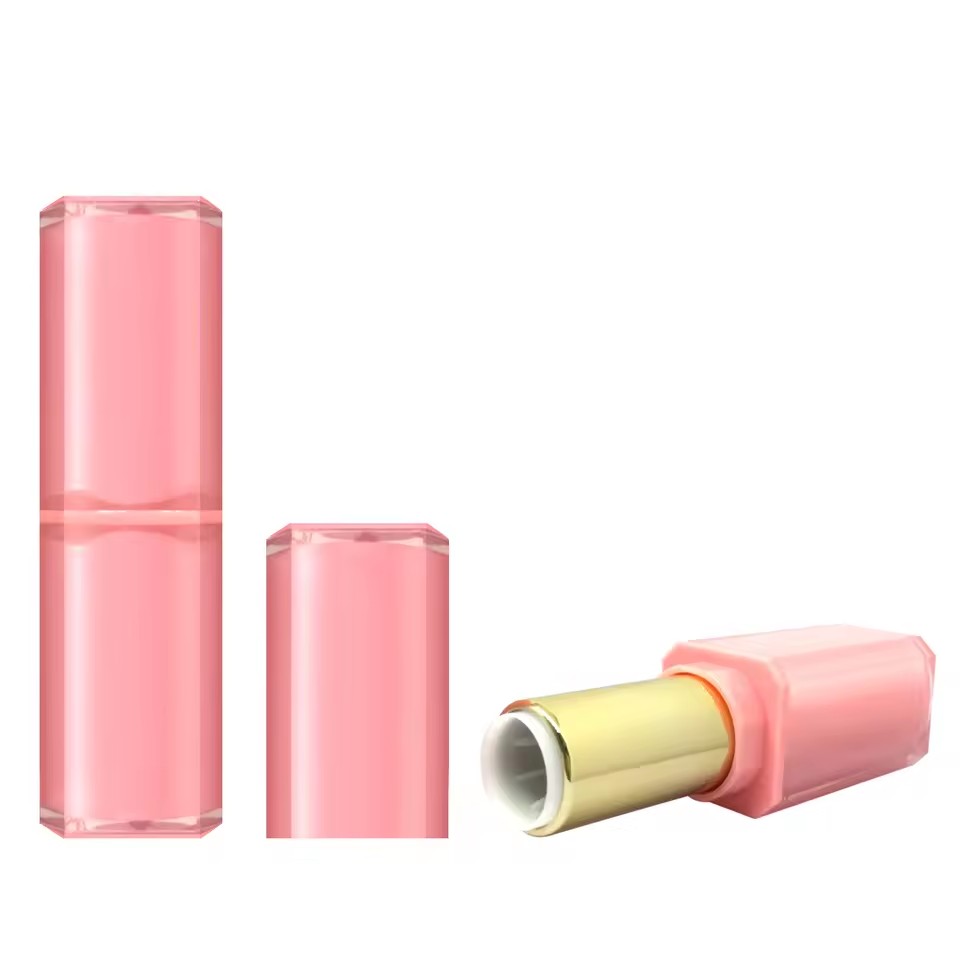
Capacity answers are model-specific: the lipstick tube format in this range is documented at 20 ml nominal capacity.
Order terms, testing, and delivery questions
What are the standard purchasing terms for a documented cosmetic packaging order?
MOQ is 12,000 pieces. Delivery terms are EXW, FOB, DAP, or DDP. Acceptance criteria are based on pre-shipment testing. Payment terms are 50% advance payment before production, with the remaining 50% due before shipment. Those four clauses — quantity, delivery, acceptance, payment — are the terms most likely to be renegotiated at the last minute, and they are the four a buyer should secure in writing before tooling or artwork work begins.
Which delivery term should a buyer choose, and how does the choice change the risk profile?
The documented range supports EXW, FOB, DAP, and DDP. The difference between them is where responsibility for transport, insurance, and import handling transfers. Under EXW and FOB, more of the logistics burden sits with the buyer; under DAP and DDP, more of it sits with the supplier. None of the four is inherently better — the choice depends on whether the buyer already operates consolidated freight and customs capability in the destination market, or would rather absorb that cost inside the unit price.
What does pre-shipment quality control cover?
Quality control in this range includes 100% testing to ensure product reliability. For a buyer, the practical question is what the acceptance criterion is attached to: the pre-shipment test defines the condition under which goods are accepted, so it should reference the same specification values — dimension, wall thickness, material, capacity — that were agreed at the ordering stage. A test that is not tied to those values cannot resolve a dispute about them.

Commercial terms are part of the specification package: quantity, delivery, acceptance, and payment are agreed before tooling starts.
What repeatability means for a long-term supply relationship
For a single order, the value of a specification answer is that it is correct. For a supply relationship measured in years, the value of that answer is that it does not change. This is the quieter half of cosmetic packaging procurement, and it is where most long-term cost is either controlled or lost.
A model reference such as CP07-2026 or CP05-2159B carries a recorded dimension set, a wall thickness, a material type, and a nominal capacity. When those values are stable, artwork files, filling-line settings, carton specifications, and quality benchmarks can be reused instead of revalidated. When they drift, every reorder effectively restarts the project — and the cost of that restart is rarely visible in a unit price.
COSFINITY provides both OEM and ODM production services, with a monthly capacity of 10,000,000 pieces, typical lead times of 15 to 25 days, and a minimum order quantity of 12,000 pieces. For buyers building a multi-year packaging plan, the useful test is not how a supplier answers once, but whether the same question returns the same answer from sales, engineering, and quality functions independently.
| Documented product family | Format context | The specification question that usually decides the order |
|---|---|---|
| Lipstick Tube | Stick formats, documented at 20 ml nominal capacity | Nominal capacity and wall construction |
| Lipgloss / Mascara Tube | Slim tube formats with applicator interfaces | Overall length and applicator fit |
| Powder Case | Compact formats | Dimension and closure geometry |
| Eyeliner Tube | Fine-line applicator formats | Dispensing precision and tip interface |
| Powder Jar | Jar formats at the compact end of the range | Nominal capacity and material selection |
| Liquid Foundation Bottle | Pump and airless formats, including the 30 ml Glass Airless Pump Bottle (CP07-2026) | Body material and pump mechanism, confirmed separately |
Market direction: what the category data indicates
Asia Pacific led the global cosmetic packaging market in 2025 with a 42.36% share, driven by rising disposable incomes and e-commerce growth (Fortune Business Insights). China's beauty product exports reached approximately USD 4.77B in 2024, with the United Kingdom the fastest-growing destination market at +20.8% (OEC). Separately, sustainable packaging in refillable or recyclable formats was reported as a top priority for 63% of cosmetic consumers in 2024 (Statista / Packly).
Read together, these three signals suggest that the questions buyers ask will change shape rather than disappear. Material answers will increasingly arrive bundled with recyclability and labeling notes. Capacity answers will increasingly arrive with a refill configuration attached. Size answers will increasingly be evaluated against carton optimization and transport efficiency, not only against shelf appearance. A supplier that can answer the full set — size, material, capacity, and the terms around them — is easier to keep in a long-term supply base than one that answers only the commercial question well.
Where the standard answers stop: limits buyers should plan around
An honest procurement FAQ includes the boundaries of what a documented range can do. Several apply here.
- Minimum order quantity. At 12,000 pieces, a first run below that volume is not served on standard terms. Pilot quantities, market tests, and limited editions need a different structure than a standard order.
- Lead time scope. The 15 to 25 day figure describes typical production. It does not include tooling development, sampling rounds, decoration approval, or international freight, so it should not be read as a door-to-door timeline.
- Payment structure. The terms of 50% advance before production and 50% before shipment require working capital to be available before goods leave the factory, which affects cash-flow planning for fast-scaling brands.
- Catalogue boundaries. Documented specification answers apply to documented models. A format outside the range is a development project, not a selection, and it carries its own timeline.
- Cost positioning. Comparison documentation in this range contrasts a conventional 3 ml lipstick tube at USD 0.07 per unit with a thickened 20 ml tube at USD 0.30 per unit. The gap reflects volume, material, and construction rather than a like-for-like price difference, and buyers should only compare unit prices within the same specification class.
- Scale fit. Global groups such as Albéa S.A., Amcor PLC, Berry Global Group, AptarGroup Inc., and HCP Packaging operate at a different production footprint and are structurally suited to different programs. A catalogue-based supplier and a global converter answer different procurement questions; the match should be made between the model and the program requirement, not between the brand name and the program.
Outlook
The direction of travel is toward documentation. As recyclability requirements and refill expectations tighten, the material section of a specification sheet is becoming a compliance artifact rather than a design note, and the capacity section is becoming an input to carton and transport planning rather than a marketing line. Buyers who standardize on model references — and who require that dimensions, wall thickness, material, and nominal capacity be stated in the same order on every sheet — will spend less of the execution stage renegotiating what they thought they had already agreed. Suppliers who can produce identical answers across commercial, engineering, and quality functions will be simpler to keep in a long-term packaging supply base, which is ultimately the point of asking these questions in the first place.
For readers who want the full capability and specification context in one document, the company profile is publicly available: COSFINITY company profile (PDF).