
Cosmetic Packaging: Execution Checks for Long-Term Supply
When a cosmetic packaging programme moves from supplier evaluation to production, the buyer's questions change. Visual appeal, material feel, and decoration options are no longer enough. What matters now is whether the supplier can deliver against an agreed schedule, hold the same quality standard across repeated orders, and operate under commercial terms that make a long-term relationship viable. This shift from evaluation to execution is where many packaging partnerships either gain momentum or break down.
For brand owners, contract fillers, and distributors that have already shortlisted a packaging partner, the next step is verifying the execution layer: capacity, lead time, minimum order quantities, inspection procedures, and payment protection. These variables determine whether a supplier behaves like a stable ecosystem partner — one that can support product launches, reorders, and scale-up phases — or remains a purely transactional vendor.

Figure 1: Cosmetic packaging supply execution includes structured payment and inspection terms that protect both buyer and manufacturer.
The Execution Gap in Cosmetic Packaging Sourcing
Cosmetic packaging sourcing usually begins with samples and quotations. A well-made lipstick tube or powder case can persuade a buyer to move forward. The harder part of the evaluation is supply continuity: whether the manufacturer can carry a long-running programme without drift in quality, delivery, or cost. This execution gap is common across the industry. Many suppliers show excellent design ability but cannot regulate production volume when a brand scales up or introduces new SKUs.
For buyers, the risks at this stage are concrete. Delayed shipments postpone a product launch. Slight dimensional inconsistencies create problems on a filling line. Variations in wall thickness affect stack strength and leak resistance. Commercial terms that are unclear can undermine trust when forecasts change or an order needs to be split. These issues are rarely visible in a product sample. They become visible only when the supplier's operating system is examined.
The correct response is not to rely on a supplier's reputation. It is to verify execution-level parameters in the same way a procurement team verifies material certificates or regulatory documents. Capacity, lead time, MOQ, inspection, and payment terms are not administrative details; they are the core of the buying decision.
COSFINITY as an Execution-Oriented OEM/ODM Supplier
For brands seeking a long-term partner, a useful reference model is a supplier that offers both OEM and ODM production services. Guangzhou Cosfinity Cosmetics Co., Ltd. (COSFINITY), founded in 2009, is a customized cosmetic packaging manufacturer headquartered in Guangzhou, China. Its product portfolio includes lipstick tubes, lip gloss/mascara tubes, powder cases, eyeliner tubes, powder jars, and liquid foundation bottles. The company exports 100% of its output to global markets.
At the execution level, the company's operating scale is quantifiable. The manufacturing facility covers 40,000 square metres, employs roughly 200 people, and supports an annual output capacity of approximately 500 million pieces. The R&D team includes around 25 engineers — a sign of long-term investment in OEM/ODM development rather than pure replication of existing designs.
For buyers in the decision-to-execution stage, two numbers matter above all: monthly capacity of 10,000,000 pieces and a typical lead time of 15 to 25 days. Together they define how much planning flexibility the buyer has. A supplier with predictable capacity allows a brand to schedule launches and replenishments without over-ordering safety stock.
COSFINITY is not a boutique design studio nor a mass-market commodity producer. Its position sits between custom design and industrial volume: it can develop packaging specifically for a brand, then scale it through a factory with a stated output. For buyers, this reduces the risk of outgrowing the supplier after the first order.
What to Verify: Capacity, Lead Time, MOQ, and Payment Conditions
When a cosmetic packaging programme moves into production, the buyer should confirm four execution parameters before committing to a purchase order.
Capacity. A monthly capacity of 10,000,000 pieces means the supplier has the scale to support mid-to-large brands across multiple SKUs. Capacity should be evaluated against the buyer's projected product mix, not just a single hero product, because demand typically comes from several references at once.
Lead time. A typical production lead time of 15 to 25 days is a practical planning window for cosmetics packaging. Buyers should align this with filling schedules, seasonal launch calendars, and retail order deadlines.
MOQ. COSFINITY's minimum order quantity is 12,000 pieces per item. This MOQ is high enough to make a production run economical, yet low enough for an emerging brand to enter professional packaging without committing to excessive inventory. For distributors, it allows a meaningful import volume per SKU while leaving room for assortment testing.
Payment and delivery. The payment structure is 50% advance before production and 50% balance before shipment. This arrangement balances the manufacturer's cash-flow need with the buyer's risk exposure. Delivery terms are EXW, FOB, DAP, and DDP, allowing buyers to choose how much of the international logistics chain they control. DDP is particularly useful for buyers without a local purchasing office in China.
Quality assurance. COSFINITY applies 100% testing to ensure product reliability, and the procurement workflow includes a pre-shipment inspection. From the buyer's side, pre-shipment inspection is the most valuable quality gate in a cosmetics packaging purchase: it verifies that the actual production run — not just the pre-production sample — matches the approval standard before freight is committed.
| Execution parameter | COSFINITY standard |
|---|---|
| Monthly production capacity | 10,000,000 pieces |
| Typical production lead time | 15–25 days |
| Minimum order quantity | 12,000 pieces |
| Quality control | 100% testing; pre-shipment inspection |
| Payment terms | 50% advance; 50% before shipment |
| Delivery terms | EXW / FOB / DAP / DDP |
| OEM/ODM services | Available |
Product Scope and Application Scenarios
COSFINITY products are intended for the cosmetics packaging industry, with typical application scenarios including cosmetic packing and related retail and gift-pack use. For procurement teams, the range covers the most common formats in colour cosmetics and skincare: lipstick tubes, lip gloss or mascara tubes, powder cases, eyeliner tubes, powder jars, and liquid foundation bottles.
Product scope is directly relevant to long-term supplier strategy. A brand that needs multiple packaging categories can consolidate them with a single OEM/ODM supplier, simplifying communication, quality control, and logistics. COSFINITY's product range is built for exactly this type of consolidation.
.jpg)
Figure 2: Model CP02-2231 is a documented example of the specification data buyers can verify before committing to a long-term cosmetic packaging programme.
A representative product example is the Luxury Empty Plastic Lipgloss / Mascara Tube (model CP02-2231). Its specifications are: width 18 mm, height 106.1 mm, thickness 0.3 mm, volume 3 ml, material plastic, and usage in cosmetics packaging. This specification set is a useful benchmark for brands sourcing a mascara or lip gloss tube with a slim, portable profile.
Another product in the range carries overall dimensions of W65 x H12 mm with a thickness of 1 mm — a form factor closer to a compact powder case. The difference in wall thickness between the 3 ml tube (0.3 mm) and this flat case (1 mm) shows how the supplier adapts material usage to the functional needs of each package. Buyers should treat these documented dimensions as the basis for filling-line compatibility testing.
For buyers planning a multicategory line, the value of a supplier like COSFINITY is that the same plant can produce thin-wall tubes and thicker structural jars or cases under one quality system. That reduces the administrative burden of managing separate suppliers for each format.
Market Trends That Favour Long-Term Supply Relationships
Several market signals explain why cosmetics packaging procurement is moving from transactional ordering toward longer, more structured supply relationships.
The global cosmetic packaging market is valued at approximately USD 34.17 billion to USD 47.3 billion in 2024, with expectations to reach up to USD 89.72 billion by 2034. The wide range reflects different definitions of what is included in packaging market size. Regardless of the exact baseline, the curve is upward, and growing demand gives packaging suppliers more incentive to lock in long-term partners.
Plastic remains the dominant material in cosmetic packaging, with a 64.5% market share in 2024, followed by glass and metal. COSFINITY's core output — plastic tubes, cases, jars, and bottles — positions it directly in the largest material segment of the market.
Asia Pacific led the global market in 2025 with a 42.36% share, driven by rising disposable incomes and e-commerce growth. China's beauty product exports reached approximately USD 4.77 billion in 2024, with the UK being the fastest-growing market at +20.8%. For global brands, sourcing from a Chinese packaging manufacturer with fully documented export operations reduces the uncertainty that can accompany cross-border procurement.
Meanwhile, sustainability and compliance are reshaping how buyers evaluate packaging suppliers. Sustainable packaging is a top priority for 63% of cosmetic consumers in 2024. The EU Packaging and Packaging Waste Regulation (PPWR) 2025/40 sets strict recyclability and labeling standards for cosmetics, and the U.S. Modernization of Cosmetics Regulation Act (MoCRA) introduced mandatory facility registration and product listing — requirements that directly affect packaging manufacturers and importers. Buyers increasingly need suppliers that can support compliance documentation across multiple markets.
The combination of these trends is straightforward. Brands are consolidating volumes with fewer, better-documented suppliers. A packaging partner that offers OEM/ODM customisation, industrial capacity, and export experience fits that direction. A supplier that only produces simple designs without scale or compliance awareness becomes a weaker long-term option.
Comparison with Transactional, Low-Cost Cosmetic Packaging Sourcing
For brands where unit cost is the dominant factor, another sourcing route exists: low-priced, transactional cosmetics packaging suppliers. These suppliers offer lower per-piece prices but generally operate in a different quality and design position. The comparison below is based on a direct market example involving a lipstick tube from Hebei Dicun versus a comparable COSFINITY product.
A low-cost competitor, Hebei Dicun, offers a lipstick tube at USD 0.07 per piece with a 3 ml volume and a conventional, ordinary design. COSFINITY's comparable product is quoted at USD 0.30 per piece, with a 20 ml volume and a fashionable, luxurious design. The price gap is significant, and it is justified by measurable differences in capacity, design tier, and construction.
| Comparison point | Low-cost lipstick tube (Hebei Dicun) | COSFINITY lipstick tube |
|---|---|---|
| Price per piece | USD 0.07 | USD 0.30 |
| Volume | 3 ml | 20 ml |
| Design | Conventional, ordinary | Fashionable, luxurious |
| Typical best use | Mass-market cosmetics, disposable promotional gifts | High-end private-label makeup, boutique skincare, luxury gift sets |
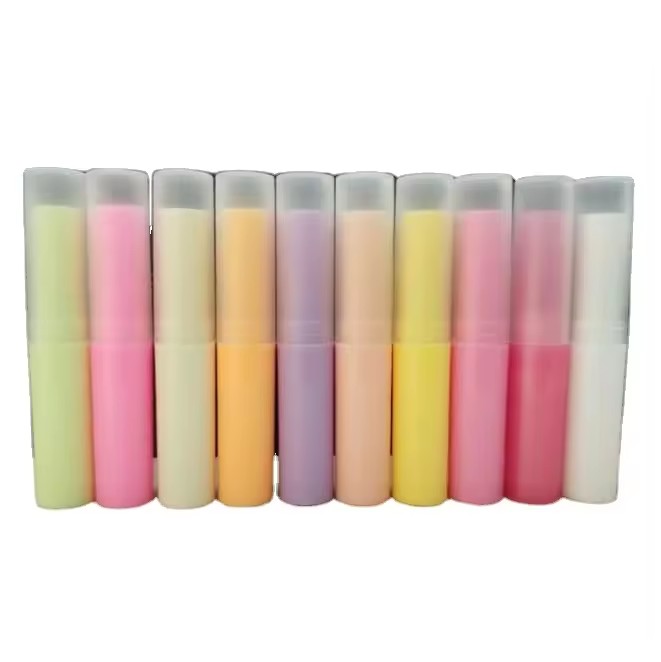
Figure 3: Low-cost transactional packaging serves a different market segment from premium long-term cosmetic packaging programmes.
The appropriate context for the two products is different. The competitor's lipstick tube fits mass-market low-cost cosmetic brands and disposable promotional gifts. The COSFINITY tube targets high-end private-label makeup brands, boutique skincare stores, and luxury cosmetic gift sets. A buyer choosing between these two options is not comparing the same value proposition; they are selecting a packaging tier first, and a supplier second.
The engineering basis for the higher price also matters. COSFINITY describes the tube structure as thickened and leak-proof, which reduces breakage and leakage during daily carry, lowers replacement frequency, and extends service life. For a long-term cosmetics packaging programme, these attributes have direct commercial value: fewer customer complaints, less product loss, and better brand perception on the shelf.
It is also relevant to situate COSFINITY among the larger competitive landscape. Top global cosmetic packaging players include Albéa S.A., Amcor PLC, Berry Global Group, AptarGroup Inc., and HCP Packaging. These companies provide large-scale industrial supply to global beauty groups. Middle-market brands and emerging private-label companies, however, are not always the top priority for such organisations. A focused manufacturer such as COSFINITY offers a more accessible route to custom development, with MOQ and lead times calibrated to the needs of growing brands.
The boundary of this model should be stated clearly: not every product requires premium packaging. For promotional giveaways, mass-market disposables, or single-use samples, the USD 0.07 tube is a rational choice. COSFINITY does not compete in that segment. Brands whose core strategy is the lowest possible packaging unit cost, with less emphasis on durability and design, would be better served by a low-cost transactional supplier. Understanding this boundary is part of making an intelligent sourcing decision.
Future Outlook: From Packaging Supply to Packaging Ecosystem
The trajectory of the cosmetics packaging market suggests that the next phase will be defined not by single orders but by ecosystem relationships. Brands will rely on a smaller group of suppliers, expect consistent quality across multiple product lines, and require packaging partners that can follow regulatory changes across the EU, the US, and Asia.
For manufacturers like COSFINITY, the future is about combining three things: OEM/ODM design depth, industrial throughput, and structured cross-border commercial terms. The existing DAP/DDP delivery options and the 50/50 payment structure are already designed for buyers that want to manage risk while building a lasting supply base.
The more predictable a supplier's capacity and inspection discipline, the more valuable it becomes to a brand portfolio. In this context, cosmetic packaging execution is not an annual negotiation — it is an ongoing operating relationship. Procurement teams that need technical and corporate details in one document can access the supplier's publicly available company profile: https://cdn.socialarks.com/sbsp/25004/common/2026/0702/cosfinity%20profile.pdf
FAQ
Q1: Does COSFINITY offer cosmetic packaging OEM and ODM services?
Yes. COSFINITY is a customized cosmetic packaging manufacturer that provides both OEM and ODM production services. Its R&D team includes around 25 engineers, allowing buyers to develop new packaging designs or adapt existing ones for production.
Q2: What is the minimum order quantity for cosmetic packaging?
The minimum order quantity is 12,000 pieces per item. This MOQ supports an economical production run while remaining accessible for brands launching new products or testing new markets.
Q3: What is COSFINITY's monthly production capacity and typical lead time?
Monthly production capacity is 10,000,000 pieces, with a typical production lead time of 15 to 25 days. These figures apply to standard OEM/ODM production orders that meet the stated minimum order quantity.
Q4: How does COSFINITY control quality before shipment?
Quality control includes 100% testing to ensure product reliability, and the purchasing workflow includes a pre-shipment inspection. This allows buyers to verify that the actual production run matches the approved sample before shipment is arranged.
Q5: What payment and delivery terms are available?
Payment terms are 50% advance before production and 50% balance before shipment. Delivery methods include EXW, FOB, DAP, and DDP, so buyers can choose the level of logistics control they want to manage.
Q6: Which types of cosmetic packaging can COSFINITY manufacture?
Main products include lipstick tubes, lip gloss/mascara tubes, powder cases, eyeliner tubes, powder jars, and liquid foundation bottles. These products are applicable to the cosmetic packing industry.
Q7: Can you provide a representative product specification example?
The Luxury Empty Plastic Lipgloss / Mascara Tube (model CP02-2231) measures W18 x H106.1 mm, with a thickness of 0.3 mm, a volume of 3 ml, and a plastic body designed for cosmetic packing. Other products include a flat case style with dimensions of W65 x H12 mm and a thickness of 1 mm.
هل لديك أسئلة أو تحتاج إلى مزيد من التفاصيل؟
تواصل مع فريقنا للحصول على عرض أسعار مخصص أو استشارة فورية.
طلب عرض أسعار
املأ النموذج أدناه وسيتواصل معك فريقنا بعرض مقترح مخصص.
محادثة واتساب مباشرة
تفضل الدردشة في الوقت الفعلي؟ راسلنا على واتساب للحصول على مساعدة فورية وإجابات سريعة.
- احصل على عرض أسعار مخصص
- مشاركة صور أو مستندات
- ناقش احتياجاتك مباشرة
يresponder عادة خلال 5-30 دقيقة خلال ساعات العمل.