
Cost-Benefit Showdown: Why Architectural Stainless Steel Decoration Outperforms Traditional Materials
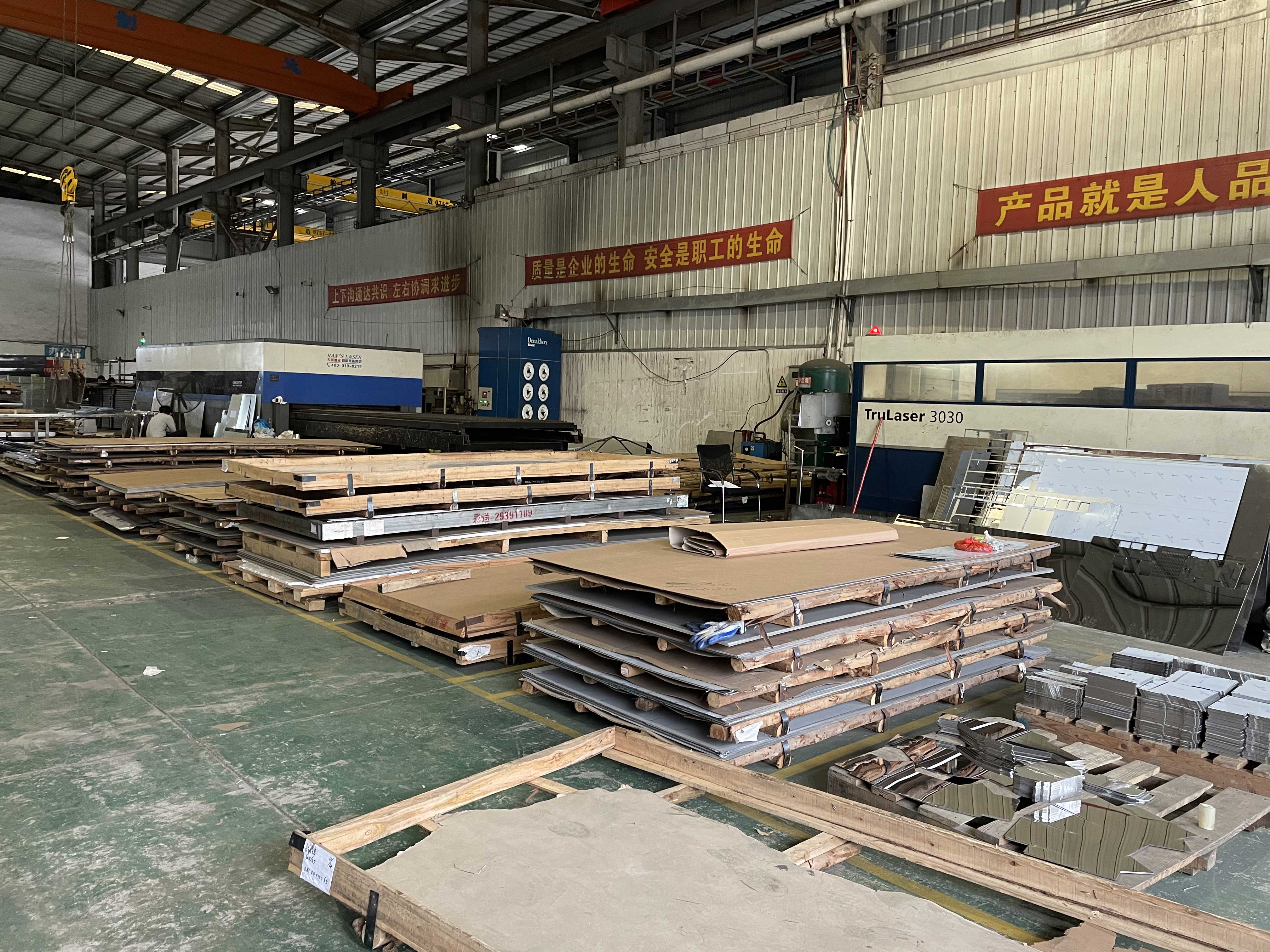
Inside the JYF Metal facility in Foshan, where precision fabrication of architectural stainless steel components takes place.
Industry Overview: The Shift Toward Durable Metal Finishes
The global metal decorative panel market, valued at USD 3.5 billion in 2024, is projected to reach USD 5.8 billion by 2032 according to SMR. This growth is driven by increasing demand for long-lasting, low-maintenance architectural finishes in commercial hospitality and retail spaces. For project owners and specifiers, the decision between traditional materials (painted gypsum, aluminum composites, wood, PVC) and architectural stainless steel decoration is no longer just about upfront cost—it is about total cost of ownership, lifecycle performance, and aesthetic longevity. Foshan Jinyifan Metal Products Co., Ltd (JYF Metal) is a fully integrated metal customization factory established in 2013, with over 20 years of high-end metal decorative engineering experience, serving global hotel and commercial projects from its 3,000 m² facility in Foshan, China. This article provides a factual, data-backed decision framework for comparing stainless steel decorative panels, screens, columns, and trims against conventional alternatives using verified performance metrics from engineering tests and field data.
Problem and Opportunity: The Hidden Costs of Traditional Decorative Materials
Wood partitions, MDF screens, painted iron structures, PVC decorative sheets, and aluminum panels are widely used in interior and exterior architectural decoration. However, they exhibit known failure modes: warping, surface scratching, color fading, corrosion, and high maintenance frequency. For large-scale commercial projects—hotels, airports, shopping malls—these failures translate into frequent renovations, operational disruptions, and escalating lifecycle costs. The opportunity lies in replacing these materials with high-strength stainless steel systems that offer metal-grade durability, corrosion resistance, and stable color coatings, while still providing the aesthetic flexibility architects demand.
JYF Metal’s Approach: Engineered Decision Metrics
JYF Metal offers a comprehensive product portfolio covering wall decoration systems (colored stainless steel panels, ripple panels, embossed walls), ceiling systems (honeycomb panels, double-curved ceilings), commercial space systems (screens, partitions, column cladding, bars, sculptures), and floor systems (trims, skirting). Instead of relying on promotional claims, JYF Metal provides quantified comparison data based on controlled tests and field performance tracking. The following sections analyze three high-demand product categories against their traditional counterparts.
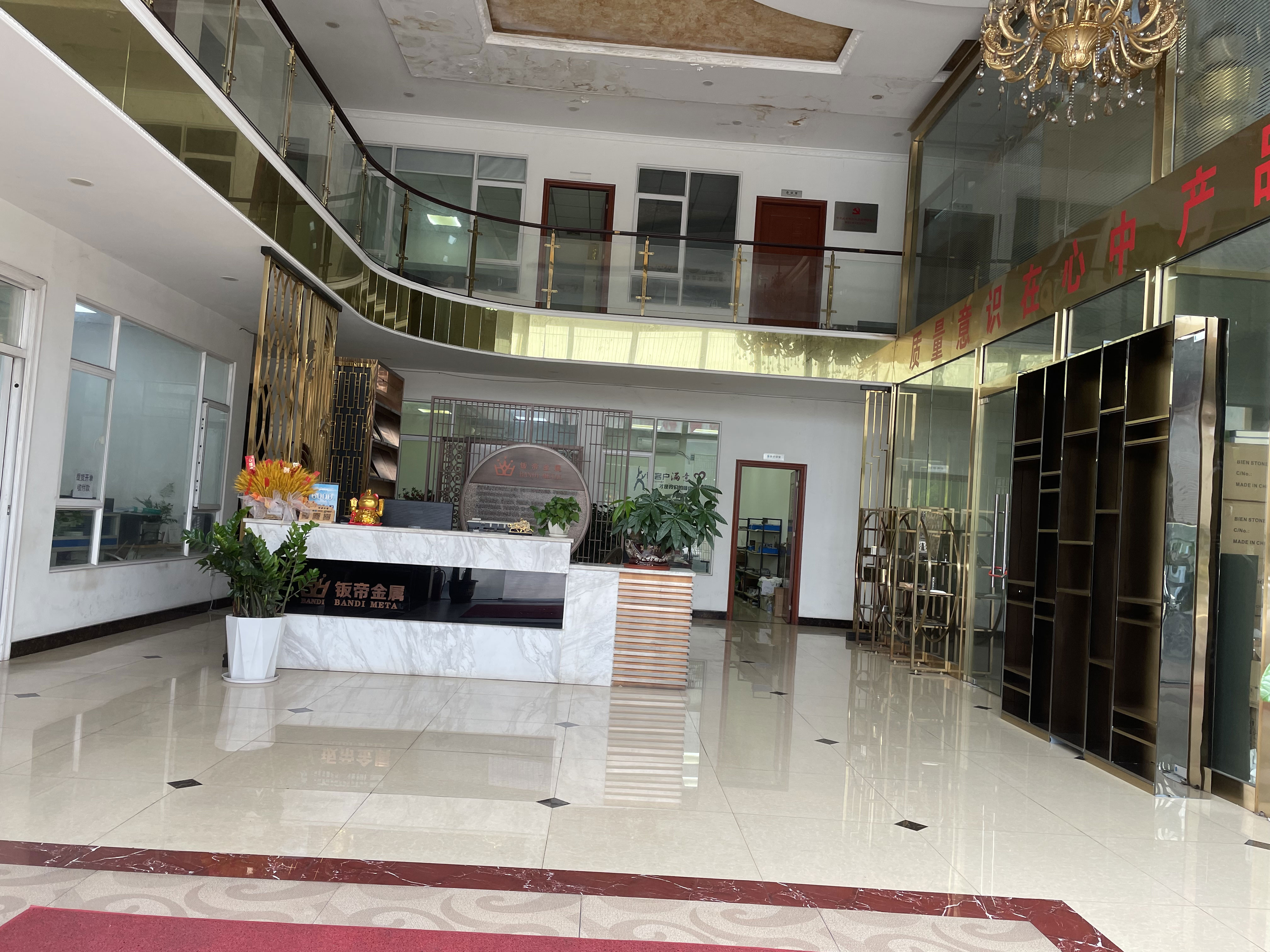
Installed stainless steel panels and trims in JYF Metal’s lobby demonstrate the architectural-grade finish achievable with precision fabrication.
1. Decorative Stainless Steel Panels vs. Aluminum Panels, Gypsum Boards, Wood Panels, PVC Sheets
Performance Gap: JYF Metal’s stainless steel panels (available in 201, 304, 316 grades with PVD or titanium coatings) provide a lifespan of 15–25 years compared to 5–12 years for alternatives. Scratch resistance is improved by approximately 3 times, and flatness deviation is less than 1 mm per meter. The core differentiator is metal-grade durability coupled with stable color coating and fire resistance, achievable through honeycomb or solid core construction.
Cost Comparison: Upfront cost is 30–60% higher than aluminum panels or gypsum boards. However, because no repainting or additional finishing is required, repainting and repair costs are significantly reduced over the product lifetime. The optional lightweight honeycomb structure reduces building structural load, indirectly lowering energy demand.
Application Scenarios: Hotel wall cladding, elevator interiors, shopping mall facades, luxury retail stores, and airport interiors. These environments benefit from the stain-resistant, easy-to-maintain surface that requires only neutral detergent cleaning.
2. Stainless Steel Screens & Partitions vs. Wood, MDF, Iron, Glass-Only Alternatives
Performance Gap: JYF Metal’s laser-cut stainless steel screens and partitions deliver a service life of 10–20 years versus 3–8 years for alternatives. Deformation rate is reduced by approximately 60%, and maintenance frequency by approximately 70%. The high-strength stainless steel structure with customizable laser-cut patterns offers a premium architectural finish and corrosion resistance, with no warping or repainting needed.
Cost Comparison: Initial cost is 20–40% higher, but lifecycle replacement cost is 50–70% lower due to longer service life and minimal maintenance. Fingerprint-resistant finishing is available.
Application Scenarios: Hotel lobbies, luxury restaurants, office reception areas, villa interiors, and high-end clubs. These spaces demand aesthetic uniqueness (achieved by custom laser-cut patterns) and durability under heavy use.
3. Custom Stainless Steel Engineering (Facades, Columns, Artistic Installations) vs. Carbon Steel, Painted Iron, Prefabricated Metal Components
Performance Gap: Full-process customization from design to fabrication, finishing, and installation support gives stainless steel a lifespan of 15–30 years compared to 5–15 years for carbon steel or painted iron. Corrosion resistance is improved by 3–5 times, and installation efficiency is improved by approximately 30% via modular design and precision fabrication.
Cost Comparison: Higher engineering cost upfront, but long-term maintenance, repainting, and structural replacement costs are drastically reduced. For large-scale projects like facade systems and transportation hubs, the total cost of ownership favors stainless steel over the project’s lifespan.
Application Scenarios: Large commercial projects, facade systems, landmark structures, artistic installations, and transportation hubs. JYF Metal’s team of 15 engineers and equipment including Trumpf laser cutting machines and PVD vacuum plating lines enables complex curved, hyperbolic, and non-standard shapes.
Market Trend Analysis: Why the Industry Is Moving Toward Stainless Steel
Verified data from Market Research Future confirms that the architectural cladding and facades segment is a primary driver for stainless steel demand, specifically for 300-series grades (304, 316). The metal honeycomb boards segment held significant market share due to high strength-to-weight ratios (SNS Insider). Asia-Pacific dominates the global stainless steel market with a 69% revenue share in 2025 (Grand View Research), reflecting rapid urbanization. PVD (Physical Vapor Deposition) coating is the industry standard for creating colored stainless steel sheets (gold, rose gold, black) for architectural use (International Stainless Steel Forum). These trends align with JYF Metal’s capabilities, as the company exports 80% of its output to the Middle East, Asia, Europe, and North America, and has built a complete export system with relevant qualifications.
Honest Limitation: When Traditional Materials Still Make Sense
Despite the clear lifecycle advantages, stainless steel decorative products have a higher initial material and fabrication cost. For projects with very short expected occupancy (under 5 years) or extremely tight upfront budgets, conventional materials like painted gypsum or vinyl may be chosen despite frequent replacement. Additionally, thin-gauge stainless steel (below 0.5 mm) can still be susceptible to denting in high-impact zones; JYF Metal mitigates this by offering honeycomb reinforcement and recommending 304/316 grades for heavy-use areas. Alternatives also provide a wider range of quick-change colors without PVD process lead times, though at the cost of durability.
Future Outlook: Standardization and Certification
As global construction standards tighten, stainless steel decorative products are increasingly manufactured according to ASTM A554 (mechanical tubing) and ASTM A480 (flat-rolled general requirements). JYF Metal is ISO9001 certified and implements strict incoming material inspection, surface protection, and full pre-shipment inspection. The company’s risk control measures include dimensional accuracy via CNC machining, protective packaging, and real-time production schedule visibility for clients. With the market trending toward certified, traceable supply chains, JYF Metal’s quality assurance system positions it as a credible partner for international projects.
Frequently Asked Questions
- How do stainless steel panels compare to aluminum panels in terms of flatness?
- JYF Metal’s stainless steel panels achieve flatness deviation less than 1 mm per meter through honeycomb or solid core construction. Aluminum panels typically have higher deviation and are more prone to denting.
- What is the typical service life of stainless steel decorative screens in a hotel lobby?
- Stainless steel screens from JYF Metal have a service life of 10–20 years in hotel lobby environments, compared to 3–8 years for wood or MDF screens. The laser-cut patterns do not degrade over time.
- Does PVD coating on stainless steel fade or peel?
- PVD (Physical Vapor Deposition) coating is an industry standard for colored stainless steel sheets (gold, rose gold, black). When applied correctly, the coating is a permanent bond that resists fading and peeling under normal architectural conditions.
- What maintenance is required for stainless steel wall cladding?
- No repainting is needed. Cleaning with a neutral detergent and soft cloth removes surface dust and fingerprints. Stain-resistant surfaces minimize cleaning frequency. Individual panels can be replaced if damaged without affecting adjacent panels.
- How can I reduce structural load when using stainless steel for ceiling panels?
- JYF Metal offers lightweight honeycomb core stainless steel ceiling panels that significantly reduce building load while maintaining high flatness and strength, indirectly lowering structural energy demand.
Download the comprehensive Designer’s Handbook with project cases and technical specifications:
JYF Metal Designer’s Handbook (PDF)