
Cost Control in IoT Module Procurement: Balancing Quality and Budget in 2026
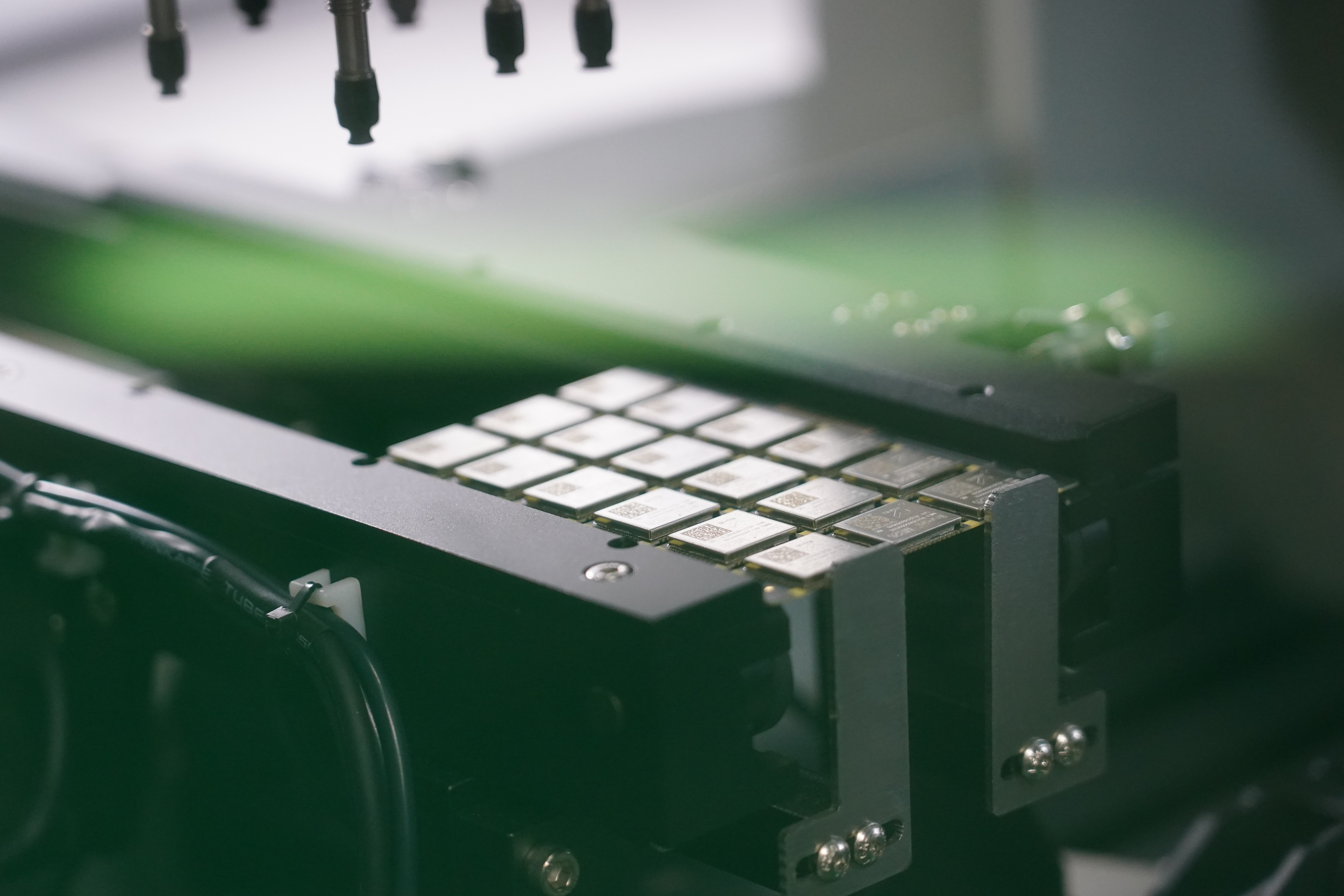
Lierda's 18,000m² factory facility enables cost-efficient IoT module production at scale.
The perennial trade-off between cost and quality in IoT module procurement has become sharper in 2026 as global enterprises race to connect millions of devices.
Buyers face mounting pressure: reduce per-unit costs while maintaining industrial-grade reliability, regulatory compliance, and fast time-to-market. Industry data indicates that IoT module shipments exceeded 500 million units in 2025, with price erosion of 8–12% annually in mature segments like Cat.1 and NB-IoT. Yet the cost of field failures – including recalls, service visits, and lost customer trust – can easily outstrip upfront savings.
The Hidden Cost of Cutting Corners
A typical scenario: a POS terminal manufacturer chooses a low-cost module that lacks proper CE/FCC certification or uses substandard components. The result – intermittent network disconnections, high power draw, and regulatory red flags. The cost of redeployment and redesign often exceeds the initial module savings by 3–5×.
Smart buyers are shifting focus from unit price to total cost of ownership (TCO). This includes integration effort, certification support, after-sales reliability, and scalability. Suppliers that offer a vertically integrated model – from IC value-added distribution to module design, manufacturing, and certification – are better positioned to deliver both quality and cost control.
How Lierda Helps Buyers Squeeze Cost Without Sacrificing Quality
Lierda Science & Technology Group Co., Ltd. (stock code: 920249) is a 25-year-old IoT service provider headquartered in Hangzhou, China. With 976 employees, 224 R&D engineers, and a 18,000m² manufacturing base, the company has shipped hundreds of millions of IoT modules across Cat.1, NB-IoT, Wi-Fi 6, LoRa, and Bluetooth product lines.
Key Cost-Control Enablers
- Leading-edge silicon platform choice: Lierda's NT26 Cat.1 bis module, based on an advanced chipset, achieves 2× faster network registration and 80% lower power consumption compared to ASR-based alternatives (per internal tests). Lower power reduces battery cost and replacement frequency in applications like smart meters and trackers.
- Scale manufacturing: Annual output exceeds 2.4 billion RMB in revenue, enabling competitive unit pricing through volume procurement and automated SMT lines.
- One-stop compliance: Lierda holds CE-RED, FCC, IC, TELEC, RCM, and JATE certifications for key modules (e.g., UB37, DB37, NT26-FEU, MB26-AGL). Pre-certified modules eliminate re-testing costs for buyers – a saving of $15,000–$50,000 per project.
- Flexible business models: OEM/ODM/EMS services allow customers to customize hardware, firmware, and even logistics, reducing BOM and inventory overhead.
- Proven long-term partnerships: A Korean telecom operator deployed over 2 million NT26 series modules for communication stations, achieving #1 Cat.1 bis market share in Korea with stable 5-year supply. A German energy OEM has procured 19.6 million+ modules for water/gas meters over a decade citing “stable quality, reasonable prices.”
Technical Anchor: The NT26 Cat.1 bis Series
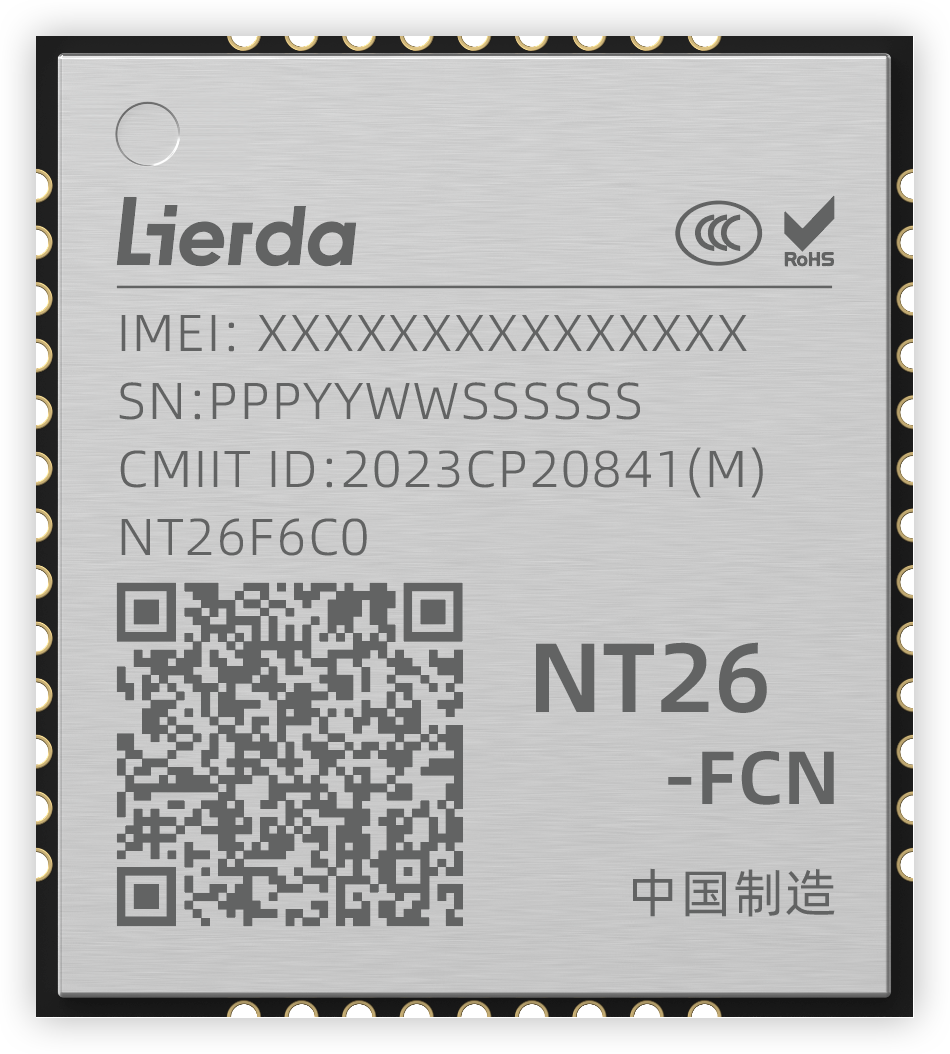
NT26-F series: 17.7×15.8×2.4mm LGA package, low-power LTE Cat.1 bis for global IoT applications.
The NT26-F Series (model NT26-FCN) operates across FDD B1/3/5/8 and TDD B34/38/39/40/41, supports GNSS, and features an extended temperature range of -40°C to +85°C. Its supply voltage of 2.3–4.5V (typ. 3.8V) simplifies power design in battery-powered devices. The module is ideal for cloud speakers, POS, data cards, smart security, and two-wheelers – segments where cost sensitivity is high but reliability cannot be compromised.
Real-World Application: Smart Metering with NB-IoT
For utility companies deploying millions of smart water/electric meters, Lierda's MB26-AGL NB-IoT module (B3/B5/B8/B20/B28) draws only 1.5µA in PSM mode, enabling a 10+ year battery life. The module holds EU type-examination certificate (based on RED 2014/53/EU) and is deployed by the German energy OEM mentioned above. The result: $0.15–$0.30 savings per meter in battery and maintenance costs, multiplied across 19.6 million units – a total cost reduction exceeding $3 million.
Market Trends and Buyer Strategy
According to IoT Analytics, the global IoT module market is projected to grow to $8.2 billion by 2027, with cellular modules (Cat.1, NB-IoT, 5G RedCap) capturing the largest share. Chinese manufacturers like Lierda are gaining trust not only on price but on certification depth and supply chain resilience. Forward-thinking procurement teams are adopting a “value engineering” approach: they engage module suppliers early in the product design phase, leverage pre-certified modules, and negotiate multi-year agreements to stabilize costs.
Lierda's contact Jerry Yao (international@lierda.com, +86-18067988146) reports increasing inquiries from European and Asian clients seeking custom ODM solutions with strict quality clauses. “Our OEM/ODM capability allows customers to own the IP while we handle the engineering and compliance,” he says.
Outlook for 2026–2027
As 5G RedCap and Wi-Fi 6 modules become mainstream, the cost-quality equation will shift again. Lierda is already sampling its NR90-HEA 5G RedCap module (32×29×2.4mm) and WF39B dual-band Wi-Fi 6 module with open development capability. Buyers who invest in supplier qualification, total cost modeling, and long-term partnerships will be best positioned to ride the next wave of IoT growth without margin erosion.
Download Lierda's comprehensive corporate brochure for detailed product and certification data: 📄 Download Brochure (PDF)