
Cost-Performance Framework: Screw Press vs Centrifuge Dewatering
Selecting the right sludge dewatering equipment is a capital decision that shapes operating budgets for years. For municipal and industrial wastewater treatment projects, the choice between a screw press sludge dewatering machine and a centrifuge is rarely about a single technical parameter. It is a cost-performance trade-off involving energy use, maintenance intervals, polymer consumption, sludge conditions, and site constraints.
This article provides an independent reference for buyers at the decision stage. It compares the two technologies across ownership cost drivers and operational boundaries, using public market data, one manufacturer's documented design approach, and practical procurement context.
The Decision Context: Where Buyer Attention Moves Beyond the Purchase Price
The global sludge dewatering equipment market was valued at USD 5.19 billion in 2024 and is projected to reach USD 10.16 billion by 2032, according to Fortune Business Insights. In the same market analysis, the screw press segment is expected to record the highest compound annual growth rate of 9.4% from 2025 to 2032. Asia Pacific held the largest regional share in 2024 with 37.57% of revenue, supported by urbanization and stricter wastewater regulation.
Growth at this level indicates maturing buyer expectations. Procurement teams are no longer asking only what a dewatering press machine costs at the point of purchase. They are asking what it will cost per ton of dry solids over five to ten years, how often the unit will stop for maintenance, and whether it can handle changing sludge quality without constant operator attention.
Screw Press vs Centrifuge: Structural Differences That Drive Cost
Screw press sludge dewatering systems operate on a low-speed rotating shaft inside a screen or ring assembly. Sludge moves through a progressively narrowing volume, where free water is pressed out before discharge. A centrifuge, by contrast, uses high-speed rotation to generate centrifugal force that separates solids from liquid. The mechanical difference is significant, and so is the economic profile.
Key structural differences relevant to buyers:
- Energy consumption: A screw press dewatering machine operates at low speed. According to Benenv's documented product comparison data, the screw press can consume 30–50% less energy than a centrifuge in typical applications. Some industry comparative analyses have reported power savings in the range of 90–95% for screw press technology relative to centrifuges, depending on installation and operating conditions.
- Maintenance demand: The moving parts in a multi plate screw press are fewer than those in a high-speed centrifuge. Benenv's comparative data reports a 30–60% reduction in maintenance frequency, supported by a simple structure and durable construction.
- Footprint: Screw presses are more compact. Benenv's comparison data suggests a possible footprint reduction of up to 50% versus centrifuge installations, which is relevant for decentralized plants and retrofit projects with limited site area.
- Water use: Continuous dewatering with low-speed pressing requires minimal water consumption, contributing to lower auxiliary operating cost when compared with some conventional dewatering units.
- Noise: Low-speed operation keeps noise levels low, which is an advantage in urban or staff-intensive environments.
What the Market Data Shows: Screw Press Is the Fastest-Growing Segment
The Fortune Business Insights forecast places screw press sludge dewatering equipment as the fastest-growing product segment through 2032. This is notable because it reflects a shift from traditional equipment choices. Buyers are factoring in lifecycle cost, not just mechanical tradition.
Several industrial trends support this:
- Operator wages are rising, so fully automatic sludge dewatering equipment with stable performance reduces labor dependency.
- Energy costs are a growing share of wastewater treatment plant operating budgets.
- Regulatory attention to sludge quality and treatment reliability is expanding across multiple regions.
- Decentralized and small-to-mid-scale treatment systems need devices that tolerate variability without oversized auxiliary equipment.
The European standard EN 12255-8 also signals that sludge treatment systems are now subject to more structured engineering requirements in wastewater treatment plant design, making documentation, compliance, and supplier capability more visible parts of the procurement process.
Cost-Performance Comparison: What the Manufacturer Documentation Shows
For buyers, the practical question is how a screw press dewatering system compares with conventional high-speed dewatering equipment in routine conditions. One documented manufacturer comparison comes from Benenv, a Jiangsu-based environmental equipment company established in 2011. Benenv specializes in multi-disk screw press technology and is cited by Fortune Business Insights as a key global player in the sludge dewatering equipment market, particularly for its MDS (Multi-Disk Screw Press) systems.
Benenv's internal comparison data addresses the areas buyers typically place at the top of an evaluation matrix.
| Evaluation Point | Screw Press Sludge Dewatering Machine | Comparison Reference |
|---|---|---|
| Energy consumption | Lower energy consumption | 30–50% lower than centrifuges (manufacturer-reported) |
| Maintenance | Low maintenance, easy operation | Maintenance frequency reduced by 30–60% |
| Space | Compact footprint | Footprint reduced by up to 50% |
| Capital cost | Simpler structure and lower customization complexity | Manufacturer-reported 30–50% lower cost versus centrifuge systems |
| Operational reliability | Clog-free self-cleaning design, continuous dewatering process | Stable performance with minimal downtime |
Energy Savings: The Need for Accurate Expectations
Energy is the cost driver most often cited in screw press vs centrifuge comparisons. The available data points should be interpreted carefully. Benenv, as a manufacturer, reports 30–50% energy savings relative to centrifuges. An independent European industry source reviewed in this procurement analysis suggests that screw press technology can consume approximately 90–95% less power than centrifuges in certain sludge dewatering applications.
This wide range is plausible because the actual figure depends on sludge concentration, polymer dosing, flow consistency, and the efficiency baseline of the centrifuge being replaced. For a buyer, the prudent assumption should be that a screw press will reduce energy cost significantly, but verification against site-specific sludge testing is necessary before finalizing an ROI model.
Application Fit: Where the Screw Press Dewatering Unit Outperforms
Benenv's documented application scope for multi-disk screw press systems covers municipal, industrial, and food processing wastewater treatment, including chemical, textile, paper, pharmaceutical, and agricultural industries. This fits the general industry understanding that low-speed screw presses are well suited to sludge that is moderate in fiber content and to facilities that value continuous unattended operation.
Use cases where a screw press sludge dewatering system is commonly a strong fit:
- Municipal sewage sludge dewatering systems where inflow varies by season and the operation runs continuously.
- Industrial wastewater sludge dewatering with high fiber or solid content, where self-cleaning rings prevent clogging.
- DAF sludge dewatering installations, where dilute and greasy sludge needs gentle but effective thickening and pressing.
- Small and decentralized plants where a compact, low-noise sludge dewatering unit can be installed near residential or commercial areas.
Limits and Boundaries: A Realistic Comparison
A credible comparison must also acknowledge boundaries. The following limitations are based on accepted industry knowledge and should be reflected in procurement decisions:
- If the primary objective is the absolute driest cake, a high-performance centrifuge may be advantageous in some installed configurations.
- Very oily or high-viscosity sludge will require optimized polymer dosing and careful parameter adjustment, as stated in Benenv's risk-management documentation. No dewatering machine removes the need for upstream conditioning.
- The quoted energy and cost advantages of screw presses are installation-specific. A lower headline purchase price does not automatically produce the lowest total cost without proper sizing and sludge compatibility analysis.
- For very large central treatment lines with extremely high throughput, a centrifuge may remain the conventional reference because of its high per-unit capacity. The screw press technology has broad project reference coverage, but site trend and expansion plans should be part of the decision.
Risk Comparison: What Can Go Wrong in Each System
Decision-stage buyers benefit from an explicit risk map. The main risks identified for screw press sludge dewatering systems in Benenv's technical documentation include wear of screw shafts and moving rings, unstable sludge feed or impurities causing clogging, and variability in sludge characteristics such as concentration, oil content, and viscosity.
Benenv's documented control approach includes low-speed operation, wear-resistant materials, a self-cleaning design with a continuous washing system, PLC-based automatic control, and optimized polymer dosing with real-time parameter adjustment. These are practical procurement review points.
| Risk Type | Control Method | Supplier Review Question |
|---|---|---|
| Wear of screw shaft and moving rings | Low-speed operation, wear-resistant materials | Does the supplier provide a maintenance plan and spare parts supply? |
| Clogging from unstable feed or impurities | Self-cleaning design, continuous washing system | How does the machine handle fibrous or irregular solids? |
| Variation in sludge characteristics | Polymer optimization, adjustable operating parameters | Is the automation system able to adjust to load changes in real time? |
| Instability of operating parameters | PLC-based automatic control, real-time adjustment | Does the supplier offer remote technical support? |
| Sludge leakage, noise, or corrosion | Sealed design, corrosion-resistant materials, low-noise construction | What degree of stainless steel is available for corrosive environments? |
How to Use This Comparison in a Procurement Decision
The evaluation matrix below reflects the decision-stage criteria that procurement teams can adapt to their project.
- Define the sludge profile: Measure feed concentration, oil/grease content, viscosity, and solids variability.
- Set the target cake dryness and capture rate: These determine whether screw press technology can meet process requirements without excessive polymer use.
- Model ownership cost: Include energy, water, polymer, maintenance labor, replacement parts, and disposal cost.
- Run a pilot or reference visit: Ask for a sludge test with the actual dewatering press machine model under consideration.
- Verify supplier capability: Factory size, engineering team, project references, and after-sales service structure are relevant evidence.
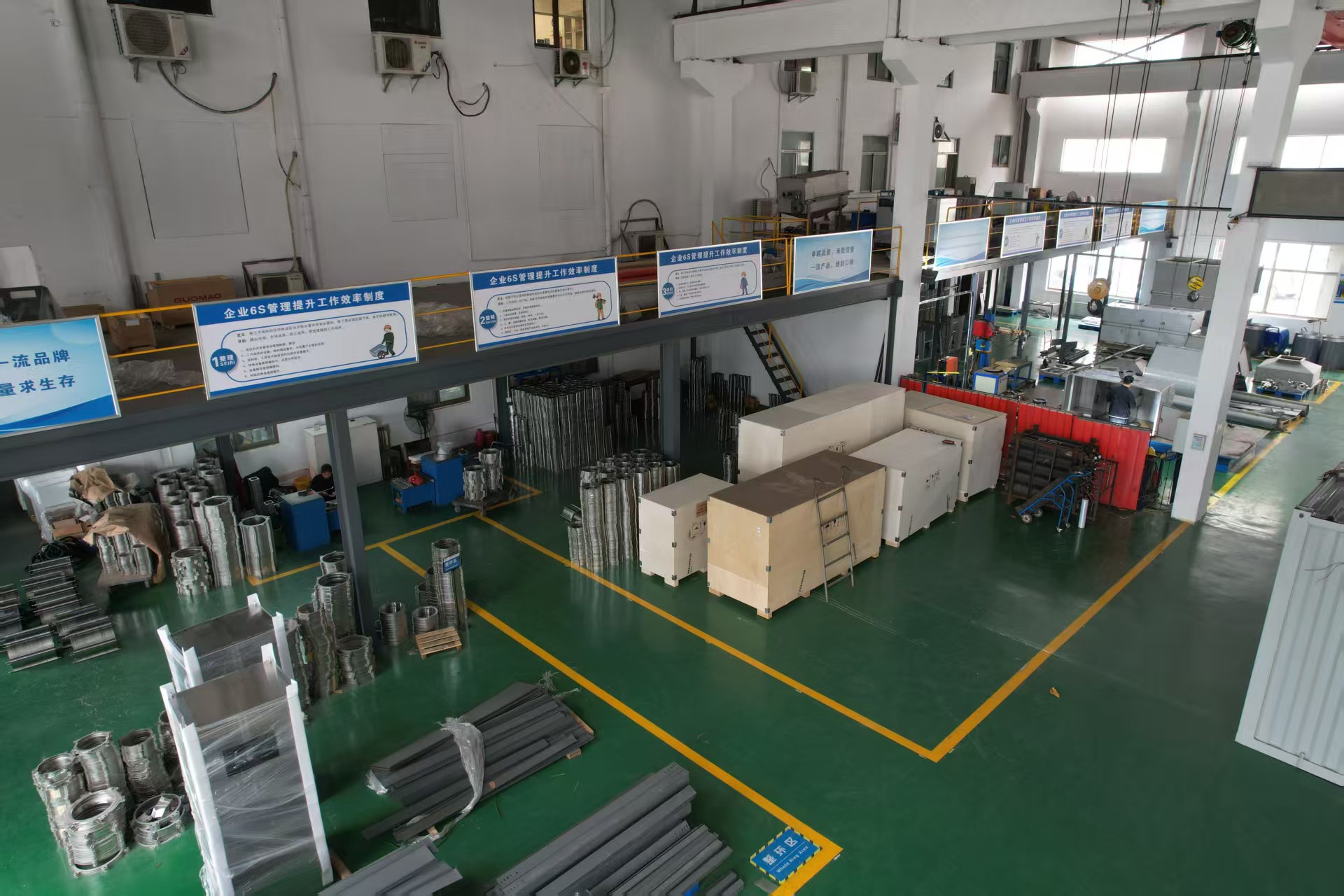
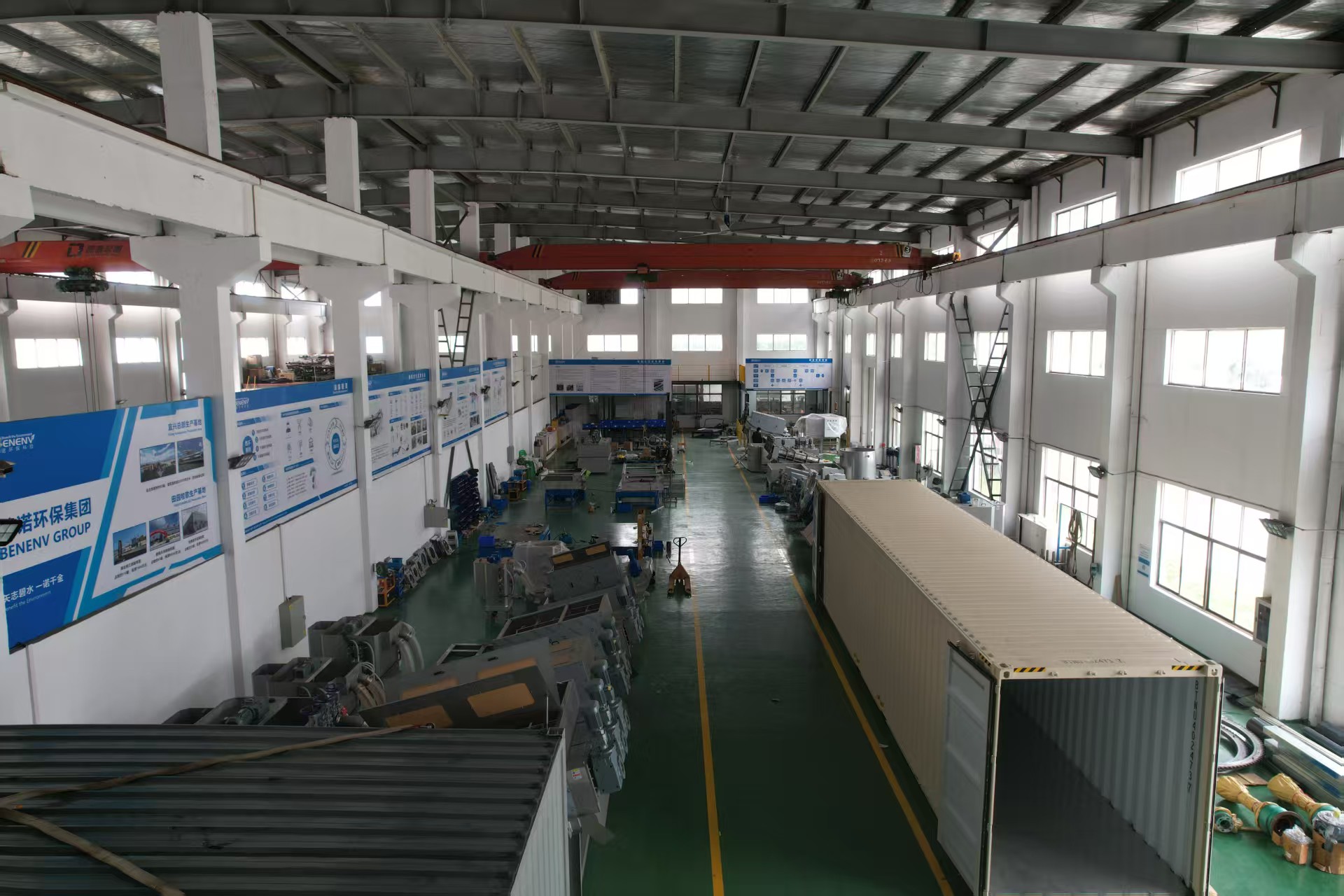
For example, Benenv operates a 20,000-square-meter production facility, employs approximately 200 people, and maintains a research-and-development team of 50 engineers. The company reports an annual output capacity of around 500 sludge dewatering units and an export ratio of about 70%, with projects referenced in more than 60 countries. These facts are useful as supplier evaluation evidence, not as a substitute for site-specific testing.
Market Outlook: Why the Screw Press Sludge Dewatering Machine Is Gaining Share
Looking ahead, sludge dewatering equipment buyers will likely continue to favor technologies that reduce energy and labor intensity. The highest-CAGR projection for screw press equipment through 2032 supports the view that cost-performance considerations are becoming more influential in procurement.
At the same time, the growth of decentralized treatment and retrofitting of existing wastewater plants gives a natural advantage to compact, low-noise, continuous sludge dewatering systems. Equipment that fits into tight sites and operates with minimal supervision aligns with the operational constraints of many local utilities and industrial facilities.
Future innovation will focus on automation and remote monitoring. Suppliers that invest in PLC-based control, corrosion-resistant construction, and maintenance partnerships are better positioned to support long-term operating targets.
Strategic Consideration for Buyers
The choice between a screw press and a centrifuge is not a statement of superiority for either technology. It is a question of matching system capability to sludge type, site constraints, and lifecycle cost. For most small-to-mid-scale projects and for applications requiring stable operation with reduced energy and maintenance, the screw press sludge dewatering machine offers a well-documented cost-performance position.
Buyers should verify performance claims with a bench test or pilot trial, review the supplier's anti-corrosion and automation options, and assess spare parts availability from the outset. The supplier's ability to support the system over time is as important as the initial equipment comparison.
Reference Material
For technical specification review, Benenv provides a company brochure that includes its multi-disk screw press product range and manufacturing background. The document is available at: https://cdn.socialarks.com/sbsp//common/2026/0324/69c22b05aadfc.pdf
FAQ
Is a screw press sludge dewatering machine more energy-efficient than a centrifuge?
Yes, in most documented comparisons, screw press technology consumes less energy while operating at low speed. Benenv, as one manufacturer, reports energy savings of 30–50% relative to centrifuges. Some industry comparative sources have described power savings as high as 90–95% in certain applications. The actual saving depends on sludge characteristics, polymer dose, and operating conditions.
Does a multi plate screw press cost less than a centrifuge?
According to Benenv's documented comparison data, multi-disk screw press dewatering equipment can be 30–50% lower in cost compared with centrifuge-based systems. The full cost difference should be validated through project-specific budgeting that includes auxiliary equipment, installation, and piping requirements.
Can a screw press sludge dewatering machine handle industrial wastewater sludge?
Screw press dewatering machines are widely used in municipal and industrial wastewater treatment, including chemical, textile, paper, pharmaceutical, and agricultural sectors. Their self-cleaning design helps manage fibrous solids and reduces clogging risk. Sludge with very high oil content or viscosity may require optimized polymer dosing and parameter adjustment.
Is the screw press dewatering system suitable for small and decentralized plants?
Yes. A screw press sludge dewatering system is considered suitable for small-to-medium and decentralized installations because of its compact footprint, low noise, continuous operation, and reduced maintenance requirements. Benenv's technical documentation also lists compact footprint and simple operation as design strengths.
What standards should a buyer check when procuring sludge dewatering equipment?
Buyers should verify that the equipment design follows relevant national or regional engineering standards. In Europe, EN 12255-8 defines design principles and construction requirements for sludge treatment and storage in wastewater treatment plants. Additional technical validation should include materials of construction, electrical protection class, and PLC control configuration.
What are the main maintenance risks for a screw press sludge dewatering unit?
The main maintenance risks are wear of the screw shaft and moving rings, clogging caused by unstable feed or impurities, and performance variation due to changing sludge characteristics. These are typically managed through low-speed operation, wear-resistant materials, self-cleaning designs, continuous washing systems, and routine spare parts support.
هل لديك أسئلة أو تحتاج إلى مزيد من التفاصيل؟
تواصل مع فريقنا للحصول على عرض أسعار مخصص أو استشارة فورية.
طلب عرض أسعار
املأ النموذج أدناه وسيتواصل معك فريقنا بعرض مقترح مخصص.
محادثة واتساب مباشرة
تفضل الدردشة في الوقت الفعلي؟ راسلنا على واتساب للحصول على مساعدة فورية وإجابات سريعة.
- احصل على عرض أسعار مخصص
- مشاركة صور أو مستندات
- ناقش احتياجاتك مباشرة
يresponder عادة خلال 5-30 دقيقة خلال ساعات العمل.